 How to resolve AdBlock issue?
News
The role of the committee, also known as LEDAC, is to develop ideas and strategies for the promotion of economic development through business retention, recruitment, attraction and creation.
These are two-year terms that will be effective as of January 2022.
This committee meets bimonthly, on the second Wednesday at 7:30 a.m.
Membership on LEDAC is voluntary.
If you are interested in serving on this committee, applications are available on the city’s website under the Community News Topic, “Now Recruiting: 3 Openings on the Lakeport Economic Development Advisory Committee (LEDAC)” or under the “Government” tab (Committees & Commissions).
Applications will be accepted until Monday, Nov. 22, at 5 p.m.
Appointments will be scheduled for the Lakeport City Council meeting on Tuesday, Dec. 18.
For additional information, please contact Deputy City Clerk Hilary Britton at 707-263-5615, Extension 102, or by email at
Call Lake County Animal Care and Control at 707-263-0278 or visit the shelter online at http://www.co.lake.ca.us/Government/Directory/Animal_Care_And_Control.htm for information on visiting or adopting.
The following cats at the shelter have been cleared for adoption.
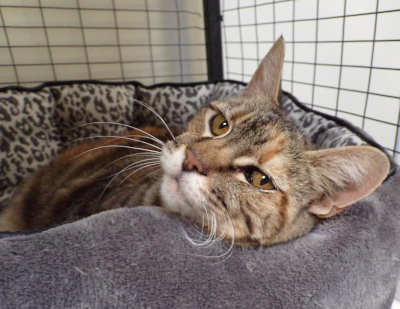
Female domestic shorthair
This 5-year-old female domestic shorthair has a brown tabby coat.
She is in cat room kennel No. 7, ID No. LCAC-A-1770.

Male domestic shorthair kitten
This male domestic shorthair kitten has a white coat and blue eyes.
He is in cat room kennel No. 68a, ID No. LCAC-A-1863.
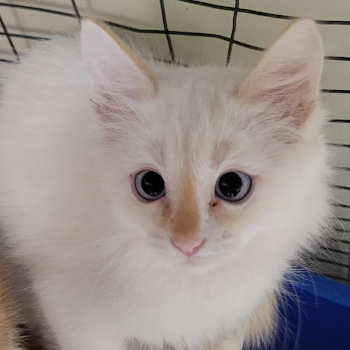
Male domestic shorthair kitten
This male domestic shorthair kitten has a white coat and blue eyes.
He is in cat room kennel No. 68b, ID No. LCAC-A-1864.
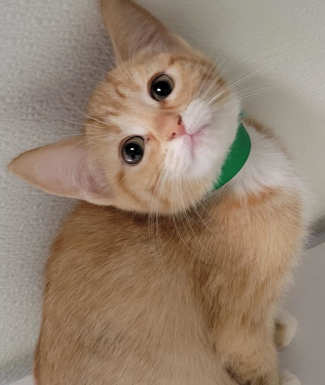
Female domestic shorthair kitten
This female domestic shorthair kitten has an orange tabby coat.
She is in cat room kennel No. 68c, ID No. LCAC-A-1865.

Female domestic shorthair kitten
This female domestic shorthair kitten has an orange tabby coat.
She is in cat room kennel No. 68dc, ID No. LCAC-A-1866.
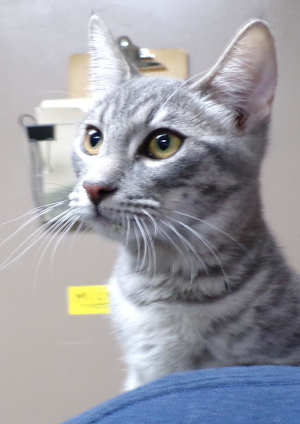
Female domestic shorthair kitten
This female domestic shorthair kitten has a gray tabby coat.
She is in cat room kennel No. 101a, ID No. LCAC-A-1945.
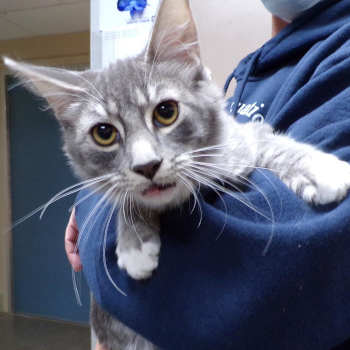
Female domestic shorthair kitten
This female domestic shorthair kitten has a gray tabby coat.
She is in cat room kennel No. 101b, ID No. LCAC-A-1946.
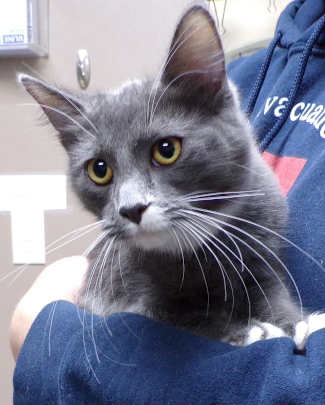
Female domestic shorthair kitten
This female domestic shorthair kitten has a gray tabby coat.
She is in cat room kennel No. 101c, ID No. LCAC-A-1947.
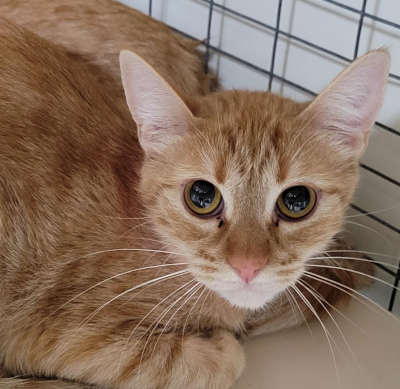
‘Tami’
“Tami” is a 2-year-old female domestic shorthair cat with an orange tabby coat.
She is in cat room kennel No. 114, ID No. LCAC-A-1882.
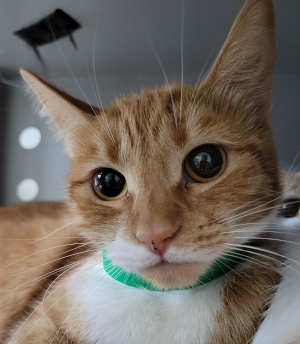
‘Angel Wings’
“Angel Wings” is a 2-year-old female domestic shorthair cat with an orange tabby coat.
She is in cat room kennel No. 114, ID No. LCAC-A-1884.
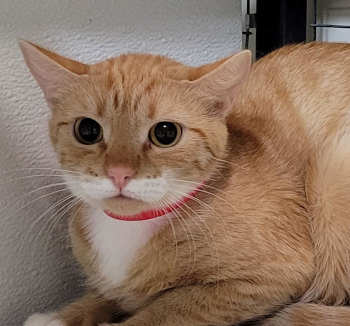
‘Climber’
“Climber is a 2-year-old female domestic shorthair cat with an orange tabby coat.
She is in cat room kennel No. 114, ID No. LCAC-A-1885.
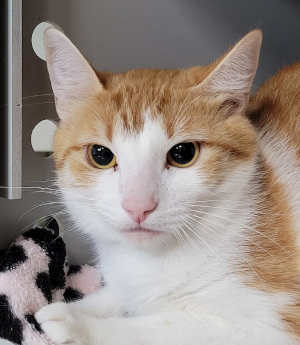
‘Pretty Girl’
“Pretty Girl” is a 2-year-old female domestic shorthair cat with an orange tabby coat.
She is in cat room kennel No. 115, ID No. LCAC-A-1883.
Email Elizabeth Larson at
Dear Lady of the Lake,
The storm season is upon us and I am very glad we are seeing some rain. However, I am concerned about flooding. Where do I find out about local stream and river information? Is there a stream gage in my area and where do I find that data?
“Streaming Stream data” Steve
Hello Steve,
Great questions! Yes, this is the time of year that learning how to get real-time stream and river data is very important. There are many reasons that one would want to get that information, and you touched on the most important one: to best plan for and predict a potential flooding event.
Real-time stream data basically means that a gage in the river is transmitting data as it’s being collected in real-time and that data is then available at an accessible location, usually online. The technology that makes this possible is remarkable and I am grateful every day that the access to this type of information, literally, at our fingertips.
Before we get too deep into the available stream data resources, let’s review some terminology that will be helpful.
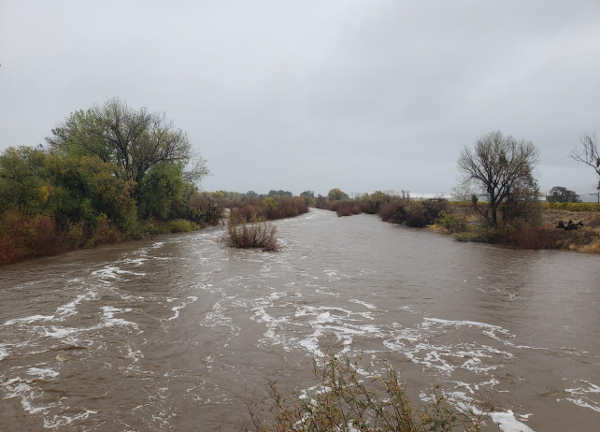
Stream stage = height of the water from the bottom of the stream. During the last major storm event, Sunday, October 24th during the atmospheric river storm event, the stage of Middle Creek got to 11.0 feet. Unlike Clear Lake, stream stage is measured in just plain metrical feet. For more information on the Lake Level measurement and gage information, revisit my previous column about lake levels (October 17, 2021).
Stream flow or discharge = this is velocity or speed of the water and the amount of water flowing past the point where the measurement is being collected, generally at the gage station. For example, the discharge of Middle Creek during the last storm was 1,400 cubic feet per second, or CFS. So in one second, about 1,400 cubic feet of water passed the gage on Middle Creek. That is quite a bit of water for our regional creeks, but to put it in perspective, The Mississippi River has an average discharge of 593,000 ft³/s!!
Prior to the most recent heavy storm event, our local Middle Creek had a CFS of 2 before the storm event. That is very little flow, however most of the other creeks in our area were completely dry, so again, we demonstrate how useful stream gage information can be for both tracking wet and dry conditions.
Forecast = a statement of prediction. For the stream gage, the river forecast visually shows predicted conditions of stream stage, flow, discharge, and sometimes even precipitation based on climate data and expectations for upcoming weather.
Guidance = is the modeled predicted conditions of stream stage and flow. Usually this is based on years of previous data and models, in conjunction with forecast information. Guidance is more of a “sure thing” than forecasted data, but they are both expectations of future conditions and are subject to change.
Types of data and information
Most of the real-time stream gages also collect precipitation measurements (i.e. rain gages), so when the data is uploaded/downloaded by an agency, the rainfall / snow amount can easily be correlated with stream condition, and in some cases help to inform river stage and flow guidance.
Usually stream gages are equipped to transmit their measurement data to a central data center location (through telemetry or satellite). The data is verified and reviewed and then posted online. Some of the gage data is reported in hourly or daily increments. Sometimes there are gages that collect measurements every 10-15 minutes and the data is posted a day or two later. Some gages relay information during critical events - like during an atmospheric river surge!
While some gages only measure and relay the current conditions, there are some organizations that provide more information than just current stream data, like predictive precipitation, future stream stage and predictive stream flow. Prediction data is nice because it allows the user to plan for effectively. This is especially important during flood season.
Water Resource managers use stream stage data regularly. Safe operation of diversion structures, weirs, or dams are dependent on the opening or closing of structures and gates at certain thresholds of stream stage or flow. Predictive gage information is valuable because it allows managers to monitor multiple stream gage sites at once without having to sit on site in potentially hazardous conditions for hours waiting for the threshold to hit.
Prediction data is also wonderful in that it allows the public to use the same tools that are available to researchers and agencies - making it easy for everyone to be best prepared when conditions change are of a concerning nature.
If you live adjacent to a stream or river and are concerned about flooding, I would look into exploring if a stream gage is located somewhere on that stream system. You don’t need to be near a stream gage for the data to provide value, as long as one is located somewhere along the stream.
Some gage stations even have automatic alerts you can set up on your smartphone that will automatically send a text message should a specific river or stream reach a certain stage or flow. A good place to learn about such a tool is USGS WaterAlert.
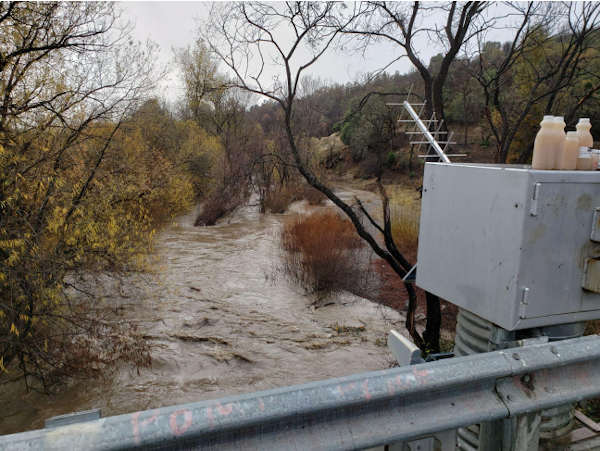
It’s flood season
It’s worth mentioning that last week (Oct 23 to 30) was California’s Flood Preparedness Week as proclaimed by the California Department of Water Resources (CDWR). The CDWR periodically comes to Lake County and trains the County and City staff how to prepare, respond, and mitigate flood emergency events should they occur. It’s a great service provided by the CDWR to our local agencies.
You can learn more about California’s Flood Preparedness Week here and you can learn more about FEMA’s National Flood Insurance Program here.
Just like fires, floods can cause localized and regional disasters, and it’s best to prepare for a flood event in a similar way you prepare for a potential wildfire; know the evacuation routes, pack a go-bag, and most importantly, know how to monitor local conditions during flood season.
Monitoring local streams and rivers
There are lots of resources available online for anyone to access real-time stream and river data. I will share two of my favorites with you. Warning: I am a data nerd and a data snob. I like my data clean and organized and I think everyone should have those same standards when it comes to environmental and public safety data.
You can be a data nerd too if you take the time to explore and learn about these websites and the information they contain, that is the way to get the maximum benefit from them. I recommend finding your nearest stream gage and being familiar with how to understand the data output before you absolutely need it, like during an emergency flood situation.
My personal favorite site is the California Nevada River Forecast Center. I can not emphasize enough how much I love this website; I have all the Lake county gage pages from this website bookmarked on my phone browser and my work and home computers. If this were a movie review, I would give this website five stars, the biggest popcorn, the reddest tomato or whatever the highest rank would be. I think this website is one of the best for monitoring past and current rain and stream conditions and is one of the easiest platforms to understand stage and flow predictions.
The California Nevada River Forecast Center, or CNRFC, is a field office of the National Weather Service located in Sacramento, California. The CNRFC is co-located with the Sacramento NWS Forecast Office, CDWR, and United States Bureau of Reclamation. The NWS is an agency of the National Oceanic Atmospheric and Administration, or NOAA, under the United States Department of Commerce.
This site is great for monitoring flash flooding, river forecasting, managing water resources, or learning about hydrometeorology. Also the maps and graphs are very easy to use and interpret. This site can also provide temperature conditions and predictions which can be used for frost protection planning, for example. Additionally, this site has incorporated some post-fire debris flow warning layers. So if you live in an area that has a burn scar nearby, this website can help you to visualize those areas most at risk to post-fire flooding and debris flows.
This website has a lot to offer, that is best explained visually, so I made a video tutorial that can help you explore some of the key features of the site and how to find regional stream stage and flow data from neighborhood gages here in Lake County.
In this video tutorial, Lady of the Lake demonstrates how to access local stream gage information on both the California Nevada River Forecast Network and California Data Exchange Center Websites.
The next resource is California Data Exchange Center, or CDEC. This website is managed by the California Department of Water Resources and while it does have some prediction power, the majority of gage information here is real-time and archival. However, it’s pretty easy to use and has a large network of gages and data that expands across all of California.
According to the website, “The primary function of the California Data Exchange Center, or CDEC, is to facilitate the collection, storage, and exchange of hydrologic and climate information to support real-time flood management and water supply needs in California.” This is a great tool that does provide the necessary river and flood information for an agency or a member of the public.
One thing about the CDEC is the data is focused on river information. The tabs at the top of the home page provide a lot of the type of data and tools available, and makes it easy to search for what you might need. Historic water data is also easily available on CDEC, making it easy to conduct a study on your local stream or river.
One thing to be aware of with CDEC is that the website can get pretty busy and bogged down during popular use times. If there is a heavy storm event and people and agencies are looking for river data and flood conditions, this website might get really slow and pages might not load as quickly, so be patient.
There are of course other stream gage websites and resources available, but the two I mention today, in my opinion, are some of the best and easiest to use. I hope you take the time to learn about these resources, so that when the rains come down next, you can easily locate the stream condition data and the information that is most useful for you, your family, your business, or your travel plans.
To review, below are some handy links to the stream gages most relevant to those living around Clear Lake. I would suggest opening each website in your browser and bookmarking them. I like to view each one at least once a day during the rainy season, but then again, I am a data nerd.
Scotts Creek Gage California Nevada River Forcast Network
https://www.cnrfc.noaa.gov/graphicalRVF.php?id=SKPC1
Middle Creek Gage California Nevada River Forecast Network
https://www.cnrfc.noaa.gov/graphicalRVF.php?id=MUPC1
Kelsey Creek Gage Californioa Nevada River Forecast Network (Kelsey Creek Upstream of Kelseyville)
https://www.cnrfc.noaa.gov/graphicalRVF.php?id=KCVC1
Kelsey Creek gage CDEC (Downstream at Soda Bay Road)
https://cdec.water.ca.gov/jspplot/jspPlotServlet.jsp?sensor_no=20400&end=&geom=small&interval=2&cookies=cdec01
CDEC for Clear Lake and Cache Creek System (aggregate of 9 River and Lake sites)
https://cdec.water.ca.gov/river/cacheStages.html
Sincerely,
Lady of the Lake
Angela De Palma-Dow is a limnologist (limnology = study of fresh inland waters) who lives and works in Lake County. Born in Northern California, she has a Master of Science from Michigan State University. She is a Certified Lake Manager from the North American Lake Management Society, or NALMS, and she is the current president/chair of the California chapter of the Society for Freshwater Science. She can be reached at
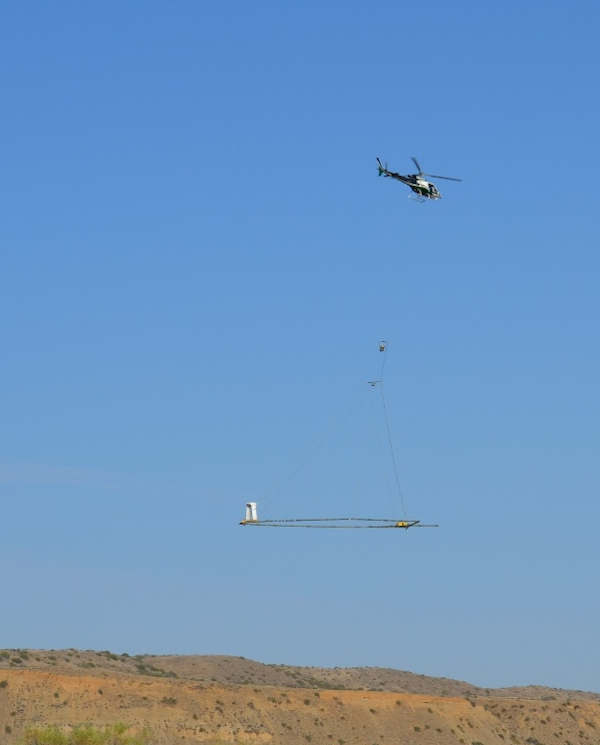
LAKE COUNTY, Calif. — Airborne geophysical surveys will be conducted throughout Lake County in the month of November.
The surveys are expected to start Nov. 8 to 11.
These surveys will help improve understanding the communities’ groundwater resources and support local sustainable groundwater management efforts.
During these geophysical surveys, also referred to as airborne electromagnetic, or AEM, geophysical surveys, data is collected via a large hoop towed beneath a helicopter.
Surveys will only be conducted during daylight hours. The helicopter will not fly over businesses, homes and other inhabitable structures, or confined animal feeding operations.
The helicopter operator follows all established Federal Aviation Administration rules and regulations, and their highest priority is public safety.
For more information about the surveys, visit the California Department of Water Resources AEM project website.
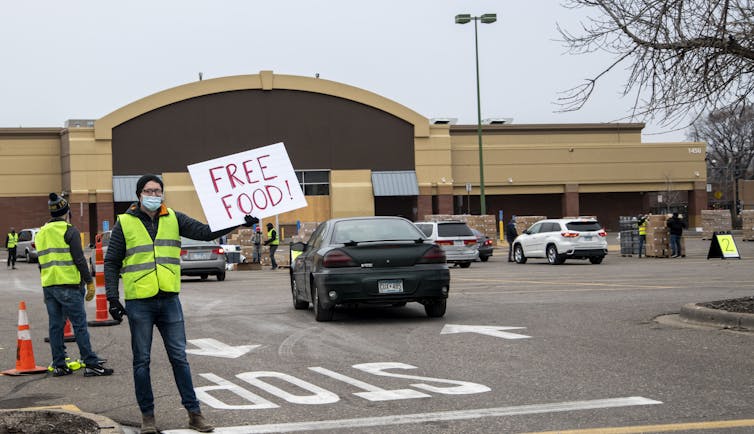
Almost half of U.S. congregations participate in some kind of food distribution program. While the government’s Supplemental Nutritional Assistance Program was helping nearly 42 million Americans purchase groceries in mid-2021, those benefits often don’t cover the full food costs of people facing economic hardship. And not everyone who needs food is eligible for those benefits.
Food banks, food pantries, meal programs and similar initiatives run by churches, synagogues, mosques and other faith-based institutions are among the charitable organizations seeking to fill this gap.
As a social scientist who studies the economic impact of community-based organizations, I have seen even small efforts by local congregations make an outsized difference for people who are experiencing food insecurity – meaning they can’t get enough nutritious food to eat.
Building on my research with Karen Flórez and Kathryn Derose, I have tracked the important role congregations play in getting food to the people who need it. I analyzed data collected through the National Congregations Study – a nationally representative survey of congregations.
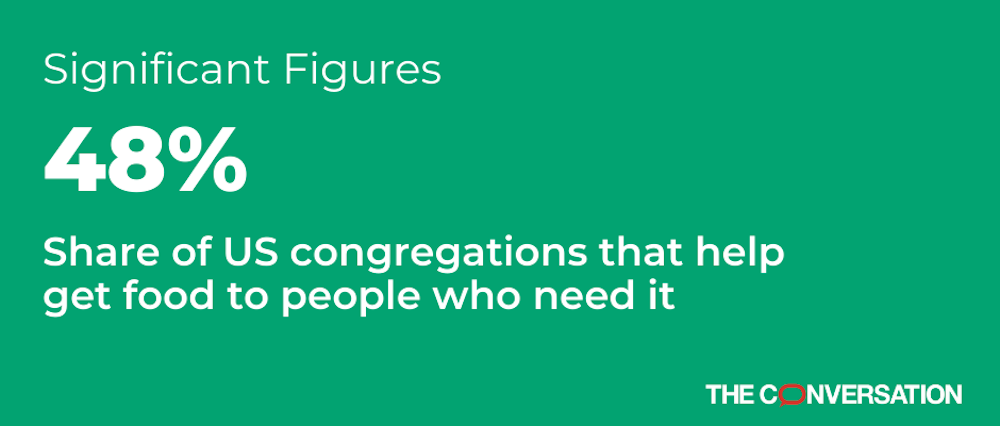
This data indicates that in 2018, 48% of U.S. congregations either had their own food-distribution program or supported efforts run by another organization, such as a food bank or food pantry. That’s over 150,000 congregations.
Unlike government programs, these faith-based efforts generally provide help immediately to anyone who shows up, with no questions asked. For example, the Laboratory Church in Indianapolis runs a mobile food pantry. Like most congregation-based food programs, it requires “no qualifications” or extensive paperwork to receive food.
Growing needs
The share of households in this country experiencing food insecurity has ranged from 10% to 15% since 1995. Surprisingly, the problem did not worsen in 2020 despite the economic upheaval triggered by the COVID-19 pandemic. The share of food-insecure households stood at 10.5% in 2020, the same level as a year earlier.
One major reason why food insecurity didn’t grow was that the government stepped up. It distributed several rounds of relief and stimulus payments, spent more on SNAP and expanded unemployment benefits.
That aid increase is now drying up. The federal government ended the extra jobless benefits that were keeping many families afloat. States are also starting to put SNAP benefits back on a sliding scale, rather than giving everyone who gets them the maximum level allowed.
With additional help waning and inflation rising, the Biden administration is boosting aid to those in need by permanently increasing the average SNAP benefits above pre-pandemic levels.
However, that change won’t help people who aren’t eligible for those benefits, including immigrants and refugees who have been in the country legally for less than five years.
Some congregations focus on serving immigrants by providing legal assistance, language instruction or help finding jobs. These congregations are the most likely to have food programs: 66% of them are addressing food needs, compared to 48% nationally.
On a scale small and large
Congregational food programs come in all sizes.
Consider Crossroads Community Baptist Church in Whitley City, Kentucky, one of the poorest communities in America. The population of this Appalachian town is about 1,200 people, and the church’s food ministry, the Lord’s Café, gives free groceries to about 400 families. Also, when local kids are out of school in the summer, it feeds lunch to 250 children a day, three days a week.
The Crossroads Church in Cincinnati, a megachurch, operates on a bigger scale. It plans to deliver more than 100,000 Thanksgiving meals to those in need in 2021.
[Over 115,000 readers rely on The Conversation’s newsletter to understand the world. Sign up today.]
And Christian churches aren’t the only faith-based groups stepping up to feed the hungry. At the East Plano Islamic Center in Texas, local residents can pick up what they need from a drive-thru food pantry every Saturday. Similarly, Temple Beth Shalom in Austin, Texas, a Reform Jewish congregation, partners with Meals on Wheels to deliver meals to homebound, disabled and other people who need them.
These efforts are motivated by compassion for the hungry. As the economy bounces back, the government will keep playing a vital role in meeting the needs of Americans. So will thousands of local congregations whose efforts and impact often go unacknowledged.
Brad R. Fulton, Associate Professor of Nonprofit Management, Indiana University
This article is republished from The Conversation under a Creative Commons license. Read the original article.
Dogs available for adoption this week include mixes of American bulldog, American Staffordshire terrier, Doberman, German shepherd, Great Pyrenees, hound, husky, Labrador retriever, mastiff, pit bull, Rottweiler and terrier.
Dogs that are adopted from Lake County Animal Care and Control are either neutered or spayed, microchipped and, if old enough, given a rabies shot and county license before being released to their new owner. License fees do not apply to residents of the cities of Lakeport or Clearlake.
The following dogs at the Lake County Animal Care and Control shelter have been cleared for adoption (additional dogs on the animal control website not listed are still “on hold”).
Call Lake County Animal Care and Control at 707-263-0278 or visit the shelter online at http://www.co.lake.ca.us/Government/Directory/Animal_Care_And_Control.htm for information on visiting or adopting.
‘Luna’
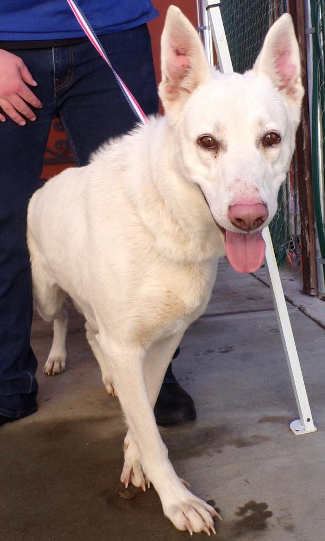
“Luna” is a 3-year-old female German shepherd-Great Pyrenees mix with a white coat.
She is in kennel No. 2, ID No. LCAC-A-1906.
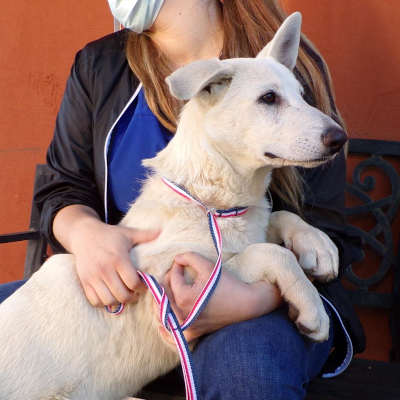
‘Lucy’
“Lucy” is a female German shepherd-Great Pyrenees mix puppy with a white coat.
She is in kennel No. 3, ID No. LCAC-A-1909.
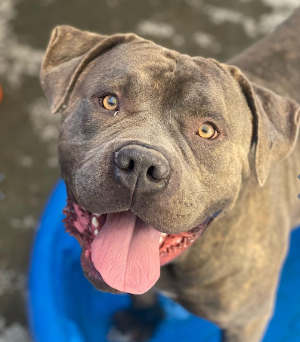
‘George’
“George” is a 1-year-old male American bulldog mix with a short gray coat.
He is in kennel No. 4, ID No. LCAC-A-1430.
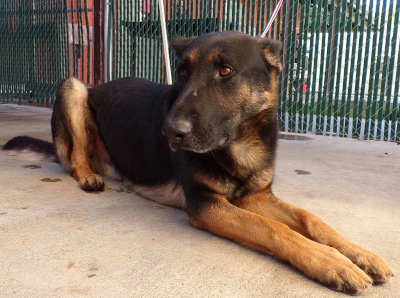
Male German shepherd
This 1-year-old male German shepherd has a black and tan coat.
He is in kennel No. 6, ID No. LCAC-A-1892.
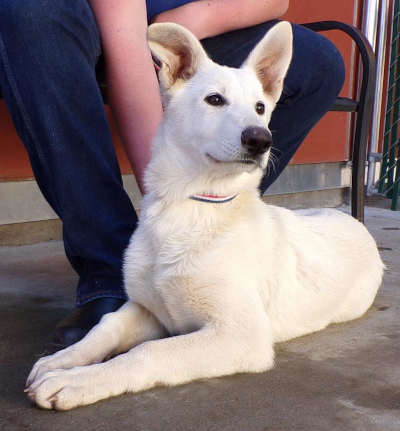
‘Emmy’
“Emmy” is a female German shepherd puppy with a white coat.
She is in kennel No. 8, ID No. LCAC-A-1908.
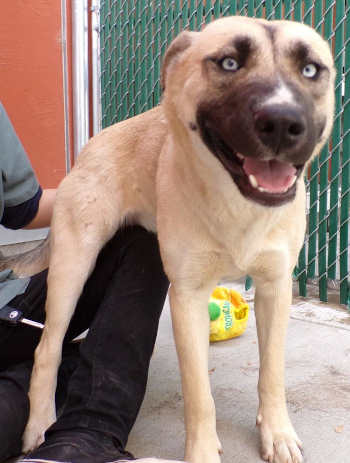
Female shepherd-husky
This female shepherd-husky has a short tan coat with black markings and blue eyes.
She is in kennel No. 9, ID No. LCAC-A-1745.
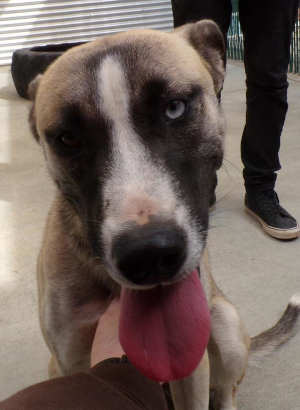
Female shepherd-husky
This 1-year-old female shepherd-husky mix has a short tricolor coat and blue eyes.
She’s in kennel No. 10, ID No. LCAC-A-1746.
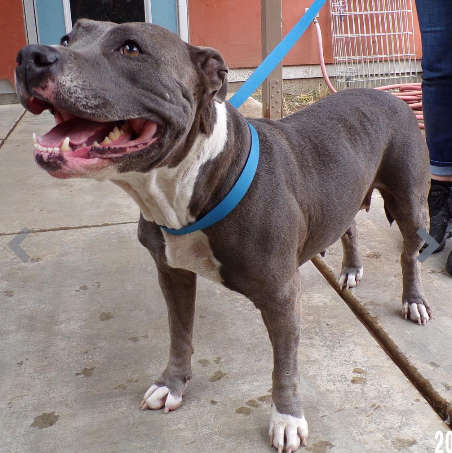
Female American Staffordshire terrier
This 7-year-old female American Staffordshire terrier has a short gray coat and white markings.
She is in kennel No. 11, ID No. LCAC-A-1890.
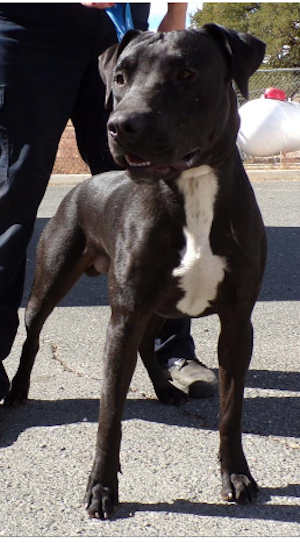
‘Einstine’
“Einstine” is a young Labrador retriever-pit bull mix with s short black coat with white markings.
He is in kennel No. 12, ID No. LCAC-A-1860.
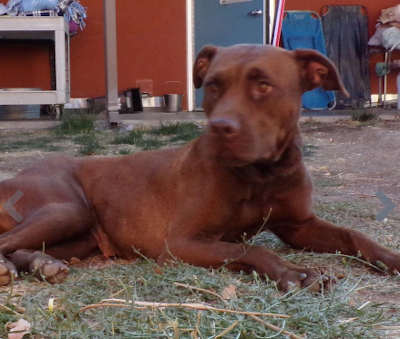
Labrador-pit bull mix
This 5-year-old female chocolate Labrador retriever-pit bull mix has a short chocolate-colored coat.
She is in kennel No. 13, ID No. LCAC-A-1769.
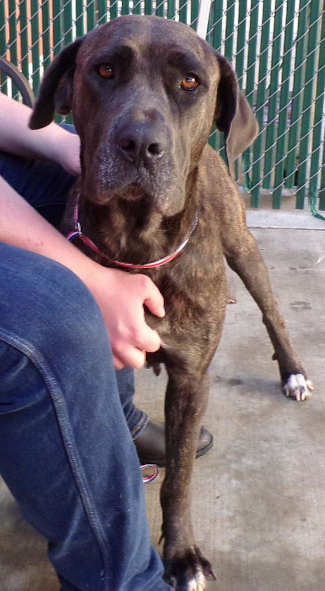
Female mastiff
This 3-year-old female mastiff has a short brindle coat.
She is in kennel No. 15, ID No. LCAC-A-1868.
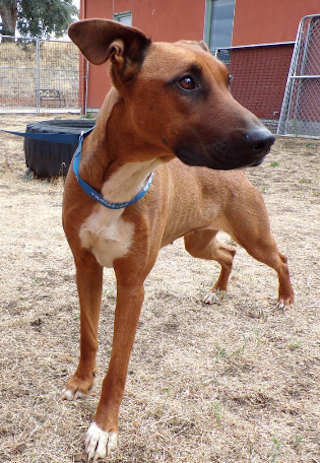
‘Cynthia’
“Cynthia” is a 1-year-old female Doberman pinscher-hound mix.
She is in kennel No. 18, ID No. LCAC-A-1891.

‘Rocky’
“Rocky” is a 1-year-old female German shepherd mix with a short black coat and tan markings.
She is in kennel No. 19, ID No. LCAC-A-1719.
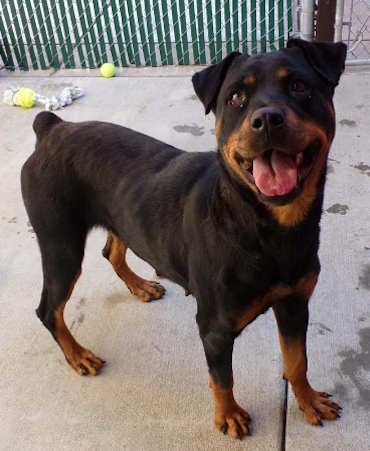
Female Rottweiler
This 5-year-old female Rottweiler has a short black and tan coat.
She is in kennel No. 20, ID No. LCAC-A-1833.
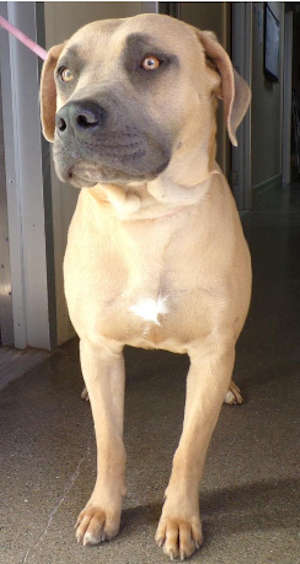
Male mastiff
This 2-year-old male mastiff has a short tan coat.
He is in kennel No. 21, ID No. LCAC-A-1869.
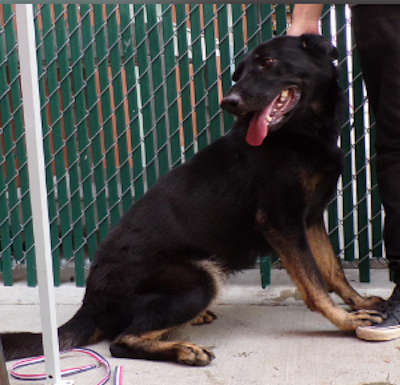
Female German shepherd
This 2-year-old female German shepherd has a short black coat with tan markings.
She is in kennel No. 22, ID No. LCAC-A-1733.
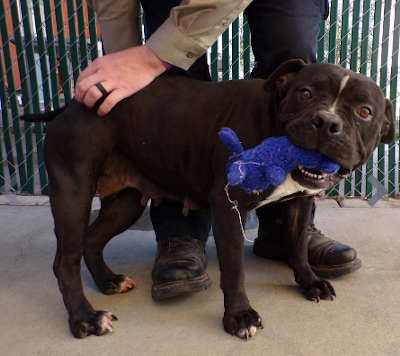
Female American Staffordshire mix
This 3-year-old female American Staffordshire mix has a short black coat with white markings.
She is in kennel No. 23, ID No. LCAC-A-1727.
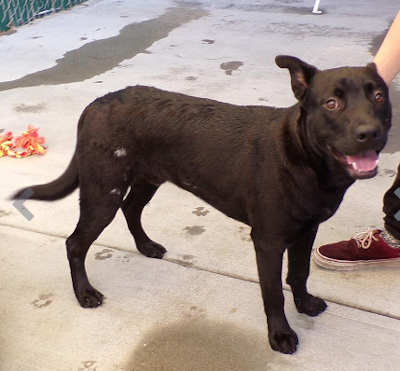
Male husky-pit bull
This 1-year-old male husky-pit bull mix has a short coat.
He is in kennel No. 25, ID No. LCAC-A-1726.
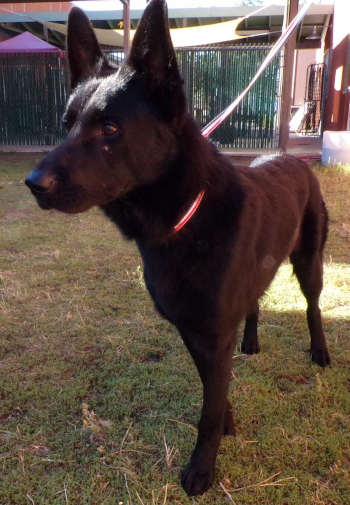
Male German shepherd
This 2-year-old male German shepherd has a black and tan coat.
He is in kennel No. 26, ID No. LCAC-A-1903.
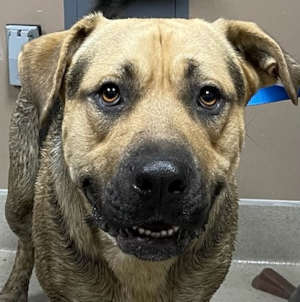
Male shepherd mix
This 2-year-old male shepherd mix has a short black and tan coat.
He is in kennel No. 28, ID No. LCAC-A-1743.
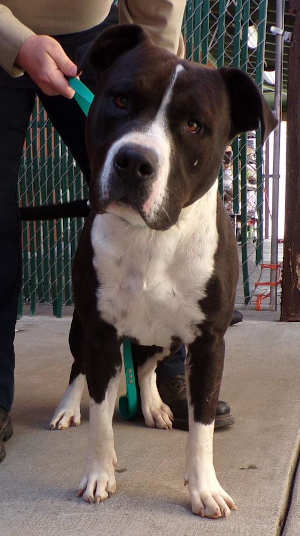
Male pit bull
This young male pit bull has a short black and white coat.
He is in kennel No. 29, ID No. LCAC-A-1699.
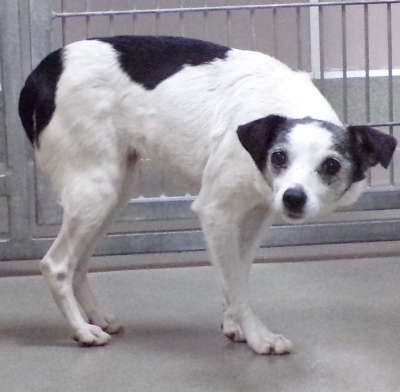
Female terrier
This 10-year-old female terrier has a short black and white coat.
She is in kennel No. 34, ID No. LCAC-A-2068.
Email Elizabeth Larson at