 How to resolve AdBlock issue?
News
LAKE COUNTY, Calif. — This week the Board of Supervisors took action to approve an agreement that will finalize the exchange of a county-owned property in Clearlake for the Lakeport Armory, which will be used as a new headquarters for the sheriff’s office.
Work on the land swap has been in the process for a few years now.
County Deputy Administrative Officer Susan Parker reported that in January 2019, Gov. Gavin Newsom signed an executive order directing the Department of General Services to collaborate with the Department of Housing and Community Development and the California Housing Finance Agency to identify and prioritize excess state-owned property to address the state’s affordable housing shortage.
The Lakeport Armory property, located at 1431 Hoyt Ave. in Lakeport next to the Lake County Jail, was identified as excess state-owned property as the result of that process.
Last year, the county, the city of Clearlake, State Sen. Mike McGuire and state agencies began discussing the possibility of swapping the armory for a vacant, 15.5-acre county-owned property at 15837 18th Ave.
The result was a proposal to move forward with the county and state exchanging the properties.
In January, the Board of Supervisors voted to direct county staff to finalize the plan.
Later that month, the planning commissions for both the city of Clearlake and the county took actions that found the proposal to be in conformance with their respective general plans.
In March, the Board of Supervisors adopted a resolution declaring its intent to exchange the county property with the state.
The state also has entered into an exclusive negotiating agreement with Chelsea Investment Corp. to build a 100-unit affordable housing project on the property, county officials reported.
The Carlsbad-based company reported that it has developed more than 100 affordable communities, providing housing for special needs, senior and rural populations, along with mixed-use development, at a cost of more than $2 billion.
The property on 18th Avenue had, at one time, been the site where local officials had hoped to build veterans housing.
It’s centrally located in the city, near Clearlake’s largest shopping center, Adventist Health Clear Lake Hospital and Woodland Community College’s Clear Lake Campus. A new transit hub that will cover a service area from the Bay Area to Shasta County also is slated to be built nearby.
On Tuesday, the board approved an agreement that allows the county and state to convey the properties to each other.
Sheriff Brian Martin was on hand to offer his support. “I think the general public thinks that these things are simple,” Martin said.
He added, “It’s anything but simple,” and said many hardworking people at the county and state levels were part of bringing the agreement together.
Martin said it’s a win-win, allowing the sheriff’s office to move from its current location — at 1220 Martin St. — into a more suitable location while opening up additional office space for the county.
“There’s really no downside to this,” Martin said.
County Administrative Officer Carol Huchingson said that if the board approved the agreement on Tuesday, it would allow the developer to pursue funding that had a Nov. 1 application deadline.
Board Chair Bruno Sabatier said there had been four qualified and interested developers in the process.
He said the 100-unit development will have an amazing impact on the city’s housing needs — noting other projects also are in process — and also will address the county’s office space issues.
There was no public comment before Supervisor Tina Scott moved to approve the agreement. Supervisor Jessica Pyska seconded and the board approved the agreement unanimously.
Sheriff Martin told Lake County News in a previous interview that the process of moving into the armory will take a few years as it’s a “significant project” that will require improvements. He said the county was looking at funding sources to make the renovations.
The armory has many amenities the Martin Street location doesn’t have, including a commercial kitchen, a vault and storage.
Email Elizabeth Larson atThis email address is being protected from spambots. You need JavaScript enabled to view it. . Follow her on Twitter, @ERLarson, or Lake County News, @LakeCoNews.
Work on the land swap has been in the process for a few years now.
County Deputy Administrative Officer Susan Parker reported that in January 2019, Gov. Gavin Newsom signed an executive order directing the Department of General Services to collaborate with the Department of Housing and Community Development and the California Housing Finance Agency to identify and prioritize excess state-owned property to address the state’s affordable housing shortage.
The Lakeport Armory property, located at 1431 Hoyt Ave. in Lakeport next to the Lake County Jail, was identified as excess state-owned property as the result of that process.
Last year, the county, the city of Clearlake, State Sen. Mike McGuire and state agencies began discussing the possibility of swapping the armory for a vacant, 15.5-acre county-owned property at 15837 18th Ave.
The result was a proposal to move forward with the county and state exchanging the properties.
In January, the Board of Supervisors voted to direct county staff to finalize the plan.
Later that month, the planning commissions for both the city of Clearlake and the county took actions that found the proposal to be in conformance with their respective general plans.
In March, the Board of Supervisors adopted a resolution declaring its intent to exchange the county property with the state.
The state also has entered into an exclusive negotiating agreement with Chelsea Investment Corp. to build a 100-unit affordable housing project on the property, county officials reported.
The Carlsbad-based company reported that it has developed more than 100 affordable communities, providing housing for special needs, senior and rural populations, along with mixed-use development, at a cost of more than $2 billion.
The property on 18th Avenue had, at one time, been the site where local officials had hoped to build veterans housing.
It’s centrally located in the city, near Clearlake’s largest shopping center, Adventist Health Clear Lake Hospital and Woodland Community College’s Clear Lake Campus. A new transit hub that will cover a service area from the Bay Area to Shasta County also is slated to be built nearby.
On Tuesday, the board approved an agreement that allows the county and state to convey the properties to each other.
Sheriff Brian Martin was on hand to offer his support. “I think the general public thinks that these things are simple,” Martin said.
He added, “It’s anything but simple,” and said many hardworking people at the county and state levels were part of bringing the agreement together.
Martin said it’s a win-win, allowing the sheriff’s office to move from its current location — at 1220 Martin St. — into a more suitable location while opening up additional office space for the county.
“There’s really no downside to this,” Martin said.
County Administrative Officer Carol Huchingson said that if the board approved the agreement on Tuesday, it would allow the developer to pursue funding that had a Nov. 1 application deadline.
Board Chair Bruno Sabatier said there had been four qualified and interested developers in the process.
He said the 100-unit development will have an amazing impact on the city’s housing needs — noting other projects also are in process — and also will address the county’s office space issues.
There was no public comment before Supervisor Tina Scott moved to approve the agreement. Supervisor Jessica Pyska seconded and the board approved the agreement unanimously.
Sheriff Martin told Lake County News in a previous interview that the process of moving into the armory will take a few years as it’s a “significant project” that will require improvements. He said the county was looking at funding sources to make the renovations.
The armory has many amenities the Martin Street location doesn’t have, including a commercial kitchen, a vault and storage.
Email Elizabeth Larson at
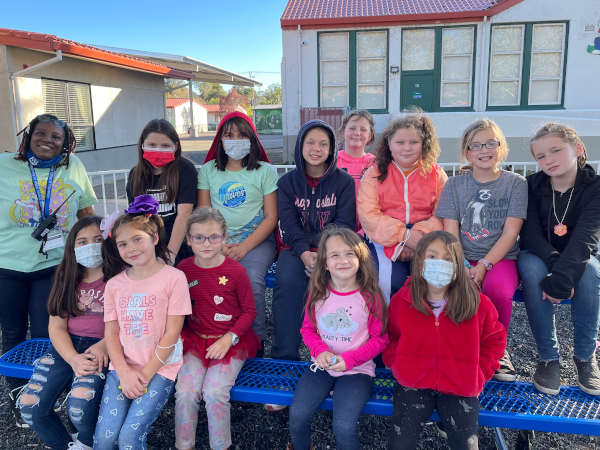
CLEARLAKE, Calif. — Hope Rising’s cradle to career initiative, Smart Start | Bright Future has launched Lake County’s first-ever partner-driven After-School Hub.
“That is what the Smart Start | Bright Future initiative is all about. It is about collaboration, partnership and lifting each other up as a community,” said Faith Hornby, Hope Rising executive director.
The After-School Hub officially launched on Oct. 11 at the Burns Valley Elementary School in the city of Clearlake in the Konocti Unified School District.
The Smart Start After-School Hub is designed to provide in-depth, enriching experiences for Burns Valley K-7th grade students.
“To be engaged in school, the students have to want to come to school, so they need a safe place to go after school to get excited about the next day of learning,” said Becky Salato, Konocti Unified superintendent.
The Smart Start After-School Hub is just one of the four-pillars that make up the Smart Start | Bright Future initiative.
The Smart Start | Bright Future initiative kicked off in June 2021 with its first two pillars, the Smart Start Eligibility Wizard and Smart Start Navigator.
The Smart Start Eligibility Wizard, created in partnership with First 5 Lake County, helps parents and caregivers identify services and programs their children are eligible to receive.
The Smart Start Navigator is Courtney Parker from the Lake Family Resource Center. She provides education and resources to new mothers with children ages 0-5 and/or pregnant women in Lake County.
This initiative continues to support the youth in Lake County from birth to graduation and beyond.
The next step will be to launch in January the fourth pillar, 10,000 Degrees, is a nationally recognized leader in supporting students from low-income backgrounds to and through college and beyond. This program will be implemented at Lower Lake High School.
This initiative is made possible by the Founders Circle and Hope Rising sponsors. The Founders Circle includes Adventist Health Clearlake, Redwood Credit Union, Senator Mike McGuire’s office and the John Jordan Foundation.
The mission for Hope Rising Lake County is to mobilize and inspire community partnerships and actions that support individual, collective and community health and wellness.
LAKE COUNTY, Calif. — A fire in an underground utility vault on Wednesday caused a power outage and a traffic shutdown in a part of Clearlake.
Clearlake Police Chief Andrew White said the fire occurred in an underground Pacific Gas and Electric electrical vault located on Lakeshore Drive in the roadway at Olympic Drive.
He said two passersby reported it to the police department as smoke coming from the vault.
“When we arrived on scene, we saw active fire in the vault. Lake County Fire and PG&E responded,” White said.
White said the incident resulted in a power outage along Lakeshore Drive and the surrounding area.
PG&E spokeswoman Deanna Contreras told Lake County News that the power was disrupted just after noon on Wednesday to 2,767 customers.
Contreras said power was restored to all of those customers by 1:40 p.m. Wednesday.
Police also issued a Nixle urging motorists to avoid the area while repairs were underway.
“The cause of the outage was ultimately equipment failure with underground equipment in a vault near Country Club Drive and 12th street in Clearlake,” Contreras said. “A faulty cable came into contact with water and flashed, otherwise known as a flashover, which produced smoke. PG&E worked with first responders to ensure the area was safe while we made repairs and replaced several pieces of the underground equipment safely.”
Email Elizabeth Larson atThis email address is being protected from spambots. You need JavaScript enabled to view it. . Follow her on Twitter, @ERLarson, or Lake County News, @LakeCoNews.
Clearlake Police Chief Andrew White said the fire occurred in an underground Pacific Gas and Electric electrical vault located on Lakeshore Drive in the roadway at Olympic Drive.
He said two passersby reported it to the police department as smoke coming from the vault.
“When we arrived on scene, we saw active fire in the vault. Lake County Fire and PG&E responded,” White said.
White said the incident resulted in a power outage along Lakeshore Drive and the surrounding area.
PG&E spokeswoman Deanna Contreras told Lake County News that the power was disrupted just after noon on Wednesday to 2,767 customers.
Contreras said power was restored to all of those customers by 1:40 p.m. Wednesday.
Police also issued a Nixle urging motorists to avoid the area while repairs were underway.
“The cause of the outage was ultimately equipment failure with underground equipment in a vault near Country Club Drive and 12th street in Clearlake,” Contreras said. “A faulty cable came into contact with water and flashed, otherwise known as a flashover, which produced smoke. PG&E worked with first responders to ensure the area was safe while we made repairs and replaced several pieces of the underground equipment safely.”
Email Elizabeth Larson at
On Thursday, Rep. Mike Thompson (CA-05) reported on the updated Build Back Better Framework after attending a meeting with President Joe Biden on Capitol Hill.
The framework includes Thompson’s GREEN Act, which his office said is historic legislation to reduce greenhouse gas emissions and address climate change.
“Today, I was honored to again meet with President Biden and hear directly from him about the updated Build Back Better Act. He outlined a bill that is a direct investment in the middle class that will support education for our kids, cut taxes for working families, help people get back to work and make a historic effort to address climate change. I am proud to support this framework and look forward to voting to pass this bill.
“The Build Back Better Act also includes my GREEN Act, the largest investment in renewable energy and decarbonization in U.S. history to help us address the climate crisis. It uses the tax code to incentivize renewable energy and energy efficiency and will be a game changer in our work to combat climate change. I was proud to work alongside another leader on green energy, Senate Finance Committee Chairman Ron Wyden, whose expertise and commitment to climate issues were invaluable to the development of this package. Overall, this investment through my legislation allows us to meet President Biden’s goal of reducing greenhouse gas emissions by 50 percent by the year 2030.
“Though this bill does not include everything I wanted, I am proud of the change that it will bring about, for workers, for families, for children and for generations to come. We must have a vote and deliver this bill for the American people as soon as possible,” Thompson said.
The Build Back Better Framework invests in children, families and caregiving through:
— Universal preschool for all 3- and 4-year-olds,
— Affordable high-quality child care,
— Affordable, high-quality care for hundreds of thousands of older Americans and people with disabilities in their homes and communities, and
— An expanded Child Tax Credit:
Clean energy and combating climate change through:
— $320 billion in clean energy tax credits,
— $105 billion in resilience investments,
— $110 billion in investments and incentives for clean energy technology, manufacturing, and supply chains, and
— $20 billion in clean energy procurement.
Affordable care for millions of hardworking Americans through:
— Affordable Care Act premium tax credits and
— Allowing Medicare to cover the cost of hearing.
Bringing down costs, reducing inflationary pressures, and strengthening the middle class through:
— $150 billion investment in housing affordability and reducing price pressures, including in rural areas,
— Education beyond high school and workforce, and
— Earned Income Tax Credit for 17 million low-wage workers.
— An immigration system consistent with the Senate’s reconciliation rules.
To learn more about the Build Back Better framework, click here.
To learn more about the GREEN Act, you can click here.
Thompson represents California’s Fifth Congressional District, which includes all or part of Contra Costa, Lake, Napa, Solano and Sonoma counties.
The framework includes Thompson’s GREEN Act, which his office said is historic legislation to reduce greenhouse gas emissions and address climate change.
“Today, I was honored to again meet with President Biden and hear directly from him about the updated Build Back Better Act. He outlined a bill that is a direct investment in the middle class that will support education for our kids, cut taxes for working families, help people get back to work and make a historic effort to address climate change. I am proud to support this framework and look forward to voting to pass this bill.
“The Build Back Better Act also includes my GREEN Act, the largest investment in renewable energy and decarbonization in U.S. history to help us address the climate crisis. It uses the tax code to incentivize renewable energy and energy efficiency and will be a game changer in our work to combat climate change. I was proud to work alongside another leader on green energy, Senate Finance Committee Chairman Ron Wyden, whose expertise and commitment to climate issues were invaluable to the development of this package. Overall, this investment through my legislation allows us to meet President Biden’s goal of reducing greenhouse gas emissions by 50 percent by the year 2030.
“Though this bill does not include everything I wanted, I am proud of the change that it will bring about, for workers, for families, for children and for generations to come. We must have a vote and deliver this bill for the American people as soon as possible,” Thompson said.
The Build Back Better Framework invests in children, families and caregiving through:
— Universal preschool for all 3- and 4-year-olds,
— Affordable high-quality child care,
— Affordable, high-quality care for hundreds of thousands of older Americans and people with disabilities in their homes and communities, and
— An expanded Child Tax Credit:
Clean energy and combating climate change through:
— $320 billion in clean energy tax credits,
— $105 billion in resilience investments,
— $110 billion in investments and incentives for clean energy technology, manufacturing, and supply chains, and
— $20 billion in clean energy procurement.
Affordable care for millions of hardworking Americans through:
— Affordable Care Act premium tax credits and
— Allowing Medicare to cover the cost of hearing.
Bringing down costs, reducing inflationary pressures, and strengthening the middle class through:
— $150 billion investment in housing affordability and reducing price pressures, including in rural areas,
— Education beyond high school and workforce, and
— Earned Income Tax Credit for 17 million low-wage workers.
— An immigration system consistent with the Senate’s reconciliation rules.
To learn more about the Build Back Better framework, click here.
To learn more about the GREEN Act, you can click here.
Thompson represents California’s Fifth Congressional District, which includes all or part of Contra Costa, Lake, Napa, Solano and Sonoma counties.
The California Highway Patrol and the California Office of Traffic Safety are partnering on a campaign aimed at reducing the number of crashes caused by impaired drivers.
The Impaired Driving Reduction, or IDR, education and enforcement campaign, which began Oct. 1, 2021, continues through Sept. 30, 2022.
In 2019, impaired driving crashes were responsible for 568 deaths and 11,444 injuries within the CHP’s jurisdiction throughout the state.
Each one of these injuries and deaths represents a preventable tragedy and a continued need to focus efforts on reducing impaired driving in California.
“This grant will help support the Department’s mission by strengthening education and enforcement efforts throughout the state,” CHP Commissioner Amanda Ray said. “As a public safety organization, we will continue to do everything in our power to promote safety for all on California’s roadways.”
In 2020, more than 90,000 violations for driving under the influence of alcohol and/or drugs were cited by CHP officers through California.
The IDR grant provides the CHP with funding to conduct additional saturation patrols, checkpoints and traffic safety education efforts throughout California.
These efforts are designed to remove impaired drivers from the roadway and educate the
public regarding the dangers of DUI.
Additionally, the CHP will actively participate in California’s Drive Sober or Get Pulled Over public awareness campaign.
The CHP wants to remind the public, “DUI Doesn’t Just Mean Booze.”
Alcohol, cannabis, certain prescription and over-the-counter medications, illegal drugs, or any combination can affect your ability to drive and will result in an arrest if you are under the influence.
Always make good decisions and plan ahead by designating a sober driver, take public transportation, or call a taxi or ride-share. There is always a better option than getting behind the wheel while impaired.
The public is encouraged to call 9-1-1 if they observe a suspected impaired driver. Be prepared to provide the dispatcher a location, direction of travel, and vehicle description.
Funding for this program was provided by a grant from the California Office of Traffic Safety, through the National Highway Traffic Safety Administration.
The Impaired Driving Reduction, or IDR, education and enforcement campaign, which began Oct. 1, 2021, continues through Sept. 30, 2022.
In 2019, impaired driving crashes were responsible for 568 deaths and 11,444 injuries within the CHP’s jurisdiction throughout the state.
Each one of these injuries and deaths represents a preventable tragedy and a continued need to focus efforts on reducing impaired driving in California.
“This grant will help support the Department’s mission by strengthening education and enforcement efforts throughout the state,” CHP Commissioner Amanda Ray said. “As a public safety organization, we will continue to do everything in our power to promote safety for all on California’s roadways.”
In 2020, more than 90,000 violations for driving under the influence of alcohol and/or drugs were cited by CHP officers through California.
The IDR grant provides the CHP with funding to conduct additional saturation patrols, checkpoints and traffic safety education efforts throughout California.
These efforts are designed to remove impaired drivers from the roadway and educate the
public regarding the dangers of DUI.
Additionally, the CHP will actively participate in California’s Drive Sober or Get Pulled Over public awareness campaign.
The CHP wants to remind the public, “DUI Doesn’t Just Mean Booze.”
Alcohol, cannabis, certain prescription and over-the-counter medications, illegal drugs, or any combination can affect your ability to drive and will result in an arrest if you are under the influence.
Always make good decisions and plan ahead by designating a sober driver, take public transportation, or call a taxi or ride-share. There is always a better option than getting behind the wheel while impaired.
The public is encouraged to call 9-1-1 if they observe a suspected impaired driver. Be prepared to provide the dispatcher a location, direction of travel, and vehicle description.
Funding for this program was provided by a grant from the California Office of Traffic Safety, through the National Highway Traffic Safety Administration.
On Wednesday, on the first day of a three-day meeting, the California Citizens Redistricting Commission sat down to begin working through the process of turning proposed groupings of communities across the state into new district maps for state and federal representation.
The 14-member commission met with staff in Los Angeles but the meeting was available on its website. The public will be able to watch all three days of the meeting there.
On Tuesday, the commission released “visualizations,” which are mapped scenarios for how communities could be grouped into new districts for Congress, State Assembly and the state Senate.
Those visualizations weren’t received well by local officials on Tuesday, as they showed Lake County grouped far differently than it is currently.
That prompted the Board of Supervisors to vote to send a letter to the commission asking it to move the county into other potential district boundaries.
Under the visualizations presented on Tuesday, Lake might be placed with a large group of North Coast counties for Congress and the State Assembly, and with Napa and Solano counties for the state Senate. All of its current alignments would no longer be in place.
When the commission began its meeting on Wednesday afternoon, Chair Trena Turner told the members, “Time is not our friend,” in light of the amount of work to be done.
After a closed session that ran nearly an hour and a half, the commission returned to open session to begin going over Voting Rights Act requirements and public input statistics.
They started with the State Assembly Districts for the North Coast region, the large area running up the coast that includes Lake, Mendocino, Humboldt, Del Norte, Trinity, and portions of Siskiyou and Sonoma counties.
Commissioner Pedro Toledo, who hails from Sonoma County, said Lake has provided testimony that it wants to be paired with Sonoma.
As the discussion began, staff pointed out challenges with making large shifts, as it would have a large ripple effect and impact other areas. They also said that the commission’s previous direction had been to not have boundaries run across the Golden Gate Bridge.
Later in the meeting, some of the commissioners said they were willing to cross the bridge if necessary to get the right boundaries dialed in.
As the meeting progressed, some different options and alternatives were suggested.
One that appeared to pique interest was made by Commissioner Jane Andersen, a civil and structural engineer who lives in Berkeley, who suggested creating a wine country district that could include parts of Sonoma, Napa, Lake and Yolo counties.
Other commissioners suggested modifications to add more portions of Sonoma County, and as the discussion progressed, it was suggested that there might be more than one wine country district.
No firm decisions were made and the commission adjourned early Wednesday evening.
The meeting is scheduled to take place from 11 a.m. to 6 p.m. Thursday and 9:30 a.m. to 4:30 p.m.
Toledo told Lake County News in a Tuesday interview that the work being done at this week’s meeting will be used to draw maps in the coming weeks.
Those maps, in turn, will be the basis for getting to the final district boundaries, which must be completed in December, as they will be used for the June primaries.
Email Elizabeth Larson atThis email address is being protected from spambots. You need JavaScript enabled to view it. . Follow her on Twitter, @ERLarson, or Lake County News, @LakeCoNews.
The 14-member commission met with staff in Los Angeles but the meeting was available on its website. The public will be able to watch all three days of the meeting there.
On Tuesday, the commission released “visualizations,” which are mapped scenarios for how communities could be grouped into new districts for Congress, State Assembly and the state Senate.
Those visualizations weren’t received well by local officials on Tuesday, as they showed Lake County grouped far differently than it is currently.
That prompted the Board of Supervisors to vote to send a letter to the commission asking it to move the county into other potential district boundaries.
Under the visualizations presented on Tuesday, Lake might be placed with a large group of North Coast counties for Congress and the State Assembly, and with Napa and Solano counties for the state Senate. All of its current alignments would no longer be in place.
When the commission began its meeting on Wednesday afternoon, Chair Trena Turner told the members, “Time is not our friend,” in light of the amount of work to be done.
After a closed session that ran nearly an hour and a half, the commission returned to open session to begin going over Voting Rights Act requirements and public input statistics.
They started with the State Assembly Districts for the North Coast region, the large area running up the coast that includes Lake, Mendocino, Humboldt, Del Norte, Trinity, and portions of Siskiyou and Sonoma counties.
Commissioner Pedro Toledo, who hails from Sonoma County, said Lake has provided testimony that it wants to be paired with Sonoma.
As the discussion began, staff pointed out challenges with making large shifts, as it would have a large ripple effect and impact other areas. They also said that the commission’s previous direction had been to not have boundaries run across the Golden Gate Bridge.
Later in the meeting, some of the commissioners said they were willing to cross the bridge if necessary to get the right boundaries dialed in.
As the meeting progressed, some different options and alternatives were suggested.
One that appeared to pique interest was made by Commissioner Jane Andersen, a civil and structural engineer who lives in Berkeley, who suggested creating a wine country district that could include parts of Sonoma, Napa, Lake and Yolo counties.
Other commissioners suggested modifications to add more portions of Sonoma County, and as the discussion progressed, it was suggested that there might be more than one wine country district.
No firm decisions were made and the commission adjourned early Wednesday evening.
The meeting is scheduled to take place from 11 a.m. to 6 p.m. Thursday and 9:30 a.m. to 4:30 p.m.
Toledo told Lake County News in a Tuesday interview that the work being done at this week’s meeting will be used to draw maps in the coming weeks.
Those maps, in turn, will be the basis for getting to the final district boundaries, which must be completed in December, as they will be used for the June primaries.
Email Elizabeth Larson at