 How to resolve AdBlock issue?
News

The NASA-funded Asteroid Terrestrial-impact Last Alert System, or ATLAS — a state-of-the-art asteroid detection system operated by the University of Hawaiʻi Institute for Astronomy for the agency’s Planetary Defense Coordination Office — has reached a new milestone by becoming the first survey capable of searching the entire dark sky every 24 hours for near-Earth objects, r NEOs, that could pose a future impact hazard to Earth.
Now comprised of four telescopes, ATLAS has expanded its reach to the southern hemisphere from the two existing northern-hemisphere telescopes on Haleakalā and Maunaloa in Hawai’i to include two additional observatories in South Africa and Chile.
“An important part of planetary defense is finding asteroids before they find us, so if necessary, we can get them before they get us” said Kelly Fast, Near-Earth Object Observations Program Manager for NASA’s Planetary Defense Coordination Office. “With the addition of these two telescopes, ATLAS is now capable of searching the entire dark sky every 24 hours, making it an important asset for NASA’s continuous effort to find, track, and monitor NEOs.”
University of Hawaiʻi Institute for Astronomy, or UH IfA, developed the first two ATLAS telescopes in Hawaiʻi under a 2013 grant from NASA’s Near-Earth Objects Observations Program, now part of NASA’s Planetary Defense Coordination Office, or PDCO, and the two facilities on Haleakalā and Maunaloa, respectively, became fully operational in 2017.
After several years of successful operation in Hawaiʻi, IfA competed for additional NASA funds to build two more telescopes in the southern hemisphere.
IfA sought partners to host these telescopes, and selected the South African Astronomical Observatory, or SAAO, in South Africa and a multi-institutional collaboration in Chile. The ATLAS presence augments already substantial astronomical capability in both countries.
Each of the four ATLAS telescopes can image a swath of sky 100 times larger than the full moon in a single exposure. The completion of the two final telescopes, which are located at Sutherland Observing Station in South Africa and El Sauce Observatory in Chile, enable ATLAS to observe the night sky when it is daytime in Hawai‘i.
To date, the ATLAS system has discovered more than 700 near-Earth asteroids and 66 comets, along with detection of 2019 MO and 2018 LA, two very small asteroids that actually impacted Earth.
The system is specially designed to detect objects that approach very close to Earth — closer than the distance to the Moon, about 240,000 miles or 384,000 kilometers away.
On Jan. 22, ATLAS-Sutherland in South Africa discovered its first NEO, 2022 BK, a 100-meter asteroid that poses no threat to Earth.
The addition of the new observatories to the ATLAS system comes at a time when the agency’s Planetary Defense efforts are on the rise.
NASA’s Double Asteroid Redirection Test, or DART —the world’s first full-scale mission to test a technology for defending Earth against potential asteroid impacts — launched Nov. 24, 2021, on a SpaceX Falcon 9 rocket from Space Launch Complex 4 East at Vandenberg Space Force Base in California.
DART will deflect a known asteroid, which is not a threat to Earth, to slightly change the asteroid’s motion in a way that can be accurately measured using ground-based telescopes.
Additionally, work on the agency’s Near-Earth Object Surveyor space telescope, or NEO Surveyor, is underway after receiving authorization to move forward into Preliminary Design, known as Key Decision Point-B.
Once complete, the infrared space telescope will expedite the agency’s ability to discover and characterize most of the potentially hazardous NEOs, including those that may approach Earth from the daytime sky.
“We have not yet found any significant asteroid impact threat to Earth, but we continue to search for that sizable population we know is still to be found. Our goal is to find any possible impact years to decades in advance so it can be deflected with a capability using technology we already have, like DART,” said Lindley Johnson, planetary defense officer at NASA Headquarters. “DART, NEO Surveyor, and ATLAS are all important components of NASA’s work to prepare Earth should we ever be faced with an asteroid impact threat.”
The University of Hawai’i ATLAS is funded through a grant from the Near-Earth Object Observations Program administered by NASA’s PDCO. The Johns Hopkins Applied Physics Lab manages the DART mission for NASA's PDCO as a project of the agency’s Planetary Missions Program Office, or PMPO.
NEO Surveyor is being developed by NASA’s Jet Propulsion Laboratory in Southern California and the University of Arizona and managed by NASA’s PMPO with program oversight by the PDCO. NASA established the PDCO in 2016 to manage the agency‘s ongoing efforts in Planetary Defense.
For more information, visit https://www.nasa.gov/planetarydefense. Follow NASA Asteroid Watch on Twitter at @AsteroidWatch.
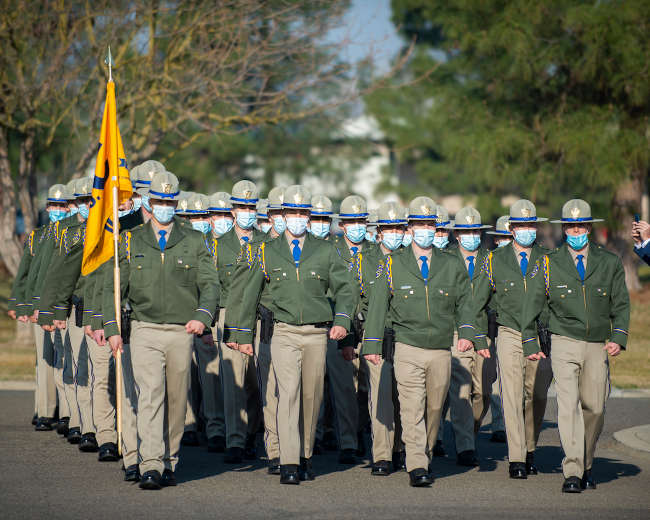
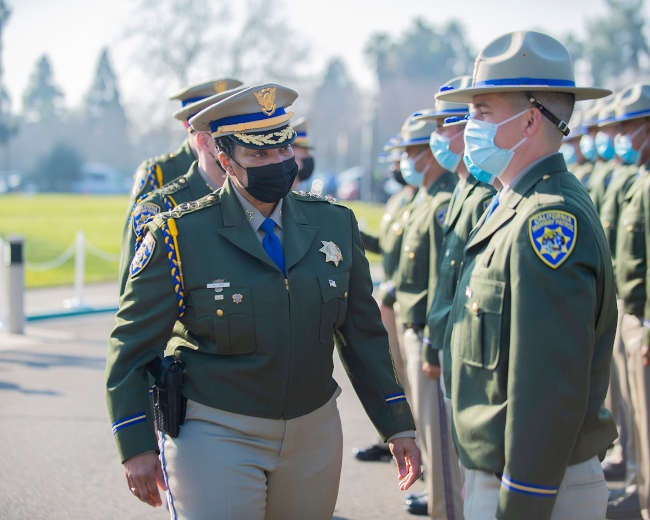
NORTHERN CALIFORNIA — The California Highway Patrol’s 142 newest officers graduated from the CHP Academy on Friday and, after the swearing-in ceremony, received their badges following 27 weeks of training.
Two of the cadets have been assigned to the Clear Lake Area office, Officer Zachary Cornell and Officer Jared Wade, said CHP spokesperson Jaime Coffee.
Coffee said the two new officers will report for duty in Lake County on Monday, Feb. 14.
With family and friends looking on, each cadet was promoted to the rank of officer and took their first steps as California’s newest defenders of the law.
“I have pride knowing that these women and men will be deploying throughout our great state to serve the people of California,” CHP Commissioner Amanda Ray said. “These new officers answered the call and are embarking on a time-honored tradition of service.”
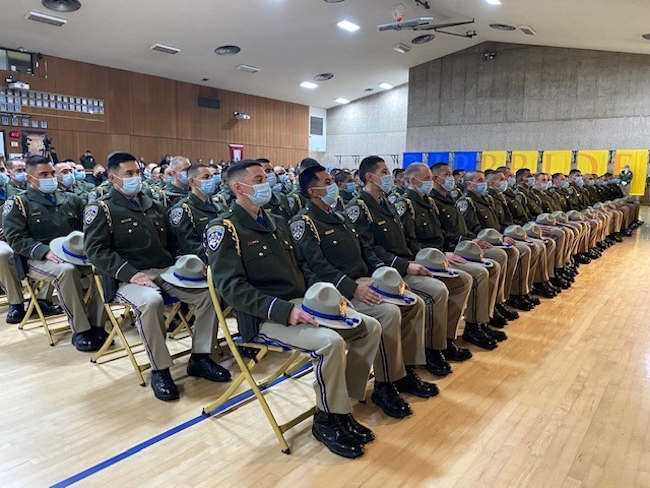
At the CHP Academy, cadet training starts with nobility in policing, leadership, professionalism and ethics, and cultural diversity. Cadets also receive instruction on mental illness response and crisis intervention techniques.
The training also covers vehicle patrol, accident investigation, first aid, and the apprehension of suspected violators, including those who drive under the influence of alcohol or drugs.
The cadets also receive training in traffic control, report writing, recovery of stolen vehicles, assisting the motoring public, issuing citations, emergency scene management, and knowledge of various codes including the California Vehicle Code, Penal Code, and Health and Safety Code.
Upon graduation, this class of officers will be reporting for duty to one of the 103 CHP Area offices throughout the state.
For more information about becoming a CHP officer, or to apply, visit the CHP’s website.
CLEARLAKE, Calif. — The Rotary Club of Clear Lake announced that it will host its annual Seafood Boil and Auction presented by Adventist Health on Saturday, Feb. 26.
The event will take place at the Clearlake Community Center, located at 3245 Bowers Ave. Doors open at 5:30 p.m.
The center has been the beneficiary of two recent Rotary initiatives, including the installation and expansion of the emergency evacuation center under leadership of the Lake Area Rotary Club Association, and soon-to-be-installed outdoor fitness equipment for the Highlands Senior Center.
This year proceeds from the event will be directed towards youth athletics and enhancements to the developing Burns Valley Sports Complex to be built by the city of Clearlake nearby, reaffirming the club’s commitment to better health opportunities for the community.
"Adventist Health Clear Lake is proud to support the Clear Lake Rotary Seafood Boil Fundraiser,” said David Santos, president of Adventist Health Clear Lake. “We believe it is important to support local organization’s efforts to improve and make a positive impact in the overall well-being of the community.”
The seafood boil fundraiser will host live and silent auctions, with a full bar featuring wine from Brassfield Estate Winery.
“Our club has never been more determined to find ways to support education, healthy living, and strengthen the bonds that have served all of us so well after countless disasters and hardships,” said Andrew Pierson, Rotary Club of Clear Lake’s president. “In the two years since our last boil I’ve seen amazing resilience and strength among the people of this county. Through this event we’ve been able to initiate projects that have made an impact for residents, and we look forward to continuing that tradition.”
To sponsor or reserve a table, contact the Rotary Club of Clearlake atThis email address is being protected from spambots. You need JavaScript enabled to view it. .
The event will take place at the Clearlake Community Center, located at 3245 Bowers Ave. Doors open at 5:30 p.m.
The center has been the beneficiary of two recent Rotary initiatives, including the installation and expansion of the emergency evacuation center under leadership of the Lake Area Rotary Club Association, and soon-to-be-installed outdoor fitness equipment for the Highlands Senior Center.
This year proceeds from the event will be directed towards youth athletics and enhancements to the developing Burns Valley Sports Complex to be built by the city of Clearlake nearby, reaffirming the club’s commitment to better health opportunities for the community.
"Adventist Health Clear Lake is proud to support the Clear Lake Rotary Seafood Boil Fundraiser,” said David Santos, president of Adventist Health Clear Lake. “We believe it is important to support local organization’s efforts to improve and make a positive impact in the overall well-being of the community.”
The seafood boil fundraiser will host live and silent auctions, with a full bar featuring wine from Brassfield Estate Winery.
“Our club has never been more determined to find ways to support education, healthy living, and strengthen the bonds that have served all of us so well after countless disasters and hardships,” said Andrew Pierson, Rotary Club of Clear Lake’s president. “In the two years since our last boil I’ve seen amazing resilience and strength among the people of this county. Through this event we’ve been able to initiate projects that have made an impact for residents, and we look forward to continuing that tradition.”
To sponsor or reserve a table, contact the Rotary Club of Clearlake at
On Friday, Gov. Gavin Newsom issued a proclamation declaring February 2022 as Black History Month.
The governor also released a video commemorating the observance, which can be seen above.
The proclamation, which explains the history of Black History Month, can be read in its entirety below.
PROCLAMATION
This month, we pay homage to the rich history and contributions of African Americans who have shaped our state and nation in innumerable ways. First proposed by scholar Carter G. Woodson in 1926, Black History Month rightfully centers the struggles and triumphs of African-Americans to tell a fuller story of America and the diverse communities that built it.
This year’s theme, Black Health and Wellness, lifts up the contributions of African-Americans to medicine while shining a light on persistent health disparities impacting the community. California is committed to closing these equity gaps by making health care, including mental health services, more accessible than ever before and expanding support for the most
vulnerable among us.
With the maternal and infant mortality rate among African-Americans significantly higher than the state average, I was honored to sign the landmark Momnibus Act last year to advance our efforts in tackling the socio-economic factors and structural racism at the heart of these
preventable tragedies. Building on the state’s Black Infant Health Program, Perinatal Equity Initiative and other targeted supports, we’ve added Medi-Cal coverage for doulas, extended Medi-Cal eligibility for postpartum individuals, provided easier access to CalWORKs for pregnant people, and required perinatal health care providers to undergo implicit bias training.
Throughout the pandemic, California has taken action to address the disproportionate toll on communities of color. Through robust partnerships with faith leaders, community-based organizations and ethnic media, the state has kept equity at the center of our COVID vaccination and testing outreach, meeting Californians where they are with culturally-competent
engagement and information. As our recovery continues, we’re not letting up on this focus to tackle the wide-ranging disparities laid bare by the pandemic to ensure that all Californians have an opportunity to reach their dreams.
As we honor the accomplishments and history of African-Americans this month, we reflect on the injustices of the past that shape our present. Together, we’ll continue to make strides toward a California for All that supports the health and well-being of all our communities and where all
families can thrive.
NOW THEREFORE I, GAVIN NEWSOM, Governor of the State of California, do hereby proclaim February 2022, as “Black History Month.”
IN WITNESS WHEREOF I have hereunto set my hand and caused the Great Seal of the State of California to be affixed this 3rd day of February 2022.
GAVIN NEWSOM
Governor of California
ATTEST:
SHIRLEY N. WEBER, Ph.D.
Secretary of State
What's up for February? Jupiter makes its exit, Venus at peak brightness and the star-forming cloud next door.
With the departure of Saturn and Venus over the past two months, Jupiter is the only bright planet left in our twilight skies in February, and it's on its way out.
The giant planet stands alone, low in the western sky after sunset in February. By mid-month, it's setting only about an hour after the Sun.
Once Jupiter departs at the end of February, the post-sunset sky will be essentially devoid of naked-eye planets until August, when Saturn will start rising in the east around sunset. (There's a short period, though, in April and May when you might be able to spot Mercury as it pops briefly above the horizon.)
You'd have to go back four years, to March of 2018, to find twilight skies with no bright planets. So catch Jupiter before it's gone. And look for it to become a morning planet in April.
Speaking of morning skies, the planet Venus will be at its brightest for the year in February, around mid-month. It rises with Mars around 4 a.m. and is visible low in the southeast until sunrise. Venus is the brightest of all the planets in our solar system because of the highly reflective clouds that completely cover its globe.
But its brightness in our skies varies, depending on how far it is from Earth and on its phase. Turns out Venus is brightest not when it's closest to Earth, but when it's almost at its closest and still shows us a large, bright crescent phase.
So enjoy the crescent Venus that is the planet at its brightest. And look for Venus to form a trio with the Moon and Mars on the morning of Feb. 26.
February is a perfect time to enjoy one of the most popular and well-studied sights in the night sky: the Great Nebula in Orion.
The Orion Nebula is an enormous cloud of gas and dust where thousands of stars are being born. In fact, it's the nearest large star-forming region to our solar system, at around 1,500 light years away.
The bright, central region of the Orion nebula is a giant cavity in the cloud being carved out by the intense ultraviolet light from a handful of extremely massive young stars.
Finding the Orion Nebula is easy on February nights, as the constellation Orion will be high in the south around 8 or 9 p.m.
Look for the three stars of the hunter's belt, and then find the stars that hang below it forming Orion's sword. In the center of this line of stars is one that looks kind of fuzzy. That's the nebula. It's visible to the unaided eye under relatively dark skies, and is easily seen with binoculars as a faint haze. And through a telescope, it's a sight you'll never forget.
Stay up to date with all of NASA's missions to explore the solar system and beyond at nasa.gov.
Preston Dyches works for NASA's Jet Propulsion Laboratory.
LAKE COUNTY, Calif. — Clearlake Police Chief Andrew White reported on the past year’s crime trends and his agency’s performance during the Clearlake City Council meeting on Thursday night.
White started out by introducing new Officer Brady Crenshaw and swearing him in. Crenshaw’s wife Celeste pinned on his badge as he held their young daughter, Joy.
“We’ll take good care of him,” White told Crenshaw’s family.
White noted that COVID-19 — and the associated rules and regulations — has been an ongoing challenge for the department.
The Clearlake Police Department continued its focus on community policing in 2021, building cars for children to drive in the city’s soapbox derby, participating in library story times for children and partnering with other city departments to put on a successful Independence Day celebration.
Officers once again delivered Thanksgiving meals and Christmas gifts, and participated in the “Shop with a Cop” program for local children, White said.
Police officers were a part of the response in the August Cache fire and the department has been working on projects to boost the city’s resilience in the face of such incidents. Those projects include fiber-optic internet at the Clearlake Senior Center, extending communications capability to the fire department and working on improvements to computer-aided dispatch.
White said they’ve launched the program CueHit, which surveys community members who have called or interacted with police. It also allows the department to update people when officers will respond, send follow-up information and resources, and get an assessment on their performance.
He said he made a concerted effort to bring people into the department who care about the community. The survey results show that effort does have a linkage to the satisfaction of community members.
Crime-related statistics White reported included the following for 2021:
• Calls for service increased by 3%, up by 756 to 21,956 calls.
• Arrests are trending down, totaling 2,324 in 2021, down by 148 or 6%.
• Officer-initiated activities totaled 12,044, down by 25% or 3,938. Those numbers were impacted by loss of staff.
• There were 3,731 reports created, up by 31, or 1%.
• Police conducted 3,694 traffic stops.
• There 24 more injury collisions, accounting for a 43% increase. Of those, there were three fewer fatalities, but six more major and 21 more minor collisions in 2021 compared to the previous year. Overall, Clearlake’s numbers are still not very high, White said, adding that staffing issues resulted in the agency losing the traffic officer position. “Enforcement is an important factor.”
• Priority one call response time was down slightly from 6:35 to 6:25 minutes; priority two response time from 10:50 to 12:06 minutes and priority three from 13:47 to 14:01 minutes.
White said violent crime is at a seven-year slow, dropping by 18%, a trend that has been happening for the last several years. Property crime has shown a 5% increase, but remains at one of the lowest levels since the city incorporated more than 40 years ago.
Part one crimes — such as murder, robbery, assault, burglary, vehicle theft and arson — are at an all-time low, and have declined by 35% in five years, White said.
Burglary is down 4% and arson is down 82%, while vehicle thefts rose 1% and larceny increased 12%, amounts that White called “concerning.”
White said it’s difficult to pin rising crime to any one thing.
He said the $0 bail rule has had a significant impact. Originally, it was driven by the California Supreme Court, but repealed last summer and left up to each jurisdiction.
White said many courts had reinstated bail for certain crimes, but in Lake County all property-related crimes had been left at zero bail. “It created some unique situations.”
He said he’s given feedback to decision makers and has seen some progress. The matter was brought back to the Lake County Superior Court, which just made some offenses bookable again.
There also had been significant challenges in the District Attorney’s Office, which at one point had started declining to file some misdemeanor cases for a period of time, White said.
White said his department has worked with the District Attorney’s Office on direct filing some misdemeanors as infractions to help alleviate pressure on the court system.
He also noted that last year's department had 400 arrest warrants but the Superior Court has been backlogged because of COVID, resulting in a lot of cases stacking up.
Last year, Clearlake Police implemented Livescan booking and rolled out new electric mountain bikes for officers to patrol parts of the city.
It also used its automated license plate recognition program to solve 73 cases, primarily involving recoveries of stolen vehicles. White said they’ve gotten good at intercepting stolen vehicles, noting that one stolen vehicle from Los Angeles came into the city and within a few minutes they identified it and were able to intercept and recover it.
White reported the following code enforcement statistics for 2021:
• 528 property cases, down 62 from the previous year;
• 834 vegetation cases, down 621;
• 387 vehicles abated, up by 122;
• 131 cannabis cases, down 72;
• 2,203 administration citations, down 120;
• 866 parking citations, up 477;
• Five vacant building registrations;
• 1161 abandon tags, up 496.
Clearlake Animal Control recorded 391 intakes, with 179 of those animals going to rescues and 20 being adopted. There were 324 licenses.
He said recruitment remains a challenge. Last year, they had 50 applicants for police officer positions but hired just three. For dispatchers, there were 92 applicants but just one hire. While they have another promising candidate, there is a planned retirement this summer. “Staff doing an incredible job,” White said.
In addition to recruitment and retention, a focus area has been training and leadership, White said.
He said he’s incredibly proud of the work his staff does.
“We are a statistically safer city, and we are becoming a cleaner city,” he said.
In other business on Thursday evening, the council supported sending a letter in support of the Lake Area Planning Council’s pursuit of a rural regional energy network, or RuralREN, to deliver energy efficiency programs to the community, and voted to confirm assessments for city-funded abatements on six properties.
Email Elizabeth Larson at