 How to resolve AdBlock issue?
News
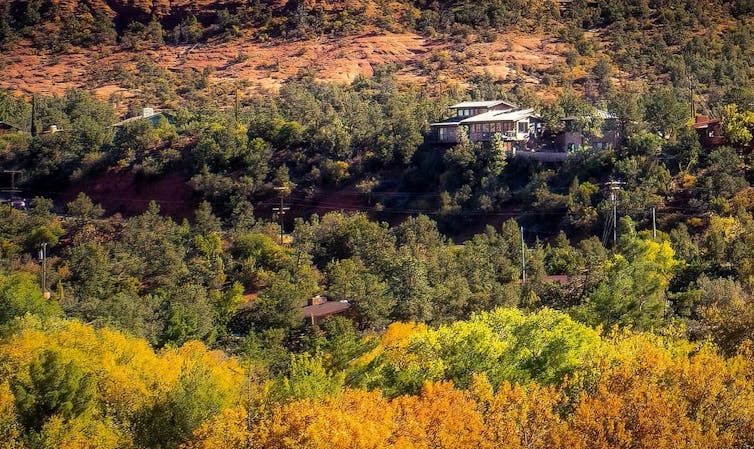
The view from the foothills of the Sierra Nevada in California can be beautiful – pine forests and chaparral spill across an often rugged landscape. But as more people build homes in this area, where development gets into wild land, they’re facing some of the highest risks for wildfires in the country.
The type of trees, plants and grasses at any location will influence how likely the area is to burn. However, our new research shows that some areas of the wildland-urban interface – the land where development ends and wilderness begins – are at much higher risk of burning than others. A key reason is how vulnerable the local vegetation is to drying out in a warming climate.
In a study published Feb. 7, 2022, our team of climate scientists, fire scientists and eco-hydrologists mapped out where vegetation is creating the highest fire risks across the western U.S. We then compared that map to where in the region people have been moving into the wildland-urban interface.
We were surprised to discover that the fastest rate of population growth by far has been in the areas with the highest fire risk. This includes several areas in California, Oregon, Washington and Texas.
Plant sensitivity has a large effect on fires
When a fire does break out, the amount of area that burns increases significantly if a region’s vegetation is drought sensitive, meaning it dries up easily after periods of little rainfall and hot temperatures.

Just as a succulent is better at surviving a water shortage than, say, a citrus tree, some vegetation loses moisture more quickly in dry conditions. Such diverse sensitivity can have a strong effect on wildfires. In fact, we found that under the same increase in droughtlike conditions, burned area increases twice as much in the most sensitive regions as the least sensitive regions. As a result, fire hazard in regions like California, eastern Oregon, and central Arizona has far outstripped the average. But what about human exposure to wildfires?
The wildland-urban interface population boom
We found that while the number of people living in the wildland-urban interface overall roughly doubled from 1990 to 2010, the population in its highest-hazard regions grew by 160%. As more people move into these areas, the opportunity for fires to ignite rises, as does the number of people at risk.
In all, the population of those high-hazard areas grew from 1 million in 1990 to 2.6 million in 2010, the latest year with detailed population data. That’s an increase equivalent to the current populations of San Francisco and Seattle combined.
More people still live in the low-hazard regions of the wildland-urban interface, where the population grew 107%, from 5 million in 1990 to 10.4 million in 2010, but the high-hazard regions have seen much faster growth.
We don’t know what is causing the population boom in these highly sensitive areas of the western U.S. Building codes, timber-dependent communities and people seeking homes surrounded by forests may have contributed to the expansion of the wildland-urban interface, but those factors alone don’t explain why population would rise the most in the most vulnerable regions.
However, a map of vegetation’s sensitivity to water shortages can provide some insight. By linking satellite-based estimates of vegetation dryness to climate observations, we created continental-scale maps of vegetation moisture. For the first time, we now know the precise locations of the most drought-vulnerable and hence fire-prone vegetation.
The map shows that the foothills of the Sierra Nevada in Central California, the outskirts of the San Francisco Bay Area, San Diego and San Antonio all have drought-sensitive vegetation and saw populations expand in the wildland-urban interface.
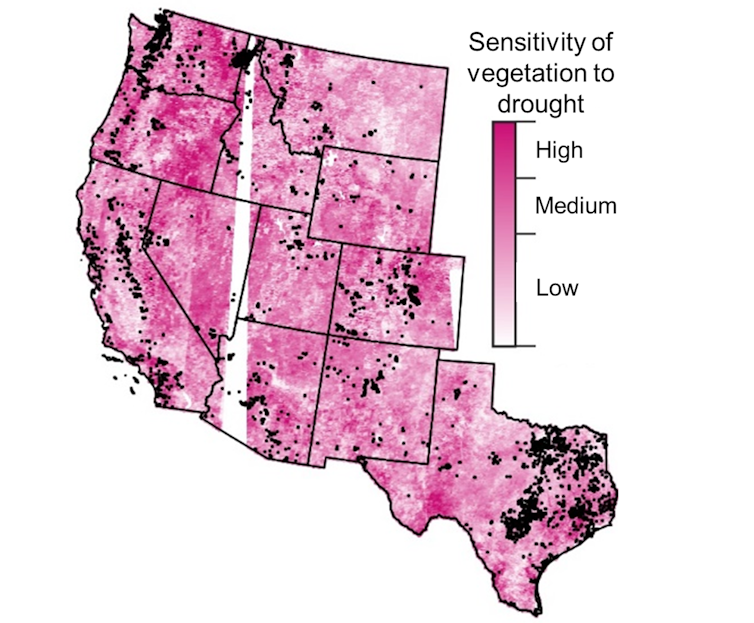
Further studies examining the demographics and local land use and development regulations in such regions can shed light on the drivers of growth in these high-risk areas. In the Bay Area, for example, a lack of affordable housing has pushed people farther from cities and may be encouraging more development in the wildland-urban interface, including high-risk areas that hadn’t previously been developed.
What can people living in high-risk areas do?
The disproportionate population growth in high-hazard areas is a warning that the likelihood of humans sparking a fire in an area with high-risk vegetation is rising – and that it may be higher than was previously understood.
Community leaders can use this knowledge to identify where human activity overlaps with drought-sensitive regions to improve local land-use planning, prepare firefighting resources and develop safer evacuation routes.
Property owners can keep a safe defensible space of at least a 100 feet of nonvegetated land on all sides of a home to help protect their structures when wildfires occur. Retrofitting homes using fire-retarding materials or double-paned windows can help too.
[Over 140,000 readers rely on The Conversation’s newsletters to understand the world. Sign up today.]
Preventive measures like these can limit the ballooning losses from wildfires, including devastating air quality due to wildfire smoke, while also allowing humans to more safely coexist with natural fires.
Preparing homes for wildfires can take months, so it’s important to use the winter, when many of these areas have their wet seasons, to be ready by the time the land dries out and wildfires ramp up in spring.
Krishna Rao, Ph.D. candidate in Earth System Science, Stanford University; Alexandra Konings, Assistant Professor of Earth System Sciences, Stanford University; Marta Yebra, Associate professor, Australian National University; Noah Diffenbaugh, Professor of Earth System Science, Stanford University, and Park Williams, Associate Professor of Hydroclimatology, University of California, Los Angeles
This article is republished from The Conversation under a Creative Commons license. Read the original article.
LOWER LAKE, Calif. — One of Lake County’s historic buildings is about to get some much-needed repairs thanks to state funding.
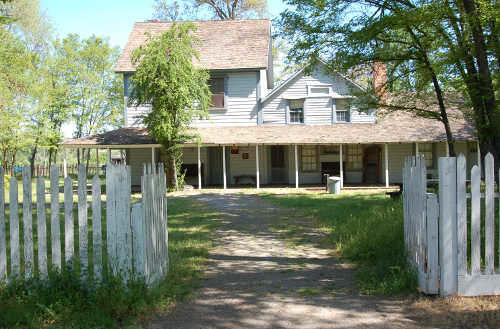
The Anderson Marsh Interpretive Association, or AMIA, has announced that an $800,000 fund has been created by the California Department of Parks & Recreation to be used to perform critical repairs to the historic Anderson Ranch House at Anderson Marsh State Historic Park.
The Anderson Ranch House is one of the oldest remaining buildings in Lake County, with construction beginning in the mid-19th century.
It has been furnished by State Parks to provide an opportunity for the public to experience what life was like on a working cattle ranch in Lake County between 1850 and 1920.
State Parks said the funding will be used to stabilize the ranch house by performing structural foundation repairs, along with repairs to other critical parts of the ranch house structure.
The project is in the beginning planning phase, with preliminary reports and inspections being conducted.
Out of these inspections, a final scope and project schedule will be created. After a project plan is developed, a construction start date will be determined.
“AMIA is grateful to State Parks for creating this significant project to protect the structural integrity of the Anderson Ranch House,” said AMIA President Roberta Lyons. “We are looking forward to the time when the COVID-19 pandemic allows us to resume public tours of the ranch house.”
AMIA is a nonprofit association cooperating with the Department of Parks and Recreation to promote educational and interpretive activities at Anderson Marsh State Historic Park.
For information about Anderson Marsh State Historic Park and AMIA, go to www.andersonmarsh.org or contact AMIA at either
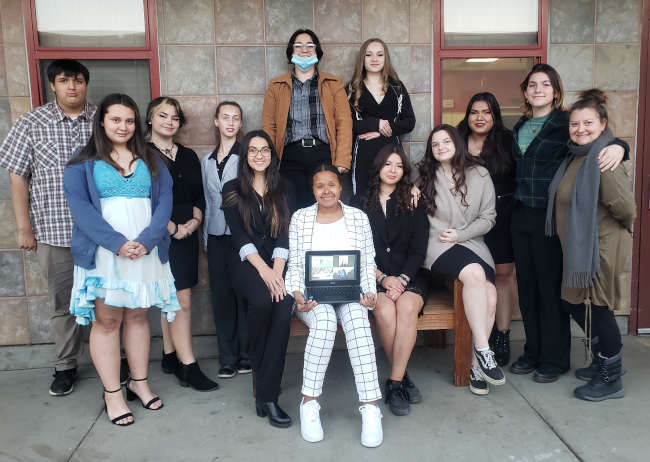
LAKE COUNTY, Calif. — Upper Lake High School’s Academic Decathlon team participated in the Bay Regional Academic Decathlon over the weekend and will advance to the state competition to represent Lake County.
The Solano County Office of Education hosts and coordinates the annual Bay Region Academic Decathlon event for students.
“Water, A Most Essential Resource” is the theme of this year’s decathlon in which
250 students from 17 high schools across nine counties — Contra Costa, Lake, Mendocino, Napa, San Mateo, Santa Clara, Solano, Sonoma and Yolo — were challenged to bring their “A” game.
The decathletes completed testing, speeches and interviews last week, with the competition culminating on Saturday with a live virtual Super Quiz followed by the awards ceremony.
In addition to Upper Lake, the schools taking part in this year’s competition were American Canyon High School, Napa Valley Unified School District; BASIS Independent Silicon Valley Charter, Santa Clara; Buckingham Collegiate Charter Academy, Vacaville Unified; Campolindo High School, Acalanes Unified; Casa Grande High School, Petaluma City School District; Davis Senior High School, Davis Joint Unified; Dixon High School, Dixon Unified; Evergreen Valley High School, East Side Unified; Freedom High School, Liberty Unified; Jesse Bethel High School and Vallejo High School, Vallejo City Unified; Menlo-Atherton High School, Sequoia Unified; River City High School, Washington Unified; Rodriguez High School, Fairfield-Suisun Unified; Vanden High School, Travis Unified; and Willits High School, Willits Unified.
Willits placed fourth overall and Upper Lake placed sixth overall, and the two schools will now go on to represent Mendocino and Lake counties, respectively, at the state competition, said Upper Lake High Head Coach Anna Sabalone.
Guiding the team along with Sabatone is Assistant Coach Angel Hayenga.
Sabalone said the state competition will take place virtually starting on March 1 with the essay. Objective testing will take place on March 5, on March 12 the speech and interview round will be held and the awards are planned for March 19.
Upper Lake High’s team members competing at the regional competition were Upper Lake Joslyn Huntley, Ahmana Jones, Atlantis Jones, Paris Klier, Monserrat Luna, Zackery Marrufo,
Isaiah Marschall, Cassidy McAuley, Desiree McCarty, Diana Mendoza-Razo, Natalia Rosin, Isabel Sanchez, Georgia Schmit, Cierra Wenning, Emily Williams and Kadenz Rickert.
Team members won the following awards in the weekend regional competition:
• Art: Gold, Isabel Sanchez and Georgia Schmit; silver, Joslyn Huntley.
• Economics: Gold, Georgia Schmit.
• Essay: Bronze, Georgia Schmit.
• Interview: Gold, Isabel Sanchez; bronze, Georgia Schmit, Ahmana Jones and Diana Mendoza-Razo.
• Literature: Gold, Georgia Schmit; bronze, Isabel Sanchez.
• Math: Silver, Georgia Schmit; bronze, Isabel Sanchez.
• Music: Silver, Georgia Schmit and Desiree McCarty; bronze, Diana Mendoza-Razo.
• Social Science: Bronze, Emily Williams.
• Speech: Silver, Isabel Sanchez; bronze, Georgia Schmit.
Georgia Schmit, a junior who competes in the varsity level, won the bronze for individual high score.
The team high score gold went to Paris Klier, with Schmit receiving the silver and Atlantis Jones the bronze.
The team that will represent Upper Lake at the state competition are Atlantis Jones, Paris Klier, Kadenz Rickert, Desiree McCarty, Ahmana Jones, Natalia Rosin, Isabel Sanchez, Georgia Schmit and Joslyn Huntley.
The team members thanked everyone in the region and the county who have supported them this year and especially those who volunteered to be speech and interview judges.
MATH will meet at 7 p.m. Thursday, Feb. 10, via Zoom. The meeting is open to the public.
To join the Zoom meeting click on this link; the meeting ID is 832 1989 2440. Call in at 669-900-6833 or 253-215-8782.
One of the evening’s main topics will be local crime.
At 7:05 p.m., they will discuss local crime statistics, legislative challenges and response time.
Guest speakers will be Sheriff Brian Martin, District Attorney Susan Krones and Chief Deputy District Attorney Richard Hinchcliff.
There also will be a question and answer period.
In other business, MATH will hold nominations for a special election for an at-large seat at 7:50 p.m., and will follow up by discussing an alternate seat nomination and election.
At 8:15 p.m., the chair will give a report and will discuss the formation of a committee to review an election-related grievance.
At 8:30 p.m., Supervisor Moke Simon will give his monthly update.
Other items on Thursday’s agenda include public comment, committee updates and a municipal advisory council review.
The MATH Board includes Chair Monica Rosenthal, Vice Chair Rosemary Córdova, Secretary Todd Fiora, Ken Gonzales and Lisa Kaplan.
MATH — established by resolution of the Lake County Board of Supervisors on Dec. 12, 2006 — is a municipal advisory council serving the residents of Anderson Springs, Cobb, Coyote Valley (including Hidden Valley Lake), Long Valley and Middletown.
For more information email
Email Elizabeth Larson at

More Americans are using flexible workplace practices – including telecommuting, co-working and off-peak start times – to add flexibility to their lives and eliminate or improve their commute.
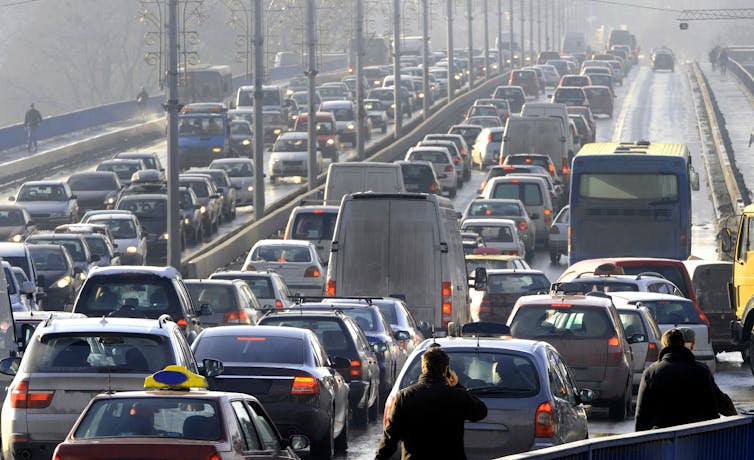
One motivation? Rush hour traffic is getting worse, and commute times are getting longer.
For example, the average American today spends close to an hour getting to and from work. It’s worse in big cities. In the greater New York area, commutes average 1 hour 14 minutes round-trip.
We’re experts in urban planning and development, and started wondering why worsening traffic wasn’t encouraging more people to telecommute.

What do we know about workplace flexibility?
Telecommuting – or working at home – has many benefits. Workers have been modifying commutes ever since the phone and portable computers made it possible.
Advances in technology within the last decade have greatly expanded our ability to work from anywhere at any time. Many of us are taking advantage of this flexibility.
Census estimates show that the percentage of the workforce working from home the majority of the week grew from 3.3% in 2000 to 5.3% in 2018, and is growing faster than additions to the workforce.
Most people adopt flexible workplace practices just a few times a month rather than full-time, and these numbers are also growing.
How workers win
What are the benefits of telecommuting?
For one thing, it allows workers to seek cheaper housing, yet still have access to a large job market.
They can also use time previously spent commuting in more productive ways.
Companies that offer flexible workplace practices have a competitive edge because they are more attractive to workers. Many high-tech businesses and startups cater to their employees’ needs in order to attract and retain talent because talent is critical to innovation.
Flexible workplace practices can also increase an organization’s productivity. Studies have shown that workers who have control over their schedules and places of work are more satisfied and productive. They don’t quit as often or take as many sick days.
But even with these benefits, most organizations are still not comfortable granting flexibility to their workers.
Obstacles to flexibility
Our recent report showed that many workers we surveyed viewed managerial and executive resistance to telework as a major obstacle.
Through interviews, we learned that executives saw the benefits of using flexible work to their advantage as a negotiating tool for recruitment, promotion, retention and motivation, but they often worried about the costs of training and potential culture change.
They expressed concern that allowing telecommuting could create inequitable outcomes in the workplace, and possibly negatively impact morale.
Because flexible workplace practices provide so many benefits, we believe policymakers should encourage its implementation. In Atlanta, which has seen one of the fastest-growing commute times of any city, policymakers have implemented telework programs.
It has paid off. From 2008 to 2017, the number of commuters working from home increased from 5.7% to 7.3%.
There are no easy fixes here. Even if organizations become more willing to allow flexible workplace practices, we will likely never see a future in which the roads are free of congestion.
That’s because any traffic decreases will result in people that were previously using alternatives joining the roads. This is called “triple convergence” in the field of transportation research, and it is the principle that congestion self-adjusts.
In other words, you can add more lanes to a highway, but after a while people will catch on, begin using the route and congestion will stay the same or increase.
[ Like what you’ve read? Want more? Sign up for The Conversation’s daily newsletter. ]
Mohja Rhoads, Research Consultant and Lecturer in Policy, Planning and Development, California State University, Dominguez Hills and Fynnwin Prager, Assistant Professor of Public Administration, California State University, Dominguez Hills
This article is republished from The Conversation under a Creative Commons license. Read the original article.
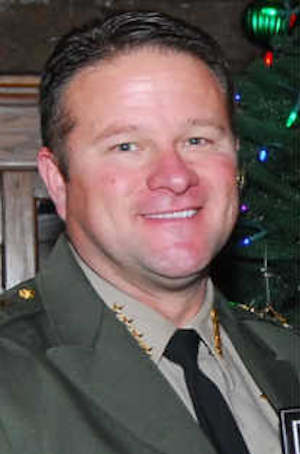
LAKE COUNTY, Calif. — Lake County’s sheriff said he plans to run for reelection this year.
Brian Martin is seeking a third term as sheriff-coroner.
He said it’s been an honor and a privilege to serve the people of Lake County as sheriff-coroner for the past seven years.
“It has been much more challenging, and much more rewarding than I could have ever imagined,” said Martin, who took office just months ahead of a series of devastating fires in 2015 — the Rocky, Jerusalem and Valley fires.
“Through numerous emergencies, including fires that have touched every family and community in our county, to floods, to atmospheric river events, to public safety power shut-offs, a jail evacuation, an endless quest to adequately staff positions, and the loss of several close friends, we’ve been through a lot together. We even got to slip in a global pandemic along the way, too, which has no signs of letting up anytime soon,” Martin said.
He said he has many thanks to give for the successes we’ve had. “I have to thank my dedicated, committed, and capable staff. Whether it’s the deputy on the street, or the dispatcher answering 911 calls, or the correctional deputy ensuring inmates are safe and secure, or the investigators and evidence technicians who comb scenes looking for the evidence needed to ensure justice is served, or the support staff that keeps the bills paid, the records correct, and the right doors locked at the jail, the dedicated men and women of the Lake County Sheriff’s Office have answered the call to duty with selfless, tireless commitment. Our community owes them thanks. I want to thank them and tell you what an honor it is to work with all of them.”
Martin also thanked Lake County’s residents for being supportive, kind and helpful during some truly challenging times. “Even when other communities joined calls to ‘defund the police and in some cases staged violent protests with targeted violence against peace officers, the people of Lake County remained supportive of our law enforcement officers. On behalf of a grateful group of peace officers, thank you for allowing us to serve you.”
He saved the most important thank you for his family, including his wife Crystal, their three grown children and his parents, all of whom have all been extremely supportive.
“This position requires a great deal of time, and they have been more than understanding of the demands of the job. I couldn’t be successful without their support,” he said.
As for what he’s planning in the coming years, Martin said, “Our focus on the next four years will be to fine tune the systems we’ve put in place and develop the next group of leaders within our organization to carry us on as we adapt to ever-changing circumstances, whether it’s changing requirements in the law, changes in our environment, or societal shifts that require evolution in our profession, I want to make sure the Lake County Sheriff’s Office meets or exceeds your expectations.”
He said he hopes he’s served the people of Lake County well enough for them to reelect him for another term.
“I expect that we will continue to deal with emergencies. Some, like fires and floods, will be familiar. It seems that there is always a curve ball thrown our way, but our staff has proved to be adaptable and our community resilient. I feel confident that we can handle anything that comes our way,” Martin said.