 How to resolve AdBlock issue?
News
The board will meet beginning at 9 a.m. Tuesday, Feb. 8, in the board chambers on the first floor of the Lake County Courthouse, 255 N. Forbes St., Lakeport.
The meeting can be watched live on Channel 8, online at https://countyoflake.legistar.com/Calendar.aspx and on the county’s Facebook page. Accompanying board documents, the agenda and archived board meeting videos also are available at that link.
To participate in real-time, join the Zoom meeting by clicking this link.
The meeting ID is 968 9808 8699, pass code 822047. The meeting also can be accessed via one tap mobile at +16699006833,,96898088699#,,,,*822047#.
All interested members of the public that do not have internet access or a Mediacom cable subscription are encouraged to call 669-900-6833, and enter the Zoom meeting ID and pass code information above.
To submit a written comment on any agenda item visit https://countyoflake.legistar.com/Calendar.aspx and click on the eComment feature linked to the meeting date. If a comment is submitted after the meeting begins, it may not be read during the meeting but will become a part of the record.
On Tuesday, Supervisor Bruno Sabatier is asking the board to consider possible renegotiations of certain provisions of an agreement the supervisors approved on Sept. 28, 2021 with RCHDC, regarding the development of an affordable housing project on Collier Avenue in Nice.
Sabatier also is asking for discussion and direction on an audit for financial activity regarding the loan and loan forgiveness regarding that project.
Also on the agenda, in an untimed item, the board will consider midyear budget adjustments proposed by the County Administrative Office.
In other business, the board is expected to approve a resolution of the Lake County Board of Education ordering a special election to fill a vacancy on the Middletown Unified School District Board of Education and requesting consolidation with the Statewide Primary Election occurring on June 7, 2022. That item is part of the consent agenda.
The full agenda follows.
CONSENT AGENDA
5.1: Affirm the addition of Scotts Valley Tribe of Pomo Indians to the third amendment to the joint powers agreement creating the Lake County Community RIsk Reduction Authority.
5.2: Approve letter of support for APC to submit a business plan to CPUC for RuralREN energy efficiency programs.
5.3: Adopt resolution approving the application of the Lake County Arts Council for the California Arts Council Grant for FY 2022-23 and Authorizing the Lake County Arts Council to execute the grant contract.
5.4: Adopt resolution authorizing the Behavioral Health director to execute and sign any subsequent amendments or modifications to the original standard agreement between the county of Lake and the Department of Housing and Community Development for the California Emergency Solutions and Housing Program grant funds.
5.5: Adopt resolution authorizing an amendment to the standard agreement between the county of Lake and the Department of Health Care Services for the period of July 1, 2021, through June 30, 2024, and authorizing the Behavioral Health director to sign the standard agreement and the contractor certification clause (CCC 04/2017).
5.6: Approve agreement between county of Lake and Kings View Professional Services for MIS support services for fiscal years 2020-21 and 2021-22 for a contract maximum of $244,781.00 and authorize the board chair to sign the agreement.
5.7: Approve Board of Supervisors meeting minutes for Jan. 11 and Feb. 1, 2022.
5.8: Approve agreement for special services with Liebert Cassidy Whitmore.
5.9: Approve resolution of the Lake County Board of Education ordering a special election to fill a vacancy on the Middletown Unified School District Board of Education and requesting consolidation with the Statewide Primary Election occurring on June 7, 2022.
5.10: Approve plans and specifications for the Middletown Multiuse Path Project; Bid No. 22-05, State Project No: ATPL-5914(102).
5.11: a) Approve letter of agreement between the Lake County Sheriff's Office and the Drug Enforcement Administration of the United States Department of Justice in the amount of $195,000 for the period Oct. 1, 2021, to Sept. 30, 2022; and b) authorize sheriff to sign the agreement; and c) authorize the chairman to sign workplace certifications and grant assurances.
5.12: Approve Everbridge Mass Notification User Agreement in the amount of $20,767.23 from March 20, 2022, to March 19, 2023, and authorize the chair to sign.
TIMED ITEMS
6.2, 10:30 a.m.: Consideration of acceptance of the Dec. 31, 2021, Report of Lake County Pooled Investments.
UNTIMED ITEMS
7.2: a) Discussion and possible renegotiations of certain provisions of agreement approved on Sept. 28, 2021 with RCHDC; b) discussion and direction on audit for financial activity regarding loan and loan forgiveness regarding Collier Avenue project.
7.3: Midyear budget — a) Consideration of resolution amending Resolution No. 2021-115 to Amend the FY 2021-22 Adopted Budget by adjusting reserves, fund balance carry over, revenues, and appropriations; and b) consideration of resolution amending Resolution 2021-116 to amend the position allocations for FY 2021-22 to conform to the midyear budget adjustments.
7.4: Continued from Dec. 14, 2021, discussion and consideration of board action in response to a gate on a public roadway — review.
CLOSED SESSION
8.1: Conference with legal counsel: Decision whether to initiate litigation pursuant to Government Code section 54956.9(d)(4) — One potential case.
8.2: Conference with legal counsel: Existing litigation pursuant to Gov. Code sec. 54956.9 (d)(1) — FERC Project No. 77, Potter Valley Hydroelectric Project.
Email Elizabeth Larson at
Americans are returning to the labor force at a quickening rate – do they just really need the work?
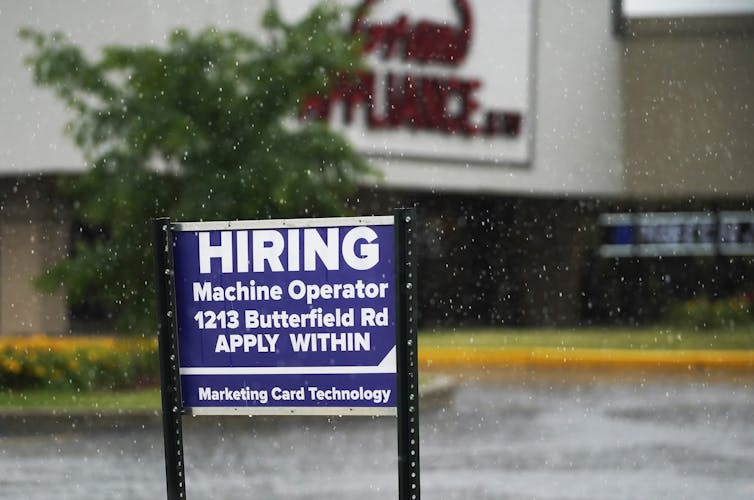
The U.S. economy surprised analysts by adding 467,000 jobs in January, overcoming omicron concerns and continuing a long streak of gains, the Bureau of Labor Statistics reported on Feb. 4, 2022.
Yet at the same time, the unemployment rate ticked up a notch, from 3.9% to 4%.
Confused? Shouldn’t a large increase in jobs drive joblessness lower?
I believe the main culprit behind these conflicting results is a jump in the number of people rejoining the job market – in fact, the biggest increase in 19 months.
The share of working-age Americans either in work of looking for work – known as the labor participation rate – dropped steeply at the beginning of the pandemic.
But there are signs that labor participation may finally be turning around. From a low of 60.2% in April 2020, it has slowly risen since. And the latest report showed it climbed a further 0.3 percentage point to 62.2% in January, the highest since the depths of the pandemic in mid-2020. The 2.2 percentage point gain since April 2020 may not seem huge, but it equates to about 5.8 million people rejoining the workforce.
As an economist who has been following the labor market closely for the past year, I think people are being both encouraged and forced back into looking for work. My interpretation of the evidence suggests that those who quit and held off getting back into the labor force are now finding job opportunities that are too valuable to pass up.
For one thing, wages continue to increase – they grew rapidly in January 2022, with average hourly wages up 5.6% from a year earlier.
At the same time, it appears that many businesses are responding to workers’ desires for some flexibility in scheduling and a better work/life balance.
Greater job flexibility can be seen in the jump in the number of Americans working remotely. The number of employees working from home because of the pandemic increased to 15.4% of the workforce in January, as the omicron variant spread and staffers were given the option to work from home.
But it isn’t just employer-driven factors behind the increase in labor participation.
For those without a job and stable income, personal resources can get depleted over time. Some people who left the workforce early on in the pandemic may have been able to get by and cover essential spending such as housing and groceries by relying on personal savings, support from family members or generous pandemic-related government benefits.
Those resources are not infinite, however. The number of long-term unemployed Americans declined in January, following a trend observed throughout 2021, suggesting that a growing number are returning to the workforce.
Moreover, the cost of living is soaring at the fastest pace in 40 years. And for households that had been relying on a single income during the pandemic, the problem is made worse by the fact that wages are lagging behind, putting pressure on families.
In other words, job holdouts might not be able out hold out much longer if inflation continues to outpace wage increases.
But even with the uptick in the labor participation rate, the U.S. economy still has a long way to go before the ongoing labor shortages hammering companies end and the job markets return to pre-pandemic levels.
[Over 140,000 readers rely on The Conversation’s newsletters to understand the world. Sign up today.]
Christopher Decker, Professor of Economics, University of Nebraska Omaha
This article is republished from The Conversation under a Creative Commons license. Read the original article.
Children who lived with at least one foreign-born parent in 2019 had different characteristics than children who lived with native-born parents. Those with at least one foreign-born parent were more likely to live with two parents but didn’t fare as well economically.
While the majority of children under 18 in the United States lived with native-born parents in 2019 (69.7%), over a quarter (26.3%) lived with at least one foreign-born parent, according to a new U.S. Census Bureau report.
The remaining 4% of children had no parents present. Among those with at least one foreign-born parent, the majority (87.7%) were native-born.
Presence of parents
The living arrangements of children are diverse and vary across many characteristics, including parental nativity.
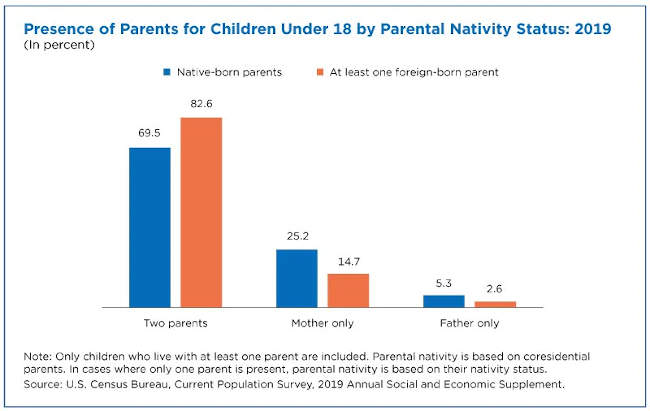
Regardless of nativity status, most children live with two parents, but children with at least one foreign-born parent (82.6%) were more likely to live with two parents in 2019 than children with native-born parents (69.5%).
Consequently, children with at least one foreign-born parent were less likely than children with native-born parents to live with either their mother only or their father only.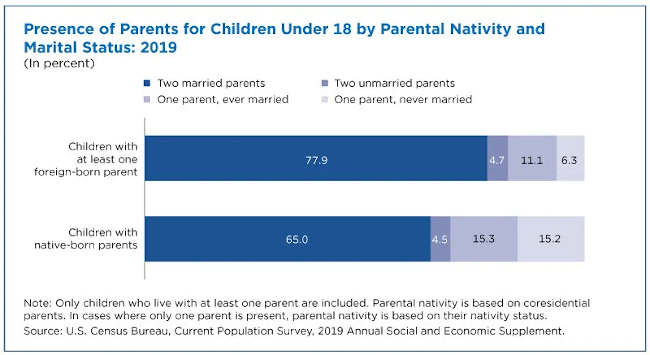
Parental marital status
Children with at least one foreign-born parent were also more likely than children with native-born parents to live with two married parents — 77.9% and 65.0%, respectively.
However, the percentage of children in these two groups who lived with two unmarried parents did not differ statistically.
Children with native-born parents were more likely than children with at least one foreign-born parent to live with one parent, regardless of whether the parent had ever married.
Among children with native-born parents, the percentage with only one parent who ever married did not significantly differ from the percentage with only one parent who never married.
Household economic characteristics
Children with native-born parents fared better on certain household economic characteristics than children with at least one foreign-born parent.
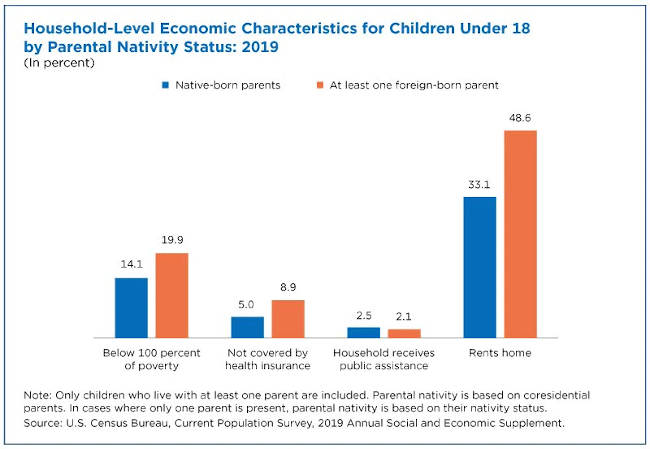
Those with at least one foreign-born parent, for example, were more likely than children with native-born parents to live below the poverty line (19.9% compared to 14.1%) and have no health insurance coverage (8.9% compared to 5.0%).
They were also more likely to live in a rented home: just under half (48.6%) compared to a third (33.1%) of children with native-born parents.
Although some household-level characteristics show that children living with at least one foreign-born parent were less economically secure, they also show that they were less likely to live in a household that received public assistance.
The recently released report is an update of a longstanding series on the living arrangements of children, first published in 1994.
The report uses data from the 2007 and 2019 Current Population Survey, Annual Social and Economic Supplements, 2008 and 2018 1-Year American Community Surveys and 2014 Survey of Income and Program Participation Wave 1.
Household-level economic characteristics for children under 18 by parental nativity status: 2019
Lydia Anderson and Paul Hemez are survey statisticians in the U.S. Census Bureau’s Fertility and Family Statistics Branch.
UPPER LAKE, Calif. — One of Lake County’s standout educators has received a national award.
Erica Boomer, the agriculture teacher and FFA adviser at Upper Lake High School in Upper Lake was recently selected to receive one of the five 2021 Carlston Family Foundation “Outstanding Teachers of America” awards.
Boomer, who has been teaching for 16 years, was named California Teacher of the Year in 2018.
She started the agriculture program at Upper Lake High in 2005.
Four other teachers representing high schools located in Garden Grove, Anaheim, Los Angeles, and Palm Springs will join Boomer and each will receive a $15,000 cash award.
Additionally, each of their high schools will receive a grant in the honored teacher’s name in the amount of $5,000.
This award will be formally announced at the Feb. 8 Upper Lake Unified School District Board meeting.
The Carlston Family Foundation awards are given only to California public high school teachers who primarily teach in the most challenging school environments.
A teacher must be nominated by former students who are either currently enrolled in a four-year college or university or who already have earned a college degree.
In 2020-21, the Foundation received over 100 nominations from students attending or have graduated from colleges throughout the United States.
The evaluation and selection process is extensive and involves interviews with as many as seven or more former students, the school principal, two teaching colleagues, and the teacher being nominated.
Ten teachers are selected as finalists and each finalist is observed in their classroom by the foundation’s executive director.
“These are the real-life stories of how students have overcome incredible personal and academic obstacles with the guidance and the extraordinary efforts of dedicated teachers who believed in them, inspired and motivated them, and supported them with the academic skills to be successful in higher education,” said Tim Allen, recently retired executive director of the Carlston Family Foundation. “These are the stories I share with the Carlston Board of Directors and what is considered most when selecting the 2021 honorees.”
Students who nominate their former teachers describe the reasons for their nomination, identify the specific characteristics of their former teachers that influenced their learning, and focus on specific teaching strategies that increased both their interest in the subject and the motivation to rise to the high expectations of their teachers.
Each former student shares in detail the life changing impact their former teacher had on his/her life. More than 80% of the nominating students are first generation college students, many of whom have overcome significant obstacles to become academically and personally successful, and they give credit to their former teacher for their success.
“My main goal is to help foster diligent, respectful, contributing members of society,” said Boomer. “Providing students with the skills to recognize a problem, come up with a solution and work until the job is completed, are the main things I try to teach in all of my classes. When I run into a student after they have graduated and they thank me for helping them realize the importance of respecting others and the value of hard work, that is when I know that my students are achieving.”
Boomer and the other four honorees will join 81 previous honorees as members of the Carlston Family Foundation Board of Advisors and will participate in the Annual Educational Symposium that focuses on addressing major issues facing education in California.
This exceptional group of educators also provide professional development to early career teachers throughout California and support their novice colleagues in one-to-one mentoring relationships.
Dogs available for adoption this week include mixes of American Staffordshire terrier, Anatolian shepherd, Australian cattle dog, Great Pyrenees, husky, Labrador retriever, mastiff, Rhodesian ridgeback, Shar-Pei, shepherd and pit bull.
Dogs that are adopted from Lake County Animal Care and Control are either neutered or spayed, microchipped and, if old enough, given a rabies shot and county license before being released to their new owner. License fees do not apply to residents of the cities of Lakeport or Clearlake.
The following dogs at the Lake County Animal Care and Control shelter have been cleared for adoption (additional dogs on the animal control website not listed are still “on hold”).
Call Lake County Animal Care and Control at 707-263-0278 or visit the shelter online for information on visiting or adopting.

Labrador-pit bull mix puppy
This male Labrador retriever-pit bull mix puppy has a short tan coat.
He is in kennel No. 2a, ID No. LCAC-A-2523.

Labrador-pit bull mix puppy
This male Labrador retriever-pit bull mix puppy has a short brindle coat.
He is in kennel No. 2b, ID No. LCAC-A-2521.

‘Colt’
“Colt’ is a 3-year-old male pit bull with a short tan and white coat.
He is in kennel No. 5, ID No. LCAC-A-2429.

Female Shar-Pei-Rhodesian ridgeback mix
This 2-year-old female Shar-Pei-Rhodesian ridgeback mix has a short tan coat.
She is in kennel No. 13, ID No. LCAC-A-2560.

Male pit bull
This 2-year-old male pit bull has a short black and white coat.
He is in kennel No. 14, ID No. LCAC-A-2473.

Male pit bull
This 2-year-old male pit bull has a short brindle coat.
He is in kennel No. 16, ID No. LCAC-A-2462.

Male husky mix
This 2-year-old male husky mix has a short black and tan coat.
He is in kennel No. 17, ID No. LCAC-A-2512.

‘Nova’
“Nova” is an 8-year-old female yellow Labrador retriever with a short coat.
She is in kennel No. 18, ID No. LCAC-A-2509.

‘Akeyla’
“Akeyla” is a 1-year-old Labrador retriever mix with a short black coat and white markings.
She is in kennel No. 20, ID No. LCAC-A-2614.

‘Nioki’
“Nioki” is a 1-year-old female shepherd with a black coat.
She is in kennel No. 21, ID No. LCAC-A-2442.

Anatolian shepherd mix
This 2-year-old female Anatolian shepherd mix has a short tan coat with black markings.
She is in kennel No. 23, ID No. LCAC-A-2535.

Labrador retriever mix puppy
This female Labrador Retriever mix puppy has an all black coat.
She is in kennel No. 28, ID No. LCAC-A-2533.

Female Australian cattle dog
This female Australian cattle dog puppy has a short black and white coat.
She is in kennel No. 29, ID No. LCAC-A-2506.

Male pit bull-chocolate Labrador
This 5-year-old male pit bull terrier-chocolate Labrador retriever mix has a short coat.
He is in kennel No. 31, ID No. LCAC-A-2537.

‘Iris’
“Iris” is a 3-year-old American Staffordshire terrier with a short black coat with white markings.
She is in kennel No. 32, ID No. LCAC-A-1727.

Anatolian shepherd-Great Pyrenees mix
This 2-year-old male Anatolian shepherd-Great Pyrenees mix has a short white coat.
He is in kennel No. 34, ID No. LCAC-A-2536.
Email Elizabeth Larson at
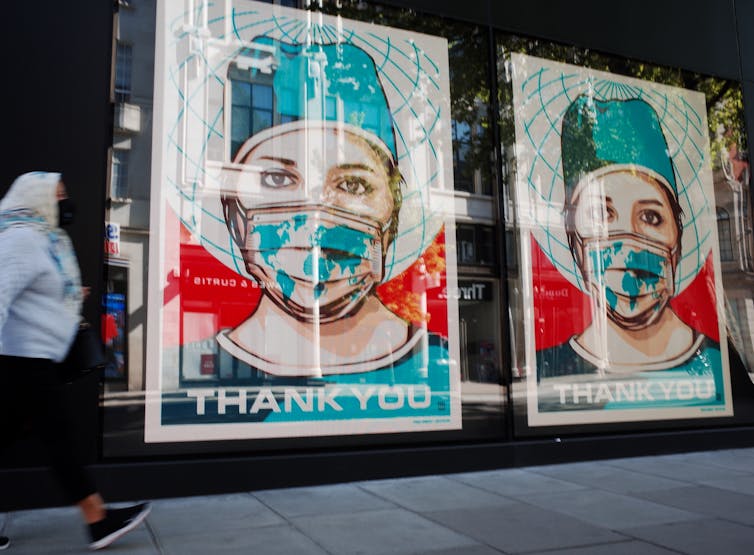
More than two years after the first cases of COVID-19 were diagnosed, people are exhausted by the coronavirus pandemic, ready for all this to end. When – if ever – is it realistic to expect SARS-CoV-2 will recede from the headlines and daily life?
That’s the unspoken question beneath the surface of many of The Conversation’s articles about COVID-19. None of our authors can see the future, but many do have expertise that offers insights about what’s reasonable to expect. Here are four such stories from our archive. Written by historians and scientists, they each suggest a way to think about what’s at the end of the pandemic tunnel – and paths to get there.
1. Past pandemics are not a perfect prediction
Almost as soon as it hit, people were trying to figure out how the COVID-19 pandemic would proceed. It was tempting to look for clues in the course of the 1918 flu pandemic that killed as many as 50 million people worldwide. Could the waves of disease seen in the 1900s provide a road map for what could be expected a century later?
Daily deaths from COVID-19 were declining in the U.S. when historian Mari Webel and virologist Megan Culler Freeman from University of Pittsburgh Health Sciences cautioned against reading too much into how things had gone for people generations ago.
It was so tempting to superimpose a timeline of flu surges on the modern calendar to get even a blurry forecast of what the coronavirus might have in store for us. “Scanning the historical record is one way to draw our own lives into focus and perspective,” wrote Webel and Culler Freeman. “Unfortunately, the end of influenza in summer 1919 does not portend the end of COVID-19 in the summer of 2020.”
And for reasons ranging from biology to demographics to politics, that is one prediction that most certainly came true.
2. Calling it over before it’s really over
While the 1918 flu pandemic wasn’t an exact template for how the coronavirus would sweep the world, the earlier pandemic provided plenty of parallels when it came to human behavior.
University of Michigan historian J. Alexander Navarro described how in the early 20th century Americans essentially quit on effective social distancing precautions when they got fed up with living constrained lives. Sound familiar?

As case numbers declined, “People clamored to return to their normal lives. Businesses pressed officials to be allowed to reopen,” Navarro wrote. “Believing the pandemic was over, state and local authorities began rescinding public health edicts.”
With the burden of public health resting on individual choices, additional waves of flu crashed over the population. Some amount of wishful thinking, along with a premature return to “normal,” was likely to blame. People’s choices can affect whether an infectious disease outbreak ends or drags on.
3. Once a virus comes, it never really leaves
Infectious diseases are as old as humanity. Pointing to examples such as malaria, tuberculosis, leprosy and measles, Rutgers University – Newark historian Nükhet Varlik wrote, “Once added to the repertoire of pathogens that affect human societies, most infectious diseases are here to stay.” Only smallpox has been completely eradicated, thanks to an intense global vaccination campaign.
Varlik’s own research has focused on plague, a bacterial disease that’s caused at least three pandemics in the past 5,000 years – including the 14th century’s Black Death – along with many more localized outbreaks over the years. Outbreaks wound down based on factors like “changes in temperature, humidity and the availability of hosts, vectors and a sufficient number of susceptible individuals,” Varlik wrote. “Some societies recovered relatively quickly from their losses caused by the Black Death. Others never did.”
The responsible bacterium, Yersinia pestis, is still with us today.
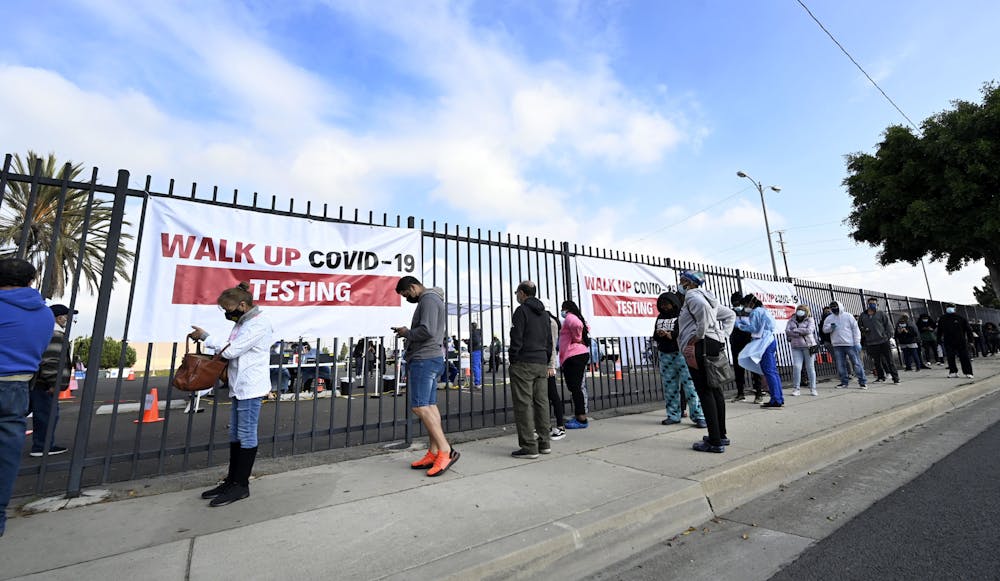
4. The endemic endgame
A post-pandemic world may still have COVID-19 in it. Many researchers suspect that the SARS-CoV-2 coronavirus will become endemic, meaning it’s always around, with some level of constant ongoing transmission. The viruses that cause the flu and the common cold, for instance, are endemic.
Sara Sawyer, Arturo Barbachano-Guerrero and Cody Warren, a team of virologists and immunologists from the University of Colorado Boulder, wrote that SARS-CoV-2 might hit the sweet spot for a virus to become endemic by being just the right degree of transmissible: “Generally speaking, viruses that are highly contagious, meaning that they spread really well from one person to the next, may never die out on their own because they are so good at finding new people to infect.”
[More than 140,000 readers get one of The Conversation’s informative newsletters. Join the list today.]
SARS-CoV-2 spreads easily through the air. Even people who aren’t experiencing any symptoms can pass the coronavirus to others. These factors, along with today’s heavily interconnected global society, make it unlikely COVID-19 is going away completely anytime soon.
For now, these scholars write, the best we can likely hope for is stabilized rates of SARS-CoV-2 that settle down into predictable patterns, like flu season. If you want to help hurry things along toward this end stage, do what you can to make yourself an inhospitable host for the coronavirus – most notably, keep up to date with recommended COVID-19 vaccinations.
Editor’s note: This story is a roundup of articles from The Conversation’s archives.
Maggie Villiger, Senior Science + Technology Editor, The Conversation
This article is republished from The Conversation under a Creative Commons license. Read the original article.