 How to resolve AdBlock issue?
News
The Lake County First Responder Memorial Ceremony will take place beginning at 5:30 p.m. Friday, May 13, at Lake County Museum Park, 255 N. Main St.
The event is being hosted by the Lake County Sheriff’s Office.
The agency invites everyone to join them as they come together to honor and remember those who made the ultimate sacrifice for their community in the line of duty and service.
For more information, contact Deputy Cynthia Radoumis at 707-262-4200.
The committee, or LEDAC, will meet via Zoom from 7:30 to 9 a.m. Wednesday, May 11.
The meeting is open to the public.
The meeting will be held via Zoom: Meeting ID, 847 9466 6151; pass code, 619840. Dial by your location, 669-900-6833.
On the agenda are informational presentations on homelessness in the city by Lakeport Police Chief Brad Rasmussen, and the California Main Street and Lakeport Main Street Association by the association’s executive director, Marie Schrader.
Also Wednesday, the group will continue its review and work on updating the Lakeport Economic Development Strategic Plan for 2022 to 2027, and get status reports from working groups.
There also will be updates on city projects and activities, and member reports.
The group’s next meeting is on July 13.
LEDAC advocates for a strong and positive Lakeport business community and acts as a conduit between the city and the community for communicating the goals, activities and progress of Lakeport’s economic and business programs.
Members are Chair Wilda Shock, Vice Chair Denise Combs and Secretary JoAnn Saccato, along with Bonnie Darling, Candy De Los Santos, Bill Eaton, Monica Flores, Pam Harpster, Scott Knight, Alicia Russell, Laura Sammel and Marie Schrader. City staff who are members include City Manager Kevin Ingram and Community Development Director Jenni Byers.
Email Elizabeth Larson at
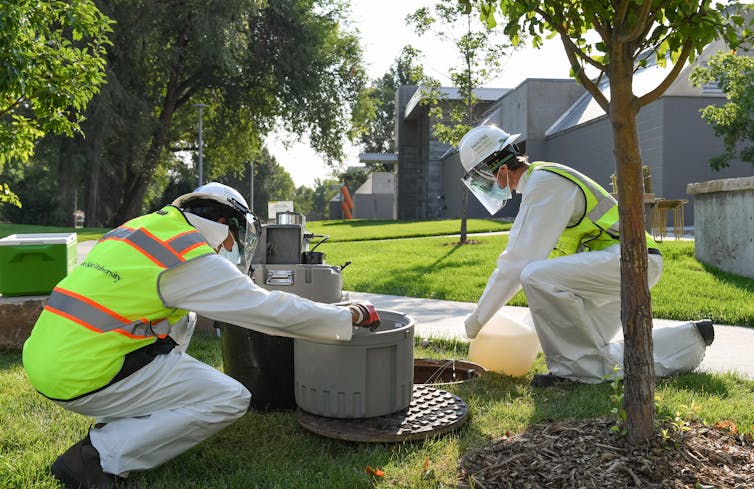
A community’s sewage holds clues about its COVID-19 burden. Over the course of the pandemic, wastewater surveillance has become an increasingly popular way to try to understand local infection trends.
Microbiologists Susan De Long and Carol Wilusz met and became wastewater aficionados in April 2020 when a grassroots group of wastewater treatment plant operators asked them to develop and deploy a test to detect SARS-CoV-2 in samples from the sewers of Colorado. De Long is an environmental engineer who studies useful bacteria. Wilusz’s expertise is in RNA biology. Here they describe how wastewater surveillance works and what it could do in a post-pandemic future.
How is wastewater monitored for SARS-CoV-2?
Wastewater surveillance takes advantage of the fact that many human pathogens and products of human drug metabolism end up in urine, feces or both. The SARS-CoV-2 virus that causes COVID-19 shows up in surprisingly large quantities in feces of infected people, even though this is not a major route of disease transmission.
To figure out whether any pathogens are present, we first need to collect a representative sample of wastewater, either directly from the sewer or at the point where what engineers call “influent” enters a treatment plant. We can also use solids that have settled out of the wastewater.
Technicians then need to remove large particles of fecal matter and concentrate any microbes or viruses. The next step is extracting their nucleic acids – the DNA or RNA that holds the pathogens’ genetic information.
The sequences contained in the DNA or RNA act as unique bar codes for the pathogens present. For instance, if we detect genes that are unique to SARS-CoV-2, we know that the coronavirus is in our sample. We use PCR-based approaches, similar to those used in clinical diagnostic tests, to detect and quantify SARS-CoV-2 sequences.
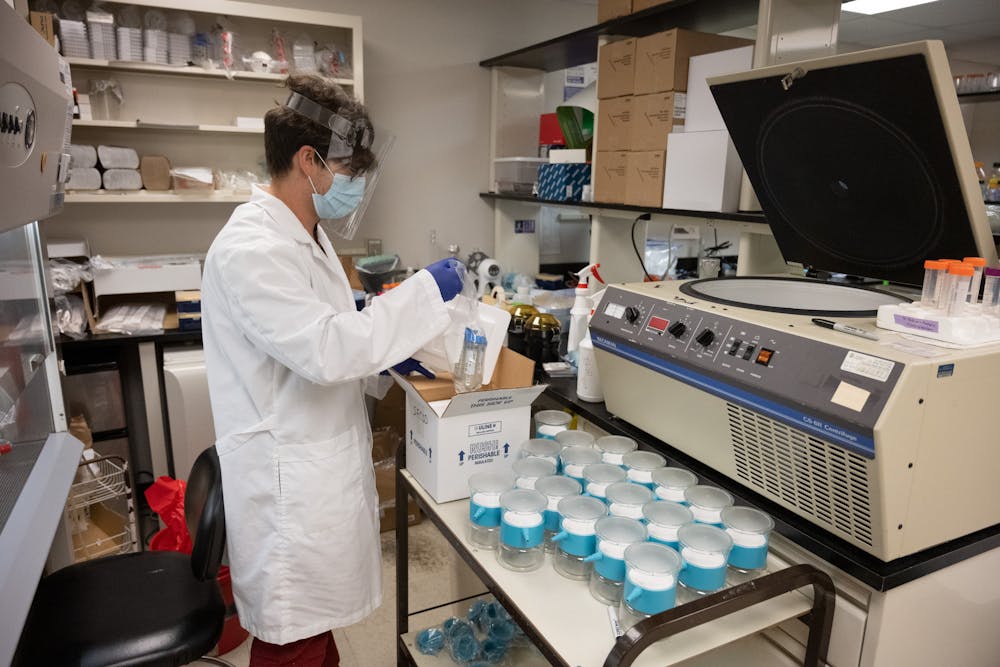
Characterizing the nucleic acid sequence in more detail can provide information about viral strains – for instance, it can identify variants like omicron BA.2.
Currently, the vast majority of wastewater surveillance efforts are focused on SARS-CoV-2, but the same techniques work with other pathogens, including poliovirus, influenza and noroviruses.
Before the pandemic, one application was monitoring for rare poliovirus outbreaks in areas where polio vaccination is ongoing. Wastewater can also be monitored for signs of various drugs to give insights into the level and type of drug use in a population.
Where does the data go?
During the pandemic, the U.S. Centers for Disease Control and Prevention developed the National Wastewater Surveillance System specifically to track SARS-CoV-2 across the country. Over 800 sites report data to this NWSS system, but not all states and counties are currently represented.
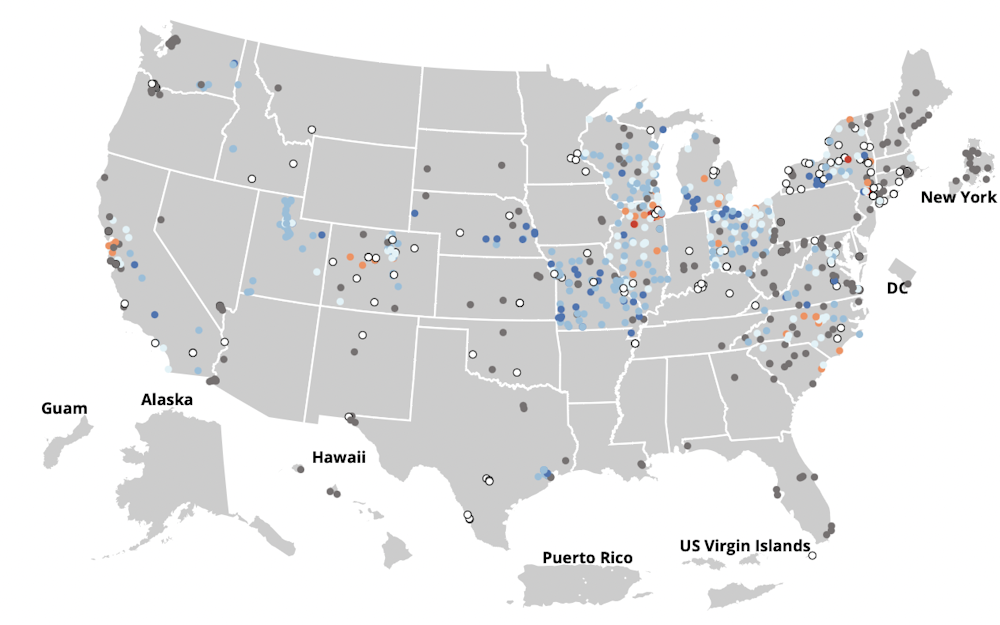
Many state agencies, like the Colorado Department of Public Health and Environment, and cities, like Tempe, Arizona, have their own dashboards for reporting data. Some companies performing wastewater analysis report data on their own dashboards, too.
In our opinion, the NWSS represents an exciting first step in monitoring population health through wastewater. Similar systems are being established in other countries, including Australia and New Zealand.
What does wastewater data really show?
SARS-CoV-2 levels in wastewater from large populations are an excellent indicator of the infection level in a community. The system automatically monitors everyone who lives in the sewershed, so it’s anonymous, unbiased and equitable. Importantly, it is also impossible to track the infection back to a particular person, household or neighborhood without taking additional samples.
Wastewater surveillance doesn’t rely on the availability of clinical tests or people reporting their test results. It also picks up asymptomatic and pre-symptomatic cases of COVID-19; this is critical because people who are infected but don’t feel sick can still spread COVID-19.
In our opinion, wastewater testing is increasingly important as more COVID-19 tests are done at home. And because vaccination has also led to more mild and asymptomatic cases of COVID-19, people may be infected without getting tested at all. These factors mean that clinical case data are less informative than earlier in the pandemic, while wastewater data remains a consistent indicator of community infection level.

So far, you can’t accurately predict the number of infected individuals in a community based on the level of virus in its wastewater. The stage of someone’s infection, how their body responds to the virus, the viral variant, how far a person was from where the wastewater sample was taken, even the weather can all affect the amounts of SARS-CoV-2 measured in sewage.
But scientists can infer relative changes in infection rates. Watching viral levels go up and down in sewage provides a glimpse of whether cases are rising or falling in the community as a whole.
Because SARS-CoV-2 can be detected in wastewater days or even weeks before outbreaks occur, wastewater monitoring can provide an early warning that public health measures may be warranted. And trends in the signal are important – if you know levels are rising, it may be a good time to reinstitute a mask mandate or recommend working from home. At present, public health officials use wastewater monitoring data along with other information like test positivity rates and the number of clinical cases and hospitalizations in the community to make these kinds of decisions.
Data from sequencing can also help detect new variants and monitor their levels, allowing health responses to take into account the characteristics of the variant present.
In smaller populations, such as in college dormitories and nursing homes, wastewater monitoring can detect a small number of infected people. That can sound the alarm that targeted clinical testing is in order to identify infected people for isolation. Early detection, targeted testing and quarantining are effective at preventing outbreaks. Rather than using clinical testing for routine monitoring, administrators can reserve disruptive clinical tests for times when SARS-CoV-2 is detected in the wastewater.
What will monitoring look like in the future?
Widespread and routine use of wastewater monitoring would give public health officials access to information about the levels of a range of potential infections in U.S. communities. This data could guide decisions about where to provide additional resources to communities, like holding testing or vaccination clinics in places where infection is on the rise. It could also help determine when interventions like masking or school closures are necessary.
In the best case, wastewater monitoring might catch a new virus when it first arrives in a new area; an early shutdown in the very localized area could potentially prevent a future pandemic. Interestingly, researchers have detected SARS-CoV-2 in archived wastewater samples collected before anyone had been diagnosed with COVID-19. If wastewater monitoring had been part of the established public health infrastructure back in late 2019, it could have provided an earlier warning that SARS-CoV-2 was becoming a global threat.
For now, though, establishing and operating a national wastewater surveillance system, particularly one that includes building-level monitoring at key locations, is still too costly and labor-intensive.
Ongoing research and development efforts are trying to simplify and automate wastewater sampling. On the analysis side, adaptation of PCR and sequencing technologies to detect other pathogens, including novel ones, will be vital to take full advantage of such a system. Ultimately, wastewater surveillance could help support a future in which pandemics are far less deadly and have less social and economic impact.
[Research into coronavirus and other news from science Subscribe to The Conversation’s new science newsletter.]
Susan De Long, Associate Professor of Civil and Environmental Engineering, Colorado State University and Carol Wilusz, Professor of Microbiology, Immunology and Pathology, Colorado State University
This article is republished from The Conversation under a Creative Commons license. Read the original article.
The activity will occur at the same location in Kelseyville, the Mercantile by Shannon Family of Wines, and at the same time, 2 to 6 p.m.
“During this time of drought and low lake levels, we are grateful for more rain and moisture,” stated Nicole Flora, executive director of the Lake EDC, “but deeply disappointed to postpone the Forum due to uncertain weather conditions.”
Ticket holders may request a refund by contacting the Lake County Economic Development Corporation,
Presented by the Lake County Economic Development Corp., or Lake EDC, the Lake County Chamber of Commerce and the Lake County Tourism Improvement District, the Lake Leadership Forum features partnerships, collaboration and entrepreneurs with presentations about community initiatives and opportunities that are generating economic momentum in Lake County.
The Leadership Forum is open to the public with a limited number of tickets available for June 7 at https://tinyurl.com/LakeForum22 for $20 per person which includes a glass of wine or other beverage.
Tickets may also be purchased with a check payable to and sent to Lake EDC, P.O. Box 1257, Lakeport, CA 95453.
Speakers will demonstrate the entrepreneurial spirit of Lake County through presentations and a panel discussion focusing on the impacts of the pandemic on local agriculture and tourism. Trends in the cannabis industry and training programs for youth in hospitality will be addressed.
The presenting organizations represent people from all over Lake County who love our community and want to see it prosper. You are invited to participate in this leadership forum and connect with like-minded citizens.
More information is available from Nicole Flora, executive director, Lake EDC,
In 2019, the city began the formal process to annex nearly 137 acres, made up of 50 parcels, in the area south of the existing Lakeport city limits, adjacent to South Main Street and Soda Bay Road and east of Highway 29.
In March, the Lake Local Agency Formation Commission, or LAFCo, approved a resolution giving the annexation the go-ahead, but also approved a protest hearing to give property owners and voters residing within the annexation area the chance to submit formal written opposition.
That hearing was held on Friday. It lasted for 15 minutes and was held at Lakeport City Hall.
LAFCo Executive Officer John Benoit said that the term “hearing” is a misnomer, and that the purpose of the event was to simply collect the protests.
He said the final results will not be verified until they are counted and checked by the county elections and assessor’s offices.
Government Code Section 57075 requires that within 30 days following the hearing the value of the protests be determined.
Lakeport City Manager Kevin Ingram told Lake County News that Benoit was expecting to have an official count for the next LAFCo meeting on May 18.
“With that said it appears that those protesting exceed 25% of total landowners representing greater than 25% of assessed value so the matter will likely proceed to a vote of registered voters in the area at a future date,” said Ingram. “It does not appear that enough registered voters protested to end proceedings at this time.”
Email Elizabeth Larson at
The board will meet beginning at 9 a.m. Tuesday, May 10, in the board chambers on the first floor of the Lake County Courthouse, 255 N. Forbes St., Lakeport.
The meeting can be watched live on Channel 8, online at https://countyoflake.legistar.com/Calendar.aspx and on the county’s Facebook page.
Accompanying board documents, the agenda and archived board meeting videos also are available at that link.
To participate in real-time, join the Zoom meeting by clicking this link.
The meeting ID is 910 8895 3263, pass code 011175. The meeting also can be accessed via one tap mobile at +16699006833,,91088953263#,,,,*011175#.
All interested members of the public that do not have internet access or a Mediacom cable subscription are encouraged to call 669-900-6833, and enter the Zoom meeting ID and pass code information above.
To submit a written comment on any agenda item visit https://countyoflake.legistar.com/Calendar.aspx and click on the eComment feature linked to
the meeting date. If a comment is submitted after the meeting begins, it may not be read during the meeting but will become a part of the record.
In an untimed item, the board will consider the process and protocol for recruiting the new county administrative officer.
The discussion had been set to take place last week but was pulled from the agenda, as the meeting ran into the evening.
The board will consider the protocol suggested by Human Resources Director Pam Samac and set a date to interview the five qualified candidates that have submitted applications so far.
The board also had been scheduled last week to discuss filling the District 4 supervisorial seat, as Tina Scott has resigned effective July 31. However, that matter also had been pulled from the agenda and is not set to be back before the board until May 17, the county reported.
At 9:45 a.m., the board is set to continue a public hearing on an appeal of the Lake County Planning Commission’s grant of a major use permit to Lake Vista Farms LLC at 2050 and 2122 Ogulin Canyon Road in Clearlake.
The full agenda follows.
CONSENT AGENDA
5.1: a) Rescind approval of agreement for provision of satellite imagery services by Planet Labs PBC to the county of Lake; and b) waive the formal bidding process, pursuant to Lake County Code Section 38.1, as an extension of an annual agreement; and c) approve agreement for provision of satellite imagery services by Planet Labs PBC to the county of Lake.
5.2: Approve Board of Supervisors minutes for April 12, 2022.
5.3: Adopt resolution setting rate of pay for election officers for the June 7, 2022, Statewide Direct Primary Election.
5.4: a) Adopt resolution adopting a continuous record retention and destruction schedule for the Human Resources Department; and b) approve policy establishing a records retention and destruction schedule for Lake County Human Resources Department; and c) approve destruction of old HR Records from 1974 through 2018.
5.5: Adopt resolution expressing support for the Middletown Days Parade and events, and temporarily authorizing a road closure, prohibiting parking and authorizing removal of vehicles and ordering the Department of Public Works to Post Signs.
5.6: Approve contract between county of Lake and Excellesoft Partners LLC for Nexus Registry Software in the amount of $42,252, from March 15, 2022 to June 30, 2025, and authorize the chair to sign.
5.7: Approve fourth amendment to the lease agreement between county of Lake and Gary Sada and Sheila Sada for the property located at 926 S. Forbes St. in Lakeport in the amount of $86,332.68, from July 1, 2022, to June 30, 2023, and authorize the chair to sign.
5.8: Approve sixth amendment to the lease agreement between county of Lake and Ewing and Associates for the Child Welfare Services parking lot located on South Forbes Street in Lakeport, for the amount of $4,800 from July 1, 2022 to June 30, 2023, and authorize the chair to sign.
5.9: Sitting as the Lake County Sanitation District Board of Directors, (a) Waive the competitive bidding process, pursuant to Lake County Code Section 2-38.2, based on the unique nature of the goods or services precludes competitive bidding; (b) authorize Special Districts administrator/assistant purchasing agent to issue a purchase order not to exceed $126,000 to Bogie’s Pump Systems for the purchase of a Fairbanks Morse 350 HP pump for Lift Station #1.
5.10: Adopt resolution authorizing the county of Lake Water Resources director to apply for, accept, and execute Prop 68 state grant funds for improving waterways, administered by the California Natural Resources Agency: to conduct countywide community trash cleanup events and improve Illicit Discharge Detection Elimination(IDDE)/ Spill Response Planning.
5.11: Adopt resolution authorizing application for grant funds for the abatement of dilapidated lake bed structures.
TIMED ITEMS
9:05 a.m.: Pet of the Week.
6.3, 9:07 a.m.: Consideration of resolution proclaiming the existence of a local emergency due to pervasive tree mortality.
6.4, 9:20 a.m.: Consideration of acceptance of the March 31, 2022 report of Lake County pooled investments.
6.5, 9:30 a.m.: Public hearing on account and proposed assessment for 2853 Merced St, Nice, CA, 95464.
6.6, 9:45 a.m.: Continued from May 3, public hearing, discussion and consideration of appeal (AB 21-05) of Planning Commission Approval of Major Use Permit 19-36 and IS/MND 19-56 “Lake Vista Farms, LLC”, Clearlake. APN’s 010-053-01 and 010-053-02.
UNTIMED ITEMS
7.2: Consideration of confidential recruitment of chief administrative officer protocol and summary.
7.3: Consideration of amendment to the county of Lake COVID-19 Public Health Emergency Worksite Protocol.
7.4: Consideration of an ordinance establishing Chapter 31 of the Lake County Code for an edible food recovery program.
7.5: Consideration of presentation and discussion by Watershed Protection District for the request to allocate $500,000 internal matching funds, over a period of six years, to support $1.9 million in approved, and partially awarded, Blue Ribbon Committee Storm Water Project Grant Funds.
CLOSED SESSION
8.1: Public employee evaluation: County Counsel Anita Grant.
8.2: Public employee evaluation: Public Health Officer Dr. Erik McLaughlin.
8.3: Conference with legal counsel: Existing litigation pursuant to Gov. Code section 54956.9(d)(1) — City of Clearlake v. County of Lake, et al.
Email Elizabeth Larson at