How to resolve AdBlock issue?
News
The portrait hanging ceremony forJudge Richard Martin will take place beginning at 3:30 p.m. Friday, May 13, in the Lake County Superior Court, located on the fourth floor of the Lake County Courthouse, 255 N. Forbes St. in Lakeport.
Martin retired in May 2017 after 12 years on the bench in the Superior Court’s Department 2.
He had a long career in public service and is the father of Sheriff Brian Martin.
The ceremony on Friday is part of a tradition for retired judges, whose portraits are hung in their former courtrooms.
Light refreshments will be served.
With more daylight hours before sunset and warming temperatures, May is the perfect month to enjoy outdoor activities.
May also happens to be National Bicycle Safety Month, and the California Highway Patrol and Office of Traffic Safety, or OTS, want to remind outdoor enthusiasts that whether you are a cyclist, pedestrian, or driver, traffic safety laws are in place to save lives.
“As more Californians choose walking and bicycling as primary modes of transportation, creating a safer environment for all roadway users is a shared responsibility,” said Commissioner Amanda Ray.
Drivers can help create a safer environment for cyclists by checking their blind spots when changing lanes, proceeding with caution through intersections, remembering to look carefully for bicyclists and pedestrians before making a turn, and always looking for cyclists before opening the car door near streets or bike paths.
California law also requires drivers to maintain a minimum of three feet of distance when passing or overtaking a cyclist. If there is not enough room to safely pass, be patient and wait until it is safe.
“If you’re driving, be the best version of yourself,” OTS Director Barbara Rooney said. “We are all pedestrians at one point and many of us ride bikes. Slow down and share the road so we may all get places safely.”
According to the CHP’s Statewide Integrated Traffic Records System, in 2020, California had almost 8,800 bicycle crashes with 90 percent of them involving an injury. In that same year, 151 people died in bicycle crashes.
Although helmets are not required for people ages 18 and older, wearing a properly secured helmet drastically reduces a rider’s chance of a head injury.
As part of National Bicycle Safety Month, the CHP has partnered with the OTS to educate the public on bicycle safety and the laws that apply to all modes of transportation.
Throughout May, many local CHP offices will offer educational presentations and bicycle trainings to promote bicycle safety.
For more information, please use this link https://www.chp.ca.gov/find-an-office to contact your local CHP office.
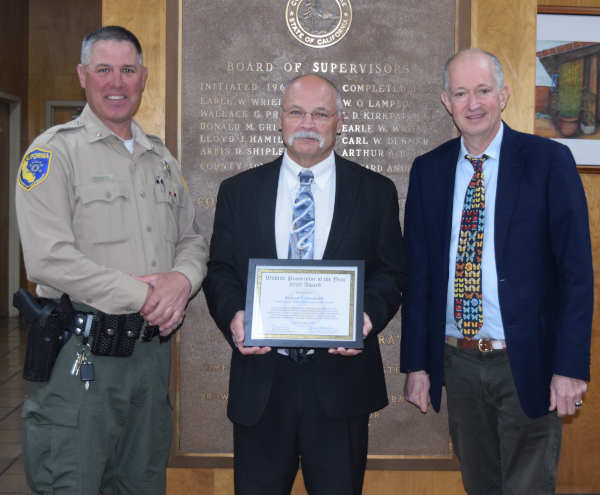
LAKE COUNTY, Calif. — State officials came to the Board of Supervisors meeting on Tuesday to honor a longtime Lake County prosecutor for his efforts to protect wildlife.
The California Fish and Game Commission named Chief Deputy District Attorney Richard Hinchcliff as its 2020 Wildlife Prosecutor of the Year in June.
Due to the COVID-19 pandemic, the presentation was delayed by nearly another year.
However, Hinchcliff finally received his reward on Tuesday, when Bart Bundesen, assistant chief of the California Department of Fish and Wildlife’s Central Enforcement District, and Eric Sklar, a member of the California Fish and Game Commission, came to the board meeting to honor him.
“It’s very important in law enforcement that our partners in the District Attorney’s Office are there to help us,” said Bundesen.
“Our work is just a portion of what needs to be done and without those district attorneys doing the work that they do we wouldn't be able to complete our job,” he said.
Bundesen said they find that there are certain district attorneys who take it upon themselves to take special interest in fish and game cases. “Sometimes it's out of love for the environment, sometimes it's out of their love for hunting and fishing, it just all depends, but those people are essential to us.”
He said Hinchcliff is one of those people that's been critical to their efforts, “and that's why we're recognizing him as Wildlife Prosecutor of the Year.”
Hinchcliff, who was raised in Lake County, joined the District Attorney’s Office in 1995. He’s been chief deputy district attorney since 2006.
Bundesen said it was Hinchcliff’s personal interest that led him in 2000 to ask the district attorney to let him handle all of the fish and game cases.
It was reported during the presentation that since 2000, Hinchcliff has prosecuted 550 wildlife and environmental cases, with a conviction rate exceeding 95%.
Fish and Wildlife also reported that Hinchcliff has obtained court orders requiring poachers to pay fines totaling $429,742. He also has had 65 firearms ordered forfeited, and had 116 hunting licenses and 57 fishing licenses revoked for convicted poachers for one to three years.
Bundesen said Hinchcliff has improved the procedures for how fines are handed out in such cases, and is working to ensure that those who are convicted pay their fines.
Greg Giusti, chair of the Lake County Fish and Wildlife Advisory Committee, also was on hand to offer his praise to Hinchcliff, with whom he has worked for at least 20 years. Hinchcliff also is a member of that committee.
During that time, he said he’s come to appreciate Hinchcliff’s honesty, integrity and professionalism, and his dedication to the protection and conservation of Lake County’s fish and wildlife resources.
“Not only does he bring a positive shining light to the county, his energy and his dedication to his job, to public service, is really part of this commendation I believe,” said Giusti.
He told the state officials that they “hit a home run” by selecting Hinchcliff for the award.
“It's a good day to come up here and to acknowledge somebody that I consider a friend, somebody that I work with and somebody who I think is a consummate professional and public servant,” said Giusti, thanking Hinchcliff for the work he does for the community.
Sklar said he and his fellow commissioners and commission staff are deeply grateful for the stellar work that Hinchcliff has done.
He credited Hinchcliff for making pioneering changes in the way wildlife cases are prosecuted, which has ensured that those who break the law are not back hunting the next day.
Sklar said Hinchcliff also has changed the way such crimes are penalized. Instead of just fines, Hinchcliff has gotten jail sentences for individuals convicted of the most serious cases.
One of the most egregious cases Hinchcliff prosecuted involved a large crappie poaching case. Sklar said Hinchcliff’s handling of the case resulted in $70,000 in fines, and $40,000 in confiscated fishing equipment was given to a local high school fishing club.
Sklar called Hinchcliff’s high conviction rate on fish and game cases “an incredible record.”
Hinchcliff thanked Bundesen, Giusti and Sklar for their comments.
“We’ve been very successful in the DA’s Office prosecuting fish and wildlife violations,” he said.
He explained the partnership that made that possible.
Hinchcliff said that in his 27 years in the District Attorney’s Office, Fish and Wildlife has had a history of very good wardens.
“I find every single one of them to be intelligent, friendly, hardworking, dedicated to their jobs and very well trained,” he said.
He added that if Fish and Wildlife hadn’t done such a good job of training and producing great wardens to work on cases, the District Attorney’s Office wouldn’t be as successful as it’s been.
Email Elizabeth Larson at
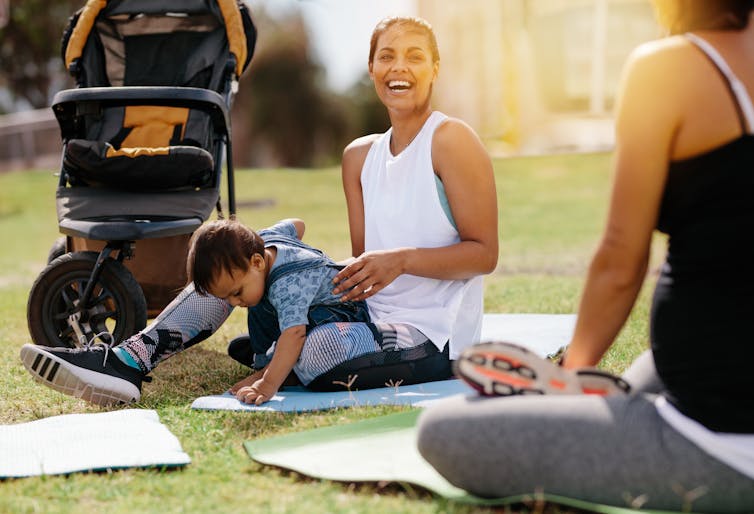
There are thoughtful and meaningful things to do to celebrate new mothers on Mother’s Day.
Mothers with young children have lower levels of leisure and physical activities than the rest of the population, which puts their physical and mental health at risk. So the gift of sleep, time, self-care (“me time”) and a message of what a remarkable job she is doing may be what she needs most.
We’re a team of researchers who have studied the life-changing transition to motherhood for nearly 10 years. Our research has examined how motherhood enriches women’s lives at the same time as we challenge society’s notion of being a “good mother.” The role of policy (maternity leave legislation, childcare, access to leisure services) in shaping women’s experiences has been a central focus.
Giving new mothers a sense of freedom
Similar to other research findings, in a recent study currently undergoing peer review, the new mothers we worked with sought out leisure and physical activities to minimize stress, decrease their anxiety, increase self-esteem and navigate their new mothering identity. The women’s participation gave them a sense of freedom and control over their lives.
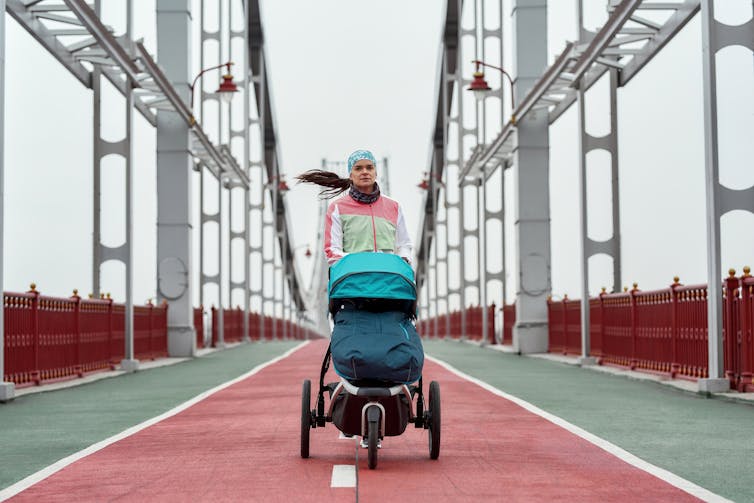
For example, for some mothers, running on their own provided an opportunity to carve out time for themselves. For other mothers, running with their baby in a stroller helped them develop a sense of family.
But the reality is that postpartum activities are not accessible to all women.
Unrealistic expectations of motherhood
In our recent study, we worked with new mothers from pregnancy to 18 months post-birth. We found that during pregnancy the women had unrealistic expectations of what life would be like, in contrast to the realities that they faced after the baby was born.
This included frustration about how much time they actually have to participate in leisure and physical activities. It also included disappointment about the type and intensity of activities they could return to — especially when considering their recovering postnatal bodies (for example, C-sections, general fatigue). The data also suggested that returning to work poses an additional challenge to women and successful leisure and physical activity engagement.
In western societies, “good mothering” practices are informed by an intensive mothering ideology that is informed by middle class and white values. It embodies motherhood as child-centred, emotionally absorbing and self-sacrificing. Compared to previous generations, mothering now extends beyond the provision of children’s safety and well-being. Mothers are expected to maximize their children’s growth and development. Participation in organized programs is one way to do this (for example, mommy and me swimming).
These societal expectations of “good mothering” often leave new mothers feeling unprepared, disappointed and fearing failure. However, research has shown that having more realistic expectations predicts better adjustment for mothers, including decreased depression.
Creating a socio-economic hierarchy
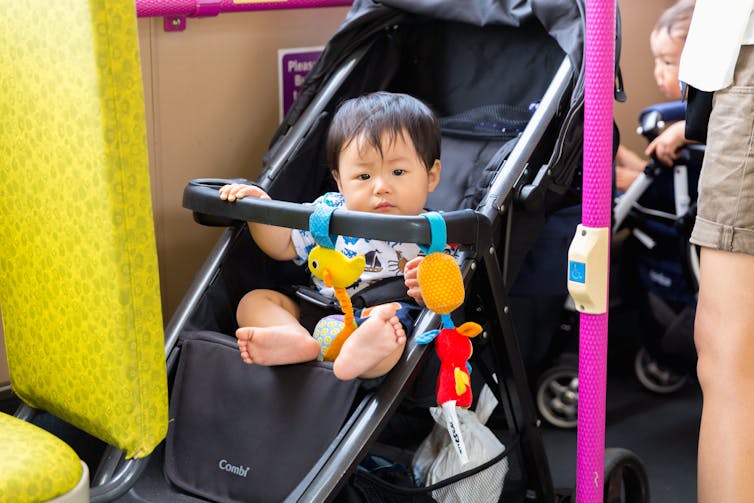
Our research on parental policies found that they privilege paid work while reinforcing a socio-economic hierarchy in which only some mothers are able to access the benefits. This can affect women’s chances for improved health and well-being.
New mothers in our recent study who were self-employed were unable to access formal maternity leave policies. Consequently, they had reduced participation in leisure and physical activities — on their own or with their baby. This led to feelings of failure as a mom and in their careers.
Women in precarious employment who did not qualify for maternity leave programs also reported difficulties. Many community recreation programs are user pay, which excludes women of lower socio-economic status.
Although financial assistance may be offered for organized recreation programs, research has highlighted the humiliation of having to publicly declare or prove their low-income status. Other research points to the fear of going out in unsafe neighbourhoods in order to access community programs and services.
The COVID-19 pandemic has also disproportionately affected low-income mothers. The new mothers in our recent study talked about the high cost of transportation and difficulties using public transportation with a stroller. Consequently, many women feel judged and vulnerable from the outset of being a mother.
Generally, the stories from new mothers who qualified for maternity leave revealed that they had more time, money and choice of leisure and physical activities that they could access than mothers who did not qualify. Yet, they still have reduced income and higher costs with the arrival of the new baby. They also had to overcome challenges such as the stigma of breastfeeding in public spaces or the inability to participate in leisure and physical activities without their baby.
Important role of family

Social relationships play an important role in facilitating new mothers’ participation in their own leisure and physical activities.
Family support networks helped the mothers in our most recent study to resist the notion of self-sacrificing motherhood and to find time for themselves. The mothers’ partners and their extended family members (for example, mother, father-in-law) were important support networks to look after the baby. These support networks helped the mothers schedule and find much-needed time for themselves.
New mothers face challenges with their return to leisure and physical activities after the birth of a child. But it is clear that with support such as parental leave and family support, these activities can help them negotiate the difficult transition to motherhood and improve their health and well-being.
Dawn Trussell, Associate Professor of Sport Management, Brock University's Chancellor's Chair for Research Excellence, Brock University; Jennifer Mooradian, Research Assistant, Faculty of Applied Health Sciences, Brock University; Shannon Hebblethwaite, Associate Professor of Applied Human Sciences, Concordia University, and Stephanie Paterson, Professor, Political Science, Concordia University
This article is republished from The Conversation under a Creative Commons license. Read the original article.
Dogs available for adoption this week include mixes of Anatolian shepherd, Australian cattle dog, Australian shepherd, Belgian malinois, border collie, Carolina dog, Catahoula leopard dog, Chihuahua, French bulldog, German shepherd, Labrador retriever, pit bull and Shih Tzu.
Dogs that are adopted from Lake County Animal Care and Control are either neutered or spayed, microchipped and, if old enough, given a rabies shot and county license before being released to their new owner. License fees do not apply to residents of the cities of Lakeport or Clearlake.
The following dogs at the Lake County Animal Care and Control shelter have been cleared for adoption.
Call Lake County Animal Care and Control at 707-263-0278 or visit the shelter online for information on visiting or adopting.
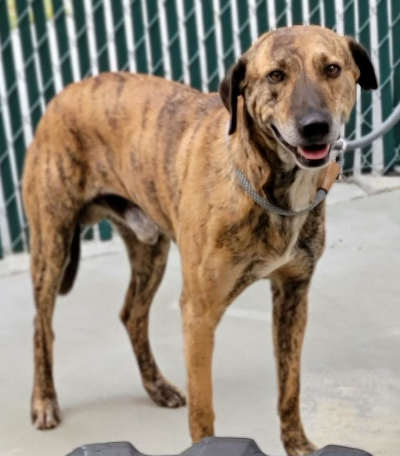
‘Rooster’
“Rooster” is a 5-year-old male mountain cur with a brown brindle coat.
He is in kennel No. 2, ID No. LCAC-A-3384.
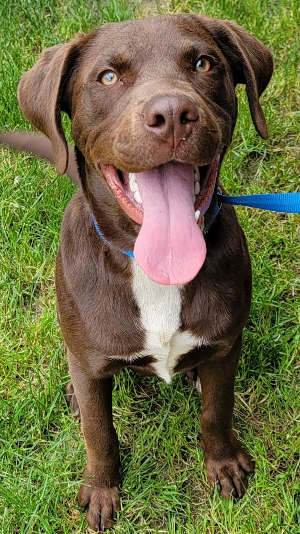
Chocolate lab mix
This young male chocolate Labrador, who is under a year old, has a short coat.
He is in kennel No. 3, ID No. LCAC-A-3385.
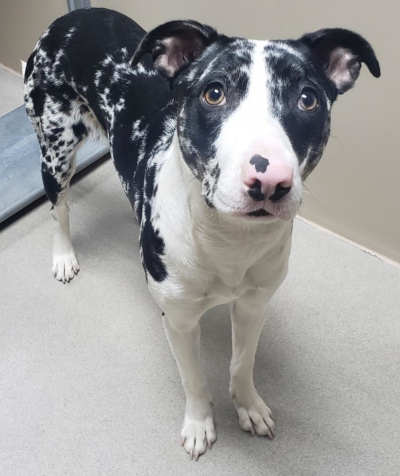
‘Bella’
“Bella” is a 2-year-old Catahoula leopard dog mix with a short black and white coat.
She is in kennel No. 4, ID No. LCAC-A-3245.
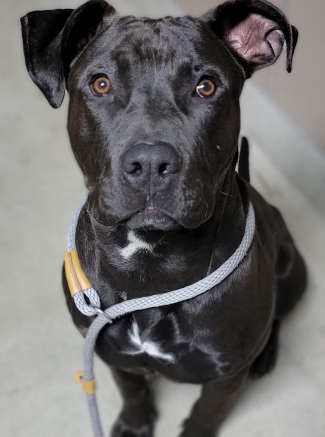
‘Dozer’
“Dozer” is a 2-year-old male pit bull with a short black coat.
He is in kennel No. 5, ID No. LCAC-A-3278.
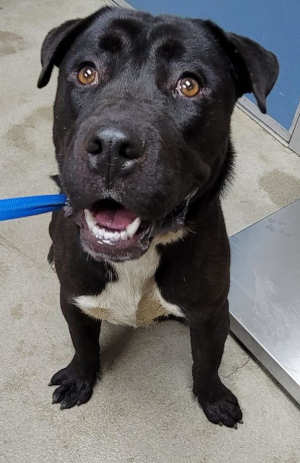
‘Dexter’
“Dexter’ is a 1-year-old male pit bull with a short black coat with white markings.
He is in kennel No. 6, ID No. LCAC-A-3290.
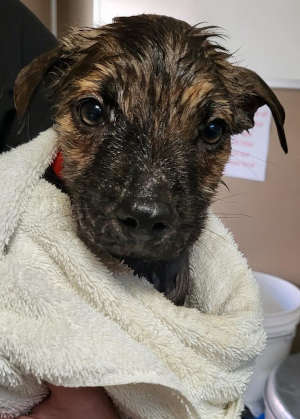
Australian shepherd mix puppy
This male Australian shepherd mix puppy has a short brown and black coat.
He is in kennel No. 7, ID No. LCAC-A-3373.
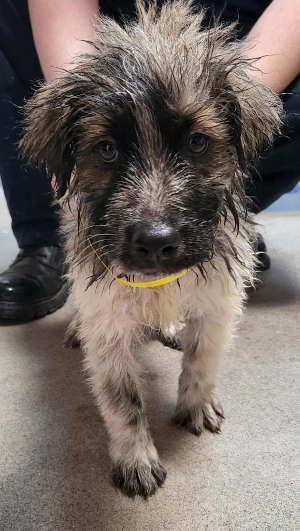
Australian shepherd mix puppy
This female Australian shepherd mix puppy has a tricolor coat.
She is in kennel No. 7, ID No. LCAC-A-3377.
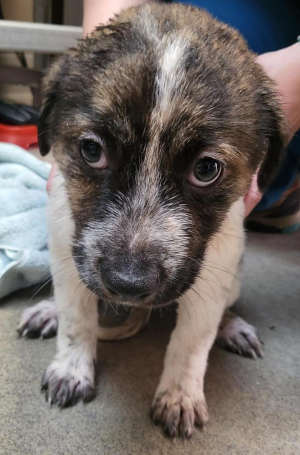
Australian shepherd mix puppy
This female Australian shepherd mix puppy has a tricolor coat.
She is in kennel No. 7, ID No. LCAC-A-3378.
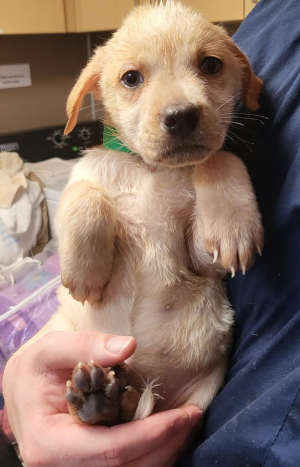
Australian shepherd mix puppy
This female Australian shepherd mix puppy has a gold coat.
She is in kennel No. 7, ID No. LCAC-A-3379.
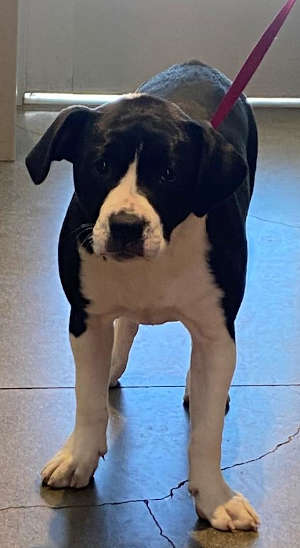
Female pit bull mix
This young female pit bull mix has a short black and white coat.
She is in kennel No. 10, ID No. LCAC-A-3353.
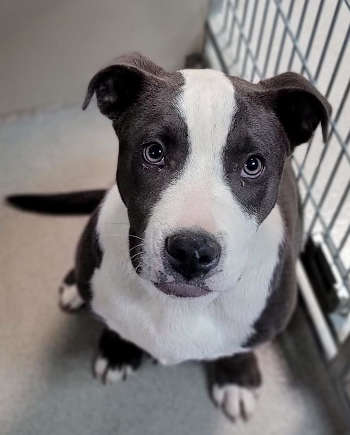
‘Bruno’
“Bruno” is a young male pit bull with a short black and white coat.
He is in kennel No. 11, ID No. LCAC-A-3344.
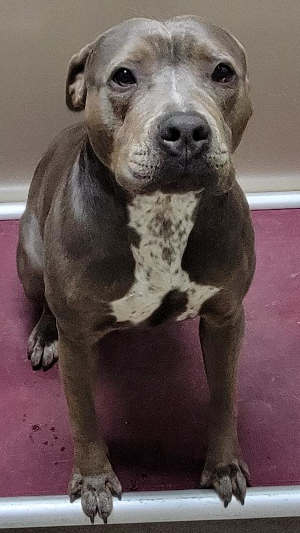
Female pit bull
This 3-year-old female pit bull had a short gray coat with withe markings.
She is in kennel No. 12, ID No. LCAC-A-3323.
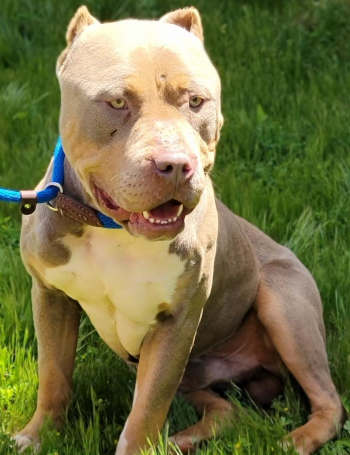
Male pit bull
This 1-year-old male pit bull has a short brown coat with white markings.
He is in kennel No. 15, ID No. LCAC-A-3321.
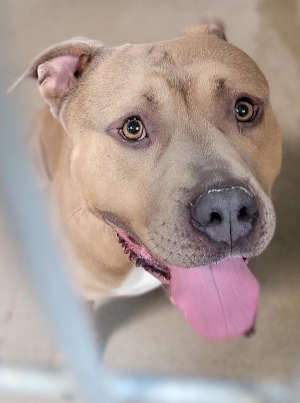
‘Macho’
“Macho” is a 3-year-old male pit bull mix with a short brown coat.
He is in kennel No. 17, ID No. LCAC-A-3343.
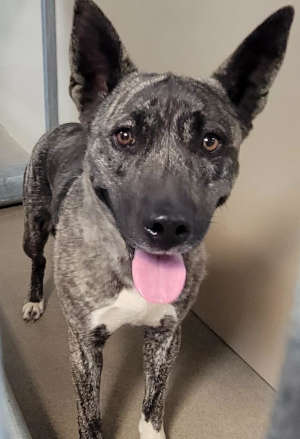
Female shepherd mix
This 1-year-old female shepherd mix has a short gray brindle coat.
She is in kennel No. 19, ID No. LCAC-A-3342.
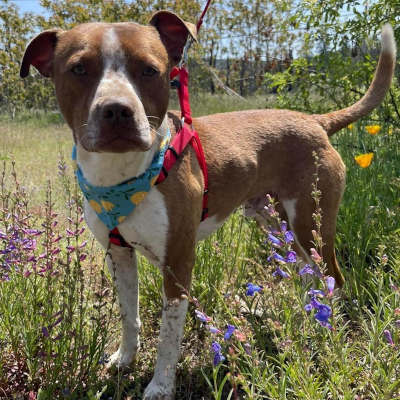
‘Willie’
“Willie” is a 1-year-old male pit bull terrier with a short brown and white coat.
He is in kennel No. 20, ID No. LCAC-A-3301.
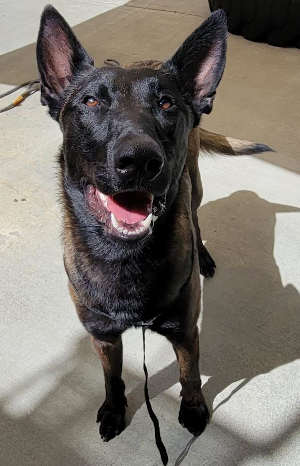
Male Belgian malinois
This 1-year-old male Belgian malinois has a short brown and black coat.
He is in kennel No. 21, ID No. LCAC-A-3270.
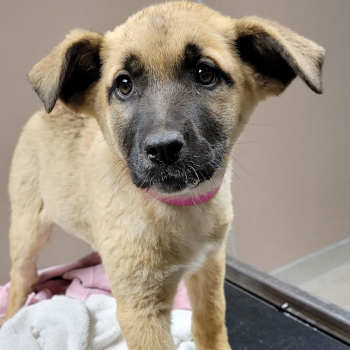
Female German shepherd puppy
This female German shepherd mix puppy has a short black and tan coat.
She is in kennel No. 22a, ID No. LCAC-A-3312.
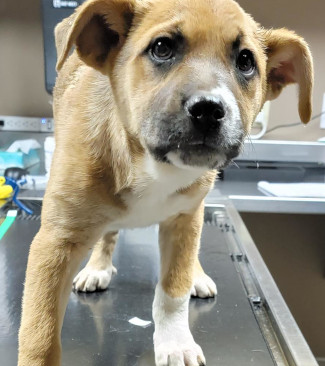
Female German shepherd puppy
This female German shepherd mix puppy has a short tan and white coat.
She is in kennel No. 22b, ID No. LCAC-A-3313.
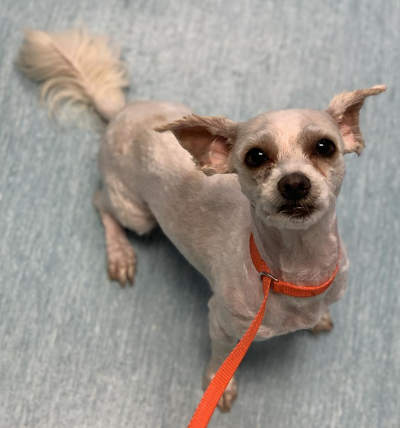
Female Shih Tzu
This young female Shih Tzu has a white coat.
She is in kennel No. 24, ID No. LCAC-A-3349.
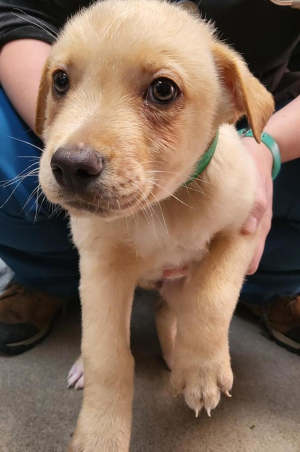
Australian shepherd puppy
This male Australian shepherd puppy has a gold coat.
He is in kennel No. 25, ID No. LCAC-A-3372.
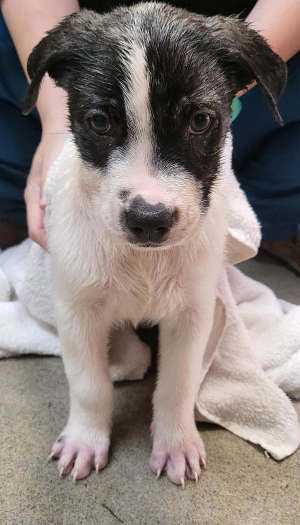
Australian shepherd puppy
This male Australian shepherd puppy has a black and white coat.
He is in kennel No. 25, ID No. LCAC-A-3374.
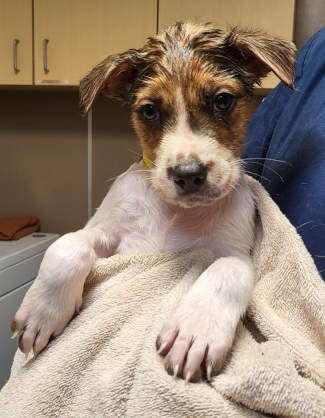
Australian shepherd mix puppy
This male Australian shepherd mix puppy has a tricolor coat.
He is in kennel No. 25, ID No. LCAC-A-3375.
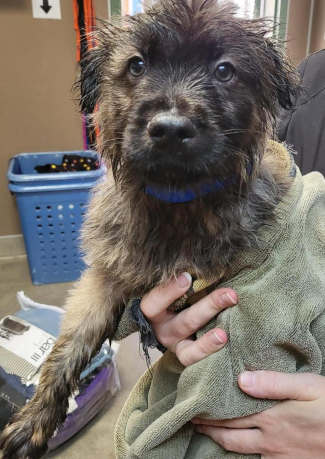
Australian shepherd mix puppy
This male Australian shepherd mix puppy has a brown and black coat.
He is in kennel No. 25, ID No. LCAC-A-3376.
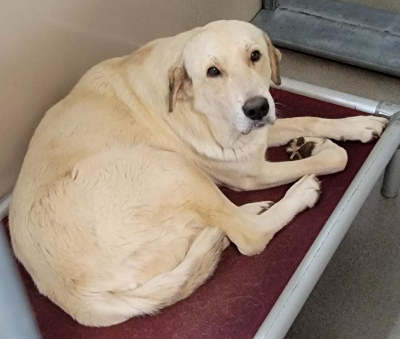
‘Pozey’
“Pozey” is a 6-year-old female Anatolian shepherd with a short cream-colored coat.
She is in kennel No. 26, ID No. LCAC-A-3362.
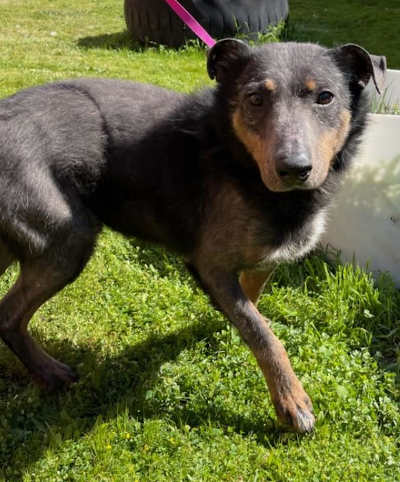
Male Australian cattle dog
This 3-year-old male Australian cattle dog has a short black, tan and white coat.
He is in kennel No. 27, ID No. LCAC-A-3130.
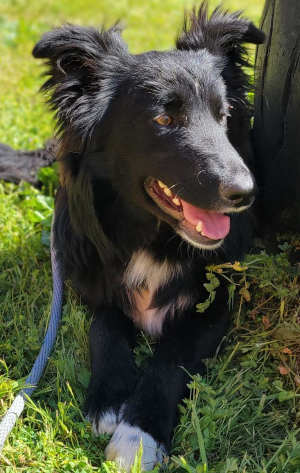
Male border collie
This 2-year-old male border collie has a black coat with white markings.
He is in kennel No. 28, ID No. LCAC-A-3361.
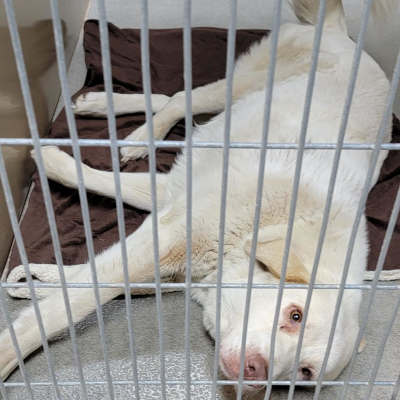
‘Mozey’
“Mozey” is a 6-year-old female Anatolian shepherd with a short cream-colored coat.
She is in kennel No. 29, ID No. LCAC-A-3363.
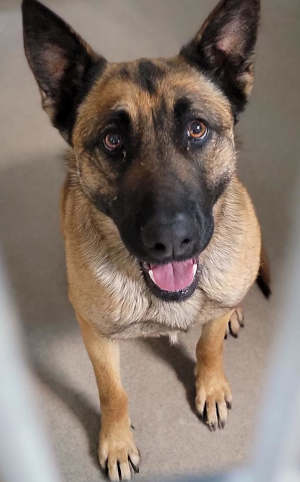
Female German shepherd
This 3-year-old female German shepherd has a short black and tan coat.
She is in kennel No. 31, ID No. LCAC-A-3331.
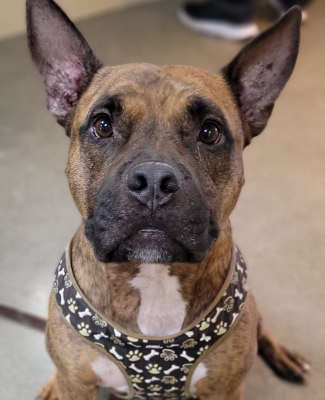
‘Cody’
“Cody” is a 7-year-old male French bulldog-pit bull terrier mix with a short brindle and white coat.
He is in kennel No. 33, ID No. LCAC-A-3284.
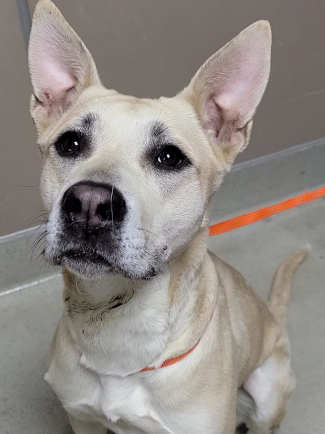
Carolina dog
This 2-year-old female Carolina dog has a short white coat.
She is in kennel No. 34, ID No. LCAC-A-3281.
Email Elizabeth Larson at
Scientists at NASA’s Goddard Space Flight Center in Greenbelt, Maryland, recently received samples of the lunar surface that have been curated in a freezer at NASA’s Johnson Space Center in Houston since Apollo 17 astronauts returned them to Earth in December 1972.
This research is part of the Apollo Next Generation Sample Analysis Program, or ANGSA, an effort to study the samples returned from the Apollo Program in advance of the upcoming Artemis missions to the Moon’s South Pole.
However, the process of getting the samples from Johnson to researchers at Goddard – as well as researchers at NASA’s Ames Research Center in California’s Silicon Valley, the Naval Research Laboratory in Washington, D.C., and the University of Arizona, Tucson – wasn’t simple.
It’s a process that began more than four years ago when NASA’s Julie Mitchell and her Artemis curation team at Johnson began designing and retrofitting a facility to process the frozen Apollo 17 samples. This was a new approach and scientists were excited to employ a technique that could be applied to future lunar missions.
“We started this in early 2018 and there’s been a lot of technical challenges that we’ve had to overcome to get to this point,” said Mitchell. “This was seen as a practice run for preparing a facility for future cold sample processing.”
“By doing this work we're not just facilitating Artemis exploration, but we're facilitating future sample return and human exploration into the rest of the solar system,” Mitchell added. “I feel very privileged to contribute in this small way by developing the capabilities for us to collect these materials, bring them home safely, and curate them for the long term.”
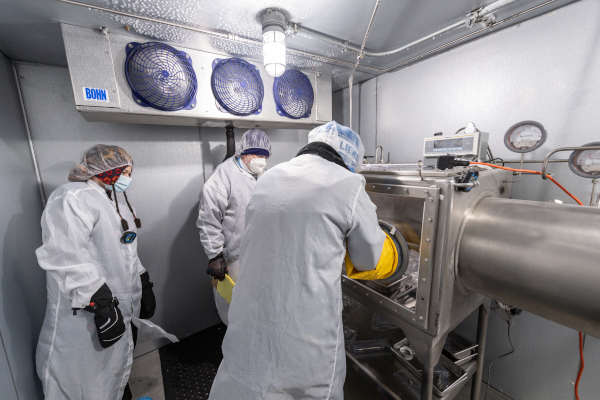
Once the facility was ready, Ryan Zeigler, Apollo sample curator in the Astromaterials Research and Exploration Science, or ARES, Division at Johnson, and his team had to adapt to the unique conditions designed by Mitchell’s team to keep the samples frozen during processing, which included decreased visibility due to frost and challenges manipulating the samples while working with thick gloves in a nitrogen-purged glove box, all of which took place inside a walk-in freezer maintained at minus 4 degrees Fahrenheit (minus 20 C).
Being able to keep samples frozen will be important for Artemis as astronauts potentially return ice samples from the Moon’s South Pole.
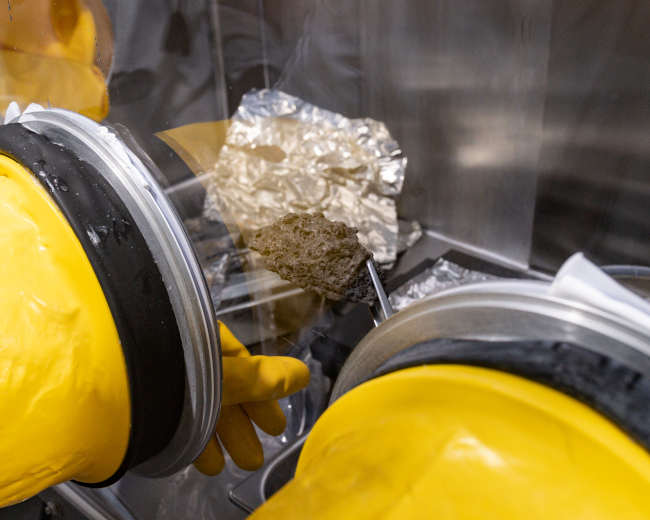
“Everything we do involves a lot of logistics and a lot of infrastructure, but adding the cold makes it a lot harder,” said Zeigler. “It’s an important learning lesson for Artemis, as being able to process samples in the cold will be even more important for the Artemis mission than it is for Apollo. This work gives us some lessons learned and a good feed forward for Artemis.”
Once the frozen samples were processed and subdivided at Johnson by lunar sample processor Jeremy Kent, the samples were then express shipped in a cooler with dry ice, immediately opened at Goddard, and stored in a secure freezer. For the scientists now working with the treasures, there's something special about receiving samples that haven't been investigated in nearly five decades.
Jamie Elsila, a research scientist in the Astrobiology Analytical Laboratory at Goddard, is focusing on the study of small, volatile organic compounds for her research and analysis of the sample. Previous research showed that some lunar samples contain amino acids, which are essential to life on Earth. Her team wants to understand their origin and distribution in the solar system.
“We think some of the amino acids in the lunar soils may have formed from precursor molecules, which are smaller, more volatile compounds such as formaldehyde or hydrogen cyanide,” said Elsila. “Our research goal is to identify and quantify these small organic volatile compounds, as well as any amino acids, and to use the data to understand the prebiotic organic chemistry of the Moon.”
Natalie Curran, principal investigator for the Mid Atlantic Noble Gas Research Lab at Goddard, focuses on understanding the history that the samples may have experienced during their lifetime on the Moon. The surface of the Moon is a harsh environment and unlike the Earth, it doesn’t have an atmosphere to protect it from exposure to space.
“Our work allows us to use noble gases, such as argon, helium, neon, and xenon, to measure the duration a sample has been exposed to cosmic rays, and this can help us understand the history of that sample,” said Curran. “Cosmic rays can be damaging to organic material that may be in a sample, so understanding the duration helps to determine the effects that exposure has had on the organic.”
Both Elsila and Curran are in possession of frozen and non-frozen lunar samples. When these samples were brought to Earth, a portion was stored at room temperature and another portion was frozen, allowing for comparison between the two groups. Scientists will analyze both sets of samples to ascertain if there are differences in the organic content. Understanding any variations caused by the different curation methods might inform future decisions about how to store samples returned by Artemis astronauts, part of what the ARES team at Johnson will be doing.
For Elsila, “it’s very cool to think about all the work that went into collecting the samples on the Moon and then all the forethought and care that went into preserving them for us to be able to analyze at this time,” she noted.
As for Curran, “when you think of how these samples have come from another world, how far they have traveled and the solar system history they have preserved inside of them, it always blows my mind,” she added.
Learn more about how NASA studies Apollo samples and other celestial bodies at https://ares.jsc.nasa.gov.