 How to resolve AdBlock issue?
News
County Counsel Anita Grant and Tax Administrator Patrick Sullivan, also the county’s treasurer-tax collector-elect, presented the documents to the supervisors for their approval.
The letter is addressed to the chair of the Federal Energy Regulatory Commission, or FERC, while the public statement was issued to media outlets, with particular emphasis on targeting publications in the Bay Area and North Coast communities that would be impacted by the loss of the Lake Pillsbury water source.
The documents address the history of the dam and Lake Pillsbury, and discuss the county’s fight to protect them from out-of-county interests who are supporting a “two-basin solution” that has as its key element the removal of the Scott Dam.
During the board’s discussion, Supervisor Bruno Sabatier thanked staff for putting the letter and statement together, noting it’s a difficult topic.
“The powers that are trying to change what is happening in Lake County are difficult to navigate through and get them to hear us, and I appreciate the fact that we are sending this letter to make sure FERC hears our voice. But this is not the end,” Sabatier said.
Sabatier and Board Chair EJ Crandell have been tasked by the board to participate in meetings related to the matter.
Crandell said the other entities involved in the discussions are getting their voices heard, while Lake County isn’t.
“Everyone that’s invested into the two-basin solution has something to benefit from, while we as a county are losing something,” Crandell said, adding that he hopes FERC will appreciate and consider the letter.
The board voted unanimously to approve and send the letter to FERC and, after a brief discussion with Sullivan, also approved releasing the statement to the media.
The public statement is published below in its entirety.
An Urgent and Important Public Statement from Chairman Eddie Crandell and the Lake County Board of Supervisors.
Destroying Lake Pillsbury Is An Expensive Gamble With Our Water Supply
Lake County, CA (June 15, 2022) – The current narrative that dam removal in Lake County is the only viable solution is being pushed forward without proper scrutiny. No real weight is being given to the true potential financial costs and the very real threat to our regional water security. This narrative effectively ignores that the Eel River water diverted from Lake Pillsbury ultimately flows into the Russian River, where it is then routed into pipelines supplying it throughout Sonoma County and Marin County, into the taps of cities like Sonoma, Petaluma, and Novato.
The North Marin Water District has stated the “Russian River, which provides approximately 70% of Novato’s water, originates in Mendocino County and derives supply from both the Eel River and the Russian River watershed.” Without understanding the history behind this, it is likely that many do not know what a gamble special interests are attempting to make with the water needs of 600,000 people as they urge the Federal Energy Regulatory Commission (FERC) to order the destruction of Lake Pillsbury.
In 1922, following the completion of Scott Dam, the Gravelly Valley of Lake County was filled to form what became known as Lake Pillsbury. The Lake County community of Hullville was then submerged under 125 feet of impounded Eel River water. At that time, it was investors from San Francisco who set this transformation into motion, already seeing the need for hydroelectric production to power Ukiah and the diversion of water into Sonoma County. The system of dams and diversion became known as the Potter Valley Project.
During the next 100 years in Lake County, the community of Lake Pillsbury would ultimately develop along the shores of the destroyed town of Hullville. During this same time, development boomed throughout Sonoma and Marin counties fueled by the Eel River bolstered water supply of the Russian River. In 1977, regional representatives presented testimony to Congress on the need for further strengthening of the water supply by constructing the Warm Springs Dam to create Lake Sonoma. Lake Pillsbury, Lake Mendocino, and Lake Sonoma have all come to form the backbone of the Russian River’s ability to meet an ever growing demand.
In those Congressional hearings, a Mendocino County Supervisor stated: “By far the major portion of current summer demand for domestic and agricultural use of water in Southern Mendocino County, Sonoma County and Northern Marin County is met by water released from Lake Mendocino down the Russian River. But, prior to 1908 very little water flowed in the Russian River during the summer months and in dry years the river was usually dry.”
This stands in stark contrast to what many in the region have come to take for granted, that the Russian River has become not just a source of water but also a vacation destination. “As a result of the Van Arsdale diversion and creation of Lake Pillsbury, water flowed in the Russian River all summer, and agriculture developed along the Russian River in Potter Valley, Southern Mendocino County, and Sonoma County. Recreational uses of the Russian also flourished.”
The prospect of the Russian River going dry as it runs along the Mendocino-Lake County line into Sonoma County is frightening, especially in the age of megafires that our region is experiencing. The Eel River in Lake County may go dry and without the water in Lake Pillsbury and Lake Mendocino the regional wildfire danger would seem only to be further heightened.
There have been many assumptions made by dam removal proponents, including that the regional water supply would not be threatened; that the cost to remove the dams is cheaper than providing fish passage; and that the environmental impact on Lake County is minimal. These assumptions simply do not hold up when the broader context is considered.
The most optimistic of projections regarding water supply have been previously used as justification to remove Scott Dam and destroy the water storage provided by Lake Pillsbury. Lake Mendocino has dropped to and remains at historic lows in the midst of this drought. The worst-case scenarios of Lake Mendocino drying up nearly came to pass just in the last year as the water level continued to drop precipitously.
There are many cost-effective methods for fish passage in Lake County that were eliminated from further consideration because they were not viewed as the most desired outcome. Some of these, such as a trap & haul option, or pressurized transport systems, could be implemented quickly without the need for the significant physical infrastructure associated with a fish ladder, even if only on a short-term basis.
Apparently, these options did not fit the narrative that the only viable fish passage option is to remove Scott Dam. In fact, their success would have weakened the argument to destroy Lake Pillsbury and risk our region’s water security. These alternatives were not weighed against the real potential cost of dam removal or realistic threat to regional water supply. Once the dams are removed there is no going back, and it would not be possible to attempt these otherwise cost-effective alternatives.
Even the early, preliminary, cost estimates presented by the Two Basin Solution provided a massive range. The dam removal itself was estimated between $30 and $120 million. What received even less focus were the estimates for Sediment Removal and Vegetation Management. These were each estimated to cost between $25 -$100 million. That put the conservative estimated cost at approximately $80 million, but the more realistic costs at $320 million. When all costs were considered the range came to $400 - $520 million. Lake County did not have a voice in these discussions, so already decisions such as removing the sediment left behind have been noted as infeasible, due to cost. These rough costs could continue to rise as operations are more fully developed.
Dam removal proponents argue that Scott Dam is unsafe. What they carefully omit is that the majority of dams in California, especially those of any substantive size, are considered high risk. In fact, over 90% of the acre feet of dam water storage is classified as high risk just like Scott Dam. This cannot be the basis to begin eliminating water storage across the state.
Forcing dam removal to begin before anyone has the chance to understand the real risks and costs involved seems to be the current strategy. That is why it was necessary to exclude Lake County from the process. Once the dam is out and Lake Pillsbury destroyed, the costs of the resulting environmental harms in Lake County and securing new water sources in Mendocino, Sonoma, and Marin will be forced upon all of us.
For over a century, regional decisions surrounding development have been made in reliance on the water in Lake Pillsbury. The danger of this was foreshadowed in 1977 Congressional testimony:
“The pressure on demand is even greater in Sonoma and Northern Marin Counties because they are closer to the metropolitan San Francisco Bay Area.
For periods of time this pressure may be contained. But we will soon have more wet years. There will be more homes built, businesses started and acres planted in the Russian River Service Area. Every member of this Committee knows this trend cannot be stopped ‘once and for all.’
Some of the later words still ring true to this day: “When the next dry cycle comes - when demand is much higher - the economic loss that will be suffered, if our water supply is not increased, will be shattering to lives and our economy.” These are the words that helped convince Congress to increase the water supply by building a new dam, and they should certainly give proponents of destroying regional water storage at Lake Pillsbury pause as we enter increasingly dramatic drought.
Residents of Marin, Sonoma, and Mendocino counties are encouraged to contact members of their local City Councils, Board of Supervisors, and other governing bodies to request open discussion of these concerns. You can also submit your comments to the Federal Energy Regulatory Commission directly at https://ferconline.ferc.gov/QuickComment.aspx (P-77).
Respectfully submitted,
Eddie Crandell, Chair (Lake County Board of Supervisors)
Email Elizabeth Larson at
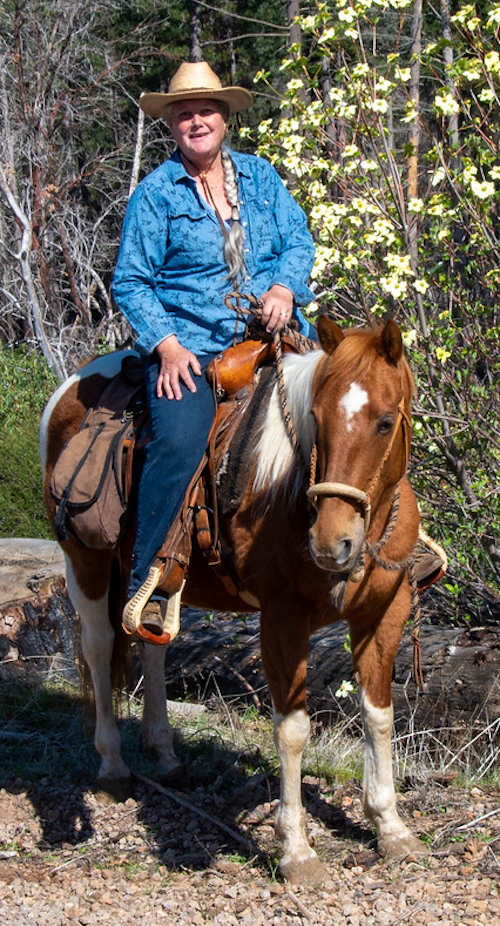
MIDDLETOWN, Calif. — This weekend’s Middletown Days will honor a longtime resident, photographer and horse enthusiast.
This year’s Middletown Days grand marshal is local photographer Nona Perez. Perez has a long history with Middletown and Middletown Days in particular.
Perez will head up this year’s Middletown Days Parade at 10 a.m. Saturday, June 18.
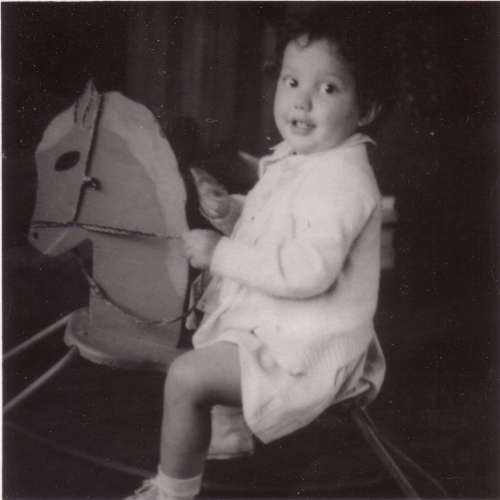
Perez was born in Middletown to Arval and Nadyne Edwards. Deanie Hardester was her first baby sitter before Perez, her older brother Anthony, and her parents moved to their new home on Mt. Saint Helena and she started school in Calistoga.
Her mother would paint, sculpt, and sketch. Nona did not possess those talents, but found that photography was a way for her to also “freeze the moment and capture it.”

She got her first camera from her dad at age 11 and she’s always packed a camera ever since. Her dad had an old Agfa camera that he brought back from Germany in 1950. It had a bellow that popped out and was “100% manual.” She had to set the distance, focus, aperture, shutter speed, and also had to remember to advance the film. Otherwise, she would get a double exposure. It was quite challenging to use and taught her a lot.
When she first got her camera she started taking photos of dogs, cats, horses, and people. She always enjoyed taking photos to preserve memories and recalls that when she was younger, the family tragically lost some family members and didn’t have a lot of photos of them. That episode and what photos mean to people always stayed with her. “Pictures are about memories. That’s why we take them. There is so much more there when you look back at the photo.”
When she was 13, Jim and Donna Kinyon helped her find and train her first horse, a 2 1/2 year-old paint filly named Patches. It was at this time that she met the Weatherwax family, and Rudy and Barbara Yudnich and their family, and formed friendships with daughters Carol, Karen and Sherry.
She started coming to gymkhanas in Middletown. Her first horse show was a halter class during Middletown Days 1970, and she didn't quite know what to do. She also says that she didn’t really like being the one showing as it was not in her comfort zone.
First prize that year was a breeding to Hill Comstock's Quarter Horse stud, Expensive Star. She didn’t win, but years later, she did have Patches bred to Expensive Star and got a colt her dad named Troupe.
It was after she got Patches that she learned that her father had grown up with work horses and had always wanted a riding pony. She says that she had great mentors in horsemanship and her father’s gentle nature influenced her approach to training.
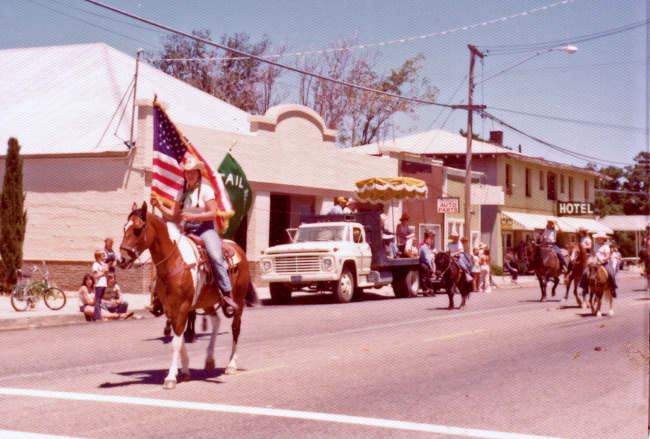
Those early gymkhanas she attended were announced by Bob Donley, “who always made us kids feel like we were doing a great job. He and his wife Pat have been a great influence in my life.” She also has fond memories of the Stimpsons, the Comstocks, and John Emerson. She had never felt like she fit in down in Calistoga and says that she “found her community in Middletown.”
When the family got a second horse, “it fulfilled my dad's lifelong dream of having a ‘riding pony’ and my parents took turns riding with me. My dad began riding in the gymkhanas after a dare from a friend. Wonderful memories!”
She also joined the Pope Valley Ropers and Riders and participated in their gymkhanas, as well. Her favorite event was pole bending.
In 1972, her love of all animals prompted her to begin working for veterinarian Glenn Baker in St. Helena. She was his first employee and worked for him for many years. When he got cattle she helped work them alongside his wife Karen.
When she was 18 or so she helped form a kids horse club with Bob Donley and Pam Wilson called the Tail Hold Riders. The club was formed to do the drill team, regular gymkhanas, and trail rides.
Some of the members included Kathy Dennis, Barbie and Vicky Poni, Joy Donley, Laura and Celena Menzio, Lisa Comstock, Keri and Wendy Johnson, Kat Thomas, Cheryl Evans, and “Greggy” Evans. Perez recalls that they all used to go on the most amazing trail rides at Guenoc, the Comstock Ranch, and at Diamond D Ranch.
Some years later, after the birth of her first child, she got an SLR with a zoom lens that gave her much more flexibility in her photography. Then, when her kids got involved with horses, she found that taking photos and capturing memories gave her something to do other than just sit around. Both of her daughters showed horses and all of her kids participated in the Middletown Days Parade and 4H where she served as a community leader.
That morphed into Perez shooting a few weddings, sporting events and even helping another local photographer, Craig Eve. Middletown Central Park hired her to record Middletown Days for many years since she was always there with her camera, anyway.
She says that while she enjoys photography it’s never been a full time livelihood for her. She spent her time homeschooling her kids, taking them to various events, and helping her husband, Elias Perez, with his construction business. They met when he was her neighbor “two miles down the road” when he used to help her dad fix fences and haul hay.
She still likes being invisible, behind the camera. But, she spends her time these days focusing on her other passions, training colts and taming horses that have never been handled. She especially enjoys teaching her grandkids to ride. She also spends a fair amount of time sewing. In fact, her grandkids will be wearing some items she has sewn for the parade.
Something that she's always loved about Middletown is the warm inviting atmosphere and the community involvement. Her favorite part of Middletown Days is “getting together with people you don’t see all the time.” It’s one of the few gatherings that she really enjoys. And, even though she’s not fond of the spotlight, she’s happy to be in the parade so long as her family is by her side.


As people age, their immune systems naturally begin to decline. This aging of the immune system, called immunosenescence, may be an important part of such age-related health problems as cancer and cardiovascular disease, as well as older people’s less effective response to vaccines.
But not all immune systems age at the same rate. In our recently published study, my colleagues and I found that social stress is associated with signs of accelerated immune system aging.
Stress and immunosenescence
To better understand why people with the same chronological age can have different immunological ages, my colleagues and I looked at data from the Health and Retirement Study, a large, nationally representative survey of U.S. adults over age 50. HRS researchers ask participants about different kinds of stressors they have experienced, including stressful life events, such as job loss; discrimination, such as being treated unfairly or being denied care; major lifetime trauma, such as a family member’s having a life-threatening illness; and chronic stress, such as financial strain.
Recently, HRS researchers have also started collecting blood from a sample of participants, counting the number of different types of immune cells present, including white blood cells. These cells play a central role in immune responses to viruses, bacteria and other invaders. This is the first time such detailed information about immune cells has been collected in a large national survey.

By analyzing the data from 5,744 HRS participants who both provided blood and answered survey questions about stress, my research team and I found that people who experienced more stress had a lower proportion of “naive” T cells – fresh cells needed to take on new invaders the immune system hasn’t encountered before. They also have a larger proportion of “late differentiated” T cells – older cells that have exhausted their ability to fight invaders and instead produce proteins that can increase harmful inflammation. People with low proportions of newer T cells and high proportions of older T cells have a more aged immune system.
After we controlled for poor diet and low exercise, however, the connection between stress and accelerated immune aging wasn’t as strong. This suggests that improving these health behaviors might help offset the hazards associated with stress.
Similarly, after we accounted for potential exposure to cytomegalovirus – a common, usually asymptomatic virus known to accelerate immune aging – the link between stress and immune cell aging was reduced. While CMV normally stays dormant in the body, researchers have found that stress can cause CMV to flare up and force the immune system to commit more resources to control the reactivated virus. Sustained infection control can use up naive T cell supplies and result in more exhausted T cells that circulate throughout the body and cause chronic inflammation, an important contributor to age-related disease.

Understanding immune aging
Our study helps clarify the association between social stress and faster immune aging. It also highlights potential ways to slow down immune aging, such as changing how people cope with stress and improving lifestyle behaviors like diet, smoking and exercise. Developing effective cytomegalovirus vaccines may also help alleviate immune system aging.
It is important to note, however, that epidemiological studies cannot completely establish cause and effect. More research is needed to confirm whether stress reduction or lifestyle changes will lead to improvements in immune aging, and to better understand how stress and latent pathogens like cytomegalovirus interact to cause illness and death. We are currently using additional data from the Health and Retirement Study to examine how these and other factors like childhood adversity affect immune aging over time.
Less aged immune systems are better able to fight infections and generate protective immunity from vaccines. Immunosenescence may help explain why people are likely to have more severe cases of COVID-19 and a weaker response to vaccines as they age. Understanding what influences immune aging may help researchers better address age-related disparities in health and illness.
Eric Klopack, Postdoctoral Researcher in Gerontology, University of Southern California
This article is republished from The Conversation under a Creative Commons license. Read the original article.
LAKE COUNTY, Calif. — The county of Lake has reached a settlement with its former Human Resources director who sued alleging wrongful termination and racial discrimination.
The Board of Supervisors approved the settlement with Pamela Nichols following a closed session discussion at Tuesday’s board meeting.
The announcement was reportedly made in open session, once the board had returned from its confidential discussion of the matter, but the county said the Zoom link was not operating at the time.
As a result, on Wednesday, the county posted a video of Board of Supervisors Chair EJ Crandell announcing the settlement approval vote.
Crandell said the board unanimously approved the agreement, in the amount of $500,000.
“The county will accept Ms. Nichols’ resignation in lieu of prior action, will ensure training in the discrimination harassment complaint process, continue its ongoing process of implementing cultural awareness training and will pay the cost of mediation,” Crandell said.
Crandell said the video was an addendum to the Zoom record to make sure the public was aware of the action.
Nichols was the county’s Human Resources director for a year. She was hired in August 2018 and held the job until the following summer.
On Aug. 30, 2019, then-County Administrative Officer Carol Huchingson, with her then-Assistant County Administrative Officer Susan Parker present, “informed Ms. Nichols that today would be her last day as HR Director,” and that she “no longer had confidence in Ms. Nichols’ commitment to her and gave Ms. Nichols two (2) options: either resign or be fired,” according to the lawsuit.
The suit filings said “Huchingson sarcastically offered that Sheriff Martin might have an available position in his department, and if it was something Ms. Nichols wanted, defendant Huchingson would not stand in the way.”
Nichols asked to leave to get more boxes, and when she returned, she found Parker and county staff with 12 boxes of Nichols’ belongings stacked on the front steps of the county courthouse in Lakeport.
Nichols, who is Black, filed her lawsuit in federal court in July 2020 alleging wrongful termination, racial discrimination, infringement of her First Amendment rights to free speech and retaliation. She sued both the county and Huchingson, specifically, and sought unlimited damages.
The case had been on track for the finalizing of discovery by July 1, with a motion hearing set for Sept. 23 in Oakland and a jury trial scheduled to begin on March 23, 2023, as Lake County News has reported.
Huchingson abruptly announced her resignation on March 17, two days after a closed session discussion with the board about the case.
On May 23, the board hired Parker — reported to be Huchingson’s hand-picked successor — as the new county administrative officer. The following day, another closed session discussion on the lawsuit was held during the board meeting.
On May 27, the last filing was made in the case, with the heading, “Defendants’ county of Lake and Carol Huchingson’s notice of pending settlement negotiations; proposed order.”
That two page document stated, “The parties hereby notify the Court that the parties are engaging in an ongoing private mediation and will have a decision as to a comprehensive settlement proposal after the Lake County Board of Supervisors meets on June 14, 2022.”
The filing stated that in the event the case settled, within seven days of the full execution of the settlement agreement, the parties will file with the court a joint stipulation for dismissal pursuant to federal rules of civil procedure.
“In the unlikely event the case does not settle, the parties will file a certification that all supplementation of discovery has been completed no later than June 21, 2022,” the document stated.
The federal court filings also indicated that attorneys hired by the county continue to defend not just the county but Huchingson in the suit.
Email Elizabeth Larson at
102120 Nichols Amended Complaint by LakeCoNews on Scribd
On Wednesday, the Board of Parole Hearings denied parole for Edward Keefe Crawford, 63, said Lake County Chief Deputy District Attorney Richard Hinchcliff.
Deputy District Attorney Art Grothe attended the hearing for the Lake County District Attorney’s Office to argue against Crawford’s release, Hinchcliff said.
Crawford was prosecuted in 1988 by Stephen O. Hedstrom, who was the Lake County district attorney at the time.
A jury found Crawford guilty of first-degree murder for the killing of 28-year-old Glenn Shoemaker.
Crawford was sentenced to 27 years to life by Judge Robert L. Crone Jr. His minimum eligible parole date was Sept. 17, 2006. This was Crawford’s third parole hearing.
The murder was investigated by retired investigator Carl Stein at the Lake County Sheriff’s Office.
According to investigation reports, Crawford and a co-defendant, Jon Christ, took Shoemaker for a boat ride on Sept. 19, 1987, and stopped at a secluded spot on the shoreline.
Christ reportedly told a witness before the incident that they were taking Shoemaker for a one-way boat ride.
When the three got out of the boat, Shoemaker was shot six times, including twice in the back, with a .22-caliber handgun.
Shoemaker’s body was found 11 days later. Crawford and Christ both reportedly bragged or confessed to others that they had killed Shoemaker.
The motive reported at the time was that Shoemaker had recently stolen the same handgun that he was shot with from Christ, and Christ got the gun back and was angry about the theft.
During the investigation Crawford admitted he shot the victim but claimed it was an accident. Crawford claimed Christ gave him the gun, told him it was unloaded, and told him to scare Shoemaker with it.
Crawford claimed when he pulled the trigger to scare Shoemaker, the gun discharged twice into Shoemaker, then Christ shot him four more times.
Christ also was convicted of the murder and sentenced to 31 years to life in prison.
During his time in prison, Crawford gave officials differing versions of the motive for the murder.
In 1991 Crawford told prison officials he shot Shoemaker because Shoemaker had molested Crawford’s child.
In 2007 Crawford said when he and Shoemaker went water skiing and stopped to use the bathroom, an argument ensued over stolen property and Shoemaker stabbed Crawford in the arm, so Crawford shot Shoemaker.
In January 2012 Crawford said he killed Shoemaker because the victim had molested his neighbor’s children.
At his parole hearing in May of 2012, Crawford claimed he killed Shoemaker because he was a child molester and Shoemaker had stabbed Crawford when Crawford confronted him about it. Crawford admitted it was never proven that Shoemaker was a child molester.
At his parole hearing on Wednesday, Crawford told the parole commissioners he never shot Shoemaker, John Christ did. He also changed his story and said he had been stabbed by Christ, not Shoemaker.
During his time in prison since 1988, Crawford has made no effort to address his alcohol, drug or anger issues. Crawford had taken no drug or alcohol addiction classes and had not participated in any anger management or alternatives to violence classes.
He had been caught making alcohol in prison, and admitted he had been placed in administrative segregation in prison for his own protection for not paying a $100 drug debt for heroin he purchased from other prisoners while in prison.
At the parole hearing Wednesday, Grothe asked the Board of Prison Hearings to deny Crawford parole on the grounds that he still presented an unreasonable risk of danger to the public if released.
The Board of Parole Hearings commissioners agreed that Crawford still poses an unreasonable risk of danger to the public and denied parole for at least three more years. Crawford’s next parole hearing will be in 2025.
“Based on Crawford’s history, it will be interesting to hear what his version of the events will be at the next hearing,” Hinchcliff said.
This is the third parole hearing the District Attorney’s Office has attended in the last week that has resulted in a denial of parole.
The Transit Development Plan will explore new transit options as well as potential changes to existing Lake Transit services which could improve mobility for Lake County residents.
As part of updating the plan, the Lake Area Planning Council has released a survey and is asking community members to take it.
The survey is quick and easy, and intended for all residents — both those who ride the bus and those who do not.
The link to the survey in English is here.
The survey can be taken in Spanish here.