 How to resolve AdBlock issue?
News
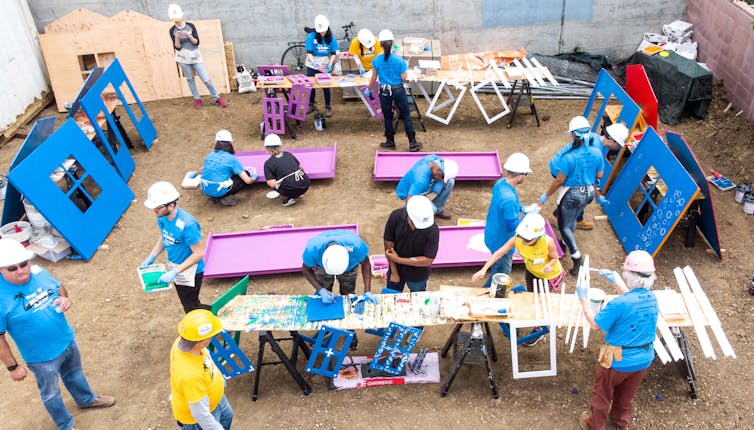
Boosted by a strong year for stocks and swift economic growth, U.S. giving in 2021 totaled a near-record US$485 billion.
Individuals, foundations, estates and corporations gave more to charity in 2021 than before the pandemic, according to the latest annual Giving USA report from the Giving USA Foundation, released in partnership with the Indiana University Lilly Family School of Philanthropy at IUPUI.
Giving was 0.7% below the inflation-adjusted all-time high of $488 billion in 2020 – when donors responded to the onset of the COVID-19 pandemic, the ensuing recession and an outpouring of concern over racial injustices.
As two of the lead researchers who produced this report, we found that inflation changed how far each charitable dollar went in 2021. We also saw that a significant percentage of giving came from extremely large gifts and that many charities whose 2020 donations declined may have experienced a rebound.
Did inflation affect giving?
Inflation – the rate at which purchasing power for food, rent and energy costs declines – was higher in 2021 than it has been in recent years.
When inflation heats up, charities need more money to keep up with rising costs. Household budgets can also get strained by rising costs of living. But charitable giving doesn’t automatically fall when inflation rates rise. In 1988 and 1989, for example, inflation exceeded 4% annually, but charitable giving grew in both years – even when adjusted for inflation.
However, higher inflation, particularly over time, can influence other economic trends that are more likely to influence how much money is donated. Those changes, in turn, can lead to declines in giving.
With inflation running at a much faster clip in 2022 than 2021, we’re keeping an eye on any effects it may have on giving until rates subside.
Role of megadonors
Individual donors gave $327 billion in 2021, or two-thirds of all charitable dollars. Ten gifts of $450 million or more, which totaled $15 billion, accounted for roughly 5% of all individual giving.

Some of the largest donations made in 2021 went to donor-advised funds, financial accounts known as DAFs.
Two billionaires who took that route were Twitter co-founder and former CEO Jack Dorsey and SpaceX and Tesla CEO Elon Musk.
Donors who transfer money into DAFs get big tax deductions right away but can decide which causes to support later. That’s similar to what happens when someone moves wealth into a foundation.
But while foundations are required to report every grant they make, all the money distributed to a particular charity from DAFs that are held at the same DAF-sponsoring organization is lumped together. This makes it impossible to separate out one individual’s support for specific causes. As a consequence, some donors may prefer to give through a DAF rather than a foundation for the anonymity.
MacKenzie Scott has given at least $12 billion to charity since her 2019 divorce from Jeff Bezos without starting a foundation, and instead relies partly on donor-advised funds. In 2021, she continued to quickly channel large sums of money into nonprofits, especially those assisting people of color and underfunded communities.
We expect transparency to be an important issue for our research in the future. As megagifts grow as a share of individual giving, it is important to understand how much megadonors are giving and where the dollars are going.
A rebound for the arts
Giving to the arts, culture and humanities rose by 22% in 2021 as many museums, theaters, ballet companies and other arts groups resumed in-person events and found ways to continue to make use of hybrid events. That growth, the biggest for any of the nine categories we track, marked a sharp reversal from 2020, when those gifts fell 7%.
Similarly, gifts related to health, a category that includes donations to hospitals, grew 2.9% in 2021 after a 6.9% decline a year earlier.
Conversely, gifts slated for colleges, universities and other educational causes fell 7.2% in 2021, following a 15% increase in 2020.
Overall, giving in 2021 stayed well above pre-pandemic levels. The total donated was at least 5% higher than in 2019 for seven of the nine categories we track.

Anna Pruitt, Associate Director of Research, Indiana University Lilly Family School of Philanthropy, and Managing Editor, Giving USA, IUPUI and Jon Bergdoll, Applied Statistician of Philanthropy, IUPUI
This article is republished from The Conversation under a Creative Commons license. Read the original article.
CLEARLAKE, Calif. — The Lakeshore Lions Club is once again presenting Clearlake’s Independence Day celebration, which will include a parade, carnival and fireworks.
The group will sponsor its 64th annual Redbud Parade and Festival on Saturday, July 2.
The parade will start at Redbud Park at 11 a.m. and will proceed down Lakeshore Drive to Austin Park.
The theme of this year’s parade is “Rocking Lake County.”
This year, the parade will feature marchers, a marching band, decorated floats, vintage cars, parade and show horses, fire and police vehicles, and much more.
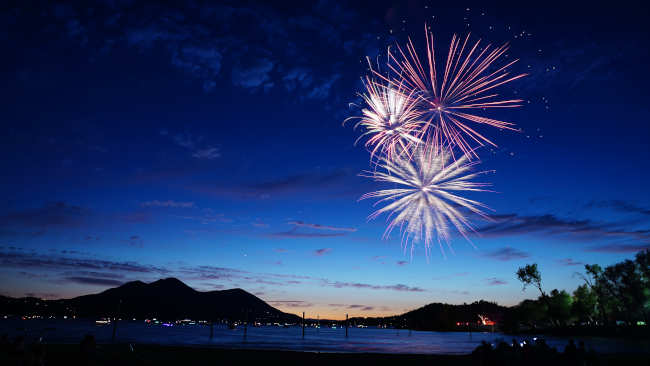
The Lakeshore Lions Club also will sponsor the firework display at dark.
The city of Clearlake will host a free concert showcasing Danielle Bradbery at 7 p.m.
Also, the Midway of Fun Carnival presale tickets are available at Clearlake Automotive, Bob’s Vacuum, and A+B Collision. For ticket information call 707-350-7100.
At Austin Park, the Lakeshore Lions and Lakeshore Lioness will feature an assortment of food, cold drinks and beer. There will be arts and craft vendors, games and entertainment for all. The Clearlake Chamber of Commerce will sponsor the International Worm Races.
This is the largest fundraiser for the Lakeshore Lions Club. The club invites the public to help the club raise money for all the many causes it aids in the community.
The Lakeshore Lions Club supports eyeglasses and vision care for the needy, high school sports, sober graduation, scholarships and many other school activities, the fire and police departments, the senior center, South Shore Little League and many other very notable causes.
Anyone who wishes to enter the parade can pick up an entry form at the Clearlake Chamber of Commerce office, Bob’s Vacuum, Clearlake Automotive and Kevin Ness Jewelers.
Any and all arts and craft vendors interested in booths, please call Nan Shields at Bob’s Vacuum at 707-994-9752.
To gather all the information you need for the parade, please call Alvaro Valencia at 707-350-7100.
The group will meet at 5 p.m. via Zoom. The public is invited to attend.
The meeting ID is 986 2616 1748, pass code is 173031. The meeting also can be accessed via phone at 1-669-900-6833 or +16699006833,,98626161748#,,,,*173031# for one tap mobile.
The group will host a representative from the Bureau of Land Management who will answer questions regarding the South Couth Mountain Management Area implementation update.
Under old business, the group will discuss a request to clear vegetation from Scotts Creek beginning at the bridge at Hendricks and Scotts Valley Road and ending downstream from newly installed culvert to the Eickhoff bridge.
Under new business, discussion items include new use permits, the city of Lakeport’s South Main Street annexation, an update from the Scotts Valley Groundwater Protection Committee, a multi-tribal fire prevention grant application to Cal Fire to support the Scotts Valley Firewise Community, an update from the Scotts Valley Firewise Committee and broadband coverage for Scotts Valley.
The group will next meet on July 25.
The awards, totaling $26 million, were made under CDFW’s 2022 Prop. 1 Watershed Restoration Grant and Delta Water Quality and Ecosystem Restoration Grant Program Proposal Solicitation Notice.
Of the $26 million, approximately $21 million was awarded to 15 projects statewide through the Prop. 1 Watershed Restoration Grant Program. Approximately $5 million was awarded to eight projects through the Prop. 1 Delta Water Quality and Ecosystem Restoration Grant Program to projects that directly benefit the Sacramento-San Joaquin Delta.
Among the projects is the Kelsey Creek Fish Passage Project. For the project, the Big Valley Band of Pomo Indians received $350,000.
“California’s fish, wildlife and their habitats are facing continued impacts from climate change including persistent drought conditions,” said CDFW Director Charlton H. Bonham. “These impacted species need strong conservation and protection efforts now more than ever. The projects that were awarded funding this year represent a collective effort to meet these challenges and push toward our conservation goals under California’s 30x30 Initiative.”
The approved projects complement CDFW’s ongoing initiatives toward species recovery and provide resilience to climate change, representing priorities outlined in the solicitation, as well as the California Water Action Plan, State Wildlife Action Plan, Sacramento Valley Salmon Resiliency Strategy, Delta Plan, California EcoRestore, Safeguarding California Plan, the California Biodiversity Initiative and the fulfillment of CDFW’s mission.
Projects approved for funding through the Prop. 1 Watershed Grant Programs include:
Acquisition projects:
• 2022 Upper Truckee River Watershed Acquisition ($1,500,000 to California Tahoe Conservancy).
• YMCA Camp Jones Gulch Conservation Easement ($1,002,000 to Sempervirens Fund).
Implementation projects:
• Lower Stotenburg Creek Coho Habitat Enhancement Implementation Project ($946,848 to Smith River Alliance).
• Wheeler Gorge Campground Fish Passage Project — implementation ($2,972,220 to Earth Island Institute).
• Phase 1 Finney-Ramer Unit Habitat Restoration Project ($1,816,516 to River Partners).
• Lower Lacey Meadow Restoration ($1,344,890 to Truckee River Watershed Council).
• Rowdy and Dominie Creek Fish Passage Improvement Project ($6,108,032 to Tolowa Dee-ni Nation).
• Fall Creek Fish Ladder Rehabilitation Project: Enhancing Survivability of Central California.
• Coast Steelhead and Coho Salmon in the San Lorenzo River Watershed ($1,116,166 to San Lorenzo Valley Water District).
Planning projects:
• Kelsey Creek Fish Passage Project ($350,000 to Big Valley Band of Pomo Indians).
• Cedar Creek Habitat Restoration and Passage Improvement Design ($202,291 to Hoopa Tribal Fisheries).
• Soda Creek Restoration and Fisheries Improvement Planning Project ($180,327 to Trout Unlimited).
• Clear Creek ACID Siphon Fish Passage Planning Project ($499,734 to Western Shasta Resource Conservation District).
• Buena Vista Lagoon Enhancement Project Phase II ($1,000,000 to San Diego Association of Governments).
• Robles Diversion and Fish Passage Design Planning Project ($1,557,926 to Ventura County Watershed Protection District).
• Scott Creek Coastal Resiliency Project: Climate Change Technical Studies and Planning ($409,133 to Resource Conservation District of Santa Cruz County).
Projects approved for funding through the Prop. 1 Delta Water Quality and Ecosystem Restoration Grant Program include:
Scientific studies:
• Green Sturgeon Population Monitoring and Habitat Analysis ($812,184 to Regents of the University of California, Santa Cruz).
• Quantifying Relative Risk of Collapse for Delta Fish Populations ($358,463 to Regents of the University of California, Davis).
• Where, When and How do Wetlands Export Food for Smelt to Open Waters of the Estuary? ($703,883 to San Francisco State University).
• Socio-Ecological Potential for Co-management of Tidal Wetlands for Fish and Fowl ($944,551 to Regents of the University of California, Davis).
• Trade-offs and co-benefits of landscape change in the Sacramento-San Joaquin River Delta.
• Phase II Tidal Wetlands and Restoration ($196,114 to Point Blue Conservation Science)
Quantifying Component Mortality Rates of Juvenile Salmonids ($565,268 to Regents of the University of California, Santa Cruz).
• Feasibility of Acoustic Telemetry in Delta Smelt ($1,226,518 to Regents of the University of California, Davis).
• When the Rubber Meets the River: An Assessment of 6PPD-quinone on Delta Species of Conservation Concern ($547,024 to Regents of the University of California, Davis).
Additional projects are still under consideration. General information about CDFW’s Prop. 1 Restoration Grant Programs, as well as a schedule for upcoming grant solicitations, once available, can be found at www.wildlife.ca.gov/grants.
Funding for these projects comes from Prop. 1 bond funds, a portion of which are allocated annually through the California State Budget Act. More information about Prop. 1 is on the California Natural Resources Agency website.
Rep. Mike Thompson (CA-05) reported that he voted to pass H.R. 6538, the Bipartisan Active Shooter Alert Act.
This bill would create an AMBER Alert-style system allowing law enforcement to alert the public of nearby active shooters. Rep. Thompson is an original co-sponsor of H.R. 6538.
“As the father of a deputy sheriff, I know how important it is for law enforcement to rapidly distribute accurate information to the general public following a crisis like a mass shooting,” said Thompson. “The Active Shooter Alert Act is a much-needed bill that will create an active shooter alert system for law enforcement, providing them with the tools they need to help provide our communities with timely information during an active shooter situation. I am proud to work with a bipartisan coalition of my colleagues, led by Reps. Cicilline and Upton, to make this a reality and ultimately save lives.”
The Bipartisan Active Shooter Alert Act would:
• Appoint an active shooter alert coordinator within the Department of Justice. The Coordinator would offer support and expert-developed best practices to local and state law enforcement to effectively implement active shooter alert systems. These practices and systems are adoptable on a voluntary basis.
• Create an active shooter alert network using the existing AMBER Alert infrastructure. Some jurisdictions around the country have local active shooter alert systems, but many of these programs have messaging delays and low enrollment. This legislation creates a Network for law enforcement to send active shooter alerts through IPAWS, the national system used for AMBER Alerts, to help fix these problems. Smartphones automatically receive IPAWS alerts, which are sent through a program with few to no delays. IPAWS also has precise geolocating technology, which can send alerts to specific locations down to 0.1 miles. Most law enforcement are familiar with IPAWS and have systems in place to use it; this legislation would simply create protocols and best practices to utilize this existing infrastructure for active shooter situations.
The Active Shooter Alert Act is endorsed by: National Sheriffs' Association, Major Cities Chiefs Association (MCCA), National Association of Police Organizations (NAPO), Fraternal Order of Police (FOP), National Police Foundation, National District Attorneys Association, Rhode Island Police Chiefs Association, Humboldt County Sheriff's Office, Virginia Association of Chiefs of Police & Foundation, North Carolina Association of Chiefs of Police, West Virginia Chiefs of Police Association, Metropolitan Police Department (Washington, DC).
This bill complements the legislation the House has passed to help reduce gun violence including passing Rep. Thompson’s H.R. 8, the Bipartisan Background Checks Act and the H.R. 1446, a bill which addresses the Charleston Loophole.
The House also has passed H.R. 2377, Federal Extreme Risk Protection Order Act, which would create a federal red flag law to keep guns out of the hands of those who pose a risk to themselves or others.
In addition, the House passed Thompson’s H.R. 7910, the Protecting Our Kids Act, which is a package of gun violence prevention legislation that would raise the purchasing age for semi-automatic weapons from 18 to 21 years old, crack down on gun trafficking and straw purchases to get illegal guns off of our streets, subject ghost gun purchases to background check requirements, strengthen safe storage requirements, and close the bump stock loophole and outlaw high-capacity magazines, both of which are designed for killing en masse.
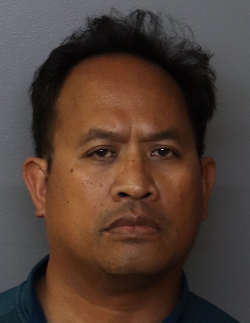
LAKE COUNTY, Calif. — The California Highway Patrol said Wednesday that it has arrested a Clearlake Oaks man for a Sunday morning hit-and-run that killed a Northshore woman.
William Len, 47, was taken into custody on Tuesday afternoon, according to a report from the CHP’s Clear Lake Area office.
The CHP said Len is the driver responsible for hitting and killing 24-year-old Amanda Arney of Nice.
At 12:10 a.m. Sunday Arney was walking eastbound on the south shoulder of Highway 20, west of Sayre Avenue in Nice, when she was struck by a vehicle, the CHP said.
She was thrown down an embankment and came to rest near a fence, where she was hidden by vegetation, the CHP said.
The CHP said its Ukiah Communications Center was notified that she had been found at 7:40 a.m. Sunday. When firefighters arrived, they found she had died of her injuries.
Investigators identified the vehicle that struck Arney and then fled the scene heading east on Highway 20 as a 2013 Toyota Sienna and began the search for it.
“We were able to get the make/model and color based upon the debris left at the scene,” Officer Joel Skeen told Lake County News.
Skeen said that vehicle information also matched a statement from a witness that he spoke to later on Sunday.
On Tuesday, through execution of search warrants and extensive investigation, the CHP said an area search was conducted with the assistance of the Lake County Sheriff’s Office.
As a result, Len was located in Clearlake and placed under arrest by the CHP just before 4 p.m. for felony hit-and-run and vehicular manslaughter.
Len, whose occupation is listed as “ride share,” was booked into the Lake County Jail on Tuesday night, where he remained in custody on Wednesday with bail set at $150,000.
Booking records show he is due to appear in Lake County Superior Court for arraignment on Thursday.
Email Elizabeth Larson at