 How to resolve AdBlock issue?
News

Whether or not you’ve heard of the chemical bisphenol A, better known as BPA, studies show that it’s almost certainly in your body. BPA is used in the manufacturing of products like plastic water bottles, baby bottles, toys and food packaging, including in the lining of cans.
BPA is one of many harmful chemicals in everyday products and a poster child for chemicals in plastics. It is probably best known for its presence in baby bottles due to campaigns by organizations such as Safer Chemicals, Healthy Families and Breast Cancer Prevention Partners.
An extensive body of research has linked BPA to reproductive health problems, including endometriosis, infertility, diabetes, asthma, obesity and harming fetal neurodevelopment.
After years of pressure from environmental and public health advocates, the U.S. Food and Drug Administration agreed in June 2022 to reevaluate the health risks of BPA. This is significant because a vast body of research has documented that BPA is leaching from products and packaging into our food and drink and ultimately our bodies.
What is BPA?
BPA is not only used in plastics and food and drink containers but also in pizza boxes, shopping receipts, liners of aluminum cans and much more. Scientists have found that BPA is an endocrine disruptor, which means it disrupts hormonal systems that support the body’s functioning and health.
Hormonal disruption is a particular problem during pregnancy and fetal development, when even minor changes can alter the trajectory of developmental processes, including brain and metabolic development.
Over the last two decades, public awareness about the risks led many companies to remove BPA from their products. As a result, studies have shown that BPA levels in people’s bodies appear to be declining in the U.S. However, a nationwide research team that I helped lead as part of a national NIH consortium showed in a recent study of pregnant women that the decline in BPA could in part be explained by the fact that BPA replacement chemicals have been on the rise over the last 12 years. And other studies have found that many BPA substitutes are typically just as harmful as the original.
As an environmental health scientist and professor and director of the University of California, San Francisco Program on Reproductive Health and the Environment who specializes in how toxic chemicals affect pregnancy and child development, I am part of a scientific panel that decides if chemicals are reproductive or developmental toxicants for the State of California. In 2015, this committee declared BPA a reproductive toxicant because it has been shown to be toxic to ovaries.
BPA and the FDA
BPA was first approved for use in food packaging by the FDA in the 1960s. In 2008, the agency released a draft report concluding that “BPA remains safe in food contact materials.” This assessment was met with pushback from many health advocates and environmental health organizations. The FDA claimed BPA to be “safe in food contact materials” as recently as 2018.
Meanwhile, since 2011, Canada and Europe have taken steps to ban or limit BPA in children’s products. In 2021, the European Union proposed “dramatic” decreases in BPA exposure limits due to a growing body of evidence linking BPA to health harms.
One of the major challenges to limiting harmful chemicals is that regulatory agencies like the FDA try to figure out the levels of exposure that they consider harmful. In the U.S., both the FDA and the Environmental Protection Agency have a long history of underestimating exposures – in some cases because they do not adequately capture “real-world exposures,” or because they fail to fully consider how even small exposures can affect vulnerable populations such as pregnant women and children.
Latest research
A large body of research has explored BPA’s effects on reproductive health. These studies have also revealed that many BPA substitutes are potentially even worse than BPA and have looked at how these chemicals act in combination with other chemical exposures that can also come from a variety of sources.
And while much attention has been paid to BPA’s effects on pregnancy and child development, there is also significant research on its effects on male reproductive health. It has been linked to prostate cancer and drops in sperm count.
In a study our research team conducted that measured BPA in pregnant women, we asked study participants if they knew about BPA or tried to avoid BPA. Many of our study participants said they knew about it or tried to avoid it, but we found their actions appeared to have no effect on exposure levels. We believe this is, in part, because of BPA’s presence in so many products, some of them known and some unknown that are difficult to control.
What you can do
One of the most common questions our staff and clinicians that work with patients are asked is how to avoid harmful chemicals like BPA and BPA substitutes. A good rule of thumb is to avoid drinking and eating from plastics, microwaving food in plastic and using plastic take-out containers – admittedly easier said than done. Even some paper take-out containers can be lined with BPA or BPA substitutes.
Our recent review of the research found that avoiding plastic containers and packaging, fast and processed foods and canned food and beverages, and instead using alternatives like glass containers and consuming fresh food, can reduce exposures to BPA and other endocrine-disrupting chemicals.
Research has shown that when heat comes into contact with plastic – whether water bottles, Tupperware, take-out containers or cans – BPA and other chemicals are more likely to leach into the food inside. One should also avoid putting hot food into a food processor or putting plastic containers into the dishwasher. Heat breaks down the plastic, and while the product might appear fine, the chemicals are more likely to migrate into the food or drink – and ultimately, into you.
We also know that when acidic foods like tomatoes are packaged in cans, they have higher levels of BPA in them. And the amount of time food is stored in plastic or BPA-lined cans can also be a factor in how much the chemicals migrate into the food.
No matter how much people do as individuals, policy change is essential to reducing harmful chemical exposures. A large part of our work at UCSF’s Program on Reproductive Health and the Environment is to hold regulatory agencies accountable for assessing chemical risks and protecting public health. What we have learned is that it is essential for agencies like the EPA and FDA to use the most up-to-date science and scientific methods to determine risk.
Tracey Woodruff, Professor of Environmental Health, University of California, San Francisco
This article is republished from The Conversation under a Creative Commons license. Read the original article.
We are in a multi-year drought and I am wondering what myself and my family can do to conserve water? I also have a neighbor that doesn’t seem to realize we need to conserve water and I see them watering their lawns and driveway several times a week, in the middle of the day and the water runs down the street. What a waste! Is there anything I can do?
— Wondering about Water Conservation in Lakeport
Dear Wondering,
Thank you for sending in this relevant and topical question. I guarantee you are not the only person in Lake County - and probably California - that is asking these very same questions. I am also very glad you and your family are willing to take some proactive steps to help conserve water. That is really the first step and one of the most important ones. Part of living in Northern California, during a time period full of variable climate shifts and changes, is knowing how to adapt to changing conditions. Being prepared and willing to do your part to be water savvy, no matter how big or small, is wonderful and I humbly thank you for your contribution.
We are lucky here in Lake County, in that we know where our water comes from, we see it everyday. When referring to drinking water, water in Lake County is sourced from two general locations; Clear Lake or the ground.
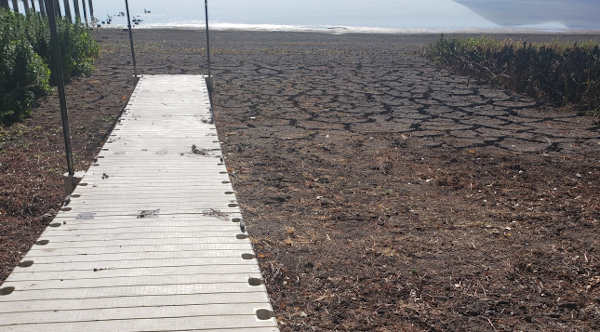
While we can “clearly” see Clear Lake water levels dropping weekly, we also know that groundwater aquatic sources are not finite, and some are also going dry, making drought and the need for water conservation immediately obvious and apparent to us all. It’s harder for residents living in other areas of the state to see this immediate need, as they get their water from far away rivers, reservoirs, or other sources. They don’t get to see the direct connection between their water use and the natural sources that provide their valuable water.
Being able to physically see and understand the direct connection between where our water comes from, and how we use it, makes it easier for us to incorporate water conservation during times of drought, like now, but also as part of our general lifestyle of living in Northern California. This understanding, or knowledge, puts the power in our hands, for us to be able to do something positive right now, to conserve water when it’s needed most.
Water saving tips
There are many small and big things that individual homeowners, renters, families, and small businesses can do to reduce their water use without sacrificing everyday conveniences. It really is easy to implement a few minor things that will probably go unnoticed in your daily life, but if everyone implemented these small things, it would result in a large water-use reduction.

From Save Our Water
Around the House Simple habits to Reduce Water Use inside Your Home
• Fill bathtubs only halfway or less.
• Inspect indoor and outdoor plumbing and fix any leaks.
• Install aerators on faucets, which can save up to 0.7 gallons a minute or up to 336 gallons a month. Check with your water provided to see if they provide “Water Conservation kits” that include aerators for faucets.
• If possible, install high-efficiency use toilets.
• Recycle Indoor water and irrigate your garden or houseplants (leftover drinking water or dropped ice cubes are great in houseplants or cement gardens).
•Take five-minute showers (or at least set a timer so you know how long your showers are taking and actively reduce them).
• Install and use water-efficient showerheads.
• Turn off water when brushing teeth or shaving, and wash full loads of clothes and dishes.
• Check with your water purveyors if they have any rebates or materials they are providing for water conservation and reduction measures, and if they don’t ask them to consider using available state emergency drought funds to provide some for their consumers.
More information on what to look for and how to install energy and water saving kitchen and bathroom faucets can be found at these two online locations: US EPA
and Minnesota CERTs Clean Energy Resource Team.
From the Drought.ca.gov Water Saving Tips page
In addition to the list provided above, here are some additional tips you, your family, and small business can follow to reduce water use and avoid water waste.
• Set lawn mower blade heights to 3”, which encourages deeper roots and reduces water needed to keep lawns green.
• Better yet, replace lawns with a water-wise, drought-tolerant plant pallet, called Xeriscaping. Xeriscaping is the practice of landscaping with slow-growing, drought tolerant plants to conserve water and reduce yard trimmings. More information can be found on the CalRecycle Xeriscaping webpage, scroll to the bottom to get additional links: https://calrecycle.ca.gov/organics/xeriscaping/.
• Improve landscape irrigation. Up to 50% of residential water use goes to irrigation, but the majority of water can be lost through evaporation, wind, or runoff. Using reduced water schedules and weather-based irrigation controllers can save up to 8,800 gallons a year. If you live in a HOA or POA, or work in a school, landscaped office facility or office park, ask your management team if they are also using these strategies to reduce water. If they aren't, ask them to consider doing so to save energy and water costs.
• Install drip irrigation in gardens and utilize mulch to reduce evaporation. For mulching: Check with your local firewise community on the supported use of mulch, type or size, as mulching too close to a building or structure can be a fire hazard. UC Extension has some information available for mulching in fire prone environments available at this site.
• Instead of power washing, use a broom to clean outdoor areas.
There are so many more tips that I can’t possibly list here, but a great resource to visit is Arizona’s Water Use It Wisely Webpage which has over 100+ Water-saving tips. The lists are broken down into categories such as outdoor, indoor, kids, and workplace tips so we can participate in water conservation at every avenue of our lives, for us, for our family, for our work, and when we play. This resource has been around since 1999 and I don’t know about you, but I think dry, desert Arizona might know how to conserve water, so their tips are probably very useful and practical.
Reporting water waste
In general, Californians are not doing a great job at actively conserving water and reducing their use. In fact, based on water reports from earlier in the year, even with knowledge of continued impending drought, Californias increased their water use by 19% between March 2020 and March 2022. Water use is increasing even with the Governor’s declared 15% water reduction goal. (CalMatters and DWR).
Without a local mechanism for enforcing water conservation measures, such as ordinances and funds to support “water conservation enforcement” officers (Such as within the Santa Clara Water District) and legal avenues to impose fines for “water wasting”, the real only option we, as concerned community members have for tracking and reducing events of water waste, is through a state-wide water reporting system.
This online reporting form is found at the Save Our Water Website. You can access this form through your mobile device or computer, and it’s very quick and easy to fill out. According to the Save Our Water site, “This site lets you easily report water waste from your phone, tablet or computer. Select the type of water waste, type in the address and click send.”
There is a drop-down list of options of the type of water waste for submitting a report. For you, Wondering, there is an option for “Water running into adjacent properties, streets, and sidewalks”. That seems like that would be the best fit for reporting your neighbor. While you might be concerned about reporting on your neighbors or local businesses, be aware that sometimes people are not even aware that they are contributing to water waste. By reporting through this form, the information can be forwarded to the relevant water provider, who can then send the water waster a notice and remind them of the water they are using and how to reduce their use.
If we don’t all participate in water conservation measures, including being aware of how much water we are using and reducing and eliminating waste, the State might put restrictions in place. That could result in restricted activities, mandatory water shut-offs or increased rates, even for basic water use. If we all contribute to improving water conservation now, by self-managing our own water use, and informing those who waste water, we might be able to avoid a catastrophic, but needed, enforcement action and step-in by the state.
Drought duration and future conditions
Wondering, you are correct in that we are in year three of a three year drought. While we should prepare for even another year of drought, the expectation of there being a normal to above average precipitation year is also expected with the occurrence of a conditional El Niño climate system for next winter. El Niño conditions don’t always bring wetter weather, but generally they do, and especially in the regional area of Lake County, based on previous years’ trend data.
For example, according to the Water Education Foundation and National Oceanic and Atmospheric Administration or NOAA, “El Niño conditions can bring above-average precipitation to California in the winter, that is not always the case … [however] ... El Niño tends to make atmospheric rivers stronger. El Niño events in 1982-1983 and 1997-1998 drenched the West Coast with record rain. The last El Nino, a weak one, occurred in 2018-2019.” (Aquapedia El Niño / La Niña). Lake County suffered significant and damaging floods during the 2018-2019 winter, even during a weak El Niño.
NOAA is the leader in data collection, compilation, and interpretation for understanding weather events and weather condition predictions. When I wrote my column “Learning about Lake Levels” published October 17, 2021, I discussed the likelihood of a La Niña event influencing precipitation during the 2021-2022 winter. I had rightly predicted, based on data from NOAA and International Research Institute for Climate and Society, that we would see another year of low rain, reduced inflows, and would be in for another year of severe drought. Which we currently are.
I realize my namesake has magical abilities, to make grails appear from smoke (The Mists of Avalon by M.Z. Bradley) and swords appear from the watery depths (see any Camelot or King Arthur movie or reference), but in the case of weather and climate predictions, I rely heavily on past and current data collected by NOAA, and other reliable agencies, and the probability trends and indicators that point to oceanic pressures and potential future forecasts and outcomes.
In the case for next winter, it’s still too early to definitely know if we are headed into a weaker La Niña winter, or a wetter El Niño. Based on the ENSO climate record, over the last multi-year drought periods that extended between two and four years, such as 1977 and 2014, they were followed by several years of heavy rain and flood events coinciding with El Niño, and this is especially true for Lake County.
A really great resource for understanding current weather patterns and future predictions is the ENSO report on the NOAA National Weather Service Climate Prediction Center, which is updated every month on the second Thursday. ENSO is the El Niño-Southern Oscillation, which is a recurring climate pattern involving changes in the temperature of waters in the central and eastern tropical Pacific Ocean.
If you want more information about current drought conditions in Lake County, CA, bookmark the State drought page for Lake County at this site: https://www.drought.gov/states/California/county/Lake. I recommend signing up for alerts, to get notified when conditions change or when additional orders or resources are available.
Sincerely,
Lady of the Lake
Angela De Palma-Dow is a limnologist (limnology = study of fresh inland waters) who lives and works in Lake County. Born in Northern California, she has a Master of Science from Michigan State University. She is a Certified Lake Manager from the North American Lake Management Society, or NALMS, and she is the current president/chair of the California chapter of the Society for Freshwater Science. She can be reached at
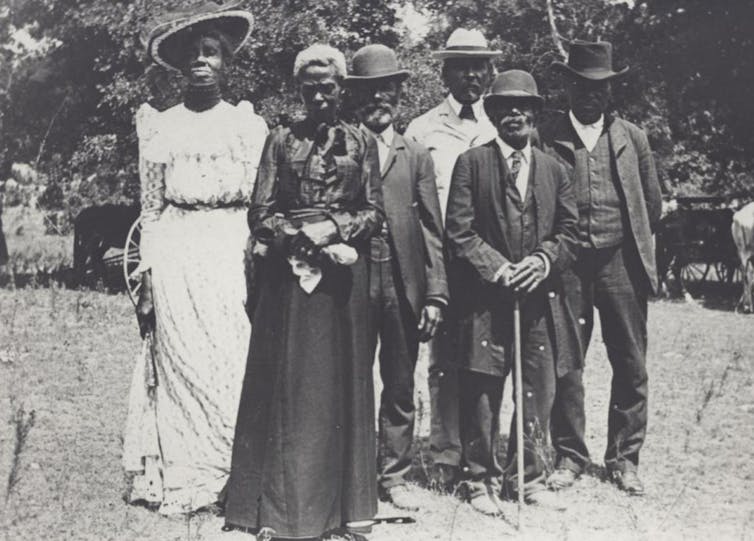
The actual day was June 19, 1865, and it was the Black dockworkers in Galveston, Texas, who first heard the word that freedom for the enslaved had come. There were speeches, sermons and shared meals, mostly held at Black churches, the safest places to have such celebrations.
The perils of unjust laws and racist social customs were still great in Texas for the 250,000 enslaved Black people there, but the celebrations known as Juneteenth were said to have gone on for seven straight days.
The spontaneous jubilation was partly over Gen. Gordon Granger’s General Order No. 3. It read in part, “The people of Texas are informed that, in accordance with a proclamation from the Executive of the United States, all slaves are free.”
But the emancipation that took place in Texas that day in 1865 was just the latest in a series of emancipations that had been unfolding since the 1770s, most notably the Emancipation Proclamation signed by President Abraham Lincoln two years earlier on Jan. 1, 1863.
As I explore in my book “Black Ghost of Empire,” between the 1780s and 1930s, during the era of liberal empire and the rise of modern humanitarianism, over 80 emancipations from slavery occurred, from Pennsylvania in 1780 to Sierra Leone in 1936.
There were, in fact, 20 separate emancipations in the United States alone, from 1780 to 1865, across the U.S. North and South.
In my view as a scholar of race and colonialism, Emancipation Days – Juneteenth in Texas – are not what many people think, because emancipation did not do what most of us think it did.
As historians have long documented, emancipations did not remove all the shackles that prevented Black people from obtaining full citizenship rights. Nor did emancipations prevent states from enacting their own laws that prohibited Black people from voting or living in white neighborhoods.
In fact, based on my research, emancipations were actually designed to force Blacks and the federal government to pay reparations to slave owners – not to the enslaved – thus ensuring white people maintained advantages in accruing and passing down wealth across generations..
Reparations to slave owners
The emancipations shared three common features that, when added together, merely freed the enslaved in one sense, but reenslaved them in another sense.
The first, arguably the most important, was the ideology of gradualism, which said that atrocities against Black people would be ended slowly, over a long and open-ended period.
The second feature was state legislators who held fast to the racist principle that emancipated people were units of slave owner property – not captives who had been subjected to crimes against humanity.
The third was the insistence that Black people had to take on various forms of debt in order to exit slavery. This included economic debt, exacted by the ongoing forced and underpaid work that freed people had to pay to slave owners.
In essence, freed people had to pay for their freedom, while enslavers had to be paid to allow them to be free.
Emancipation myths and realities
On March 1, 1780, for instance, Pennsylvania’s state Legislature set a global precedent for how emancipations would pay reparations to slave owners and buttress the system of white property rule.
The Pennsylvania Act for the Gradual Abolition of Slavery stipulated “that all persons, as well negroes, and mulattos, as others, who shall be born within this State, from and after the Passing of this Act, shall not be deemed and considered as Servants for Life or Slaves.”
At the same time, the legislation prescribed “that every negroe and mulatto child born within this State” could be held in servitude “unto the age of twenty eight Years” and “liable to like correction and punishment” as enslaved people.
After that first Emancipation Day in Pennsylvania, enslaved people still remained in bondage for the rest of their lives, unless voluntarily freed by slave owners.
Only the newborn children of enslaved women were nominally free after Emancipation Day. Even then, these children were forced to serve as bonded laborers from childhood until their 28th birthday.
All future emancipations shared the Pennsylvania DNA.
Emancipation Day came to Connecticut and Rhode Island on March 1, 1784. On July 4, 1799, it dawned in New York, and on July 4, 1804, in New Jersey. After 1838, West Indian people in the United States began commemorating the British Empire’s Emancipation Day of Aug. 1.
The District of Columbia’s day came on April 16, 1862.
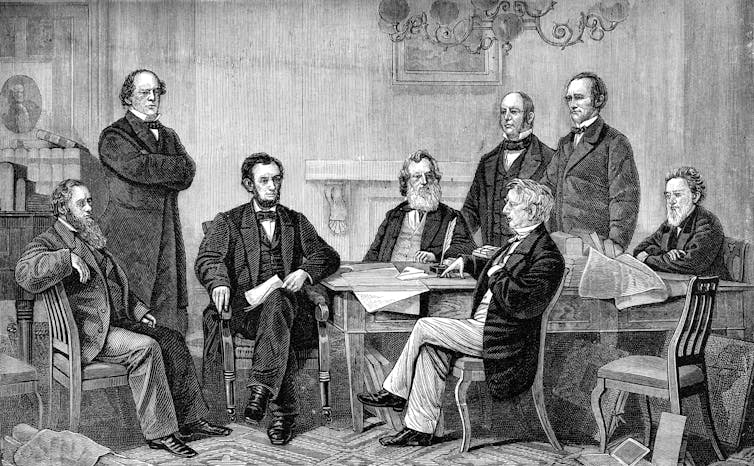
Eight months later, on Jan. 1, 1863, President Lincoln signed the Emancipation Proclamation that freed the enslaved only in Confederate states – not in the states loyal to the Union, such as New Jersey, Maryland, Delaware, Kentucky and Missouri.
Emancipation Day dawned in Maryland on Nov. 1, 1864. In the following year, emancipation was granted on April 3 in Virginia, on May 8 in Mississippi, on May 20 in Florida, on May 29 in Georgia, on June 19 in Texas and on Aug. 8 in Tennessee and Kentucky.
Slavery by another name
After the Civil War, the three Reconstruction Amendments to the U.S. Constitution each contained loopholes that aided the ongoing oppression of Black communities.
The Thirteenth Amendment of 1865 allowed for the enslavement of incarcerated people through convict leasing.
The Fourteenth Amendment of 1868 permitted incarcerated people to be denied the right to vote.
And the Fifteenth Amendment of 1870 failed to explicitly ban forms of voter suppression that targeted Black voters and would intensify during the coming Jim Crow era.
In fact, Granger’s Order No. 3, on June 19, 1865, spelled it out.
Freeing the slaves, the order read, “involves an absolute equality of personal rights and rights of property, between former masters and slaves, and the connection heretofore existing between them, become that between employer and hired labor.”
Yet, the order further states: “The freed are advised to remain at their present homes, and work for wages. They are informed that they will not be allowed to collect at military posts; and that they will not be supported in idleness either there or elsewhere.”
The meaning of Juneteenth
Since the moment emancipation celebrations started on March 1, 1780, all the way up to June 19, 1865, Black crowds gathered to seek redress for slavery.

On that first Juneteenth in Texas, and increasingly so during the ones that followed, free people celebrated their resilience amid the failure of emancipation to bring full freedom.
They stood for the end of debt bondage, racial policing and discriminatory laws that unjustly harmed Black communities. They elevated their collective imagination from out of the spiritual sinkhole of white property rule.
Over the decades, the traditions of Juneteenth ripened into larger gatherings in public parks, with barbecue picnics and firecrackers and street parades with brass bands.
At the end of his 1999 posthumously published novel, “Juneteenth,” noted Black author Ralph Ellison called for a poignant question to be asked on Emancipation Day: “How the hell do we get love into politics or compassion into history?”
The question calls for a pause as much today as ever before.
Kris Manjapra, Professor of History, Tufts University
This article is republished from The Conversation under a Creative Commons license. Read the original article.
Dogs available for adoption this week include mixes of American blue heeler, Chihuahua, chow chow, dachshund, German shepherd, Great Pyrenees, husky, Labrador retriever, pit bull, shepherd and terrier.
Dogs that are adopted from Lake County Animal Care and Control are either neutered or spayed, microchipped and, if old enough, given a rabies shot and county license before being released to their new owner. License fees do not apply to residents of the cities of Lakeport or Clearlake.
The following dogs at the Lake County Animal Care and Control shelter have been cleared for adoption.
Call Lake County Animal Care and Control at 707-263-0278 or visit the shelter online for information on visiting or adopting.

Male heeler-Rottweiler mix
This 1-year-old male American blue heeler-Rottweiler mix has a short black and tan coat.
He is in kennel No. 7, ID No. LCAC-A-3608.
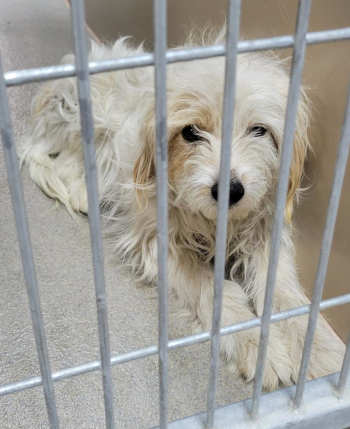
Male terrier
This 2-year-old male terrier has a long white coat with tan markings.
He is in kennel No. 8, ID No. LCAC-A-3594.

Male shepherd-chow chow
This 2-year-old male shepherd-chow chow mix has a gold coat.
He is in kennel No. 13, ID No. LCAC-A-3573.

‘Lucky’
“Lucky” is a 3-year-old male Labrador retriever with a short yellow coat.
He is in kennel No. 15, ID No. LCAC-A-3520.

Dachshund-Chihuahua mix
This young male dachshund-Chihuahua mix has a short gray and tan coat.
He is in kennel No. 17, ID No. LCAC-A-3508.

Male heeler-Rottweiler mix
This 2-year-old male American blue heeler-Rottweiler mix has a short black and tan coat.
He is in kennel No. 18, ID No. LCAC-A-3607.
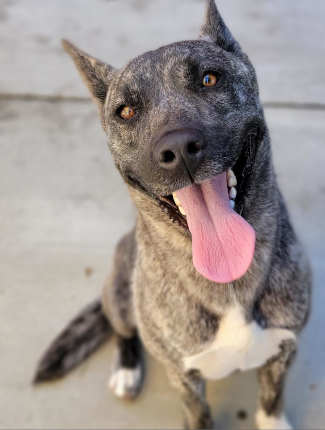
Female shepherd mix
This 1-year-old female shepherd mix has a short gray brindle coat.
She is in kennel No. 19, LCAC-A-3342.

Female Labrador retriever mix
This 3-year-old female Labrador retriever mix has a short yellow coat.
She is in kennel No. 20, ID No. LCAC-A-3438.

Male shepherd
This 2-year-old male shepherd mix has a short black and white coat.
He is in kennel No. 22, ID No. LCAC-A-3466.

Female shepherd mix
This young female shepherd mix has a white coat.
She is in kennel No. 23, ID No. LCAC-A-3472.

Female dachshund
This 2-year-old female dachshund has a short tricolor coat.
She is in kennel No. 24, ID No. LCAC-A-3593.
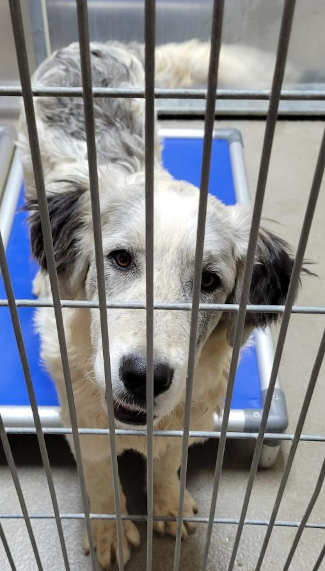
Male Great Pyrenees
This young male Great Pyrenees has a white and gray coat.
He is in kennel No. 25, ID No. LCAC-A-3590.

Male husky
This 2-year-old male husky has a gray and white coat.
He is in kennel No. 29, ID No. LCAC-A-3484.
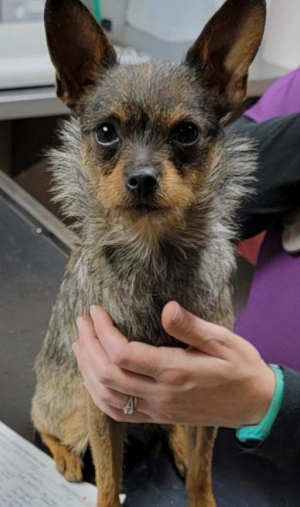
Female terrier-Chihuahua
This 1-year-old female wirehaired terrier-Chihuahua has a black and tan coat.
She is in kennel No. 30, ID No. LCAC-A-3589.

Female German shepherd mix
This 2-year-old female German shepherd mix has a short tan coat.
She is in kennel No. 32, ID No. LCAC-A-3491.

Pit bull terrier
This young female pit bull terrier has a short black and white coat.
She is in kennel No. 34, ID No. LCAC-A-3353.
Email Elizabeth Larson at
Tavares currently serves as District 7 director.
“Tony Tavares has dedicated his career to serving the people of California, with decades of leadership and deep experience overseeing critical transportation issues spanning the state,” said Gov. Newsom. “I look forward to his continued partnership in advancing our innovative efforts to create safer and more sustainable communities throughout the state.”
Tavares, 55, of Elk Grove, has been District 7 director of the California Department of Transportation since 2020, where he has served in several positions since 1997, including District 4 director, chief of the Division of Maintenance, chief of the Division of Right of Way and Land Surveys, and assistant division chief of construction.
This position requires Senate confirmation and the compensation is $209,100. Tavares is a Democrat.
A star's death throes have so violently disrupted its planetary system that the dead star left behind, called a white dwarf, is siphoning off debris from both the system's inner and outer reaches. This is the first time astronomers have observed a white dwarf star that is consuming both rocky-metallic and icy material, the ingredients of planets.
Archival data from NASA's Hubble Space Telescope and other NASA observatories were essential in diagnosing this case of cosmic cannibalism. The findings help describe the violent nature of evolved planetary systems and can tell astronomers about the makeup of newly forming systems.
The findings are based on analyzing material captured by the atmosphere of the nearby white dwarf star G238-44. A white dwarf is what remains of a star like our Sun after it sheds its outer layers and stops burning fuel though nuclear fusion. "We have never seen both of these kinds of objects accreting onto a white dwarf at the same time," said Ted Johnson, the lead researcher and recent University of California, Los Angeles (UCLA) bachelor's graduate. "By studying these white dwarfs, we hope to gain a better understanding of planetary systems that are still intact."
The findings are also intriguing because small icy objects are credited for crashing into and "irrigating" dry, rocky planets in our solar system. Billions of years ago comets and asteroids are thought to have delivered water to Earth, sparking the conditions necessary for life as we know it. The makeup of the bodies detected raining onto the white dwarf implies that icy reservoirs might be common among planetary systems, said Johnson.
"Life as we know it requires a rocky planet covered with a variety of elements like carbon, nitrogen, and oxygen," said Benjamin Zuckerman, UCLA professor and co-author. "The abundances of the elements we see on this white dwarf appear to require both a rocky and a volatile-rich parent body – the first example we've found among studies of hundreds of white dwarfs."
Demolition derby
Theories of planetary system evolution describe the transition between a red giant star and white dwarf phases as a chaotic process. The star quickly loses its outer layers and its planets' orbits dramatically change. Small objects, like asteroids and dwarf planets, can venture too close to giant planets and be sent plummeting toward the star. This study confirms the true scale of this violent chaotic phase, showing that within 100 million years after the beginning of its white dwarf phase, the star is able to simultaneously capture and consume material from its asteroid belt and Kuiper belt-like regions.
The estimated total mass eventually gobbled up by the white dwarf in this study may be no more than the mass of an asteroid or small moon. While the presence of at least two objects that the white dwarf is consuming is not directly measured, it's likely one is metal-rich like an asteroid and another is an icy body similar to what's found at the fringe of our solar system in the Kuiper belt.
Though astronomers have cataloged over 5,000 exoplanets, the only planet where we have some direct knowledge of its interior makeup is Earth. The white dwarf cannibalism provides a unique opportunity to take planets apart and see what they were made of when they first formed around the star.
The team measured the presence of nitrogen, oxygen, magnesium, silicon and iron, among other elements. The detection of iron in a very high abundance is evidence for metallic cores of terrestrial planets, like Earth, Venus, Mars, and Mercury. Unexpectedly high nitrogen abundances led them to conclude the presence of icy bodies.
"The best fit for our data was a nearly two-to-one mix of Mercury-like material and comet-like material, which is made up of ice and dust," Johnson said. "Iron metal and nitrogen ice each suggest wildly different conditions of planetary formation. There is no known solar system object with so much of both."
Death of a planetary system
When a star like our Sun expands into a bloated red giant late in its life, it will shed mass by puffing off its outer layers. One consequence of this can be the gravitational scattering of small objects like asteroids, comets, and moons by any remaining large planets. Like pinballs in an arcade game, the surviving objects can be thrown into highly eccentric orbits.
"After the red giant phase, the white dwarf star that remains is compact – no larger than Earth. The wayward planets end up getting very close to the star and experience powerful tidal forces that tear them apart, creating a gaseous and dusty disk that eventually falls onto the white dwarf's surface," Johnson explained.
The researchers are looking at the ultimate scenario for the Sun's evolution, 5 billion years from now. Earth might be completely vaporized along with the inner planets. But the orbits of many of the asteroids in the main asteroid belt will be gravitationally perturbed by Jupiter and will eventually fall onto the white dwarf that the remnant Sun will become.
For over two years, the research group at UCLA, the University of California, San Diego and the Kiel University in Germany, has worked to unravel this mystery by analyzing the elements detected on the white dwarf star cataloged as G238-44. Their analysis includes data from NASA's retired Far Ultraviolet Spectroscopic Explorer (FUSE), the Keck Observatory's High Resolution Echelle Spectrometer (HIRES) in Hawaii, and the Hubble Space Telescope's Cosmic Origins Spectrograph (COS) and Space Telescope Imaging Spectrograph (STIS).
The team's results were presented at an American Astronomical Society (AAS) press conference on Wednesday, June 15, 2022.
The Hubble Space Telescope is a project of international cooperation between NASA and ESA (European Space Agency). NASA's Goddard Space Flight Center in Greenbelt, Maryland, manages the telescope. The Space Telescope Science Institute (STScI) in Baltimore, Maryland, conducts Hubble science operations. STScI is operated for NASA by the Association of Universities for Research in Astronomy, in Washington, D.C.