 How to resolve AdBlock issue?
News
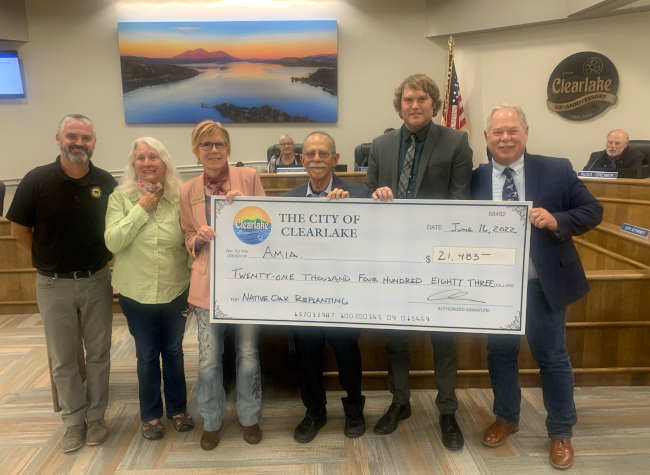
CLEARLAKE, Calif. — A partnership between the city of Clearlake, the Anderson Marsh Interpretive Association and California State Parks will lead to the planting of 100 native valley oaks at Anderson Marsh State Historic Park in the fall.
Clearlake City Manager Alan Flora introduced the project during the Clearlake City Council’s June 16 meeting.
Flora said the effort came about in response to the need to plant oak trees to replace those being taken out for affordable housing projects in the city.
As a result of the state’s desire to encourage affordable housing, it has made such projects statutorily exempt from review under the California Environmental Quality Act, Flora said.
One of those affordable housing projects is the 102-unit Konocti Gardens, which is being built by CSI Construction at 3930 Old Highway 53.
Flora said a lot of oak trees are being removed from the property. While the state has exempted the project, the city has an oak tree mitigation ordinance that requires developers who cut down native oak trees to either replant trees of the same species or choose to pay a fee to fund replanting by the city.
Because the developer didn’t want to replace the trees, Flora said the city enacted a fee in lieu of replacement.
The result was that the developer paid nearly $100,000 to the city to cover the trees’ mitigation, Flora said.
The city contacted Anderson Marsh Interpretive Association, or AMIA, about partnering with the city and State Parks to plant valley oaks at Anderson Marsh State Historic Park, which spans both Lower Lake and the city of Clearlake.
The valley oak, Quercus lobata, is native to California and is the largest of the oaks that grow in North America, reaching a height of about 100 feet, according to Calscape. Valley oaks can grow quickly but live up to 600 years.
“Trees help fight climate change by absorbing carbon dioxide and our beautiful valley oaks are part of the Lake County heritage that we leave to our descendants,” said AMIA President Roberta Lyons.
“AMIA is pleased that the city of Clearlake has undertaken to protect as many of these trees as possible and to replant trees that are cut down during the course of development projects. We are proud to partner with the city of Clearlake and State Parks in planting these valley oaks,” Lyons said.
AMIA is an all-volunteer nonprofit association that partners with State Parks to support Anderson Marsh State Historic Park in Lake County.
AMIA Board member Henry Bornstein said the group contacted State Parks, which agreed to do the initial planting, with AMIA agreeing to do the follow-up watering, weeding and maintenance necessary to help the trees survive.
The city is committing $21,000 to the planting project at Anderson Marsh.
Lyons offered her appreciation for the fact that the city cares about the beautiful oak trees that are a part of the character of the city.
She said she hopes more can be done to protect the trees, adding that she thinks the city could charge more for its mitigation fee.
Ryan Martin, the natural resources manager for the State Parks division that includes Lake County, called the agreement a “very cool partnership.”
He presented a map that showed three areas in the park where they will plant the seedlings: 60 little trees in the grassland around the historic ranch house, 30 seedlings in the North Flat area and 10 along Seigler Canyon Creek east of Highway 53.
Martin said they will prepare the planting sites, purchase supplies and equipment — including a skid mount tank and pump for watering — and hope for an early rain so all of the seedlings can be in the ground in the fall.
Once the trees are established, Martin said they plan to install two educational panels, at North Flat and near the ranch house.
Councilman Russ Cremer said he cut hay and worked on the ranch that’s now the park when he was young, and he knew people who lived in the ranch house. He said he’s glad the park property is being maintained so it will be there for future generations to enjoy.
Flora said there is more money in the oak mitigation fund and the city wants to look at investing in other projects to make up for the lost trees.
Email Elizabeth Larson at
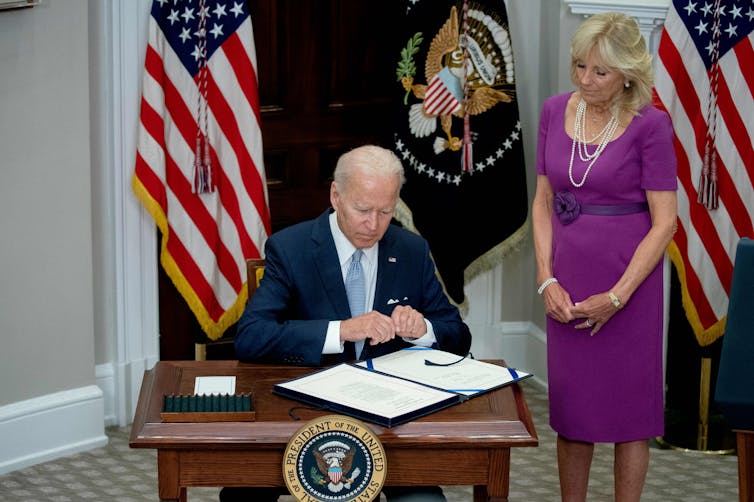
President Joe Biden signed into law on June 25, 2022, a bipartisan bill that is the first significant change in federal gun legislation in nearly three decades.
Known as the Bipartisan Safer Communities Act, the bill was written in response to the shootings in Buffalo, New York, and Uvalde, Texas, and sped through a usually slow-moving Congress.
Though the bill’s limited scope has left many disappointed, it does tighten up gun control in a number of key areas.
As the bill was making its way through Congress, The Conversation published a number of articles looking at its provisions and how effective they might be in addressing America’s gun violence crisis.
1. Support for states’ red flag laws
Among the elements of the new law is support for states to pass what are called “red flag laws.”
LaGrange College political science professor John A. Tures writes that these laws allow police to take guns from people deemed a threat to themselves or others and bar them buying firearms.
To determine if red flag laws reduce gun deaths overall, Tures examined states’ firearm death rates, in light of whether they had a red flag law or not, in each of three years – 2018, 2019 and 2020.
On average, states with red flag laws in 2019 and 2020 had significantly lower firearm death rates than states without them. In 2018, the average death rates for both groups were closer, but states with red flag laws still had a meaningfully lower rate.
“In 2020, if there were no red flag laws, I estimate that 52,530 Americans would have died in gun deaths. The number actually recorded was 45,222, indicating red flag laws saved 7,308 American lives that year,” Tures writes.
2. What is the ‘boyfriend loophole’?
One of the sticking points in negotiations over the bill that was eventually resolved was the “boyfriend loophole.”
Under current federal legislation, Michigan State University criminal justice professor April M. Zeoli explains intimate partner relationships are defined only as those in which two people are or were married, live or lived together as a couple, or have a child together.
People who were in a dating relationship are largely excluded from this definition.
As a result, Zeoli writes, “dating partners are exempt from federal laws that prohibit those convicted of domestic violence misdemeanor crimes, or those who are under domestic violence restraining orders, from buying or possessing a firearm.”
This is what is referred to as the “boyfriend loophole.”
Research suggests that when a violent male partner has access to a gun, the risk of murder to the female partner increases fivefold.
With Biden signing the bill into law, the wording extends the ban to “those who have or have had a continuing relationship of a romantic or intimate nature.”
Though the bill will close the loophole for those convicted of domestic violence misdemeanor crimes, it does not cover restraining order laws.
3. Does the law protect schools?
The new law would provide US$1 billion to help schools put in place comprehensive strategies to create safe and healthy learning environments, including $300 million to increase access to mental health services.
Part of the strategy involves risk assessment.
In the years since the Columbine shooting in 1999, researchers and federal law enforcement agencies have studied school shootings and developed risk assessments to gauge the likelihood of actual violence by a young person identified as a possible risk.
As Paul Boxer, a Rutgers University - Newark psychology professor, explains, the assessments are conducted by professionals that include police officers, teachers and mental health counselors.
Together, they determine a young person’s risk for violence.
“These teams may not be able to prevent every possible incident,” Boxer cautions. “Still, this sort of approach is critical to improving the process of identifying and stopping potential shooters overall.”
Editor’s note: This story is a roundup of articles from The Conversation’s archives.
Howard Manly, Race + Equity Editor, The Conversation
This article is republished from The Conversation under a Creative Commons license. Read the original article.
Dogs available for adoption this week include mixes of American blue heeler, chow chow, German shepherd, husky, Labrador retriever, pit bull, shar pei, shepherd and terrier.
Dogs that are adopted from Lake County Animal Care and Control are either neutered or spayed, microchipped and, if old enough, given a rabies shot and county license before being released to their new owner. License fees do not apply to residents of the cities of Lakeport or Clearlake.
The following dogs at the Lake County Animal Care and Control shelter have been cleared for adoption.
Call Lake County Animal Care and Control at 707-263-0278 or visit the shelter online for information on visiting or adopting.

‘Missy’
“Missy” is a 3-year-old female pit bull terrier with a black and white coat.
She is in kennel No. 4, ID No. LCAC-A-3524.

Shar Pei-pit bull mix
This 9-year-old female shar pei-pit bull mix has a short black and white coat.
She is in kennel No. 5, ID No. LCAC-A-3622.

‘Chango’
“Chango” is a 6-year-old male terrier with a curly black coat.
He is in kennel No. 6, ID No. LCAC-A-3547.

Male heeler-Rottweiler mix
This 1-year-old male American blue heeler-Rottweiler mix has a short black and tan coat.
He is in kennel No. 7, ID No. LCAC-A-3608.

Male pit bull terrier mix
This 3-year-old male pit bull terrier mix has a short black and white coat.
He is in kennel No. 9, ID No. LCAC-A-3627.

‘Lucky’
“Lucky” is a 3-year-old male Labrador retriever with a short yellow coat.
He is in kennel No. 15, ID No. LCAC-A-3520.

Male husky
This 2-year-old male husky has a gray and white coat.
He is in kennel No. 16, ID No. LCAC-A-3484.

‘Cali’
“Cali” is a female pit bull terrier with a short black and white coat.
She is in kennel No. 17, ID No. LCAC-A-3571.

Male heeler-Rottweiler mix
This 2-year-old male American blue heeler-Rottweiler mix has a short black and tan coat.
He is in kennel No. 18, ID No. LCAC-A-3607.

‘Pixie’
“Pixie” is a 1-year-old female shepherd mix with a gray brindle coat.
She is in kennel No. 19, ID No. LCAC-A-3342.

Female Labrador retriever mix
This 3-year-old female Labrador retriever mix has a short yellow coat.
She is in kennel No. 20, ID No. LCAC-A-3438.

Male shepherd
This 2-year-old male shepherd mix has a short black and white coat.
He is in kennel No. 22, ID No. LCAC-A-3466.

Female shepherd mix
This young female shepherd mix has a white coat.
She is in kennel No. 23, ID No. LCAC-A-3472.

Female German shepherd mix
This 2-year-old female German shepherd mix has a short tan coat.
She is in kennel No. 32, ID No. LCAC-A-3491.

Pit bull terrier
This young female pit bull terrier has a short black and white coat.
She is in kennel No. 34, ID No. LCAC-A-3353.
Email Elizabeth Larson at
For the past year, NASA’s Curiosity Mars rover has been traveling through a transition zone from a clay-rich region to one filled with a salty mineral called sulfate.
While the science team targeted the clay-rich region and the sulfate-laden one for evidence each can offer about Mars’ watery past, the transition zone is proving to be scientifically fascinating as well.
In fact, this transition may provide the record of a major shift in Mars’ climate billions of years ago that scientists are just beginning to understand.
The clay minerals formed when lakes and streams once rippled across Gale Crater, depositing sediment at what is now the base of Mount Sharp, the 3-mile-tall mountain whose foothills Curiosity has been ascending since 2014.
Higher on the mountain in the transition zone, Curiosity’s observations show that the streams dried into trickles and sand dunes formed above the lake sediments.
“We no longer see the lake deposits that we saw for years lower on Mount Sharp,” said Ashwin Vasavada, Curiosity’s project scientist at NASA’s Jet Propulsion Laboratory in Southern California. “Instead, we see lots of evidence of drier climates, like dry dunes that occasionally had streams running around them. That’s a big change from the lakes that persisted for perhaps millions of years before.”
As the rover climbs higher through the transition zone, it is detecting less clay and more sulfate. Curiosity will soon drill the last rock sample it will take in this zone, providing a more detailed glimpse into the changing mineral composition of these rocks.
Unique geologic features also stand out in this zone. The hills in the area likely began in a dry environment of large, wind-swept sand dunes, hardening into rock over time.
Interspersed in the remains of these dunes are other sediments carried by water, perhaps deposited in ponds or small streams that once wove among the dunes. These sediments now appear as erosion-resistant stacks of flaky layers, like one nicknamed “The Prow.”
Making the story richer yet more complicated is the knowledge that there were multiple periods in which groundwater ebbed and flowed over time, leaving a jumble of puzzle pieces for Curiosity’s scientists to assemble into an accurate timeline.

Ten years on, going strong
Curiosity will celebrate its 10th year on Mars Aug. 5. While the rover is showing its age after a full decade of exploring, nothing has prevented it from continuing its ascent.
On June 7, Curiosity went into safe mode after detecting a temperature reading on an instrument control box within the body of the rover that was warmer than expected. Safe mode occurs when a spacecraft senses an issue and automatically shuts down all but its most essential functions so that engineers can assess the situation.
Although Curiosity exited safe mode and returned to normal operations two days later, JPL’s engineers are still analyzing the exact cause of the issue.
They suspect safe mode was triggered after a temperature sensor provided an inaccurate measurement, and there’s no sign it will significantly affect rover operations since backup temperature sensors can ensure the electronics within the rover body aren’t getting too hot.
The rover’s aluminum wheels are also showing signs of wear. On June 4, the engineering team commanded Curiosity to take new pictures of its wheels — something it had been doing every 3,281 feet to check their overall health.
The team discovered that the left middle wheel had damaged one of its grousers, the zigzagging treads along Curiosity’s wheels. This particular wheel already had four broken grousers, so now five of its 19 grousers are broken.
The previously damaged grousers attracted attention online recently because some of the metal “skin” between them appears to have fallen out of the wheel in the past few months, leaving a gap.
The team has decided to increase its wheel imaging to every 1,640 feet (500 meters) — a return to the original cadence. A traction control algorithm had slowed wheel wear enough to justify increasing the distance between imaging.
“We have proven through ground testing that we can safely drive on the wheel rims if necessary,” said Megan Lin, Curiosity’s project manager at JPL. “If we ever reached the point that a single wheel had broken a majority of its grousers, we could do a controlled break to shed the pieces that are left. Due to recent trends, it seems unlikely that we would need to take such action. The wheels are holding up well, providing the traction we need to continue our climb.”
For more information about Curiosity, visit www.mars.nasa.gov/msl/home/ and www.nasa.gov/curiosity.

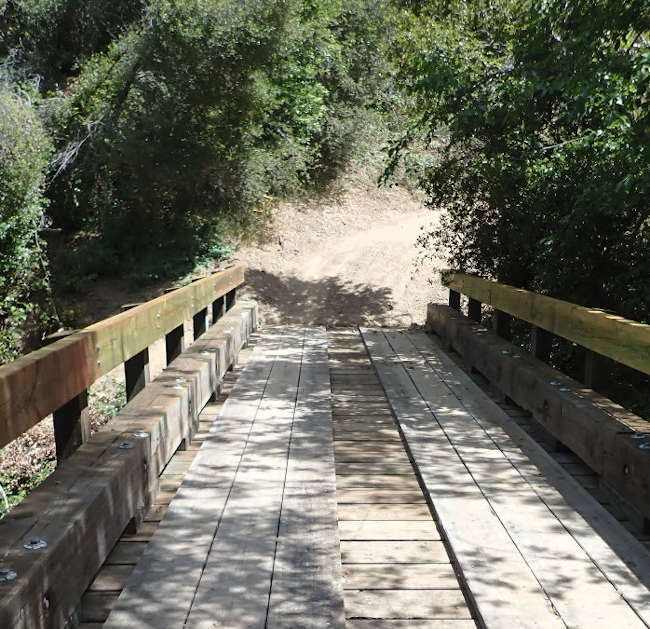
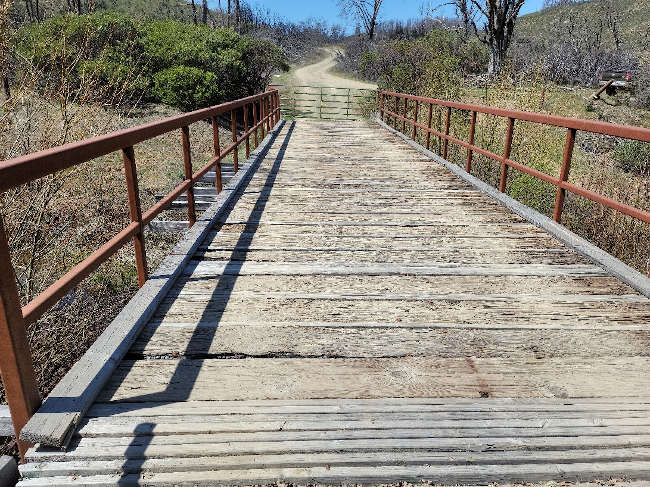
NORTH COAST, Calif. — Off-highway vehicle bridges have become a critically important part of today’s sustainable trail systems on public land particularly in mountainous or forested regions.
Often they are used to relocate motorized use out of sensitive riparian areas to protect wildlife and water quality or to provide connectivity throughout a unit’s route network.
When those structures are damaged or destroyed by wildfires or other natural disasters, public access to designated roads and trails can be severely impacted for both casual use and permitted competition events.
One such federal unit is the Bureau of Land Management’s South Cow Mountain Off Highway Vehicle, or OHV, Recreation Area near Ukiah.
It is a congressionally-designated OHV recreation area where managed multiple-use OHV recreation is a prescribed use.
It has an extensive route network that provides various degrees of challenge for dirt-bikes, ATVs, SxSs, buggies and 4WD vehicles.
It also provides motorized access to nonmotorized activities such as mountain biking, wildlife views and hunting.
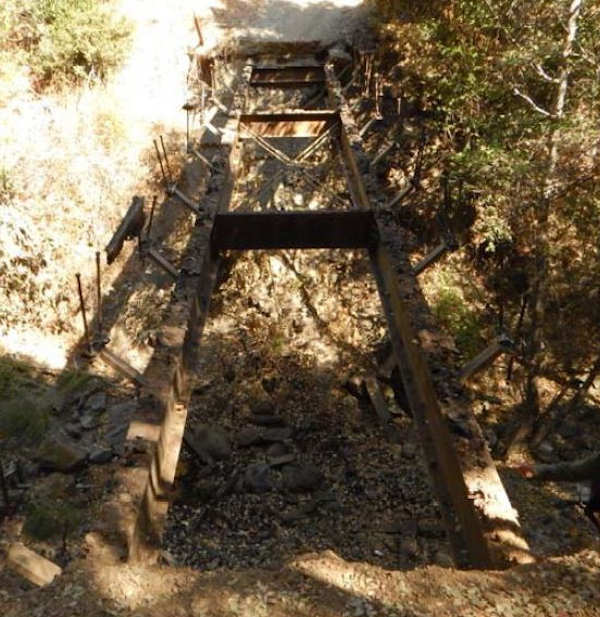
In 2018, much of South Cow Mountain was devastated in the River fire, part of the Mendocino Complex.
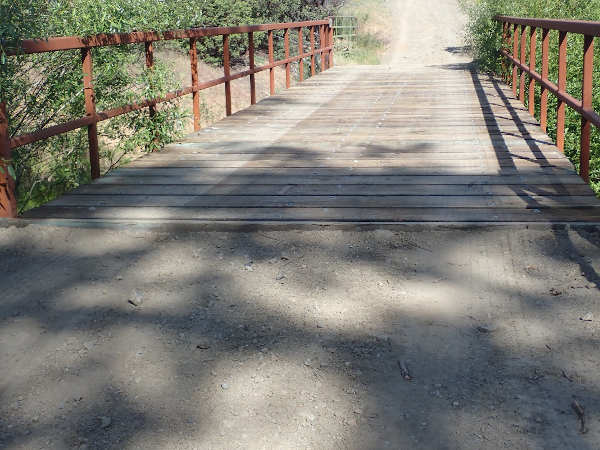
Some of that destruction included a number of key OHV bridges that provided important connectivity within the route network.
Impacts to the bridge system created safety concerns and often resulted in trail closures or restrictions and also made it difficult for the agency to issue permits for historic off-road motorcycle events.
BLM’s Ukiah Field Office leadership and staff are commended for their “git er done” attitude — during difficult times — to repair severely damaged OHV bridges and restore functionality and connectivity within the 94 mile network of designated roads and trails.
Don Amador Don is owner of Quiet Warrior Racing, a recreation, land-use, and political consulting company, and president and CEO of the Post Wildfire OHV Recovery Alliance. He has over 29 years in the field of recreation and land-use advocacy. He served as a commissioner on the California Department of Parks and Recreation Off-Highway Motor Vehicle Recreation Commission from 1994 to 2000 and has also served on many recreation stakeholder groups and advisory committees. Follow him at his website at https://quietwarriorracing.blogspot.com/. This article is reprinted with permission.
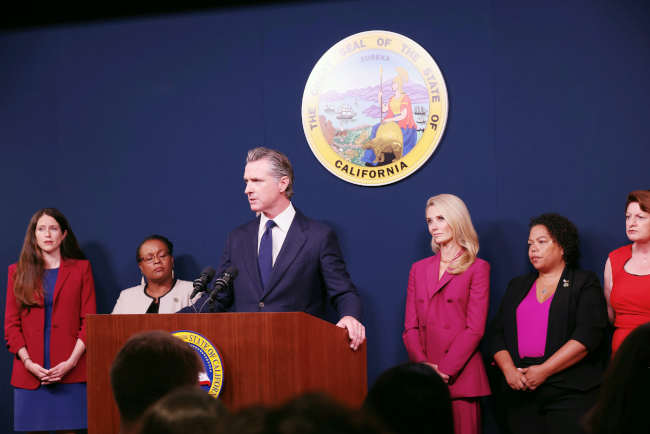
On the heels of the U.S. Supreme Court’s decision to overturn Roe v. Wade, Gov. Gavin Newsom on Friday signed legislation to help protect patients and providers in California against radical attempts by other states to extend their anti-abortion laws into California.
“With today’s Supreme Court decision to endanger the health and safety of millions of women across the country, California must do everything it can to protect the fundamental rights of all women – in California and beyond,” said Governor Newsom. “We know that states like Missouri are already targeting women seeking abortions in states like California where abortion remains legal. This legislation seeks to protect women and care providers from civil liability imposed by other states, and sends a clear message that California will continue to be a safe haven for all women seeking reproductive health care services in our state.”
The governor signed AB 1666 by Assemblymember Rebecca Bauer-Kahan (D-Orinda), which seeks to protect those in California from civil liability for providing, aiding, or receiving abortion care in the state.
The measure comes as lawmakers in Missouri advance a proposal to allow private citizens to sue Missouri residents who have an abortion out of state, as well as their providers and anyone who assists them in seeking an abortion.
Texas has enacted a six-week ban on abortion with a private right of action enabling individuals to sue abortion providers and others. U.S. Senator Marco Rubio has introduced a federal bill to exclude employers from receiving tax breaks if they provide abortion access to their employees.
Twenty-six states across the nation, where 33.6 million women live, have laws to ban or severely restrict abortion.
Twenty-two states have enacted measures to ban abortions: Alabama, Arizona, Arkansas, Georgia, Idaho, Iowa, Kentucky, Louisiana, Michigan, Mississippi, Missouri, North Dakota, Ohio, Oklahoma, South Carolina, South Dakota, Tennessee, Texas, Utah, West Virginia, Wisconsin and Wyoming.
Four additional states already restrict abortion and are likely to have bans in effect soon: Florida, Indiana, Montana and Nebraska.
The governor was joined Friday in Sacramento by First Partner Jennifer Siebel Newsom, Senate President pro Tempore Toni G. Atkins (D-San Diego), Assembly Speaker Anthony Rendon (D-Lakewood), California Attorney General Rob Bonta, Planned Parenthood Affiliates of California President/CEO Jodi Hicks, NARAL’s California Director Shannon Olivieri Hovis, and members of the California Legislative Women's Caucus — Assemblymembers Mia Bonta and Lori D. Wilson.
“As a mother, I’m outraged that children today will grow up in a country where women have fewer rights than my generation had, but I know history will show that the Supreme Court’s ruling does not reflect the values of our nation,” said Siebel Newsom. “In one week, the court has made it clear that it believes guns are entitled to more rights and protections than women. This is insane. And, it’s a ruling that will have grave consequences for women’s health, safety, economic security, and ability to live and thrive across this country. That’s why I’m proud to reside in, and raise my children in California where our governor, administration and Legislature trust women, and respect our authority to make decisions about our own reproductive health and futures.”
In response to the Supreme Court’s decision Friday morning, Gov. Newsom and the governors of Oregon and Washington launched a new multi-state commitment to defend access to reproductive health care and protect patients and providers.
“This is a dark moment for our country,” said California Attorney General Rob Bonta. “This court’s decision is outrageous, unprecedented, and dangerous. It blasts our nation back into the dark ages. Millions are now facing a stark reality when it comes to their right to choose. People all across the nation — their bodies, futures, and families — will be hurt by this decision. But, in California, we refuse to turn back the clock and let politicians exert control over a person’s body. Despite the decision, abortion remains fully protected here in California. We’ll keep fighting to strengthen and expand access to safe and legal abortion. As attorney general, I will use the full force of the law and the full authority of my office to protect reproductive healthcare for every person who seeks it in California. Abortion remains a legally protected right in our state and, in California, we won’t backslide.”
“Extremist laws — now deemed constitutional — will pursue our incredible providers for the care they provide, will penalize vulnerable people desperately seeking abortions in a last effort to control their own lives,” said Assemblymember Bauer-Kahan. “ In California we won’t let this happen. I am incredibly grateful to the governor for signing AB 1666, which will immediately protect anyone in California from civil penalties for abortion. We will continue to fight and be a sanctuary for abortion care.”
Gov. Newsom has proposed a $125 million Reproductive Health Package to expand access for women and help prepare for the influx of women seeking reproductive health care from other states.
In addition, the California Legislature has introduced a constitutional amendment to enshrine the right to abortion in the state constitution.
Gov. Newsom recently signed legislation eliminating copays for abortion care services and has signed into law a legislative package to further strengthen access and protect patients and providers.
For full text of Friday’s bill, visit: http://leginfo.legislature.ca.gov.