 How to resolve AdBlock issue?
News
LAKE COUNTY, Calif. — The Lake County Registrar of Voters Office reported Friday on the work taking place to finalize the official canvass for Tuesday’s primary election, including counting thousands of unprocessed ballots.
Registrar Maria Valadez’s office said the results from the June 7 Statewide Direct Primary Election results are not yet final.
As is normal after an election, Valadez’s office still has thousands of ballots to process, with more expected to arrive in the mail by Tuesday.
As of June 8 report, Valadez’s office has the following ballots yet to count within the 30-day official canvass period:
• Vote-by-mail ballots: 7,523.
• Provisional ballots: 830.
• Conditional voter registration provisional ballots: 39.
• Vote-by-mail ballots that require further review for various reasons: 149.
• Grand total: 8,541.
A newly enacted law changed the deadline for elections officials to receive vote-by-mail ballots returned by mail for the June 7 primary, the elections office reported.
The new law allows county elections officials to count a vote-by-mail ballot if it is postmarked on or before Election Day and delivered to the elections office by the U.S. Postal Service or a private mail delivery company no later than seven days after Election Day, in this case, June 14.
Official canvass and vote-by-mail processing
The registrar’s office reported that there are many checks and balances when certifying the election results.
The process of certifying election results, also known as the official canvass, is mandated by state law to make sure the public can have confidence in the integrity of the final results.
Unofficial results have no bearing on the final outcome of the races and contests. Only final certified results will impact the races and contests.
Valadez reported that her staff members are working very diligently on completing all tasks required to certify the election.
Each voter’s returned vote-by-mail ballot envelope must be examined by staff to see if the signature compares with the voter’s signature on file. After the vote-by-mail voter’s information has been entered and proofed; the vote-by-mail envelopes have to be sorted by voting precinct.
Staff must verify the number of vote-by-mail processed by the voting precinct before the envelopes can be opened. Once staff balances, the envelopes can be opened. Once the ballots are removed, staff must count the number of ballots and the number of envelopes in order to make sure that all of the ballots are removed from the envelopes to be counted.
“Polls provisional ballots” are cast at the polling places on Election Day. Some of the reasons a voter is issued a provisional ballot:
• The voter’s name is listed on the active voter roster list as a vote-by-mail voter and the voter is unable to surrender his/her vote-by-mail ballot in order to be issued a polls ballot.
• The voter’s name is not printed in the roster-index, has moved and did not re-register to vote at his/her new residence address.
• A voter is voting in the wrong voting precinct and not his/her assigned voting precinct.
• A first time voter who is required to provide ID, but is unable to do so.
• The voter’s eligibility to vote cannot be determined by the poll worker.
“Conditional voter ballots” issued to a person personally visiting either the Lake County Registrar of Voters or a voting precinct no later than the close of the polls (prior to 8 p.m.) on Election Day. These voters are Lake County residents who missed the regular voter registration deadline of May 23 but they still have the option to vote in an election by conditionally registering to vote and casting a conditional ballot (same day voter registration).
Voters that were able to surrender their vote-by-mail ballot, were allowed to sign the Roster-Index and were issued a ballot at their assigned polling place, and then their voted ballot was deposited into the ballot box.
After the polls closed, the voted precinct ballots were returned to the Registrar of Voters Office and counted on election night.
In addition, all of the roster-indexes must also be examined for errors or omissions. Staff checks the ballot statement including the number of returned voted ballots against the number of voters who signed the roster-index.
Provisional and conditional voter signatures also need to match the number of voter provisional and conditional ballots.
Once this is done, staff must enter voter history from each of the roster-indexes and record it into the voting system as voter history.
For additional information call the Registrar of Voters Office at 707-263-2372 or toll-free at 888-235-6730.
Registrar Maria Valadez’s office said the results from the June 7 Statewide Direct Primary Election results are not yet final.
As is normal after an election, Valadez’s office still has thousands of ballots to process, with more expected to arrive in the mail by Tuesday.
As of June 8 report, Valadez’s office has the following ballots yet to count within the 30-day official canvass period:
• Vote-by-mail ballots: 7,523.
• Provisional ballots: 830.
• Conditional voter registration provisional ballots: 39.
• Vote-by-mail ballots that require further review for various reasons: 149.
• Grand total: 8,541.
A newly enacted law changed the deadline for elections officials to receive vote-by-mail ballots returned by mail for the June 7 primary, the elections office reported.
The new law allows county elections officials to count a vote-by-mail ballot if it is postmarked on or before Election Day and delivered to the elections office by the U.S. Postal Service or a private mail delivery company no later than seven days after Election Day, in this case, June 14.
Official canvass and vote-by-mail processing
The registrar’s office reported that there are many checks and balances when certifying the election results.
The process of certifying election results, also known as the official canvass, is mandated by state law to make sure the public can have confidence in the integrity of the final results.
Unofficial results have no bearing on the final outcome of the races and contests. Only final certified results will impact the races and contests.
Valadez reported that her staff members are working very diligently on completing all tasks required to certify the election.
Each voter’s returned vote-by-mail ballot envelope must be examined by staff to see if the signature compares with the voter’s signature on file. After the vote-by-mail voter’s information has been entered and proofed; the vote-by-mail envelopes have to be sorted by voting precinct.
Staff must verify the number of vote-by-mail processed by the voting precinct before the envelopes can be opened. Once staff balances, the envelopes can be opened. Once the ballots are removed, staff must count the number of ballots and the number of envelopes in order to make sure that all of the ballots are removed from the envelopes to be counted.
“Polls provisional ballots” are cast at the polling places on Election Day. Some of the reasons a voter is issued a provisional ballot:
• The voter’s name is listed on the active voter roster list as a vote-by-mail voter and the voter is unable to surrender his/her vote-by-mail ballot in order to be issued a polls ballot.
• The voter’s name is not printed in the roster-index, has moved and did not re-register to vote at his/her new residence address.
• A voter is voting in the wrong voting precinct and not his/her assigned voting precinct.
• A first time voter who is required to provide ID, but is unable to do so.
• The voter’s eligibility to vote cannot be determined by the poll worker.
“Conditional voter ballots” issued to a person personally visiting either the Lake County Registrar of Voters or a voting precinct no later than the close of the polls (prior to 8 p.m.) on Election Day. These voters are Lake County residents who missed the regular voter registration deadline of May 23 but they still have the option to vote in an election by conditionally registering to vote and casting a conditional ballot (same day voter registration).
Voters that were able to surrender their vote-by-mail ballot, were allowed to sign the Roster-Index and were issued a ballot at their assigned polling place, and then their voted ballot was deposited into the ballot box.
After the polls closed, the voted precinct ballots were returned to the Registrar of Voters Office and counted on election night.
In addition, all of the roster-indexes must also be examined for errors or omissions. Staff checks the ballot statement including the number of returned voted ballots against the number of voters who signed the roster-index.
Provisional and conditional voter signatures also need to match the number of voter provisional and conditional ballots.
Once this is done, staff must enter voter history from each of the roster-indexes and record it into the voting system as voter history.
For additional information call the Registrar of Voters Office at 707-263-2372 or toll-free at 888-235-6730.
LAKE COUNTY, Calif. — Lake County’s Public Health officer said the case rate of COVID-19 in the county is now significant enough to land it within the “high” community level outlined by the U.S. Centers for Disease Control and Prevention.
“Reaching this category, the worst of the agency’s three-tier scale is alarming, as it signifies abundant local transmission which could signal that our community may soon put pressure on our health care resources,” said Dr. Erik McLaughlin, MD, MPH.
“As members of this community, we must take it upon ourselves to change our current trajectory by adhering to safety practices that are known to reduce transmission of COVID-19 such as wearing face coverings indoors when in public, testing when symptomatic or recently exposed, and staying up to date on vaccinations,” McLaughlin said.
McLaughlin said that moving into the CDC’s High Community Level does not trigger any new countywide health measures, however, it signals that reassessing measures may become
necessary in order to avoid devastating outcomes if case rates continue to rise.
Although an indoor face covering requirement hasn’t been necessary for months, county health officials have consistently strongly recommended residents wear face coverings indoors while in public as an extra layer of protection against COVID-19 transmission.
McLaughlin said health officials do not want these recommendations and requirements to be seen as a punishment but as a powerful tool in avoidance of more severe outcomes.
He said officials have long noted that the pandemic has plotted a predictable, if painful, path — with increases in new infections triggering corresponding rises in hospitalizations a few weeks later, and in deaths a few weeks after that.
Lake County Health Services data analysis shows the county is now reporting 212 weekly cases for every 100,000 residents, high enough to clear the bar of 200 the CDC has set for the high community level.
Test positivity has been creeping upward over recent weeks to 11% in Lake County, McLaughlin said.
“The task in front of us is similar to work we’ve had to do at other points over the past two and a half years, we must slow transmission,” McLaughlin said. “We know what works — masking, testing and vaccination, along with systems and policies that support the use of these and other effective safety measures.”
He added, “Our hope is that with the encouragement that we’re providing, the easy access to high-quality face coverings, that people will go back to putting those face coverings on while transmission is high.”
“Reaching this category, the worst of the agency’s three-tier scale is alarming, as it signifies abundant local transmission which could signal that our community may soon put pressure on our health care resources,” said Dr. Erik McLaughlin, MD, MPH.
“As members of this community, we must take it upon ourselves to change our current trajectory by adhering to safety practices that are known to reduce transmission of COVID-19 such as wearing face coverings indoors when in public, testing when symptomatic or recently exposed, and staying up to date on vaccinations,” McLaughlin said.
McLaughlin said that moving into the CDC’s High Community Level does not trigger any new countywide health measures, however, it signals that reassessing measures may become
necessary in order to avoid devastating outcomes if case rates continue to rise.
Although an indoor face covering requirement hasn’t been necessary for months, county health officials have consistently strongly recommended residents wear face coverings indoors while in public as an extra layer of protection against COVID-19 transmission.
McLaughlin said health officials do not want these recommendations and requirements to be seen as a punishment but as a powerful tool in avoidance of more severe outcomes.
He said officials have long noted that the pandemic has plotted a predictable, if painful, path — with increases in new infections triggering corresponding rises in hospitalizations a few weeks later, and in deaths a few weeks after that.
Lake County Health Services data analysis shows the county is now reporting 212 weekly cases for every 100,000 residents, high enough to clear the bar of 200 the CDC has set for the high community level.
Test positivity has been creeping upward over recent weeks to 11% in Lake County, McLaughlin said.
“The task in front of us is similar to work we’ve had to do at other points over the past two and a half years, we must slow transmission,” McLaughlin said. “We know what works — masking, testing and vaccination, along with systems and policies that support the use of these and other effective safety measures.”
He added, “Our hope is that with the encouragement that we’re providing, the easy access to high-quality face coverings, that people will go back to putting those face coverings on while transmission is high.”
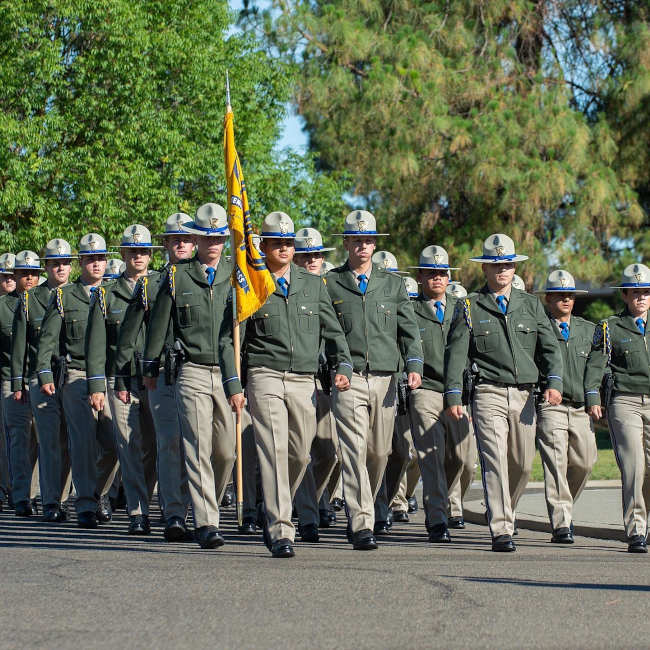
The California Highway Patrol’s 128 newest officers graduated from the CHP Academy in West Sacramento on Friday after completing 27 weeks of training.
Cadets crossed the stage to receive their badge and assignment at one of the CHP’s 103 area offices throughout the state, as family and friends packed the gymnasium in support of the new officers.
“Completing Academy training is a tremendous achievement,” said CHP Commissioner Amanda Ray. “These women and men are not just starting a new job, they are embarking on a lifelong career that requires extreme dedication and a passion for service.”
At the CHP Academy, cadet training starts with nobility in policing, leadership, professionalism and ethics, and cultural diversity.
Cadets receive instruction on mental illness response and crisis intervention techniques. The training covers vehicle patrol, crash investigation, first aid, and the apprehension of suspected violators, including drivers under the influence of alcohol or drugs.
The cadets receive training in traffic control, report writing, recovery of stolen vehicles, assisting the motoring public, issuing citations, emergency scene management, and knowledge of the California vehicle code, penal code, and health and safety code.
The CHP’s newest officers join the ranks of the more than 6,700 uniformed personnel serving in communities throughout the state.
A new cadet class is scheduled to begin training at the CHP Academy on June 20. Another class of more than 100 cadets is expected to complete training and graduate in early August.
On Thursday, the CHP launched a multiyear recruiting campaign to fill 1,000 vacant officer positions by hiring qualified individuals from diverse communities.
For more information about the “Join the CHP 1,000” campaign, or to apply, visit https://recruitment.chp.ca.gov/ or call the statewide Recruitment Unit at 916-843-4300.
“Joining the CHP family is an opportunity to be the change and make a difference in the community and the lives of those we serve,” added Commissioner Ray.
The mission of the CHP is to provide the highest level of safety, service and security.
Administration of a decedent’s probate or trust estate may include sizable financial investment assets (e.g., brokerage accounts) and/or cash assets (e.g., bank accounts).
Brokerage account values change constantly and may include assets too risky and inappropriate given the administration.
The administration will need to determine how much cash is needed to pay debts of decedent, expenses of administration, and make gifts (typically at the end of administration).
On the other hand, too much uninvested cash (e.g., bank deposits) means unproductive assets that do not earn sufficient income and gradually lose value to inflation. This is increasingly problematic as months pass before distribution is made to beneficiaries.
A personal representative or trustee, as relevant, may want to invest cash assets, reinvest already invested assets, and/or to sell investments to create cash needed to pay debts, expenses, and make gifts to beneficiaries.
What investment powers does a personal representative in a probate or a trustee in a trust administration have to manage the decedent’s assets?
First let us consider the question in a probate. A personal representative is not required or expected to invest in the stock market.
The duties of a personal representative are that he or she must manage the estate assets with the care of a prudent person dealing with someone else's property. He or she must be cautious and may not make any speculative investments. Except for checking accounts intended for ordinary administration expenses, estate accounts must earn interest.
First, if the personal representative has full authority under the Independent Administration of Estates Act (“IAEA”), then he or she may invest in certain very low risk debt assets.
Next, with permission of the beneficiaries (and sometimes other persons too), the personal representative may also invest in certain additional low-risk debt instruments (e.g., bonds and obligations).
Second, if the probate involves a decedent’s will, the will may include investment powers. If so, the personal representative may invest using such powers, but only if certain important conditions safeguarding payment of the decedent’s debts and expenses of administration are first satisfied. This cannot occur earlier than four months from commencing probate. Sometimes it is necessary or advisable to obtain a court order for certain investments.
Next, in a trust administration, a trustee has a fiduciary (legal) duty to invest and manage trust assets impartially for the benefit of all beneficiaries.
Generally, the trustee must make all assets economically productive, unless the trust provides otherwise. The duty to make assets income producing becomes increasingly important the longer the trust administration takes and the larger the value of the trust estate.
In all events, however, the trustee must evaluate the suitability of the risks and returns associated with the existing investments in the contest of the trust administration.
The trustee’s investment powers are found, first, in the trust itself and, secondarily, in the Probate Code. A trust may expand or restrict the trustee’s standard duties and limitations in the Probate Code. Generally speaking, a trustee may invest in assets that are often off limits in a probate administration.
California’s prudent investor rule requires a trustee to consider the trust’s purposes, terms, distribution requirement and other relevant circumstances when establishing an overall investment strategy.
Investment decisions — including the balancing of investment risk with investment return goals — must be made in the context of an overall investment strategy. No one asset is considered in isolation and investment diversity is the general rule.
Under the prudent investor rule, a trustee can delegate investment decisions to a professional investment advisor. If the trustee follows the following three rules the trustee will not be liable to beneficiaries for following the investment advice: (1) The trustee must select the advisor prudently; (2) trustee must establish the scope and terms of the delegation consistent with the purposes and terms of the trust; and (3) the trustee must periodically monitor the advisor’s performance and compliance with the delegation.
Selecting an advisor prudently means interviewing several different advisors and considering each advisor’s credentials, experience investing trust assets in similar situations, and any possible conflicts of interest. This process should be documented.
The foregoing is not legal or investment advice. Anyone confronting these issues in the administration of a decedent’s estate should seek appropriate legal and investment counsel before proceeding.
Dennis A. Fordham, attorney, is a State Bar-Certified Specialist in estate planning, probate and trust law. His office is at 870 S. Main St., Lakeport, Calif. He can be reached at

After a decade of observing some of the hottest, densest, and most energetic regions in our universe, this small but powerful space telescope still has more to see.
NASA’s Nuclear Spectroscopic Telescope Array, or NuSTAR, is turning 10. Launched on June 13, 2012, this space telescope detects high-energy X-ray light and studies some of the most energetic objects and processes in the universe, from black holes devouring hot gas to the radioactive remains of exploded stars. Here are some of the ways NuSTAR has opened our eyes to the X-ray universe over the last decade.
Seeing x-rays close to home
Different colors of visible light have different wavelengths and different energies; similarly, there is a range of X-ray light, or light waves with higher energies than those human eyes can detect. NuSTAR detects X-rays at the higher end of the range.
There aren’t many objects in our solar system that emit the X-rays NuSTAR can detect, but the Sun does: Its high-energy X-rays come from microflares, or small bursts of particles and light on its surface. NuSTAR’s observations contribute to insights about the formation of bigger flares, which can cause harm to astronauts and satellites.
These studies could also help scientists explain why the Sun’s outer region, the corona, is many times hotter than its surface. NuSTAR also recently observed high-energy X-rays coming from Jupiter, solving a decades-old mystery about why they’ve gone undetected in the past.

Illuminating black holes
Black holes don’t emit light, but some of the biggest ones we know of are surrounded by disks of hot gas that glow in many different wavelengths of light. NuSTAR can show scientists what’s happening to the material closest to the black hole, revealing how black holes produce bright flares and jets of hot gas that stretch for thousands of light-years into space.
The mission has measured temperature variations in black hole winds that influence star formation in the rest of the galaxy. Recently, the Event Horizon Telescope, or EHT, took the first-ever direct images of the shadows of black holes, and NuSTAR provided support.
Along with other NASA telescopes, NuSTAR monitored the black holes for flares and changes in brightness that would influence EHT’s ability to image the shadow cast by them.
One of NuSTAR’s biggest accomplishments in this arena was making the first unambiguous measurement of a black hole’s spin, which it did in collaboration with the European Space Agency, or ESA, XMM-Newton mission.
Spin is the degree to which a black hole’s intense gravity warps the space around it, and the measurement helped confirm aspects of Albert Einstein’s theory of general relativity.
Finding hidden black holes
NuSTAR has identified dozens of black holes hidden behind thick clouds of gas and dust. Visible light typically can’t penetrate those clouds, but the high-energy X-ray light observed by NuSTAR can. This gives scientists a better estimate of the total number of black holes in the universe.
In recent years scientists have used NuSTAR data to find out how these giants become surrounded by such thick clouds, how that process influences their development, and how obscuration relates to a black hole’s impact on the surrounding galaxy.

Revealing the power of ‘undead’ stars
NuSTAR is a kind of zombie hunter: It’s deft at finding the undead corpses of stars. Known as neutron stars, these are dense nuggets of material left over after a massive star runs out of fuel and collapses.
Though neutron stars are typically only the size of a large city, they are so dense that a teaspoon of one would weigh about a billion tons on Earth. Their density, combined with their powerful magnetic fields, makes these objects extremely energetic: One neutron star located in the galaxy M82 beams with the energy of 10 million Suns.
Without NuSTAR, scientists wouldn’t have discovered just how energetic neutron stars can be. When the object in M82 was discovered, researchers thought that only a black hole could generate so much power from such a small area.
NuSTAR was able to confirm the object’s true identity by detecting pulsations from the star’s rotation – and has since shown that many of these ultraluminous X-ray sources, previously thought to be black holes, are in fact neutron stars. Knowing how much energy these can produce has helped scientists better understand their physical properties, which are unlike anything found in our solar system.
Solving supernova mysteries
During their lives, stars are mostly spherical, but NuSTAR observations have shown that when they explode as supernovae, they become an asymmetrical mess.
The space telescope solved a major mystery in the study of supernovae by mapping the radioactive material left over by two stellar explosions, tracing the shape of the debris and in both cases revealing significant deviations from a spherical shape.
Because of NuSTAR’s X-ray vision, astronomers now have clues about what happens in an environment that would be almost impossible to probe directly. The NuSTAR observations suggest that the inner regions of a star are extremely turbulent at the time of detonation.
More about the mission
NuSTAR launched on June 13, 2012. The mission’s principal investigator is Fiona Harrison, chair of the Division of Physics, Mathematics, and Astronomy at Caltech in Pasadena, California.
A Small Explorer mission managed by the agency’s Jet Propulsion Laboratory in Southern California for NASA’s Science Mission Directorate in Washington, NuSTAR was developed in partnership with the Danish Technical University, or DTU, and the Italian Space Agency, or ASI.
The telescope optics were built by Columbia University, NASA’s Goddard Space Flight Center in Greenbelt, Maryland, and DTU.
The spacecraft was built by Orbital Sciences Corp. in Dulles, Virginia. NuSTAR’s mission operations center is at the University of California, Berkeley, and the official data archive is at NASA’s High Energy Astrophysics Science Archive Research Center. ASI provides the mission’s ground station and a mirror data archive. Caltech manages JPL for NASA.
For more information on NuSTAR, visit www.nustar.caltech.edu.

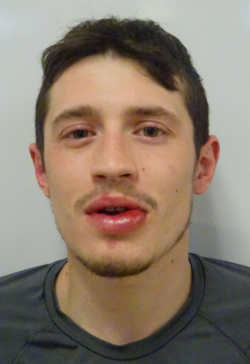
LAKE COUNTY, Calif. — The District Attorney’s Office has charged a Cobb man with numerous felony charges for a shooting that occurred after an early Tuesday morning fight at a barbecue.
Hunter Christian Toles, 23, appeared before Judge Andrew Blum in Lake County Superior Court for arraignment on the charges Thursday afternoon.
He was arrested early Tuesday after the shooting, which occurred on Rainbow Road in Cobb, the Lake County Sheriff’s Office reported.
Toles, who has remained in custody since his arrest, appeared via Zoom from the Lake County Jail.
Chief Deputy District Attorney Richard Hinchcliff told the court that Toles has no prior criminal history and that the investigation is ongoing.
Based on the reports so far and speaking to the lead officer in the investigation, Hinchcliff said Toles was at a barbecue where people were drinking and a fight broke out.
Toles is reported to have grabbed a shotgun and fired three shots. One of the shots hit a female victim at close range. Hinchcliff didn’t have a report on her condition. While it wasn’t terminal, “she was shot up pretty good,” he added.
Another shot went through a wall where there was a 3-year-old child sleeping on the other side, Hinchcliff said.
Hinchcliff filed a complaint on Thursday that charged Toles with attempted murder, assault with a firearm and battery causing serious bodily injury for shooting the woman, along with special allegations of personally and intentionally discharging a firearm, personal use of a shotgun and inflicting great bodily injury on the female victim.
Charges also were filed against Toles for another adult victim who was not reported to have been physically injured. For that second victim he’s facing charges of attempted murder and assault with a firearm, and special allegations of personal use of a firearm and personally and intentionally discharging a shotgun.
For the child victim, he was charged with assault with a firearm and felony child endangerment, and special allegations of use of a firearm and that the crime involved great violence and a firearm, and that the victim was particularly vulnerable.
Blum said during the hearing that Toles is facing the potential of three life sentences if convicted of the charges.
Hinchcliff said several of the charges carried $1 million bail requirements, with $25,000 for the child victim. Altogether, the charges called for bail totaling $3,025,000.
Toles said he could not afford an attorney and asked for one to be assigned. Defense attorney Tom Quinn agreed to take the case and asked for it to be set for entry of a plea on Tuesday.
Toles wanted to speak about his case but Quinn told him not to say anything.
“The defendant is claiming self-defense,” Hinchcliff said.
The mother of Toles’ two young children asked Blum to reduce his bail or release him on his own recognizance. Quinn said no one would get such a release on a case like this one.
She told the court the charges filed against him were different from those on his online jail booking sheet.
“The sheriff doesn’t make charges. They arrest people,” said Blum.
Quinn said they might be able to get the bail reduced to $100,000 but couldn’t do that in the Thursday hearing. Toles’ partner said she had money to hire an attorney the same day.
Blum set Toles’ bail at $3,025,000 and ordered him to be present for plea entry in Department 3 at 10 a.m. Tuesday, June 14.
Email Elizabeth Larson at