 How to resolve AdBlock issue?
News
The council will meet at 6 p.m. Tuesday, June 7, in the council chambers at Lakeport City Hall, 225 Park St.
The agenda can be found here.
The council chambers will be open to the public for the meeting. Masks are highly encouraged where 6-foot distancing cannot be maintained.
If you cannot attend in person, and would like to speak on an agenda item, you can access the Zoom meeting remotely at this link or join by phone by calling toll-free 669-900-9128 or 346-248-7799.
The webinar ID is 973 6820 1787, access code is 477973; the audio pin will be shown after joining the webinar. Those phoning in without using the web link will be in “listen mode” only and will not be able to participate or comment.
Comments can be submitted by email to
On Tuesday, the council will consider a resolution calling for a special municipal election to be held on the proposed South Lakeport Annexation Area on Nov. 8 for the purpose of seeking
confirmation from the voters in the annexation area.
Due to receiving protests on the proposed annexation last month, state law requires an election to be called.
In other business, council members will discuss approval of a resolution authorizing the financing through a bank of water system improvements totaling $5.845 million.
The council voted last month to approve the proposal for the financing, necessary to complete the water system improvements identified in an August 2021 rate study.
In other business, the council will hold a budget workshop to review the fiscal year 2022-23 budget, and consider authorizing the city manager to execute an agreement for administrative services and direct the finance director to transfer an initial deposit of $600,000 to the city’s pension trust accounts.
Council members also will consider a resolution authorizing the city manager to sign the statement of assurances and submit an application for the State Community Development Block
Grant, receive a report from the police chief on 2021 crime statistics, approve the acceptance of a surplus ambulance from the Lakeport Fire Protection District, award a construction contract to Pavement Coatings Company for the 2022 Microsurface Project, meet new employees Bethany Moss and Nanette Mariani, and the Lakeport Police Department will present a citizen commendation to Larry Richardson.
On the consent agenda — items usually accepted as a slate on one vote — are ordinances; minutes of the regular council meeting on May 17; adoption of a resolution authorizing continued remote teleconference meetings of the Lakeport City Council and its legislative bodies pursuant to Government Code section 54953(e); adoption of the ordinance amending Chapter 8.16 of the Lakeport Municipal Code to establish edible food recovery regulations and revise existing solid waste regulations; adoption of the proposed resolution approving the city of Lakeport SB 1 Project List for fiscal year 2022-23 and direct staff to submit to the California Transportation Commission; authorization to cancel the regular meeting on July 5.
Email Elizabeth Larson at
This free event brings together representatives of organizations in one location to offer valuable services and resources to the unique needs of military veterans.
In the military, “stand down” afforded battle-weary soldiers the opportunity to renew their spirit, enjoy warm meals, receive medical care and enjoy the comradery of friends in a safe environment.
Today “stand down” refers to a grassroots community-based event serving at-risk veterans.
The Lake County Vet Connect brings together representatives of organizations in one location to offer valuable services and resources to the unique needs of military veterans.
Services will include housing and homeless assistance, employment services, veterans benefits, medical insurance counseling, behavioral health support, education opportunities, emergency preparedness and supplies.
For more information contact Chris Taliaferro at 707-262-3111 or
For the period of April 23 to May 23, the total number of homes sold through the multiple listing service was 101, compared to 117 the previous month and 68 sales the month before that.
These include traditionally built “stick-built” houses as well as manufactured homes on land.
There were eight sales of mobile homes in parks, compared to seven the previous month, and 32 bare land (lots and acreage) sales, compared with 31 the month before.
Total percentage of homes bought for all cash was 23%, compared to 36% the previous month, while 43% were financed by Fannie Mae or Freddie Mac (“conventional loans”) compared to 32% last month. Another 15% were financed by FHA, compared to 20% the previous month.
There are 325 stick-built and manufactured homes on land currently on the market, compared to 281 the previous month and 197 the month before that. Inventory is rising.
If the rate of sales stays the same at 101 homes sold per month, there are currently 3.1 months of inventory on the market at the moment. That means that if no new homes are brought to the market for sale, in 3.1 months all of these homes would be sold and there would be none available.
Less than 6 months of inventory is generally considered to be a “sellers’ market” while more than 6 months of inventory is often called a “buyers’ market.”
The month previous there were 2.4 months of inventory, so the number of homes on the market is definitely increasing, the association reported.
The median time on the market last month was 23 days, up from 14 days the previous month. The median price of a single family home in Lake County over the last 30 days was $359,000.
Twenty five percent of homes sold with a seller concession to the buyer for closing costs; the average amount of seller credit to buyer was $8,219.
The documents for the races for assessor-recorder, district attorney, treasurer-tax collector and Middletown Unified School District Board can be found here, and are searchable by the candidates’ names.
The latest reporting covers the period of April 24 through May 21, and includes year-to-date totals.
Based on the latest reporting, six of the eight candidates in those four races have raised a total of $105,744.91 for the calendar year through May 21.
Two candidates — Paul Flores, who is running against Patrick Sullivan for treasurer-tax collector, and Bryan Pullman, who is running against Charise Reynolds for a seat on the Middletown Unified School Board — submitted no documents and so reported no fundraising.
Of that total amount of funding raised, $44,750, or 42%, was in the form of personal loans the candidates made to their own campaigns.
The candidate with the largest amount of total contributions is district attorney candidate Anthony Farrington. He also has the largest amount of loans given to himself, totaling $25,000.
Outside of loans, his top five monetary contributors for the reporting period were Christopher Shaul, Hayward, $500; George Monaco, Lakeport, $500; Debra Watson Heckert, Lakeport, $250; Chris Modrzejewski, Los Angeles, $250; and James R. Kemp, Kelseyville, $250.
Incumbent District Attorney Susan Krones, who Farrington is seeking to unseat, has raised $23,267, lending herself $6,000.
Her top six monetary contributors for the reporting period were Maryann Schmid, Kelseyville, $2,500; Julianne Carter, Hidden Valley Lake, $1,500; Lake County Democratic Central Committee, $1,000; Angela Carter, Hidden Valley Lake, $500; and Mike McGuire for State Senate 2022, Santa Rosa, $500.
Incumbent Assessor-Recorder Richard Ford has funded his campaign entirely with loans, totaling $3,500. No other contributions were reported.
His challenger, Hannah Faith Lee, has raised $13,178.30, of which she lent herself $5,000.
Outside of the loans, she had two contributors of funds for the campaign period: Maryann Schmid, Kelseyville, $1,000; and Eryck Lee, Clearlake, $776.20.
In the treasurer-tax collector’s race, Sullivan has raised $16,876.95 so far this year, lending himself $4,500.
His top five monetary contributors for the reporting period were the California Real Estate PAC, Los Angeles, $500; Sissa Nelson Harris, Clearlake, $100; Loy Linebarger, San Francisco, $100; Terrence McHugh, San Francisco, $100; and Michael Murphy, San Bruno, $100.
For the Middletown Unified School Board, Reynolds has raised $4,272.66 for the year to date, including $750 in loans to herself.
Her three monetary contributors for the reporting period were the Lake County Democratic Central Committee, $500; Nara Dahlbacka, Oakland, $250; and Katherine Welch, Boston, Massachusetts, $250.
For all of the candidates, campaign flyers and mailings — including postage and printing — and advertising accounted for their largest expenses.
Snapshots of the candidates’ contributions and expenses year to date are published below.
ASSESSOR-RECORDER’S RACE
Richard Ford
Total contributions received, year to date: $3,500
Monetary contributions, year to date: $0
Loans (from self): $3,500
Nonmonetary contributions: $0
Total expenditures: $3,101.30
Hannah Faith Lee
Total contributions received, year to date: $13,178.30
Monetary contributions, year to date: $6,525.72
Loans (from self): $5,000
Nonmonetary contributions: $1,652.58
Total expenditures: $10,661.85
DISTRICT ATTORNEY’S RACE
Anthony Farrington
Total contributions received, year to date: $44,650
Monetary contributions, year to date: $16,900
Loans (from self): $25,000
Nonmonetary contributions: $2,750
Total expenditures: $39,134.87
Susan Krones
Total contributions received, year to date: $23,267
Monetary contributions, year to date: $17,267
Loans (from self): $6,000
Nonmonetary contributions: $0
Total expenditures: $15,846
TREASURER-TAX COLLECTOR’S RACE
Paul Flores
No documents filed.
Patrick Sullivan
Total contributions received, year to date: $16,876.95
Monetary contributions, year to date: $12,047
Loans (from self): $4,500
Nonmonetary contributions: $329.95
Total expenditures: $11,463.25
MIDDLETOWN UNIFIED SCHOOL DISTRICT BOARD
Bryan Pullman
No documents filed.
Charise Reynolds
Total contributions received, year to date: $4,272.66
Monetary contributions, year to date: $2,748.01
Loans (from self): $750
Nonmonetary contributions: $774.65
Total expenditures: $3,573.45
Email Elizabeth Larson at
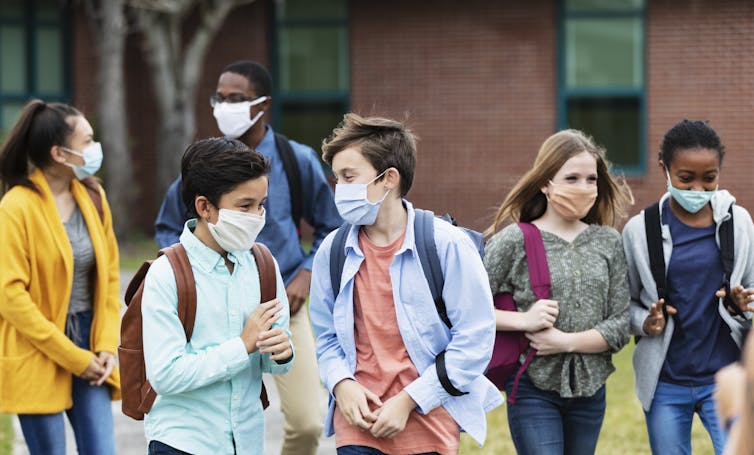
As the COVID-19 pandemic extends into a third year, experts have gained a much better understanding of its consequences for the health and development of children and adolescents.
They range from learning loss to mental health issues to housing and food insecurity to contracting the virus itself.
We are a law professor who focuses on children’s rights and well-being and a practicing family physician who researches adolescent health. We and other researchers have found that over the past two years, governments have missed opportunities to better understand and address what young people have been going through as they navigate the pandemic.
A better understanding of the pandemic’s effects on young people is essential to developing policy responses that can address the breadth of harms children and adolescents are experiencing.
The pandemic’s impacts on children
Research has found that, on average, K-12 students fell behind by about five months in mathematics and four months in reading during the 2020-2021 school year compared with students before the pandemic. Many students lost the equivalent of half a year or more of learning, with students in low-income and majority-Black schools being hit hardest. This learning loss puts many students at risk of not finishing high school, and it jeopardizes their chances of attending college, all of which has adverse consequences for lifetime earning potential.
The pandemic has also adversely affected children’s mental health. The Centers for Disease Control and Prevention found that 37% of high schoolers reported poor mental health and 44% reported that they “persistently felt sad or hopeless” during the pandemic. Other research, including a recent surgeon general’s advisory on young people’s mental health, has found higher rates of depression, anxiety, loneliness and other social-emotional issues among children since the pandemic.
Basic needs including food and housing have also been put at risk by the pandemic. Job losses, disruptions in school-based meal programs and other adverse impacts on families led to an increase in the number of families experiencing food insecurity, putting children at risk of being unable to get adequate nutrition for healthy development.
In addition, millions of children and their families have experienced housing insecurity. The Eviction Lab, which tracks evictions in six states and 31 U.S. cities, reports that more than 939,000 evictions have occurred since March 2020. Even when families can stave off eviction, housing insecurity adversely affects children’s educational progress and well-being.
Finally, we know that many children have contracted COVID-19 – more than 13 million by official counts – though research suggests the numbers are much higher.
Children should be seen and heard
Policymakers frequently dismiss young people as too immature to participate in the “serious business” of policymaking. This attitude has persisted during the pandemic: Young people have seldom been consulted on public health policy changes that affect them directly, from schools to transportation to public parks.
For example, most decisions regarding moves to virtual schooling and back to in-person learning were made without input from children – the very population most affected by these decisions.
This failure to engage young people stems largely from the conventional view that children and adolescents are “becomings,” not “beings” – that is, because they are developing, they lack maturity to make important decisions and thus should be “seen and not heard.”
However, we have learned through our own research and engagement with young people – as well as through other youth participation projects and reports – that this mindset is outdated and fails to recognize the knowledge young people’s lived experience offers. In our research and partnering with youths, we have found consistently that involving young people at all stages – from identifying issues to designing and implementing projects to developing policy recommendations – improves outcomes.
Why consulting with children matters
The United Nations Convention on the Rights of the Child recognizes that young people have a right to be heard and to participate in decisions that affect their lives. Research shows that that while young people may not want the burden of making the final decision, they do want a say in what happens in their lives and their communities.
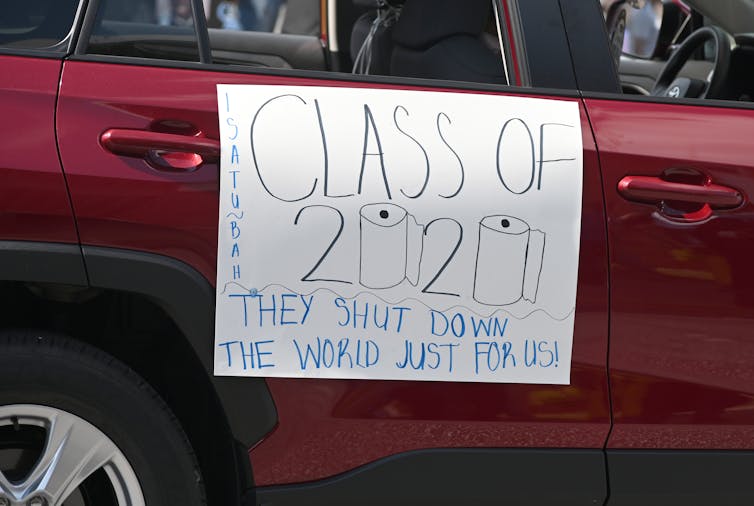
Research has found that listening to and engaging young people helps adults better understand the challenges children face. Giving young people meaningful opportunities to participate in decisions that affect their lives can lead to important insights about whether particular options will be effective and can help identify more promising solutions.
In addition, experience shows that involving youths in the development of policies and programs increases the likelihood of better buy-in from young people on the final decisions. In turn, buy-in helps improve outcomes.
For example, while children may not be experts on education theory, they are the only ones alive today who have ever navigated school during a global pandemic. Their lived experience offers expertise that can help inform and improve policies and outcomes.
Moreover, involving young people now will help them develop the skills they need to prepare for adulthood.
Listen, involve and create pathways
Our work suggests that there are various ways adults can partner with children on creating policies and programs during this pandemic, as well as in future public health crises. A few of these include:
– Parents, teachers, school administrators and community leaders can simply listen more often to children. This may best be done by “meeting them where they are,” which can include paying attention to what youths express on social media to connecting with them through text messages or asking them more often how they are doing. Adults can ask them what they’re concerned about or what they want to see happen, or create supportive in-person and virtual groups.
– Adults can actively involve young people in what is happening in their communities and engage them in responses to the pandemic in age-appropriate ways. There are good examples of children having an impact during the pandemic. With ideas originating from youths themselves, young people have taken on leadership roles in their communities, leveraging their skills to do everything from producing mask extenders for health care workers to starting a food delivery business to aid elderly community members.
– Schools, communities and policymakers can create permanent pathways for young people to participate in developing and implementing policies – and don’t have to wait for a pandemic to do it. In Colorado, the Growing Up Boulder initiative has successfully engaged young people on a breadth of policy issues including transportation, urban planning, housing and parks-related projects. Other cities, such as Minneapolis and San Francisco, have established youth commissions and congresses that provide ongoing ways for young people to have a say in their communities.
All three examples – from regular, informal check-ins with youths to official youth commissions – can enable policymakers, parents, teachers and other adults to learn from young people and partner with them to develop more effective responses to the pandemic or any other issue.
Tammy Chang, Associate Professor of Family Medicine, University of Michigan and Jonathan Todres, Distinguished University Professor and Professor of Law, Georgia State University
This article is republished from The Conversation under a Creative Commons license. Read the original article.
Dogs available for adoption this week include mixes of mountain cur, German shepherd, husky, pit bull, Rottweiler, shepherd and terrier.
Dogs that are adopted from Lake County Animal Care and Control are either neutered or spayed, microchipped and, if old enough, given a rabies shot and county license before being released to their new owner. License fees do not apply to residents of the cities of Lakeport or Clearlake.
The following dogs at the Lake County Animal Care and Control shelter have been cleared for adoption.
Call Lake County Animal Care and Control at 707-263-0278 or visit the shelter online for information on visiting or adopting.
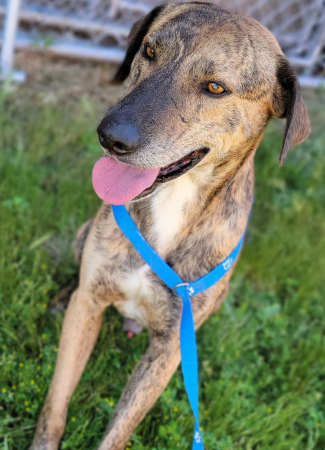
‘Rooster’
“Rooster” is a 5-year-old male mountain cur with a brown brindle coat.
He is in kennel No. 4, ID No. LCAC-A-3384.
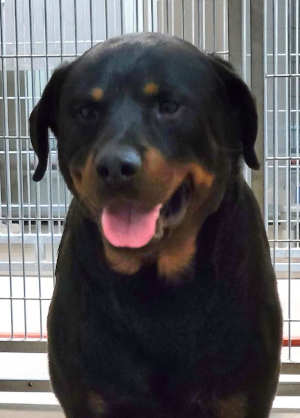
Male Rottweiler
This 2-year-old male Rottweiler has a short black and tan coat.
He is in kennel No. 6, ID No. LCAC-A-3471.
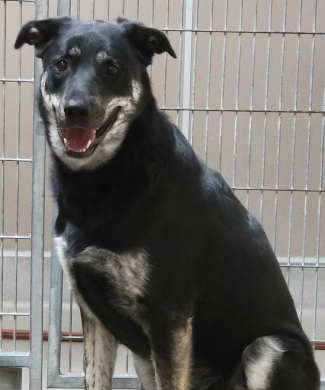
Male shepherd
This 2-year-old male shepherd mix has a short black and white coat.
He is in kennel No. 7, ID No. LCAC-A-3466.
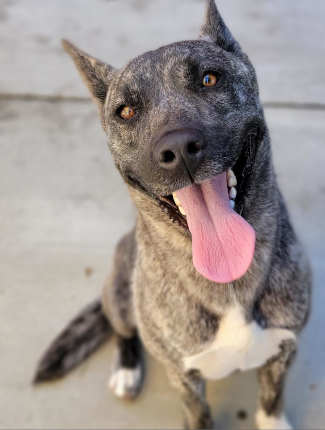
Female shepherd mix
This 1-year-old female shepherd mix has a short gray brindle coat.
She is in kennel No. 19, LCAC-A-3342.
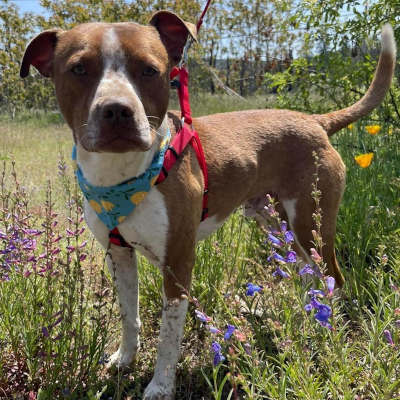
‘Willie’
“Willie” is a 1-year-old male pit bull terrier with a short brown and white coat.
He is in kennel No. 20, ID No. LCAC-A-3301.
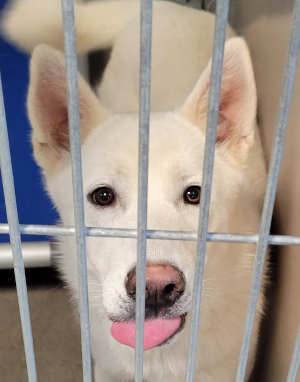
Female shepherd mix
This young female shepherd mix has a white coat.
She is in kennel No. 23, ID No. LCAC-A-3472.
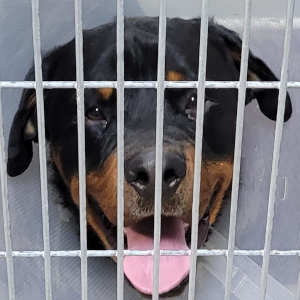
‘Topo’
“Topo” is a 1-year-old male Rottweiler with a short black and tan coat.
He is in kennel No. 25, ID No. LCAC-A-3469.

Female terrier mix
This 1-year-old female terrier mix has a short black and tan coat.
She is in kennel No. 26, ID No. LCAC-A-3439.
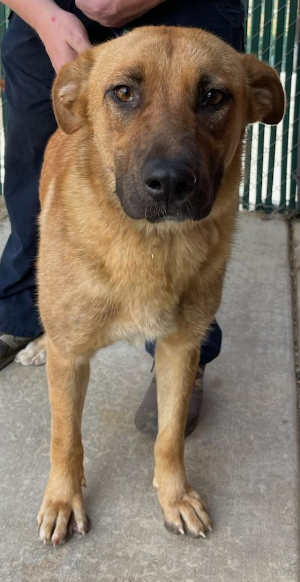
Female German shepherd mix
This 2-year-old female German shepherd mix has a short tan coat.
She is in kennel No. 32, ID No. LCAC-A-3491.

Male husky
This 2-year-old male husky has a gray and white coat.
He is in kennel No. 33, ID No. LCAC-A-3484.
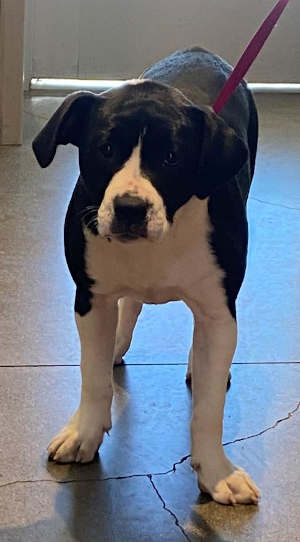
Pit bull terrier
This young female pit bull terrier has a short black and white coat.
She is in kennel No. 34, ID No. LCAC-A-3353.
Email Elizabeth Larson at