 How to resolve AdBlock issue?
News
What's up for June? A planetary breakup, prime viewing for a well-known star cluster, and the constellation Lyra.
The gathering of four naked-eye planets we've been enjoying in the morning sky for the past few months — including several close conjunctions, is beginning to break up.
Over the next few months, Saturn, Mars, Jupiter and Venus will appear increasingly spread out across the morning sky — so much so that Venus and Saturn will make their exits as morning objects for most observers by September.
Look for this increasingly spaced out planetary precession in June, and note that the crescent moon jumps into the lineup on the morning of the 23rd.

June is an excellent time to observe one of the best-known globular star clusters — M13, also known as the Hercules Cluster. Globular clusters are spherical collections of stars, tightly packed together in their centers. M13 itself contains several hundred thousand stars.
Globular clusters are also extremely old. The stars in M13 are thought to be around 12 billion years old, which is approaching the age of the universe itself. Our home galaxy, the Milky Way, is known to have about 150 globular clusters. They orbit outside the galaxy's disk, traveling tens of thousands of light-years above and below its spiral arms and most of its stars.
Now, the Hercules Cluster is best observed with a telescope, and larger telescopes will allow you to see more of the cluster's stars. But you can also find it with a pair of binoculars, where it'll look like a hazy little spot.
Find M13 in the constellation Hercules, which is high in the east in the first couple of hours after dark in June.
First look for the bright stars Vega and Arcturus.
Then find the four stars that comprise "the Keystone," which is the pattern making up the central part of Hercules.
You'll find M13 about a third of the way between the two stars on the western, or leading, side of the Keystone.
So check out the Great Globular Cluster in Hercules, M13, in June, and find yourself staring at an ancient gathering of stars that soars high above the Milky Way.
Finally in June, a quick introduction to one of the smaller constellations that's home to one of the brightest stars.
That's the constellation Lyra. It represents a lyre, or harp, played by the musician Orpheus in Greek mythology.

In Arab cultures, as well as ancient Egypt and India, Lyra was seen as an eagle. And the Inca of South America saw it as a llama.
Find Lyra by looking for Vega, which is the westernmost of the three bright stars in the Summer Triangle.
In the Northern Hemisphere, you'll find it halfway up the eastern sky in the first couple of hours after dark in June.
Vega is by far the brightest star in Lyra. It's the fifth brightest star in the sky and the second brightest in the Northern Hemisphere, after Sirius.
A pair of binoculars will help you see the others stars in Lyra, which form a sort of parallelogram hanging beneath it.
It's sometimes described as looking a bit like a diamond ring, with Vega as the diamond.
And that's not the only ring in Lyra. It's also home to the famous Ring Nebula, where a star has blown off most of its outer layers, leaving behind a remnant star known as a white dwarf.
So let the bright star Vega lead you to Lyra, the harp constellation, in the June sky. And if you see it as an eagle, or a diamond ring, or a llama, well that's perfectly OK too ...
Preston Dyches works for NASA's Jet Propulsion Laboratory.

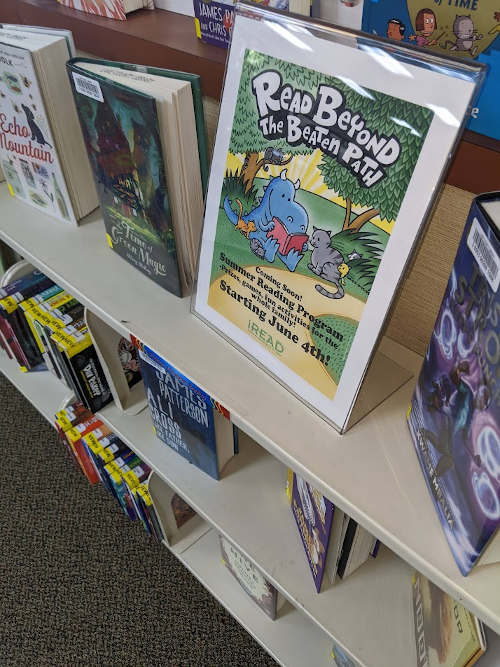
LAKE COUNTY, Calif. — The Lake County Library's annual Summer Reading Challenge begins Saturday, June 4. This year the theme is to “Read beyond the Beaten Path.”
By signing up for summer reading with the library, children, teens and adults can win various prizes, including stickers, small toys, a Kindle Fire tablet or local business gift cards.
Participating in the library program is a great way for everyone to challenge themselves to read more.
For students, reading over summer break can prevent learning loss and help them start the next school year out on the right page. Reading for fun is a great way to build vocabulary and literacy skills.
The library has programs for pre-K, kids, teens, and adults. Children who can't quite read on their own can still sign up and parents can record the books that they read together.
Starting on June 4 residents can register on the Library's summer reading website. Registration is open at any time until summer reading ends on Aug. 6.
Anyone who wants to sign up can head to the library website at http://library.lakecountyca.gov and click “Summer Reading.”
Residents can also sign up in person by visiting their local branch. On the first day of Summer Reading, Saturday, June 4, at 10 a.m., each library is hosting a Super Sign Up event with crafts and fun games.
Once registered, participants can start reading books and get points by logging their reading, either online or by visiting the library. All reading counts as long as it’s from the library, including eBooks, print books, audiobooks, magazines and comics.
The library offers prizes to make summer reading more fun. For adults and teens there will be a prize drawing at the end of the program. The more points participants earn the greater chance they have to win. The Friends of the Lake County Library, a community nonprofit membership organization, provides all the prizes.
Once participants read enough to earn 1,000 points the Friends of the Lake County Library will donate a book to the library in their name. The book will have their name inside commemorating their reading achievement and they will be the first person to check it out.
Visit the Lake County Library Website at http://library.lakecountyca.gov.
LAKE COUNTY, Calif. — The Lake County Superior Court said that due to low COVID-19 transmission rates it plans to transition back to jury selection at the courthouse and in-person appearances in criminal cases.
Nearly one year ago Gov. Gavin Newsom and the California Department of Public Health removed all physical distancing limits.
For the last several months the cases rates and hospitalizations locally have remained relatively low and stable.
Accordingly, effective June 29, the Lake County Superior Court said jury selection will return to the Lakeport Courthouse at 255 N. Forbes St. in Lakeport.
Jury selection has been taking place for some time at the Lake County Fairgrounds in Lakeport.
In cooperation with the county of Lake, when possible the jury check-in and orientation process will occur in the Board of Supervisors chambers, court officials said.
Other changes include the end of remote proceedings in criminal cases.
Effective July 1, court officials said the remaining statewide emergency rules will be rescinded.
As a result, all criminal calendars except daily in-custody arraignments will return to in-person appearances.
The court continues to allow remote appearances in many family law and civil proceedings.
Additional information can be found on the court’s website.
Nearly one year ago Gov. Gavin Newsom and the California Department of Public Health removed all physical distancing limits.
For the last several months the cases rates and hospitalizations locally have remained relatively low and stable.
Accordingly, effective June 29, the Lake County Superior Court said jury selection will return to the Lakeport Courthouse at 255 N. Forbes St. in Lakeport.
Jury selection has been taking place for some time at the Lake County Fairgrounds in Lakeport.
In cooperation with the county of Lake, when possible the jury check-in and orientation process will occur in the Board of Supervisors chambers, court officials said.
Other changes include the end of remote proceedings in criminal cases.
Effective July 1, court officials said the remaining statewide emergency rules will be rescinded.
As a result, all criminal calendars except daily in-custody arraignments will return to in-person appearances.
The court continues to allow remote appearances in many family law and civil proceedings.
Additional information can be found on the court’s website.
NORTHERN CALIFORNIA — A Caltrans worker died Friday after being struck by a driver while working along Interstate 80 in Solano County.
The California Department of Transportation said it is mourning the death of Quandra McGadney, 51, of Vallejo, a landscape maintenance worker for the department.
McGadney was killed while working near Lagoon Valley Road on Interstate 80.
Just after 10 a.m. Friday, McGadney was struck by a hit-and-run driver on westbound I-80 near Vacaville. She succumbed to her injuries on-scene. The California Highway Patrol has arrested a suspect.
“Jennifer and I were saddened to learn of the death of Caltrans Maintenance Worker Quanda McGadney, a dedicated public servant to the state for more than 18 years. We extend our deepest sympathies to her family, friends and Caltrans colleagues for their loss,” Gov. Gavin Newsom said in a Friday evening statement.
McGadney had served the people of California for more than 18 years and joined Caltrans in 2018.
She is survived by her 9-year-old daughter, Nairobi, and her two sisters, Priscilla Stevenson and Candice McGadney.
“The loss of one of our own public servants in this tragic incident is being felt heavily within the Caltrans family today. Our thoughts and heartfelt support are focused on her family, friends and colleagues at this time,” said Caltrans Acting Director Steven Keck.
McGadney is the first Caltrans District 4 (Bay Area) employee to die on the job since 2017. She is the 37th in the history of District 4 and the 190th Caltrans worker to lose their life on the job since 1921.
“This tragedy is particularly painful, coming so close to our workers memorial service just a little over a month ago, and drives home how dangerous our work on California’s roadways can be,” said Keck. “Our focus on safety and the ‘Move Over’ law, and asking the public to increase their awareness of the people working on the highways on their behalf are part of our continued effort to eliminate these tragic incidents.”
To help Quanda’s family at this difficult time, a memorial fund is being established through the California Transportation Foundation.
In honor of McGadney, Capitol, and Capitol swing space, flags will be flown at half-staff.
The California Department of Transportation said it is mourning the death of Quandra McGadney, 51, of Vallejo, a landscape maintenance worker for the department.
McGadney was killed while working near Lagoon Valley Road on Interstate 80.
Just after 10 a.m. Friday, McGadney was struck by a hit-and-run driver on westbound I-80 near Vacaville. She succumbed to her injuries on-scene. The California Highway Patrol has arrested a suspect.
“Jennifer and I were saddened to learn of the death of Caltrans Maintenance Worker Quanda McGadney, a dedicated public servant to the state for more than 18 years. We extend our deepest sympathies to her family, friends and Caltrans colleagues for their loss,” Gov. Gavin Newsom said in a Friday evening statement.
McGadney had served the people of California for more than 18 years and joined Caltrans in 2018.
She is survived by her 9-year-old daughter, Nairobi, and her two sisters, Priscilla Stevenson and Candice McGadney.
“The loss of one of our own public servants in this tragic incident is being felt heavily within the Caltrans family today. Our thoughts and heartfelt support are focused on her family, friends and colleagues at this time,” said Caltrans Acting Director Steven Keck.
McGadney is the first Caltrans District 4 (Bay Area) employee to die on the job since 2017. She is the 37th in the history of District 4 and the 190th Caltrans worker to lose their life on the job since 1921.
“This tragedy is particularly painful, coming so close to our workers memorial service just a little over a month ago, and drives home how dangerous our work on California’s roadways can be,” said Keck. “Our focus on safety and the ‘Move Over’ law, and asking the public to increase their awareness of the people working on the highways on their behalf are part of our continued effort to eliminate these tragic incidents.”
To help Quanda’s family at this difficult time, a memorial fund is being established through the California Transportation Foundation.
In honor of McGadney, Capitol, and Capitol swing space, flags will be flown at half-staff.
On National Gun Violence Awareness Day, Gov. Gavin Newsom on Friday announced a new campaign to make California schools and communities safer through a community-based outreach campaign to promote Gun Violence Restraining Orders also known as “red flag” laws.
“Gun violence is an epidemic — too many Americans are forced to live in fear because of inaction,” said Gov. Newsom. “In California, we are taking action with common sense gun safety measures that get guns out of our communities and keep people safe.”
Red flag laws allow for the temporary removal of guns and ammunition from individuals who are at risk of harming themselves or others. They empower loved ones, or law enforcement, to intervene and temporarily prevent someone in crisis from accessing firearms.
California issued 3,007 gun violence restraining orders from 2016 to 2020. In 2020, the state issued 1,284 restraining orders, 15-times greater than the 85 issued in 2016.
This new $11 million,18-month campaign, administered through the Governor’s Office of Emergency Services, will focus on outreach and education about California’s red flag laws to communities most at risk for gun violence.
The campaign includes:
$5 million in grants to local community-based domestic violence groups for community outreach.
$5 million for statewide outreach to communities most at risk of gun violence including education efforts, research and multilingual outreach.
$1 million for education and training for district attorneys and law enforcement groups.
The Violence Prevention Research Program at UC Davis Health last year released a study highlighting support for Gun Violence Restraining Orders and the need to raise public awareness around the issue.
Red flag laws are proven to be effective in reducing violence and death by guns. These laws can help de-escalate emergency situations. California is one of several states around the country that is increasingly emphasizing red flag laws as a common-sense way to help reduce gun violence.
“California has nation-leading gun safety laws,” said Mark Ghilarducci, director of the Governor’s Office of Emergency Services. “Education and outreach about how to utilize red flag laws are critical to their success. This campaign will focus on educating families and law enforcement on the tools they have at their disposal to prevent gun violence.”
Enacted in 2014 following the Isla Vista Shooting, California’s red flag law authorizes law enforcement officers and others to file petitions for a civil court order called a Gun Violence Restraining Order to temporarily suspend a person’s access to firearms when they are found to pose a significant risk to themselves or others by having legal access to firearms or ammunition.
Gov. Newsom on Thursday released a fact sheet detailing California’s nation-leading record on gun safety. The governor also thanked President Joe Biden for his leadership on gun safety and joined him in calling on Congress to pass gun safety legislation.
“Gun violence is an epidemic — too many Americans are forced to live in fear because of inaction,” said Gov. Newsom. “In California, we are taking action with common sense gun safety measures that get guns out of our communities and keep people safe.”
Red flag laws allow for the temporary removal of guns and ammunition from individuals who are at risk of harming themselves or others. They empower loved ones, or law enforcement, to intervene and temporarily prevent someone in crisis from accessing firearms.
California issued 3,007 gun violence restraining orders from 2016 to 2020. In 2020, the state issued 1,284 restraining orders, 15-times greater than the 85 issued in 2016.
This new $11 million,18-month campaign, administered through the Governor’s Office of Emergency Services, will focus on outreach and education about California’s red flag laws to communities most at risk for gun violence.
The campaign includes:
$5 million in grants to local community-based domestic violence groups for community outreach.
$5 million for statewide outreach to communities most at risk of gun violence including education efforts, research and multilingual outreach.
$1 million for education and training for district attorneys and law enforcement groups.
The Violence Prevention Research Program at UC Davis Health last year released a study highlighting support for Gun Violence Restraining Orders and the need to raise public awareness around the issue.
Red flag laws are proven to be effective in reducing violence and death by guns. These laws can help de-escalate emergency situations. California is one of several states around the country that is increasingly emphasizing red flag laws as a common-sense way to help reduce gun violence.
“California has nation-leading gun safety laws,” said Mark Ghilarducci, director of the Governor’s Office of Emergency Services. “Education and outreach about how to utilize red flag laws are critical to their success. This campaign will focus on educating families and law enforcement on the tools they have at their disposal to prevent gun violence.”
Enacted in 2014 following the Isla Vista Shooting, California’s red flag law authorizes law enforcement officers and others to file petitions for a civil court order called a Gun Violence Restraining Order to temporarily suspend a person’s access to firearms when they are found to pose a significant risk to themselves or others by having legal access to firearms or ammunition.
Gov. Newsom on Thursday released a fact sheet detailing California’s nation-leading record on gun safety. The governor also thanked President Joe Biden for his leadership on gun safety and joined him in calling on Congress to pass gun safety legislation.
The ninth annual California Invasive Species Action Week, or CISAW, runs from Saturday, June 4, through Sunday, June 12.
Sponsored by the California Department of Fish and Wildlife, or CDFW, this week provides an opportunity for Californians to learn about the hundreds of harmful non-native plants and animals that threaten our state’s natural resources, ecology and economy.
Historically, agencies, nonprofits and volunteer organizations across the state have teamed up to host events for CISAW.
As the COVID-19 pandemic subsides, the format now includes both in-person and virtual events such as webinars and videos.
Volunteer opportunities can be found in all parts of the state, such as:
• Attend a habitat restoration event at Trinidad State Beach near Humboldt where volunteers will pitch in to pull up ivy and other invasive non-native species.
• Join Friends of Five Creeks in Berkeley in their efforts to eradicate invasive foxtails from near Codornices Creek.
• Protect the American River Parkway in Sacramento by removing broom with the American River Parkway Foundation.
• Help protect and restore coastal dune and bluff scrub habitats at Half Moon Bay State Beach by assisting with the removal of invasive cape ivy, mustard, thistles and hemlock from coastal scrub areas.
• Be a “Weed Warrior” at Cabrillo National Monument in San Diego, by assisting with efforts to remove non-native grasses and other invasive plants from the landscape.
Get details for these events and find many more by visiting the CISAW schedule on CDFW’s website.
You can also watch webinars and learn about how you can stop the spread of invasive species by taking small, everyday actions, such as landscaping with native plants, not releasing unwanted pets into the wild, reporting invasive species findings, and cleaning, draining and drying gear when recreating in bodies of water.
The CISAW website lists simple actions Californians can take all year long while visiting natural areas, boating or fishing, or at home. Join our Digital Scavenger Hunt and track invasive species in your local neighborhood or park.
On Friday, June 10, CDFW will announce the winners of the annual California Invasive Species Youth Art Contest on social media. This year’s theme was “Unite to Fight Invasive Species!”
The mission of CDFW’s Invasive Species Program is to reduce the impacts of invasive species on the wildlands and waterways of California.
The program is involved in efforts to prevent the introduction of these species into the state, detect and respond to introductions when they occur and prevent the spread of those species that have established.
For questions or more information about CISAW, please contactThis email address is being protected from spambots. You need JavaScript enabled to view it. .
Sponsored by the California Department of Fish and Wildlife, or CDFW, this week provides an opportunity for Californians to learn about the hundreds of harmful non-native plants and animals that threaten our state’s natural resources, ecology and economy.
Historically, agencies, nonprofits and volunteer organizations across the state have teamed up to host events for CISAW.
As the COVID-19 pandemic subsides, the format now includes both in-person and virtual events such as webinars and videos.
Volunteer opportunities can be found in all parts of the state, such as:
• Attend a habitat restoration event at Trinidad State Beach near Humboldt where volunteers will pitch in to pull up ivy and other invasive non-native species.
• Join Friends of Five Creeks in Berkeley in their efforts to eradicate invasive foxtails from near Codornices Creek.
• Protect the American River Parkway in Sacramento by removing broom with the American River Parkway Foundation.
• Help protect and restore coastal dune and bluff scrub habitats at Half Moon Bay State Beach by assisting with the removal of invasive cape ivy, mustard, thistles and hemlock from coastal scrub areas.
• Be a “Weed Warrior” at Cabrillo National Monument in San Diego, by assisting with efforts to remove non-native grasses and other invasive plants from the landscape.
Get details for these events and find many more by visiting the CISAW schedule on CDFW’s website.
You can also watch webinars and learn about how you can stop the spread of invasive species by taking small, everyday actions, such as landscaping with native plants, not releasing unwanted pets into the wild, reporting invasive species findings, and cleaning, draining and drying gear when recreating in bodies of water.
The CISAW website lists simple actions Californians can take all year long while visiting natural areas, boating or fishing, or at home. Join our Digital Scavenger Hunt and track invasive species in your local neighborhood or park.
On Friday, June 10, CDFW will announce the winners of the annual California Invasive Species Youth Art Contest on social media. This year’s theme was “Unite to Fight Invasive Species!”
The mission of CDFW’s Invasive Species Program is to reduce the impacts of invasive species on the wildlands and waterways of California.
The program is involved in efforts to prevent the introduction of these species into the state, detect and respond to introductions when they occur and prevent the spread of those species that have established.
For questions or more information about CISAW, please contact