How to resolve AdBlock issue?
Refresh this page
How to resolve AdBlock issue?
Refresh this page
Lake County News,California
  • Home
    • Registration Form
  • News
    • Education
    • Veterans
    • Community
      • Obituaries
      • Letters
      • Commentary
    • Police Logs
    • Business
    • Recreation
    • Health
    • Religion
    • Legals
    • Arts & Life
    • Regional
  • Calendar
  • Contact us
    • FAQs
    • Phones, E-Mail
    • Subscribe
  • Advertise Here
  • Login

News

Can you really be addicted to food? Researchers are uncovering convincing similarities to drug addiction

Research has found that high-sugar, ultraprocessed foods can be addictive for some people. Doucefleur/iStock via Getty Images Plus

People often joke that their favorite snack is “like crack” or call themselves “chocoholics” in jest.

But can someone really be addicted to food in the same way they could be hooked on substances such as alcohol or nicotine?

As an addiction psychiatrist and researcher with experience in treating eating disorders and obesity, I have been following the research in this field for the past few decades. I have written a textbook on food addiction, obesity and overeating disorders, and, more recently, a self-help book for people who have intense cravings and obsessions for some foods.

While there is still some debate among psychologists and scientists, a consensus is emerging that food addiction is a real phenomenon. Hundreds of studies have confirmed that certain foods – often those that are high in sugar and ultraprocessed – affect the brains and behavior of certain people similarly to other addictive substances such as nicotine.

Still, many questions remain about which foods are addictive, which people are most susceptible to this addiction and why. There are also questions as to how this condition compares to other substance addictions and whether the same treatments could work for patients struggling with any kind of addiction.

How does addiction work?

The neurobiological mechanisms of addiction have been mapped out through decades of laboratory-based research using neuroimaging and cognitive neuroscience approaches.

Studies show that preexisting genetic and environmental factors set the stage for developing an addiction. Regularly consuming an addictive substance then causes a rewiring of several important brain systems, leading the person to crave more and more of it.

This rewiring takes place in three key brain networks that correspond to key functional domains, often referred to as the reward system, the stress response system and the system in charge of executive control.

First, using an addictive substance causes the release of a chemical messenger called dopamine in the reward network, which makes the user feel good. Dopamine release also facilitates a neurobiological process called conditioning, which is basically a neural learning process that gives rise to habit formation.

As a result of the conditioning process, sensory cues associated with the substance start to have increasing influence over decision-making and behavior, often leading to a craving. For instance, because of conditioning, the sight of a needle can drive a person to set aside their commitment to quit using an injectable drug and return to it.

Second, continued use of an addictive substance over time affects the brain’s emotional or stress response network. The user’s body and mind build up a tolerance, meaning they need increasing amounts of the substance to feel its effect. The neurochemicals involved in this process are different than those mediating habit formation and include a chemical messenger called noradrenaline and internally produced opioids such as endorphins. If they quit using the substance, they experience symptoms of withdrawal, which can range from irritability and nausea to paranoia and seizures.

At that point, negative reinforcement kicks in. This is the process by which a person keeps going back to a substance because they’ve learned that using the substance doesn’t just feel good, but it also relieves negative emotions. During withdrawal from a substance, people feel profound emotional discomfort, including sadness and irritability. Negative reinforcement is why someone who is trying to quit smoking, for instance, will be at highest risk of relapse in the week just after stopping and during times of stress, because in the past they’d normally turn to cigarettes for relief.

Third, overuse of most addictive substances progressively damages the brain’s executive control network, the prefrontal cortex, and other key parts of the brain involved in impulse control and self-regulation. Over time, the damage to these areas makes it more and more difficult for the user to control their behavior around these substances. This is why it is so hard for long-term users of many addictive substances to quit.

Scientists have learned more about what’s happening in a person’s brain when they become addicted to a substance.

What evidence is there that food is addictive?

Many studies over the past 25 years have shown that high-sugar and other highly pleasurable foods – often foods that are ultraprocessed – act on these brain networks in ways that are similar to other addictive substances. The resulting changes in the brain fuel further craving for and overuse of the substance – in this case, highly rewarding food.

Clinical studies have demonstrated that people with an addictive relationship to food demonstrate the hallmark signs of a substance use disorder.

Studies also indicate that for some people, cravings for highly palatable foods go well beyond just a normal hankering for a snack and are, in fact, signs of addictive behavior. One study found that cues associated with highly pleasurable foods activate the reward centers in the brain, and the degree of activation predicts weight gain. In other words, the more power the food cue has to capture a person’s attention, the more likely they are to succumb to cravings for it.

Multiple studies have also found that suddenly ending a diet that’s high in sugar can cause withdrawal, similar to when people quit opioids or nicotine.

Excessive exposure to high-sugar foods has also been found to reduce cognitive function and cause damage to the prefrontal cortex and hippocampus, the parts of the brain that mediate executive control and memory.

In another study, when obese people were exposed to food and told to resist their craving for it by ignoring it or thinking about something else, their prefrontal cortexes were more active compared with nonobese individuals. This indicates that it was more difficult for the obese group to fight their cravings.

drawing of a woman in a spiral surrounded by processed foods
Researchers are still working out the best methods to help patients with food addictions develop a healthy relationship with food. Viktar Sarkisian/iStock via Getty Images Plus

Finding safe treatments for patients struggling with food

Addiction recovery is often centered on the idea that the fastest way to get well is to abstain from the problem substance. But unlike nicotine or narcotics, food is something that all people need to survive, so quitting cold turkey isn’t an option.

In addition, eating disorders such as bulimia nervosa and binge-eating disorder often occur alongside addictive eating. Most psychologists and psychiatrists believe these illnesses have their root cause in excessive dietary restriction.

For this reason, many eating disorder treatment professionals balk at the idea of labeling some foods as addictive. They are concerned that encouraging abstinence from particular foods could trigger binge eating and extreme dieting to compensate.

A way forward

But others argue that, with care, integrating food addiction approaches into eating disorders treatment is feasible and could be lifesaving for some.

The emerging consensus around this link is moving researchers and those who treat eating disorders to consider food addiction in their treatment models.

One such approach might look like the one described to me by addiction psychiatrist and eating disorders specialist Dr. Kim Dennis. In line with traditional eating disorder treatment, nutritionists at her residential clinic strongly discourage their patients from restricting calories. At the same time, in line with traditional addiction treatment, they help their patients to consider significantly reducing or completely abstaining from particular foods to which they have developed an addictive relationship.

Additional clinical studies are already being carried out. But going forward, more studies are needed to help clinicians find the most effective treatments for people with an addictive relationship with food.

Efforts are underway by groups of psychologists, psychiatrists, neuroscientists and mental health providers to get “ultraprocessed food use disorder,” also known as food addiction, into future editions of diagnostic manuals such as the Diagnostic and Statistical Manual of Mental Disorders and the World Health Organization’s International Classification of Diseases.

Beyond acknowledging what those treating food addiction are already seeing in the field, this would help researchers get funding for additional studies of treating food addiction. With more information about what treatments will work best for whom, those who have these problems will no longer have to suffer in silence, and providers will be better equipped to help them.The Conversation

Claire Wilcox, Adjunct Faculty in Psychiatry, University of New Mexico

This article is republished from The Conversation under a Creative Commons license. Read the original article.
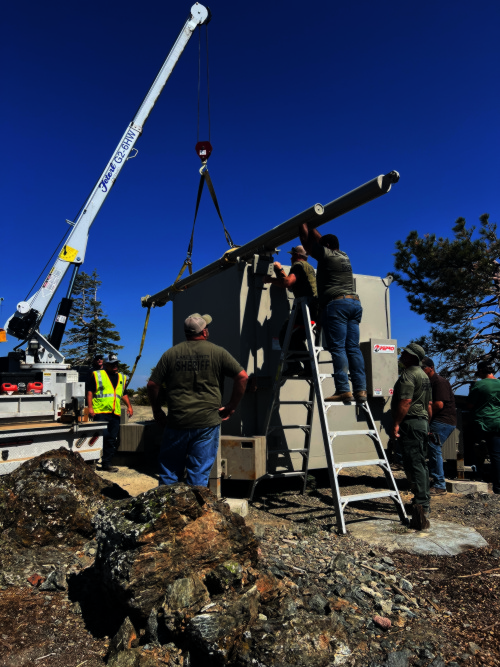
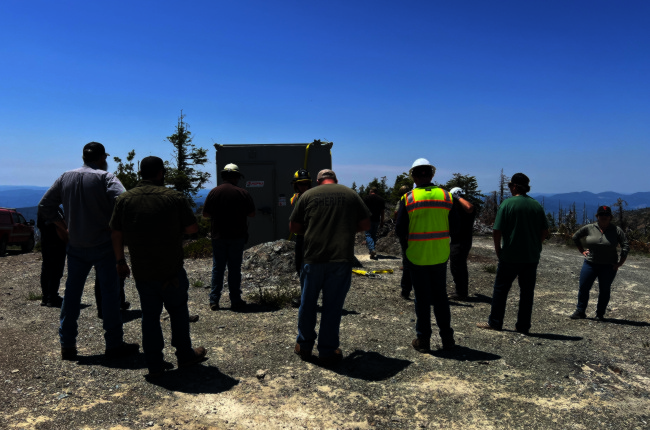
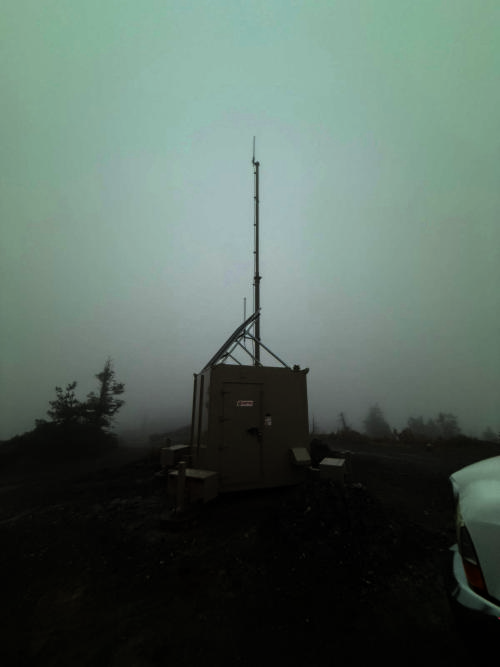
Long-running Goat Mountain repeater project completed

The completion of the Goat Mountain repeater project was the culmination of 15 years of effort. Photo courtesy of the Lake County Sheriff’s Office.

LAKE COUNTY, Calif. — After more than 15 years of planning, testing and multi-agency collaboration, the Goat Mountain Project has reached a major milestone. 

On Oct. 1, the communications repeater at Goat Mountain was successfully brought online and is now fully operational.

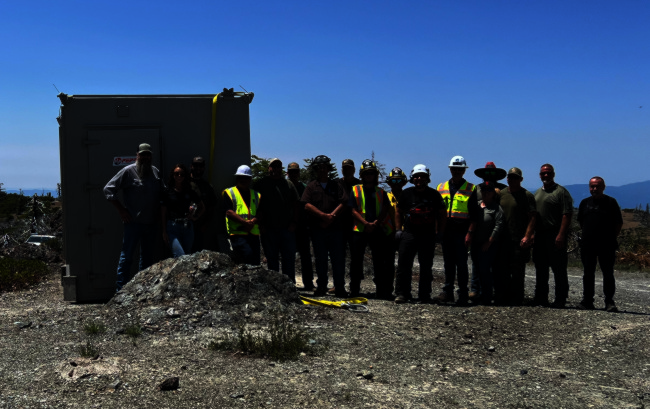
The Goat Mountain Project is a joint initiative of the Lake County Sheriff’s Office, Lake County Fire Protection District, and Pacific Gas and Electric Co., with aerial support provided by PJ Helicopters. 

The crew working on the Goat Mountain Project. Photo courtesy of the Lake County Sheriff’s Office.


The project was designed to eliminate critical radio dead zones that have limited law enforcement and fire response for years.

The newly activated repeater significantly improves coverage across Bear Valley, Indian Valley, Bartlett, and areas north of Bartlett, Walker Ridge, and the Lake Pillsbury area.

It also strengthens communication along Highway 20 east of Highway 20 and Highway 53, including Spring Valley.

Bringing this project online required persistence and dedication. Members of the Sheriff's Office and partner agencies made more than five trips to the rugged Goat Mountain site to deliver, install, and activate the equipment, despite ongoing challenges posed by wildfire seasons and severe winter storms.

The Goat Mountain Project crew. Photo courtesy of the Lake County Sheriff’s Office.


The project began more than a decade ago with field testing of potential repeater sites across San Hedrin, Walker Ridge, Lake Pillsbury and ultimately Goat Mountain. 

Goat Mountain was identified as the only viable location to provide the broad coverage needed. After years of environmental review and funding coordination, the project has now been fully completed with the installation of the vault, repeater, and communications equipment.

Future projects will continue to expand and strengthen this system to ensure Lake County’s first responders remain connected when it matters most.

Lauren Berlinn is public information and community engagement officer for the Lake County Sheriff’s Office.


The Goat Mountain repeater. Photo courtesy of the Lake County Sheriff’s Office.

Lower Lake wildland fire close to full containment

LAKE COUNTY, Calif. — A fire that began in Lower Lake on Saturday afternoon is nearing full containment.

Cal Fire said the Rock fire began at 3:42 p.m. near Butte Rock Ranch Road and Morgan Valley Road.

By Saturday night, Cal Fire said the fire was 39 acres and 90% contained.

Four engines and 15 firefighters were assigned to the incident as of Saturday night.

Radio traffic indicated that units were continuing to monitor the incident, with a crew to return on Sunday morning. 

The cause remains under investigation, Cal Fire said.

Email Elizabeth Larson at This email address is being protected from spambots. You need JavaScript enabled to view it.. Follow her on Twitter, @ERLarson, and on Bluesky, @erlarson.bsky.social. Find Lake County News on the following platforms: Facebook, @LakeCoNews; X, @LakeCoNews; Threads, @lakeconews, and on Bluesky, @lakeconews.bsky.social. 

Friendships aren’t just about keeping score – new psychology research looks at why we help our friends when they need it

Friendship isn’t about a running tally of who’s doing more. miodrag ignjatovic/E+ via Getty Images

Despite how natural friendship can feel, people rarely stop to analyze it. How do you know when someone will make a good friend? When is it time to move on from a friendship? Oftentimes, people rely on gut intuitions to answer these kinds of questions.

In psychology research, there’s no universally accepted definition of a friend. Traditionally, when psychologists have analyzed friendship, it’s often been through the lens of exchange. How much did that friend do for me? How much did I do for them? The idea is that friendships are transactional, where friends stick around only as long as they are getting at least as much as they are giving in the friendship.

But this focus doesn’t capture what feels like the essence of friendship for many people. We and our colleagues think another model for relationships – what we call risk-pooling – better matches what many people experience. In this kind of friendship, no one is keeping track of who did what for whom.

Our research over the past decade suggests that this kind of friendship was essential for our ancient ancestors to survive the challenges they encountered. And we feel it’s essential for surviving the challenges of life today, whether navigating personal struggles or dealing with natural disasters.

three men drink wine at cafe table with bill on it
Social exchange theory focuses on whether friends are investing and getting the same amount from the relationship. tim scott/Moment via Getty Images

A focus on what friends give you

The traditional social exchange theory of friendship views relationships as transactions where people keep a tally of costs and benefits. Building on this framework, researchers have suggested that you approach each friendship with a running list of pluses and minuses to decide whether to maintain the bond. You keep friendships that provide more benefits than costs, and you end those that don’t.

The theory holds that this balancing act comes into play when making decisions about what kinds of friendships to pursue and how to treat your friends. It’s even made its way into pop psychology self-help spaces.

We contend that the biggest issue with social exchange theory is that it misses the nuances of real-life relationships. Frankly, the theory’s wrong: People often don’t use this cost-to-benefit ratio in their friendships.

Less accounting, more supporting

Anybody who has seen a friend through tough times – or been the one who was supported – can tell you that keeping track of what a friend does for you isn’t what friendships are about. Friendships are more about companionship, enjoyment and bonding. Sometimes, friendship is about helping just because your friend is in need and you care about their well-being.

Social exchange theory would suggest that you’d be better off dropping someone who is going through cancer treatment or a death in the family because they’re not providing as many benefits to you as they could. But real-life experiences with these situations suggest the opposite: These are the times when many people are most likely to support their friends.

Our research is consistent with this intuition about the shortcomings of social exchange theory. When we surveyed people about what they want in a friend, they didn’t place a high value on having a friend who is conscientious about paying back any debts – something highly valued from a social exchange perspective.

People considered other traits – such as loyalty, reliability, respectfulness and being there in times of need – to be much more important. These qualities that relate to emotional commitment were seen as necessities, while paying back was seen as a luxury that mattered only once the emotional commitment was met.

Having friends who will help you when you’re struggling, work with you in the friendship and provide emotional support all ranked higher in importance than having a friend who pays you back. While they might not always be able to provide tangible benefits, friends can show they care in many other ways.

Of course, friendship isn’t always positive. Some friends can take advantage by asking too much or neglecting responsibilities they could handle themselves. In those cases, it can be useful to step back and weigh the costs and benefits.

Friendship is more than the sum of its parts

But how do friendships actually help people survive? That is one question that we investigated as part of The Human Generosity Project, a cross-disciplinary research collaboration.

The risk-pooling rather than exchange pattern of friendship is something that we found across societies, from “kere kere” in Fiji to “tomor marang” among the Ik in Uganda. People help their friends in times of need without expecting to be paid back.

Two Maasai herders in traditional clothing with herd of cattle against dusty landscape
Maasai people cultivate lifelong relationships called osotua partnerships. calm_eyes/iStock via Getty Images Plus

The Maasai, an Indigenous group in Kenya and Tanzania who rely on cattle herds to make their living, cultivate friends who help them when they are in need, with no expectation about paying each other back. People ask for help from these special friends, called osotua partners, only when they are in genuine need, and they give if they are asked and able.

These partnerships are not about everyday favors – rather, they are about surviving unpredictable, life-altering risks. Osotua relationships are built over a lifetime, passed down across generations and often marked with sacred rituals.

When we modeled how these osotua relationships function over time, we found they help people survive when their environments are volatile and when they ask those most likely to be able to help. These relationships lead to higher rates of survival for both partners compared to those built on keeping track of debts.

These friends act as social insurance systems for each other, helping each other when needs arise because of unpredictable and uncontrollable events.

And we see this in the United States, just as we do in smaller-scale, more remote societies. In one study, we focused on ranchers in southern Arizona and New Mexico embedded in a network of what they call “neighboring.” They don’t expect to be paid back when they help their neighbors with unpredictable challenges such as an accident, injury or illness. We also found this same pattern in an online study of U.S.-based participants.

In contrast, people such as the ranchers we studied are more likely to expect to be paid back for help when needs arise because of more predictable challenges such as branding cattle or paying bills.

Catastrophic insurance, not tit for tat

What all this research suggests is that friendship is less about the exchange of favors and more about being there for each other when unforeseeable disaster strikes. Friendship seems more like an insurance plan designed to kick in when you need it most rather than a system of balanced exchange.

What lets these partnerships endure is not only generosity, but also restraint and responsibility: Maasai expect their osotua partners to take care of themselves when they can and to ask only when help is truly needed. That balance of care, respect and self-management offers a useful model.

In a world of growing uncertainty, cultivating risk-pooling friendships and striving to be a good partner yourself may help you build resilience. Our ancestors survived with the help of this kind of relationship; our future may depend on them too.The Conversation

Jessica D. Ayers, Assistant Professor of Psychological Science, Boise State University and Athena Aktipis, Associate Professor of Psychology, Arizona State University

This article is republished from The Conversation under a Creative Commons license. Read the original article.
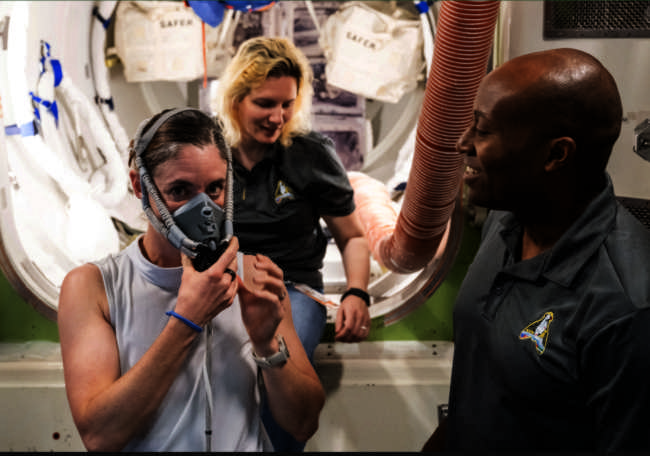
Space News: Astronaut candidates get to work at Johnson Space Center

NASA astronauts Andre Douglas, Christina Birch and Deniz Burnham during life support systems training in a mockup of an International Space Station airlock at Johnson Space Center. Photo: NASA/James Blair.


NASA announced its newest class of astronaut candidates on Sept. 22 at the agency’s Johnson Space Center in Houston. 

After the welcome ceremony, the 10 highly qualified individuals rolled up their sleeves and prepared for the next step in their journey to the stars: nearly two years of training to become flight-eligible for missions to low Earth orbit, the Moon, and ultimately, Mars.

The training astronaut candidates complete is comprehensive and rigorous. They learn about NASA’s history and vision, and how astronauts advance the agency’s mission.

They take classes on space health — gaining an understanding of radiation exposure, microgravity’s effects on the human body, space food and nutrition, and how to use the exercise equipment aboard the International Space Station. They also study first aid and practice providing medical care for crewmates. 

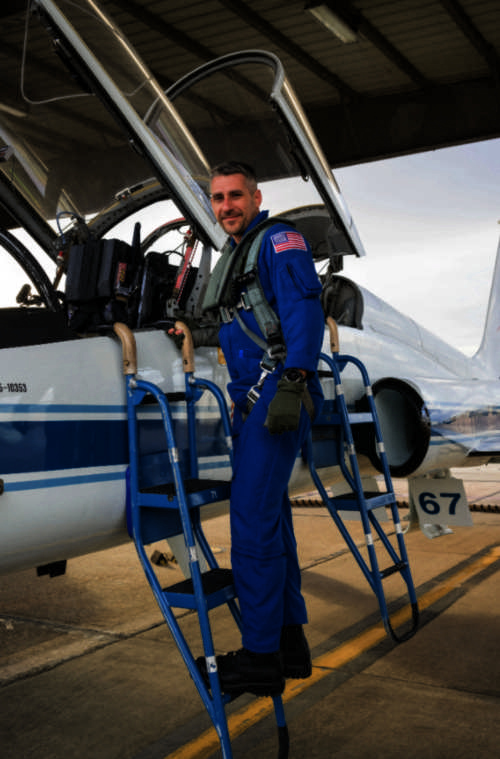
Each candidate will receive flight training, learning to pilot or improving their current piloting skills through the T-38 supersonic jet and other aviation platforms.

With NASA’s plans for the future of exploration, this class of astronauts may have opportunities to fly to low Earth orbit, or even beyond. 

Some may contribute to research and technology investigations taking place aboard the space station — which is about to celebrate 25 years of continuous human presence in space. Others may venture to the Moon to prepare for future Mars missions.   

To be ready for any destination, this class will complete both space station training and advanced preparation for deep space. These exercises allow astronaut candidates to work through problems and build relationships with their classmates while preparing them for space flights.

NASA astronaut Luke Delaney prepares for a training flight in a T-38 jet. Photo: NASA/Robert Markowitz.


“Training was such an intense period that we got to know each other really well,” said NASA astronaut Anil Menon, who joined the agency as part of the 2021 class — astronaut group 23. “Now when we come together, there are these moments — like we might be handing off a capcom shift, or we might be flying a jet together — and in those moments, I feel like I know them so well that we know how to navigate all sorts of challenges together and just be our best selves as a team.”

Astronaut candidate training also teaches foundational skills that can be applied to any destination in space. 

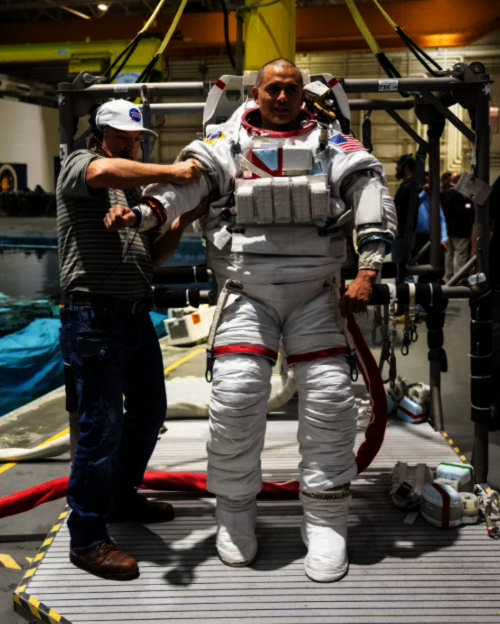
The group will complete several dives in the Neutral Buoyancy Laboratory, simulating spacewalks in different environments and learning how to do maintenance tasks in microgravity with a full-scale underwater mockup of the International Space Station as their worksite. 

They will also train inside other mockups of space vehicles, learning emergency procedures, maintenance, and repair of spacecraft, along with how to contribute to future developmental programs.

Robotics training will prepare them to use the station’s Canadarm2 robotic arm. They will trek through the wilderness as part of their land and water survival training, and they will study geology in the classroom and in the field. 

The group will practice tasks in a variety of simulations, leveraging Johnson’s world-class facilities, virtual reality, and immersive technologies. Additionally, the class will work shifts in the Mission Control Center in Houston to experience a day in the life of the people who keep watch over the astronauts and vehicles.

Astronaut candidates who successfully complete the training program celebrate their achievement in a graduation ceremony, after which they are officially flight-eligible members of NASA’s astronaut corps. They will also receive office and ground support roles at Johnson while they await future flight assignments.

“I’ve been exposed to a lot of different parts of what we do at Johnson Space Center, working both with the current increment of supporting operations aboard the International Space Station, as well as supporting some development of the Orion spacecraft and Artemis II preparations,” said NASA astronaut Chris Birch, another member of astronaut group 23.

Many members of NASA’s active astronaut corps emphasize that the learning does not stop when astronaut candidate training ends. 

“You have the foundational training and you continue to build off of that,” said Deniz Burnham, adding that the hardest days can be the most educational. “You get to learn, you get to improve, and then you’re still getting the opportunity. It’s such a positively unique experience and environment, and you can’t help but be grateful.”

As NASA astronaut Frank Rubio, class mentor, told the group, “You’ll become part of a legacy of those who trained before you, continuing the adventure they started, and looking ahead to future human exploration.”

Linda E. Grimm works for the Johnson Space Center Office of Communications.

NASA astronaut Anil Menon suits up before completing a training dive in the Neutral Buoyancy Laboratory at Johnson Space Center. Photo: NASA/Josh Valcarcel.

Lake County students continue to show growth on state assessments


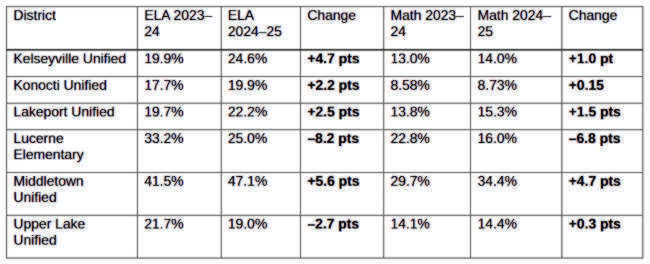
LAKEPORT, Calif. — The California Department of Education, or CDE, this week released results from the 2024-25 California Assessment of Student Performance and Progress, which show continued growth among Lake County students in English Language Arts and mathematics. 

The results highlight steady improvement across most local districts and mirror upward trends seen statewide.

Overall, Lake County students made encouraging progress compared to the 2023–24 school year, the Lake County Office of Education reported.

Countywide, 26 percent of students met or exceeded standards in English Language Arts, up from 23.3 percent the previous year, and 15.8 percent met or exceeded standards in mathematics, up from 14.8 percent.

“These results reflect the incredible commitment of our educators, staff, students, and families,” said Lake County Superintendent of Schools Brock Falkenberg. “We’re seeing consistent progress, and that tells us our investments in literacy, early learning, and instructional support are working. While we still have much work to do to ensure every student achieves at high levels, the trajectory is encouraging.”

The California Department of Education reported that students statewide also made gains across all tested subjects. Statewide percentages of students meeting or exceeding standards rose to 70.6 percent in English Language Arts, or ELA, and 61.0 percent in mathematics, each showing increases over 2023–24.

This year’s growth for California was +1.8 percentage points in ELA and +1.8 points in math, outpacing last year’s improvement rates. In addition, Hispanic/Latino and socioeconomically disadvantaged students showed higher-than-average gains in each subject area.

The California Assessment of Student Performance and Progress, or CAASPP, system, which includes the Smarter Balanced Assessments for English Language Arts and Mathematics, measures what students know and can do relative to California’s rigorous grade-level standards.

Student performance is grouped into four achievement levels:

• Standard Exceeded (Advanced);
• Standard Met (Proficient);
• Standard Nearly Met;
• Not Met.

The percentage of students meeting or exceeding the standard represents the proportion who are performing at or above grade-level expectations. 

These results are used alongside other indicators — such as classroom grades, report cards, and teacher observations — to provide a full picture of student achievement.

The Lake County Office of Education said it continues to support district partners with early literacy programs, math intervention, and professional development designed to strengthen teaching and learning across all grade levels. 

These efforts are supported by state initiatives such as the Literacy Coach and Reading Specialist Grant, Expanded Learning Opportunities Program and targeted Local Control and Accountability Plan funding.

“Lake County’s educators are committed to continuous improvement,” said Falkenberg. “Each year, we use this data to refine instruction, guide investments, and provide the tools teachers and students need to succeed. The progress we’re seeing gives us confidence in the path ahead.”

For more information about California’s 2024–25 test results, visit the Test Results for California’s Assessments website.

  • 86
  • 87
  • 88
  • 89
  • 90
  • 91
  • 92
  • 93
  • 94
  • 95

Community

  • Lake County Wine Alliance offers sponsor update; beneficiary applications open 

  • Mendocino National Forest announces seasonal hiring for upcoming field season

Public Safety

  • Lakeport Police logs: Thursday, Jan. 15

  • Lakeport Police logs: Wednesday, Jan. 14

Education

  • Woodland Community College receives maximum eight-year reaffirmation of accreditation from ACCJC

  • SNHU announces Fall 2025 President's List

Health

  • California ranks 24th in America’s Health Rankings Annual Report from United Health Foundation

  • Healthy blood donors especially vital during active flu season

Business

  • Two Lake County Mediacom employees earn company’s top service awards

  • Redwood Credit Union launches holiday gift and porch-to-pantry food drives

Obituaries

  • Rufino ‘Ray’ Pato

  • Patty Lee Smith

Opinion & Letters

  • The benefits of music for students

  • How to ease the burden of high electric bills

Veterans

  • CalVet and CSU Long Beach team up to improve data collection related to veteran suicides

  • A ‘Big Step Forward’ for Gulf War Veterans

Recreation

  • Wet weather trail closure in effect on Upper Lake Ranger District

  • Mendocino National Forest seeking public input on OHV grant applications

  • State Parks announces 2026 Anderson Marsh nature walk schedule 

  • BLM lifts seasonal fire restrictions in central California

Religion

  • Kelseyville Presbyterian to host Ash Wednesday service and Lenten dinner Feb. 18

  • Kelseyville Presbyterian Church to hold ‘Longest Night’ service Dec. 21

Arts & Life

  • Auditions announced for original musical ‘Even In Shadow’ set for March 21 and 28

  • ‘The Rip’ action heist; ‘Steal’ grounded in a crime thriller

Government & Politics

  • Lake County Democrats issue endorsements in local races for the June California Primary

  • County negotiates money-saving power purchase agreement

Legals

  • March 3 hearing on ordinance amending code for commercial cannabis uses

  • Feb. 12 public hearing on resolution to establish standards for agricultural roads

How to resolve AdBlock issue?
Refresh this page