 How to resolve AdBlock issue?
News

NORTH COAST, Calif. — Cal Fire Sonoma-Lake-Napa Unit Law enforcement officers have arrested two Healdsburg residents for 21 felony counts of arson for their role in setting a series of fires last September.
Upon completion of an extensive multi-year investigation, Estevan Miranda-Silva, 23, and Gabriel Gonzalez-Flores, 19, were arrested in relation to a series of fires in and around the Healdsburg area, including fires ignited during the night of Sept. 6, 2021.
The original reports on the incident, called the #13Fire, said there were 15 separate fires that burned six acres.
The men have been booked on 21 felony counts each for arson, possession of an incendiary device, arson in an area where a state of emergency has been declared and conspiracy.
In addition, a “ghost gun” was recovered from the vehicle Miranda-Silva was driving at the time of his arrest and Cal Fire officers will be seeking additional firearm related charges.
Both Miranda-Silva and Gonzalez-Flores were booked into the Sonoma County Jail and bail has been set at $1 million apiece.

LAKE COUNTY, Calif. — Upper Lake’s levees, the community’s concerns about their condition and the county’s ongoing work to find the best solution to fix them was the focus of a Wednesday evening workshop.
The Western Region Town Hall, or WRTH, held the workshop at the Habematolel community center on Main Street in Upper Lake.
The workshop, in the planning for months, drew more than 40 community members, primarily Upper Lake area residents, for an hour-and-a-half-long discussion and question and answer session with county officials and Lake County Water Resources’ consulting company, Peterson Brustad Inc.
There also were some attendees via Zoom, including a representative from Assemblywoman Cecilia Aguiar-Curry’s office.
District 3 Supervisor EJ Crandell Crandell said the workshop was offering the chance for a “deeper dive” on the levee situation, which has been a topic of discussion for WRTH since late last year.
Peterson Brustad is in the process of completing the Middle Creek Flood Control Feasibility Study, which covers the Middle Creek and Clover Creek diversion levees, the diversion structure and Old Clover Creek closure structure in Flood Zone 8.
Lake County Public Works and Water Resources Director Scott De Leon said the United States Army Corps of Engineers built the levees in the 1950s, later giving up management of them. The state of California took over management until the 1990s. The county of Lake created Flood Zone 8 to manage them in the years since.
In the 2022-23 final recommended budget, which the Board of Supervisors approved last week, it shows that $266,920 in revenue from taxes, assessments and penalties are budgeted, with $350,164 in expenditures, including more than $259,000 in professional and specialized services.
De Leon said Wednesday night that the flood zone’s income hasn’t kept up with the costs to maintain the levees.
In December, the county released a video describing some of the study’s aspects, modeling potential breaches and laying out three alternatives for addressing the levees’ condition.
Since then, WRTH members have been discussing the levees regularly at monthly meetings, attending Board of Supervisors’ meetings to ask for county action and planning the workshop.
Crandell on Wednesday night credited Julia Carrera, a former WRTH Board member, for her work to set up the workshop. Carrera did not attend the Wednesday workshop, but most of the current WRTH Board members were on hand, including Chair Tim Chiara.
Chiara said he believed the levee situation is the most important issue WRTH has dealt with, and he encouraged people to speak up.
“You’re part of the solution, and we appreciate you all coming here,” he said.
Finding the best alternative
Along with De Leon, Deputy Water Resources Director Marina Deligiannis and Sergio Jimenez of Peterson Brustad, an engineering and consulting firm based in Folsom, were on hand for the meeting.
The December feasibility study video focused on three specific alternatives: Raising and strengthening in place 2.7 miles of levees on Middle Creek and the Clover Creek Diversion, including installing a shallow cutoff wall; sediment management and vegetation clearing in the channel to convey 100-year flow; and raising structures to be above the 100-year floodplain level, along with evacuation enhancements.
On Wednesday, Jimenez explained that, since that video was released, eight more alternatives had been added, for a total of 11 that were considered.
That original array of three alternatives didn’t capture multi-benefit opportunities — including recreation and habitat, in addition to safety and maintenance needs — which the state looks for when assessing such projects, Jimenez told Lake County News.
Another concern was cost. Jimenez said a cutoff wall can be very expensive. While he declined to give a specific estimate for Upper Lake’s situation, as the study is not yet at the stage where a final calculation has been made, he said a similar project is estimated at $25 million-plus. So one of the goals was to find an alternative that’s more efficient.
De Leon said later during the meeting that he’s aware of projects of similar scope to Upper Lake’s levees going as high as $50 million, which would be a very large project for Lake County.
The 11 alternatives have now narrowed down to three new alternatives, which are slightly different from the original three. Jimenez said all three of those new alternatives revolve around sediment management — specifically, the large amount of gravel that has built up in the creeks and levees.
However, he noted that sediment management alone will not get the community to a levee certification level approved by the Federal Emergency Management Agency, or FEMA, because of the levees’ seepage issues.
Jimenez said he thinks Peterson Brustad will have modeling of those alternatives completed by the end of October, with a final version of the study to come out by year’s end.
State rules limit sediment and vegetation removal
In response to community members’ questions about removing sediment and vegetation, De Leon explained the multilayered bureaucratic maze that has to be navigated in order to get such a project accomplished.
“Even if I had the money, I can’t just go in there and tear it all out,” he said of the gravel and trees community members have said are clogging the levee channels and making them vulnerable to overtopping and breaches.
Challenges involve changes in state law that prevent gravel extraction in creeks and levee channels as it used to be done, he said. Removing gravel requires state permits that can require a lengthy and expensive process. In the meantime, excessive gravel buildup has occurred.
De Leon said the state’s listing in 2014 of the Clear Lake hitch — a large freshwater minnow native to the Clear Lake watershed and an important food staple in Pomo culture — as a threatened species under the California Endangered Species Act has led to it being extremely difficult to do work in local creeks.
There are options for meeting the state’s requirements and finding ways to pay for the project.
De Leon said Caltrans is looking for an off-site mitigation project and is considering a project in a portion of Clover Creek that would remove gravel and vegetation, and conduct habitat restoration.
Also at the meeting were two former county supervisors, Gary Lewis, who represented District 3, and Rob Brown, who represented District 5. Both men acknowledged how they have seen changes in state law impact the situation.
Lewis, who emphasized that the county has to follow the state’s permitting process, recalled how gravel extraction at one point had gotten out of hand and didn’t get fixed until a group of citizens sued the county in the 1970s.
He recalled how the creek used to meander down the canyon, with islands in the middle and oak trees. The extractors had dug too deep from White Rock Canyon all the way down to Middle Creek Road, “and it became a flood channel,” and brought gravel down and pushed it into town.
Lewis said he didn’t think gravel removal would really solve the problem, and he also doubted a gravel removal project could even get done because of cost, legal action and state requirements, adding he believes the levees are now a detriment to the community.
“It’s almost beyond comprehension how we could get this done,” he said.
For his part, Brown said during the meeting that he believes the state law is actually hurting the hitch, as it’s not allowing for the removal of vegetation that WRTH Board member Melinda Wright said is so thick that it’s preventing the hitch from spawning in the channel.
Another important part of the process is tribal consultation.
Johnathan Costillas, a tribal monitor for the Habematolel Pomo, said cultural resources could be in the sediment and erosion. However, he said as long as mitigation measures are in place, they are good to go. He said the tribes need to be at the table.
When a community member asked if the tribe was concerned about flooding of a local cemetery, Costillas said yes.
“We’re on your side,” he said.
Next steps
De Leon said that on Tuesday he will take to the Board of Supervisors a contract with Peterson Brustad for the development of a preliminary restoration plan along the entire channel, including Alley Creek, Clover Creek and the Clover Creek bypass, which De Leon said he thinks should include restoration of the levee channel to original configuration.
That plan is needed to take to the state for the purpose of getting permits and for pursuing funding, De Leon said.
Once there is a plan prepared, De Leon said that the community will need to put pressure on state and federal officials for help in completing and funding the project.
Email Elizabeth Larson at
Middle Creek Flood Control Project Map by LakeCoNews on Scribd
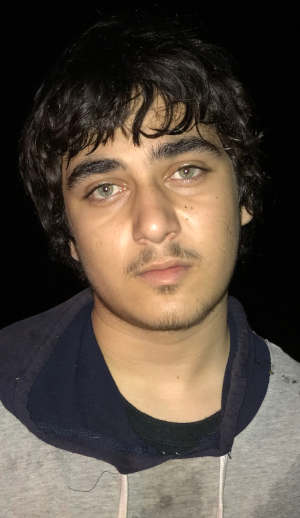
CLEARLAKE, Calif. — The Clearlake Police Department is asking for the community’s help in locating a missing teenage boy.
Crise Martain Askew, 16, was last seen in the 14000 block of Alvita in Clearlake on Sunday, police said.
He is described as 5 feet, 8 inches tall, 150 pounds, with brown hair and hazel eyes.
If you have information regarding Askew’s whereabouts, please contact the Clearlake Police Department at 707-994-8251.
LAKEPORT, Calif. — The city of Lakeport is launching a program to connect with city businesses.
The Business Walk program in Lakeport is designed to familiarize the business community with city and other resources available to them.
City staff and members of the Lakeport Economic Development Advisory Committee, or LEDAC, contact local owners and managers, providing them with the opportunity to speak with representatives about issues of concern.
The goal is to help local businesses thrive and grow.
Sixteen teams of staff and volunteers, totaling 29 individuals, will cover the city and begin conducting their visits in early October, with completion anticipated by late in the month.
Findings from the visit will be compiled by LEDAC and presented to the Lakeport City Council in December.
The city’s economic development strategic plan identified annual in-person visits as an important element in the support and retention of existing local businesses.
The walks were put on hold during the COVID-19 pandemic and are being resumed now to engage with and hear from the business community.
The Guide to Doing Business in Lakeport has been updated and will be made available during the visits.
The publication includes information and contacts for services aimed at assisting new businesses, along with business loan programs offered by the city of Lakeport and other agencies.
The guide will be available on the City’s website, www.cityoflakeport.com, at City Hall, and through the Lakeport Main Street Association and the Lake County Chamber of Commerce.
LEDAC is an advocate for a strong and positive Lakeport business community, and serves as a conduit between the city and the community for communicating the goals, activities and progress of Lakeport’s economic and business programs.
The committee meets bi-monthly on the second Wednesday from 7:30 to 9 a.m.
The next meeting is on Nov. 9; all meetings are open to the public.
The Business Walk program in Lakeport is designed to familiarize the business community with city and other resources available to them.
City staff and members of the Lakeport Economic Development Advisory Committee, or LEDAC, contact local owners and managers, providing them with the opportunity to speak with representatives about issues of concern.
The goal is to help local businesses thrive and grow.
Sixteen teams of staff and volunteers, totaling 29 individuals, will cover the city and begin conducting their visits in early October, with completion anticipated by late in the month.
Findings from the visit will be compiled by LEDAC and presented to the Lakeport City Council in December.
The city’s economic development strategic plan identified annual in-person visits as an important element in the support and retention of existing local businesses.
The walks were put on hold during the COVID-19 pandemic and are being resumed now to engage with and hear from the business community.
The Guide to Doing Business in Lakeport has been updated and will be made available during the visits.
The publication includes information and contacts for services aimed at assisting new businesses, along with business loan programs offered by the city of Lakeport and other agencies.
The guide will be available on the City’s website, www.cityoflakeport.com, at City Hall, and through the Lakeport Main Street Association and the Lake County Chamber of Commerce.
LEDAC is an advocate for a strong and positive Lakeport business community, and serves as a conduit between the city and the community for communicating the goals, activities and progress of Lakeport’s economic and business programs.
The committee meets bi-monthly on the second Wednesday from 7:30 to 9 a.m.
The next meeting is on Nov. 9; all meetings are open to the public.
Assemblymember Cecilia Aguiar-Curry announced Wednesday that AB 1902, her legislation to update the authority of resource conservation districts to fight climate change, has been signed into law by Gov. Gavin Newsom.
Resource conservation districts, or RCDs, are special districts created in the 1930s to serve as the local connection to state and federal conservation programs in response to the dust bowl.
Over the decades since RCDs have evolved into a network of 95 districts across the state to meet the natural resource needs of rural, urban, and suburban communities.
As California’s natural resource challenges have evolved, so has the role of RCDs.
Today, RCDs employ and contract with conservation professionals and local experts to implement programs and projects on and provide technical assistance and education to landowners of public and private natural, working, and urban lands to achieve California’s climate, conservation and environmental goals.
“RCDs are doing incredibly important work, including growing efforts to address climate change,” said Aguiar-Curry (D-Winters). “In my district, RCDs are reforesting areas hurt by wildfires, supporting water conservation, controlling erosion, managing soil health, and so much more.”
She continued, “Many of these RCDs, however, are located in rural communities and have small budgets and few resources to do the work they’re responsible for. We have a responsibility to make it easier for RCDs to receive grants from the state and to make sure that the law is updated to reflect the work that these resources professionals are already doing.”
The last meaningful update to Division 9 occurred in the 1970s, and the statute currently is out of step with the types of projects RCDS can undertake.
RCDs are neither enterprise districts (fees for services) nor non-enterprise (tax supported) and are largely dependent on state grants. Relying on grants has led RCDs to take on service programs beyond the clear and/or explicit provision in statute.
AB 1902 adds a number of conservation activities that RCDs may be formed to address. In addition to their current authorization to control runoff, prevent or control soil erosion, the development and distribution of water, and the improvement of land capabilities, RCDs would have statutory authority in line with their current work.
These authorities would range from protecting people, communities, and ecosystems from wildfire, drought and other disasters wrought by climate change to controlling and eradicating invasive species to providing technical assistance to landowners to enhance the landowners’ knowledge of resilience practices.
“RCDs are playing a critical role in helping the state and communities respond and adapt to climate change and AB 1902 will enable RCDs to go to the next level on this important work,” said Don Butz, board chair of the California Association of Resource Conservation Districts. “We are very thankful to Assemblymember Aguiar-Curry for carrying this measure and the hard work of her staff to see AB 1902 through the Legislature.”
Aguiar-Curry represents the Fourth Assembly District, which includes all of Lake and Napa Counties, parts of Colusa, Solano and Sonoma counties, and all of Yolo County except West Sacramento.
Resource conservation districts, or RCDs, are special districts created in the 1930s to serve as the local connection to state and federal conservation programs in response to the dust bowl.
Over the decades since RCDs have evolved into a network of 95 districts across the state to meet the natural resource needs of rural, urban, and suburban communities.
As California’s natural resource challenges have evolved, so has the role of RCDs.
Today, RCDs employ and contract with conservation professionals and local experts to implement programs and projects on and provide technical assistance and education to landowners of public and private natural, working, and urban lands to achieve California’s climate, conservation and environmental goals.
“RCDs are doing incredibly important work, including growing efforts to address climate change,” said Aguiar-Curry (D-Winters). “In my district, RCDs are reforesting areas hurt by wildfires, supporting water conservation, controlling erosion, managing soil health, and so much more.”
She continued, “Many of these RCDs, however, are located in rural communities and have small budgets and few resources to do the work they’re responsible for. We have a responsibility to make it easier for RCDs to receive grants from the state and to make sure that the law is updated to reflect the work that these resources professionals are already doing.”
The last meaningful update to Division 9 occurred in the 1970s, and the statute currently is out of step with the types of projects RCDS can undertake.
RCDs are neither enterprise districts (fees for services) nor non-enterprise (tax supported) and are largely dependent on state grants. Relying on grants has led RCDs to take on service programs beyond the clear and/or explicit provision in statute.
AB 1902 adds a number of conservation activities that RCDs may be formed to address. In addition to their current authorization to control runoff, prevent or control soil erosion, the development and distribution of water, and the improvement of land capabilities, RCDs would have statutory authority in line with their current work.
These authorities would range from protecting people, communities, and ecosystems from wildfire, drought and other disasters wrought by climate change to controlling and eradicating invasive species to providing technical assistance to landowners to enhance the landowners’ knowledge of resilience practices.
“RCDs are playing a critical role in helping the state and communities respond and adapt to climate change and AB 1902 will enable RCDs to go to the next level on this important work,” said Don Butz, board chair of the California Association of Resource Conservation Districts. “We are very thankful to Assemblymember Aguiar-Curry for carrying this measure and the hard work of her staff to see AB 1902 through the Legislature.”
Aguiar-Curry represents the Fourth Assembly District, which includes all of Lake and Napa Counties, parts of Colusa, Solano and Sonoma counties, and all of Yolo County except West Sacramento.

LAKEPORT, Calif. — The Lakeport Main Street Business Association welcomes the community to Lakeport’s Harvest Festival on Saturday, Oct. 1.
It will take place in the city’s downtown, between First and Fifth streets on Main Street, from 11 a.m. to 6 p.m.
The festival celebrates October and everything the harvest has to offer.
During the festival, there will be five competitions: a scarecrow contest; a carved vegetable contest; a corn hole tournament, sponsored by the Clear Lake Club; a hot dog eating contest, sponsored by the Lakeport Fire Department; and, back by popular demand, the Dachshund Derby and Wiener Wannabe Races. You can win cash prizes for your entries.
There will be other fun stuff for children including crafts, face painting, chalk art, tricycle obstacle course, lawn games and more.
Entertainment this year includes Margo & Friends, Irma Lopez and the LC Diamonds.
Visitors are encouraged to stop in at the downtown businesses during the festival. There will be a Harvest Festival Shopping Punch Card; get all of the spaces filled out and enter a chance to win cash.
There will also be crafts, goods and food vendors for you to visit during the day as well.
Other highlights will include the Lake County Clickers, line dancing and some sing along and dance along fun during the day.
From 4 to 6 p.m., you can dance on the streets to the music of the LC Diamonds.
Keep an eye on the LMSA social media pages or its website for more information about activities and contests, and a schedule of events.