 How to resolve AdBlock issue?
News
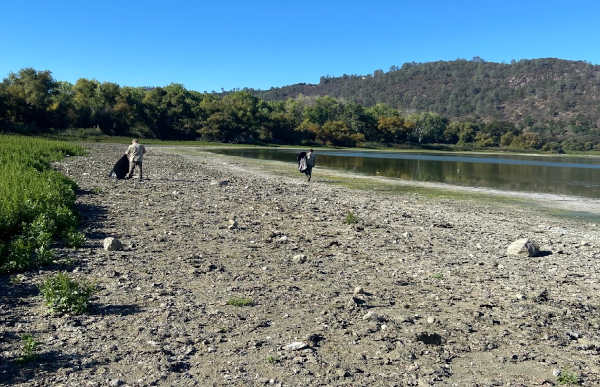
CLEARLAKE, Calif. — On Tuesday, 12 California State Parks employees spent the day cleaning up tires and other debris that has become exposed on the Clear Lake shoreline due to the falling lake level.
The cleanup day was conducted by staff members from the public safety, natural resources and maintenance departments, with a Clear Lake State Park lifeguard joining the crew.
The cleanup occurred at Molesworth Beach, a part of the shoreline of Clear Lake at the southernmost area of the lake.
The beach is located within the boundaries of the North Flat portion of Anderson Marsh State Historic Park.
The origin of the tires found at this part of the shoreline is no mystery, said Supervising Ranger Chris Glenn.
“For years, folks around Clear Lake have been using tires as dock fenders, and eventually, the docks deteriorate and the tires end up at the southern end of the lake,” said Glenn.
“On behalf of State Parks, we wish to thank Clear Lake Resort for assistance with access to the beach area and South Lake Refuse and Recycling for receiving the tires at no cost to the state,” he said.
The North Flat portion of Anderson Marsh State Historic Park is relatively undeveloped, with walking trails leading to Cache Creek and Clear Lake.
Dogs on a 6-foot leash are allowed on the trails in this area of the park. The area can be reached via Lakeview Drive off of Old Highway 53.
LAKE COUNTY, Calif. — State water officials this week gave an update on climate conditions and offered an explanation of what weather Californians can expect this fall and winter.
The California Department of Water Resources said it is preparing for a potential fourth dry year based on the weather forecasts so far.
State Climatologist Michael Anderson and Drought Manager Jeanine Jones spoke to reporters about the water year recap for 2022 and what is ahead in water year 2023.
A water year is the period from Oct. 1 to Sept. 30.
Anderson said there has been more variability for this past water year, with both extreme wet and dry months. Water storage statewide is slightly better than water year 2021 but still below average.
That new normal requires a more conservative planning approach and aggressive multiagency action, starting right now, he said.
He said water year 2022 was wetter than 2021 and had the third warmest November on record.
Anderson said December was “fantastic,” with a large amount of precipitation. That included record snowfall in parts of the Sierras, with a statewide average of 150%. Had those conditions continued, the situation would be better overall.
He said water year 2013 had the driest start to a water year until water year 2021. There was a little bit of precipitation during the snow melt, which he said is important to move the snowpack down and into the reservoirs. Then there was the massive heat wave during Labor Day weekend.
Water year saw a large amount of rain in October, when the largest storm occurred — at the start of the season, not in the heart of winter — followed by record dryness. During the peak of the rainy season, from December to February, there was only 50% of the annual precipitation, Anderson reported.
When dry conditions continue, they impact the landscape. Anderson said November was dry and warm and, as a result, the landscape didn’t go into hibernation. Rather than going to sleep, the landscape was evaporating water to stay cool.
During the summer, a southwest monsoon that usually impacts the Colorado River basin occurred with more intensity than normal, resulting in flooding rains for Death Valley, he said.
At the beginning of September, there was a record setting heat wave with records for high temperatures in a number of locations. Hurricane Kay impacted Southern California, with the storm’s northeast side impacting the desert region.
In Northern California, Anderson said there was a typhoon remnant that came down from the Bering Sea where it did damage. Traveling down California’s coast, it brought heavy rains.
Anderson also reported on an expansion of aerial snow surveys the state is carrying out, with the help of the NASA Jet Propulsion Lab, explaining the importance of getting a spatial picture of what is going on.
The expanded surveys moved into the Tahoe and Feather basins last year, and now there are plans to expand them to the watersheds that flow into the Shasta, Kern and American rivers. Anderson said the state wants to better understand snowpack patterns as they are changing and becoming more dynamic.
Conditions challenge water supply
Jones, who wished everyone a “happy new water year,” followed up by saying of water year 2022, “This was our third dry year in a row.”
As a result, the prospects are not good for the Central Valley Project, the series of dams, reservoirs, canals and other facilities managed by the U.S. Bureau of Reclamation that supplies water to major urban centers in the Greater Sacramento and San Francisco Bay areas.
For the second year in a row, Jones said the Central Valley Project is offering zero supply to most agricultural contracts except for the Friant Division, which impounds the entire flow of the San Joaquin River. Eighteen percent is going to Sacramento Valley water rights settlement contractors and wildlife refuges, and the health and safety allocation.
The State Water Project, California’s water and delivery system, is only giving a 5% allocation, with 50% to the Feather River water rights settlement contractors, she said.
Jones said increased drought impacts in the Sacramento Valley have led to the California Rice Commission estimating that there has been a 50% cut in harvested rice acreage, which will affect migratory waterfowl that travel the Pacific Flyway, resting and feeding in rice fields.
Water year 2022 had 76% average rainfall. As a result, the state is now consciously holding over more water from its reservoirs. As of September, California’s reservoir storage was at 69% of the historical average. That compares with 124% in 2019 and 120% in 2017, the two most recent wet years, and 36% in 1977, one of the worst years for drought in the state’s recorded history.
During a drought, groundwater is a major supply. Jones said groundwater normally provides 40% of supply, but that rises to 60% during droughts.
Regarding the Colorado River basin, Jones said Lake Mead and Lake Powell have continued to set record low elevations.
To address low water levels throughout the state, Jones said the Department of Water Resources has taken a number of actions, including constructing an emergency selenity barrier in the Bay Delta.
Jones said the Legislature gave significant funding to DWR to respond to drought impacts, and she showed a picture of a portable storage tank in Glenn County for a household whose private well went dry.
Record-breaking stretch of dry years
Anderson explained during the briefing that water years 2020, 2021 and 2022 now make up the driest three year stretch that goes back to water year 1896, with 46 inches of rain. Previously, water years 2013, 2014 and 2015, with 49 inches, had been the driest.
He said this is the third year where there is the presence of La Niña conditions, which occur when water near the equator is cooler than normal.
Going back to 1950, when the National Oceanic and Atmospheric Administration first put together its La Niña index, there have been only a few other times with stretches of La Niña conditions, specifically, 1976 and 2001, Anderson said.
When the winter solstice arrives, the Earth starts to tilt another way, which Anderson said “opens the door for something interesting to happen.”
Last year, it resulted in weather going from very wet to dry, with Anderson urging readiness for anything that might come the state’s way.
Anderson said the 2021 water year was the second-driest year on record, second to water year 1924.
With groundwater, above average years are needed to have some volume that can be put toward recovery and not just what’s being used on an annual basis, he said.
Anderson said one wet year can do a lot for the surface water supply, but multiple wet years are needed to help with subsurface supply.
Email Elizabeth Larson atThis email address is being protected from spambots. You need JavaScript enabled to view it. . Follow her on Twitter, @ERLarson, or Lake County News, @LakeCoNews.
The California Department of Water Resources said it is preparing for a potential fourth dry year based on the weather forecasts so far.
State Climatologist Michael Anderson and Drought Manager Jeanine Jones spoke to reporters about the water year recap for 2022 and what is ahead in water year 2023.
A water year is the period from Oct. 1 to Sept. 30.
Anderson said there has been more variability for this past water year, with both extreme wet and dry months. Water storage statewide is slightly better than water year 2021 but still below average.
That new normal requires a more conservative planning approach and aggressive multiagency action, starting right now, he said.
He said water year 2022 was wetter than 2021 and had the third warmest November on record.
Anderson said December was “fantastic,” with a large amount of precipitation. That included record snowfall in parts of the Sierras, with a statewide average of 150%. Had those conditions continued, the situation would be better overall.
He said water year 2013 had the driest start to a water year until water year 2021. There was a little bit of precipitation during the snow melt, which he said is important to move the snowpack down and into the reservoirs. Then there was the massive heat wave during Labor Day weekend.
Water year saw a large amount of rain in October, when the largest storm occurred — at the start of the season, not in the heart of winter — followed by record dryness. During the peak of the rainy season, from December to February, there was only 50% of the annual precipitation, Anderson reported.
When dry conditions continue, they impact the landscape. Anderson said November was dry and warm and, as a result, the landscape didn’t go into hibernation. Rather than going to sleep, the landscape was evaporating water to stay cool.
During the summer, a southwest monsoon that usually impacts the Colorado River basin occurred with more intensity than normal, resulting in flooding rains for Death Valley, he said.
At the beginning of September, there was a record setting heat wave with records for high temperatures in a number of locations. Hurricane Kay impacted Southern California, with the storm’s northeast side impacting the desert region.
In Northern California, Anderson said there was a typhoon remnant that came down from the Bering Sea where it did damage. Traveling down California’s coast, it brought heavy rains.
Anderson also reported on an expansion of aerial snow surveys the state is carrying out, with the help of the NASA Jet Propulsion Lab, explaining the importance of getting a spatial picture of what is going on.
The expanded surveys moved into the Tahoe and Feather basins last year, and now there are plans to expand them to the watersheds that flow into the Shasta, Kern and American rivers. Anderson said the state wants to better understand snowpack patterns as they are changing and becoming more dynamic.
Conditions challenge water supply
Jones, who wished everyone a “happy new water year,” followed up by saying of water year 2022, “This was our third dry year in a row.”
As a result, the prospects are not good for the Central Valley Project, the series of dams, reservoirs, canals and other facilities managed by the U.S. Bureau of Reclamation that supplies water to major urban centers in the Greater Sacramento and San Francisco Bay areas.
For the second year in a row, Jones said the Central Valley Project is offering zero supply to most agricultural contracts except for the Friant Division, which impounds the entire flow of the San Joaquin River. Eighteen percent is going to Sacramento Valley water rights settlement contractors and wildlife refuges, and the health and safety allocation.
The State Water Project, California’s water and delivery system, is only giving a 5% allocation, with 50% to the Feather River water rights settlement contractors, she said.
Jones said increased drought impacts in the Sacramento Valley have led to the California Rice Commission estimating that there has been a 50% cut in harvested rice acreage, which will affect migratory waterfowl that travel the Pacific Flyway, resting and feeding in rice fields.
Water year 2022 had 76% average rainfall. As a result, the state is now consciously holding over more water from its reservoirs. As of September, California’s reservoir storage was at 69% of the historical average. That compares with 124% in 2019 and 120% in 2017, the two most recent wet years, and 36% in 1977, one of the worst years for drought in the state’s recorded history.
During a drought, groundwater is a major supply. Jones said groundwater normally provides 40% of supply, but that rises to 60% during droughts.
Regarding the Colorado River basin, Jones said Lake Mead and Lake Powell have continued to set record low elevations.
To address low water levels throughout the state, Jones said the Department of Water Resources has taken a number of actions, including constructing an emergency selenity barrier in the Bay Delta.
Jones said the Legislature gave significant funding to DWR to respond to drought impacts, and she showed a picture of a portable storage tank in Glenn County for a household whose private well went dry.
Record-breaking stretch of dry years
Anderson explained during the briefing that water years 2020, 2021 and 2022 now make up the driest three year stretch that goes back to water year 1896, with 46 inches of rain. Previously, water years 2013, 2014 and 2015, with 49 inches, had been the driest.
He said this is the third year where there is the presence of La Niña conditions, which occur when water near the equator is cooler than normal.
Going back to 1950, when the National Oceanic and Atmospheric Administration first put together its La Niña index, there have been only a few other times with stretches of La Niña conditions, specifically, 1976 and 2001, Anderson said.
When the winter solstice arrives, the Earth starts to tilt another way, which Anderson said “opens the door for something interesting to happen.”
Last year, it resulted in weather going from very wet to dry, with Anderson urging readiness for anything that might come the state’s way.
Anderson said the 2021 water year was the second-driest year on record, second to water year 1924.
With groundwater, above average years are needed to have some volume that can be put toward recovery and not just what’s being used on an annual basis, he said.
Anderson said one wet year can do a lot for the surface water supply, but multiple wet years are needed to help with subsurface supply.
Email Elizabeth Larson at
CLEARLAKE, Calif. — The Lake County Campus of Woodland Community College, or LCC, invites the community to join the celebration of its 50th anniversary.
The event will take place from noon to 5 p.m. on Thursday, Oct. 13.
Located on 12.7 beautifully wooded acres, LCC has had many names over its 50-year history.
What has remained consistent over LCC’s history is its commitment to providing Lake County citizens access to academic and career technical programs that meet the needs and expectations of the region’s economy.
Lake County Campus has offered courses to county residents since 1972.
It started off offering a few courses at Konocti Harbor Inn, in Kelseyville under the name of Lake County Center of Yuba College.
In 1974, classes moved to the current location in Clearlake and the first buildings were constructed.
The California Commission of Post-Secondary Education recognized “Lake County Campus” as a center in 1990. At the same time, the Board of Trustees voted to change the name to “Lake County Campus.”
In 2000, the college was renamed again, this time to “Clear Lake Community College.” The college’s culinary program was launched the same year.
Under the instruction of the California Community College Chancellor’s office, in 2003 Yuba College District removed the word “college” from the campus’s name and it was renamed “Clear Lake Campus.”
In 2011, the campus held a groundbreaking ceremony that added 26,000 square feet to the facility.
This expansion added a new student services center, library, a state-of-the-art kitchen and dining room for Aromas Restaurant, and new classrooms/labs for biology, chemistry and early childhood education courses.
The new facility was completed, and a dedication ceremony was held in 2012.
Under a district realignment, LCC became part of Woodland Community College in July 2016. Its current name, Lake County Campus of Woodland Community College, is a result of that realignment.
The festivities on Oct. 13 will kick off at noon with lunch provided by vendors from the community. Campus tours will follow.
Beginning at 3:30 p.m., a program will be offered that includes comments from special guests and alumni.
Throughout the afternoon, visitors can expect culinary and pastry treats from LCC’s Aromas crew.
LCC invites the entire community to join in the celebration.
The event will take place from noon to 5 p.m. on Thursday, Oct. 13.
Located on 12.7 beautifully wooded acres, LCC has had many names over its 50-year history.
What has remained consistent over LCC’s history is its commitment to providing Lake County citizens access to academic and career technical programs that meet the needs and expectations of the region’s economy.
Lake County Campus has offered courses to county residents since 1972.
It started off offering a few courses at Konocti Harbor Inn, in Kelseyville under the name of Lake County Center of Yuba College.
In 1974, classes moved to the current location in Clearlake and the first buildings were constructed.
The California Commission of Post-Secondary Education recognized “Lake County Campus” as a center in 1990. At the same time, the Board of Trustees voted to change the name to “Lake County Campus.”
In 2000, the college was renamed again, this time to “Clear Lake Community College.” The college’s culinary program was launched the same year.
Under the instruction of the California Community College Chancellor’s office, in 2003 Yuba College District removed the word “college” from the campus’s name and it was renamed “Clear Lake Campus.”
In 2011, the campus held a groundbreaking ceremony that added 26,000 square feet to the facility.
This expansion added a new student services center, library, a state-of-the-art kitchen and dining room for Aromas Restaurant, and new classrooms/labs for biology, chemistry and early childhood education courses.
The new facility was completed, and a dedication ceremony was held in 2012.
Under a district realignment, LCC became part of Woodland Community College in July 2016. Its current name, Lake County Campus of Woodland Community College, is a result of that realignment.
The festivities on Oct. 13 will kick off at noon with lunch provided by vendors from the community. Campus tours will follow.
Beginning at 3:30 p.m., a program will be offered that includes comments from special guests and alumni.
Throughout the afternoon, visitors can expect culinary and pastry treats from LCC’s Aromas crew.
LCC invites the entire community to join in the celebration.
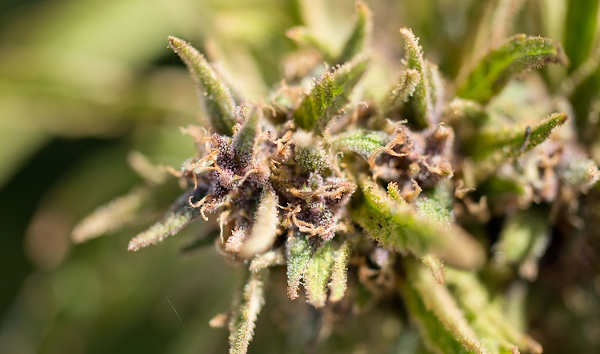
In an effort to take aggressive action to protect communities, consumers and the environment alike, Gov. Gavin Newsom has directed the creation of a new multi-agency, cross-jurisdictional taskforce of enforcement agencies designed to better coordinate agencies combatting illegal cannabis operations and transnational criminal organizations.
This new “Unified Cannabis Enforcement Taskforce,” which has been actively working since late summer, is co-chaired by the Department of Cannabis Control (DCC) and the California Department of Fish and Wildlife (CDFW) and is being coordinated by the California Governor’s Office of Emergency Services (Cal OES) through its Homeland Security Division.
The taskforce has been charged by the governor to better align state efforts and increase enforcement coordination between state, local and federal partners.
“The state of California is committed to combatting illicit commercial cannabis activity which is causing pervasive harm to California communities, the environment, consumers and legal cannabis businesses,” said Nicole Elliott, Director of DCC.
“We cannot allow harmful, illicit cannabis operations to lay waste to the environment or threaten our communities,” said Mark Ghilarducci, Director of the Cal OES and the Governor’s Homeland Security Advisor. “We are bringing together the combined law enforcement resources of our state, local and federal agencies in a coordinated enforcement action against these bad actors and criminal organizations.”
“California has an abundance of public lands set aside for conservation, recreational use and the enjoyment of the people of this state,” said CDFW Director Charlton H. Bonham. “Unfortunately, criminal organizations are impacting these areas by exploiting some of our most pristine public lands and wildlife habitats as grow sites for cannabis.”
Since its inception, the taskforce has been actively coordinating with federal, state, local and tribal agencies to disrupt this illegal market, including:
• Combatting the non-linear threat of transnational crime that extends to areas of California beyond the border and into some of most rural parts of the state.
• Establishing a new data sharing agreement which allows state and local enforcement officials to more broadly share information and cross-match data across jurisdictions.
• Leveraging and better aligning the authorities and legal provisions of federal, state and local law enforcement and regulatory agencies in conducting search warrants, indictments and maximizing arrests and prosecution of perpetrators, while also maximizing administrative, regulatory and civil penalties for bad actors.
• Disrupting human traffickers and illegal firearm and drug smugglers.
• Interdicting illegal cannabis shipments crossing California’s borders.
• Coordinating with local police chiefs, sheriffs and federal officials to deploy personnel and equipment where needed.
By investigating, removing and reclaiming illegal grow sites as well as shutting down illegal manufacturing, distribution and retail operations, and by apprehending and applying meaningful repercussions to offenders and traffickers, state, local and federal law enforcement agencies are protecting consumer and public safety, safeguarding the environment, and depriving illegal cannabis operators and transnational criminal organizations of illicit revenue that undercuts the regulated cannabis market in California.
Large scale, illicit outdoor cannabis cultivation can be harmful to the environment. Non-compliant cultivation sites can negatively affect wildlife, vegetation, water, soil, and other natural resources when they utilize chemicals, fertilizers and terracing, and even poach local wild animals. Illegal cannabis cultivation results in the chemical contamination and alteration of watersheds, diversion of natural water courses, elimination of native vegetation, wildfire hazards, poaching of wildlife and harmful disposal of garbage, non-biodegradable materials and human waste.
Untested cannabis products also pose safety hazards to consumers, while all illegal activity undercuts the regulated market and hurts licensed cannabis business owners.
In addition to the three agencies, the participating partners in the taskforce are listed below.
California Agricultural Labor Relations Board
California Business, Consumer Services and Housing Agency
California Environmental Protection Agency
California Police Chiefs Association
California State Sheriffs Association
California Highway Patrol
California National Guard
California State Transportation Agency
California Franchise Tax Board
California Department of Food and Agriculture
California Department of Forestry and Fire Protection
California Department of Justice
California Department of Parks and Recreation
California Department of Pesticide Regulation
California Department of Public Health
California Department of Tax and Fee Administration
California Department of Toxic Substances Control
California Employment Development Department
California Department of Occupational Health and Safety
California Labor and Workforce Development Agency
California Government Operations Agency
California Water Resources Control Board
High Intensity Drug Trafficking Areas program
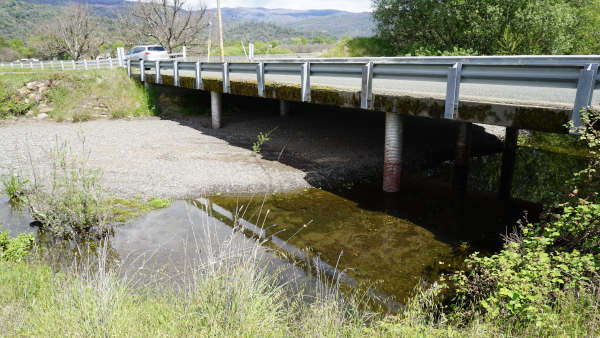
LAKE COUNTY, Calif. — The Board of Supervisors on Tuesday approved the award of a contract to an engineering firm that will be tasked with designing a project to remove gravel and sediment buildup from the levee channels that protect the town of Upper Lake.
Water Resources Director Scott De Leon asked for, and received, the approval of the supervisors — sitting as the Lake County Watershed Protection District Board of Directors — to waive the county’s formal bidding process and authorize the signing of an agreement with Peterson Brustad Inc. for engineering design services for the Clover Creek Bypass Gravel Removal Project.
The Folsom-based company will be paid $44,820 for the project. The contract term ends on March 31, 2023.
Peterson Brustad was the firm hired to complete the Middle Creek Flood Control Feasibility Study, which covers the Middle Creek and Clover Creek diversion levees, the diversion structure and Old Clover Creek closure structure in Flood Zone 8. That work is still underway.
Those levees do not provide protection in 100 year flood events, and modeling completed last year and described in a video on the feasibility study showed that if the levees failed it could be catastrophic for Upper Lake, as Lake County News has reported.
The Western Region Town Hall hosted a special workshop on the levees last week.
De Leon said the contract is to prepare preliminary plans not only for the Clover Creek bypass but all of the Clover Creek and Ally Creek facility in Upper Lake.
The United States Army Corps of Engineers installed the levees on those creeks in the 1950s, De Leon said.
Now, there is “significant gravel buildup within the channels” and De Leon said one of the projects that’s been identified to deal with the levees condition is gravel removal.
However, in order to pursue that project, De Leon said his department needs to have preliminary plans to develop the project scope — including how many yards of material need to come out. They also need to start preliminary environmental work.
“That is all key to making applications for funding,” he said.
He added, “It’s going to be a very expensive project so we need as much information as we can,”
De Leon proposed to use Peterson Brustad because the company already is doing the feasibility study of that entire creek region, has been analyzing the levees and modeling how the levees perform under certain storm events and conditions. As a result, they have all of the topographic information on the channels.
There are potential funding sources available to pay for the extraction project, said De Leon; those include the Natural Resources Conservation Service, part of the U.S. Department of Agriculture.
That option was discussed during the June 15 Western Region Town Hall attended by Lake County News. An NRCS representative, Jim Rienstra, who attended that meeting via Zoom confirmed the agency could fund the work through its programs.
“The sooner that we can get some plans done and get a project description prepared, the sooner that we can start chasing grant funds to try to do the project,” said De Leon.
“We also believe that it’s going to require a pretty significant environmental review,” he added.
Supervisor Bruno Sabatier said he didn’t necessarily agree that, under the justifications for waiving the bidding process, that it was a unique service, but that it was more of an amendment to the current contract with Peterson Brustad.
Sabatier said it also wasn’t an emergency yet, but there was the potential for one if the county gets a large amount of rain.
County Counsel Anita Grant said she thought Sabatier was right about the exemption from competitive bidding, and suggested instead that the applicable exemption would be no economic benefit.
Supervisor Moke Simon said the county needs to look at gravel removal in all local creeks, as it’s building up everywhere and affects everyone.
“Getting some of this gravel out of our creeks is very important,” he said.
Referring to Simon’s statement, Sabatier agreed that it’s a larger issue and asked if the same California Environmental Quality Act process being used for Upper Lake’s levees can be used to address future removal of gravel in the area.
“That’s a really complicated question,” said De Leon. “It’s possible.”
He said he didn’t think the environmental work can be reused, but the plan can be.
In the feasibility study, Peterson Brustad discussed the addition of structures or areas where gravel would accumulate as opposed to it going in and disrupting the channel, he explained.
De Leon said there are a number of design options that could be put into play here that could be reused. A routine maintenance project also could be done.
Sabatier moved to approve waiving the bidding process and authorizing the signing of the contract, which the board approved 4-0.
Editor’s note: This article has been clarified regarding Supervisor Sabatier’s questions about whether the California Environmental Quality Act process could be reused again.
Email Elizabeth Larson at
LAKE COUNTY, Calif. — The Clearlake City Council will consider this week whether to create a homebuyer assistance program for city employees.
The council will meet at 5 p.m. Thursday, Oct. 6, for a workshop before the regular meeting begins at 6 p.m. in the council chambers at Clearlake City Hall, 14050 Olympic Drive.
The meeting will be broadcast live on the city's YouTube channel or the Lake County PEGTV YouTube Channel. Community members also can participate via Zoom or can attend in person.
The agenda can be found here.
Comments and questions can be submitted in writing for City Council consideration by sending them to City Clerk Melissa Swanson atThis email address is being protected from spambots. You need JavaScript enabled to view it. .
To give the council adequate time to review your questions and comments, please submit your written comments before 4 p.m. Thursday, Oct. 6.
Each public comment emailed to the city clerk will be read aloud by the mayor or a member of
staff for up to three minutes or will be displayed on a screen. Public comment emails and town hall public comment submissions that are received after the beginning of the meeting will not be included in the record.
The council will meet at 5 p.m. for a workshop to discuss annexation and sphere of influence updates.
During the regular meeting, there will be a swearing-in for the new police sergeant and the presentation of a proclamation declaring October 2022 as Domestic Violence Awareness
Month.
Under business items, the council will discuss and consider a proposal to establish a homebuyer assistance program as a retention and recruitment incentive for city employees.
“One of the most difficult tasks of any organization is the recruitment and retention of high performing and committed employees,” City Manager Alan Flora wrote in his report to the council. “We couldn’t be more pleased with the dedicated staff we have and are constantly analyzing tools or programs to ensure we keep our employees. Home ownership is often a
key factor and incentive for employees staying put. With local access to housing still a challenge, and the cost of homeownership continuing to rise, we would like the Council to consider ways to assist with our employee’s commitment to the City via homeownership.”
Flora is asking the council to consider an incentive amount, requirements that home purchases be within the city and owner-occupied, income limits, requirements for time of employment and ensuring any method is tax free to increase effectiveness.
Also under business, the council will consider appointing Curt Giambruno to the Lake County Vector Control District Board for a term of four years.
On the meeting's consent agenda — items that are considered routine in nature and usually adopted on a single vote — are warrants; minutes of the Aug. 10 Lake County Vector Control District Board; continuation of authorization to implement and utilize teleconference accessibility to conduct public meetings pursuant to Assembly Bill 361; adoption of a resolution appointing the finance director as city treasurer, authorizing signing and endorsing checks, electronic funds transfers, deposits to and withdrawals from operating and investment accounts and authorizing the certification of the names and signatures of the authorized persons to the financial institution(s); and consideration of updated salary range for the Public Works director position and salary schedule.
The council also is scheduled for a closed session to discuss two potential cases of litigation and the city’s ongoing case against the county of Lake and Treasurer-Tax Collector Barbara Ringen.
Email Elizabeth Larson atThis email address is being protected from spambots. You need JavaScript enabled to view it. . Follow her on Twitter, @ERLarson, or Lake County News, @LakeCoNews.
The council will meet at 5 p.m. Thursday, Oct. 6, for a workshop before the regular meeting begins at 6 p.m. in the council chambers at Clearlake City Hall, 14050 Olympic Drive.
The meeting will be broadcast live on the city's YouTube channel or the Lake County PEGTV YouTube Channel. Community members also can participate via Zoom or can attend in person.
The agenda can be found here.
Comments and questions can be submitted in writing for City Council consideration by sending them to City Clerk Melissa Swanson at
To give the council adequate time to review your questions and comments, please submit your written comments before 4 p.m. Thursday, Oct. 6.
Each public comment emailed to the city clerk will be read aloud by the mayor or a member of
staff for up to three minutes or will be displayed on a screen. Public comment emails and town hall public comment submissions that are received after the beginning of the meeting will not be included in the record.
The council will meet at 5 p.m. for a workshop to discuss annexation and sphere of influence updates.
During the regular meeting, there will be a swearing-in for the new police sergeant and the presentation of a proclamation declaring October 2022 as Domestic Violence Awareness
Month.
Under business items, the council will discuss and consider a proposal to establish a homebuyer assistance program as a retention and recruitment incentive for city employees.
“One of the most difficult tasks of any organization is the recruitment and retention of high performing and committed employees,” City Manager Alan Flora wrote in his report to the council. “We couldn’t be more pleased with the dedicated staff we have and are constantly analyzing tools or programs to ensure we keep our employees. Home ownership is often a
key factor and incentive for employees staying put. With local access to housing still a challenge, and the cost of homeownership continuing to rise, we would like the Council to consider ways to assist with our employee’s commitment to the City via homeownership.”
Flora is asking the council to consider an incentive amount, requirements that home purchases be within the city and owner-occupied, income limits, requirements for time of employment and ensuring any method is tax free to increase effectiveness.
Also under business, the council will consider appointing Curt Giambruno to the Lake County Vector Control District Board for a term of four years.
On the meeting's consent agenda — items that are considered routine in nature and usually adopted on a single vote — are warrants; minutes of the Aug. 10 Lake County Vector Control District Board; continuation of authorization to implement and utilize teleconference accessibility to conduct public meetings pursuant to Assembly Bill 361; adoption of a resolution appointing the finance director as city treasurer, authorizing signing and endorsing checks, electronic funds transfers, deposits to and withdrawals from operating and investment accounts and authorizing the certification of the names and signatures of the authorized persons to the financial institution(s); and consideration of updated salary range for the Public Works director position and salary schedule.
The council also is scheduled for a closed session to discuss two potential cases of litigation and the city’s ongoing case against the county of Lake and Treasurer-Tax Collector Barbara Ringen.
Email Elizabeth Larson at