 How to resolve AdBlock issue?
News
On Friday, Gov. Gavin Newsom signed Assemblymember James C. Ramos’s bill, AB 1314, and it was chaptered into state statute by the Secretary of State’s Office.
Ramos said he was gratified that Newsom signed the bill to help stop the violence afflicting California’s Native American communities.
“The Legislature and administration are listening to those in the trenches fighting these crimes. These violent acts affect not only victims, but also families — and in too many instances, the lives of children who are left without a parent. We have much more work to do, but this is one step that can help now,” he said.
The “Feather Alert” bill is meant to address the growing number of cases involving missing Indigenous people and, in particular, to stop the increase in Missing and Murdered Indigenous Women, or MMIW.
It creates a state endangered missing advisory, or EMA, system when Native Americans are at risk.
Ramos said it’s similar to other notification systems currently operated by the California Highway Patrol.
“The rates of murdered and missing people in Native American communities is a shameful tragedy and does not receive the scrutiny and attention it deserves,” Ramos said ahead of the Assembly’s Aug. 30 vote.
Ramos has noted that California has both the greatest number of Native Americans and also is among the states with the highest rates of reported cases of missing and murdered Indigenous people.
On May 4, the Select Committee on Native American Affairs held a hearing in which tribal leaders urged legislators to take action to address abductions and other violence against California’s Indigenous people. Native Americans are the victims of a disproportionate number of such crimes.
A key recommendation from tribal leaders who gave testimony at the hearing was the creation of an alert or advisory system to the public to seek help in finding missing Indigenous people.
In response, Ramos, who chairs the committee and is the only California Native American ever elected to the state Legislature, took action, amending an existing bill to create the Feather Alert system.
Ramos and a host of co-sponsors announced the bill's introduction in late June.
Support came from the Yurok tribe, Shingle Springs Band of Miwok Indians, the Tachi Santa Rosa Rancheria, San Manuel Band of Mission Indians, Picayune Rancheria of the Chukchansi Indians, Santa Ynez Band of Chumash Indians, California State Sheriff’s Association, California Tribal Families Coalition, Los Coyotes Band of Cahuilla Cupeno Indians, Torres Martinez Band of Desert Cahuilla Indians and Yocha Dehe Wintun Nation, California Consortium for Urban Indian Health and California Tribal Business Alliance.
Calling MMIW a “silent epidemic,” the sponsors pointed to a report by the Sovereign Bodies Institute, which indicated that only 9% of murders of Indigenous women in California have ever been solved.
It’s estimated that there are more than 5,700 MMIW cases, but only 116 of the women in the cases were placed on the United States Department of Justice missing persons list.
AB 1314 quickly moved through the Legislature, gaining unanimous votes in committees.
On Aug. 25 and 30, the Senate and Assembly, respectively, gave it unanimous approval and it was sent to the governor’s desk.
It was enrolled and presented to Gov. Newsom at 4 p.m. Sept. 7. The governor signed it 16 days later.
Newsom said the new emergency alert system “will provide us with additional critical tools needed to address the crisis of Missing and Murdered Indigenous People. I thank all the legislators and tribal partners whose leadership and advocacy help light the path forward in our work to build a better, stronger and more just state together.”
“We supported the Feather Alert bill because it will help reduce the disproportionate rate of MMIP cases in California,” said Yurok Tribe Chairman Joe James. “The next generation of indigenous Californians should not have to live in a world where they have to worry about family members going missing or worse. With the emergency notification in place, we will take action to address the remaining root causes of this complex crisis.”
California is among the first states in the nation to implement such an alert system for missing Indigenous people.
Washington state was first, with its bill approved in April and the system going into effect on July 1.
In June, Colorado Gov. Jared Polis signed a bill to create an alert system along with an office of liaison for missing and murdered Indigenous people.
In California, the Feather Alert joins these other special notifications overseen by the CHP:
• The AMBER Alert, which stands for America’s Missing: Broadcast Emergency Response is used when children age 17 or younger have been abducted. It has been in use since 2002.
• The Blue Alert, approved in 2011, notifies the public when a suspect in the assault or killing of a police officer remains at large and the search is active.
• The Silver Alert, used when elderly, developmentally or cognitively-impaired persons are missing and determined to be at-risk. Adopted as the top priority of the California Senior Legislature in October 2011, it was enacted through SB 1047, legislation introduced by state Sen. Elaine Alquist (D-Santa Clara) and Sen. Lou Correa (D-Santa Ana). The bill was approved in 2012 and went into effect in 2013.
• The general endangered missing advisory is used when an individual is missing under unexplained or suspicious, and is believed to be in danger due to issues with age, physical and mental health issues, weather, being with a potentially dangerous person or other circumstances.
Email Elizabeth Larson at
Over the month of August, the homes sold through the multiple listing service totaled 85, compared to 123 during the same time last year. Those included traditionally built “stick-built” houses as well as manufactured homes on land.
There were five sales of mobile homes in parks compared to 10 for the same time last year, and 23 bare land (lots and acreage) sales, compared with 21 for the same time last year.
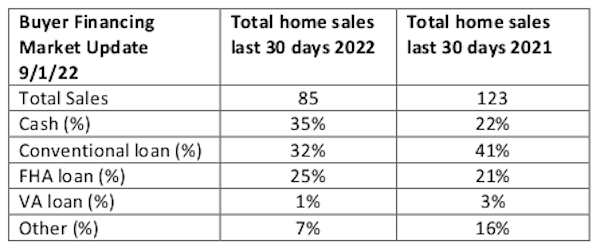
Homes bought for all cash in August totaled 30%, compared to 27% for the same time last year. Of those, 32% were financed by Fannie Mae or Freddie Mac (“conventional loans”) compared to 41% for the same time last year; 21% were financed by FHA (same as last year this time); and 1% were financed by the VA or CalVet, compared to 2% for this time last year; and 7% had other financing such as private loans or seller financed notes, compared to 13% last year at this time.
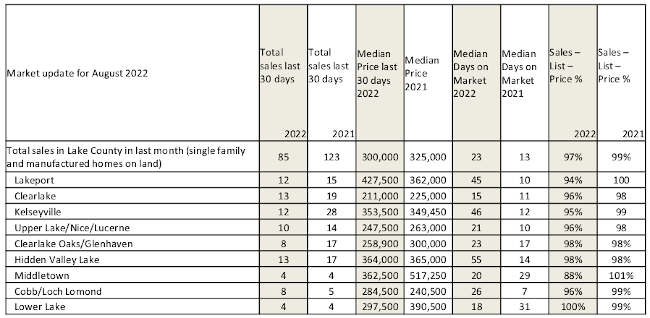
There are 445 homes on the market right now. If the rate of sales stays the same at 85 homes sold per month, there are currently 5.2 months of inventory on the market at the moment. That means that if no new homes are brought to the market for sale, in 5.2 months all of these homes would be sold and there would be none available.
Less than six months of inventory is generally considered to be a “sellers’ market” while more than six months of inventory is often called a “buyers’ market.”
The inventory has been growing steadily over the past several months and again is a record of most homes available at any time in the last two years.
Most homes were selling very close to the asking price, at an average of 97% of the asking price. This is in contrast to other areas, where homes sell for more than the asking price.
The median time on the market last month was 23 days, compared to 13 days for this time last year.
The median sale price of a single family home in Lake County over the last 30 days was $300,000 compared to $325,000 during this time period last year.
In August, 41% of homes sold had seller concessions for an average of $9,046; a year ago 30% of homes sold had an average seller concession of $6,806.
Replacing petroleum fuels with electricity is crucial for curbing climate change because it cuts carbon dioxide emissions from transportation – the largest source of U.S. global warming emissions and a growing source worldwide. Even including the impacts of generating electricity to run them, electric vehicles provide clear environmental benefits.
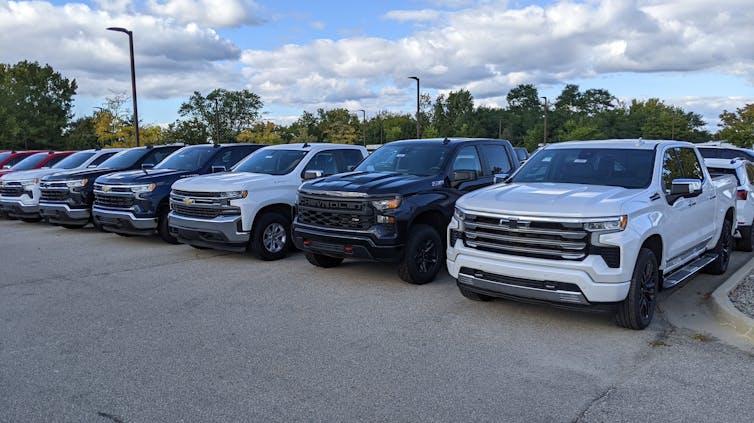
Plug-in vehicles are making great progress, with their share of U.S. car and light truck sales jumping from 2% to 4% in 2020-2021 and projected to exceed 6% by the end of 2022. But sales of gas-guzzling pickups and SUVs are also surging. This other face of the market subverts electric cars’ carbon-cutting progress.
As a researcher who studies transportation and climate change, it’s clear to me that EVs provide large carbon reductions that will grow as the electric grid shifts to carbon-free energy. But fleetwide emissions, including vehicles of all types and ages, are what ultimately matters for the climate.
While the latest policy advances will speed the transition to EVs, actual emission reductions could be hastened by tightening greenhouse gas emissions standards, especially for the larger gasoline-powered personal trucks that dominate transportation’s carbon footprint. Because it takes 20 years to largely replace the on-road automobile fleet, gas vehicles bought today will still be driving and emitting carbon dioxide in 2040 and beyond.
Public policy progress
Plugging in rather than pumping gas reduces both global warming and smog-forming pollution. It avoids the ecological harm of petroleum production and reduces the economic and security risks of a world oil market coupled to totalitarian regimes such as those of Russia and in the Middle East.
On the good news front, automakers are offering ever more EV choices and promising all-electric fleets within 15 years or so. Two recent policy developments will help turn such promises into reality.
One is California’s recent update to its zero-emission vehicle program. The new regulations will require that by 2035, 100% of new light vehicles sold in California must be qualifying zero-emission vehicles, allowing for a limited number of plug-in hybrid vehicles. Other states that historically have adopted California’s emission standards may follow its lead, so cars running only on gasoline could ultimately be banned across 40% of the U.S. new car market.
In addition, the Inflation Reduction Act recently signed by President Biden includes new incentives for EVs and subsidies for domestic production of EVs, batteries and critical minerals. The new policy targets incentives in several ways, disqualifying high-income consumers, capping the price of qualifying vehicles, providing incentives for used EVs, and restricting the tax credits to EVs built in the U.S. and Canada. It complements the US$7.5 billion for building a national EV charging network authorized by the infrastructure bill that the Biden administration brokered in 2021.
The consumption conundrum
In spite of rapidly growing sales, however, EVs have not yet measurably cut carbon. U.S. Environmental Protection Agency data indicates that the rate of carbon dioxide reduction from new vehicles has all but stalled, while vehicle mass and power have reached all-time highs.
Why? The surging popularity of low-fuel-economy pickups and SUVs. My analysis of the EPA data shows that through 2021, the higher emissions from market shifts to larger, more powerful vehicles swamp the potential carbon dioxide reductions from EVs by more than a factor of three.
Including the largest personal pickup trucks, which are omitted from the EPA’s public data, would further increase the gasoline vehicle emissions that overwhelm EV carbon reductions. Because vehicles remain on the road for so long, excessive emissions from popular but under-regulated pickups and SUVs will harm the climate for many years.
Complications of clean-car rules
A reason for this conundrum is that clean-car standards are averaged across the overall fleets of cars and light trucks that automakers sell. When a manufacturer increases its sales of EVs and other high-efficiency vehicles, it can sell a greater number of less fuel-efficient vehicles while still meeting regulatory requirements.
The standards are structured in several ways that further weaken their effectiveness. The targets an automaker has to meet get weaker if it makes its vehicles larger. Vehicles classified as light trucks – including four-wheel-drive and large SUVs, as well as vans and pickups – are held to weaker standards than those classified as cars.
What’s worse, a regulatory loophole allows the largest pickups to effectively evade meaningful carbon constraints. Such vehicles are classified as “work trucks” even though they are sold and priced as luxury personal vehicles. An ongoing horsepower war gives these massive “suburban cowboy” trucks capabilities far beyond those of the relatively spartan pickups once used by cost-conscious businesses.
Toward faster emission reductions
In spite of falling prices and rising sales, electric cars still face hurdles before they can fully sweep the market. The time it takes to charge an electric car may remain an inconvenience for many consumers. For example, commonly available Level 2 chargers take four to 10 hours to fully recharge an EV battery.
Such obstacles make it unclear whether the car market can move as quickly to an all-electric future as some hope.
Emissions could be cut more quickly if regulators reform clean car standards to close the loopholes that allow excess emissions. California is taking a step in this direction by revising its methods for determining new fleet emission limits for gasoline vehicles. Also hopeful is the recent joint announcement by General Motors and the Environmental Defense Fund, which notes the need to address the large light trucks as part of new standards targeting a 60% reduction in fleetwide greenhouse gas emissions by 2030.
As the world transitions to EVs, their size and energy use will matter, too. Massive EVs will require large batteries, and hence more critical minerals whose supplies are limited. They will demand more electricity that, even if renewable, is not fully free of environmental impacts. Sustainability will suffer if the roads are ruled more by the likes of Hummer EVs rather than Tesla Model 3s.
Policymakers and environmental organizations have mounted major promotional campaigns in support of EVs. But there are no similar efforts to encourage consumers to choose the most efficient vehicle that meets their needs. Significant numbers of Americans now believe that global warming is for real and of concern. Connecting such beliefs to everyday vehicle purchases is a missing link in clean-car strategy.
These sobering car market trends highlight the risk of letting visions of an all-electric future mask the need for better decisions today – by policymakers, consumers and automakers – to more quickly reduce emissions across the entire vehicle fleet.
This piece updates an article originally published on January 28, 2021.
John DeCicco, Research Professor Emeritus, University of Michigan
This article is republished from The Conversation under a Creative Commons license. Read the original article.
UPPER LAKE, Calif. — The condition and stability of Upper Lake’s levee system, highlighted in a feasibility study released by the county of Lake last year, has raised concerns about danger to the Upper Lake community and has led to the scheduling of a special workshop this week.
The Western Region Town Hall, or WRTH, is hosting the special workshop at 5:30 p.m. Wednesday, Sept. 28, at the Habematolel community center, 9460 Main St. in Upper Lake.
The area of concern includes the Middle Creek and Clover Creek diversion levees, the diversion structure and Old Clover Creek closure structure in Flood Zone 8, which the county calls the “Middle Creek Flood Control Project” and is operated by the Lake County Watershed Protection District.
The town hall’s members have raised the alarm about the levee conditions, the potential for breaches leading to significant flooding and damage to the historic town, as illustrated in the feasibility study released in December.
That led them in March to begin formally asking the Board of Supervisors by letter and in person to take action by agendizing a discussion with Water Resources Director Scott De Leon about remedies to keep citizens and property in Upper Lake safe from flooding, as well as to discuss funding, a timeline for improvements, and the program for maintenance to keep the Middle Creek flood bypass channel in continuous repair and a program for maintaining Clover Creek.
Such a discussion so far hasn’t happened, even though District 3 Supervisors EJ Crandell has been at the WRTH meetings, has heard the concerns firsthand, and in his capacity as chair of the Board of Supervisors is part of weekly agenda review.
However, WRTH members hope the board will finally take it up after the community weighs in at the Sept. 28 special workshop.
The Middle Creek Flood Control Project’s maintenance and condition has long been an issue. In 2007, the U.S. Army Corps of Engineers included Upper Lake’s levees on a nationwide list of those the agency said hadn’t been maintained at acceptable levels.
Over the years the county has faulted the Army Corps’ findings and said it has continued to maintain the levees.
However, this year, the levees appear to be unmown, overgrown with vegetation — particularly with trees blocking the channel — with large amounts of gravel buildup throughout the channels and under bridges.
Today, the Army Corps’ National Levee Database shows Upper Lake’s levees as being low risk due to the low population and the fact that the levees have withstood without previous breaches.
However, that database finds the potential for lower water depths in case of a breach when compared with the county’s feasibility study, reports that the levees haven’t had seepage issues — they have — and also doesn’t reflect “the overtopping without breach risk associated with the presence or operation of the levee system.”
Feasibility study looks at current levee conditions
In December, the Lake County Water Resources Department and staff from one of its consultants, Folsom-based Peterson Brustad Inc., presented a video of the Upper Lake levee feasibility study, formally known as the Middle Creek Flood Control Feasibility Study.
That video can be seen at the top of the page.
That study was years in the making. On Dec. 18, 2015, the Board of Supervisors approved a request to the California Department of Water Resources’ Small Communities Flood Risk Reduction Program, which assists local governments by providing technical and financial support to improve flood control facilities of the State Plan of Flood Control for small communities of under 10,000 residents, according to county documents.
In 2016, a consultant selection board chose Peterson Brustad Inc. to help the county apply to the program for the feasibility study and in July 2018 the county received a $499,971 grant.
On Jan. 8, 2019, the Board of Supervisors approved an agreement with Peterson Brustad in the amount of $499,971 to conduct the study.
Incidentally, Jan. 8, 2019, was the day Crandell was first sworn into office as District 3 supervisor, making approval of the study one of his first acts as supervisor.
The point of the study is to create alternatives that can improve the levee system and protect the Upper Lake community.
The study looked at ways to provide protection from a flood event that has a 1% probability of occurring in any given year. Such a flood is more commonly referred to as a 100-year flood event.
That study’s area was the boundary of Upper Lake, on the east side of Middle Creek and south of the Clover Creek diversion.
Particular focus is on the Middle Creek and Clover Creek diversion levees, the diversion structure and Old Clover Creek closure structure.
Those levees, the study is careful to note, are called State Plan of Flood Control, or SPFC, levees, which do not provide protection in a 100-year flood.
The Middle Creek and Clover Creek levees are meant to protect a population in the study area of 1,100 people, with critical infrastructure including a fire station; elementary, middle and high schools; Highway 20, which is the main evacuation route; and the Upper Lake Ranger District for the U.S. Forest Service, which services 260,000 acres of the Mendocino National Forest.
The study broke Upper Lake’s levees into two sections, the Clover Creek diversion and Clover Creek and the Middle Creek and Old Clover Creek downstream of Highway 20. It only considered left bank levees, which give direct protection to the study area.
It looked at known sedimentation issues, with 10 areas identified throughout the levee system. Among those areas are Alley Creek, the confluence of Middle Creek and the Clover Creek diversion, the Elk Mountain Road Bridge, the confluence of Middle Creek and Old Clover Creek, and the Middletown Creek and Scotts Creek confluence.
Erosion is another concern the study took into consideration along the levee banks.
Today, residents point to large amounts of gravel buildup that have resulted in reduced clearance in channels and under bridges. The levees also are heavily overgrown with trees and other vegetation and, in some areas, large cutbanks can be seen in the levee structures.
With all of the information from the study, the consultants modeled a 100-year flood event with the existing levees in place. That modeling found that overtopping of the levees would result in historic Robinson Lake filling up.
The resulting flooding could see up to 3 feet of water in much of the downtown, areas of 5 to 10 feet south of town and, in some areas, closer to 15 feet of floodwater.
Specific problems found with the levees include the Clover Creek left bank, which is not tied into high ground. That levee deficiency — which could lead to 1 to 3 feet of water in town — is one of the issues the study wants to address in its options, or alternatives.
Another deficiency in the system and the diversion structure is the lack of adequate “freeboard,” defined by the Federal Emergency Management Agency, or FEMA, as the vertical distance from the 1-percent-annual chance flood elevation up to the top of the levee.
Freeboard is important because FEMA requires 3 feet of freeboard and 4 feet of freeboard at bridge crossings in order to accredit the levee system.
A FEMA report titled “Freeboard Deficient Procedure Modeling and Mapping Non-Accredited Levees” explains, “Flood risk is dynamic and constantly changing. While levee systems are designed to manage a certain amount of floodwater, they can be overtopped or fail during flood events that exceed the level for which the levee was designed. Freeboard helps reduce the likelihood of overtopping (floodwater runs over the levee) during the design event, and it controls overtopping locations, helping to reduce the risk of catastrophic flooding.”
The modeling looked at several scenarios based on what would happen if there were breaches at specific sites along the levee system.
A breach at Middle Creek River Mile 3.4 would result in heavier flooding south of town and flow into Robinson Lake.
However, a breach at Middle Creek River Mile 3.9 could see floodwater depths of 3 to 10 feet, with additional issues from the flanking at the end of the Clover Creek levee. In that situation, water would come both from the north and the south, and then from the west to overwhelm the town.
An animation of that scenario starts at the 23:40 minute mark in the video above.
The next scenarios, a 100-year levee breach at Middle Creek River Mile 4.4 which is more upstream, similarly would be disastrous for the town, as would one at Clover Diversion River Mile 0.2, with both showing depths of up to 10 feet of water. A breach at Clover Diversion River Mile 0.9 would be slightly less severe, with depths in town of 3 to 5 feet.
A 100-year composite floodplain of the modeled breaches, which begins at the 30-minute mark in the video above, showed the fire station under about 7 feet of water, the Forest Service office would be under 1 to 3 feet, much of Main Street and even a portion of Highway 20 at the entrance of town and between the levees would be at risk of being under 10 feet of water, making it completely impassable.
Upper Lake’s schools, because they are built up more, are expected to be out of harm’s way, the study explained.
Testing shows levees fail to meet key structural criteria
The California Department of Water Resources did a nonurban levee evaluation of Upper Lake’s levees, examining them for erosion; landslide stability; through seepage and underseepage, which are drivers of breaches; freeboard; geometry; and hazard levels. It didn’t include geotechnical studies but was dependent on historical information.
As part of this study, the engineering company Kleinfelder conducted 20 geotechnical explorations along Middle Creek and the Clover Creek Diversion left bank levees, analyzing underseepage, through seepage and stability, and testing soil makeup.
The testing found that the Clover Creek Diversion did not meet the criteria for freeboard, through seepage or stability, but did meet the criteria for underseepage and rapid drawdown.
For the Middle Creek levee, the geotechnical exploration showed that it didn’t meet freeboard or through seepage criteria, but did for underseepage, stability and rapid drawdown.
With little geotechnical study having been done before, this new information is informing agencies and officials, helping them better understand with specificity the levee system’s issues, and be able to characterize if they have through seepage or underseepage, based on the FEMA standards for levee systems, the consultants said.
Kleinfelder came up with remediation options, including a seepage berm, which requires expanding the levee footprint on the landside to stop the seepage problems.
Another option is a shallow cutoff wall. The consultants said that’s the preferred remediation method, as it does not require any additional levee footprint so no additional land needs to be acquired. A shallow clay cutoff wall is put through the center of the levee, which is used to stop the seepage going through the levee and causing problems on the landside.
Those remediations will be taken into consideration as part of the alternatives.
The objectives of the project include 100-year protection, which could be achieved incrementally over time; helping local maintenance agencies respond; flood system and agricultural sustainability; willing sellers; managing residual risk; leveraging local assessments; and incorporating multiple benefits where feasible.
Constraints are the ability to cost share, deficiencies in the existing SPFC levees, regulations are difficult for a small community, adjacent channels, flooding depths that are “pretty significant” in Upper Lake, maintenance funding, ecosystem enhancements may be more difficult without willing landowners and making the system robust and resilient in anticipating of future climate change predictions.
The study includes a range of alternatives, with three in particular mentioned: fix in place the existing levees, sediment management and nonstructural improvements.
Some structural features could be included in multiple alternatives, and the selected alternative could be a combination of features from each alternative as the alternatives are refined in the evaluation process.
Still to be determined is how it will all be funded, which will be dependent on factors, including the alternative selected. A goal is to build a multi-benefit project that could include ecosystem restoration and recreation, which could be eligible for funding opportunities through state bond funding, some of them covering 100% of the costs.
That funding will be critical, because study presenters pointed out that levee projects are not cheap, and as such they may need to phase in aspects of the preferred alternative, as funding may not be available up front.
The alternatives
The study video presented three main alternatives.
Alternative No. 1 is fixing in place the existing levees that provide direct protection to the community, improving them to a 100-year level of protection, making freeboard and geotechnical fixes such as the shallow cutoff wall.
That alternative calls for raising and strengthening 2.7 miles of levees on Middle Creek and the Clover Creek Diversion, modifying or replacing the diversion structure, and extending the Clover Creek levee’s left bank by about 1,000 feet to high ground to prevent flanking. It also would address the Old Clover Creek closure structure’s deficiencies.
Alternative No. 2 calls for sediment management and vegetation clearing in the channel to convey 100-year flow, in addition to all of the aspects in Alternative No. 1.
Alternative No. 3 revolves around raising structures to be above the 100-year floodplain level, considering school modifications for an evacuation center, and other emergency action and evacuation enhancements, including improved mapping of the floodplain and levee breach timing, and evacuation routes and coordination.
All of the alternatives consider multi-benefit opportunities, such as helping the Clear Lake hitch, a large minnow native to Clear Lake that have been vital both to the ecosystem and to Pomo tribal culture, and which historically used Clover Creek for migration and spawning.
They’re listed as a threatened species under the California Endangered Species Act, and the study concluded the hitch should be taken into consideration for all alternatives in the Middle Creek watershed — promoting the ecosystem, reducing stranding and lowering channel velocities for migration.
Another multi-benefit opportunity cited is water quality. Such issues are well known in Clear Lake, and the study concluded that the alternatives should intend to increase water quality of runoff into Clear Lake.
Addressing issues with mercury, another challenge for Clear Lake, also is expected to offer another potential venue for project funding.
Regarding the next steps, the alternatives evaluation was to take place earlier this year. That step included layouts, geotechnical, hydraulics — flood flow, environmental and cultural, costs, benefits and economics, and community support.
At that time, an alternatives comparison was expected to be completed midyear, with the preferred alternative to be selected and information about that alternative to be emailed to stakeholders. That would be followed by submission of reports to the California Department of Water Resources by the end of the year with the pursuit of funding to begin.
However, Lake County Public Works and Water Resources Director Scott De Leon said last week that an alternative hasn’t yet been selected.
“The consultant is working through the process of assessing the choices using a matrix that evaluates various components of each option and ultimately assigns a score to each alternative,” De Leon said. “The top three alternatives will then be considered with a similar process until a preferred alternative is selected.”
Last week, following two days of hearings, the Board of Supervisors approved the final 2022-23 recommended budget. That final budget document does not include any funding for the levee alternatives.
In response to a question from Lake County News during the first day of the hearings about the levee improvements not being in the budget, De Leon said that work will be budgeted in the 2023-24 fiscal year.
Email Elizabeth Larson at
LAKE COUNTY, Calif. — On Monday, a judge sentenced an Upper Lake man to state prison for a 2020 killing.
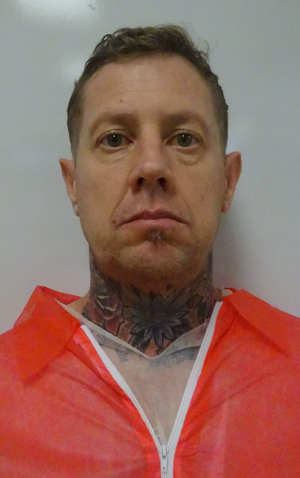
Christopher Jon McDonald, 45, was sentenced to 25 years to life in prison for the murder of 48-year-old John Turner Dickerson of Nice.
McDonald entered a no contest plea to first-degree murder last month, days ahead of the scheduled start of his trial, as part of a plea agreement reached with the District Attorney’s Office, as Lake County News has reported.
The body of Dickerson, who moved from Maryland to California in 2011, was found in the Mendocino National Forest on Aug. 9, 2020.
An autopsy concluded Dickerson died of a gunshot wound and that his remains had been in the forest for several weeks by the time they were discovered.
The Lake County Sheriff’s Office’s investigation resulted in a search warrant being served on McDonald’s property, which led to his arrest in early May 2021.
Deputy District Attorney Daniel Flesch said the killing was the result of “a marijuana deal gone bad,” in which Dickerson had allegedly “lost” 30 pounds of marijuana that belonged to McDonald.
McDonald’s attorney, Andrea Sullivan, told Lake County News last month that had he gone to trial and been convicted, he could have faced a life sentence without the possibility of parole.
The plea agreement makes McDonald eligible for parole, Sullivan said.
Email Elizabeth Larson at
State officials believe voting should be easy, that's why every active registered voter receives a ballot in the mail and Gov. Gavin Newsom has signed new legislation to make it even easier and safer to participate in our democracy.
The bills signed today will:
Increase vote-by-mail ballot drop box locations at UC and CSU campuses.
Protect election officials and poll workers from doxing and harassment by giving them the option to keep their home address confidential.
Increase multilingual resources and access to polling places.
The bills in the package include:
• AB 1631 by Assemblymember Sabrina Cervantes (D-Riverside) – Elections: elections officials.
• AB 2815 by Assemblymember Marc Berman (D-Menlo Park) – Elections: vote by mail ballot drop-off locations.
• SB 1131 by Senator Josh Newman (D-Fullerton) – Address confidentiality: public entity employees and contractors.
Last month, Gov. Newsom signed SB 103 by Sen. Bill Dodd (D-Napa) ensuring the state’s presidential electors cast ballots for candidates who won the election.
In a move to increase access to democracy and enfranchise more voters, the governor last year signed legislation permanently requiring a vote by mail ballot be mailed to every active registered voter in the state — a practice that began in California in 2020 as a safety measure to counteract pandemic-related disruptions and resulted in record voter participation.
For full text of the bills, visit http://leginfo.legislature.ca.gov.