 How to resolve AdBlock issue?
News

CLEARLAKE, Calif. — Clearlake Animal Control continues to have a full shelter of dogs needing to find their new families.
There currently are 34 adoptable dogs at the shelter available to be adopted into new homes.
Among the dogs available is Roman, a 4 year old border collie-German shepherd mix with a black and white coat. He has been neutered.
The shelter is located at 6820 Old Highway 53. It’s open from 9 a.m. to 6 p.m. Tuesday through Saturday.
For more information, call the shelter at 707-762-6227, email
Volunteers also are invited to apply to walk and care for the dogs.
This week’s adoptable dogs are featured below.
Email Elizabeth Larson at
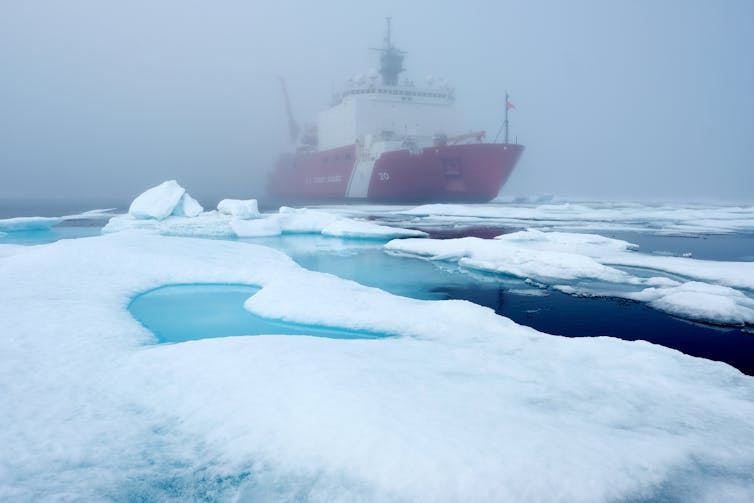
Atmospheric rivers, those long, powerful streams of moisture in the sky, are becoming more frequent in the Arctic, and they’re helping to drive dramatic shrinking of the Arctic’s sea ice cover.
While less ice might have some benefits – it would allow more shipping in winter and access to minerals – sea ice loss also contributes to global warming and to extreme storms that cause economic damage well beyond the Arctic.
I’m an atmospheric scientist. In a new study of the Barents-Kara Seas and the neighboring central Arctic, published Feb. 6, 2023, in Nature Climate Change, my colleagues and I found that these storms reached this region more often and were responsible for over a third of the region’s early winter sea ice decline since 1979.
More frequent atmospheric rivers
By early winter, the temperature in most of the Arctic is well below freezing and the days are mostly dark. Sea ice should be growing and spreading over a wider area. Yet the total area with Arctic sea ice has fallen dramatically in recent decades.
Part of the reason is that atmospheric rivers have been penetrating into the region more frequently in recent decades.
Atmospheric rivers get their name because they are essentially long rivers of water vapor in the sky. They carry heat and water from the subtropical oceans into the midlatitudes and beyond. California and New Zealand both saw extreme rainfall from multiple atmospheric rivers in January 2023. These storms also drive the bulk of moisture reaching the Arctic.
Warm air can hold more water vapor. So as the planet and the Arctic warm, atmospheric rivers and other storms carrying lots of moisture can become more common – including in colder regions like the Arctic.
When atmospheric rivers cross over newly formed sea ice, their heat and rainfall can melt the thin, fragile ice cover away. Ice will start to regrow fairly quickly, but episodic atmospheric river penetrations can easily melt it again. The increasing frequency of these storms means it takes longer for stable ice cover to become established.
As a result, sea ice doesn’t spread to the extent that the cold winter temperature normally would allow it to, leaving more ocean water open longer to release heat energy.
How atmospheric rivers melt sea ice
Atmospheric rivers affect sea ice melting in two primary ways.
More precipitation is falling as rain. But a larger influence on ice loss involves water vapor in the atmosphere. As water vapor turns into rainfall, the process releases a lot of heat, which warms the atmosphere. Water vapor also has a greenhouse effect that prevents heat from escaping into space. Together with the effect of clouds, they make the atmosphere much warmer than the sea ice.
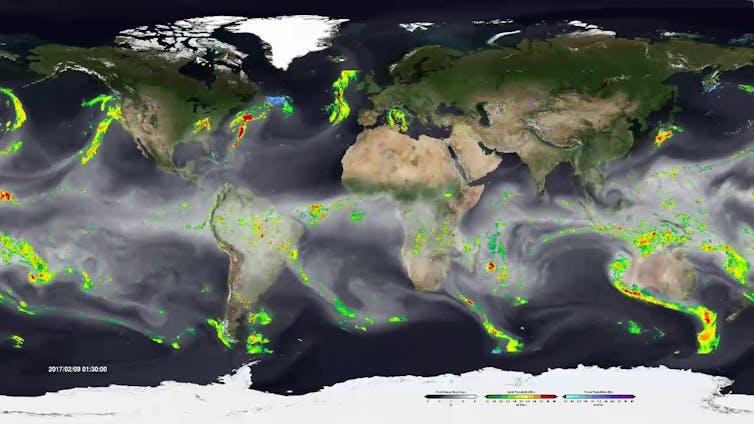
Scientists have known for years that heat from strong moisture transports could melt sea ice, but no one knew to what extent. That’s because it’s nearly impossible to install instruments on wild ice to conduct long-term energy exchange observation.
We looked at it in a different way. We were able to establish a statistical linkage between the amount of ice lost and the average count of atmospheric rivers that arrived. In the Barents-Kara Seas and central Arctic, the Arctic quadrant with the most atmospheric river activity, we found that about 34% of the ice decline from 1979 to 2021 can be attributed to the increased frequency of atmospheric rivers.
Other studies have described increases in atmospheric rivers affecting ice loss on Antarctica, Greenland and across the Arctic during the near-record low-ice winter of 2016-2017.

Anthropogenic warming – temperature rise caused by human activities such as burning fossil fuels – is a key reason for the increase in atmospheric rivers. We also noticed some influence from natural variability in the tropical Pacific, but studies have found that anthropogenic forcing is likely to overwhelm the influence of natural variability by the middle of the 21st century.
Our earlier research has suggested that after the middle of this century, when temperatures are warmer, just about every part of the polar regions should see a substantial increase in atmospheric rivers.
What sea ice decline means for humans
Like just about everything, sea ice loss has both bad and good effects.
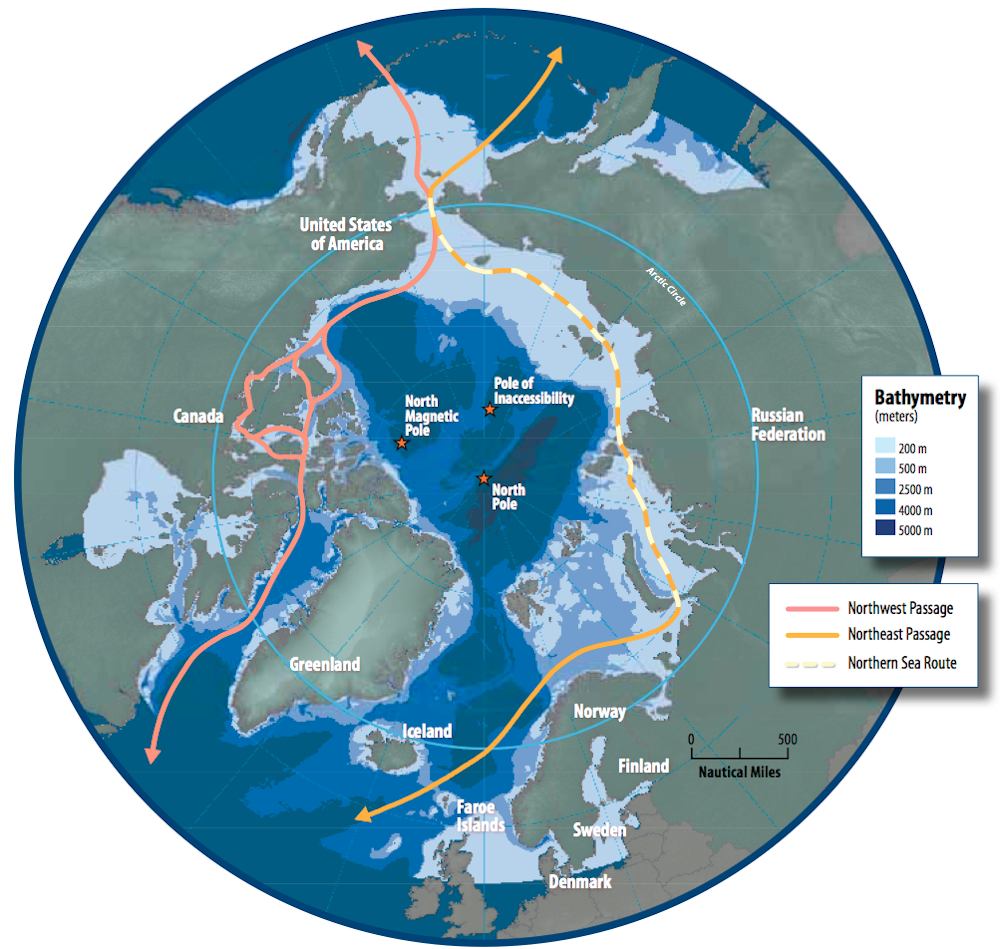
More open water may enable more direct shipping, so ships could sail from Northern Europe to North America and East Asia through the Arctic, which would be much cheaper. It can also increase access to natural resources, including oil, natural gas and minerals crucial for clean energy production.
Of course, atmospheric rivers are also accompanied by strong wind, which can mean more dangerous wind storms for shipping and erosion for coastal areas. For some wildlife, the effects would be a disaster. Polar bears, for example, rely on sea ice to hunt seals. Loss of sea ice also contributes to climate change. Sea ice reflects incoming energy back into space. Without it, the dark oceans absorb more than 90% of that energy, which causes the oceans to heat up, with wide implications.
According to the latest global assessment published by the Intergovernmental Panel on Climate Change, the Arctic could be almost entirely ice-free in summer by the middle of this century. That means thin, fragile ice across almost the entire region in early winter that would be susceptible to increasing storms.
Pengfei Zhang, Assistant Research Professor of Atmospheric Science, Penn State
This article is republished from The Conversation under a Creative Commons license. Read the original article.
The clinic, which will be free to the community, will include vaccinations provided by Petco Love, including rabies, FVRCP for cats, and DAPP — distemper, adenovirus, parainfluenza, and parvo — for dogs, microchipping, and pet supplies for dogs and cats.
The clinic will be held from 10 a.m. to 1 p.m. on Sunday, Feb. 19, at the Clearlake Senior Community Center, 3245 Bowers Ave. It is first come, first served.
The importance of having your animal companions microchipped and up to date on vaccinations is critical in the event of an evacuation due to a flood, fire, or other natural disaster.
Jameson Humane recognizes the need for access to affordable veterinary care, which is why they are offering these free clinics to help companion animals and their guardians prepare for the unexpected.
"Jameson Humane's goal with these clinics is to ensure animals and their guardians are prepared for a disaster and can stay together during an evacuation. We also wish to provide access to veterinary care for those who need it most," said Monica Stevens, co-founder of Jameson Humane. "We understand how important it is to have your animal companions ready and prepared in the event of a disaster, which is why we are eager to offer these disaster preparedness clinics to the wider community.”
For more information, visit Jameson Humane's calendar.
LUCERNE, Calif. — A project that’s studying the removal of invasive fish species from Clear Lake is continuing through next week.
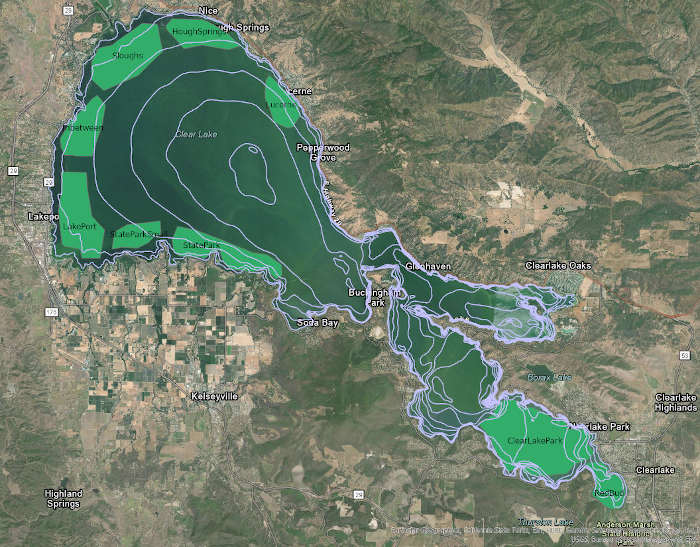
The California Department of Fish and Wildlife is working with Robinson Rancheria, the Lake County Water Resources Department and a contractor, WSB, on a seine net fishing project for common carp and goldfish management.
The project began Feb. 3 and continues until Feb. 13.
It’s especially important now, with the Board of Supervisors having declared and emergency for the native Clear Lake hitch on Tuesday.
Scientists have stated that the hitch are preyed upon by carp, which eat their eggs.
The project involves using 1,000-foot seine nets at specific areas around the lake.
One of the spots where the team was working this week was along the shoreline in Lucerne.
In the video above, team members describe the work they are doing.

LAKE COUNTY, Calif. — Funds from the Lake County Wine Alliance will be used to improve collections at the Lake County Library.
The Friends of the Lake County Library was one of the fortunate groups to be granted funds from the Lake County Wine Alliance on Dec. 12.
As a result, President Debbie Zacharisen was able to present County Librarian Christopher Veach with a check for $8,000 at the Jan. 25 meeting of the Friends.
The funds are earmarked for large type books and children’s materials, including audiobooks. These items will be distributed to all four of the branches of the county library system.
The library itself is supported by local property taxes but these don’t always stretch far enough to provide everything needed to support the public.
The goal of the Friends of the Library is to provide financial donations that help support the programming at the library and help add books and other materials to the library collection.
The Friends also provide support for the exceptional clubs and programs put on by the library.
Examples include the ever popular children’s programs like story time and lego club and programming for the community like the Summer Reading Program and the current Winter Reading Challenge.
Also happening now is the very exciting Big Read with its amazing line-up of programs all designed around the book, “Postcolonial Love Poem” by Pulitzer Prize winner Natalie Diaz.
The support provided by the Friends is made possible with the book sales at each of the branches, membership dues, financial donations and the pursuit of grant funds.
Additional support is always needed. The group asks community members to please consider becoming a member by asking for an application at your local branch or visiting their website at https://www.friendsofthelakecountylibrary.org.
Active members are always needed as well. There are monthly business meetings on the fourth Wednesday of the month at 10 a.m. in the children’s room at the Lakeport branch and all are welcome.

Six and one-half years.
That’s the decline in life expectancy that the COVID-19 pandemic wrought upon American Indians and Alaska Natives, based on an August 2022 report from the National Center for Health Statistics.
This astounding figure translates to an overall drop in average living years from 71.8 years in 2019 to 65.2 by the end of 2021.
Although the pandemic is a major reason for this decline, it’s not the whole story. Even before COVID-19 emerged, life expectancy for Indigenous men was already five years lower than for non-Hispanic white men in the United States.
The grim reality
As a Native American physician and board-certified M.D., I am all too familiar with the health challenges that Indigenous Americans face.
Growing up in remote rural Alaska as a member of the Koyukon Athabascan tribe, I heard stories of how infectious diseases like flu, smallpox and tuberculosis threatened our survival. My cultural group descends from three families that survived the 1918 flu pandemic.
This history inspired me to become a traditional healer. Along with my training in Western medicine, I have also studied plant-based medicine and earth-based science, which was taught to me by my elders – practitioners who passed down thousands of years of accumulated knowledge to me.
Through both my medical and traditional practices, I have learned there are many reasons for the decline in life expectancy and the divide between Indigenous and non-Indigenous health outcomes. But this gap – if the government and the medical system will act – can be narrowed.
Poverty, unemployment and lack of health care
American Indians and Alaska Natives die from diabetes at more than twice the rate of non-Indigenous populations. A report from the Centers for Disease Control and Prevention shows Native Americans have significantly higher rates of obesity, high blood pressure, cancers and general poor health status than other Americans. The suicide rate in Indigenous communities is about 43% higher than that of non-Indigenous communities. And Native American women experience sexual violence far more often than non-Hispanic white women.
There are many reasons for these disparities. For starters: Native Americans have the highest poverty rate among all minority groups, perhaps as high as 25%.
Unemployment among American Indians and Alaska Natives in November 2022 was 6.2%, compared to 3.7% in the general population. Many Indigenous people, working only seasonally, are also woefully underemployed.
American Indians and Alaska Natives are also underserved in the U.S. health care system. The Indian Health Service – the federal agency that provides medical care to Indigenous Americans – is funded at about US$6 billion per year. That translated to only $4,078 per person in 2021.
The result is that there are fewer physicians, nurses and therapists seeing Indigenous patients, particularly those who live in rural areas. Those providing care have fewer technologies available to them, such as MRI and ultrasound machines, to help diagnose and treat disease earlier. Such shortages mean less access to either primary or emergency care, which contributes to lower life expectancy.
Historical trauma
A shaky health care system is only part of the problem. Adverse childhood experiences, social marginalization and toxic, relentless stress also contribute to shorter lives.
Then there are the effects of unresolved historical trauma – the cumulative emotional and psychological trauma within a specific group that spans generations.
This kind of collective trauma cannot be overstated. A growing body of evidence is documenting its effects on Indigenous people. Historical trauma can produce physiological stress, striking not just individual people, but entire families. There is recent evidence to suggest that the body’s stress response has caused epigenetic changes – meaning changes in gene expression caused by the environment – in Native Americans that can affect one’s health even before birth.
To this day, the U.S. government has consistently created policies that sanctioned inequality – actions that have likely contributed to the historical trauma and health disparities present today. American Indian and Alaska Native communities have suffered from disease, war, internment and starvation for centuries.
Not only were Indigenous people displaced from the lands that were once our home, the U.S. government even made it illegal for us to practice their traditions. Throughout most of the 20th century, the U.S. government placed Indigenous children into boarding schools that separated them from their families.
Breaking the cycle
It’s clear that Indigenous communities need new or upgraded hospitals and clinics, more and better diagnostic technology, more specialty services in dental care, obstetrics, pediatrics and oncology, and more alcohol and substance abuse treatment programs.
There is some good news: The Biden administration’s 2022 infrastructure bill makes $13 billion available to address some of these needs for Native American tribes. And an additional $20 billion appropriation for COVID-19 relief will also provide help for some of the most immediate challenges.
But even with this aid, there is still a funding gap. The National Indian Health Board, a nonprofit advocacy group representing federally recognized tribes, recommends a commitment of $48 billion for the 2024 fiscal year to fully fund the health needs of Indigenous people. The current budget, $9.3 billion, is less than one-fifth of that.
The recent increases in funding are certainly a step in the right direction. But the factors contributing to the shorter lives of Native Americans started generations ago, and they are still reverberating among the youngest of us today.
Both from a professional standpoint – as well as one that is very personal to me and my ancestors – more work in this area cannot come soon enough.
Allison Kelliher, Assistant Professor, Department of Family & Community Medicine, University of North Dakota
This article is republished from The Conversation under a Creative Commons license. Read the original article.