 How to resolve AdBlock issue?
News
After years of prolonged drought, recent storms resulted in the wettest three-week period on record in California.
The storms have been followed by an unseasonably dry February, however, and the state could see a return to warm and dry conditions during the remaining weeks of the wet season — just as heavy rains in fall 2021 gave way to the driest January-February-March period in over 100 years.
While recent storms have helped replenish the state’s reservoirs and boosted snowpack, drought conditions continue to have significant impacts on communities with vulnerable water supplies, agriculture, and the environment.
The latest science indicates that hotter and drier weather conditions could reduce California’s water supply by up to 10% by the year 2040.
The frequency of hydrologic extremes that is being experienced in California demonstrates the need to continually adapt to promote resiliency in a changing climate.
To protect water supply and the environment given this new reality, and until it is clear what the remainder of the wet season will hold, the executive order includes provisions to protect water reserves, and replace and replenish the greater share of rain and snowfall that will be absorbed by thirstier soils, vegetation and the atmosphere.
The order helps expand the state’s capacity to capture storm runoff in wet years by facilitating groundwater recharge projects.
It also continues conservation measures and allows the State Water Board to reevaluate requirements for reservoir releases and diversion limitations to maximize water supplies north and south of the Delta while protecting the environment.
Additionally, the order directs state agencies to review and provide recommendations on the state’s drought response actions by the end of April, including the possibility of terminating specific emergency provisions that are no longer needed, once there is greater clarity about the hydrologic conditions this year.
Leveraging the more than $8.6 billion committed by Gov. Newsom and the Legislature in the last two budget cycles to build water resilience, the state is taking aggressive action to prepare for the impacts of climate-driven extremes in weather on the state’s water supplies.
In the 2023-24 state budget, Gov. Newsom is proposing an additional $202 million for flood protection and $125 million for drought related actions.

For Valentine’s Day, some couples only roll their eyes at each other in mutual cynicism. The capitalisation of love in the modern world can certainly seem banal.
But Valentine’s Day gifts are hardly a contemporary invention. People have been celebrating the day and gifting love tokens for hundreds of years.
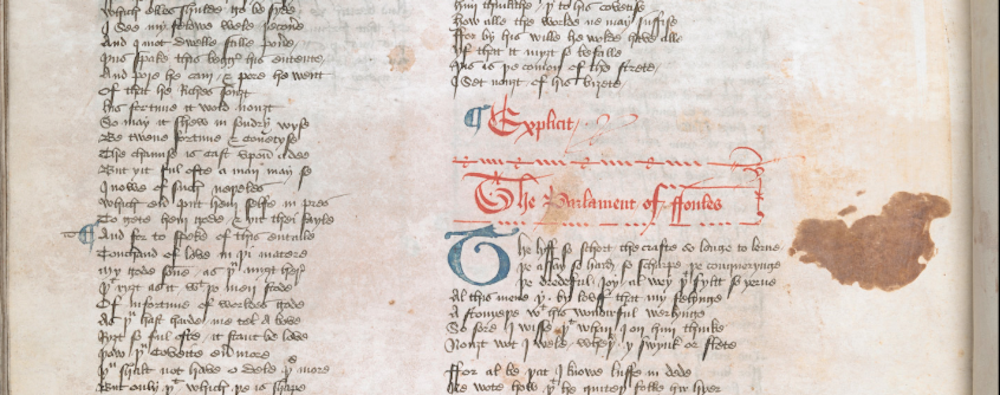
We should first turn to Geoffrey Chaucer, the 14th-century poet, civil servant and keen European traveller. Chaucer’s poem from the 1380s, The Parliament of Fowls, is held to be the first reference to February 14 as a day about love.
This day was already a feast day of several mysterious early Roman martyred Saint Valentines, but Chaucer described it as a day for people to choose their lovers. He knew that was easier said than done.
The narrator of the poem is unsuccessful in love, despairing that life is short compared with how long it takes to learn to love well. He falls asleep and dreams of a garden in which all the different birds of the world have gathered.
Nature explains to the assembled flocks that, like every year on St Valentine’s Day, they have come to pick their partners in accordance with her rules. But this process causes confusion and debate: the birds can’t agree what it means to follow her rules because they all value different things in their partners.
Legal and emotional significance
Like today, in Chaucer’s time gift-giving could be highly ritualised and symbolise intention and commitment. In Old and Middle English, a “wed” was any sort of token pledged to guarantee a promise. It was not until the 13th century that a “wedding” came to mean a nuptial ceremony.
The same period saw marriage transform into a Christianised and unbreakable commitment (a sacrament of the Church). New conventions of love developed in songs, stories and other types of art.
These conventions influenced broader cultural ideas of emotion: love letters were written, grand acts of service were celebrated, and tokens of love were given.

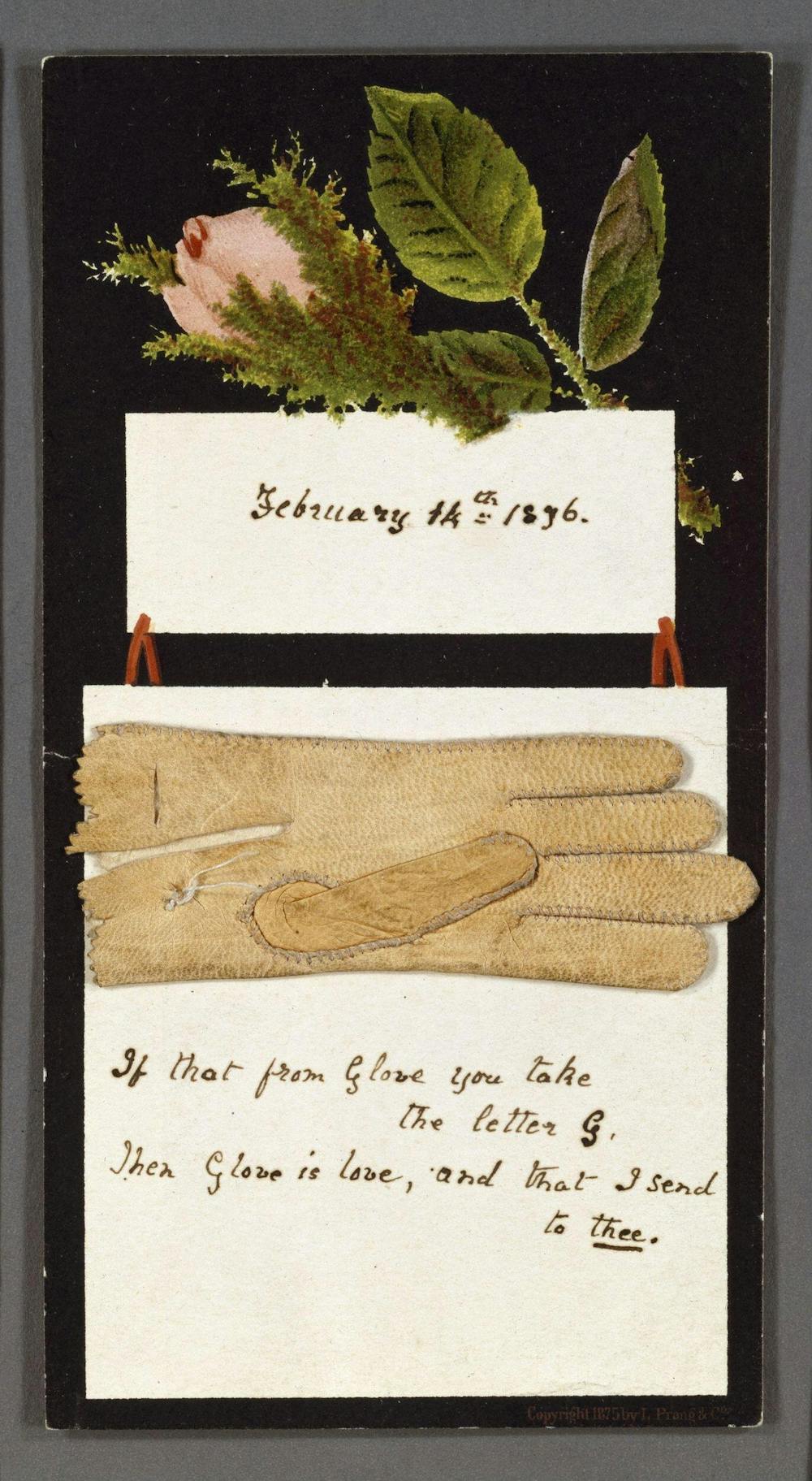
Rings, brooches, girdles (belts), gloves, gauntlets (sleeves), kerchiefs or other personalised textiles, combs, mirrors, purses, boxes, vessels and pictures – and even fish – are just some examples of romantic gifts recorded from the late middle ages.

In stories, gifts could be imbued with magical powers. In the 13th century, in a history of the world, Rudolf von Ems recorded how Moses, when obliged to return home and leave his first wife Tharbis, an Ethiopian princess, had two rings made.
The one he gave her would cause Tharbis to forget him. He always wore its pair which kept her memory forever fresh in his mind.
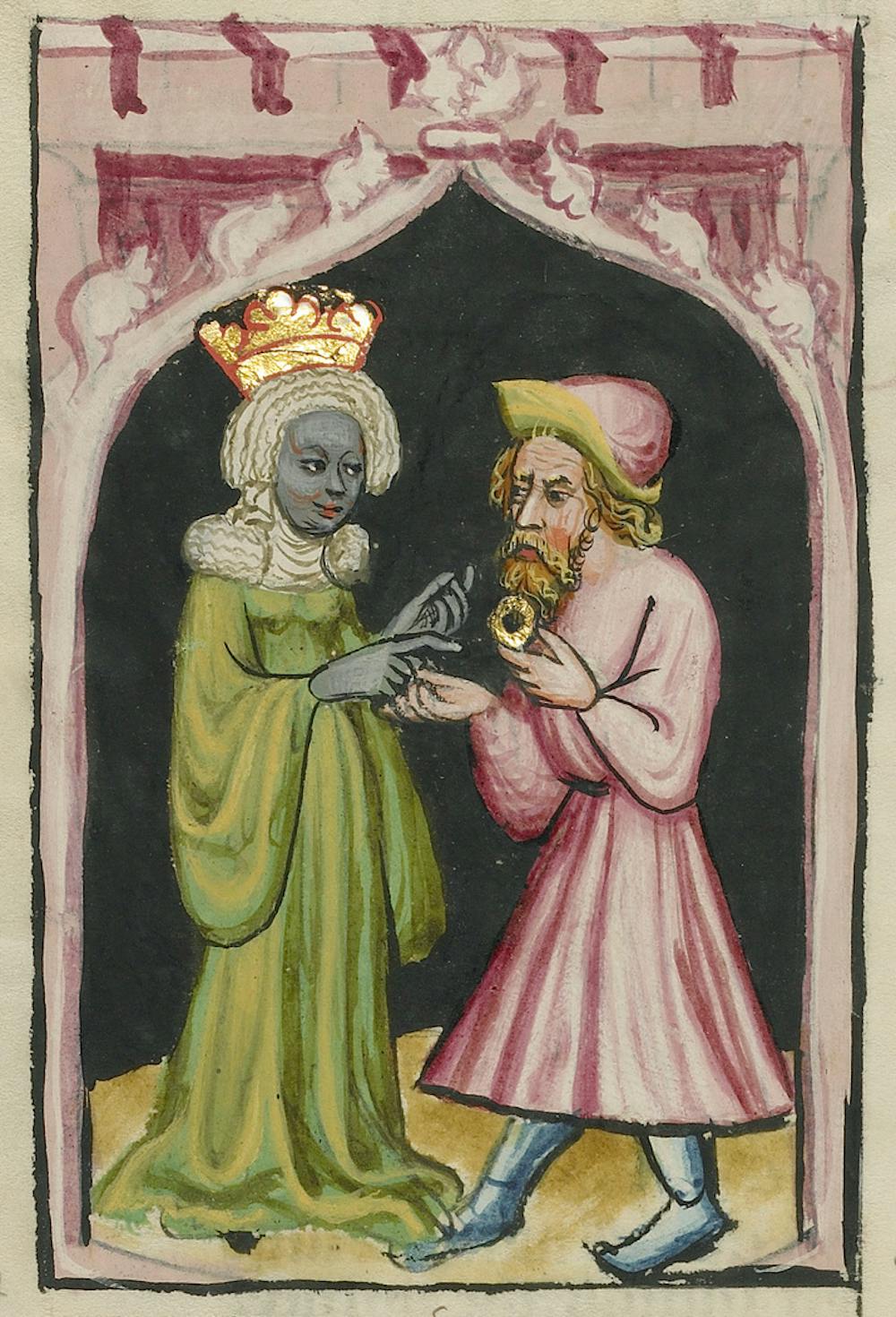
Outside of stories, gifts could have legal significance: wedding rings, important from the 13th century, could prove that a marriage had occurred by evidencing the intention and consent of the giver and recipient.
The art of loving
Like Chaucer, 20th-century German psychologist Erich Fromm thought people could learn the art of loving. Fromm thought love was an act of giving not just material things, but one’s joy, interest, understanding, knowledge, humour and sadness.
While these gifts might take some time and practice, there are more straightforward ideas from history. Manufactured cards have dominated since the industrial revolution, taking their place alongside other now traditional presents such as flowers, jewellery, intimate apparel and consumables (now more often chocolates than fish). All can be personalised for that intimate touch.
There have, of course, been weirder examples of love gifts, such as Angelina Jolie and Billy Bob Thornton exchanging necklaces with silver pendants smeared with each other’s blood.
Artist Dora Maar was so upset when her notoriously bad lover Pablo Picasso complained about having to trade a painting for a ruby ring she immediately threw the ring in the Seine. Picasso soon replaced it with another, this one featuring Maar’s portrait.
A good love token can long outlast the feelings that prompt its giving: a flower pressed in a book, a trinket at the bottom of a box, a fading heartfelt card or a bittersweet song that jolts you back to an earlier time. In this way, the meaning of gifts can change as they become reminders that all things pass.
Clare Davidson, Research Associate, Gender and Women’s History Research Centre, Australian Catholic University
This article is republished from The Conversation under a Creative Commons license. Read the original article.
The board will meet beginning at 9 a.m. Tuesday, Feb. 14, in the board chambers on the first floor of the Lake County Courthouse, 255 N. Forbes St., Lakeport.
The meeting can be watched live on Channel 8, online and on the county’s Facebook page. Accompanying board documents, the agenda and archived board meeting videos also are available at that link.
To participate in real-time, join the Zoom meeting by clicking this link.
The meeting ID is 982 4526 2136, pass code 099773. The meeting also can be accessed via one tap mobile at +16694449171,,98245262136#,,,,*099773#.
All interested members of the public that do not have internet access or a Mediacom cable subscription are encouraged to call 669-900-6833, and enter the Zoom meeting ID and pass code information above.
To submit a written comment on any agenda item visit the county website and click on the eComment feature linked to the meeting date. If a comment is submitted after the meeting begins, it may not be read during the meeting but will become a part of the record.
In an untimed item, the board will discuss the organizational analysis of indigent services report entitled “The Right to Counsel in Lake County, California,” completed by Sixth Amendment Center, or 6AC. The organization completed the analysis after the board approved an agreement with it in August 2021.
The report for the meeting explains that 6AC “observed approximately 170 court proceedings, involving indigent representation attorneys in the Lake County Superior Court in all critical stages of an adult trial level criminal case. In addition, 6AC also interviewed stakeholders in the judiciary, indigent defense, prosecution, and law enforcement.”
The result is that 6AC found an overall lack of accountability and oversight in Lake County’s provision of public defender services and funding.
It recommends the county advocate the state to study and make recommendations about how best to fulfill the state’s Sixth and Fourteenth Amendment responsibilities to ensure that each indigent defendant receives effective assistance of counsel; that he supervisors should establish a nonpartisan independent commission to oversee all aspects of indigent representation services and should fund the operations of the commission and the implementation of the methods and standards it adopts; and that an office of indigent representation services be established immediately.
In a followup item, the board will consider initial steps in the county’s ongoing review of the provision of legal services for indigent criminal defendants presented by County Counsel Anita Grant and Deputy County Counsel Carlos Torrez.
Grant and Torrez’s recommendations including reconstitute the Public Defender Advisory Committee; initiating and developing a community-based approach to criminal defense services, utilizing the services of Lake County Behavioral Health, Lake County Social Services and numerous service-based groups in the County; retain the services of a former public defender to assist the county in ensuring the comprehensive provision of indigent defense services; and continue to pursue grant funding to initiate any desired improvements to the indigent defense system.
In timed items on Tuesday, at 9:10 a.m. the supervisors will present aproclamation designating the month of February 2023 as Black History Month and celebrating Martin Luther King's Birthday, and at 9:20 a.m. they will hold a Brown Act “refresher” and related changes in the law effective in 2023.
The full agenda follows.
CONSENT AGENDA
5.1: Approve letter of support for Assembly Bill 297 – “Wildfires: Local Assistance Grant Program: Advance Payments,” and authorize the chair to sign.
5.2: (a) Approve revisions of Personnel Rule 1801, Holidays: Adding Juneteenth as a county paid holiday; (b) approve a side letter to Lake County Correctional Officers Association Oct. 21, 2021, to June 30, 2025 MOU; (c) approve a side letter to Lake County Deputy District Attorney’s Association Oct. 21, 2021, to June 30, 2025 MOU; (d) approve a side letter to Lake County Deputy Sheriff’s Association Oct. 21, 2021, to June 30, 2025 MOU; (e) approve a side letter to Lake County Employees Association Units #3, #4, #5 Oct. 21, 2021, to June 30, 2025 MOU; (f) approve a side letter to Lake County Safety Employees Association Oct. 21, 2021, to June 30, 2025 MOU; (g) approve a side letter to Lake County Sheriff’s Management Association Nov. 1, 2021, to June 30, 2025 MOU; (h) adopt resolution amending Resolution No. 2021-122 establishing salaries and benefits for employees assigned to the Confidential Unit, Section A, for Oct. 21, 2021, to June 30, 2025; (i) adopt resolution amending Resolution No. 2021-123 establishing salaries and benefits for employees assigned to the Confidential Unit, Section B, for Oct. 21, 2021, to June 30, 2025; adopt resolution amending Resolution No.2021-124 establishing salaries and benefits for management employees for the period from Nov. 1, 2021, to June 30, 2025.
5.3: Approve long distance travel for Auditor Controller/Clerk Jenavive Herrington to attend GFOA Advanced Governmental Accounting training in Chicago, Illinois, from March 21 to 23, 2023.
5.4: Adopt proclamation designating the month of February 2023 as Black History Month and celebrating Martin Luther King's Birthday.
5.5: Approve first amendment of agreement between the county of Lake and TruePoint Solutions for as-needed permitting software services for and increase of $19,965.00, and authorize the chair to sign.
5.6: Approve agreement between the county of Lake and Liebert Cassidy Whitmore for training and consultation regarding employee-related matters and authorize the chair to sign.
5.7: Approve late travel claim for Health Services staff Carol Morgan in the amount of $339.87.
5.8: Approve Amendment No. 3 to the agreement between the county of Lake and Management Connections for temporary clerical personnel in the County of Lake Human Resources Office to amend the minimum hourly rate of compensation and authorize chair to sign.
5.9: Approve amendment one to agreement between the county of Lake and Track Group to provide electronic monitoring and associated services for an amount not to exceed $75,000, and authorize the chair to sign.
5.10: Approve purchase orders for the purchase of two vehicles for the Central Garage Fleet at revised prices, and authorize the Public Works director/assistant purchasing agent to sign the purchase orders.
5.11: Approve allocation agreement for the Medi-Cal Health Enrollment Navigators Project between county of Lake, Department of Social Services, and state of California, Department of Health Care Services in the amount of $126,000 for the term of Oct. 1, 2022, through June 30, 2026, and authorize the chair to sign.
5.12: Approve contract between county of Lake and the Regents of the University of California for training services, in the amount of $339,915 from Jan. 1, 2023, to June 30, 2024, and authorize the chair to sign.
TIMED ITEMS
6.2, 9:10 a.m.: Presentation of proclamation designating the month of February 2023 as Black History Month and celebrating Martin Luther King's Birthday.
6.3, 9:20 a.m.: Presentation of a Brown Act “refresher” and related changes in the law effective in 2023.
UNTIMED ITEMS
7.2: 2022-23 Mid-Year Budget: (a) Consideration of resolution amending Resolution No. 2022-118 to amend the FY 2022-23 Adopted Budget by adjusting reserves, fund balance carry over, revenues, and appropriations; (b) consideration of resolution amending Resolution 2022-119 to amend the position allocations for FY 2022-23 to conform to the mid-year budget adjustments; and (c) consideration of resolution amending adopted budget for FY 2022-23 to establish Fund 74-John T. Klaus Park, Budget Unit 7074-John T. Klaus Park.
7.3: Overview and discussion of the organizational analysis of indigent services report entitled “The Right to Counsel in Lake County, California.”
7.4: Presentation of initial steps in the county’s ongoing review of the provision of legal services for indigent criminal defendants.
7.5. Consideration of the following Advisory Board Appointments: Animal Care and Control Advisory Board, Child Care Planning and Development Council, Fish and Wildlife Advisory Committee and Scotts Valley Community Advisory Council.
7.6: Presentation of update on planning services contract between the county of Lake and LACO Associates for processing cannabis-related use permit applications.
7.7: Consideration of the following resolutions to correct benefit language as required by CalPERS: a) resolution amending Resolution 2020-149 and Resolution 2021-122 establishing salary and benefits for Confidential Unit, Section A, for the periods of Oct. 21, 2020, to Oct. 20, 2021, and Oct. 21, 2021, to June 30, 2025; b) resolution amending Resolution 2020-150 and Resolution 2021-123 establishing salary and benefits for Confidential Unit, Section B, for the periods of Oct. 21, 2020, to Oct. 20, 2021, and Oct. 21, 2021, to June 30, 2025; c) resolution amending Resolution 2020-151 and Resolution 2021-124 establishing salary and benefits for management employees for the periods of Nov. 1, 2020, to Oct. 31, 2021, and Nov. 1, 2021, to June 30, 2025; d) resolution amending the memorandum of understanding by and between the Lake County Sheriff’s Management Association and the county of Lake for the periods of Nov. 1, 2020, to Oct. 31, 2021, and Nov. 1, 2021, to June 30, 2025.
7.8: Consideration of conceptual approval for the purchase of real property for a Cobb area community park and appoint a negotiating team.
7.9: Consideration of Lake County Social Services CalFresh & Medi-Cal Program Update.
CLOSED SESSION
8.1: Conference with legal counsel: Existing litigation pursuant to Gov. Code sec. 54956.9(d)(1), Citizens for Environmental Protection and Responsible Planning, et al. v. County of Lake, et al.
8.2: Public employee evaluation: Social Services Director Crystal Markytan.
8.3: Public Employee Evaluation: Air Pollution Control Officer Douglas Gearhart.
8.4: Public Employee Evaluation: Agricultural Commissioner Katherine Vanderwall.
Email Elizabeth Larson at
The county of Lake invites and encourages community members to provide input on the future of our facilities and programs through a community needs survey.
County officials currently are in the process of developing a parks, recreation and trails master plan that will inventory parks, facilities and trails; develop an understanding of community priorities and needs; and create actionable strategies to meet demands.
There will be many opportunities for the public to get involved and share their unique, local experience that will help shape this master plan.
The first step is to take the community needs survey, which in addition to an inventory of existing facilities will be the baseline for the master plan.
Complete the community needs survey by March 10 at www.surveymonkey.com/r/LakeCountyPRT. It will take no more than 10 minutes and all answers will be completely anonymous.
To learn more or get involved with the parks, recreation and trails master plan process, please visit the project website, www.lakecountyprt.com.
Call Lake County Animal Care and Control at 707-263-0278 or visit the shelter online at http://www.co.lake.ca.us/Government/Directory/Animal_Care_And_Control.htm for information on visiting or adopting.
The following cats at the shelter have been cleared for adoption.

‘Banshee’
“Banshee” is an 8-year-old female domestic shorthair with a calico coat.
She is in kennel No. 10, ID No. LCAC-A-4705.

‘Puma’
“Puma” is a 4-year-old male domestic shorthair with a black coat.
He is in kennel No. 73, ID No. LCAC-A-4708.
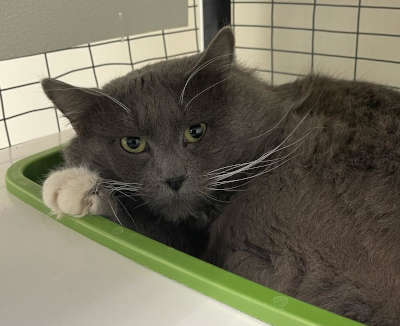
‘Mr. Cheeks’
“Mr. Cheeks” is a 3-year-old male domestic medium hair cat with a gray coat.
He is in cat room kennel No. 13, ID No. LCAC-A-4559.
Email Elizabeth Larson at
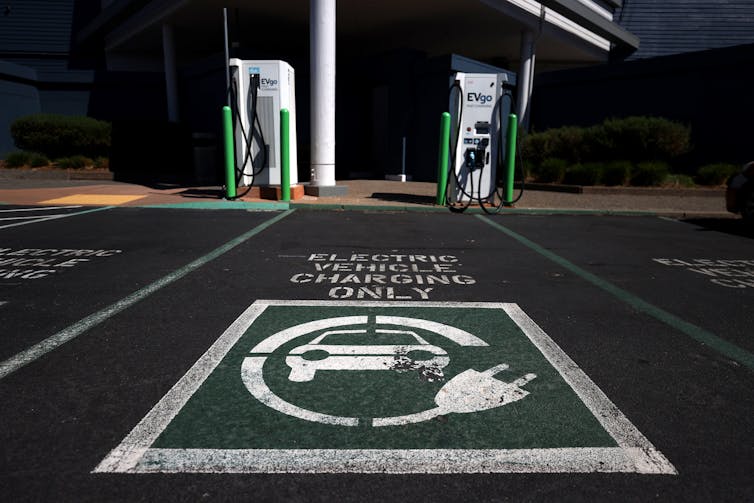
The race to decarbonize passenger cars and light-duty trucks in the U.S. is accelerating. Battery electric vehicles accounted for almost 6% of all new vehicle sales in 2022, up from close to 3% in 2021, and demand is outstripping supply, even as manufacturers roll out new models and designs. The Biden administration is spending billions of dollars to build out EV charging networks and providing incentives for purchasing new and used EVs.
This shift offers big economic and environmental benefits, but they’re not spread equitably. People who bear the most burdens in our current transportation systems often receive the fewest benefits, and are least able to change their situations.
I study the future of clean transportation and energy, and my research analyzes equity considerations in the design of these systems. As my colleagues and I see it, an equitable transition will require thinking broadly about all transportation users and their needs – especially those who are currently being left behind.
Here are four issues that we believe should be front and center:
Banning gas-powered cars can have unintended consequences
California has banned sales of new gas-powered passenger cars and light-duty trucks starting in 2035, and other states are following suit. Without the right support, these bans could hurt communities that are underserved by current transportation systems.
At the end of 2022, the average price of a new battery EV was around $61,500, compared with an average of $49,500 for all new cars. Less-expensive models are starting to reach the market, but EVs remain out of financial reach for many people.
Federal tax credits of up to $7,500 for new EVs or $4,000 for used ones come with manufacturer restrictions, income thresholds and vehicle price caps. For now, the policy does not offer discounts at the time of purchase, so upfront costs remain high and often prohibitive for many buyers.
These bans may affect markets for used gas-powered cars, and it’s unclear whether states will provide support for people who can’t transition immediately to EVs. Used car prices are already at unprecedented highs due to inflation and global supply chain issues affecting the new car market. Bans on new gas-powered cars could further boost prices in the used market, as long as those models are cheaper than EVs.
Supporting industries, such as repair shops, gas stations and auto dealerships, could also be affected. These businesses, which provide services and jobs in their communities, could be displaced in the shift to EVs, which require less maintenance than gas-powered cars and have different supply chains and support systems.
The Biden administration has pledged that shifting to EVs will create high-quality jobs. However, many parts of the auto industry and workforce development systems need to evolve to ensure that workers benefit from this process.
Gas-powered cars will keep polluting for years
Bans on sales of new gas-powered vehicles won’t affect those that are already on the road. One-third of U.S. greenhouse gas emissions come from the transportation sector. Cars and light-duty trucks produce almost two-thirds of that share, which makes them a major driver of climate change.
They also emit air pollutants, notably fine particulates, that can cause premature deaths and illnesses, including cardiovascular disease, asthma and other respiratory ailments. Studies show that fine particle pollution disproportionately burdens communities of color.
Gas-powered cars can remain on the road for up to 30 years. Given their harmful health effects, I believe that waiting for the U.S. auto fleet to naturally turn over to zero-emission vehicles is not acceptable.
There aren’t many mechanisms today to encourage drivers to shift away from old, dirty cars. The federal CARS program, also known as “Cash for Clunkers,” ran for a few months in 2009 and offered rebates of up to $4,500 to drivers who turned in older vehicles for more fuel-efficient new or used cars. However, this program delivered modest emission reductions relative to its cost
What’s more, older vehicles often are shipped abroad for resale. According to a United Nations report, the U.S. is one of the top three global exporters of used cars. In addition to increasing scrapping and recycling of older, high-emitting cars, I see a need for coordinated international regulations to ensure safe and sustainable trade of used vehicles, as the U.N. report recommended.
EV incentives don’t go to underserved drivers
Benefits to promote EV adoption often aren’t accessible to those who need them most. A 2020 study funded by the U.S. Department of Transportation found that low-income households in Atlanta were less likely to benefit from state and federal EV incentives than higher-income households, because the incentives were awarded as credits against income taxes owed. This is also how current federal tax credits are structured.
In a paper currently under review, colleagues and I show that to date in California, EV adoption and rebate rates are lower in zip codes whose residents are majority low-income and populations of color, as well as in formerly redlined neighborhoods.
In another study, we examined an equity mobility program in California that was designed to help low-income households purchase zero-emission vehicles. We found that the program didn’t fully work as intended, because the application process was complex, imposed challenging timelines and offered applicants limited support.
California has enacted new legislation that will expand this program statewide, and we look forward to seeing updates and improvements.
Rural areas face unique transportation challenges
Almost one-fifth of Americans live in rural areas, where they typically drive more than city dwellers, have sparse access to public transit and often rely on private vehicles. Members of our research group have interviewed rural residents who don’t own cars and rely on one bus a day to get to the nearest doctor’s office or grocery store.
So far, policies intended to promote the EV transition have not focused on rural areas, although the Department of Transportation has launched an initiative focusing on these communities’ needs. Rural residents are concerned about availability of charging infrastructure, economic development and EVs that fit rural residents’ needs, and in my view, they deserve targeted support.
In a car-centric society, who does the EV transition serve?
The U.S. is a car-centric society where most people need access to an automobile to live their lives effectively. Many years of policies and investments have produced a system that focuses on helping drivers reach their destinations as quickly as possible, rather than other objectives like clean air or reliable public transit.
By doing so, the system values the time of drivers more than that of people who rely on other modes of transit. Americans with access to cars have more freedom and more choice about where and how to pursue an education, work and spend time with loved ones.
Surveys show that Americans who are lower-income, Black, Hispanic or immigrants are especially likely to use public transit regularly. Today, mass transit systems are in decline across the U.S., thanks to pandemic ridership decreases that have worsened the effects of long-term underfunding.
In my view, the EV transition should be part of a broader shift to clean mobility that invests in public transit, walking and biking, as well as systems like EV charging that support private car use. New clean mobility systems should be designed so that all Americans have safe and reliable options for getting to their destinations.
Sita M. Syal, Assistant Professor of Mechanical Engineering, University of Michigan
This article is republished from The Conversation under a Creative Commons license. Read the original article.