 How to resolve AdBlock issue?
News
Call Lake County Animal Care and Control at 707-263-0278 or visit the shelter online for information on visiting or adopting.
The following goats at the shelter have been cleared for adoption.

‘Jake’
“Jake” is a 5-year-old male pygmy mix goat with a white coat.
He is in upper pen No. 1, ID No. LCAC-A-587.

Male pygmy goat
This 2-year-old male pygmy goat has a black coat.
He is upper pen No. 1b, ID No. LCAC-A-4645.

Male pygmy goat
This 2-year-old male pygmy goat has a tricolor coat.
He is in upper pen No. 1c, ID No. LCAC-A-4646.

Male pygmy goat
This 2-year-old male pygmy goat has a black and white coat.
He is in upper pen No. 1d, ID No. LCAC-A-4647.

Male pygmy goat
This 2-year-old male pygmy goat has a white coat with black markings.
He is in upper pen No. 1d, ID No. LCAC-A-4659.
Email Elizabeth Larson at

Millions of Americans will find it harder to put enough food on the table starting in March 2023, after a COVID-19 pandemic-era boost to Supplemental Nutrition Assistance Program benefits comes to an end. Congress mandated this change in budget legislation it passed in late December 2022.
Roughly 41 million Americans are currently enrolled in this program, which the government has long used to ease hunger while boosting the economy during downturns.
Many families enrolled in the program, commonly known as SNAP but sometimes called food stamps, stand to lose an average of roughly US$90 per person a month.
While researching SNAP for an upcoming book, I’ve observed that this program has provided critical assistance to struggling families over the last three years. The extra benefits, which Americans can use to purchase food at the roughly 250,000 stores that accept them, have helped millions of people weather the pandemic’s economic fallout and high inflation rates.
SNAP benefits grew during the pandemic
In the early days of the COVID-19 pandemic, lines at food banks grew and millions lost their jobs. One way that Congress responded was with legislation that let the states, which administer this federally funded program, expand SNAP benefits during the public health emergency.
Under this temporary arrangement, all families who were eligible for SNAP could get the maximum allowable benefit amount for the size of their household. Otherwise, that maximum amount would only be available to people with no income at all. But starting in March 2023, SNAP benefits will once again be distributed everywhere on a sliding scale based on income levels.
Some states began to drop the extra benefits in the spring of 2021. But 32 states and the District of Columbia were still offering the extra help in February 2023.
A study from the Urban Institute, a think tank, estimated that the extra benefits kept 4.2 million people out of poverty at the end of 2021 and had reduced overall poverty in states still offering the benefits by 9.6% and child poverty by 14%.
Although the unemployment rate has recently fallen to the lowest level since 1969, the extra SNAP benefits have continued to help low-income families deal with soaring prices that increased the cost of food consumed at home by 11.3% in the 12 months ending in January 2023.
With more people enrolled in the program today than before the COVID-19 pandemic, and the distribution of extra benefits, SNAP spending reached a record $114 billion in the 12 months that ended in September 2022.
Looming hunger cliff
Many experts on food insecurity have long argued that SNAP benefits have historically been too low.
The Biden administration has already tried to boost them by adjusting the “Thrifty Food Plan” – the standard the U.S. Department of Agriculture uses to set SNAP benefits based on the cost of a budget-conscious and nutritionally adequate diet.
As a result, benefits rose an average of $36 a month, a 21% increase, in October 2021. That increase more than offset the expiration of a temporary seven-month boost in benefits that Congress had approved earlier that year.
SNAP benefits automatically adjust every October based on the increase in food prices in July as compared with the previous year. In 2022, they increased 12.5%. But when prices are rising quickly, as is currently the case, SNAP benefits can lose a lot of ground in the months before the next adjustment.
Many advocates for a stronger safety net say that SNAP benefits are too low to meet the needs of low-income people. They are warning of a looming hunger cliff – meaning a sharp increase in the number of people who don’t get enough nutritious food to eat – in March 2023, when the extra help ends.
At that point, the lowest-income families will lose $95 in benefits a month. But some SNAP participants, such as many elderly and disabled people who live alone and on fixed incomes and who only qualify for the minimum amount of help, will see their benefits plummet from $281 to $23 a month.
Most people on SNAP who get Social Security benefits will see their SNAP benefits fall. That’s because of the 8.7% cost of living increase in Social Security benefits implemented in January 2023, which increases their income and lowers the amount of nutritional assistance they can receive. And some of these Americans may even have enough income that they no longer qualify for SNAP at all.
For an average family of four on SNAP, benefits will fall from the maximum of $939 to $718, according to an estimate by the Center for Budget and Policy Priorities, an anti-poverty research group.
Food banks, already under stress because of higher food costs and falling donations, are bracing for higher demand. Food banks in some states that ended the emergency boost in benefits early have seen a 30% increase in need.
More people on SNAP also reported skipping meals in the states that dropped extra benefits than those that did not.
Lawmakers poised to resume a longtime fight
Several Democrats have proposed legislation to increase SNAP benefits over the long term. But many Republicans want to reduce spending on SNAP and put more limits on who can get the program’s benefits.
Debate centers around whether unemployed adults deemed capable of working should be able to get SNAP. This argument, almost as old as the program itself, was largely set aside during the pandemic.
Legislation enacted in early 2020 suspended a requirement that limited benefits for adults under 50 who meet the government’s definition of able-bodied and have no dependents. They can receive no more than three months of SNAP benefits every three years – unless they work or participate in a work-training program at least 20 hours a week.
This time limit will come back when the public health emergency ends in May 2023.
But many critics of SNAP have argued the work requirements were never effectively enforced. A few Republicans want to make tightening restrictions on SNAP benefits a condition for raising the debt ceiling. At this point, it isn’t clear if they will succeed.
Debate over SNAP reforms is likely to come up when Congress considers the program as part of broad food and agriculture legislation known as the farm bill. Congress must act to renew the program before October 2023.
But with the House narrowly controlled by Republicans and the Senate controlled by a slim Democratic majority, I believe it will be hard to make big changes to the Supplemental Nutrition Assistance Program.
Tracy Roof, Associate Professor of Political Science, University of Richmond
This article is republished from The Conversation under a Creative Commons license. Read the original article.
The National Weather Service has issued a wind advisory for 1 p.m. Tuesday to 4 a.m. Wednesday in response to the storm, which is forecast to bring northwest winds of 25 to 35 miles per hour and gusts of up to 60 miles per hour.
The forecast said the winter storm will impact northwest California Tuesday through Thursday, and very cold low temperatures are expected Friday and Saturday morning.
This week it’s also forecast that snow amounts at or below 5 inches will occur from
eastern Trinity County south to Lake County and west across Mendocino County.
The specific Lake County forecast calls for chances of snow showers from Wednesday through Friday, with the potential for rain on Sunday.
Daytime temperatures this week are expected to be the warmest on Monday, when they rise to the high 60s, falling to the low 40s at night, followed by cooler temperatures on Tuesday, when temperatures during the day are expected to be in the low 50s before they drop into the 30s at night.
Conditions will get much colder midweek, hovering in the low to mid 40s during the day and high 20s at night from Wednesday through Friday.
Temperatures will rise into the 50s during the day and 30s at night by the weekend, the forecast said.
Email Elizabeth Larson at
The council will meet at 6 p.m. Tuesday, Feb. 21, in the council chambers at Lakeport City Hall, 225 Park St.
The agenda can be found here.
The council chambers will be open to the public for the meeting. Masks are highly encouraged where 6-foot distancing cannot be maintained.
If you cannot attend in person, and would like to speak on an agenda item, you can access the Zoom meeting remotely at this link or join by phone by calling toll-free 669-900-9128 or 346-248-7799.
The webinar ID is 973 6820 1787, access code is 477973; the audio pin will be shown after joining the webinar. Those phoning in without using the web link will be in “listen mode” only and will not be able to participate or comment.
Comments can be submitted by email to
Under council business, Assistant City Manager Nick Walker will present a resolution approving a joint exercise of powers agreement forming the Lake County Recreation Agency.
The Clearlake City Council approved the agreement last week and the Board of Supervisors is expected to consider it later this month.
Also on Tuesday, City Attorney David Ruderman will give a presentation on ethics regulations and best practices.
On the consent agenda — items considered noncontroversial and usually accepted as a slate on one vote — are ordinances; minutes of the regular council meeting on Feb. 7; confirmation of the continuing existence of a local emergency for the COVID-19 Public Health Emergency; approval of application 2023-003, with staff recommendations, for the 2023 Cinco de Mayo Fiesta event; approval of application 2023-005, with staff recommendations, for the 2023 Memorial Day pancake breakfast; and approval of letter of support for the Keithly property acquisition by Lake County Land Trust and authorization for the mayor to sign.
Email Elizabeth Larson at
The association said in January, the homes sold through the multiple listing service totaled 55, compared to 81 during the same time last year. These include traditionally built “stick-built” houses as well as manufactured homes on land.
There were seven sales of mobile homes in parks with the same number sold for the same time period last year, and 21 bare land sales — lots and acreage — compared with 17 for the same time in 2022, the association reported.
There are 285 “stick built” and manufactured homes on the market right now. If the rate of sales stays the same at 55 homes sold per month, there are currently 5.1 months of inventory on the market at the moment compared to 4.26 months of inventory a month ago in December, and 5.45 months of inventory in November.
The association said that means that if no new homes are brought to the market for sale, in 5.16 months all of these homes would be sold and there would be none available.
Less than 6 months of inventory is generally considered to be a “sellers’ market” while more than 6 months of inventory is often called a “buyers’ market.
The inventory has been growing over the past several months, with more homes being brought to market and staying on the market for a longer time with fewer buyers. The association said the interest rate hikes and inflation have played a major role in reducing the number of active buyers.
Of the homes sold in January, 16% were purchased with all cash, compared to 33% for December and 26% for this same time last year.
Thirty six percent were financed by Fannie Mae or Freddie Mac, or considered to be “conventional loans,” compared to 44% for December and 46% for the same time in 2022.
Another 20% were financed by the Federal Housing Administration, or FHA, compared to 10% for December and 19% for this time last year.
Fifteen percent were financed by the VA or CalVet, compared to 4% for December and 4% in January 2022, while 11% had other financing such as private loans, USDA, or seller financed notes, compared to 6% in December and 5% in January of last year.
The homes were selling at an average of 95% of the asking price, same as December but lower than the 97% of the asking price a year ago at this time.
The median time on the market last month was 57 days, compared to 30 in December and 39 days for January 2022.
The median sale price of a single family home in Lake County in December was $292,000, down from $295,000 in December and well below the median sale price of $325,000 during this time period last year.
In January, 47% of homes sold had seller concessions for an average of $9,100; in December 30% of homes had seller concessions for an average concession of $7,614 and a year ago 32% of homes sold had an average seller concession of $9,570.

Almost like aftershocks, questions about earthquake prediction tend to follow disasters like the Feb. 6, 2023, Turkey-Syria quake. Could advance notice have prevented some of the devastation? Unfortunately, useful predictions are still in the realm of science fiction.
University of Washington professor of seismology and geohazards Harold Tobin heads the Pacific Northwest Seismic Network. He explains the differences between predicting and forecasting earthquakes, as well as early warning systems that are currently in place in some areas.
Can scientists predict a particular earthquake?
In short, no. Science has not yet found a way to make actionable earthquake predictions. A useful prediction would specify a time, a place and a magnitude – and all of these would need to be fairly specific, with enough advance notice to be worthwhile.
For example, if I predict that California will have an earthquake in 2023, that would certainly come true, but it’s not useful because California has many small earthquakes every day. Or imagine I predict a magnitude 8 or greater earthquake will strike in the Pacific Northwest. That is almost certainly true but doesn’t specify when, so it’s not helpful new information.
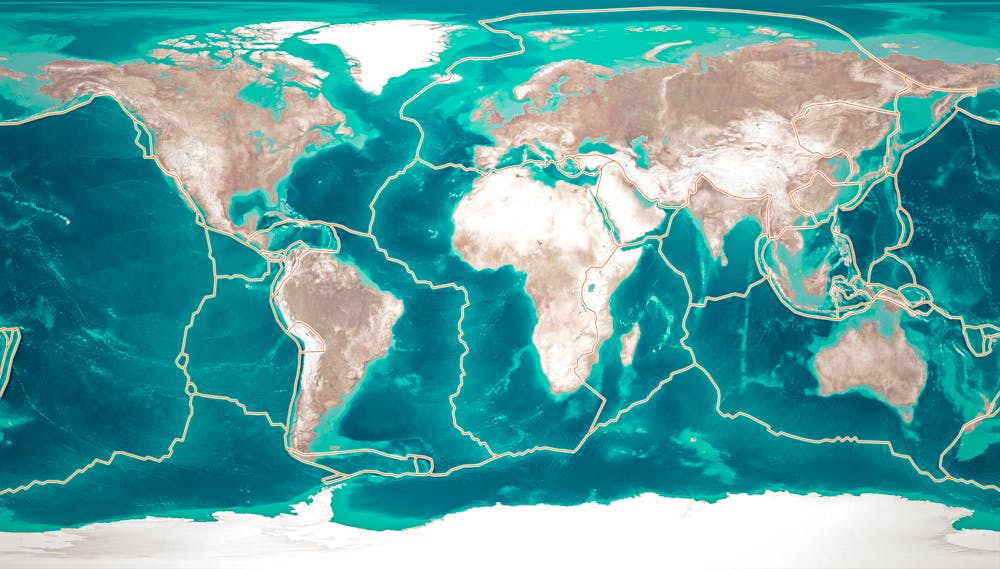
Earthquakes happen because the slow and steady motions of tectonic plates cause stresses to build up along faults in the Earth’s crust. Faults are not really lines, but planes extending down miles into the ground. Friction due to the enormous pressure from the weight of all the overlying rock holds these cracks together.
An earthquake starts in some small spot on the fault where the stress overcomes the friction. The two sides slip past each other, with the rupture spreading out at a mile or two per second. The grinding of the two sides against each other on the fault plane sends out waves of motion of the rock in every direction. Like the ripples in a pond after you drop in a stone, it’s those waves that make the ground shake and cause damage.
Most earthquakes strike without warning because the faults are stuck – locked up and stationary despite the strain of the moving plates around them, and therefore silent until that rupture begins. Seismologists have not yet found any reliable signal to measure before that initial break.
What about the likelihood of a quake in one area?
On the other hand, earthquake science today has come a long way in what I’ll call forecasting as opposed to prediction.
Seismologists can measure the movement of the plates with millimeter-scale precision using GPS technology and other means, and detect the places where stress is building up. Scientists know about the recorded history of past earthquakes and can even infer farther back in time using the methods of paleoseismology: the geologically preserved evidence of past quakes.
Putting all this information together allows us to recognize areas where conditions are ripe for a fault to break. These forecasts are expressed as the likelihood of an earthquake of a given size or greater in a region over a period of decades into the future. For example, the U.S. Geological Survey estimates the odds of a magnitude 6.7 or greater quake in the San Francisco Bay Area over the next 30 years is 72%.

Are there any hints a quake could be coming?
Only about 1 in 20 damaging earthquakes have foreshocks – smaller quakes that precede a larger one in the same place. By definition they aren’t foreshocks, though, until a bigger one follows. The inability to recognize whether an earthquake in isolation is a foreshock is a big part of why useful prediction still eludes us.
However, in the past decade or so, there have been a number of massive earthquakes of magnitude 8 or more, including the 2011 magnitude 9.0 Tohoku earthquake and tsunami in Japan and a 2014 magnitude 8.1 in Chile. Interestingly, a larger fraction of those very biggest earthquakes seem to have exhibited some precursory events, either in the form of a series of foreshocks detected by seismometers or sped-up movements of the nearby Earth’s crust detected by GPS stations, called “slow slip events” by earthquake scientists.
These observations suggest perhaps there really are precursory signals for at least some huge quakes. Maybe the sheer size of the ensuing quake made otherwise imperceptible changes in the region of the fault prior to the main event more detectable. We don’t know, because so few of these greater than magnitude 8 earthquakes happen. Scientists don’t have a lot of examples to go on that would let us test hypotheses with statistical methods.
In fact, while earthquake scientists all agree that we can’t predict quakes today, there are now essentially two camps: In one view, earthquakes are the result of complex cascades of tiny effects – a sensitive chain reaction of sorts that starts with the proverbial butterfly wing flapping deep within a fault – so they’re inherently unpredictable and will always remain so. On the other hand, some geophysicists believe we may one day unlock the key to prediction, if we can just find the right signals to measure and gain enough experience.
How do early warning systems work?
One real breakthrough today is that scientists have developed earthquake early warning systems like the USGS ShakeAlert now operating in California, Oregon and Washington state. These systems can send out an alert to residents’ mobile devices and to operators of critical machinery, including utilities, hospitals, trains and so on, providing warning of anywhere from a few seconds to more than a minute before shaking begins.

This sounds like earthquake prediction, but it is not. Earthquake early warning relies on networks of seismometers that detect the very beginning of an earthquake on a fault and automatically calculate its location and magnitude before the damaging waves have spread very far. The sensing, calculating and data transfer all happen near the speed of light, while the seismic waves move more slowly. That time difference is what allows early warning.
For example, if an earthquake begins off the coast of Washington state beneath the ocean, coastal stations can detect it, and cities like Portland and Seattle could get tens of seconds of warning time. People may well get enough time to take a life safety action like “Drop, Cover and Hold On” – as long as they are sufficiently far away from the fault itself.
What complications would predicting bring?
While earthquake prediction has often been referred to as the “holy grail” of seismology, it actually would present some real dilemmas if ever developed.
First of all, earthquakes are so infrequent that any early methods will inevitably be of uncertain accuracy. In the face of that uncertainty, who will make the call to take a major action, such as evacuating an entire city or region? How long should people stay away if a quake doesn’t materialize? How many times before it’s a boy-who-cried-wolf situation and the public stops heeding the orders? How do officials balance the known risks from the chaos of mass evacuation against the risk from the shaking itself? The idea that prediction technology will emerge fully formed and reliable is a mirage.
It is often said in the field of seismology that earthquakes don’t kill people, buildings do. Scientists are already good enough today at forecasting earthquake hazards that the best course of action is to redouble efforts to construct or retrofit buildings, bridges and other infrastructure so they’re safe and resilient in the event of ground shaking in any area known to be at risk from large future quakes. These precautions will pay off in lives and property saved far more than a hoped-for means of earthquake prediction, at least for the foreseeable future.
Harold Tobin, Professor of Seismology and Geohazards, University of Washington
This article is republished from The Conversation under a Creative Commons license. Read the original article.