 How to resolve AdBlock issue?
News
The supervisors, sitting as the Lake County Housing Commission, unanimously gave the final financial approvals for the Collier Avenue Affording Housing Project during a special meeting on the afternoon of Friday, Jan. 13.
Ukiah-based Rural Communities Housing Development Corp., or RCHDC, is the developer and owner of the 3.3-acre parcel at 6853 Collier Ave. in Nice where the project will be built.
It will be owned by Collier Avenue Associates LP, formed in October by RCHDC, which county staff said is meant to maximize the use of federal low income housing tax credits, one of the sources of funding for the project.
RCHDC, which also built and operated a similar but smaller 10-unit facility on Bevins Court in Lakeport, will be responsible for property management, while Behavioral Health will work with its clients who live in the complex, said Scott Abbott of Behavioral Health.
“This has been very messy,” Supervisor Bruno Sabatier said during the meeting, explaining that the messiness was, in part, a result of the impacts of the 2008 recession and the state’s ending of redevelopment in 2012, which resulted in some money being pulled back. “I hope that we can learn something from this.”
The project will consist of 40 units, with one unit for an on-site manager and the rest a mix of one- and two-bedroom apartments to be devoted to specific populations.
Half of the units will be set aside for Lake County Behavioral Health clients who meet the definition of mental disorder — which includes, under state code, bipolar, post-traumatic stress disorder, schizophrenia, major affective disorders or other severely disabling mental disorders — as well as substance use disorder or those at risk of homelessness.
Another 10 units will be served by Redwood Coast Regional Center clients and the remaining 10 will be set aside for low income or very low income households.
Behavioral Health Services Director Todd Metcalf, who did not appear at the meeting, submitted a written report that stated that the documents “represent the final step in executing the Collier Avenue Housing project, prior to breaking ground.”
If the project gets the final approval needed from the California Department of Housing and Community Development, or HCD, RCHDC could break ground by the end of March or the start of April, said Behavioral Health Deputy Director Elise Jones.
Jones said the construction is financed through a $14,965,665 million construction loan from JPMorgan Chase Bank; the Lake County Housing Commission, which is contributing $976,094 in Mental Health Services Act funds, $473,050.13 from the Homeless Housing Assistance and Prevention, $602,469 from the Permanent Local Housing Allocation, along with public construction/permanent funds and non-recourse loans; $550,000 from the Department of Developmental Services and Redwood Coast Regional Center; and a $585,000 loan from the Tri Counties Bank Affordable Housing Program.
“There is inherent risk in any construction project,” Jones told the board, adding, “We need to be very cautious and considerate about that risk and make an informed decision.”
During the discussion, Jones said the project “cannot be used for anything other than low income and permanent supportive housing.”
She said the county was up against a timeline to submit the project’s loan documents to HCD for final approval. HCD can take up to 60 days, putting the approval as late as March 17.
If the project fails to close by March 27, Jones said it will result in the rescission of tax credits, which are the primary source of funding.
Jones said construction is anticipated to start in late March or the beginning of April and continue through midsummer, with units to be leased beginning in mid-August.
Merritt Community Capital, which is the project’s tax credit investor and the limited partner of the borrower, will have a role in monitoring as will JP Morgan Chase Bank, Jones said.
She added, “The inherent risk in any construction project is something we can closely monitor,” noting the County Administrative Office also will have an oversight role.
In addition, Jones said HCD and the California Tax Credit Allocation Committee are the two main state agencies that will monitor compliance.
During the board’s meeting and ahead of the final approval, it was determined that a delegation of county employees and two board members — Sabatier and Board Chair Jessica Pyska — will offer project oversight, along with Behavioral Health staff. County Administrative Officer Susan Parker said a consultant the county has retained will conduct grant monitoring.
District 3 Supervisor EJ Crandell, in whose district the project is located, said that Nice is within the Western Region Town Hall and that, in future, that group should get a chance to consider such projects ahead of time.
He said he had gotten a lot of feedback from Nice residents about the project, and several had said they could not be at the special meeting.
A confusing path
Community concerns like those voiced to Crandell, other Lake County officials and to Lake County News arise from the fact that the project has followed a confusing and convoluted path.
During the Jan. 13 meeting, Sabatier — in pointing out how “messy” the project’s process has been, acknowledged that fact.
“The process has been difficult to track, and that’s from my perspective. From the public’s perspective, this can’t even be possible to even understand how we got here in the first place or what happened in the past. So I hope we use this as a learning moment,” Sabatier said.
The project has been in the works on and off going back to 2005, when the Lake County Redevelopment Agency entered into an owner participation agreement with RCHDC to develop a 50-unit affordable housing unit at the site, according to county records. That included the redevelopment agency issuing two “forgivable” loan notes to RCHDC for $1,248,000 to help fund the project.
However, the state’s dissolution of redevelopment in 2012 caused the project to stall, county officials reported, due to RCHDC’s challenges in finding additional funding, in part, due to the forgivable loans the Lake County Housing Authority held on the property.
In April 2021, the Board of Supervisors, sitting as the Lake County Housing Commission, considered a request from RCHDC to divest security and previous development interests in the property — in other words, to forgive the loans — and consider a new development agreement.
The board adopted a resolution confirming the prior transfer of the loans from the former Lake County Redevelopment Agency to the Lake County Housing Authority and directed then-County Administrative Officer Carol Huchingson to draft a new agreement that would divest Lake County’s security interest and pre-existing development restrictions on the property.
That new agreement was brought back on Sept. 28, 2021, and the board approved it unanimously.
That was followed in 2022 by eight scheduled discussions of the project by the board.
On Feb. 8, 2022, the board discussed possible renegotiations of the September 2021 agreement as well as a possible audit of the financial activity regarding the loan and loan forgiveness. That was continued to Feb. 15, with no action taken but consensus to consider the item at a future date.
It was again agendized for March 1 but pulled and when it was placed on the March 8 agenda, no action was taken following a discussion.
County staff again scheduled it for April 5, it was pulled and continued to the April 12 meeting, at which time the first amendment to the 2021 agreement between the county and RCHDC to develop affordable housing at the site was approved.
At the same meeting, Sabatier’s request that an audit be conducted failed with the Housing Commission deadlocked with a 3-3 vote: Sabatier, Crandell and Commissioner Deborah Figueroa voted in favor of the audit but supervisors Jessica Pyska, Moke Simon and Tina Scott voted against it.
On April 19, the board went on to approve a memorandum of understanding between the county of Lake and RCHDC for the No Place Like Home Permanent Supportive Housing Project — another name for the Collier Avenue development.
That was followed on June 28 by the board’s approval of a resolution authorizing the application for the Permanent Local Housing Allocation Program for the project.
In early 2022 the project also was the focus of several meetings of the Countywide Oversight Board in 2022, which guides the “winding-down” process of the former redevelopment agencies for the cities and the county in the wake of the state’s ending of redevelopment a decade ago.
The Countywide Oversight Board was tasked with handling approvals connected with redevelopment investment in the project.
At those meetings, Sabatier and CIearlake City Manager Alan Flora — the latter an oversight board member — raised concerns about the process and financial issues.
For Flora, he questioned whether the oversight board had the authority to forgive a loan as it was being asked to do. When he had spoken to the state about similar actions for the city of Clearlake, he was told it couldn’t be done.
Project exempted from CEQA
Throughout the process, Lake County News was told by county officials that the project would be subject to the California Environmental Quality Act, or CEQA, which would bring with it more public input on the plan.
However, around seven months ago, Community Development Department planning staff were asked to evaluate the project’s consistency with Assembly Bill 2162, which treats supportive housing as a “use by right” under certain circumstances, according to Association Planner Eric Porter.
As a result, then-Community Development Director Mary Darby exempted the project from CEQA review and from a discretionary use permit review, Porter said.
By deciding that only a ministerial — not a discretionary — review was necessary, Darby’s action meant that the community would have no say in the project going forward.
It was at around the same time, in July, that Darby — who took over as Community Development director in October 2021 — announced she was leaving her job in November. However, she ended up leaving abruptly in August and was succeeded by Mireya Turner.
With Metcalf’s memo anticipating groundbreaking as the next step, Turner confirmed to Lake County News that the project now is in the building permit review process.
Turner told Lake County News in a Jan. 20 email that as a result of Darby’s decision on ministerial review, “The project went straight to building permit review. Since it is ministerial rather than discretionary, there are no public hearings to hold. It is processed just like any other building permit.”
Bill Collins, Lake County’s chief building official, told Lake County News in a Jan. 20 email that at that point RCHDC was working on a response to comments submitted and a plan check on the project as part of the process of getting the permit issued.
No definite date was given for completion of the permit as additional reviews may be needed, Turner said.
Turner said any community complaints can be directed to RCHDC, Community Development — who will have a technician track them and distribute them to the appropriate division staff — and Supervisor Crandell.
However, Turner pointed out, “complaints from the public will not change the building permit review process. Again, this process is ministerial, not discretionary. The proposed land use is no longer up for review.”
Following the board’s discussion of the project in June, it didn’t come back to county leadership until the supervisors’ first meeting of the year on Jan. 10.
At that point, Sabatier — who had been a part of last year’s oversight meetings — asked for more time to discuss it, which led to the special meeting on Jan. 13.
Sabatier said he had been glad to get a second day to discuss the project. While he understood the urgency, he had concerns about monitoring and the potential for the county to have to pay back $2 million in loans if the project didn’t go forward as planned.
In the future, he hoped that on projects “we can get the full picture from the very beginning rather than piecemealing.” He added that he wasn’t the greatest fan of the project but didn’t think he had a choice but to approve it moving forward.
To date, only one community meeting on the project has been held and that occurred in 2019, and was hosted by the county.
And in response to the Jan. 13 board meeting, the project was discussed at a North Shore Business Association meeting.
In an April 22, 2022, email, Ryan LaRue, RCHDC’s chief executive officer, told Lake County News that “additional stakeholder engagement is planned for this summer if our next funding milestones are achieved.”
However, last month, LaRue acknowledged that additional outreach didn’t happen.
“The funding milestones were pushed back so we did not hold a meeting during the summer. Our Property Management team will be coordinating a community meeting. We are also in the preliminary stages of planning a groundbreaking ceremony in April in partnership with Lake County Behavioral Health,” LaRue said in a Jan. 26 email.
He also noted that there are no more county approvals needed.
In a follow-up email, Lake County News asked if the community meeting would take place ahead of the groundbreaking.
“Yes, that is the plan,” LaRue said.
Editor’s note: This article has been corrected to note that Sabatier is not a County Oversight Board member.
Email Elizabeth Larson at
MATH will meet at 7 p.m. Thursday, Feb. 9, in the Middletown Community Meeting Room/Library at 21256 Washington St., Middletown. The meeting is open to the public.
To join the meeting via Zoom click on this link; the meeting ID is 659 964 1209. Call in at 669-900-6833.
At 7:05 p.m., guest speaker Paul Duncan, division chief for the Cal Fire Sonoma-Lake-Napa Unit, will discuss the new fire hazard severity zones for Lake County.
The discussion will include impacts to Lake County, the public comment period and frequently asked questions. There also will be a question and answer period.
At 7:45 p.m., MATH will discuss several items of business, among them the review of the bylaws and Rosenberg's Rules of Order.
MATH also will host its annual election of the board officers.
The MATH Board includes Chair Monica Rosenthal, Vice Chair Ken Gonzalez, Secretary Todd Fiora, Rosemary Córdova and Bill Waite.
MATH — established by resolution of the Lake County Board of Supervisors on Dec. 12, 2006 — is a municipal advisory council serving the residents of Anderson Springs, Cobb, Coyote Valley (including Hidden Valley Lake), Long Valley and Middletown.
For more information email
Email Elizabeth Larson at
The events are offered free to Lake County seniors.
Seniors may register for one event, or for as many as they wish, by visiting www.andersonmarsh.org.
Each day includes transportation to the park from the Clearlake Senior Center and two entertaining programs. A free lunch is also included.
Programs range from getting up close and personal with live hawks, learning about what is going on with Clear Lake, the history and culture of the Indigenous people of Anderson Marsh, the history of the European immigrants and tours of the park and the historic Anderson Ranch House.
Those who wish to drive themselves to the park may do so, with free parking offered at the park for those attending the programs.
“The idea of this project is to make it easy for seniors to feel welcomed at the park, to have some fun outdoors and to learn about Anderson Marsh State Historic Park,” said Henry Bornstein, one of the AMIA event coordinators. “The park is an important part of what Lake County has to offer its residents and may have been overlooked by seniors who may not have felt comfortable visiting the park on their own.”
“The special programs will be educational, but will also be fun,” stated Roberta Lyons, AMIA president. “We encourage all Lake County seniors to visit our website at www.andersonmarsh.org, take a look at the different programs and register to attend the ones that interest them.”
The “Senior Days” programs are made possible by a grant from the California State Parks Foundation.
AMIA is a nonprofit association cooperating with State Parks to support and promote educational and interpretive activities at Anderson Marsh State Historic Park. The Clearlake Senior Center is located at 3245 Bowers Road in Clearlake.
For information about Anderson Marsh State Historic Park or AMIA, please visit www.andersonmarsh.org or contact AMIA at either
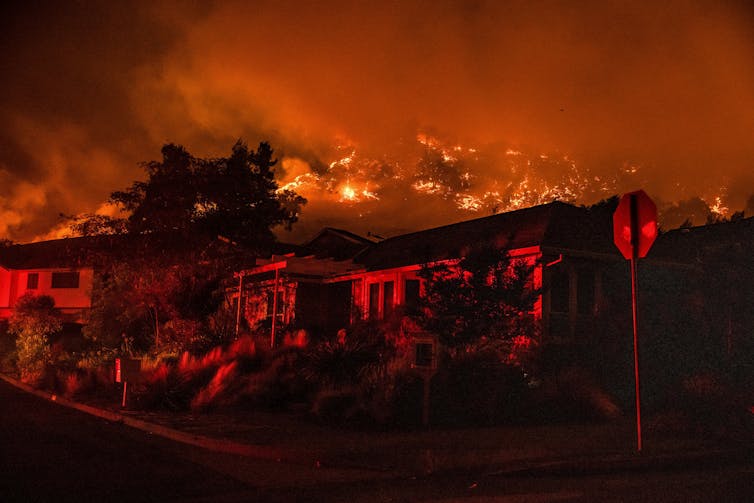
It can be tempting to think that the recent wildfire disasters in communities across the West were unlucky, one-off events, but evidence is accumulating that points to a trend.
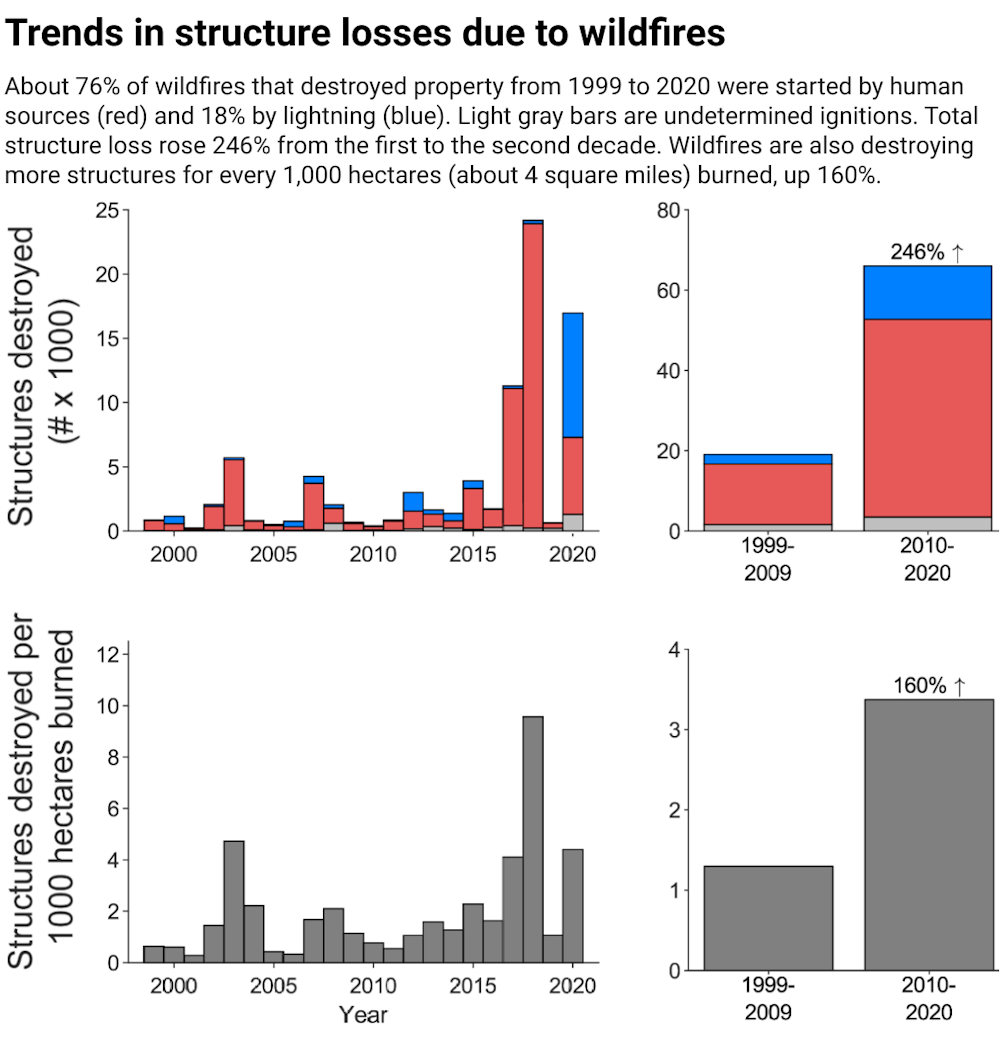
In a new study, we found a 246% increase in the number of homes and structures destroyed by wildfires in the contiguous Western U.S. between the past two decades, 1999-2009 and 2010-2020.
This trend is strongly influenced by major fires in 2017, 2018 and 2020, including destructive fires in Paradise and Santa Rosa, California, and in Colorado, Oregon and Washington. In fact, in nearly every Western state, more homes and buildings were destroyed by wildfire over the past decade than the decade before, revealing increasing vulnerability to wildfire disasters.
What explains the increasing home and structure loss?
Surprisingly, it’s not just the trend of burning more area, or simply more homes being built where fires historically burned. While those trends play a role, increasing home and structure loss is outpacing both.
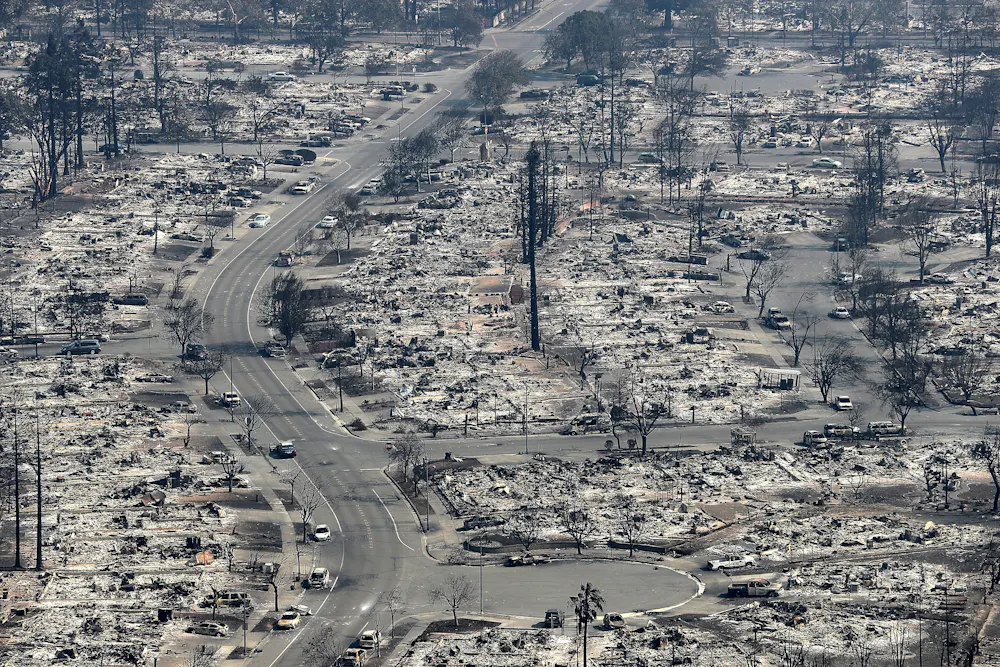
As fire scientists, we have spent decades studying the causes and impacts of wildfires, in both the recent and more distant past. It’s clear that the current wildfire crisis in the Western U.S. has human fingerprints all over it. In our view, now more than ever, humanity needs to understand its role.
Wildfires are becoming more destructive
From 1999 to 2009, an average of 1.3 structures were destroyed for every 4 square miles burned (1,000 hectares, or 10 square kilometers). This average more than doubled to 3.4 during the following decade, 2010-2020.
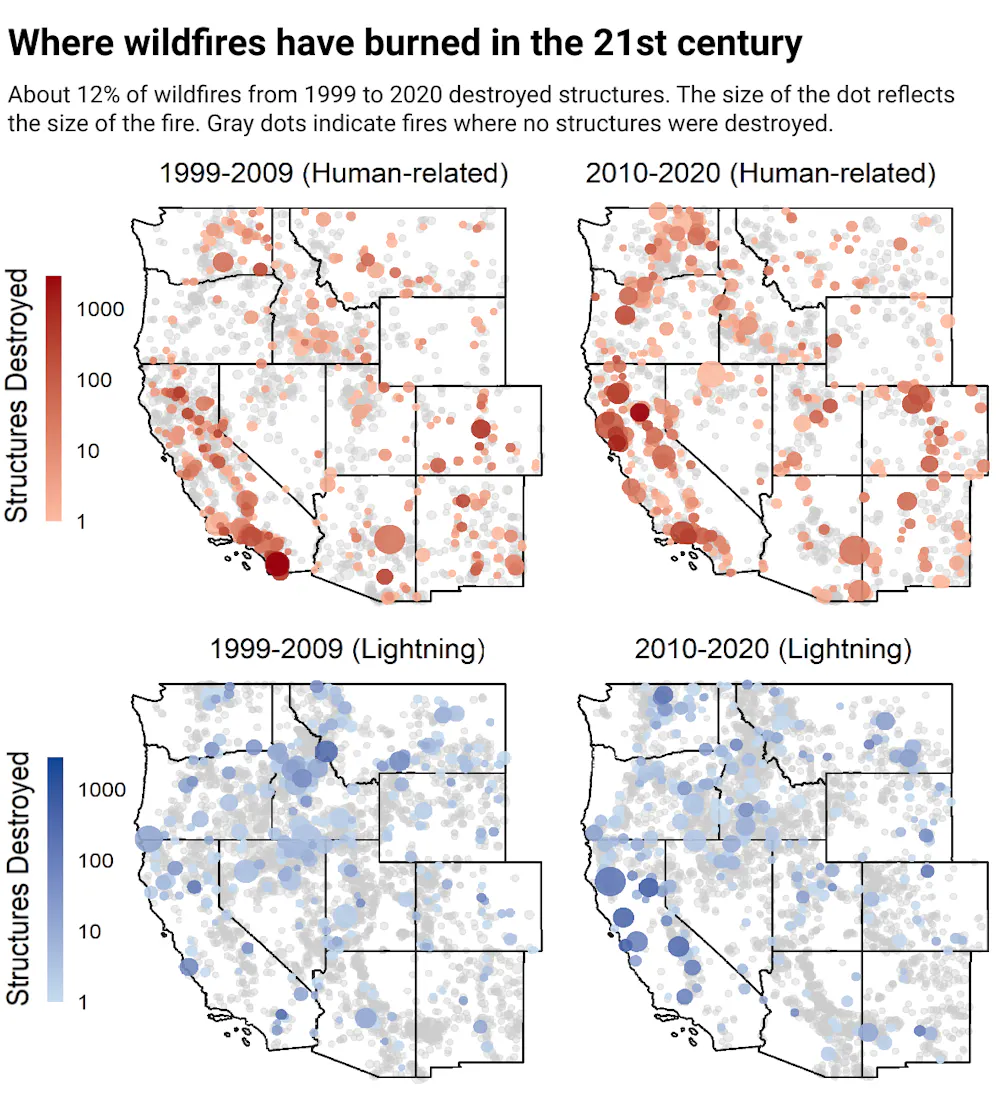
Nearly every Western state lost more structures for every square mile burned, with the exception of New Mexico and Arizona.
Humans increasingly cause destructive wildfires
Given the damage from the wildfires you hear about on the news, you may be surprised to learn that 88% of wildfires in the West over the past two decades destroyed zero structures. This is, in part, because the majority of area burned (65%) is still due to lightning-ignited wildfires, often in remote areas.
But among wildfires that do burn homes or other structures, humans play a disproportionate role – 76% over the past two decades were started by unplanned human-related ignitions, including backyard burning, downed power lines and campfires. The area burned from human-related ignitions rose 51% between 1999-2009 and 2010-2020.
This is important because wildfires started by human activities or infrastructure have vastly different impacts and characteristics that can make them more destructive.
Unplanned human ignitions typically occur near buildings and tend to burn in grasses that dry out easily and burn quickly. And people have built more homes and buildings in areas surrounded by flammable vegetation, with the number of structures up by 40% over the past two decades across the West, with every state contributing to the trend.
Human-caused wildfires also expand the fire season beyond the summer months when lightning is most common, and they are particularly destructive during late summer and fall when they overlap with periods of high winds.
As a result, of all the wildfires that destroy structures in the West, human-caused events typically destroy over 10 times more structures for every square mile burned, compared to lighting-caused events.
The December 2021 Marshall Fire that destroyed more than 1,000 homes and buildings in the suburbs near Boulder, Colorado, fit this pattern to a T. Powerful winds sent the fire racing through neighborhoods and vegetation that was unusually dry for late December.
As human-caused climate change leaves vegetation more flammable later into each year, the consequences of accidental ignitions are magnified.
Putting out all fires isn’t the answer
This might make it easy to think that if we just put out all fires, we would be safer. Yet a focus on stopping wildfires at all costs is, in part, what got the West into its current predicament. Fire risks just accumulate for the future.
The amount of flammable vegetation has increased in many regions because of an absence of burning due to emphasizing fire suppression, preventing Indigenous fire stewardship and a fear of fire in any context, well exemplified by Smokey Bear. Putting out every fire quickly removes the positive, beneficial effects of fires in Western ecosystems, including clearing away hazardous fuels so future fires burn less intensely.
How to reduce risk of destructive wildfires
The good news is that people have the ability to affect change, now. Preventing wildfire disasters necessarily means minimizing unplanned human-related ignitions. And it requires more than Smokey Bear’s message that “only you can prevent forest fires.” Infrastructure, like downed power lines, has caused some of the deadliest wildfires in recent years.
Reducing wildfire risks across communities, states and regions requires transformative changes beyond individual actions. We need innovative approaches and perspectives for how we build, provide power and manage lands, as well as mechanisms that ensure changes work across socioeconomic levels.
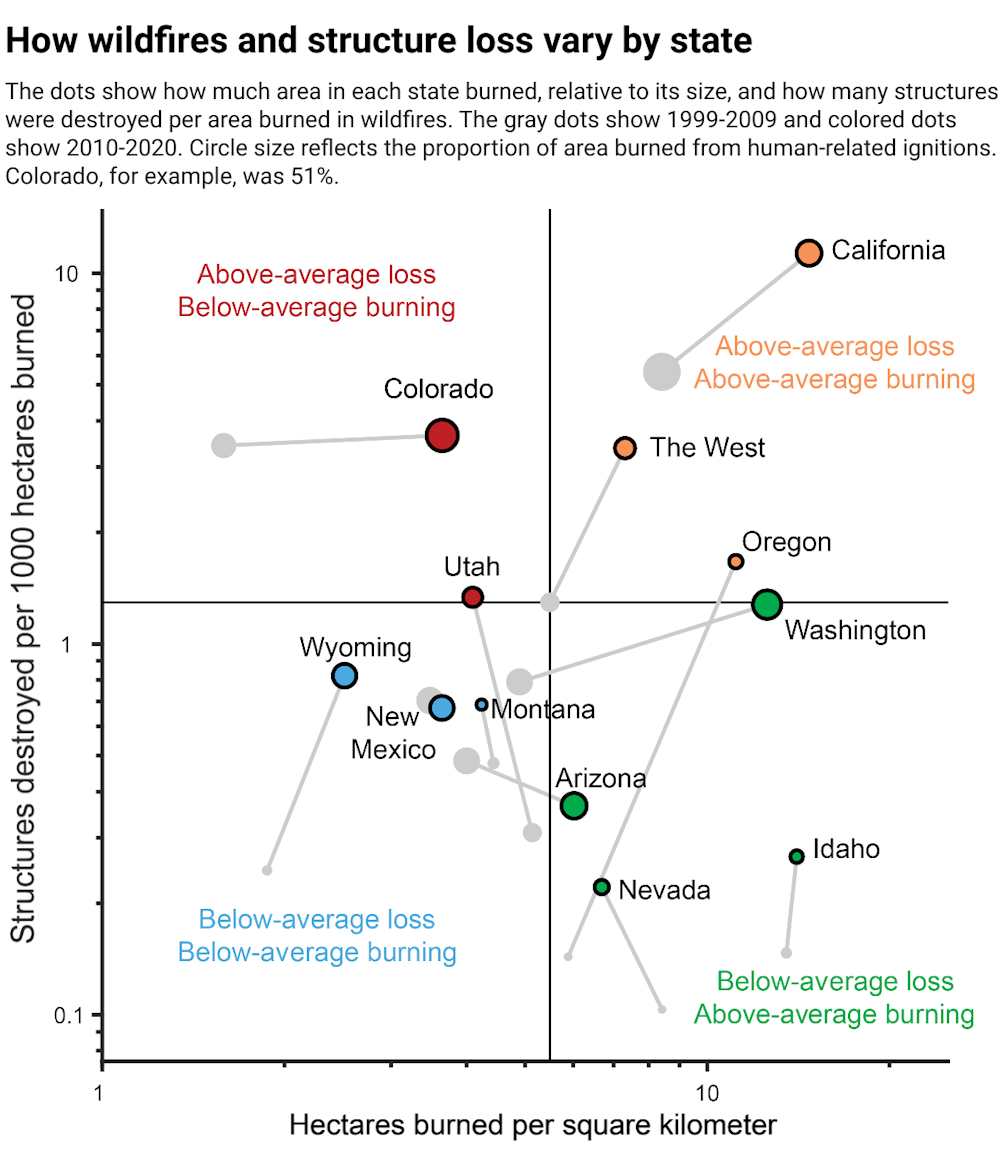
Actions to reduce risk will vary, since how people live and how wildfires burn vary widely across the West.
States with large tracts of land with little development, like Idaho and Nevada, can accommodate widespread burning, largely from lighting ignition, with little structure loss.
California and Colorado, for example, require different approaches and priorities. Growing communities can carefully plan if and how they build in flammable landscapes, support wildfire management for risks and benefits, and improve firefighting efforts when wildfires do threaten communities.
Climate change remains the elephant in the room. Left unaddressed, warmer, drier conditions will exacerbate challenges of living with wildfires. And yet we can’t wait. Addressing climate change can be paired with reducing risks immediately to live more safely in an increasingly flammable West.
Philip Higuera, Professor of Fire Ecology, University of Montana; Jennifer Balch, Associate Professor of Geography and Director, Earth Lab, University of Colorado Boulder; Maxwell Cook, Ph.D. Student, Dept. of Geography, University of Colorado Boulder, and Natasha Stavros, Director of the Earth Lab Analytics Hub, University of Colorado Boulder
This article is republished from The Conversation under a Creative Commons license. Read the original article.
The board will meet beginning at 9 a.m. Tuesday, Feb. 7, in the board chambers on the first floor of the Lake County Courthouse, 255 N. Forbes St., Lakeport.
The meeting can be watched live on Channel 8, online at https://countyoflake.legistar.com/Calendar.aspx and on the county’s Facebook page. Accompanying board documents, the agenda and archived board meeting videos also are available at that link.
To participate in real-time, join the Zoom meeting by clicking this link.
The meeting ID is 970 1940 5925, pass code 458671. The meeting also can be accessed via one tap mobile at +16699006833,,97019405925#,,,,*458671#.
All interested members of the public that do not have internet access or a Mediacom cable subscription are encouraged to call 669-900-6833, and enter the Zoom meeting ID and pass code information above.
To submit a written comment on any agenda item visit https://countyoflake.legistar.com/Calendar.aspx and click on the eComment feature linked to the meeting date. If a comment is submitted after the meeting begins, it may not be read during the meeting but will become a part of the record.
At 1:15 p.m., Fred Feyrer of the United States Geological Survey is scheduled to give a presentation on the Clear Lake hitch and other fish species.
That will be followed at 1:30 p.m. by the board’s consideration of a draft proclamation declaring a Clear Lake hitch emergency. The board held a five-hour hearing on the topic at its Jan. 24 meeting.
Also on Tuesday, in an untimed item, the board will consider the recruitment process for finding a successor to County Counsel Anita Grant, who announced to the board on Jan. 25 that she will retire in March after 17 in her current role and more than three decades in the County Counsel’s Office.
The full agenda follows.
CONSENT AGENDA
5.1: Approve the continuation of the proclamation declaring a shelter crisis due to the current need for sheltering for those experiencing homelessness during the weather and temperature patterns that the county of Lake has been experiencing.
5.2: Approve continuation of proclamation of the existence of a local emergency due to pervasive tree mortality.
5.3: Approve agreement to terminate and release municipal lease with option to purchase Agreement No. 1995-1 (Instrument No. 95-017576 of Official Records) and site lease (Instrument No. 95-017577 of official records) between the county of Lake and MPA Leasing Corp. for property located at 15837-18th Ave., Clearlake, and authorize the chair to sign.
5.4: Approve Amendment No. 1 to agreement for professional services between county of Lake and Karl A. Sporer, M.D. to extend an additional sixth months as Public Health officer for an amount not to exceed $6,000 a month and authorize chair to sign.
5.5: Approve Amendment No. 1 to agreement between the county of Lake and Community Development Services to provide Community Development Block Grant consulting services for an additional $50,000 for activity delivery, as awarded in Grant #20-CDBG-12081, and authorize the chair to sign.
5.6: Sitting as the Lake County Air Quality Management District Board of Directors, authorize the air pollution control officer to sign the FARMER program grant agreements.
5.7: (a) Approve shelter services agreement between the county of Lake and the University of California Davis in an amount not to exceed $154,077.25 in connection with the California for All Animals Statewide Animal Shelter Assistance Program and authorize the Animal Care and Control director to sign; and (b) adopt resolution amending Resolution No. 2022-118 to amend the adopted budget for FY 2022-2023 by appropriating unanticipated revenues and add appropriations in Budget Unit 2711 — Animal Medical Clinic.
5.8: Approve Board of Supervisors minutes for Sept. 27, 2022; Dec. 20, 2022; Jan. 13, 2023; and Jan. 31, 2023.
5.9: Second reading, adopt ordinance amending Chapter 21, Article 58 and Article 68 of the Lake County Zoning Ordinance relating to appeals.
5.10: Second reading, adopt ordinance amending Chapter 5, Section 2 of the Lake County Code, setting forth procedures for expediting permit processing for electric vehicle charging stations, as required by Government Code Section 65850.7 (AB 1236, 2015, Chiu).
5.11: Approve continuation of resolution authorizing teleconferenced meetings during a state of emergency that continues to exist.
5.12: Authorize destruction of records by the Registrar of Voters Office.
5.13: Approve continuation of a local health emergency related to the 2019 Coronavirus (COVID-19) as proclaimed by the Lake County Public Health officer.
5.14: Approve contract between Lake County Health Services and Trina Maia for physical therapy services in support of the California Children’s Services program and the Medical Therapy Unit for an amount not to exceed $10,000 and authorize the chair to sign .
5.15: Approve Amendment No. 1 between Lake County Health Services and Lake County Office of Education to extend the current contract providing COVID outreach and communication to the Latino population and authorize the chair to sign.
5.16: Approve Amendment No. 1 between Lake County Health Services and KNO’QOTI Native Wellness Inc. to extend the current contract providing COVID outreach and communication to the Native American population and authorize the chair to sign.
5.17: Approve Accela subscription annual license renewals from March 1, 2023, through Feb. 29, 2024, in the amount of $33,057.85 and authorize the board chair to sign.
5.18: Adopt resolution approving agreement between the county of Lake and the Department of Health Care Services for Medi-Cal Administrative Activities and authorize the director of Health Services to sign.
5.19: Approve continuous leave for Christina Thomas from Feb. 25, 2023, through March 19, 2023, intermittent leave from March 20, 2023, to June 30, 2023.
5.20: Approve continuation of an emergency declaration for drought conditions.
5.21: Approve continuation of a local emergency due to COVID-19.
5.22: Approve continuation of a local emergency by the Lake County sheriff/OES director for the January 2023 Atmospheric River Event.
5.23: Approve plans and specifications for the Bartlett Springs Road at Bartlett Creek Bridge Replacement Project; Bid No. 23-02, Federal Project No: BRLO-5914(111).
5.24: (a) Approve letter of agreement between the Lake County Sheriff's Office and the Drug Enforcement Administration of the United States Department of Justice in the amount of $185,000 for the period Oct. 1, 2022, to Sept. 30, 2023; and (b) authorize sheriff to sign the agreement and (c) authorize the chairperson to sign workplace certifications and grant assurances.
5.25: Authorize the chairperson of the Board of Supervisors to sign the updated certification of the governing body resolutions for the Office of Emergency Services.
5.26: Approve contract with Guardian RFID for a Safety Check program in the amount of $40,485 and authorize the chair to sign the contract.
5.27: (a) Approve the bid award to Dell Technologies for the purchase of two servers and (b) award bid to Motorola for migration services not to exceed a total of $55,000 and (c) authorize the sheriff or his designee to sign the purchase orders.
5.28: (a) Waive the competitive bidding pursuant to Section 38.2 due to the unique nature of service; and, b) approve memorandum of understanding between Social Services and Behavioral Health Services for CalWORKs Mental Health and Substance Abuse Services in an amount that shall not exceed the California Department of Social Services allocation, from July 1, 2022, to June 30, 2024, and authorize the chair to sign.
5.29: Approve the distribution of excess proceeds in the amount of $430,996.14 from tax defaulted land sale No. 158 held on Jan. 29, 2021 (per R&T § 4675).
TIMED ITEMS
6.2, 9:10 a.m.: Public hearing, a) consideration of adoption of resolution of formation declaring results of majority protest proceedings and renewing the Lake County Tourism Improvement District; and b) consideration of adoption of 2024–2033 Lake County Tourism Improvement District Management Plan.
6.3, 9:15 a.m.: Lake County Health Services Public Health update.
6.4, 9:30 a.m.: Presentation of report on the Road Map Task Force 2022 activities .
6.5, 10 a.m.: Consideration of (a) resolution amending Resolution No. 2022-118 to amend the FY 2022-23 adopted budget by adjusting reserves, fund balance carry over, revenues, and appropriations; and (b) resolution amending Resolution 2022-119 to amend the position allocations for FY 2022-23 to conform to the mid-year budget adjustments.
6.6, 11:45 a.m.: Lake County Health Services Tobacco Education and Prevention Program update.
6.7, 1:15 p.m.: Presentation and discussion regarding Clear Lake hitch and other fish species, by Fred Feyrer, United States Geological Survey.
6.8, 1:30 p.m.: Continued from Jan. 10, 2023, and Jan. 24, 2023, consideration of draft proclamation declaring a Clear Lake hitch emergency.
UNTIMED ITEMS
7.2: Consideration of discussion and action regarding short term administrative support for the Monthly Risk Reduction Authority meeting.
7.3: Consideration and discussion involving the recruitment process for filling the vacancy created by the county counsel’s retirement announcement.
7.4: Consideration of resolution authorizing the Behavioral Health Services Director to sign the Drug Medi-Cal Organized Delivery System Regional Model Implementation Plan and submission to the Department of Health Care Services.
7.5: (a) Consideration of presentation on Lake County Opioid Settlement Funds by Lake County Behavioral Health and Health Services Departments, (b) approval to use a portion of funds towards the match for the Behavioral Health Continuum Infrastructure Program Round 6 and (c) board and public feedback regarding proposed uses for funding.
7.6: Consideration of advisory board appointments.
7.7: (a) Consideration of creation of Section 19 of the “Board of Supervisors, County of Lake, CA, Policies and Procedures Manual,” and; b) consideration of Approval of Section 19.1 Acceptable Use Policy.
7.8: Consideration of update on Lake County recreation center efforts.
7.9: Consideration of agreement between the county of Lake and the California State Franchise Tax Board; and authorize the treasurer-tax collector to sign.
CLOSED SESSION
8.1: Public employee evaluation: Child Support Services.
8.2: Public Employee Evaluation: Animal Care and Control.
Email Elizabeth Larson at
The council will meet at 6 p.m. Tuesday, Feb. 7, in the council chambers at Lakeport City Hall, 225 Park St.
The agenda can be found here.
The council chambers will be open to the public for the meeting. Masks are highly encouraged where 6-foot distancing cannot be maintained.
If you cannot attend in person, and would like to speak on an agenda item, you can access the Zoom meeting remotely at this link or join by phone by calling toll-free 669-900-9128 or 346-248-7799.
The webinar ID is 973 6820 1787, access code is 477973; the audio pin will be shown after joining the webinar. Those phoning in without using the web link will be in “listen mode” only and will not be able to participate or comment.
Comments can be submitted by email to
During public presentations, the council will receive an update on the Clear Lake Blue Ribbon Committee.
The council also will hold a public hearing to adopt an ordinance adopting a policy for the use of military equipment by the Lakeport Police Department.
On Tuesday, City Manager Kevin Ingram will lead the midyear budget view and give the council an update on the city’s progress toward meeting the 2022-23 department goals set by the council.
That will be followed by the fiscal year 2021-22 annual comprehensive financial report from Assistant City Manager Nick Walker.
On the consent agenda – items considered noncontroversial and usually accepted as a slate on one vote – are ordinances; minutes of the regular council meeting on Jan. 17; adoption of a resolution authorizing continued remote teleconference meetings of the Lakeport City Council and its legislative bodies pursuant to Government Code section 54953(e); approval of application 2023-002, with staff recommendations, for the 2023 Shakespeare at the Lake event; adoption of the proposed resolution adopting a records retention schedule and authorizing destruction of certain city records and rescinding Resolution No. 2580 (2022); adoption of the resolution accepting construction of Hartley Street Pedestrian Improvement Project by Granite Construction Co. and authorize the filing of the notice of completion; and receipt and filing of the draft minutes of the Measure Z Advisory Committee regular meeting of Jan. 18, 2023.
Email Elizabeth Larson at