How to resolve AdBlock issue?
News
What's Up for February? The brightest planets converge, the constellation Auriga, and two star clusters you might want to get Sirius about.
All month – Jupiter and Venus are visible in the west after sunset. The two planets appear closer together each evening, as they head for a conjunction on March 1.
February 5 – Full moon.
Feb. 20 – New moon.
Feb. 22 – The crescent Moon sits just a degree apart from Jupiter in the western sky, with Venus hanging beneath them.
Feb. 27 – Find the Moon and Mars high in the southwest after sunset, where they will appear less than a degree apart.
All month – Locate the charioteer constellation, Auriga, by finding your way to its brightest star Capella. From Orion, look northward twice Orion's height to find Capella. [see sky chart in the video]
All month – Use the brightest star in the sky, Sirius, in order to find your way to two easy-to-locate star clusters, M41 and M47, using binoculars.
All month long, you'll notice the two brightest planets in the sky, Jupiter and Venus, appear closer together each evening. Find them in the west in the hour or so after sundown.
On Feb. 22, the crescent Moon sits just a degree apart from Jupiter, with Venus hanging beneath them. The two planets then continue to get closer in the sky over the following week, culminating in a close conjunction on March 1.
Another nice pairing takes place on Feb. 27, when the Moon and Mars will appear less than a degree apart. You'll find them high in the southwest after sunset.
The constellation Auriga makes for a worthy target to pick out in the February sky. Auriga represents an ancient chariot driver, and it's often depicted as an entire person, but given the outline, you might prefer to think of it as one of a chariot's wheels.
The brightest star in Auriga is Capella. Now, in Latin, Capella is a word for a female goat, and in addition to Capella, there are three little stars nearby, known as "the kids" – as in the name for baby goats, which is pretty fun.
Opposite Capella toward the south is the bright star Elnath. Technically it’s part of Taurus next door, but it helps define the roughly circular shape of Auriga.
Auriga appears high in the western sky on February evenings, and it's relatively easy to find, thanks to Capella and Elnath. From Orion, look northward twice the height of Orion, to find Capella. Then spot Elnath on Auriga's opposite side and from there it’s pretty easy to identify the other stars that round out the shape of the charioteer constellation.
All month long, observers with access to a good pair of binoculars or a small telescope can hunt for two easy star clusters using the brightest star in the sky as a guidepost. They're two open star clusters, M41 and M47. They're called "open" because their stars are close together in space, but in sort of a diffuse structure.
To find them, start with brilliant Sirius, which is easy to pick out toward the south in the winter night sky. M41 lies just 4 degrees south of Sirius, and should be visible in the same field of view in binoculars, where it appears as sort of a faint patch of light. It's about as wide on the sky as the full moon, though in actual extent it's about 25 light years across and is located about 2,300 light years away from us.
To find M47, you can also start at Sirius and work your way over toward the east about 12 degrees, and then a couple of degrees to the south north. It's about the same size on the sky as M41, but just a little brighter. M47 lies about 1,600 light years away and occupies a volume of space about 12 light years across.
Our own Sun is thought to have formed as part of a cluster like these. So finding them in the February sky can be a pretty neat way to connect with our own cosmic origins.
Stay up to date with all of NASA's missions to explore the solar system and beyond at nasa.gov.
Preston Dyches works for NASA's Jet Propulsion Laboratory.
LAKE COUNTY, Calif. — Officials are urging boaters to use caution over the coming week and a half as a seine net fishing project for common carp and goldfish management takes place on Clear Lake.
Robinson Rancheria has received California Department of Fish and Wildlife funding to complete a feasibility study on carp and goldfish removal.
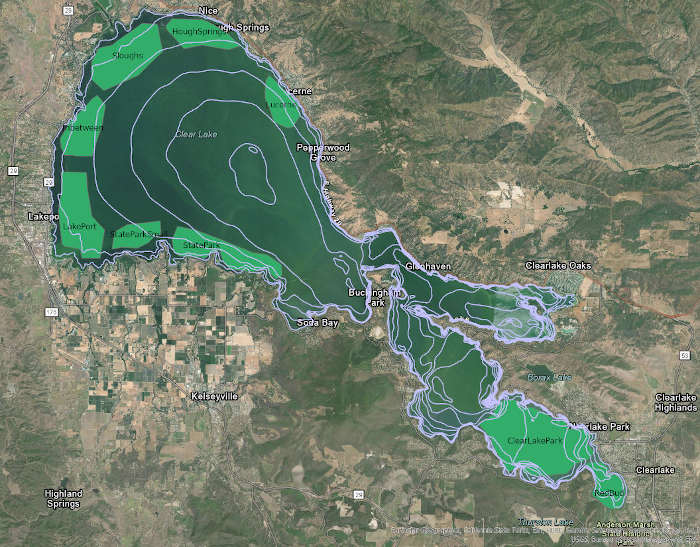
Fishing boats with 1,000-foot seine nets will be deployed throughout identified locations around Clear Lake — shown in the map above — to support future capture and removal of carp and goldfish.
The study began Friday and will continue through Feb. 13.
Multiple deployments will be conducted in areas throughout Clear Lake where radio tagged carp have been detected.
All areas where net deployment and successful capture is documented will be mapped as future potential netting areas for carp and goldfish removal.
Partners involved in the CDFW-funded feasibility study include the project contractor, WSB; CDFW; Big Valley Rancheria; and the Lake County Water Resources Department.
The Lake County Sheriff’s Marine Patrol has been notified and made aware of the feasibility study and identified locations.
Read more about the project in this December 2022 Lady of the Lake column.
For questions or comments regarding the Clear Lake Common Carp and Goldfish Management Project, please contact Karola Kennedy, Robinson Rancheria EPA director, at
For more information on carp management, visit this website.

On Friday, Gov. Gavin Newsom announced his appointment of Sean Duryee as commissioner of the California Highway Patrol.
Duryee has been serving as acting CHP commissioner and has held several roles since 1998.
“A veteran of the CHP, Commissioner Duryee has dedicated his career to serving the people of California, starting as a Cadet decades ago,” said Gov. Newsom. “His leadership, extensive experience and dedication will continue to serve California well and I thank him for taking on this new role.”
Duryee, 48, of Galt, has served as acting commissioner of the California Highway Patrol since January, following the retirement of Commissioner Amanda Ray.
He served in several positions at CHP from 1998 to 2022, including Deputy commissioner, executive assistant to the commissioner, special representative to the Legislature, commander of the Department’s Commercial Vehicle Section, academy instructor and cadet.
He is a coach for the Liberty Ranch High School Girls Varsity Basketball Team.
This position requires Senate confirmation and the compensation is $315,348. Duryee is registered without party preference.

President Joe Biden announced on Jan. 30, 2023, that he intends to end both the national emergency and the public health emergency declarations related to COVID-19 on May 11, 2023.
Biden’s announcement came on the same day that the World Health Organization said it still considers the COVID-19 pandemic to be a public health emergency of international concern, or PHEIC, a status that is reassessed every three months. The WHO’s advisory committee noted that although the pandemic is at a turning point, “COVID-19 remains a dangerous infectious disease with the capacity to cause substantial damage to health and health systems.”
The Conversation asked public health experts Marian Moser Jones and Amy Lauren Fairchild to put these statements into context and to explain their ramifications for the next stage of the pandemic.
What does ending the emergency phase of the COVID-19 pandemic mean?
Ending the federal emergency reflects both a scientific and political judgment that the acute phase of the COVID-19 pandemic crisis has ended and that special federal resources are no longer needed to prevent disease transmission across borders.
In practical terms, it means that two declarations – the federal Public Health Emergency, first declared on Jan. 31, 2020, and the COVID-19 national emergency that President Donald Trump announced on March 13, 2020 – will be allowed to expire in May 2023.
Declaring those emergencies enabled the federal government to cut through a mountain of red tape, with the goal of responding to the pandemic more efficiently. For instance, the declarations allowed funds to be made available so that federal agencies could direct personnel, equipment, supplies and services to state and local governments wherever they were needed. In addition, the declarations made resources available to launch investigations into the “cause, treatment or prevention” of COVID-19 and to enter into contracts with other organizations to meet needs stemming from the emergency.
The emergency status also allowed the federal government to make health care more widely available by suspending many requirements for accessing Medicare, Medicaid and the Children’s Health Program. And they made it possible for people to receive free COVID-19 testing, treatment and vaccines and enabled Medicaid and Medicare to more easily cover telehealth services.
What policy changes will occur once the emergency is declared over?
The end to the federal emergency could substantially reduce the number of people insured under Medicaid. Before the pandemic, states required people to prove every year that they met income and other eligibility requirements.
In March 2020, Congress enacted a continuous enrollment provision in Medicaid that prevented states from removing anyone from their rolls during the pandemic. In a December 2022 appropriations bill, Congress passed a provision that will end continuous enrollment on March 31, 2023.
The Biden administration has defended this time frame as sufficient to ensure that “patients do not lose access to care unpredictably” and that state Medicaid budgets – which have been infused with emergency funds since 2020 – “don’t face a radical cliff.” But many people with Medicaid may be unaware of these changes until they actually lose their benefits.
Some states have already indicated that they will begin disenrolling members in April 2023 or require members to apply to be considered for renewal. This could result in between 5 million and 14 million people losing coverage.
People with Medicare do not have to worry about losing their benefits, since this program is age-based, not income-based. The array of telehealth services that Medicare began covering during the pandemic will continue to be covered through December 2023. Medicare coverage for many telehealth services could also be made permanent after this year.
The end of the emergency could additionally curb access to COVID-19 drugs, tests and vaccines. Federal emergency funding for free treatment or vaccination will end when the emergency status is lifted on May 11. If such programs are to continue, the cost will fall to state and local health agencies or insurance companies.
We are concerned that the withdrawal of federal emergency funds for vaccination may further slow the already sluggish uptake of boosters. As of Jan. 25, 2023, about 20% of the population ages 5 and up and only 40.1% of those 65 and older – who are at the highest risk of death from COVID-19 – had received an updated bivalent booster dose. Once the emergency ends, measures that allowed a broad array of health providers – from pharmacist interns to retired nurses and even veterinarians – to administer vaccines will expire, which could lead to decreased access to vaccination in many parts of the U.S.
What does this mean for the status of the pandemic?
A pandemic declaration represents an assessment that human transmission of a disease, whether well known or novel, is “extraordinary,” that it constitutes a public health risk to two or more states and that controlling it requires an international response.
At some point the WHO will end its pandemic declaration. On Jan. 30, 2023, World Health Organization Director-General Tedros Adhanom Ghebreyesus described the pandemic as being “at a transition point.” But the WHO’s assessment is that the risks are still considerable. Ghebreyesus noted that COVID-19 continues to strain health care systems, exacerbate health care workforce shortages and exceed surveillance system capacities.
The U.S. remains one of the global COVID-19 hot spots. With more than 3,500 hospitalizations per week on average in January 2023, and 3,452 deaths per week as of early February 2023, the U.S. has among the highest deaths per capita in the world.
How does the Biden administration’s stance differ from the WHO’s position?
In some ways they are very similar. The WHO is looking at the pandemic from a global perspective while the Biden administration is examining it from a national perspective. The WHO’s stance reflects the assessment that the world is not sufficiently vaccinated, that health care systems remain vulnerable and that unchecked disease transmission in some parts of the world should remain a source of international concern and attention.
China’s massive outbreak after the lifting of its zero-COVID policy in early December 2022 has received a great deal of media attention. But less noted is the fact that vaccination rates across African nations average 40%, and that vaccination rates are very low in countries that are experiencing conflict, such as Syria, where only 15% of the population has received any COVID-19 vaccine.
The WHO’s continuation of the global pandemic status signals that there is more international coordination and work to be done. In contrast, the Biden administration is making a social and political judgment that it is time to wind down the federal role.
Biden’s order will not affect state-level or local-level emergency declarations. These declarations have allowed states to allocate resources to meet pandemic needs and have included provisions allowing them to respond to surges in COVID-19 cases by allowing out-of-state physicians and other health care providers to practice in person and through telehealth.
Almost all U.S. states, however, have ended their own public health emergency declarations. Eight states – California, Colorado, Delaware, Georgia, Illinois, New Mexico, Rhode Island and Texas – still have emergency declarations in effect, but all of them will expire by the end of February 2023 unless renewed.
While some states may choose to make permanent some COVID-era emergency standards, such as looser restrictions on telemedicine or out-of-state health providers, it could be a long time before either politicians or the public regain an appetite for any emergency orders directly related to COVID-19.
Amy Lauren Fairchild, Dean and Professor of Public Health, The Ohio State University and Marian Moser Jones, Associate Professor and Graduate Director of Family Science, The Ohio State University
This article is republished from The Conversation under a Creative Commons license. Read the original article.

Assets of a decedent’s estate can pass at death either with or without administration, i.e., a court supervised probate and/or a trust administration.
It depends on how the decedent’s assets are titled, the gross value of the decedent’s entire estate (excluding non-probate assets) and whether the asset(s) is (are) inherited by a surviving spouse / surviving registered domestic partner.
Administration largely occurs between the death of the decedent and the major distribution of the decedent’s estate.
The person administering the decedent’s estate — either a personal representative (probate) or a successor trustee (trust) — is a “fiduciary,” i.e., legal representative of the estate.
A fiduciary, amongst other things, must notify the decedent’s heirs/ beneficiaries and creditors of the administration; inventory, appraise and safeguard the decedent’s assets; and pay the decedent’s debts and taxes.
At the end, the heirs / beneficiaries receive their distributions. Not all inheritances, however, require an administration.
That is, assets that pass to designated death beneficiaries — such as “pay on death” bank accounts, “transfer on death” brokerage accounts, retirement accounts, and any insurance or annuity policies — usually pass without administration: The death beneficiaries present the deceased’s death certificate and complete necessary papers.
Also, the decedent’s share of assets titled as, “joint tenancy with right of survivorship” pass to the surviving joint tenant(s) by means of an affidavit.
Similarly, assets that are gifted during the donor’s life avoid administration. That includes, lifetime gifts of real property where the decedent while alive may have retained either a life estate or a lifetime right of occupancy. Simply recording the deceased tenant or occupant’s death certificate ends the decedent’s interest.
Next, small estates that are under the probate threshold (gross value) do not typically require administration. Either an affidavit or a small estate petition to the court can be used to claim or to retitle the assets in a small estate.
Assets that do not involve the appointment of a fiduciary do not require administration. No administration typically means no notice to the decedent’s heirs / beneficiaries and no notice to creditors of the decedent’s estate.
With an administration, however, notice to the decedent’s heirs or beneficiaries invites a possible legal contest (e.g., “ a will contest”) over the decedent’s estate planning documents.
With administration, notice to the decedent’s possible creditors invites creditor claims against the decedent’s assets subject to administration. With administration, the fiduciary usually needs significant assistance from an attorney.
There are, however, important disadvantages to, “no administration,” including the following: First, with real property assets, the use of the lifetime estate or joint tenancy approaches requires making a lifetime transfer (gift) of an ownership interest; second, any lifetime gift of appreciated assets (i.e., assets that have increased in value while owned) means that the recipient does not get an adjusted “date of death” income tax basis; third, assets that are transferred outright (free and clear) without any administration to designated death beneficiaries are not protected from the beneficiary’s own creditors, predators, and the beneficiary’s bad choices; and fourth, no administration may be the product of undue influence over the decedent (while alive) where the decedent was coerced to designate death beneficiaries and to avoid administration and fiduciary supervision.
Typically, some assets pass without administration and other assets pass with administration. Assets that pass with administration are the decedent’s real properties and the decedent’s investment accounts. Having some bank accounts pass without administration can be very helpful during an administration to provide immediate cash where and when needed.
The foregoing discussion is a simplified overview and not legal advice. Consult an attorney.
Dennis A. Fordham, attorney, is a State Bar-Certified Specialist in estate planning, probate and trust law. His office is at 870 S. Main St., Lakeport, Calif. He can be reached at

Less than six weeks after it began, construction of the first sample depot on another world is complete.
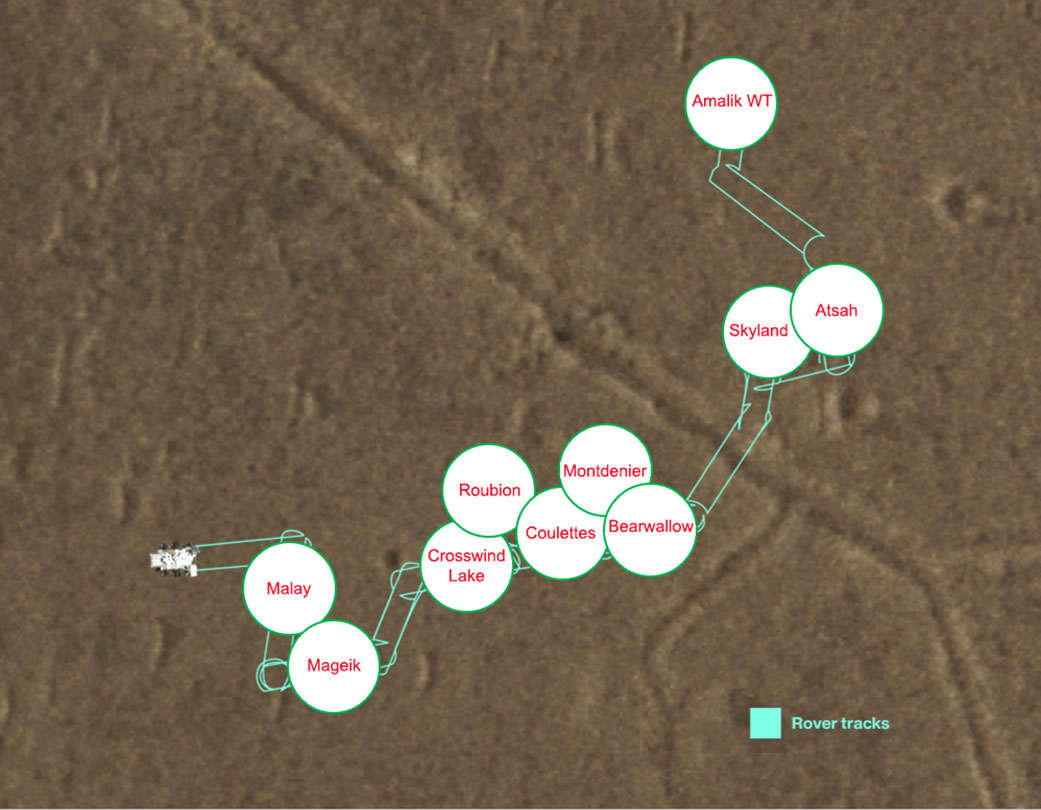
Confirmation that NASA’s Perseverance Mars rover successfully dropped the 10th and final tube planned for the depot was received around 5 p.m. PST Sunday, Jan. 29, by mission controllers at the agency’s Jet Propulsion Laboratory in Southern California.
This major milestone involved precision planning and navigation to ensure the tubes could be safely recovered in the future by the NASA-European Space Agency Mars Sample Return campaign, which aims to bring Mars samples to Earth for closer study.
Throughout its science campaigns, the rover has been taking a pair of samples from rocks the mission team deems scientifically significant. One sample from each pair taken so far now sits in the carefully arranged depot in the “Three Forks” region of Jezero Crater.
The depot samples will serve as a backup set while the other half remain inside Perseverance, which would be the primary means to convey samples to a Sample Retrieval Lander as part of the campaign.
Mission scientists believe the igneous and sedimentary rock cores provide an excellent cross section of the geologic processes that took place in Jezero shortly after the crater’s formation almost 4 billion years ago.
The rover also deposited an atmospheric sample and what’s called a “witness” tube, which is used to determine if samples being collected might be contaminated with materials that traveled with the rover from Earth.
The titanium tubes were deposited on the surface in an intricate zigzag pattern, with each sample about 15 to 50 feet (5 to 15 meters) apart from one another to ensure they could be safely recovered. Adding time to the depot-creation process, the team needed to precisely map the location of each 7-inch-long (18.6-centimeter-long) tube and glove (adapter) combination so that the samples could be found even if covered with dust. The depot is on flat ground near the base of the raised, fan-shaped ancient river delta that formed long ago when a river flowed into a lake there.
“With the Three Forks depot in our rearview mirror, Perseverance is now headed up the delta,” said Rick Welch, Perseverance’s deputy project manager at JPL. “We’ll make our ascent via the ‘Hawksbill Gap’ route we previously explored. Once we pass the geologic unit the science team calls ‘Rocky Top,’ we will be in new territory and begin exploring the Delta Top.”

Next science campaign
Passing the Rocky Top outcrop represents the end of the rover’s Delta Front Campaign and the beginning of the rover’s Delta Top Campaign because of the geologic transition that takes place at that level.
“We found that from the base of the delta up to the level where Rocky Top is located, the rocks appear to have been deposited in a lake environment,” said Ken Farley, Perseverance project scientist at Caltech. “And those just above Rocky Top appear to have been created in or at the end of a Martian river flowing into the lake. As we ascend the delta into a river setting, we expect to move into rocks that are composed of larger grains — from sand to large boulders. Those materials likely originated in rocks outside of Jezero, eroded and then washed into the crater.”
One of the first stops the rover will make during the new science campaign is at a location the science team calls the “Curvilinear Unit.”
Essentially a Martian sandbar, the unit is made of sediment that eons ago was deposited in a bend in one of Jezero’s inflowing river channels. The science team believes the Curvilinear Unit will be an excellent location to hunt for intriguing outcrops of sandstone and perhaps mudstone, and to get a glimpse at the geological processes beyond the walls of Jezero Crater.
More about the mission
A key objective for Perseverance’s mission on Mars is astrobiology, including caching samples that may contain signs of ancient microbial life. The rover will characterize the planet’s geology and past climate, pave the way for human exploration of the Red Planet, and be the first mission to collect and cache Martian rock and regolith.
Subsequent NASA missions, in cooperation with ESA, would send spacecraft to Mars to collect these sealed samples from the surface and return them to Earth for in-depth analysis.
The Mars 2020 Perseverance mission is part of NASA’s Moon to Mars exploration approach, which includes Artemis missions to the Moon that will help prepare for human exploration of the Red Planet.
JPL, which is managed for NASA by Caltech, built and manages operations of the Perseverance rover.
For more about Perseverance visit https://mars.nasa.gov/mars2020/.