How to resolve AdBlock issue?
News

LAKE COUNTY, Calif. — The Lake County Sheriff’s Office said it has located a woman reported missing earlier this month.
Nancy Mingey, 55, Lakeport, had not been seen or heard from since early January and was reported missing to the Lake County Sheriff’s Office on Jan. 19.
The sheriff’s office said she was located and is safe in Sacramento.
The agency thanked everyone who assisted in finding her.
Call Lake County Animal Care and Control at 707-263-0278 or visit the shelter online at http://www.co.lake.ca.us/Government/Directory/Animal_Care_And_Control.htm for information on visiting or adopting.
The following cats at the shelter have been cleared for adoption.

Male domestic medium hair
This 3-year-old male domestic medium hair cat has a gray coat.
He is in cat room kennel No. 13, ID No. LCAC-A-4559.
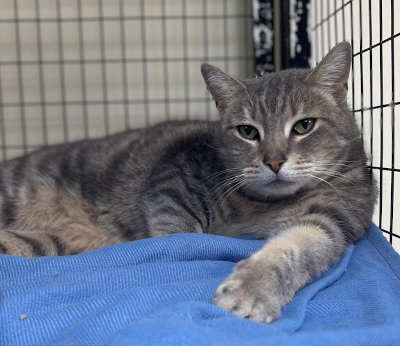
‘Halo’
“Halo” is a 3-year-old male domestic shorthair cat with a gray tabby coat.
He is in kennel No. 77a, ID No. LCAC-A-4466.
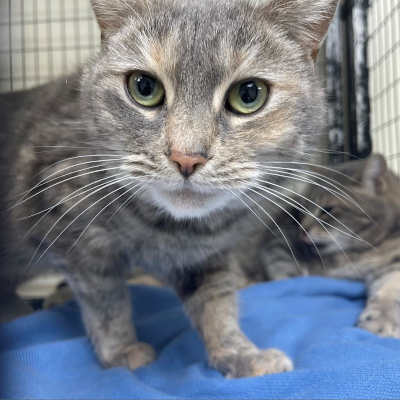
‘Wednesday’
“Wednesday” is a 3-year-old female domestic shorthair cat with a gray tabby coat.
She is in kennel No. 77b, ID No. LCAC-A-4463.
Email Elizabeth Larson at
LAKE COUNTY, Calif. — During a Tuesday morning hearing, members of the Board of Supervisors, the Lakeport Fire Protection District chief and Lake County residents raised concerns about the potential impact of a new statewide fire hazard severity zone map and how it could cause more challenges for county residents when it comes to fire insurance.
Cal Fire held a public hearing on the new map during the Board of Supervisors meeting.
Community members were allowed to give comments in person but not via Zoom, a requirement that was not stated in the public hearing announcement.
Sonoma-Lake-Napa Unit Battalion Chief Marshall Turbeville said those on Zoom who wanted to give comments in person could go to a meeting in another county.
However, comments can still be submitted in writing until Feb. 3.
The map looks at how much of the State Responsibility Area, or SRA, overseen by Cal Fire, is in various risk categories.
In a December announcement on the release of the map, Cal Fire said the new revision only updates areas in the SRA, which is described as California’s “unincorporated, rural areas, where wildfires tend to be frequent.”
The previous version of the map was created in 2007. The new version shows much of the state now moving into the “high risk” category, including most of Lake County.
Cal Fire’s map takes no account of defensible space — a practice Cal Fire urges homeowners to follow — and doesn’t record fire history or recent changes in landscape. It puts more store on landscape and how fire might behave. A computer algorithm is key to the analysis.
In Lake County, there are 395,373 acres in the SRA, a growth of 575 acres since 2007.
Of that total SRA acreage in Lake County, 366,812 acres are in the “very high” fire severity category, with 22,343 acres in the “high” and 6,218 acres in the “moderate” categories.
In this newest map, the “very high” category in Lake County has grown by 31.5%.
In addition, the percentage of Lake County’s SRA in the “very high” category is 92.8%. Counties with higher percentages of their SRA acreage in that highest category are Orange, with 96.7%; Trinity with 96.5%; Ventura, 95.9%; and Los Angeles, at 93%.
Turbeville presided over the public hearing on behalf of Cal Fire, explaining the map and showing a short video.
The video explained that the map models fire and applies scientific methods to model fire behavior like spread and intensity. They use factors such as slope and vegetation in their calculations.
The fire hazard severity model for wildland fire has two key elements — probability of an area burning and expected fire behavior under extreme fuel and weather conditions. The video said that the probability of an area burning is calculated using fire history from 1991 to 2020.
Cal Fire then estimates potential flame length based on vegetation type and climate.
Fire hazard severity zones are intended to measure potential hazards across multiple decades. Cal Fire uses a long term look at fuel development and does not adjust data inputs to account for recent fire or fuel management activities. Their goal is to know what a fire would be like in the worst fuel condition in an area.
Community members speak to concerns about the map
The California Insurance Commissioner’s Office said the maps “are intended to drive local planning decisions, not insurance decisions,” and that under Insurance Commissioner Ricardo Lara’s new regulation finalized in October 2022, “insurance companies must provide
discounts for wildfire safety actions such as community mitigation and home-hardening, which Cal Fire’s maps do not assess. In addition, insurance companies are already using risk analysis tools and models that go beyond Cal Fire’s proposed maps in determining what properties they will underwrite.”
The public comments given during the hearing were unanimous in their criticisms and concerns about the map, and their concerns that the map is being used by insurance companies, despite Lara’s statement.
Randy Murphy, general manager of Hidden Valley Lake, said that the HVL community spends more than $1 million a year in fire mitigation efforts.
He said he hears about people all the time not getting renewed for their insurance, and he’s concerned that the map won’t help that.
Kathy Andre of Riviera Heights and Konocti Fire Safe Council said the map is being used by California insurance companies to cancel insurance, and that the California Insurance Commissioner’s Office uses it to assess fire risk, not fire hazard.
She said that practice is having drastic consequences for homeowners in high and very high fire zones.
“High fire hazard ratings and skyrocketing insurance premiums are competing to deter homeowners from doing mitigation work on their properties,” Andre said.
Bill Groody, president of the Buckingham Homeowners Association and a board member of the Konocti Fire Safe Council, pointed out that in the new map, the entire Buckingham peninsula is in the very high fire area, up from half from the last map. “That is a very significant change.”
Groody said he wasn’t there to argue about the data. “However well intentioned this map may be, we believe that it could very well undermine our efforts to reduce wildfire risk and could in fact inflict significant financial harm on the residents of Buckingham.”
He said the map is being used for underwriting and will be harmful to the council’s efforts. The council tells property owners about the benefits of weed clearing, taking down dead trees and home hardening, but when they see that their efforts are not being recognized, it makes the Fire Safe Council’s job of building a consensus around fire safety even more difficult.
“In short, the optics are terrible,” said Groody.
He called on Cal Fire to make it clear to the insurance industry in a very forceful way that this map is not intended for use as a sole source of denying coverage.
John Nowell, a retired battalion chief and another Konocti Fire Safety Council member, said the map arbitrarily placed areas in the highest severity zone.
He said the map provides an “incredible opportunity” for Cal Fire to add Firewise and Fire Safe councils to its algorithm when looking at fire risk areas.
Robert Geary, the Habematolel Pomo tribal historic preservation officer and director of cultural resources, wanted tribal communities to be included when maps are created, noting information about cultural resources is confidential.
During the board’s discussion, Supervisor Bruno Sabatier said the direction the state is going is only going to hurt rural areas.
He said rural California has not been the major contributor to climate change, but it is the major recipient of rules and regulations that will limit what can be done there.
This map and efforts to eliminate building in some parts of the state will lead to rules that will eventually eliminate any prospect of economic movement and progress in Lake County, Sabatier said. “So I’m very nervous about what this map means.”
He said the map is a slap in the face to efforts to mitigate fires. Sabatier also pointed out that since cities are exempt from being included in the SRA, he foresees that leading to a lot of cities being created or more areas annexed, as it puts unincorporated areas in an awkward situation. That’s not a good idea, economically or politically, he added.
Supervisor Moke Simon wanted to recognize the work that’s been done to deal with fire risk, from the county’s vegetation ordinance to its new home hardening program, with Lake being one of three counties statewide to have it so far. “We’re just starting to do that work.”
He raised issues with the algorithm, noting that when a computer’s making a decision, it doesn’t come out good. “This is just going to set us back.”
Simon urged community members to get their comments in and to let the governor and Cal Fire know they need to look at the situation in a different way.
Board Chair Jessica Pyska called the map a snapshot. “It doesn’t tell the whole story.”
She said that in recent years Lake County has experienced smaller fires, which she attributed to a combination of strategies from Cal Fire, local agencies and communities. Pyska said the map needs to show proactive work and layering, not just a moment in time.
“Data is critical, but so is looking at the adaptability,” Pyska said, noting that communities are working proactively.
Lakeport Fire Chief Patrick Reitz said he would like to see Cal Fire take a closer look at the mapping process, taking defensible space and home hardening into account. “Our zones are overly broad and we can narrow it down.”
He said the map is not having a good effect on the community, with his constituents asking why they are paying so much for insurance, and efforts on defensible space and home hardening, when it’s not reflected in the map.
Reitz said there is no penalty on the insurance companies for using the map against property owners. “The state has to be more aggressive and more helpful for its constituents.”
Pyska also pointed out that the map doesn’t show that entire communities have been rebuilt to the latest standards.
Supervisor Michael Green said he did not think they should game the hazard map to get a break on insurance but should accept what the hazard map says, as he believed the assessment to be “dead on.”
HOW TO COMMENT
The Office of the State Fire Marshal will accept written comments on the map through Friday, Feb. 3.
Information on the Fire Hazard Severity Zones is here:
https://osfm.fire.ca.gov/divisions/community-wildfire-preparedness-and-mitigation/wildfire-preparedness/fire-hazard-severity-zones/
To see how the map is proposed to change from 2007, visit this webpage:
https://calfire-forestry.maps.arcgis.com/apps/webappviewer/index.html?id=fd937aba2b044c3484a642ae03c35677
For information presented at the Board of Supervisors hearing, visit this page:
https://countyoflake.legistar.com/View.ashx?M=F&ID=11574889&GUID=9685D0B4-8184-4E28-880A-C53110C3A311
Written comments may be submitted by U.S. mail to the following address:
Office of the State Fire Marshal
California Department of Forestry and Fire Protection
Attn: Scott Witt, Deputy Chief
P.O. Box 944246
Sacramento, CA 94244-2460
Written comments can also be hand delivered or sent by courier to the contact person listed in this notice at the following address:
California Department of Forestry and Fire Protection
Office of the State Fire Marshal
C/O: Scott Witt
California Natural Resources Building
715 P Street, 9th floor
Sacramento, CA 95818
Written comments may also be delivered via email at the following address:
For questions email
Email Elizabeth Larson at
Dogs available for adoption this week include mixes of Akita, Alaskan malamute, American blue heeler, Belgian Malinois, German shepherd, hound, husky, Labrador retriever, mastiff, pit bull, pointer, shepherd and terrier.
Dogs that are adopted from Lake County Animal Care and Control are either neutered or spayed, microchipped and, if old enough, given a rabies shot and county license before being released to their new owner. License fees do not apply to residents of the cities of Lakeport or Clearlake.
The following dogs at the Lake County Animal Care and Control shelter have been cleared for adoption.
Call Lake County Animal Care and Control at 707-263-0278 or visit the shelter online for information on visiting or adopting.

‘Diesel’
“Diesel” is a 2-year-old male pit bull terrier with a short white coat with black markings.
He’s in kennel No. 31, ID No. LCAC-A-4549.

Lab-pit bull mix puppy
This female Labrador retriever-pit bull mix puppy has a short black coat with white markings.
She is in kennel No. 2, ID No. LCAC-A-4451.

American blue heeler-hound
This 5-month-old female American blue heeler-hound has a short brown and white coat.
She is in kennel No. 6a, ID No. LCAC-A-4521.

American blue heeler-hound
This 5-month-old female American blue heeler-hound has a short brindle coat.
She is in kennel No. 6b, ID No. LCAC-A-4522.

Male American blue heeler-hound
This 5-month-old male American blue heeler-hound has a short brown coat.
He is in kennel No. 9b, ID No. LCAC-A-4523.

Male Akita-shepherd mix
This 2-year-old male Akita-shepherd mix has a long brown coat.
He is in kennel No. 12, ID No. LCAC-A-4539.

Male Akita-shepherd
This 2-year-old male Akita-shepherd has a short fawn-colored coat.
He is in kennel No. 13, ID No. LCAC-A-4538.

Female husky
This 1-year-old female husky has a black and white coat.
She is in kennel No. 16, ID No. LCAC-A-4562.
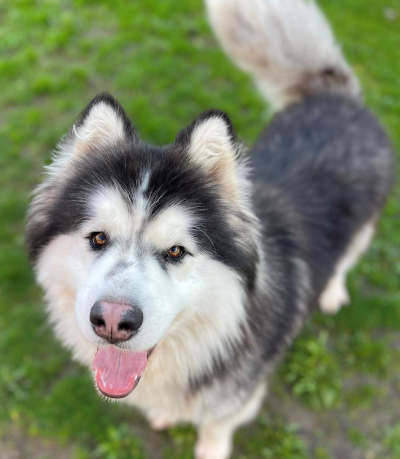
‘Malachi’
“Malachi” is a 4-year-old male Alaskan malamute with a long black and white coat.
He is in kennel No. 20, ID No. LCAC-A-4434.

‘Frankie’
“Frankie” is a 7-year-old male pit bull terrier with a short gray and white coat.
He is in kennel No. 27, ID No. LCAC-A-4551.

Male German shepherd
This 7-year-old male German shepherd with a black and tan coat.
He is in kennel No. 29, ID No. LCAC-A-4561.

Female German shepherd
This 1-year-old female German shepherd has a black and tan coat.
She is in kennel No. 30, ID No. LCAC-A-4486.

Male German shepherd
This 8-year-old male German shepherd has a black and tan coat.
He is in kennel No. 32, ID No. LCAC-A-4518.

Male terrier
This 1-year-old male terrier has a tan and white coat.
He is in kennel No. 33, ID No. LCAC-A-4470.

Female pit bull terrier mix
This 2-year-old female pit bull terrier mix has a short brown and white coat.
She is in kennel No. 34, ID No. LCAC-A-4599.
Email Elizabeth Larson at

The U.S. Food and Drug Administration’s key science advisory panel, the Vaccines and Related Biological Products Advisory Committee, met on Jan. 26, 2023, to chart a path forward for COVID-19 vaccine policy. During the all-day meeting, the 21-member committee discussed an array of weighty issues including the efficacy of existing vaccines, the composition of future vaccine strains and the need to match them to the circulating variants of SARS-CoV-2, the possibility of moving to an annual-shot model, the potential seasonality of the virus and much more.
But the key question at hand, and the only formal question that was voted on, following a proposal from the FDA earlier in the week, had to do with how to simplify the path to getting people vaccinated.
The Conversation asked immunologist Matthew Woodruff, who has been on the front lines of studying immune responses to COVID-19 since the early days of the pandemic, to walk us through the big questions of the day and what they mean for future COVID-19 vaccine strategies.
What exactly did the advisory committee vote on?
The question put before the committee for a vote was whether to move to one COVID-19 vaccine consisting of a single composition for all people – whether currently vaccinated or not – and away from the current model that includes one formulation given as a primary series and a separate formulation administered as a booster. Importantly, approved formulations could come from any number of vaccine manufacturers, not just those that have currently authorized vaccines.
The U.S. Centers for Disease Control and Prevention currently requires that the primary series of shots, or the first two doses of the vaccine that a patient receives, consist of the first generation of vaccine against the original strain of SARS-CoV-2, known as the “Wuhan” strain of the virus. These shots are given weeks apart, followed months later by a booster shot that was updated in August 2022 to contain a bivalent formulation of vaccine that targets both the original viral strain and newer subvariants of omicron.
The committee’s endorsement simplifies those recommendations. In a 21-to-0 vote, the advisory board recommended fully replacing, or “harmonizing,” the original formulation of the vaccine with a single shot that would consist of – at least for now – the current bivalent vaccine.
In doing so, it has signaled its belief that these new second-generation vaccines are an upgrade over their predecessors in protecting from infection and severe illness at this point in the pandemic.
Will the single shot remain a mixed-strain, or bivalent, vaccine?
For now, the single shot will be bivalent. But this may not always be the case.
There was a general agreement that the current bivalent shot is preferable to the original vaccine targeted at the Wuhan strain of the virus by itself. But committee members debated whether that original Wuhan vaccine strain should continue to be a part of updated vaccine formulations.
There is no current data comparing a monovalent, or single-strain, vaccine that targets omicron and its subvariants against the current bivalent shot. As a result, it’s unclear how a monovalent shot against recent omicron subvariants would perform in comparison to the bivalent version.
What is immune imprinting, and how does it apply here?
A main reason for the debate over monovalent versus bivalent – or, for that matter, trivalent or tetravalent – vaccines is a lack of understanding around how best to sharpen an immune response to a slightly altered threat. This has long been a debate surrounding annual influenza vaccination strategies, where studies have shown that the immune “memory” that forms in response to a prior vaccine can actively repress a robust immune response to the next.
This phenomenon of immune imprinting, originally coined in 1960 as “original antigenic sin,” has been a topic of debate both within the advisory committee and within the broader immunological community.
Although innovative strategies are being developed to overcome potential problems with routinely updated vaccines, they are not yet ready to be tested in humans. In the meantime, it is unclear how bivalent versus monovalent vaccine choices might alter this phenomenon, and it is very clear that more study is needed.
Is the committee considering only mRNA vaccines?
While a significant portion of the discussion focused on the mRNA vaccine platform used by both Pfizer and Moderna, several committee members emphasized the need for new technologies that could provide broader immunological protection. Dr. Pamela McInnes, a now-retired longtime deputy director of the National Center for Advancing Translational Sciences, highlighted this point, saying, “I would make a plea for ongoing research on broader protection, maybe different platforms, maybe a different approach.”
A good deal of attention was also directed toward Novavax, a protein-based formulation that relies on a more traditional approach to vaccination than the mRNA-based vaccines. Although the Novavax vaccine has been authorized by the FDA for use since July 2022, it has received much less national attention – largely because of its latecomer status. Nonetheless, Novavax has boasted efficacy rates on par with its mRNA cousins, with good safety profiles and less demanding long-term storage requirements than the mRNA shots.
By simplifying the vaccine schedule to include only a single vaccine formulation, the committee reasoned, it might be easier for competing vaccination platforms to break into the market. In other words, newer vaccine contenders would not have to rely on patients’ having already received their primary series before using their products. Companies seemed ready to take advantage of that future flexibility, with researchers from Pfizer, Moderna and Novavax all revealing their companies’ exploration of a hybrid COVID-19 and flu shot at various stages of clinical trials and testing.
Would the single shot resemble flu vaccine development?
Not necessarily. Currently, the influenza vaccine is decided by committee through the World Health Organization. Because of its seasonal nature, the strains to be included in each season’s flu vaccine for the Southern and Northern hemispheres, with their opposing winters, are selected independently. The Northern Hemisphere’s selection is made in February for the following winter based on a vast network of flu monitoring stations around the globe.
Although there was broad consensus among panelists that the shots against SARS-CoV-2 should be updated regularly to more closely match the most current circulating viral strain, there was less agreement on how frequent that would be.
For instance, rapidly mutating strains of the virus in both summer and winter surges might necessitate two updated shots a year instead of just one. As Dr. Eric Rubin, an infectious disease expert from the Harvard T.H. Chan School of Public Health, noted, “It’s hard to say that it’s going to be annual at this point.”
Matthew Woodruff, Instructor of Human Immunology, Emory University
This article is republished from The Conversation under a Creative Commons license. Read the original article.

NASA’s Lucy spacecraft will add another asteroid encounter to its 4-billion-mile journey. On Nov. 1, 2023, Lucy will get a close-up view of a small main-belt asteroid to conduct an engineering test of the spacecraft’s innovative asteroid-tracking navigation system.
The Lucy mission is already breaking records by planning to visit nine asteroids during its 12-year tour of the Jupiter Trojan asteroids, which orbit the Sun at the same distance as Jupiter.
Originally, Lucy was not scheduled to get a close-up view of any asteroids until 2025, when it will fly by the main belt asteroid (52246) Donaldjohanson.
However, the Lucy team identified a small, as-yet unnamed asteroid in the inner main belt, designated (152830) 1999 VD57, as a potential new and useful target for the Lucy spacecraft.
“There are millions of asteroids in the main asteroid belt,” said Raphael Marschall, Lucy collaborator of the Nice Observatory in France, who identified asteroid 1999 VD57 as an object of special interest for Lucy. “I selected 500,000 asteroids with well-defined orbits to see if Lucy might be traveling close enough to get a good look at any of them, even from a distance. This asteroid really stood out. Lucy’s trajectory as originally designed will take it within 40,000 miles of the asteroid, at least three times closer than the next closest asteroid.”
The Lucy team realized that, by adding a small maneuver, the spacecraft would be able to get an even closer look at this asteroid. So, on Jan. 24, the team officially added it to Lucy’s tour as an engineering test of the spacecraft’s pioneering terminal tracking system.
This new system solves a long-standing problem for flyby missions: during a spacecraft’s approach to an asteroid, it is quite difficult to determine exactly how far the spacecraft is from the asteroid, and exactly which way to point the cameras.
“In the past, most flyby missions have accounted for this uncertainty by taking a lot of images of the region where the asteroid might be, meaning low efficiency and lots of images of blank space,” said Hal Levison, Lucy principal investigator from the Southwest Research Institute Boulder, Colorado office. “Lucy will be the first flyby mission to employ this innovative and complex system to automatically track the asteroid during the encounter. This novel system will allow the team to take many more images of the target.”
It turns out that 1999 VD57 provides an excellent opportunity to validate this never-before-flown procedure.
The geometry of this encounter — particularly the angle that the spacecraft approaches the asteroid relative to the Sun — is very similar to the mission’s planned Trojan asteroid encounters.
This allows the team to carry out a dress rehearsal under similar conditions well in advance of the spacecraft’s main scientific targets.
This asteroid was not identified as a target earlier because it is extremely small. In fact, 1999 VD57, estimated to be a mere 0.4 miles (700 m) in size, will be the smallest main belt asteroid ever visited by a spacecraft. It is much more similar in size to the near-Earth asteroids visited by recent NASA missions OSIRIS-REx and DART than to previously visited main belt asteroids.
The Lucy team will carry out a series of maneuvers starting in early May 2023 to place the spacecraft on a trajectory that will pass approximately 280 miles (450 km) from this small asteroid.
Lucy’s principal investigator is based out of the Boulder, Colorado branch of Southwest Research Institute, headquartered in San Antonio, Texas. NASA’s Goddard Space Flight Center in Greenbelt, Maryland, provides overall mission management, systems engineering, and safety and mission assurance. Lockheed Martin Space in Littleton, Colorado, built the spacecraft. Lucy is the 13th mission in NASA’s Discovery Program. NASA’s Marshall Space Flight Center in Huntsville, Alabama, manages the Discovery Program for the Science Mission Directorate at NASA Headquarters in Washington.
For more information about NASA’s Lucy mission, visit https://www.nasa.gov/lucy.
Katherine Kretke writes for the Southwest Research Institute in San Antonio, Texas.