 How to resolve AdBlock issue?
News
LAKE COUNTY, Calif. — Over the course of the COVID-19 pandemic, the Lake County Library Literacy Program, supported in part by the California Library Literacy Services, has worked to rebuild the one-on-one tutoring program which aims to increase literacy in Lake County.
Adult learners in the program are paired with tutors to improve their reading, writing, and conversation skills at no cost and at their own pace.
This program is also available to adults who are learning English as a second language.
In addition to the adult program, a Family Literacy Program is available to families of adult learners with young children to promote literacy and lifelong learning for all ages.
In this program, children receive free books to build home libraries, and parents receive a monthly newsletter that includes reading recommendations, family activities, and more.
The latest development in the Family Literacy Program is a partnership with the Clear Lake State Park for the free monthly StoryWalk & Crafting Party, which takes place on the second Saturday of each month from 11 a.m. to 2 p.m.
This month’s Storywalk is scheduled for Saturday, June 10, from 11 a.m. to 2 p.m.
The Family Literacy Program will provide free books to families in attendance, and encourage adult learners in need to enroll in the Literacy Program.
This effort is also supported by the Lake County Literacy Coalition which supports the Library Literacy Program with fundraising and outreach, and select Board members will host the monthly StoryWalks.
Any and all Lake County residents are welcomed to attend the monthly Storywalks and are encouraged to bring family members of all ages and lunch for a picnic outside. Parking and day use fees are waived for Storywalk events.
The State Park is located at 5300 Soda Bay Road in Kelseyville.
Additionally, a new StoryTime in the Park event at Clear Lake State Park will take place on Wednesdays at 10:15 a.m. through the end of August.
Follow the Clear Lake State Park on Facebook @clearlakestateparkca and Instagram @clearlakestatepark, and the Lake County Literacy Coalition @LakeCountyLiteracyCoalition.
If you are interested in becoming a literacy tutor or know someone who could benefit from literacy services, please call 707-263-7633 or emailThis email address is being protected from spambots. You need JavaScript enabled to view it. .
To learn more about the Clear Lake State Park Interpretive Programs, visit https://www.parks.ca.gov/?page_id=473 or call 707-279-1936.
Adult learners in the program are paired with tutors to improve their reading, writing, and conversation skills at no cost and at their own pace.
This program is also available to adults who are learning English as a second language.
In addition to the adult program, a Family Literacy Program is available to families of adult learners with young children to promote literacy and lifelong learning for all ages.
In this program, children receive free books to build home libraries, and parents receive a monthly newsletter that includes reading recommendations, family activities, and more.
The latest development in the Family Literacy Program is a partnership with the Clear Lake State Park for the free monthly StoryWalk & Crafting Party, which takes place on the second Saturday of each month from 11 a.m. to 2 p.m.
This month’s Storywalk is scheduled for Saturday, June 10, from 11 a.m. to 2 p.m.
The Family Literacy Program will provide free books to families in attendance, and encourage adult learners in need to enroll in the Literacy Program.
This effort is also supported by the Lake County Literacy Coalition which supports the Library Literacy Program with fundraising and outreach, and select Board members will host the monthly StoryWalks.
Any and all Lake County residents are welcomed to attend the monthly Storywalks and are encouraged to bring family members of all ages and lunch for a picnic outside. Parking and day use fees are waived for Storywalk events.
The State Park is located at 5300 Soda Bay Road in Kelseyville.
Additionally, a new StoryTime in the Park event at Clear Lake State Park will take place on Wednesdays at 10:15 a.m. through the end of August.
Follow the Clear Lake State Park on Facebook @clearlakestateparkca and Instagram @clearlakestatepark, and the Lake County Literacy Coalition @LakeCountyLiteracyCoalition.
If you are interested in becoming a literacy tutor or know someone who could benefit from literacy services, please call 707-263-7633 or email
To learn more about the Clear Lake State Park Interpretive Programs, visit https://www.parks.ca.gov/?page_id=473 or call 707-279-1936.
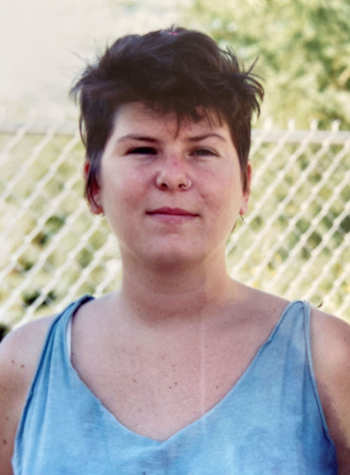
A 25-year mystery has been solved and a family is finally getting closure thanks to a partnership between the Humboldt County Sheriff's Office, the California Department of Justice and Othram Inc.
The remains have been identified as belonging to Kerry Cummings, who was last in contact with her family in 1997.
In October of 1997, a duck hunter located a dismembered female torso in the Ryan Slough, just north of Eureka. The remains were recovered, however, attempts to identify the female victim were unsuccessful. In January of 1998, additional remains were located and recovered on Clam Beach.
On Nov. 3, 1998, Wayne Adam Ford arrived at the HCSO’s Main Station in possession of a female body part. He subsequently admitted to murdering several women throughout the North State, including the unidentified female. Investigators interviewed Ford numerous times, obtaining descriptive details of the female.
Ford’s encampment was searched as part of the investigation. Investigators located additional remains belonging to the female recovered from the Slough. Attempts to identify the female were made, but ultimately were unsuccessful.
In June of 2006, Ford was convicted of four counts of first-degree murder in a San Bernardino County court and was sentenced to death.
Through the years, HCSO investigators never gave up on attempting to identify Ford’s unknown female victim, routinely searching missing persons reports from all of the West Coast to obtain leads.
Using DNA, investigators were able to confirm that the remains located on Clam Beach were also that of the unknown female.
The DNA was entered into both the California Missing Persons DNA database and the National Unidentified Persons DNA index.
The DNA profile was routinely searched against profiles from both missing persons and other human remains in the Combined Index System. No profile matches were ever made.
HCSO Sheriff William Honsal created the Cold Case Unit in 2021, assigning two investigators to exclusively review HCSO’s unsolved cases for new leads. In December of 2022, the HCSO and the CA DOJ partnered with Othram Inc, a forensic genealogy lab, to determine if advanced forensic DNA testing could help establish the identity of the unknown female, or a close relative.
“During our review of cold cases, we identified multiple cases that could benefit from this DNA technology,” HCSO Cold Case Investigator Mike Fridley said. “Earlier this year we were able to identify another unknown person by using this technology. We were eager to submit this case for consideration and to finally bring some closure to the victim’s family.”
The case was determined to be eligible for advanced forensic DNA testing and the HCSO sent Othram a DNA extract from the remains. Othram scientists used Forensic Genome Sequencing to build a comprehensive DNA profile for the female.
Utilizing this profile and forensic genealogy, a potential DNA match was developed for a close relative. Investigators contacted the relative, inquiring if they had any missing family members. The relative stated that their family member, Kerry Cummings, had been missing since the mid-1990s.
HCSO Investigators were able to track down Kerry’s sister, Kathie Cummings, who confirmed that Kerry’s last contact with family was in 1997. Kathie Cummings provided investigators with a DNA sample which was then compared to the DNA sample from the unknown female’s remains.
These DNA profiles were confirmed to be a genealogic match — officially identifying the remains as that of Kerry Ann Cummings, born in 1972.
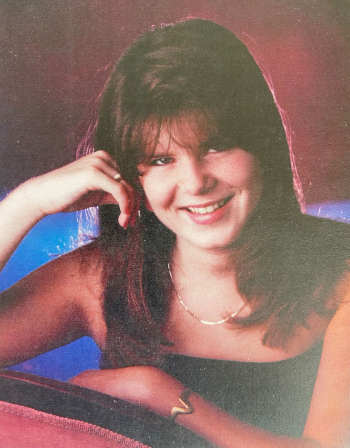
During her last contact with family in 1997, Kerry was suffering from untreated mental illness and told family that she was couch-surfing in the Eugene, Oregon area. Despite multiple offers from her family, she refused to come home.
“Kerry was beautiful, funny, smart and an artist. She was great at making us laugh,” Kerry’s sister, Kathie Cummings, told investigators. “It is devastating what mental illness can do in a span of only two short years.”
Kathie told investigators that after Kerry went missing her parents tried to report her as missing in Arizona and Oregon, and even hired a private investigator, but due to laws surrounding the report of missing persons at that time, a missing persons report was never taken. Therefore, Kerry was never listed as a missing person or entered into any national missing persons databases.
“Unfortunately, back then they were told that Kerry was an adult, that she had chosen the lifestyle, and that if she wasn’t a threat to herself or others, there was nothing that [law enforcement] could do,” Kathie said. “As the internet expanded, I took to searching the NamUs website when I was missing her, scanning for mention of her tattoo and searching through the pictures of the Jane Does. She was dearly loved.”
The Humboldt County Coroner’s Division is working with family members to release Kerry Cumming’s remains for burial with other deceased family members.
“I’d like to thank the California Department of Justice DNA Lab and Othram for once again providing outstanding work and assistance in solving this case,” Sheriff William Honsal said. “While we can’t take away the pain of loss, we hope that this identification can help bring closure to Kerry’s family and the community. I’m thankful for the dedication of our investigators who never gave up on Kerry and continue to seek resolution for the outstanding cases that remain to be solved.”
The HCSO is continuing its partnership with the CA DOJ and Othram, and is reviewing other missing and unidentified persons investigations for the use of this DNA technology. This effort is partially funded by the county’s Asset Forfeiture Fund, with additional grant funding anticipated in the near future to continue this work.
Anyone with information about this case or other unsolved homicides is asked to contact HCSO Investigator Mike Fridley at 707-441-3024. A full list of the HCSO’s unsolved cases and current missing persons can be located at https://humboldtgov.org/2772/Unsolved-Cases.
California First Partner Jennifer Siebel Newsom on Wednesday announced the start of this year’s First Partner’s Summer Book Club.
The Summer Book Club, part of the First Partner’s California for ALL Kids initiative, is an annual program and partnership with the California State Library that aims to reduce learning loss by encouraging kids and caregivers to read throughout the summer.
Research has shown that many students, particularly children from disadvantaged backgrounds, experience summer learning loss — falling behind in reading by at least two months.
And studies show that access to reading and learning opportunities between the ages of 0 and 5 are a foundational part of an individual’s future health, education, and economic participation.
“When we read with children early and often and encourage young readers to dive in and explore a new story, we help cultivate in kids a lifelong love of reading and a healthy curiosity about the world around them. We also provide children with an opportunity to expand their creativity and ability to regulate their emotions,” said First Partner Siebel Newsom. “In California, we value diversity and pride ourselves on equity and inclusion. So while other states ban books and stifle curiosity, we’re uplifting books that educate and introduce children to an array of diverse authors, stories, and characters to build their capacity for empathy and show them a world filled with possibilities as limitless as their imagination.”
“Reading opens a door to another world — but it’s also the key to understanding our own world. As states across the country chip away at learning opportunities and silence diverse voices — California is encouraging our kids to read voraciously, to put themselves in someone else’s shoes, and learn through experience,” said Gov. Gavin Newsom. “Here in California, everyone has the right to read, to learn, and to think freely.”
"The First Partner is always incredibly generous to California's kids and our libraries. It's a privilege for us to be her partner," said California State Librarian Greg Lucas. "We're excited to jump into another summer of great books, excited kids, and building stronger readers."
This year's Summer Book Club list was curated by the First Partner in partnership with librarians across the state. The books highlight themes such as navigating mental health struggles, identity and belonging, and the importance of exploration and curiosity.
The books range in reading levels from preschool to high school and are available for check-out at most public libraries across the state.
In addition to promoting early and regular reading, the First Partner’s Summer Book Club also encourages California families to learn about and engage with programming at their local library.
In particular, First Partner Siebel Newsom has championed the California State Library Parks Pass – a partnership with the State Library and State Parks. Through the Pass, library card holders can check out a State Parks vehicle day use pass at their local public library for use at over 200 participating California State Parks. To date, over 50,000 passes have been checked out.
Through California For All Kids, First Partner Siebel Newsom is working to give California children the best start in life by taking a whole child approach to their well-being.
The Summer Book Club, part of the First Partner’s California for ALL Kids initiative, is an annual program and partnership with the California State Library that aims to reduce learning loss by encouraging kids and caregivers to read throughout the summer.
Research has shown that many students, particularly children from disadvantaged backgrounds, experience summer learning loss — falling behind in reading by at least two months.
And studies show that access to reading and learning opportunities between the ages of 0 and 5 are a foundational part of an individual’s future health, education, and economic participation.
“When we read with children early and often and encourage young readers to dive in and explore a new story, we help cultivate in kids a lifelong love of reading and a healthy curiosity about the world around them. We also provide children with an opportunity to expand their creativity and ability to regulate their emotions,” said First Partner Siebel Newsom. “In California, we value diversity and pride ourselves on equity and inclusion. So while other states ban books and stifle curiosity, we’re uplifting books that educate and introduce children to an array of diverse authors, stories, and characters to build their capacity for empathy and show them a world filled with possibilities as limitless as their imagination.”
“Reading opens a door to another world — but it’s also the key to understanding our own world. As states across the country chip away at learning opportunities and silence diverse voices — California is encouraging our kids to read voraciously, to put themselves in someone else’s shoes, and learn through experience,” said Gov. Gavin Newsom. “Here in California, everyone has the right to read, to learn, and to think freely.”
"The First Partner is always incredibly generous to California's kids and our libraries. It's a privilege for us to be her partner," said California State Librarian Greg Lucas. "We're excited to jump into another summer of great books, excited kids, and building stronger readers."
This year's Summer Book Club list was curated by the First Partner in partnership with librarians across the state. The books highlight themes such as navigating mental health struggles, identity and belonging, and the importance of exploration and curiosity.
The books range in reading levels from preschool to high school and are available for check-out at most public libraries across the state.
In addition to promoting early and regular reading, the First Partner’s Summer Book Club also encourages California families to learn about and engage with programming at their local library.
In particular, First Partner Siebel Newsom has championed the California State Library Parks Pass – a partnership with the State Library and State Parks. Through the Pass, library card holders can check out a State Parks vehicle day use pass at their local public library for use at over 200 participating California State Parks. To date, over 50,000 passes have been checked out.
Through California For All Kids, First Partner Siebel Newsom is working to give California children the best start in life by taking a whole child approach to their well-being.
A recent report named California First in the country for dog bites, with 675 incidents in 2022.
Nationwide, there were more than 5,300 incidents involving dogs and mail carriers last year.
To better understand the potential danger to mail carriers, and even people in your community, the Postal Service is sponsoring the annual National Dog Bite Awareness Week, June 4 to 10.
“One bite is far worse than any bark,” said San Francisco Postmaster Doug Smith “Dogs that are not secured pose a threat to our carriers making their appointed rounds. We ask that our customers keep their dogs secured before their carrier arrives.”
National Dog Bite Awareness Week is a USPS-sponsored public service campaign that offers safety tips and emphasizes the need for increased owner responsibility in the prevention of dog attacks. Its theme this year is “Even good dogs have bad days.”
More than 5,300 postal employees were attacked by dogs last year. Many attacks could be avoided if dog owners would take a few extra moments of precaution.
Pet owners can help support safe mail delivery
Mail carriers know all dogs can bite, even those perceived as nonaggressive. Dogs are generally protective of their turf and dog owners have an important responsibility to control them to ensure safe mail delivery.
Most people know the approximate time their letter carrier arrives every day. Securing your dog before the carrier approaches your property will minimize any potentially dangerous interactions.
When a letter carrier comes to your home, keep dogs:
• Inside the house or behind a fence;
• Away from the door or in another room; or
• On a leash.
Pet owners also should remind children not to take mail directly from a letter carrier as the dog may view the carrier as a threat to the child.
Inform yourself, see the mail before it arrives
By using Informed Delivery, a free USPS service, customers can digitally preview incoming mail and packages from a computer, tablet or mobile device.
More than 52 million customers have enrolled since it was launched in 2017. Sign up is at https://www.usps.com/manage/informed-delivery.htm. This service can help dog owners anticipate when their carrier will arrive.
Many attacks reported by letter carriers came from dogs whose owners regularly stated, “My dog won’t bite.” Dog bites are entirely preventable. One bite is one too many.
Letter carriers are trained to observe an area where they know dogs may be present. They are taught to be alert for potentially dangerous conditions and to respect a dog’s territory.
Letter carriers are trained to:
• Not startle a dog;
• Keep their eyes on any dog;
• Never assume a dog will not bite;
• Make some noise or rattle a fence to alert a dog if entering a yard;
• Never attempt to pet or feed a dog; and
• Place their foot against an outward swinging door to prevent a dog from escaping.
If a dog attacks, carriers are also trained to stand their ground and protect their body by placing something between them and the dog — such as a mail satchel — and to use dog repellent, if necessary.
Even though postal officials ask customers to control their dogs, bites still happen and may result in injuries to carriers and costly medical expenses for dog owners. Please heed the above best practices to help stop dog bites and protect your mail carrier.
Carriers have tools to alert them to dogs on their routes. A dog alert feature on carriers’ handheld scanners can remind them of a possible dog hazard, and dog warning cards may be used during mail sorting to alert carriers to routes where a dog may interfere with delivery.
Lastly, when a carrier feels unsafe, mail service could be halted — not only for the dog owner, but for the entire neighborhood. When mail service is stopped, mail must be picked up at the Post Office. Service will not be restored until the aggressive dog is properly restrained.
Nationwide, there were more than 5,300 incidents involving dogs and mail carriers last year.
To better understand the potential danger to mail carriers, and even people in your community, the Postal Service is sponsoring the annual National Dog Bite Awareness Week, June 4 to 10.
“One bite is far worse than any bark,” said San Francisco Postmaster Doug Smith “Dogs that are not secured pose a threat to our carriers making their appointed rounds. We ask that our customers keep their dogs secured before their carrier arrives.”
National Dog Bite Awareness Week is a USPS-sponsored public service campaign that offers safety tips and emphasizes the need for increased owner responsibility in the prevention of dog attacks. Its theme this year is “Even good dogs have bad days.”
More than 5,300 postal employees were attacked by dogs last year. Many attacks could be avoided if dog owners would take a few extra moments of precaution.
Pet owners can help support safe mail delivery
Mail carriers know all dogs can bite, even those perceived as nonaggressive. Dogs are generally protective of their turf and dog owners have an important responsibility to control them to ensure safe mail delivery.
Most people know the approximate time their letter carrier arrives every day. Securing your dog before the carrier approaches your property will minimize any potentially dangerous interactions.
When a letter carrier comes to your home, keep dogs:
• Inside the house or behind a fence;
• Away from the door or in another room; or
• On a leash.
Pet owners also should remind children not to take mail directly from a letter carrier as the dog may view the carrier as a threat to the child.
Inform yourself, see the mail before it arrives
By using Informed Delivery, a free USPS service, customers can digitally preview incoming mail and packages from a computer, tablet or mobile device.
More than 52 million customers have enrolled since it was launched in 2017. Sign up is at https://www.usps.com/manage/informed-delivery.htm. This service can help dog owners anticipate when their carrier will arrive.
Many attacks reported by letter carriers came from dogs whose owners regularly stated, “My dog won’t bite.” Dog bites are entirely preventable. One bite is one too many.
Letter carriers are trained to observe an area where they know dogs may be present. They are taught to be alert for potentially dangerous conditions and to respect a dog’s territory.
Letter carriers are trained to:
• Not startle a dog;
• Keep their eyes on any dog;
• Never assume a dog will not bite;
• Make some noise or rattle a fence to alert a dog if entering a yard;
• Never attempt to pet or feed a dog; and
• Place their foot against an outward swinging door to prevent a dog from escaping.
If a dog attacks, carriers are also trained to stand their ground and protect their body by placing something between them and the dog — such as a mail satchel — and to use dog repellent, if necessary.
Even though postal officials ask customers to control their dogs, bites still happen and may result in injuries to carriers and costly medical expenses for dog owners. Please heed the above best practices to help stop dog bites and protect your mail carrier.
Carriers have tools to alert them to dogs on their routes. A dog alert feature on carriers’ handheld scanners can remind them of a possible dog hazard, and dog warning cards may be used during mail sorting to alert carriers to routes where a dog may interfere with delivery.
Lastly, when a carrier feels unsafe, mail service could be halted — not only for the dog owner, but for the entire neighborhood. When mail service is stopped, mail must be picked up at the Post Office. Service will not be restored until the aggressive dog is properly restrained.
LAKE COUNTY, Calif. — A new program has been launched in Lake County to establish the first countywide and coordinated action plan for addressing the impact of extreme heat events and harmful algal blooms in communities.
The program is called the Climate Health Adaptation and Resilience Mobilizing, or CHARM for short.
Clear Lake in Lake County is California’s largest freshwater lake, providing drinking water to over 60% of the county’s residents, and driving the local economy through recreation and tourism.
The lake is also an important cultural and natural resource for seven local Native American tribes, including the Big Valley Band of Pomo Indians.
Severe heat events increase the chance of illness and death, especially among vulnerable populations.
A warming climate may also be related to the local increase in harmful algal blooms, or HABs, which produce a toxin called microcystin that can affect the water supply and impact community health.
“We found that homes that rely on private drinking water supplied by Clear Lake have been contaminated with microcystin during harmful algal blooms. We know HABs are increasing in Lake County, and we’re concerned that more people will be at risk,” said Paul English, principal investigator of CHARM, referring to a recent study from Cal-WATCH, a program that he leads in collaboration with Big Valley and which prompted the development of the CHARM project.
“Within the tribal community and seemingly throughout Lake County, people of this area are not fully prepared to face increasing heat waves and HABs. While it’s critical to continue monitoring these issues, we know there needs to be a plan in place to protect the sensitive populations from these impacts. There’s a lot to do – for example there aren’t any established cooling centers in the area. This project will help build resiliency for our communities,” explained Sarah Ryan, environmental director at Big Valley and co-investigator for the CHARM project.
To guide the project and the development of the action plan, the CHARM project is establishing a working group of representatives from local tribes, county government and community-based organizations that are engaged in emergency response.
“This project is an opportunity to begin addressing these critical issues in a collaborative way, and I’m honored to participate in this effort on behalf of the Lake County community,” said Terre Logsdon, chief climate resiliency officer for the county of Lake.
The two-year project will also include an information-gathering phase, including data analysis, review of other emergency response plans, and collecting input from local residents about their knowledge, beliefs, and experiences related to extreme heat and HABs in Lake County. Results will be used by the working group to develop the action plan.
The CHARM project is a collaboration between the Public Health Institute’s Tracking California program and the Big Valley Band of Pomo Indians. It is funded by the National Institutes of Health’s Climate and Health Initiative.
For more information about the project, please contactThis email address is being protected from spambots. You need JavaScript enabled to view it. or visit www.CHARMLakeCounty.org.
The program is called the Climate Health Adaptation and Resilience Mobilizing, or CHARM for short.
Clear Lake in Lake County is California’s largest freshwater lake, providing drinking water to over 60% of the county’s residents, and driving the local economy through recreation and tourism.
The lake is also an important cultural and natural resource for seven local Native American tribes, including the Big Valley Band of Pomo Indians.
Severe heat events increase the chance of illness and death, especially among vulnerable populations.
A warming climate may also be related to the local increase in harmful algal blooms, or HABs, which produce a toxin called microcystin that can affect the water supply and impact community health.
“We found that homes that rely on private drinking water supplied by Clear Lake have been contaminated with microcystin during harmful algal blooms. We know HABs are increasing in Lake County, and we’re concerned that more people will be at risk,” said Paul English, principal investigator of CHARM, referring to a recent study from Cal-WATCH, a program that he leads in collaboration with Big Valley and which prompted the development of the CHARM project.
“Within the tribal community and seemingly throughout Lake County, people of this area are not fully prepared to face increasing heat waves and HABs. While it’s critical to continue monitoring these issues, we know there needs to be a plan in place to protect the sensitive populations from these impacts. There’s a lot to do – for example there aren’t any established cooling centers in the area. This project will help build resiliency for our communities,” explained Sarah Ryan, environmental director at Big Valley and co-investigator for the CHARM project.
To guide the project and the development of the action plan, the CHARM project is establishing a working group of representatives from local tribes, county government and community-based organizations that are engaged in emergency response.
“This project is an opportunity to begin addressing these critical issues in a collaborative way, and I’m honored to participate in this effort on behalf of the Lake County community,” said Terre Logsdon, chief climate resiliency officer for the county of Lake.
The two-year project will also include an information-gathering phase, including data analysis, review of other emergency response plans, and collecting input from local residents about their knowledge, beliefs, and experiences related to extreme heat and HABs in Lake County. Results will be used by the working group to develop the action plan.
The CHARM project is a collaboration between the Public Health Institute’s Tracking California program and the Big Valley Band of Pomo Indians. It is funded by the National Institutes of Health’s Climate and Health Initiative.
For more information about the project, please contact
Legislation advanced on Tuesday from Sen. Bill Dodd, D-Napa, that would extend the ability of the state Department of Parks and Recreation to enter into agreements with nonprofits to help operate and maintain park facilities, improving parks and saving money.
“Hundreds of volunteers and nonprofit groups devote their time and effort into making California parks the truly remarkable places they are,” Sen. Dodd said. “My proposal would allow these vital partnerships to continue, ensuring our parks are sustainable and the best they can be for generations to come.”
Existing law allows the state to partner with nonprofits for the improvement, restoration, maintenance and operation of state parks.
In Lake County, such partnerships are in effect between State Parks and the Anderson Marsh Interpretive Association and the Clear Lake State Park Interpretive Association.
However, that authorization under state law is set to end on Jan. 1, 2025.
Under Sen. Dodd’s proposal, Senate Bill 668, operating or co-management agreements with nonprofits would be allowed to be extended.
Among other things, the agreements allow qualified nonprofit organizations to operate or co-manage a park unit, taking on functional and financial responsibilities for the park unit with the department.
These partnerships have been vital to over a dozen state parks across the state, preventing closures during the recession in 2011, and making critical capital investments in preserving and enhancing parks.
SB 668 passed the Assembly Water, Parks and Wildlife committee on Tuesday. It previously was approved by the full Senate.
“Nonprofit partners have provided important, stable funding to California’s state parks that allows them to remain open and allow continued public access,” said Rachel Norton, executive director of California State Parks Foundation, which is sponsoring the bill. “But these partnerships are a two-way street. Partners need support and a measure of autonomy to thrive while they help parks thrive. That support and limited autonomy depends on the authority the park agency is granted through legislation like SB 668. We envision a future where every state park has a dedicated partner that helps with financial support, programming, staffing and community engagement, and SB 668 is a crucial step in reaching that future.”
“This forward-thinking legislation allows for the continuation of proven, successful nonprofit partnerships that provide essential support to parks like Jack London State Historic Park, to keep them thriving,” said Matt Leffert, Jack London Park Partners’ executive director. “Our state parks are California’s most precious resources and Jack London Park Partners is grateful for Sen. Dodd’s leadership to ensure we have the tools necessary to care for California’s most precious resource, the California state park system.”
“With a simple approach, SB 668 allows partnerships to continue to support our vital public trust resources,” Richard Dale, executive director of Sonoma Ecology Center. “These partnerships have brought thousands of new faces, tens of thousands of volunteer hours, and millions of dollars to our state parks, including several threatened with closure, while deepening relationships between the state and local communities.”
Dodd represents the Third Senate District, which includes all or portions of Napa, Sonoma, Solano, Yolo, Contra Costa and Sacramento counties. Dodd previously represented Lake County in the State Assembly.
“Hundreds of volunteers and nonprofit groups devote their time and effort into making California parks the truly remarkable places they are,” Sen. Dodd said. “My proposal would allow these vital partnerships to continue, ensuring our parks are sustainable and the best they can be for generations to come.”
Existing law allows the state to partner with nonprofits for the improvement, restoration, maintenance and operation of state parks.
In Lake County, such partnerships are in effect between State Parks and the Anderson Marsh Interpretive Association and the Clear Lake State Park Interpretive Association.
However, that authorization under state law is set to end on Jan. 1, 2025.
Under Sen. Dodd’s proposal, Senate Bill 668, operating or co-management agreements with nonprofits would be allowed to be extended.
Among other things, the agreements allow qualified nonprofit organizations to operate or co-manage a park unit, taking on functional and financial responsibilities for the park unit with the department.
These partnerships have been vital to over a dozen state parks across the state, preventing closures during the recession in 2011, and making critical capital investments in preserving and enhancing parks.
SB 668 passed the Assembly Water, Parks and Wildlife committee on Tuesday. It previously was approved by the full Senate.
“Nonprofit partners have provided important, stable funding to California’s state parks that allows them to remain open and allow continued public access,” said Rachel Norton, executive director of California State Parks Foundation, which is sponsoring the bill. “But these partnerships are a two-way street. Partners need support and a measure of autonomy to thrive while they help parks thrive. That support and limited autonomy depends on the authority the park agency is granted through legislation like SB 668. We envision a future where every state park has a dedicated partner that helps with financial support, programming, staffing and community engagement, and SB 668 is a crucial step in reaching that future.”
“This forward-thinking legislation allows for the continuation of proven, successful nonprofit partnerships that provide essential support to parks like Jack London State Historic Park, to keep them thriving,” said Matt Leffert, Jack London Park Partners’ executive director. “Our state parks are California’s most precious resources and Jack London Park Partners is grateful for Sen. Dodd’s leadership to ensure we have the tools necessary to care for California’s most precious resource, the California state park system.”
“With a simple approach, SB 668 allows partnerships to continue to support our vital public trust resources,” Richard Dale, executive director of Sonoma Ecology Center. “These partnerships have brought thousands of new faces, tens of thousands of volunteer hours, and millions of dollars to our state parks, including several threatened with closure, while deepening relationships between the state and local communities.”
Dodd represents the Third Senate District, which includes all or portions of Napa, Sonoma, Solano, Yolo, Contra Costa and Sacramento counties. Dodd previously represented Lake County in the State Assembly.