 How to resolve AdBlock issue?
News
Dogs available for adoption this week include mixes of American bulldog, Anatolian shepherd, Catahoula leopard dog, German shepherd, mastiff, pit bull, plott hound, pointer and wirehaired terrier.
Dogs that are adopted from Lake County Animal Care and Control are either neutered or spayed, microchipped and, if old enough, given a rabies shot and county license before being released to their new owner. License fees do not apply to residents of the cities of Lakeport or Clearlake.
The following dogs at the Lake County Animal Care and Control shelter have been cleared for adoption.
Call Lake County Animal Care and Control at 707-263-0278 or visit the shelter online for information on visiting or adopting.
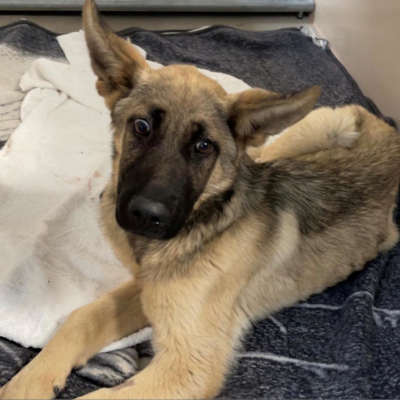
Male German shepherd puppy
This 6-month-old male German shepherd puppy has a black and tan coat.
He is in kennel No. 2, ID No. LCAC-A-5315.

Female German shepherd
This 1 and a half year old female German shepherd has a black and tan coat.
She is in kennel No. 3, ID No. LCAC-A-5296.
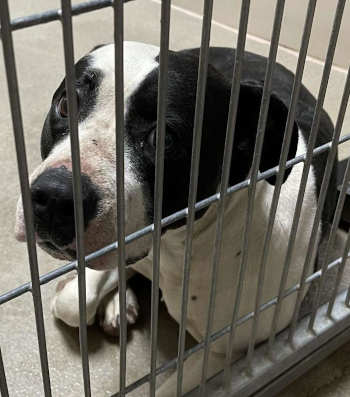
Female pit bull
This 2-year-old female pit bull has a short black and white coat.
She is in kennel No. 4, ID No. LCAC-A-5301.

Anatolian shepherd-mastiff mix
This 3-year-old male Anatolian shepherd-mastiff mix has a short fawn coat.
He is in kennel No. 5, ID No. LCAC-A-5276.
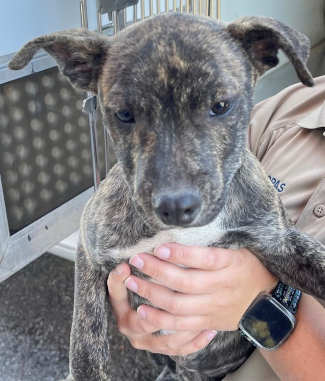
Male pit bull puppy
This 3-month-old male pit bull puppy has a short brindle coat.
He is in kennel No. 6, ID No. LCAC-A-5266.
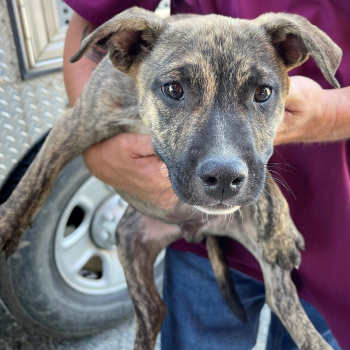
Male pit bull terrier
This 3-month-old male pit bull terrier has a short brindle coat.
He is in kennel No. 7, ID No. LCAC-A-5265.

Male pit bull
This 1-year-old male pit bull terrier has a short black coat.
He is in kennel No. 11, ID No. LCAC-A-5258.
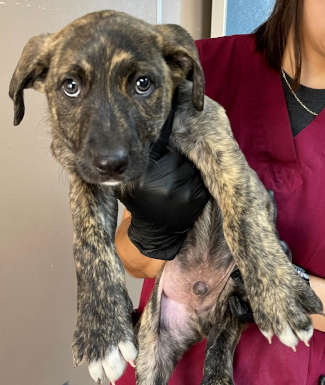
Male Catahoula leopard dog puppy
This 2-month-old male Catahoula leopard dog puppy has a short brindle coat with white markings.
He is in kennel No. 12b, ID No. LCAC-A-5245.

Female Catahoula leopard dog puppy
This 2-month-old female Catahoula leopard dog puppy has a short brindle coat with white markings.
She is in kennel No. 12c, ID No. LCAC-A-5246.

Female pit bull-pointer mix
This 8-month-old female pit bull-pointer mix has a brown brindle and white coat.
She is in kennel No. 14, ID No. LCAC-A-5230.
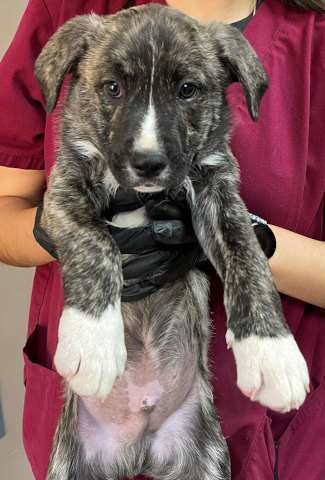
Male Catahoula leopard dog puppy
This 2-month-old male Catahoula leopard dog puppy has a short brown brindle coat with white markings.
He is in kennel No. 16a, ID No. LCAC-A-5244.

Male Catahoula leopard dog puppy
This 2-month-old male Catahoula leopard dog puppy has a short white coat with black markings.
He is in kennel No. 16b, ID No. LCAC-A-5247.
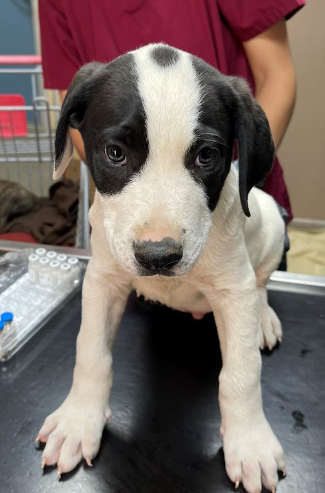
Female Catahoula leopard dog puppy
This 2-month-old female Catahoula leopard dog puppy has a short white coat with black markings.
She is in kennel No. 16d, ID No. LCAC-A-5249.
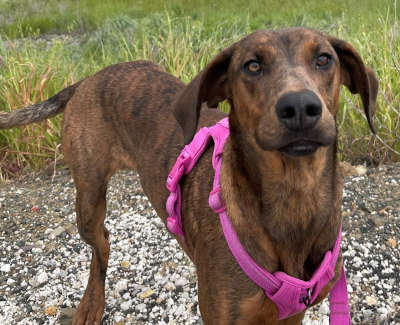
Male plott hound
This 2-year-old male plott hound has a short brown coat.
He is in kennel No. 18, ID No. LCAC-A-5143.

Female pit bull terrier
This one and a half year old female pit bull terrier has a short tricolor coat.
She is in kennel No. 20, ID No. LCAC-A-5312.

Male pit bull terrier
This 3-year-old male pit bull terrier has a short black and white coat.
He is in kennel No. 21, ID No. LCAC-A-5076.
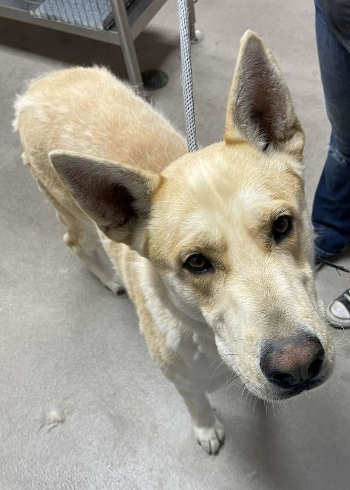
Male shepherd
This 2-year-old male shepherd has a tan and white coat.
He is in kennel No. 22, ID No. LCAC-A-5223.

Male shepherd
This 1-year-old male shepherd has a tan coat.
He is in kennel No. 25, ID No. LCAC-A-5303.

Male pit bull
This 1-year-old male pit bull terrier has a short tan coat with white markings.
He is in kennel No. 26, ID No. LCAC-A-5120.

Male pit bull terrier
This 1-year-old male pit bull terrier has a black coat with white markings.
He is in kennel No. 27, ID No. LCAC-A-5203.

Female pit bull-shepherd puppy
This 5-month-old female pit bull-shepherd puppy has a short tricolor coat.
She is in kennel No. 32, ID No. LCAC-A-5072.

Male shepherd
This 1-year-old male shepherd has a tricolor coat.
He is in kennel No. 33, ID No. LCAC-A-5310.
Email Elizabeth Larson at
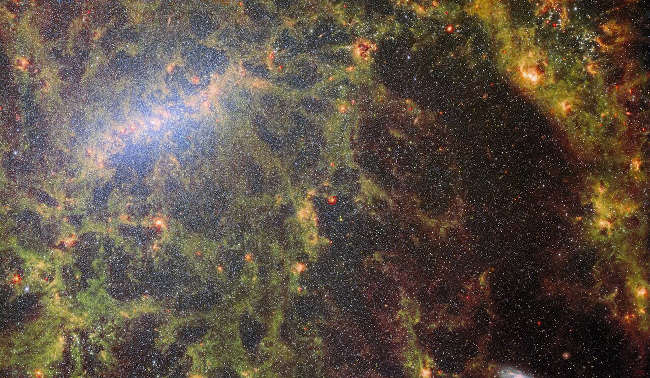
A delicate tracery of dust and bright star clusters threads across this image from the James Webb Space Telescope.
The bright tendrils of gas and stars belong to the barred spiral galaxy NGC 5068, whose bright central bar is visible in the upper left of this image — a composite from two of Webb’s instruments.
NASA Administrator Bill Nelson revealed the image Friday during an event with students at the Copernicus Science Centre in Warsaw, Poland.
NGC 5068 lies around 20 million light-years from Earth in the constellation Virgo. This image of the central, bright star-forming regions of the galaxy is part of a campaign to create an astronomical treasure trove, a repository of observations of star formation in nearby galaxies.
Previous gems from this collection can be seen here (IC 5332) and here (M74).
These observations are particularly valuable to astronomers for two reasons. The first is because star formation underpins so many fields in astronomy, from the physics of the tenuous plasma that lies between stars to the evolution of entire galaxies.
By observing the formation of stars in nearby galaxies, astronomers hope to kick-start major scientific advances with some of the first available data from Webb.

The second reason is that Webb’s observations build on other studies using telescopes including the Hubble Space Telescope and ground-based observatories.
Webb collected images of 19 nearby star-forming galaxies which astronomers could then combine with Hubble images of 10,000 star clusters, spectroscopic mapping of 20,000 star-forming emission nebulae from the Very Large Telescope (VLT), and observations of 12,000 dark, dense molecular clouds identified by the Atacama Large Millimeter/submillimeter Array, or ALMA. These observations span the electromagnetic spectrum and give astronomers an unprecedented opportunity to piece together the minutiae of star formation.
With its ability to peer through the gas and dust enshrouding newborn stars, Webb is particularly well-suited to explore the processes governing star formation. Stars and planetary systems are born amongst swirling clouds of gas and dust that are opaque to visible-light observatories like Hubble or the VLT.
The keen vision at infrared wavelengths of two of Webb’s instruments — MIRI, or Mid-Infrared Instrument, and NIRCam, or Near-Infrared Camera — allowed astronomers to see right through the gargantuan clouds of dust in NGC 5068 and capture the processes of star formation as they happened. This image combines the capabilities of these two instruments, providing a truly unique look at the composition of NGC 5068.
The James Webb Space Telescope is the world's premier space science observatory. Webb will solve mysteries in our solar system, look beyond to distant worlds around other stars, and probe the mysterious structures and origins of our universe and our place in it. Webb is an international program led by NASA with its partners, European Space Agency and the Canadian Space Agency.

The 4.5-magnitude quake was reported at 5:01 a.m. Saturday just inside the Sonoma County border.
It was located 3.6 miles southwest of Cobb and 13.4 miles north northeast of Healdsburg, at a depth of sixth tenths of a mile.
Lake County News received reports of residents in the Kelseyville area feeling it rocking and rattling their homes.
The U.S. Geological Survey had received 224 shake reports from around the North Coast, including Lake County, by 10 a.m. Saturday.
That main quake was followed by several aftershocks: a 2.8-magnitude at 5:02 a.m., a 2.6-magnitude at 5:07 a.m. and another 2.8-magnitude at 5:10 a.m., all close to the epicenter of the main quake in Sonoma County, and a 2.7-magnitude quake at 5:09 a.m. in Lake County that was just west of Cobb.
Reports on the main quake can be made here.
Email Elizabeth Larson at

The California Department of Fish and Wildlife invites everyone with an interest in natural resources to join us in recognizing California Invasive Species Action Week from Saturday, June 3, through Sunday, June 11.
For the past 10 years, CDFW has devoted the first week in June to engaging the public in taking action to prevent the harmful impacts of non-native plants and animals that threaten California’s natural resources, ecology and economy.
Historically, agencies, nonprofits and volunteer organizations across the state have teamed up to host events for California Invasive Species Action Week.
This year, opportunities to participate include virtual events and activities in all parts of the state, such as:
• Restoring habitat at Tolowa Dunes State Park in Crescent City with California State Parks, Tolowa Dunes Stewards and Redwood Parks Conservancy.
• Protecting the American River Parkway near Sacramento from invasive plants with the American River Parkway Foundation.
• Becoming a “Weed Warrior” at Cabrillo National Monument in San Diego by assisting with efforts to remove non-native grasses and other invasive plants.
• Learning how to identify Lake Tahoe’s native and invasive aquatic plants during a webinar with the League to Save Lake Tahoe.
• Watching lunchtime webinars from the University of California Cooperative Extension on topics such as removing the invasive seaweed Caulerpa and efforts to stop damaging insects from entering California.
Visit the CISAW schedule on CDFW’s website for details on these events and many more.
You can also watch webinars and learn about how to stop the spread of invasive species by taking small, everyday actions, such as landscaping with native plants, not releasing unwanted pets into the wild, reporting invasive species findings, and cleaning, draining and drying gear when recreating in bodies of water.
The CISAW web page lists simple actions Californians can take all year long while visiting natural areas, boating or fishing, or at home.
Next week, CDFW will announce winners of the annual California Invasive Species Youth Art and Video Contest on social media. This year’s theme was “Think Ahead and Prevent the Spread.”
The mission of CDFW’s Invasive Species Program is to reduce the impacts of invasive species on the wildlands and waterways of California. The program is involved in efforts to prevent the introduction of these species into the state, detect and respond to introductions when they occur, and prevent the spread of those species that have established.
For questions or more information about CISAW, please contact
The cleanup will take place from 9 a.m. to 1 p.m.
The goal is to clean up Lucerne by picking up tires, trash or anything that doesn’t belong.
Anyone can attend to volunteer. There will be a site host who will have trash bags, garbage grabbers, gloves and safety vests for the public to use while picking up waste. All the collected trash will then be hauled to the dump.
Volunteers are encouraged to go far and wide in Lucerne to collect garbage in watersheds, on beaches and areas near waterways.
All items need to be brought back to the site host by 1 p.m. on Saturday.
The project director Jordan Beaton, Lake County Water Resources Program coordinator, realizes walking around with a bunch of tires and trash bags might be quite an inconvenience.
For this reason, a designated pick up location in town can be coordinated the day of the clean up event with the site host. This could be as simple as reporting to the site host how many bags were dropped off at this location.
If you have any questions, please contact Beaton at 707-263-2344 or email her at
Social Security is in trouble.
The retirement and disability program has been running a cash-flow deficit since 2010. Its trust fund, which holds US$2.7 trillion, is rapidly diminishing. Social Security’s trustees, a group that includes the secretaries of the departments of Treasury, Labor, and Health and Human Services, as well as the Social Security commissioner, project that the trust fund will be completely drained by 2033.
Under current law, when that trust fund is empty, Social Security can pay benefits only from dedicated tax revenues, which would by that point cover about 77% of promised benefits. Another way to say this is that when the trust fund is depleted, under current law, Social Security beneficiaries would see a sudden 23% cut in their monthly checks in 2034.
As economists who study the Medicare and Social Security programs, we view the above scenario as politically unacceptable. Such a sudden and dramatic benefit cut would anger a lot of voters. Unfortunately, the actions necessary now to avoid it – like raising taxes or cutting benefits – aren’t getting serious consideration today. But we believe there are strategies that could work.
Where the money for benefits comes from
Roughly 67 million Americans, most of whom are 65 or older, receive Social Security benefits. The agency disburses more than $1 trillion annually. It’s the government’s largest single expenditure, constituting nearly 20% of the total federal budget.
Social Security is funded by a payroll tax of 12.4% on wages split equally between workers and employers. Self-employed people pay the entire 12.4%. This payroll tax applies to earnings up to $160,200 as of 2023. The government increases this cap annually based on increases in the National Average Wage Index – a measure that combines wage growth and inflation. The program also receives about 4% of its revenue from a tax on Social Security benefits, though not everyone who receives them has to pay this tax.
Social Security tax revenue stayed relatively flat after 1990. But the costs of the program rose sharply in 2010, in part because of early retirements in response to the Great Recession.
Social Security spending has recently been growing more rapidly because of a wave of baby boomer retirements, which added to a decline in the number of workers per retiree.
Costs of the program are expected to further exceed the money that’s coming in, which will continue to drain the trust fund, according to the program’s trustees.
Barring immediate action by the government, the trust fund’s exhaustion is only a little more than a decade away. And yet few members of Congress seem willing to do something about it. For example, Social Security reform was not even on the table during the 2023 negotiations over the debt ceiling and spending cuts.
Trust fund
Where did the trust fund, which helps cover the program’s costs, come from?
While the Social Security program was collecting surpluses from 1984 to 2009, that extra money funded other spending – keeping other taxes lower than they would have been otherwise and partially covering the budget deficit.
During Social Security’s years of surplus, the excess revenues were credited to the trust fund in the form of special-issue government bonds that yielded the prevailing interest rates. When those bonds are needed to pay for Social Security expenses, the Treasury redeems them.
Those bonds are components of the government’s $31.4 trillion gross debt.
Last reformed during the Reagan administration
Reducing the benefits current retirees receive would be extremely unpopular. Likewise, people now in the workforce who are nearing retirement would certainly object strongly if they were told to expect lower benefits in retirement than they have been promised throughout their careers.
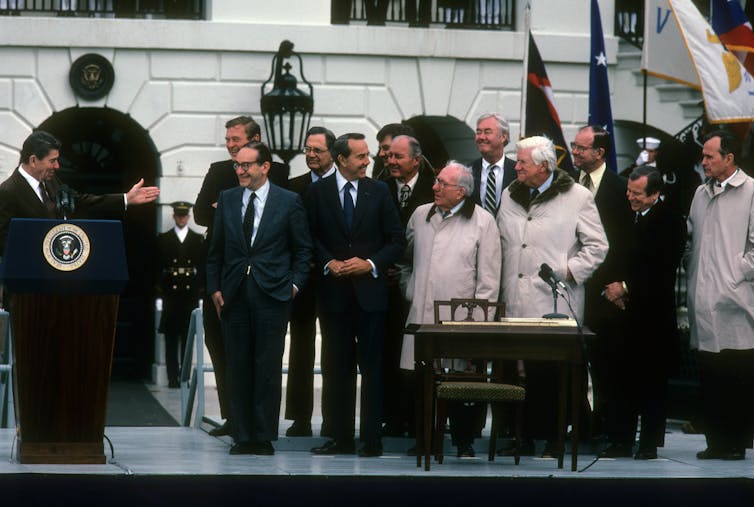
The last time the government made big changes to Social Security was in 1983, during the Reagan administration, when the government enacted reforms that slowly reduced benefits over time. These changes included raising the full retirement age, a change that is still being phased in. Because of those changes, workers born in 1960 or later cannot retire with full benefits until age 67 – two years later than the original retirement age.
The 1983 reforms also included increases in the Social Security payroll tax rate from 10.4% in 1983 to 12.4% by 1990, and for the first time levied federal income taxes on higher-income retirees’ benefits. Workers bore the burden of the payroll tax increases and higher-income retirees bore the burden of the tax on benefits.
Those changes bolstered the program’s finances, but they no longer suffice.
The bipartisan 2001 Commission to Strengthen Social Security tried – and failed – during George W. Bush’s presidency to get Congress to enact reforms to shore up the program’s finances. There’s been no momentum toward resolving the problem since then.

4 principles
We believe that policymakers and lawmakers need to follow four principles as they consider how to move forward.
-
The program should be self-funded in the long run so that its annual revenues match its annual expenses. That way the many questions that arise related to trust fund accounting and whether Social Security tax revenues are being used for their intended purposes would be eliminated.
-
The reform burden should be shared across generations. Current retirees can share the burden through a reform that reduces the cost-of-living adjustment. Today’s workers can share the burden through an increase in the cap on income subjected to Social Security taxes so that 90% of total earnings are taxed. Continued gradual increases in the retirement age to keep pace with anticipated longevity gains would also be borne by current workers.
-
The government should make sure that Social Security benefits will be adequate for lower-income retirees for years to come. That means reforms that slow the benefit growth of future retirees would be designed to affect only higher-income retirees.
-
Any changes to Social Security should help constrain the future growth of federal spending, given the current and projected growth in the budget deficit.
Advantages of ending the delay
It appears that the U.S. – citizens and elected officials included – are deferring serious debate on this urgent matter until the trust fund’s depletion is imminent. That’s unwise. Acting sooner rather than later would leave more options available to gradually resolve the program’s financial shortfalls.
Ending this procrastination would also give the millions of people who rely on Social Security benefits, taxpayers and businesses more time to prepare for any changes required by overdue reforms.
Andrew Rettenmaier, Executive Associate Director of the Private Enterprise Research Center, Texas A&M University and Dennis W. Jansen, Professor of Economics and Director of the Private Enterprise Research Center, Texas A&M University
This article is republished from The Conversation under a Creative Commons license. Read the original article.