 How to resolve AdBlock issue?
News

Federal Reserve officials held interest rates steady at their monthly policy meeting on Sept. 20, 2023 — only the second time they have done so since embarking on a rate-raising campaign a year and a half ago. But it is what they hinted at rather than what they did that caught many economists’ attention: Fed officials indicated that they don’t expect rates to end 2023 higher than they did in June – when they last issued their projections.
Since the hiking cycle began, observers have worried about whether increased rates could push the U.S. economy into a downturn. Some have even speculated that a recession had already begun. However, the economy has been more resilient than many expected, and now many economists are wondering whether the seemingly impossible soft landing – that is, a slowdown that avoids crashing the economy – has become a reality.
As a finance professor, I think it’s premature to start celebrating. Inflation is still almost double the Federal Reserve’s target of 2%, and is expected to come in at around 4% for September. What’s more, the economy is still growing quite fast, with consensus forecasts showing gross domestic product will rise by nearly 3% this quarter. Some early data suggests that could be a low estimate.
What’s next for interest rates?
Fed-watchers are parsing every word from the central bank to determine whether another hike is coming this year or next, or if the cycle is truly over. To understand that decision, it helps to consider the bigger picture.
While the U.S. economy has certainly avoided a downturn for longer than many expected, the inflation battle is a long way from finished. In fact, this wouldn’t be the first time the economy looked like it would avoid a soft landing. For the next several months, the economy is not likely to implode without a major spark.
However, inflation may not continue to fall as quickly in the coming year, which means the Fed may still raise rates more than some expect. If rising oil prices continue to boost transportation costs, other goods could also get more expensive, which may mean higher interest rates for longer.
Is this really the end?
Though Federal Reserve Chair Jerome Powell seemed to indicate that the committee is approaching the end of the hiking cycle, only 10% of economists expect that it is over at this point – not that economists’ track record of forecasting rates is great either. This is largely because Powell has been clear that the Fed is basing its decisions on economic data, which have been strong so far and hopefully will continue in that direction.
So while everyone is watching the Fed this week, they should also keep an eye on broader economic conditions. With luck, the reported data will continue to be strong enough to avoid a downturn, but not so strong that inflation picks back up.
D. Brian Blank, Assistant Professor of Finance, Mississippi State University
This article is republished from The Conversation under a Creative Commons license. Read the original article.
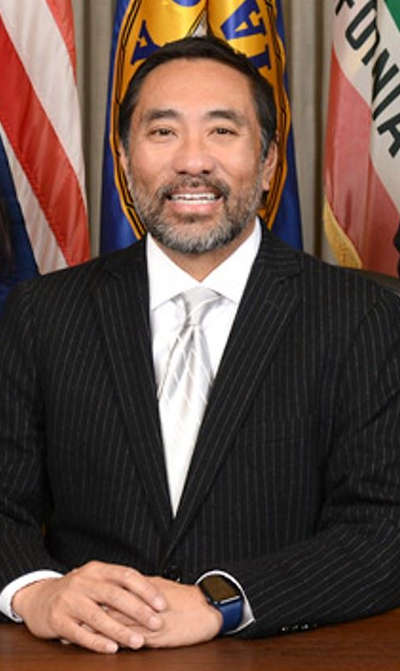
LAKE COUNTY, Calif. — Following a monthslong process that members of the local legal community have faulted for its lack of transparency and failure to consider issues involving potential conflicts and high costs, the Board of Supervisors on Tuesday selected a Bay Area attorney and politician as Lake County’s new chief public defender.
The supervisors appointed Raymond Buenaventura, mayor of Daly City and a longtime member of its council as well as an attorney in private practice, as chief public defender during its regular meeting on Tuesday.
He’ll start at a pay rate that makes him one of the highest-paid county employees for a job created in April.
A county statement about his hiring called it a “historically significant board action” that “followed a rigorous review of indigent legal defense in Lake County.”
“Our board is truly excited Mr. Buenaventura has chosen to invest his considerable experience and energies toward supporting a stronger and more just future for Lake County,” said Board Chair Jessica Pyska in the statement released by the County Administrative Office. “We are committed to supporting his important work.”
“I am grateful for the board’s confidence in my leadership at this important juncture,” Buenaventura said in the county-issued statement. “This is a great opportunity to build on the considerable strengths of those working hard to ensure every Lake County defendant receives a professional and appropriate defense.”
In this new role, Buenaventura will have the opportunity “to apply all he has learned toward establishment of a dynamic County of Lake Public Defender Office,” the County Administrative Office reported.
The statement attributed to Buenaventura said, “It is also a chance to bring fresh ideas and renewed energy, and promote the public interest through innovative programs that can truly make a difference. I look forward to deepening my understanding of the unique challenges and opportunities in Lake County’s communities, and building an effective and transformative Public Defender Office.”
Buenaventura has served on the City Council for Daly City since April 2011. His current term expires in November 2026, according to his profile on the Daly City website.
Buenaventura holds a bachelor’s degree in legal studies through the University of California, Berkeley — also the alma mater of current County Counsel Lloyd Guintivano. He received his Juris Doctor degree from Whittier College School of Law.
Buenaventura was admitted to the State Bar in June 1993 and is a certified criminal law specialist. He also serves as a member of the State Bar of California’s Finance Committee.
On his State Bar profile is a link to his law firm website. On a mobile phone, that link brings up a website that appears to have been hacked and now displays pornography.
More useful information about his achievements can be found on his LinkedIn page, which shows that he was admitted to the Washington D.C. Bar in 2007 and the New York State Bar in 2017, and was certified by the Veterans Affairs in January 2018 as a veterans disability attorney.
He’s been a licensed private pilot since January 1987, is captain of the Civil Air Patrol, has served as a pro bono attorney for Bay Area homeless shelters and has been an adjunct professor for San Francisco State University since 2019, according to his LinkedIn profile.
Buenaventura has been involved with Asian and Filipino American organizations and with politics through the Democratic Party. He’s also bilingual, speaking both English and Tagalog, as well as having some proficiency in Spanish.
The county’s hiring announcement said that from 2014 to 2020, Buenaventura — who had been appointed by then-Gov. Edmund G. Brown — contributed policy and strategic direction to the state of California’s Commission on Asian and Pacific Islanders.
Questions about hiring process
Deputy County Administrative Officer Matthew Rothstein Rothstein confirmed that Buenaventura was among five applicants the Board of Supervisors interviewed in a process that began on July 18 and extended over seven meetings, one of them a special meeting planned Aug. 3 for the purpose of holding the closed-door interviews. The final interviews had been scheduled on Tuesday.
Lake County News has confirmed independently that of those applicants, two were Lake County attorneys — Tom Quinn and Tom Feimer. Both work as defense attorneys and Feimer is a partner in Lake Indigent Defense, or LID, the contractor which has held the county’s indigent public defense contract since 2017. Seventeen attorneys work for LID, including Quinn.
Andrea Sullivan, Feimer’s partner in the contract and the wife of Lake County Treasurer-Tax Collector Patrick Sullivan, said Lake Indigent Defense’s contract extends until June. She said the county has not revealed how the contract is set to end or transition, despite she and Feimer asking about the process.
Sullivan and Angela Carter, who held the indigent defense contract for many years before LID, have both raised concerns about how the chief public defender’s hiring process has been handled and how the attorneys involved in ensuring that local criminal defendants get the best representation possible have been kept in the dark.
“What is this guy going to do?” Sullivan asked, adding that she doubts he will move from Daly City to do the work.
Carter faulted the integrity of the process and a “bad start.”
She’s concerned that Buenaventura isn’t going to actually live in Lake County and that he doesn’t know the community, adding, “We have no idea who he is.”
Carter also said the county’s hiring process “was done so cloak-and-dagger. If he hasn't ever spoken to any of us and we haven't seen him in our courts then how does he know what is needed.”
The county has not answered Lake County News’ question about whether there will be a requirement for Buenaventura to live in Lake County at least-part time during his tenure.
In its hire of Dr. Noemi Doohan as Public Health officer last month, the supervisors approved a contract that allows Doohan to work mostly remotely after the initial months of employment and to continue to hold other jobs, which opens a door for other department heads from out of county to do the same.
The county announcement said Buenaventura has represented criminal defendants in more than 100 jury trials ranging from minor infractions to murder cases with special circumstances, such as death penalty-eligible cases, in communities throughout California.
The county did not reply when asked if Buenaventura had spoken with local attorneys and legal officials ahead of taking the job.
Carter, Sullivan and Quinn all confirmed to Lake County News that neither they nor any other attorneys working in the local defense system have met Buenaventura or seen him in court observing cases in the lead up to his hire.
While he won’t be overseeing any staff yet, the board appointed him at the top step of the newly created pay range for the chief public defender.
The first pay range, established along with the position allocation job at the board’s April 18 meeting, was for $10,461 or $125,532 a year. On the county’s website, the job description has a range of $130,704 to $158,868 annually.
However, last week, the board approved as part of its consent agenda a resolution amending the resolution that established the position allocation and classification for the chief public defender’s job.
“Based on the accepted Conditional Offer of Employment and in preparation of a final offer of employment, this proposed Resolution amends the previous Resolution that includes a grade and salary change for the Chief Public Defender classification,” wrote County Administrative Officer Susan Parker.
That action raised the pay range from $10,892 (Step 1) to $13,239 (Step 5) to $12,631 (Step 1) to $15,352 (Step 5).
Rothstein said the board approved Buenaventura’s hire at the fifth step, which is $184,234.26 annually.
That appears to put him ahead of District Attorney Susan Krones, who oversees a staff of at least 15 and whose 2022 wages totaled $177,314, according to the Government Pay in Compensation website.
It’s also well more than the $11,000 that Sullivan and Feimer each have each received while running LID. Sullivan said they receive no benefits and must pay all of their own expenses out of that amount.
Report kicks off process
In August 2021, the county hired the Boston-based Sixth Amendment Center, or 6AC, a national nonpartisan nonprofit, to conduct an operational analysis of indigent defense services, as Lake County News has reported.
“They reached out to us,” David Carroll, 6AC’s executive director, told Lake County News in a February interview about how the county first engaged with the organization.
He said Lake County officials contacted 6AC after studying issues in Santa Cruz County, where the organization also had done a significant evaluation.
That led to the report, “The Right to Counsel in Lake County, California: Evaluation of Trial-Level Indigent Representation Services,” which 6AC publicly released at the end of January.
However, Lake County News has confirmed with Sullivan and others involved with the process that the county had been in receipt of the 6AC report last year, well before the Board of Supervisors finally held its first discussion of it in February.
The report said the county’s provision of public defender services and funding lacks accountability and oversight.
As a result, it recommended the county advocate for the state to form a legislative or gubernatorial committee to study and make recommendations on how best to fulfill the state’s Sixth and Fourteenth Amendment responsibilities to indigent defendants, that the Board of Supervisors establish and fund the operation of a nonpartisan independent commission to oversee all aspects of indigent representation services, and that the supervisors should immediately establish an office of indigent representation services to carry out the day-to-day duties of the commission, headed by an executive director attorney selected by the commission.
In other counties where it has conducted evaluations, 6AC has been invited to come and give a report before the Board of Supervisors and answer questions. In Lake County’s case, Carroll said 6AC wasn’t asked to come and make a presentation, and county officials didn’t come back to further discuss the report.
Instead, then-County Counsel Anita Grant, her staff and the County Administrative Office led the process, which resulted in the county hiring Jose Varela, the retired chief public defender of Marin County, to assist with the process of pursuing a public defender’s office.
Varela presented a draft public defender program work plan and phased implementation steps at its May 23 meeting.
“Why did they pick on us? We’ve never been sued. We’ve never been sued for harassment,” said Sullivan, adding that’s been the case for the District Attorney’s Office.
“It seems to be fashionable to put us under a microscope when there's serious issues elsewhere,” said Sullivan, pointing to morale issues across the county’s departments. “We don’t have those problems.”
Sullivan said she initially was suspicious of Varela, but that changed after she had the chance to have a 90-minute Zoom meeting with him.
“I think that his intentions were really pure,” Sullivan said, adding that he wanted a statutory public defender’s office.
“Everybody has wanted a statutory office for time immemorial,” Sullivan said.
However, she said it’s still not clear to her or other defense attorneys if establishing such an agency is what the county actually intends to do.
“It’s very unclear to me what he is supposed to be doing,” said Sullivan of Buenaventura, noting his job description sounds a lot like what she and Feimer have been doing.
Throughout the process, Carter has raised concerns about the potential cost to implement a statutory public defender’s office.
Lake County had one in the early 1980s, but due to high costs in order to deal with conflicts of interest for the attorneys involved, it was abandoned.
While both Carter and Sullivan are supportive of a statutory public defender’s office, they warn that it comes with very high costs to cover staffing.
Sullivan said the LID contract currently costs the county $1.62 million, and that includes covering all potential conflicts of interest, which are ethical issues that can arise with attorneys representing certain clients because of previous relationships. She said some counties have as many as three or four layers of conflict attorneys.
Carter told the Board of Supervisors during the discussions this spring that they could see costs rise to $4 million a year for a statutory public defender’s office.
If there are conflicts with even one attorney in the proposed public defender’s office, the entire office would be disqualified from handling a case. That would result in additional attorneys needing to be hired, which Sullivan said could cause the county’s annual costs to run much higher than the anticipated $4 million.
Currently, all public defense attorneys under LID are contractors. “One of the things that was great about LID is that we had amazing retention over the District Attorney's Office and over other public defenders officers,” Sullivan said.
LID’s team also has attorneys with far more defense experience than other public defenders in neighboring counties. Sullivan is concerned that current contract attorneys will leave as it’s a very good market for defense attorneys now, so they can go elsewhere and be paid far better.
Because Lake County’s contracted defense attorneys have been paid below the market rate, the model — as originally conceived — allowed them to supplement their income by taking work outside of the contract and even in other counties, as Sullivan herself has done.
“We are not forcing anyone to solely work in Lake County because they are not employees. We do not exercise that amount of control over them,” she said.
However, she said that about two to three years ago, a shift occurred in the attitude the Lake County Superior Court and the county leadership had about the contract attorneys taking outside work.
“The county and the court were super hostile to me being out of county. But we’re independent contractors,” she said.
Sullivan in particular pointed to the current presiding judge of the Lake County Superior Court — Judge J. David Markham — as being “extremely hostile to the practice of outside law.”
Before he was initially appointed as a Lake County Superior Court judge, Markham had been Sullivan’s partner in administering the indigent defense contract.
Sullivan said she and Feimer have explained to the county that if the chief public defender tries to direct subcontractors — including telling them they cannot work outside of the county and the contract — they will be considered employees. “That would not be an ethical position to take.”
That could lead to extreme liability for the county, especially if the California Employment Development Department found out, as Sullivan said it could lead to audits and millions of dollars in unnecessary and avoidable costs.
There is another nightmare scenario that they’ve tried to alert the county about, Sullivan said.
She said that if Buenaventura directs the contract attorneys too much, causing them to no longer be considered part of a separate entity from the county, and if the Court of Appeal finds out about it, they could reverse convictions. It’s happened before in other parts of the state, she said.
While LID’s contract is supposed to continue through next summer, Sullivan said it will go on without her.
She said that in light of the presiding judge making it impossible for her to have an outside practice, she has given the county notice that she is terminating her contract. It ends around Dec. 11.
Despite her concerns, Carter said she’s hopeful that local defense attorneys will hear from Buenaventura soon “and that he demonstrates his commitment to our rural county's indigent population by living here and joining our community wholeheartedly.”
Email Elizabeth Larson at
LAKEPORT, Calif. — During a brief Tuesday evening meeting, the Lakeport City Council approved adding a no parking zone on a portion of Hartley Street.
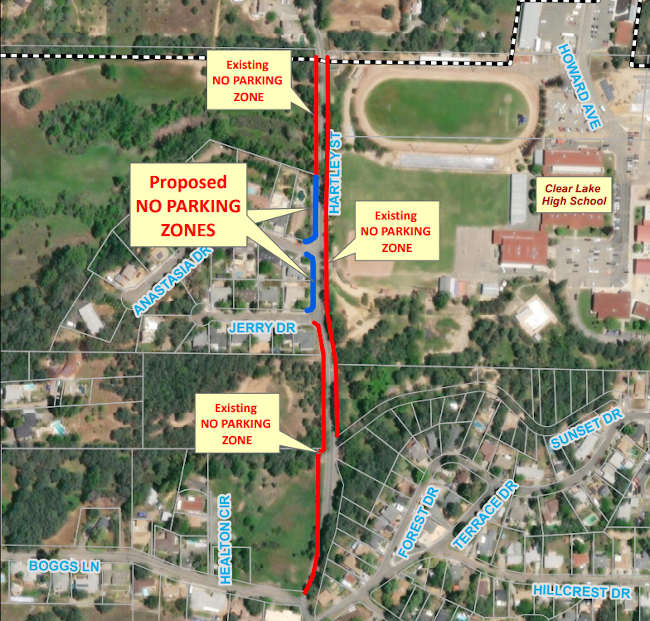
Public Works Director Ron Ladd presented to the council an updated resolution revising the prohibited parking zones within the city to include posting the west side of Hartley Street from Boggs Lane north to the city limit as a no parking zone.
Councilman Brandon Disney recused himself from the discussion due to the proximity of his home to the area in question.
Ladd’s written report to the council explained that pedestrian improvements and lane realignments completed with the Hartley Street Project resulted in city staff concluding that there is no longer adequate roadway width for safe traffic flow on Hartley Street to allow for parking along the west side of the street.
He said Tuesday evening that there is no longer sufficient space to park safely on that side of the road beginning around the area of Jerry and Anastasia drives to the city limit.
“Even before the project it was an incredibly small space,” he said.
Mayor Pro Tem Michael Froio pointed out that the Clear Lake High School baseball field, located at the intersection of Anastasia Drive with Hartley Street, gets a lot of use. He was concerned that the city might be making criminals by implementing the change.
“This is a genuine safety concern, is what you’re saying,” Froio said.
Ladd said there is not enough space to legally park there, and that the changes eliminated six parking spots.
Froio said there is still off street parking by the school
Ladd said the legitimate parking by the baseball field is on school grounds.
City Manager Kevin Ingram said the project involved doing “quite a bit of cleanup” for the district encroachment, which was well into the travel lane.
Mayor Stacey Mattina said the parking situation wasn’t great before the changes. Councilman Kenny Parlet, who acts as an umpire, said that area has never been a good situation due to driving patterns.
Froio moved to approve the resolution, which Parlet seconded. Froio, Mattina, Parlet and Councilmember Kim Costa approved the motion unanimously, with Disney recusing.
At the end of the meeting, which ran just under a half-hour, Ingram reported that the city council and members of city staff are going this week to the League of California Cities annual meeting, taking place in Sacramento.
In their absence, Ingram said Ladd has been designated the acting city manager.
Email Elizabeth Larson at
The Insurance Institute for Business & Home Safety, or IBHS, in collaboration with Cal Fire’s Office of the State Fire Marshal and Sacramento City Fire, has conducted a live wildfire demonstration to show the effectiveness of research-based wildfire mitigation actions in its Wildfire Prepared Home designation program, including maintaining a noncombustible five-foot buffer around a home – Zone 0 – to help reduce its risk of ignition.
Embers, not the main fire front, are the leading cause of home ignitions during a wildfire, the research showed.
As part of a Cal Fire/California Office of Emergency Services joint powers authority meeting, the live fire demonstration featured a side-by-side look at fire behavior impacts on mitigated vs. unmitigated structures.
“Northern Californians live with the reality of wildfire,” said IBHS CEO Roy Wright. “Yet, they may be unaware of how embers can attack an unmitigated structure. Following the actions captured in Wildfire Prepared Home gives them a better chance of having a house to come home to in the event of wildfire entering their neighborhood.”
Based on the latest wildfire research, IBHS created Wildfire Prepared Home, a system of mitigation actions addressing the three most vulnerable areas of a home – the roof, specific building features such as gutters and vents and Zone 0 — that California homeowners can take to meaningfully reduce their home’s risk of ignition and receive a designation that may help with insurance availability.
IBHS and Cal Fire – Office of the State Fire Marshal urge homeowners to get started now.
Most California homes have Class A roofs, meeting that component of the designation requirements. Mitigation actions for building features include ensuring a home’s vents are ember resistant, gutters are debris free and the last six inches of vertical space on the exterior wall are made of noncombustible material.
Creating a non-combustible five-foot buffer around the home involves removing combustible items and vegetation, replacing groundcover like wood or rubber mulch with materials such as river rocks or gravel and replacing the first five feet of combustible fencing attached to the home.
Items on top of or underneath attached porches and decks should also be non-combustible and any deck four inches or lower to the ground should be enclosed with 1/8 inch or finer metal mesh. Keeping Zone 0 free of debris build up over time is critical.
“Developing a combustible free zone around your home doesn’t mean taking away its curb appeal,” said IBHS Chief Engineer Anne Cope. “There are great choices for decorative décor and hardscaping that are not only attractive, but also low maintenance.”
During a wildfire, embers may collect in Zone 0, also known as the home ignition zone, and smolder, ultimately igniting and spreading to the home. Once a home ignites in a wildfire, it is almost always a total loss without firefighter intervention.
“Peak wildfire season is here, but there is still time to prepare your home before a wildfire strikes your community,” urged Acting State Fire Marshal Daniel Berlant. “Today’s demonstration showed how vulnerable a home can be and how much of a difference taking steps to prepare your home for wildfire can make.”
“Firefighters can’t do it alone – everyone has a part to play in making California safer from wildfires, including insurance companies,” said Insurance Commissioner Ricardo Lara. “California is the first state in the nation to require insurance companies to incorporate our new Safer from Wildfires framework into the price of insurance — so we reduce wildfire risk and incentivize people to harden their homes. If you do the work, you should get the reward, and today’s demonstration highlights the difference these actions make in reducing fire risk.”

As questions loom over the Federal Emergency Management Agency’s ability to fund disaster recovery efforts, people whose homes were damaged or destroyed by recent wildfires and storms are trying to make their way through the difficult process of securing financial aid.
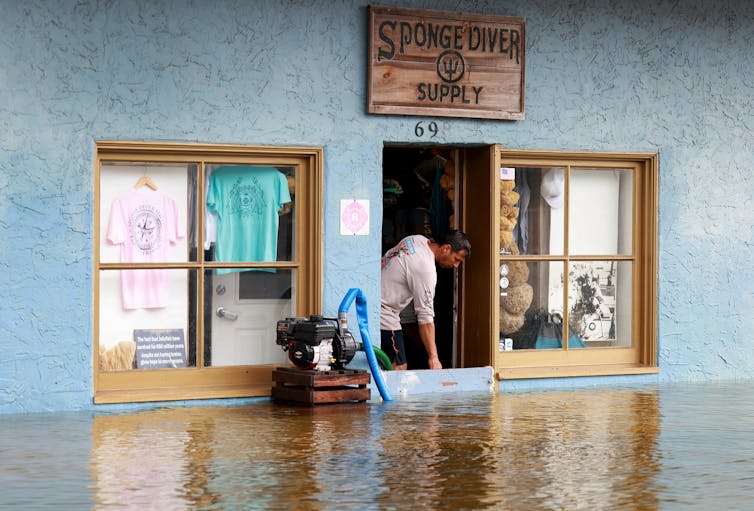
Residents in communities hit by Hurricane Idalia, the Maui fires or other recent disasters have a long, tough journey ahead. Early estimates suggest Idalia caused US$12 billion to $20 billion in losses, primarily in property damage, acccording to Moody’s Analytics. And rebuilding Lahaina, Hawaii, has been forecast at over $5.5 billion.
How well the initial disaster response meets residents’ needs has far-reaching consequences for community resilience, especially for vulnerable residents, as we saw after Hurricanes Katrina and Maria.
I am a law professor who focuses on disaster recovery and preparedness and has created several legal clinics to assist survivors. Here’s what anyone facing losses after a federally declared disaster needs to know.
Declaring a disaster
The road to recovery starts with state and federal governments identifying damages – both property damage and economic damage. These assessments will shape the scope of federal assistance and how resources are allocated for each community and survivor. The level of damage will determine whether the president approves a major disaster declaration or simply an emergency declaration.
FEMA created a survey tool, released in May 2023, to make these assessments more consistent. It is now used by officials to collect information about damage to residences, whether owners or renters live there, and the amount of insurance coverage, among other details. That information is then used to determine the extent of the disaster, its impact on infrastructure and the type of aid needed in the request for a federal disaster declaration.
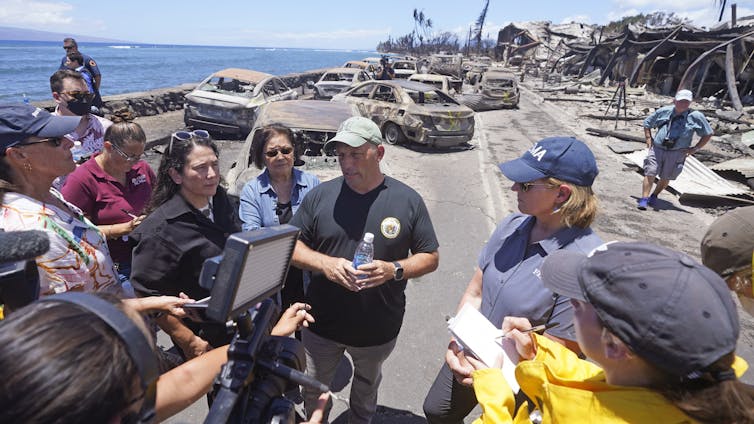
Once the federal government issues an emergency or major disaster declaration, individuals can apply for disaster recovery funding.
Documenting the damage
Step 2 is determining individual damages.
Amid the grief and the rush to find temporary housing and rebuild lives, it can be hard to focus on meticulously documenting what was lost and dealing with insurance. But federal aid has relatively short deadlines – people have 30 days from the formal disaster declaration to apply for disaster unemployment assistance and 60 days for individual and household assistance, such as aid for housing, though that deadline is often extended.
As soon as possible, disaster survivors should take photos of the damage and record every affected area of their property. That includes capturing details of damage to structures, personal belongings, vehicles and any medical equipment. This documentation will help provide the evidence for insurance claims, requests for government assistance and potential tax savings.
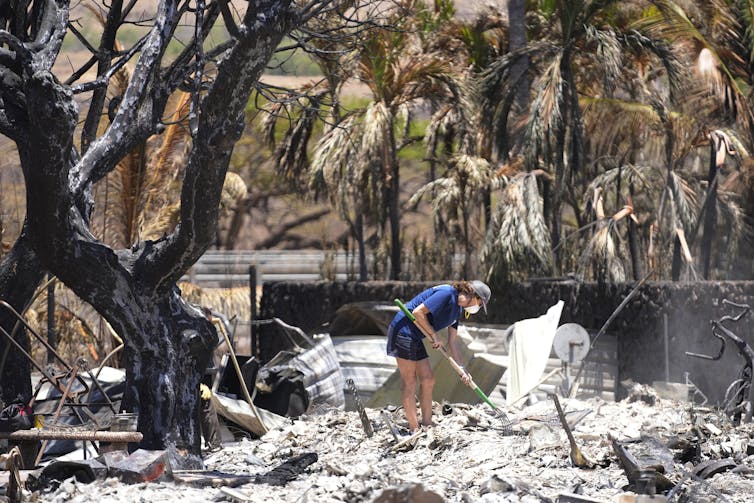
The Internal Revenue Service has a helpful guide for reconstructing records after catastrophic disasters that destroy everything. Government agencies can recover lost driving records, mortgage records, wills and vehicle sales records. Most of the costs for these searches can be waived after a disaster.
There are other sources, too. Title companies, property tax assessors and real estate brokers will have many documents related to a home’s value and possibly photos. Insurance policies typically list major assets. Credit card companies may have statements showing major purchases. Mobile phones, friends and social media accounts may have more photos of the property.
Keeping records such as repair invoices, receipts, leases, canceled checks and money orders can also help provide an overview of the losses. FEMA recently amended its policy to also allow affidavits to prove ownership of homes passed down through generations, known as heirship property.
Finding disaster aid
People generally have four options for aid: insurance coverage, FEMA benefits, community or nonprofit funding, and private funding, including loans. Navigating this complex landscape can be hard.
Start with your insurance – homeowners insurance, renters insurance and insurance for vehicles, as well as medical, dental and health. Disaster survivors must apply for their relevant insurance payouts before FEMA will pay benefits. President Joe Biden made an exception to this rule to offer a one-time $700 payment for Maui residents to assist with critical needs, including shelter and transportation.
In cases where insurance coverage is denied or the person doesn’t have insurance, FEMA can become a lifeline.
FEMA’s Individual Assistance program offers benefits that include coverage for temporary lodging, home repair, transportation and medical needs. The agency provides up to $41,000 for housing assistance after emergencies or disaster declarations. FEMA’s disaster relief fund is close to depleted, however, after several multibillion-dollar disasters. Without additional funding from Congress soon, FEMA Administrator Deanne Criswell said some recovery funding may be delayed to the next fiscal year, which starts in October.
To cover the costs that go beyond FEMA’s limits, survivors may need to secure private loans or disaster loans, such as Small Business Administration disaster loans, to bridge the gap. Homeowners can apply for SBA loans to replace or repair their primary residence or personal property, including cars, furniture and other items. Additionally, SBA loans can also cover business losses.
For those unwilling or unable to resort to loans, state and local governments often create housing recovery centers using Community Development Block Grants. These grants can help survivors reestablish housing, but the funding also takes much longer to arrive. A CBDG grant in Baton Rouge provided funding for rebuilding housing and to mitigate future flood damage in housing and rental programs after the area flooded in 2016.
Community partnerships are crucial
Amid the complexities of disaster recovery, the importance of community planning and collaboration cannot be overstated.
A coordinated approach that involves local governments, relief organizations and community leaders serves as a catalyst for effective recovery and also makes it easier to identify vulnerable populations and ensure the equitable distribution of resources so no one is left behind.
Communities often set up centers where residents can find and speak to advisers from insurance companies, FEMA and other sources of support. These disaster recovery centers can be the cornerstone for long-term recovery groups that help a community both recover and build resilience.
Five years after Hurricane Maria, community groups were still on the ground in Puerto Rico providing aid and resources to the local community. Ten years after Hurricane Katrina, local housing groups were still providing support to New Orleans residents, especially those employed in the hospitality industry.
In the midst of this formidable journey to recovery, the indomitable spirit of communities banding together, combined with the concerted efforts of government agencies and organizations, can be uplifting. Each step forward represents a collective stride toward healing, renewal and a future marked by greater unity.
This articled was updated Sept. 1, 2023, with early damage estimates.
Latisha Nixon-Jones, Associate Professor of Law, Jacksonville University
This article is republished from The Conversation under a Creative Commons license. Read the original article.
LAKE COUNTY, Calif. — In response to a weather forecast that includes high winds midweek, a public safety power shut-off may begin on Wednesday evening, with a small number of Lake County residents to be impacted.
Pacific Gas and Electric said Tuesday that its meteorologists and operations professionals, working with weather agencies, are monitoring a potential dry, northerly windstorm forecast to start Wednesday evening, extending into Thursday morning, which is why the company is considering implementing the public safety power shut-off, or PSPS.
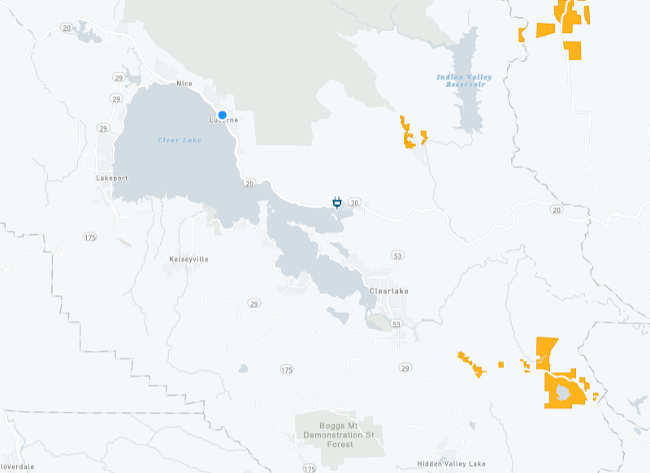
The PSPS, which may start at 6 p.m. Wednesday, would potentially impact 4,200 customers in portions of eight counties and two tribal communities, including seven customers in Napa County and 186 customers in Lake County.
The company’s mapping for the proposed PSPS shows a small number of Lake County residents would be impacted near Indian Valley Reservoir, along with a larger group east of Lower Lake in a remote area along Morgan Valley Road, close to the Colusa, Napa and Yolo county lines.
Because of the wind storm, PG&E said it has begun sending advanced notifications to customers — via text, email and automated phone call — in targeted areas where PG&E may implement the PSPS to reduce the risk of ignitions from energized power lines.
Predictive Services Northern Operations, a federal forecasting agency, is also forecasting high fire potential risk Wednesday into Thursday for northerly wind gusts up to 40 miles per hour.
The Sacramento National Weather Service Office stated northerly winds develop Wednesday into Thursday with gusts of 30 to 35 miles per hour bringing enhanced fire weather concerns for portions of the Sacramento Valley.
The potential shut-off is currently expected to affect approximately 4,200 customers across the following counties and tribal communities:
Butte County: 435 customers, 36 Medical Baseline customers.
Colusa County: 484 customers, 37 Medical Baseline customers.
Glenn County: 349 customers, 18 Medical Baseline customers.
Lake County: 186 customers, 20 Medical Baseline customers.
Napa County: 7 customers, 0 Medical Baseline customers.
Shasta County: 1,558 customers, 131 Medical Baseline customers.
Tehama County: 1,117 customers, 124 Medical Baseline customers.
Yolo County: 10 customers, 0 Medical Baseline customers.
Grindstone Rancheria: 48 customers, 4 Medical Baseline customers.
Pit River tribes: 8 customers, 0 Medical Baseline customers.
Customers can look up their address online to find out if their location is being monitored for the potential safety shut-off at www.pge.com/pspsupdates.