 How to resolve AdBlock issue?
News
LAKEPORT, Calif. — Organizers have released livestream information for a community town hall on the issues of homelessness and mental health.
The Lakeport Police Department, city of Lakeport, Lake County Behavioral Health and Lake Family Resource Center will host the town hall from 6 to 8 p.m. Wednesday in the Soper Reese Theatre, 275 S. Main St., Lakeport.
The event will be live streamed on the LPD YouTube channel for those unable to attend in person.
There will be live question and answer sessions throughout the presentations.
The Lakeport Police Department will also respond to questions after the meeting to those who leave contact information.
The presenters are not able to interact with viewers on the YouTube channel; however, questions may be entered in the comments section of the video feed for responses after the meeting.
Questions may also be submitted via email toThis email address is being protected from spambots. You need JavaScript enabled to view it. . Please write “Town Hall Meeting Question” in the subject line.
A public survey link will be released after the meeting providing equal access to everyone attending in person, watching online, and those who were not able to participate in the town hall and have questions or want to offer feedback.
The intent of the public meeting is to engage with the community. Homelessness and mental illness are complex issues requiring the collaboration of agencies and the community.
The agenda will include an overview of legislative and voter changes to criminal justice laws over the past decade that impact treatment of individuals, response to mental illness locally, and the constraints faced by agencies in rural areas.
Presenters will discuss the status of the crisis responder program operated cooperatively by Lakeport Police and the Lake Family Resource Center.
Please contact Chief Brad Rasmussen at the Lakeport Police Department at 707-263-5491 for more information.
The Lakeport Police Department, city of Lakeport, Lake County Behavioral Health and Lake Family Resource Center will host the town hall from 6 to 8 p.m. Wednesday in the Soper Reese Theatre, 275 S. Main St., Lakeport.
The event will be live streamed on the LPD YouTube channel for those unable to attend in person.
There will be live question and answer sessions throughout the presentations.
The Lakeport Police Department will also respond to questions after the meeting to those who leave contact information.
The presenters are not able to interact with viewers on the YouTube channel; however, questions may be entered in the comments section of the video feed for responses after the meeting.
Questions may also be submitted via email to
A public survey link will be released after the meeting providing equal access to everyone attending in person, watching online, and those who were not able to participate in the town hall and have questions or want to offer feedback.
The intent of the public meeting is to engage with the community. Homelessness and mental illness are complex issues requiring the collaboration of agencies and the community.
The agenda will include an overview of legislative and voter changes to criminal justice laws over the past decade that impact treatment of individuals, response to mental illness locally, and the constraints faced by agencies in rural areas.
Presenters will discuss the status of the crisis responder program operated cooperatively by Lakeport Police and the Lake Family Resource Center.
Please contact Chief Brad Rasmussen at the Lakeport Police Department at 707-263-5491 for more information.
On Tuesday, tribal leaders, victims, law enforcement and lawmakers gathered for the latest in a series of statewide meetings to consider how a new tool – the Feather Alert – will work to help law enforcement quickly notify the public about missing Native Americans and enlist their aid.
The law that enacted the Feather Alert, AB 1314, took effect in January and was authored by Assemblymember James C. Ramos (D-San Bernardino), the first and only California Native American elected to the legislature.
The Feather Alert is similar to the AMBER and Silver alert systems which notify the public about missing children and when elderly, developmentally, or cognitively-impaired persons are missing.
Ramos and representatives from the California Highway Patrol, the Department of Justice and local and tribal law enforcement participated in a roundtable discussion at the Los Angeles County Office of Education on Tuesday about when and how the alert is activated.
Ramos has conducted three other such gatherings in Madera, San Bernardino and Mendocino counties.
“A common misconception is that most Native Americans live on reservations, but more than 70 percent of them live in urban areas. Close to 328,000 Native Americans live in the Los Angeles area. It has the greatest number of Native Americans in the state and the greatest number in any county in the United States according to the LA Native American Indian Commission,” Ramos said.
Ramos added that between 1999 and 2019, homicide was the third-leading cause of death among American Indian and Alaska Native women and girls.
On reservations, the homicide rate for Native American women is 10 times the national average. “These Feather Alert roundtables help to ensure that law enforcement and tribal communities know about this new tool so we can change the shameful statistics,” Ramos said.
“It gets too easy to cite these staggering statistics,” Ramos said. “The Feather Alert will aid law enforcement and families in getting the word out quickly when a Native individual is missing or endangered by alerting the public in a broad and effective manner. Colorado and Washington state also approved similar alerts last year. Creating an alert or advisory system was a top recommendation from tribal leaders for dealing with the disproportionate number of missing Native Americans, particularly women and girls.”
Ramos also noted that California, the state with the greatest population of Native Americans in the nation, is also among the states with the highest rates of reported cases of Missing and Murdered Indigenous People, or MMIP.
Ramos observed that Northern California has been hard hit in cases of missing Indigenous people.
In April, the Round Valley Indian Tribes in Mendocino County declared a state of emergency after two of their members were found murdered.
The Yurok Tribe, in the Humboldt region issued a similar declaration last year.
Feather alert criteria
To activate the Feather Alert, the following criteria that must be met:
• Missing person is an indigenous woman or an indigenous person.
• The investigating law enforcement agency has utilized available local and tribal resources.
• The local law enforcement agency determines that the person has gone missing under unexplained or suspicious circumstances.
• The local law enforcement agency believes that the person is in danger because of age, health, mental or physical disability, or environment or weather conditions, that the person is in the company of a potentially dangerous person, or that there are other factors indicating that the person may be in peril.
• Information is available that, if disseminated to the public, could assist in the safe recovery of the missing person.
Other California public alert systems
In California, the Feather Alert joins these other special notifications overseen by the CHP:
• The AMBER Alert, which stands for America’s Missing Broadcast Emergency Response is used when children age 17 or younger have been abducted. It has been in use since 2002.
• The Blue Alert, approved in 2011, notifies the public when a suspect in the assault or killing of a police officer remains at large and the search is active.
• The Silver Alert, used when elderly, developmentally or cognitively-impaired persons are missing and are determined to be at-risk. Adopted as the top priority of the California Senior Legislature in October 2011, it was enacted through SB 1047, legislation introduced by state Sen. Elaine Alquist (D-Santa Clara) and Sen. Lou Correa (D-Santa Ana). The bill was approved in 2012 and went into effect in 2013.
• The general endangered missing advisory is used when an individual is missing under unexplained or suspicious, and is believed to be in danger due to issues with age, physical and mental health issues, weather, being with a potentially dangerous person or other circumstances.
State Controller Malia Cohen on Tuesday published the 2022 self-reported payroll data for University of California institutions and California Community College districts on the Government Compensation in California website.
California law requires cities, counties and special districts to annually report compensation data to the State Controller’s Office.
The state controller also maintains and publishes state and CSU salary data.
No such statutory requirement exists for UC, CCCs, superior courts, fairs and expositions, First 5 commissions, or K-12 education providers; their reporting is voluntary.
The data covers more than 419,000 positions and approximately $25.16 billion in total wages.
All 11 UC institutions – including 10 campuses and the Office of the President – voluntarily filed compliant reports with the State Controller’s Office.
UC data cover 324,043 employees and more than $20.88 billion in total wages.
Thirty-eight CCC districts voluntarily filed compliant reports with the State Controller’s Office.
CCC data published cover 95,131 employees and more than $4.27 billion in total wages.
Fifteen CCC districts did not file a report with SCO, while another 19 filed reports that were not compliant.
Lake County is served by two community college districts, Mendocino-Lake Community College District and the Yuba Community College District. The State Controller’s Office said neither filed a report.
Users of the Government Compensation in California website can view compensation levels on maps and search by region; narrow results by name of the entity or by job title; and export raw data or custom reports.
The GCC site contains pay and benefit information on more than two million government jobs in California, as reported annually by each entity.
As the chief fiscal officer of California, Controller Cohen is responsible for accountability and disbursement of the state’s financial resources.
The controller has independent auditing authority over government agencies that spend state funds.
She is a member of numerous financing authorities, and fiscal and financial oversight entities including the Franchise Tax Board. She also serves on the boards for the nation’s two largest public pension funds.
Follow the Controller on Twitter at @CAController and on Facebook at California State Controller’s Office.
California law requires cities, counties and special districts to annually report compensation data to the State Controller’s Office.
The state controller also maintains and publishes state and CSU salary data.
No such statutory requirement exists for UC, CCCs, superior courts, fairs and expositions, First 5 commissions, or K-12 education providers; their reporting is voluntary.
The data covers more than 419,000 positions and approximately $25.16 billion in total wages.
All 11 UC institutions – including 10 campuses and the Office of the President – voluntarily filed compliant reports with the State Controller’s Office.
UC data cover 324,043 employees and more than $20.88 billion in total wages.
Thirty-eight CCC districts voluntarily filed compliant reports with the State Controller’s Office.
CCC data published cover 95,131 employees and more than $4.27 billion in total wages.
Fifteen CCC districts did not file a report with SCO, while another 19 filed reports that were not compliant.
Lake County is served by two community college districts, Mendocino-Lake Community College District and the Yuba Community College District. The State Controller’s Office said neither filed a report.
Users of the Government Compensation in California website can view compensation levels on maps and search by region; narrow results by name of the entity or by job title; and export raw data or custom reports.
The GCC site contains pay and benefit information on more than two million government jobs in California, as reported annually by each entity.
As the chief fiscal officer of California, Controller Cohen is responsible for accountability and disbursement of the state’s financial resources.
The controller has independent auditing authority over government agencies that spend state funds.
She is a member of numerous financing authorities, and fiscal and financial oversight entities including the Franchise Tax Board. She also serves on the boards for the nation’s two largest public pension funds.
Follow the Controller on Twitter at @CAController and on Facebook at California State Controller’s Office.
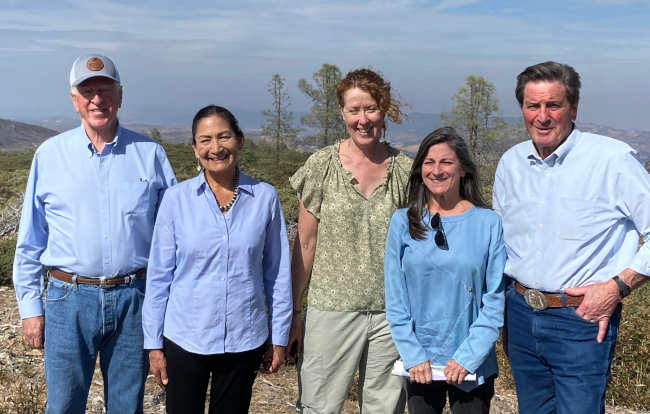
NORTHERN CALIFORNIA — On Monday, tribal, congressional and community leaders thanked Interior Secretary Deb Haaland and Bureau of Land Management Director Tracy Stone-Manning for visiting Molok Luyuk, the proposed Berryessa Snow Mountain National Monument expansion area.
On Sunday, Haaland and Stone-Manning visited the lands and held a roundtable discussion to hear from local community leaders on the need for President Joe Biden to use the Antiquities Act to protect the landscape.
“We are humbled and excited to have our Nation’s leaders visit our ancestral lands, particularly Molok Luyuk, an area of sacred and historic importance to Patwin tribes,” said Chairman Anthony Roberts, Yocha Dehe Wintun Nation. “Tribes have stewarded this area for millennia and welcome deeper collaboration with the Department of Interior and local stakeholders to protect Patwin culture and heritage.”
The Yocha Dehe Wintun Nation, which is requesting the expansion, has a long and significant connection to Molok Luyuk, stretching back thousands of years.
The ridge includes areas where religious ceremonies are practiced and sites that were central to vital trading routes. A key goal of this effort is also to establish comanagement with federally recognized tribes and to return to an Indigenous name for these lands.
Molok Luyuk is Patwin for “Condor Ridge” and is a name provided by the Yocha Dehe Wintun Nation. Currently the area is referred to as “Walker Ridge.”
“Molok Luyuk is a special and sacred place for area tribes and for many local residents who enjoy recreation activities like hiking and mountain biking,” said Lake County Supervisor E.J. Crandell, a member of the Robinson Rancheria Tribe. “The natural beauty of our home also drives tourism, which is key to the economic vitality of the region. Protecting these beautiful lands would be a gift to future generations.”
Berryessa Snow Mountain National Monument stretches from Napa County in the south to Mendocino County in the north, encompassing 330,780 acres of public lands managed by the Bureau of Land Management and the U.S. Forest Service.
President Barack Obama designated the national monument in 2015, responding to a call from Representatives Mike Thompson and John Garamendi, then-Senator Barbara Boxer, other members of California’s Congressional delegation, and community leaders to permanently protect these lands.
“Molok Luyuk is a rare treasure of rich cultural heritage and history, diverse wildlife and rare plants, stunning natural beauty and accessible recreational activities,” said Sandra Schubert, executive director of Tuleyome, leader of a local conservation organization and a participant in the roundtable. “We are deeply grateful to Secretary Haaland and Director Stone-Manning for visiting the lands and listening to why we want this special place protected. We encourage President Biden to expand the existing monument and permanently protect Molok Luyuk.”
The proposed expansion area is located on the eastern edge of the existing monument and includes 13,753 acres of public lands in Lake and Colusa counties.
These BLM-managed lands include oak woodlands, rocky outcroppings, wildflower meadows, the largest known stand of McNab cypress, and dozens of rare plant species.
Protecting the landscape would help the state of California under Gov. Gavin Newsom and the Biden Administration meet their shared goals to protect 30% of lands and waters by 2030.
“Molok Luyuk is a ‘must protect’ area in the midst of a changing climate,” said Mary Creasman, Chief Executive Officer, California Environmental Voters. “These public lands serve as a critical wildlife corridor for species such as tule elk, mountain lions and bears. It’s also home to imperiled wildlife such as bald and golden eagles and many rare plants. Protecting this habitat would help preserve critically important biodiversity.”
Senators Alex Padilla and Dianne Feinstein and Representatives Garamendi and Thompson have called on President Biden to use the Antiquities Act to expand Berryessa Snow Mountain National Monument and permanently protect Molok Luyuk.
The Antiquities Act is a 1906 law that grants presidents the ability to designate federal public lands, waters, and cultural and historical sites as national monuments to permanently conserve them.
“The meeting with Secretary Haaland and BLM Director Stone-Manning was a fruitful discussion on the many reasons why Molok Luyuk should be permanently protected,” said Elyane Stefanick, California Program Director for the Conservation Lands Foundation, who attended the event. “The addition of Molok Luyuk will protect the area’s rich biodiversity and play an important role in helping the state of California and the Biden Administration meet its goal of protecting 30% of U.S. lands and waters by the year 2030. We are grateful to the Interior secretary and the BLM director for personally visiting the area and listening to local community leaders.”
Popular recreation activities on these lands include hiking, mountain biking, photography, camping, horseback riding, and off highway vehicle, or OHV, use on designated routes. Incorporating the adjacent federally owned land into the existing national monument would improve land management and public access, and protect sensitive wildlife, prime habitat areas, and cultural resources.
“As an avid OHV recreationist, I strongly support expanding Berryessa Snow Mountain National Monument to include Molok Luyuk,” said Don Amador, former chair of the CA State Park Off-Highway Motor Vehicle Recreation Commission. “The permanent protection of Molok Luyuk will improve the management of these lands and increase public access to recreation opportunities. This is a win-win for our community and I add my voice in support of President Biden using the Antiquities Act to expand the monument.”
To learn more about this effort and to sign a petition in support of the expansion of the Berryessa Snow Mountain National Monument, visit www.expandberryessa.org.
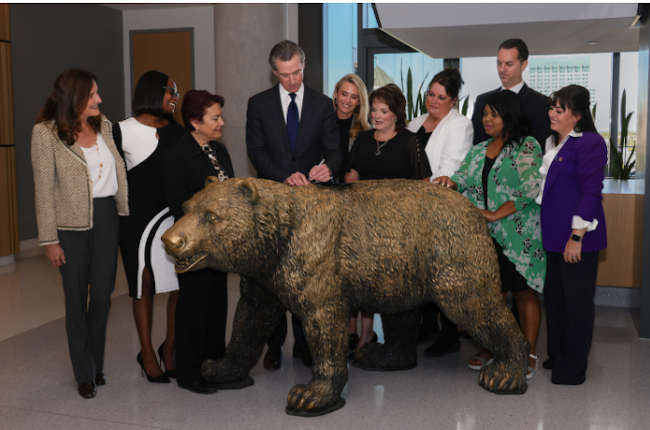
SACRAMENTO — Gov. Gavin Newsom, joined by First Partner Jennifer Siebel Newsom, State Sen. Shannon Grove (R-Bakersfield), State Sen. Anna Caballero (D-Merced), and survivors and advocates on Monday signed SB 14 into law to steepen penalties for human trafficking of minors in California.
The law, written by Sen. Grove, designates human trafficking of a minor for purposes of a commercial sex act as a serious felony — including under the state’s “Three Strikes” law — and imposes harsher penalties and sentencing enhancements for individuals convicted of the crime.
“Human trafficking is a sick crime. With this new law, California is going further to protect kids. I’m grateful for the leadership of Sen. Grove, Speaker Rivas, and Pro Tem Atkins in spearheading this bipartisan effort to make our communities and children safer,” said Gov. Newsom.
“The trafficking of young women and girls is a heinous crime with far too many victims,” said First Partner Jennifer Siebel Newsom. “I’ve seen the pain survivors carry for a lifetime and having recently visited the infamous Figueroa sex trafficking corridor, I’ve witnessed the devastating impacts of these crimes — not just on girls and young women — but on entire communities when trafficking persists. That’s why I am especially grateful to Sen. Grove for her assiduousness in combating human trafficking and helping ensure California is a safer place for women and children.”
“I want to thank the governor for signing SB 14, today is a huge victory for California’s children and the survivors of sex trafficking who have long fought for justice,” said Sen. Grove (R-Bakersfield). “With the passage of this bill, we are sending a clear message to child traffickers — we intend to put you out of business and behind bars where you belong.”
“Strengthening our laws to better protect minors from sex trafficking is not only legislatively the right thing to do, it is morally the right thing to do,” said Senate President pro Tempore Toni G. Atkins (D-San Diego). “I appreciate my colleague and friend, Sen. Shannon Grove, for her fierce dedication to this bill and to victims and survivors, as well as the leadership of Gov. Newsom and Speaker Rivas on this effort. For years, my colleagues and I have worked on laws to increase awareness of trafficking, prevent it from occurring, and help individuals and families impacted by it — SB 14 further upholds those goals.”
“California’s leaders are united against human trafficking and ensuring that victims are not themselves criminalized,” said Speaker of the Assembly Robert Rivas (D-Hollister). “SB 14 reinforces this commitment. I want to recognize and thank my Assembly colleagues, who supported this bill with an 80-0 vote. And I applaud the author and the governor for their leadership and commitment on this critical issue.”
Human sex trafficking is a heinous crime that can have numerous long-lasting, harmful impacts on victims, survivors, and their families.
SB 14, which passed the state Assembly and Senate unanimously, is a bipartisan measure co-authored by 64 members of the Legislature.
The legislation is supported by over a hundred local, national and international organizations, including a coalition of human trafficking survivors and advocates.
Since 2019, California has taken a comprehensive approach to combat human trafficking, with a total investment of $280.1 million to take down traffickers and support victims and survivors.
The state has provided substantial funding to expand support programs for human trafficking survivors and Family Justice Centers — creating a one-stop facility for victims and their families to access various services — and allocated $25 million for the prevention, intervention, and services for minor victims of commercial sexual exploitation.
In 2022, California funded Human Trafficking Task Forces at the California Department of Justice to address statewide human trafficking, resulting in numerous arrests and assistance to victims.
The California Highway Patrol’s interdiction efforts on task forces and operations have led to numerous arrests of traffickers.
Gov. Newsom has signed multiple bills to strengthen legal protections for trafficking victims, including provisions for vacating convictions and considering trauma in sentencing.
LAKEPORT, Calif. — The city of Lakeport has opportunities for the public to become involved in local government by serving on local commissions and committees.
If you have an interest in serving your community, city officials said applying for a position on a city commission or committee is a great place to start.
The city of Lakeport invites applications for the following committees and boards:
Lakeport Fire Protection District Board;
Lake County Vector Control District Board; and
Lakeport Economic Development Advisory Committee.
These appointments will be effective as of Jan. 1, 2024.
Membership on these commissions and committees is voluntary.
For additional information regarding the mission and meeting dates of each commission, including applications, visit the Committees & Commissions page under the "Government" tab on the city's website.
Applications are due by 5:30 p.m. on Monday, Nov. 6, 2023.
Appointments will be made at a special Lakeport City Council meeting — the date of which is still to be determined — in early November.
For additional information, please contact Deputy City Clerk Hilary Britton at 707-263‑5615, Extension 102, or by email atThis email address is being protected from spambots. You need JavaScript enabled to view it. .
If you have an interest in serving your community, city officials said applying for a position on a city commission or committee is a great place to start.
The city of Lakeport invites applications for the following committees and boards:
Lakeport Fire Protection District Board;
Lake County Vector Control District Board; and
Lakeport Economic Development Advisory Committee.
These appointments will be effective as of Jan. 1, 2024.
Membership on these commissions and committees is voluntary.
For additional information regarding the mission and meeting dates of each commission, including applications, visit the Committees & Commissions page under the "Government" tab on the city's website.
Applications are due by 5:30 p.m. on Monday, Nov. 6, 2023.
Appointments will be made at a special Lakeport City Council meeting — the date of which is still to be determined — in early November.
For additional information, please contact Deputy City Clerk Hilary Britton at 707-263‑5615, Extension 102, or by email at