 How to resolve AdBlock issue?
News
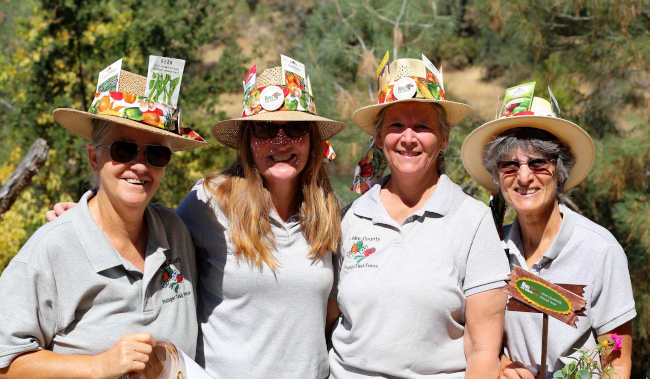
LAKEPORT, Calif. — Lace up your hiking boots and join Hospice Services of Lake County for the Mike Riley Memorial Hike for Hospice on Sunday, Oct. 8, at the picturesque Highland Springs Recreation Area.
Registration starts and 8 a.m. and the hikes begin at 9 a.m.
This meaningful event aims to raise funds for Wings of Hope, a vital grief counseling program for youth and families, provided by Hospice.
The Mike Riley Memorial Hike for Hospice is a heartwarming and free community event open to all. Whether you prefer to hike solo, with friends, or as part of a team, everyone is welcome to participate.
For those who donate $25 or more, a special commemorative T-shirt will be given as a token of appreciation for their generous support.
Participants are encouraged to go the extra mile by seeking donations from friends, family, and colleagues in support of their hike. It's not just about completing the trail; it's about making a significant impact on the lives of those who rely on the invaluable services provided by Wings of Hope.
In the spirit of fun and camaraderie, there will be a friendly competition among teams and individuals for the best costumes and the most money raised. So, don't be shy to don your most creative and inspiring hiking attire.
Wings of Hope, a program deeply committed to providing support during times of loss, offers a lifeline for Lake County residents and their children who have lost a loved one.
Their flagship initiative, the Wings of Hope Family Bereavement Camps, provides a safe and healing environment for families to come together, share their experiences, and find solace in their grief journey.
“We offer Wings of Hope Family Bereavement Camps each year to ensure that those in need receive the support and guidance they require during challenging times,” said Janine Smith Citron, director of development for Hospice.
Join Hospice on Oct. 8 for the Mike Riley Memorial Hike for Hospice, a day filled with compassion, community, and a shared commitment to providing essential grief counseling and support for youth and families through Wings of Hope.
Together, we can make a difference in the lives of those who need it most.
For more information or to register for the event, please visit www.lakecountyhospice.org/ or call 707-263-6222.
The measures include AB 5 by Assemblymember Rick Chavez Zbur (D-Los Angeles), which sets implementation timelines for required LGBTQ+ cultural competency training by public school teachers and staff.
The governor also signed SB 857 by Senator John Laird (D-Santa Cruz), which will establish an advisory task force to identify LGBTQ+ pupil needs statewide and assist in implementing supportive initiatives, and AB 223 by Assemblymember Christopher Ward (D-San Diego), which requires any petition for a change of gender and sex identifier by a minor to be kept confidential by the court.
“California is proud to have some of the most robust laws in the nation when it comes to protecting and supporting our LGBTQ+ community, and we’re committed to the ongoing work to create safer, more inclusive spaces for all Californians,” said Gov. Newsom. “These measures will help protect vulnerable youth, promote acceptance, and create more supportive environments in our schools and communities. I thank Sen. Eggman and the LGBTQ Caucus for their dedicated leadership and partnership in advancing our state’s values of equality, freedom and acceptance.”
"This year the LGBTQ Caucus took up the important work of protecting our communities in the face of vile anti-LGBTQ+ rhetoric, discriminatory laws across the country, and hatred. I appreciate the Governor's partnership in signing some of our priority and endorsed legislation today, and hope we can continue to educate about the harm LGBTQ+ people will continue to face if we fail to act,” said Sen. Susan Talamantes Eggman, Chair of the California Legislative LGBTQ Caucus.
“While states across the nation are passing legislation that puts LGBTQ+ people and especially youth at risk, California is sending a clear message today — hate-filled attacks will not be tolerated and we will continue protecting and ensuring the safety of all members of the LGBTQ+ community,” said Equality California Executive Director Tony Hoang. “We are thankful to our legislative partners for championing these important bills and to Governor Newsom for continuing to be such a strong ally in improving and protecting the well-being of the LGBTQ+ community as we face growing attacks from far-right extremists.”
The full list of bills signed by the governor can be found below:
AB 5 by Assemblymember Rick Chavez Zbur (D-Los Angeles) — The Safe and Supportive Schools Act.
AB 223 by Assemblymember Christopher Ward (D-San Diego) — Change of gender and sex identifier.
AB 760 by Assemblymember Lori Wilson (D-Fairfield) — Public postsecondary education: affirmed name and gender identification.
AB 783 by Assemblymember Philip Ting (D-San Francisco) — Business licenses: single-user restrooms.
AB 994 by Assemblymember Corey Jackson (D-Moreno Valley) — Law enforcement: social media.
SB 372 by Senator Caroline Menjivar (D-San Fernando Valley/Burbank) — Department of Consumer Affairs: licensee and registrant records: name and gender changes.
SB 407 by Senator Scott Wiener (D-San Francisco) — Foster care: resource families.
SB 760 by Senator Josh Newman (D-Fullerton) — School facilities: all-gender restrooms.
SB 857 by Senator John Laird (D-Santa Cruz) — Advisory task force: LGBTQ+ pupil needs.
Dogs available for adoption this week include mixes of Belgian malinois, boxer, Cardigan Welsh corgi, German shepherd, hound, pit bull, Siberian husky, schnauzer, shepherd and Yorkshire terrier.
Dogs that are adopted from Lake County Animal Care and Control are either neutered or spayed, microchipped and, if old enough, given a rabies shot and county license before being released to their new owner. License fees do not apply to residents of the cities of Lakeport or Clearlake.
The following dogs at the Lake County Animal Care and Control shelter have been cleared for adoption.
Call Lake County Animal Care and Control at 707-263-0278 or visit the shelter online for information on visiting or adopting.
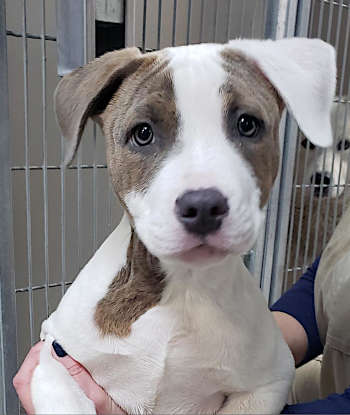
‘Halo’
“Halo” is a nearly 3-year-old female pit bull terrier mix.
She has a white coat with brown markings.
Halo is in kennel No. 8, ID No. LCAC-A-345.
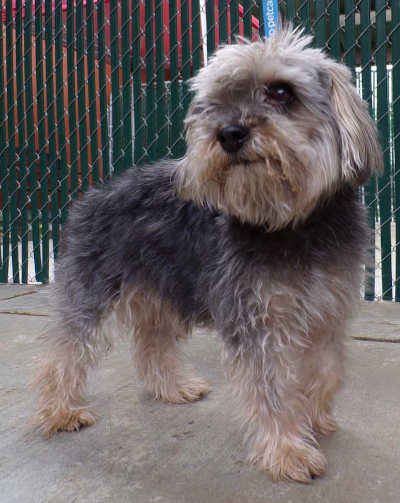
‘Teddy’
“Teddy” is a 12-year-old male Yorkshire terrier-schnauzer mix with a tricolor coat.
He is in kennel No. 2, ID No. LCAC-A-1896.
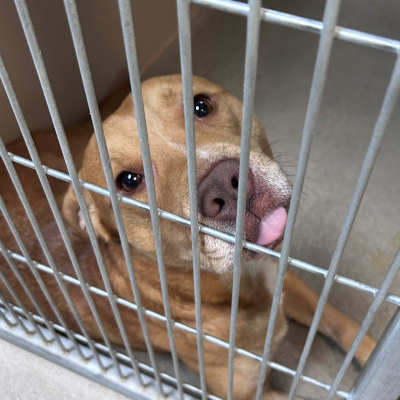
‘Sunny’
“Sunny” is a 2-year-old male pit bull terrier with a gold coat.
He is in kennel No. 7, ID No. LCAC-A-5942.
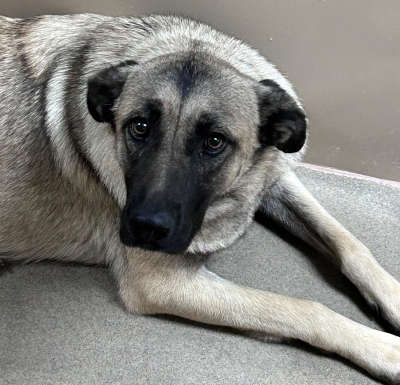
Female shepherd
This 2-year-old female shepherd has a black and white coat.
She is in kennel No. 9, ID No. LCAC-A-5955.
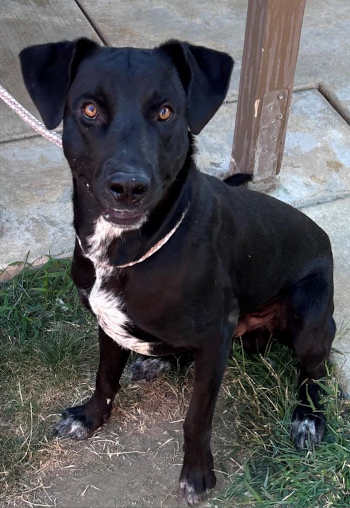
‘Sammy’
“Sammy” is a 1-year-old male Labrador retriever-shepherd.
He has a black coat with white markings.
Sammy is in kennel No. 11, ID No. LCAC-A-5826.

‘Max’
“Max” is a 6-month-old male pit bull terrier-hound puppy with a black coat with white markings.
He is in kennel No. 12, ID No. LCAC-A-5834.
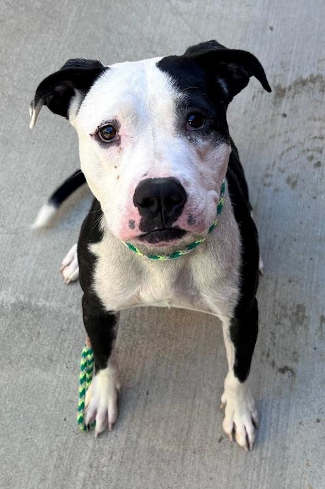
Female pit bull terrier
This 2-year-old female pit bull terrier has a black and white coat.
She is in kennel No. 13, ID No. LCAC-A-5940.
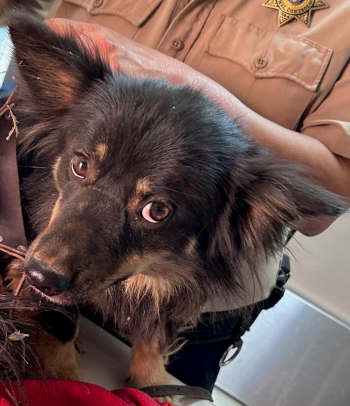
Cardigan Welsh corgi
This 1-year-old male Cardigan Welsh corgi has a brown and tan coat.
He is in kennel No. 14, ID No. LCAC-A-5882.

Hound-pit bull terrier
This 6-month-old male hound-pit bull terrier puppy has a black coat with white and tan markings.
He is in kennel No. 15a, ID No. LCAC-A-5831.

Hound-pit bull terrier
This 6-month-old male hound-pit bull terrier puppy has a white coat with gray markings.
He is in kennel No. 15b, ID No. LCAC-A-5832.
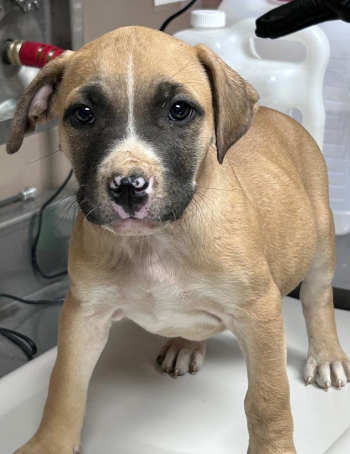
Boxer-pit bull puppy
This 2-month-old male boxer-pit bull puppy has a short tan coat with black and white markings.
He is in kennel No. 17a, ID No. LCAC-A-5806.

Boxer-pit bull puppy
This 2-month-old male boxer-pit bull puppy has a short tan coat with black and white markings.
He is in kennel No. 17b, ID No. LCAC-A-5807.
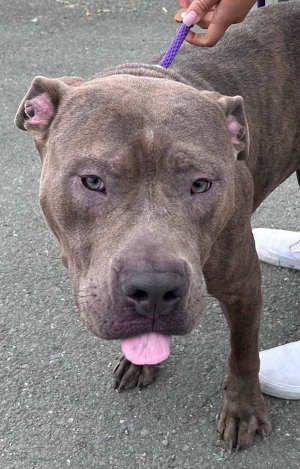
Male pit bull terrier
This 3-year-old male pit bull terrier has a short brown coat.
He is in kennel No. 18, ID No. LCAC-A-5835.

Male hound
This 4-year-old male hound has a red coat with white markings.
He is in kennel No. 20, ID No. LCAC-A-5968.

Male pit bull
This 1-year-old male pit bull has a short brindle coat.
He is in kennel No. 21, ID No. LCAC-A-5616.

Male shepherd
This 2-year-old male shepherd has a black and tan coat.
He is in kennel No. 22, ID No. LCAC-A-5423.
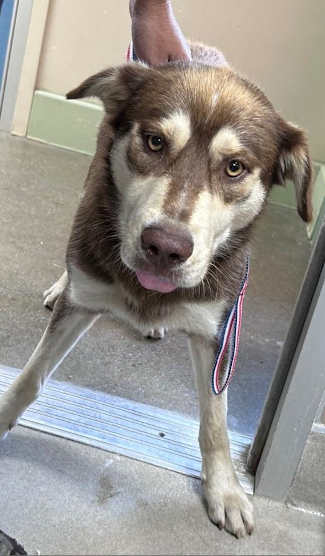
Male Siberian husky
This 4-year-old male Siberian husky has a brown and tan coat.
He is in kennel No. 24, ID No. LCAC-A-5891.
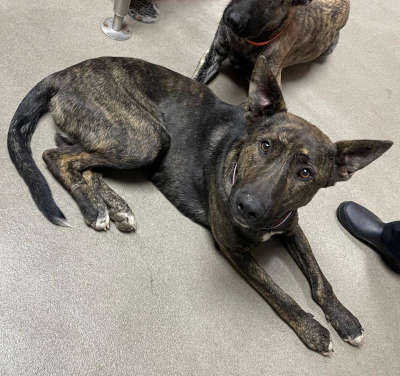
Male shepherd
This 1 and a half year old male shepherd has a short tricolor coat.
He is in kennel No. 26, ID No. LCAC-A-5424.

Female pit bull terrier puppy
This 2-month-old female pit bull terrier puppy has a black and white coat.
She is in kennel No. 27a, ID No. LCAC-A-5951.

Female pit bull terrier puppy
This 2-month-old female pit bull terrier puppy has a black and white coat.
She is in kennel No. 27b, ID No. LCAC-A-5952.

Female Labrador retriever mix
This 2-year-old female Labrador retriever mix has a black coat with white markings.
She is in kennel No. 28, ID No. LCAC-A-5838.
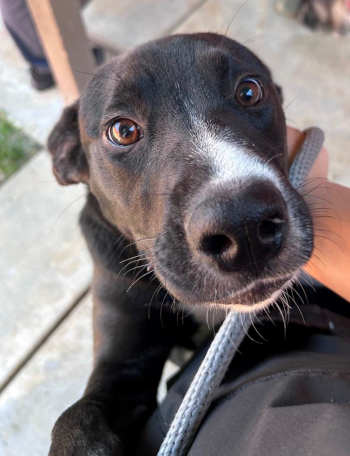
Female pit bull terrier mix
This 1-year-old female pit bull terrier mix has a black coat with white markings.
She is in kennel No. 29, ID No. LCAC-A-5829.
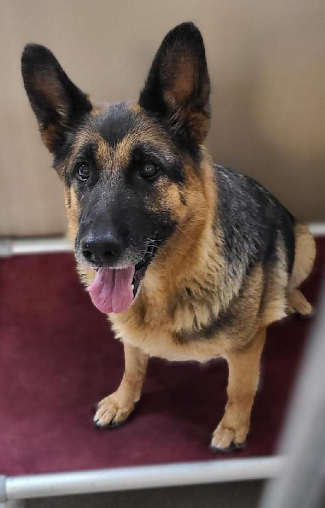
Female German shepherd
This 7-year-old female German shepherd has a black and tan coat.
She is in kennel No. 30, ID No. LCAC-A-5629.
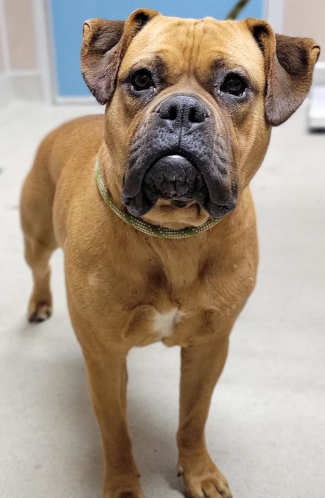
‘Chikis’
“Chikis” is a 5-year-old female boxer with a short brown coat.
She is in kennel No. 32, ID No. LCAC-A-3672.

‘Xina’
“Xina” is a 3-year-old female Belgian malinois with a brown and black coat.
She is in kennel No. 34, ID No. LCAC-A-462.
Email Elizabeth Larson at
When you hear about the abundance of life on Earth, what do you picture? For many people, it’s animals – but awareness of plant diversity is growing rapidly.
Our planet has nearly 300,000 species of flowering plants. Among animals, only beetles can compete with that number. There are more species of ferns than birds, more mints than mammals, and more beans than butterflies. Measured in total mass, plants make up 82% of all life on land across the globe.
We are plant scientists and co-founders of Let’s Botanize, an educational nonprofit that uses plant life to teach about ecology, evolution and biodiversity. In the past several years we have witnessed a botanical boom, with participation in plant-based hobbies surging. From cultivating houseplants to foraging for wild foods and outdoor gardening, plant appreciation is on the rise.
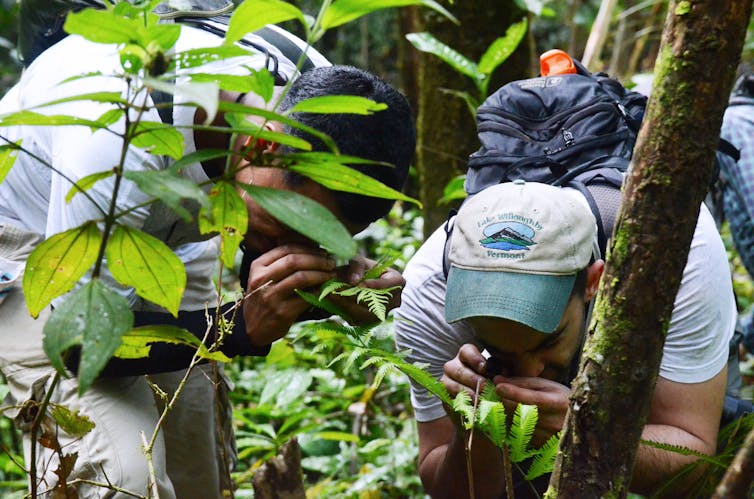
Botanizing is spending time alongside plants in order to observe and appreciate them as living organisms – like birding, but with subjects that stay in place. When you botanize, a simple walk in the woods becomes an immersive experience shared with many species. Getting to know your nonhuman neighbors is a way to engage with a changing planet.
Plant collecting and colonialism
Botanizing has a deep and checkered history. Humans have been analyzing and classifying plants for thousands of years, often to figure out what they can safely eat or cultivate.
When Europeans began exploring and colonizing other parts of the world, they were interested in finding plants that were useful as food, medicine or for other purposes. For example, in the early 17th century, the Dutch East India Company forcibly colonized the Banda Islands in what is now Indonesia in order to monopolize the cultivation and lucrative trade of nutmeg (Myristica fragrans).
In 19th-century England, Victorians became obsessed with plants, especially ferns. This craze came to be known as pteridomania, or fern fever. It coincided with the height of European imperialism across the globe, which included widespread collection of valuable plants from faraway places.
Today, however, many botanic gardens and arboreta – gardens that focus on trees and shrubs – have shifted their mission to public education, scientific research and biodiversity conservation. They can be good resources for learning to botanize.
Why botanize?
Plants provide raw materials for the homes we live in, the food we eat and the oxygen we breathe. Without them, life as humans know it could not exist.
Nonetheless, many people think of plants more as a backdrop to life, rather than as a central part of it. Scientists and educators call this phenomenon plant awareness disparity – a widespread cognitive bias that leads people to underestimate the diversity and importance of plants.
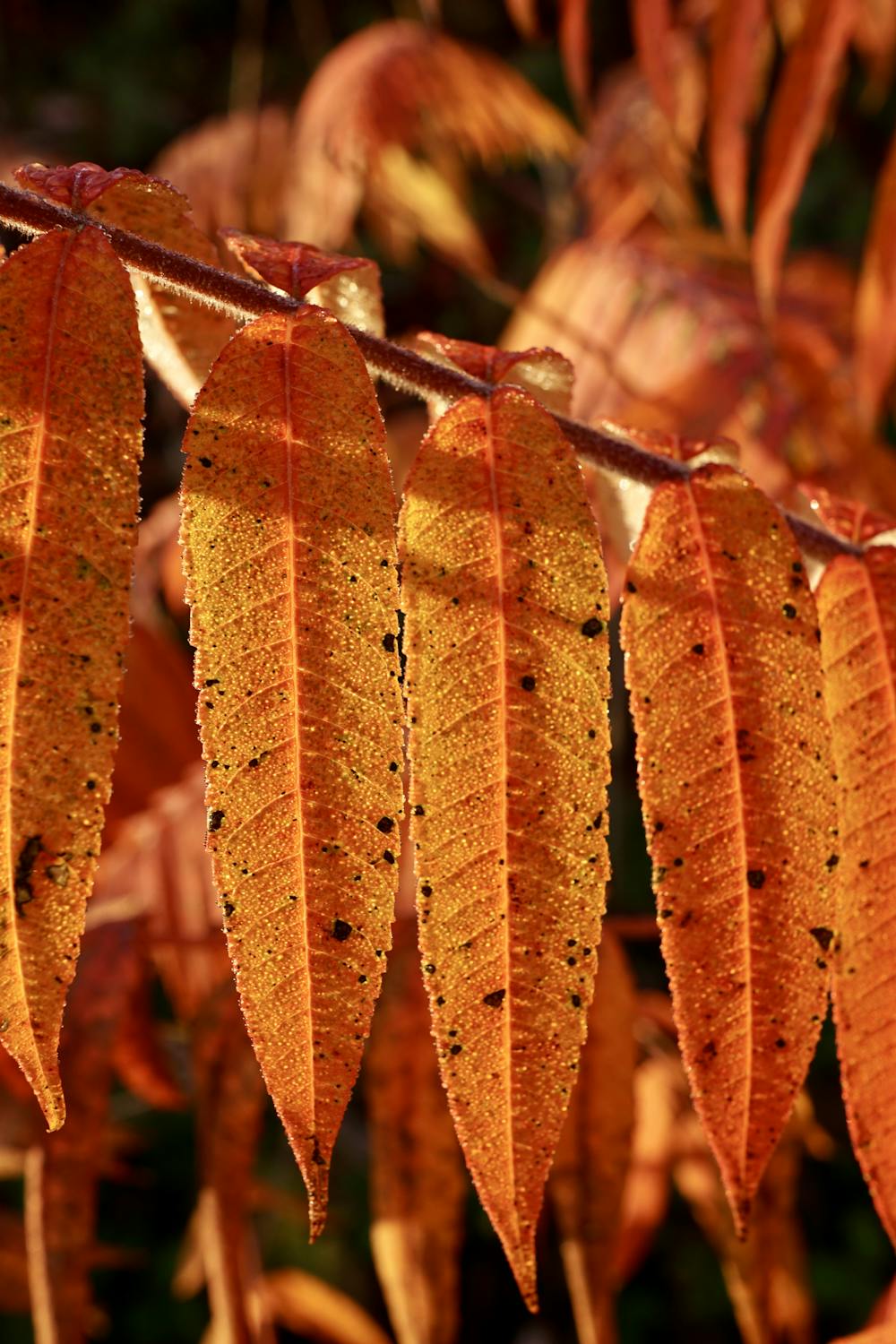
Research has shown the value of being outside in natural green areas or around plants indoors. Even traditional western doctors are starting to prescribe nature walks to reduce stress and improve physical well-being. Botanizing can provide a reason to get outdoors, and spending time closely observing plants’ minute structures is a great mindfulness practice.
We also see botanizing as a valuable alternative to spending time on social media. As many experts have observed, online platforms have become so individually tailored by algorithms that each user participates in their own version of reality, a trend that has enabled increasingly combative and antisocial behavior. Botanizing is an opportunity to take a break from these tailored worlds and deeply engage with local human and nonhuman communities.
Finally, since plants form the foundation of life on Earth, caring for plants is a way of caring for our planet. Botanizing is one simple way to inspire change in other aspects of our lives that prioritizes sustainability.

Tools of the trade
There are many ways to botanize. Typically it involves trying to identify a plant species, observing its form and structure or assessing how it survives in the landscape. Plants are everywhere and don’t move, so this can be done in virtually any setting, including your windowsill or sidewalk.
So, how do you start? You can focus on plant structure, ecology, interactions, colors, textures or scents – or tastes, if you’re bold. You don’t need to travel far or spend a lot of money. There’s much to learn from your houseplants, the food you cook, the wood grain of your furniture, the plants growing in your sidewalks, gardens or local green spaces.
Here are a few essential tools:
– A hand lens is a window into the minutia of the botanical world. It’s as essential for a botanist as binoculars are for a birder. We recommend one with 10x magnification – that is, one that magnifies what you’re looking at by a factor of 10.
– A local field guide is your reference textbook. A good field guide to your local plants will have images and detailed text that you can use to cross-reference your identifications.
– A plant identification app can help confirm your identifications. Machine learning algorithms are getting increasingly good at matching plant images with species. One popular choice is the Seek app, which is powered by iNaturalist, an online social network where people share information about living species and get help with identifications.
– Almost every region of the U.S. has local botanical clubs that typically hold regular meetings and organize workshops, online groups, botanizing days and more. Joining one is a great way to meet and learn from people with similar interests.
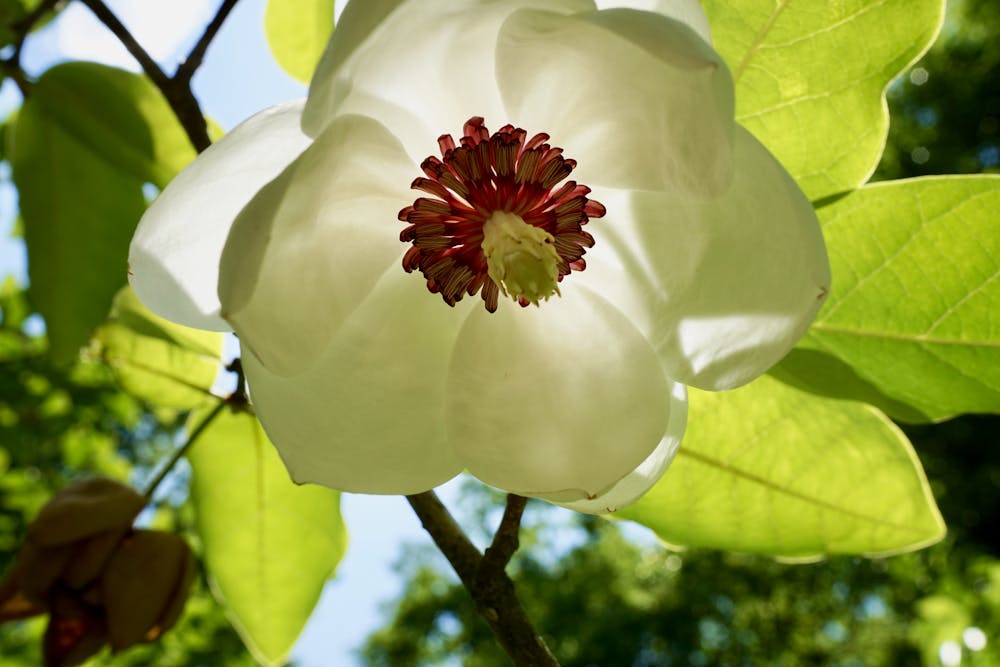
To germinate your initial interest, we recommend searching for a spark plant – one that excites, engages or is meaningful to you. It can be a plant that you are familiar with but haven’t seen growing in real life, one that is totally new to you, or one that you associate with a special moment.
If botanizing is to reclaim its place as a nature-based hobby, we believe it is important to reimagine it as a critically evolved 21st century pastime. That means looking at plants with appreciation – not simply as products for human use but as foundational and interconnected members of life on Earth.
Jacob S. Suissa, Assistant Professor of Plant Evolutionary Biology, University of Tennessee and Ben Goulet-Scott, Higher Education & Laboratory Coordinator at Harvard Forest, Harvard University
This article is republished from The Conversation under a Creative Commons license. Read the original article.
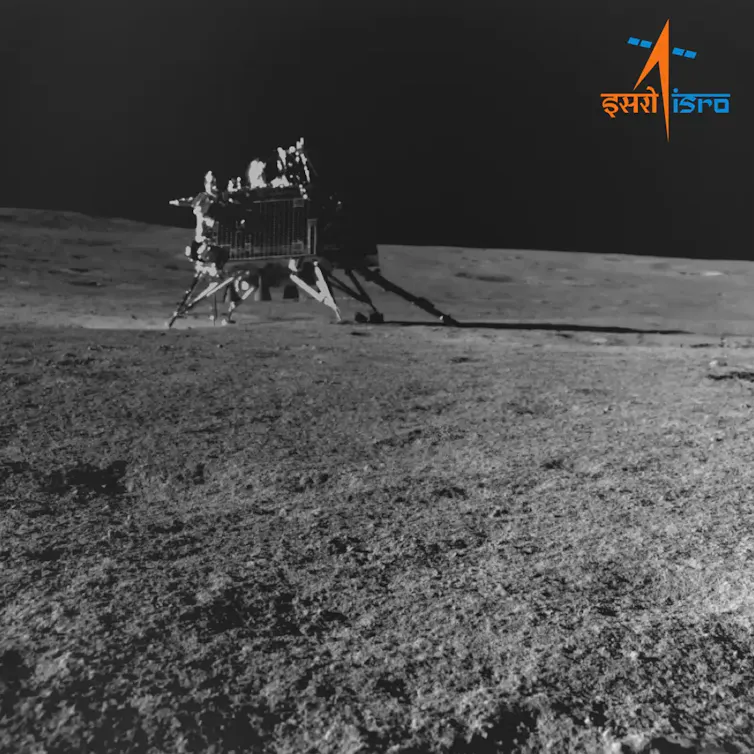
In an exciting milestone for lunar scientists around the globe, India’s Chandrayaan-3 lander touched down 375 miles (600 km) from the south pole of the Moon on Aug. 23, 2023.
In just under 14 Earth days, Chandrayaan-3 provided scientists with valuable new data and further inspiration to explore the Moon. And the Indian Space Research Organization has shared these initial results with the world.
While the data from Chandrayaan-3’s rover, named Pragyan, or “wisdom” in Sanskrit, showed the lunar soil contains expected elements such as iron, titanium, aluminum and calcium, it also showed an unexpected surprise – sulfur.
Planetary scientists like me have known that sulfur exists in lunar rocks and soils, but only at a very low concentration. These new measurements imply there may be a higher sulfur concentration than anticipated.
Pragyan has two instruments that analyze the elemental composition of the soil – an alpha particle X-ray spectrometer and a laser-induced breakdown spectrometer, or LIBS for short. Both of these instruments measured sulfur in the soil near the landing site.
Sulfur in soils near the Moon’s poles might help astronauts live off the land one day, making these measurements an example of science that enables exploration.
Geology of the Moon
There are two main rock types on the Moon’s surface – dark volcanic rock and the brighter highland rock. The brightness difference between these two materials forms the familiar “man in the moon” face or “rabbit picking rice” image to the naked eye.


Scientists measuring lunar rock and soil compositions in labs on Earth have found that materials from the dark volcanic plains tend to have more sulfur than the brighter highlands material.
Sulfur mainly comes from volcanic activity. Rocks deep in the Moon contain sulfur, and when these rocks melt, the sulfur becomes part of the magma. When the melted rock nears the surface, most of the sulfur in the magma becomes a gas that is released along with water vapor and carbon dioxide.
Some of the sulfur does stay in the magma and is retained within the rock after it cools. This process explains why sulfur is primarily associated with the Moon’s dark volcanic rocks.
Chandrayaan-3’s measurements of sulfur in soils are the first to occur on the Moon. The exact amount of sulfur cannot be determined until the data calibration is completed.
The uncalibrated data collected by the LIBS instrument on Pragyan suggests that the Moon’s highland soils near the poles might have a higher sulfur concentration than highland soils from the equator and possibly even higher than the dark volcanic soils.
These initial results give planetary scientists like me who study the Moon new insights into how it works as a geologic system. But we’ll still have to wait and see if the fully calibrated data from the Chandrayaan-3 team confirms an elevated sulfur concentration.
Atmospheric sulfur formation
The measurement of sulfur is interesting to scientists for at least two reasons. First, these findings indicate that the highland soils at the lunar poles could have fundamentally different compositions, compared with highland soils at the lunar equatorial regions. This compositional difference likely comes from the different environmental conditions between the two regions – the poles get less direct sunlight.
Second, these results suggest that there’s somehow more sulfur in the polar regions. Sulfur concentrated here could have formed from the exceedingly thin lunar atmosphere.
The polar regions of the Moon receive less direct sunlight and, as a result, experience extremely low temperatures compared with the rest of the Moon. If the surface temperature falls, below -73 degrees C (-99 degrees F), then sulfur from the lunar atmosphere could collect on the surface in solid form – like frost on a window.
Sulfur at the poles could also have originated from ancient volcanic eruptions occurring on the lunar surface, or from meteorites containing sulfur that struck the surface and vaporized on impact.
Lunar sulfur as a resource
For long-lasting space missions, many agencies have thought about building some sort of base on the Moon. Astronauts and robots could travel from the south pole base to collect, process, store and use naturally occurring materials like sulfur on the Moon – a concept called in-situ resource utilization.
In-situ resource utilization means fewer trips back to Earth to get supplies and more time and energy spent exploring. Using sulfur as a resource, astronauts could build solar cells and batteries that use sulfur, mix up sulfur-based fertilizer and make sulfur-based concrete for construction.
Sulfur-based concrete actually has several benefits compared with the concrete normally used in building projects on Earth.
For one, sulfur-based concrete hardens and becomes strong within hours rather than weeks, and it’s more resistant to wear. It also doesn’t require water in the mixture, so astronauts could save their valuable water for drinking, crafting breathable oxygen and making rocket fuel.

While seven missions are currently operating on or around the Moon, the lunar south pole region hasn’t been studied from the surface before, so Pragyan’s new measurements will help planetary scientists understand the geologic history of the Moon. It’ll also allow lunar scientists like me to ask new questions about how the Moon formed and evolved.
For now, the scientists at Indian Space Research Organization are busy processing and calibrating the data. On the lunar surface, Chandrayaan-3 is hibernating through the two-week-long lunar night, where temperatures will drop to -184 degrees F (-120 degrees C). The night will last until September 22.
There’s no guarantee that the lander component of Chandrayaan-3, called Vikram, or Pragyan will survive the extremely low temperatures, but should Pragyan awaken, scientists can expect more valuable measurements.
Jeffrey Gillis-Davis, Research Professor of Physics, Arts & Sciences at Washington University in St. Louis
This article is republished from The Conversation under a Creative Commons license. Read the original article.
The event will be held from 6 to 8 p.m. Wednesday, Sept. 27, at the Soper Reese Theatre, 275 S. Main Street, Lakeport.
The Lakeport Police Department, city of Lakeport, Lake County Behavioral Health and Lake Family Resource Center are partnering to host the town hall.
Speakers will include Lakeport Police Chief Brad Rasmussen, Lakeport City Manager Kevin Ingram, Behavioral Health Director Elise Jones and Lake Family Resource Center Executive Director Lisa Morrow.
Congressman Mike Thompson’s office also plans to be in attendance, Rasmussen said.
Rasmussen told Lake County News that he estimates that the Lakeport Police Department’s officers spend 40% of their time addressing homelessness and mental illness.
The town hall’s agenda will include an overview of legislative and voter changes to criminal justice laws over the past decade that impact treatment of individuals, response to mental illness locally, and the constraints faced by agencies in rural areas.
They also will discuss the status of the crisis responder program operated cooperatively by Lakeport Police and the Lake Family Resource Center and funded by a grant.
Organizers hope to hear questions from community members and address their concerns, and to get feedback through a public survey.
Rasmussen said Friday that the Public, Education and Government, or PEG channel 8, will run a livestream of the town hall on the Lakeport Police Department’s YouTube page, with a recording to be replayed on PEG.
Rasmussen said they won’t be able to interact with livestream viewers due to insufficient staffing to manage it.
Because the Soper Reese did not have sufficient internet to run a livestream, Mediacom partnered with Lakeport Police to give them a temporary high speed drop for the event.
Rasmussen offered his thanks to Mediacom for offering the assistance to make the livestream possible.
Contact Chief Rasmussen at 707-263-5491 for more information.
Email Elizabeth Larson at