How to resolve AdBlock issue?
News

As the U.S. shifts away from fossil fuels to cleaner energy sources, thousands of coal, oil and gas workers will be looking for new jobs.
Many will have the skills to step into new jobs in the emerging clean energy industries, but the transition may not be as simple as it seems. New research published in the journal Nature Communications identifies a major barrier that is often overlooked in discussions of how to create a just transition for these workers: location.
We analyzed 14 years of fossil fuel employment and skills data and found that, while many fossil fuel workers could transfer their skills to green jobs, they historically have not relocated far when they changed jobs.
That suggests that it’s not enough to create green industry jobs. The jobs will have to be where the workers are, and most fossil fuel extraction workers are not in regions where green jobs are expected to grow.
Without careful planning and targeted policies, we estimate that only about 2% of fossil fuel workers involved in extraction are likely to transition to green jobs this decade. Fortunately, there are ways to help smooth the transition.
Many fossil fuel and green skills overlap
As of 2019, about 1.7 million people worked in jobs across the fossil fuels industry in the U.S., many of them in the regions from Texas and New Mexico to Montana and from Kentucky to Pennsylvania. As the country transitions from fossil fuel use to clean energy to protect the climate, many of those jobs will disappear.
Policymakers tend to focus on skills training when they talk about the importance of a just transition for these workers and their communities.
To see how fossil fuel workers’ skills might transfer to green jobs, we used occupation and skills data from the U.S. Bureau of Labor Statistics to compare them. These profiles provide information about the required workplace skills for over 750 occupations, including earth drillers, underground mining machine operators and other extraction occupations.

Overall, we found that many fossil fuel workers involved in extraction already have similar skills to those required in green occupations, as previous studies also found. In fact, their skills tend to be more closely matched to green industries than most other industries.
Job-to-job flow data from the U.S. Census Bureau showed that these workers historically tend to transition to other sectors with similar skills requirements. Thus, fossil fuel workers should be able to fill emerging green jobs with only minimal reskilling.
However, the data also shows that these fossil fuel workers typically do not travel far to fill employment opportunities.

The location problem
When we mapped the current locations of wind, solar, hydro and geothermal power plants using data from the U.S. Energy Information Administration, we found that these sites had little overlap with fossil fuel workers.
The U.S. Bureau of Labor Statistics’ projections for where green jobs are likely to emerge by 2029 also showed little overlap with the locations of today’s fossil fuel workers.

These results were consistent across several green employment projections and different definitions of “fossil fuel” occupations. That’s alarming for the prospects of a just transition.
How policymakers can intervene
Broadly, our findings point to two potential strategies for policymakers.
First, policymakers can explore incentives and programs that help fossil fuel workers relocate. However, as our analysis reveals, these populations have not historically exhibited geographic mobility.
Alternatively, policymakers could design incentives for green industry employers to build in fossil fuel communities. This might not be so simple. Green energy production often depends on where the wind blows strongest, solar power production is most effective and geothermal power or hydropower is available.
We simulated the creation of new green industry employment in two different ways, one targeting fossil fuel communities and the other spread uniformly across the U.S. according to population. The targeted efforts led to significantly more transitions from fossil fuel to green jobs. For example, we found that creating 1 million location-targeted jobs produced more transitions than the creation of 5 million jobs that don’t take workers’ locations into account.
Another solution doesn’t involve green jobs at all. A similar analysis in our study of other existing U.S. sectors revealed that construction and manufacturing employment are already co-located with fossil fuel workers and would require only limited reskilling. Supporting manufacturing expansion in these areas could be a simpler solution that could limit the number of new employers needed to support a just transition.
There are other questions that worry fossil fuel workers, such as whether new jobs will pay as well and last beyond construction. More research is needed to assess effective policy interventions, but overall our study highlights the need for a comprehensive approach to a just transition that takes into account the unique challenges faced by fossil fuel workers in different regions.
By responding to these barriers, the U.S. can help ensure that the transition to a green economy is not only environmentally sustainable but also socially just.
Morgan R. Frank, Assistant Professor of Informatics, University of Pittsburgh and Junghyun Lim, Assistant Professor of Political Science, University of North Carolina at Chapel Hill
This article is republished from The Conversation under a Creative Commons license. Read the original article.
The Sonoma County Sheriff’s Office arrested Alfredo Carretero Jr., 65 — an original person of interest in the case — for the June 1983 killing of Noelle Kinzie Russo.
Officials took Carretero into custody and booked him into the Sonoma County Main Adult Detention Facility for murder on Monday afternoon. He’s being held with no bail.
By Tuesday, the Sonoma County District Attorney’s Office had filed a murder charge against Carretero.
He was arraigned before Judge Laura Passaglia on Wednesday morning and is scheduled to return to court for the entry of plea on Oct. 18.
A report issued by Sonoma County Sheriff’s Deputy Rob Dillon, the agency’s public information officer, explained that on June 27, 1983, deputies were dispatched to a report of a deceased, naked woman in the unincorporated area of Rohnert Park.
The woman, later identified as Russo, had been beaten to death, Dillon said.
Dillon said detectives with the Violent Crime Investigations, or VCI, Unit began an investigation into the circumstances surrounding Russo’s murder.
Deputies and detectives collected a significant amount of evidence during this investigation, and numerous interviews were conducted. Detectives developed certain persons of interest over the years, but no arrests were made, Dillon said.
However, Dillon said that, through the years, VCI detectives continued to work on Russo’s case.
Between 2010 and 2023 they submitted several items of evidence for DNA analysis to the Santa Clara County Crime Lab and the Serological Research Institute, Dillon reported.
Dillon said Carretero, who had been an original person of interest in Russo’s murder, was positively identified as a suspect based on DNA and other evidence.
As a result, VCI detectives obtained a warrant to arrest Carretero Jr. for Russo’s murder.
Dillon said Russo’s family has been notified of the arrest and would appreciate privacy.
Throughout this investigation, detectives worked closely with the Sonoma County District Attorney’s Office, Dillon said.
“The Sonoma County Sheriff’s Office and Sonoma County District Attorney’s Office are both dedicated to justice for murder victims, whether the case is new or old. The VCI Unit continues to investigate many cold cases and relentlessly pursue justice for the victims of violent crime,” Dillon’s report noted.
Over the years, Lake County law enforcement officials have had numerous contacts with Carretero.
Lauren Berlinn, public information office for the Lake County Sheriff’s Office, told Lake County News that the agency had previous contacts with Carretero, the last of them being in 2009.
“He was arrested several times, primarily for drug-related charges,” Berlinn said.
Lake County Superior Court records show an Alfredo Carretero Jr. being convicted in 2003 of a felony assault case that resulted in prison time as well as a felony drug conviction in 2004, but Lake County News was unable to confirm by press time whether it was the same individual.
An Alfredo Carretero Jr. shown in Sonoma County Superior Court records going back to 1995 shows a conviction for receiving stolen property and possession of a controlled substance that resulted in a three-year state prison term and a February 2001 conviction for possession of a controlled substance that led to a nine-month sentence.
Email Elizabeth Larson at
The event will focus on action steps each of us should take before a wildfire occurs to help save lives and homes.
Featured guest speakers for this interactive presentation are Cal Fire Battalion Chief Brian York and John Nowell, former Los Angeles Fire Department battalion chief and Soda Bay homeowner.
This event will be held Wednesday, Oct. 11, from 6 to 7:30 p.m. at Konocti Harbor Resort in Andy’s Tavern.
Admission is free.
“Lessons from Lahaina” is part of continued public outreach efforts by the Konocti Fire Safe Council in its efforts to educate and prepare residents along the Soda Bay Road corridor to be ready for wildfire.
This event is sponsored by Cal Fire, Konocti Harbor Resort and the Konocti Fire Safe Council.
The Konocti Fire Safe Council is a 501 c(3) nonprofit corporation that aims to increase wildfire resilience in the Soda Bay Road corridor in Lake County.
The group’s efforts are centered on preparation, mitigation, education and evacuation in the eight designated Zonehaven/Genesys districts that make up its service area.
For more information, contact the Konocti Fire Safe Council at

SACRAMENTO — Gov. Gavin Newsom on Wednesday signed SB 616 by Sen. Lena Gonzales (D-Long Beach), a bill guaranteeing workers at least five paid sick days per year, up from the current three days, while also increasing the accrual and carry-over amounts.
Working sick costs the national economy $273 billion annually in lost productivity.
Two days of unpaid sick time is nearly the equivalent of a month’s worth of groceries.
Newsom’s office said offering sick days helps save employers money through improved productivity and morale, as well as reduced presenteeism and turnover.
Increasing access to paid sick days also reduces health care costs, with evidence showing that when workers have paid sick days such costs go down and workers’ health benefits, Newsom’s office reported.
“Too many folks are still having to choose between skipping a day's pay and taking care of themselves or their family members when they get sick,” said Newsom. “We’re making it known that the health and well-being of workers and their families is of the utmost importance for California’s future.”
“Women and mothers are the default caregivers of sick family members. As such, they are more likely to be harmed by disrupted or lost wages when they need to take time off work,” said First Partner Jennifer Siebel Newsom. “More paid sick days for ALL California workers will help ease this distinct burden on women, and bolster their economic security.”
“Today marks an exciting moment as our Golden State enacts SB 616, which gives five guaranteed paid sick leave days to California's workers,” said Gonzalez. “This reinforces our state’s values and commitment to protecting the health and well-being of our workers. As workers and families face illnesses that can disrupt their wages and livelihoods, California has delivered and stepped up to protect and expand paid sick leave, providing a critical safety net to all working Californians. I extend my gratitude to Gov. Newsom for signing this bill into law, and to my colleagues in the Legislature, and all the labor supporters, small businesses, and community members who united to advocate for this critical legislation.”
“This is a huge win for workers who have struggled to access adequate paid sick time. We never know what can come up in our lives. A sick child. Emergency surgery. Serious illness. Going from 3 to 5 paid sick days is a very important lifeline for working families across the state,” said Ingrid Vilorio, Jack in the Box worker from Castro Valley. “Now, workers will no longer have to worry about how to make the month’s rent or how to keep food on the table while recovering from illness or caring for a loved one. We thank Gov. Newsom for standing up for workers and signing SB 616.”
In addition to signing this measure on Wednesday, the governor also announced that he has signed the following bills:
AB 256 by Assemblymember Diane Dixon (R-Newport Beach) — Vehicles: registration.
AB 268 by Assemblymember Dr. Akilah Weber (D-San Diego) — Board of State and Community Corrections.
AB 298 by Assemblymember Devon Mathis (R-Porterville) — Honoring Our Blind Veterans Act.
AB 969 by Assemblymember Gail Pellerin (D-Santa Cruz) — Elections: voting systems.
AB 1270 by Assemblymember Diane Dixon (R-Newport Beach) — Redevelopment: successor agency: City of Lake Forest.
AB 1271 by Assemblymember Mike Gipson (D-Carson) — Gambling Control Act: licenses.
AB 1458 by Assemblymember Tri Ta (R-Westminster) — Common interest developments: association governance: member election.
AB 1471 by Assemblymember Gail Pellerin (D-Santa Cruz) — Hospitals: seismic compliance: O’Connor Hospital and Santa Clara Valley Medical Center.
SB 256 by Sen. Bill Dodd (D-Napa) — Parklands: City of Davis.
SB 519 by Sen. Toni G. Atkins (D-San Diego) — Corrections.
SB 548 by Sen. Roger Niello (R-Fair Oaks) — Public employees’ retirement: joint county and trial court contracts.
SB 568 by Sen. Josh Newman (D-Fullerton) — Electronic waste: export.
SB 617 by Sen. Josh Newman (D-Fullerton) — Public contracts: progressive design-build: local and regional agencies: transit.
SB 883 by the Committee on Public Safety — Public Safety Omnibus.
SB 890 by the Committee on Governance and Finance — Property taxation: change of ownership and base year value transfers.
People think sexual harassment and domestic abuse are less harmful for women in poverty than for higher-income women, according to four studies involving 3,052 Americans conducted by my colleagues and me. We also found that people believe women in poverty require less help and support when experiencing these kinds of sexual misconduct.
My research partners and I recruited participants of different ages, genders and incomes. We asked them to read about either a low-income woman or a high-income woman who was dealing with workplace sexual harassment or intimate partner abuse. Then we had participants rate how distressing these instances would be for the woman.
The harassment events described inappropriate behavior from a co-worker, such as sexual comments and unwanted advances, while domestic abuse events included threats, demeaning comments and physical violence from the woman’s partner. In some of the studies, participants also rated how much social support or bystander intervention would be necessary for these events.
Our participants rated the harassment and abuse events as less upsetting for the lower-income woman than for the higher-income woman. They also thought the lower-income woman would need less emotional support from friends and family and less help from bystanders than the higher-income woman. On average, participants thought she needed only 85% as much help as her higher-income counterpart.
The result was the same whether the woman was white, Black, East Asian or Latina. Both low- and high-income study participants shared this pattern of judgment – as did male and female participants.
Why it matters
There is no data that shows lower-income women are less affected by gender-based violence – in fact, there is evidence they are often more affected.
Women in poverty are more likely to experience sexual harassment and domestic abuse – and have more difficulty finding support after experiencing sexual misconduct. Our research suggests that stereotypes about toughness may contribute to the neglect low-income women encounter when they seek help after violence.
It isn’t that study participants didn’t like the low-income woman. In fact, in our studies, participants rated the low-income woman as friendlier and warmer than the higher-income woman. But liking the low-income woman didn’t prevent participants from thinking the harassment and abuse would be less harmful for her.
Such perceptions may have wide-ranging consequences. For example, low-income women may not receive the care they need from those around them. They also may be disproportionately neglected by those in powerful positions, such as human resources managers and police investigating domestic abuse.
Biased perceptions may help explain why lower-income women encounter more barriers in the legal system.
Already, the neglect of low-income women has been effectively part of U.S. federal workplace law based on several rulings from courts hearing sexual harassment claims. For example, in the 1995 case Gross v. Burggraf, the court ruled that sexually harassing behaviors in a “white collar” workplace do not necessarily qualify as harassment in “blue collar” contexts like construction sites.
This logic echoes our study participants’ judgments – and also partially explains why low-income women have spoken out about being sidelined by the #MeToo movement.
What other research is being done
Our research fits with a growing body of work examining beliefs around experiencing adversity. People seem to widely endorse the idea “what doesn’t kill you makes you stronger.” Individuals who have experienced past hardship, such as women experiencing financial difficulties, are perceived by others to have grown a “thicker skin,” making them less affected by new negative events.
Our findings show this kind of bias exists for low-income women – and highlight the need for strategies to counteract this biased belief.
The Research Brief is a short take on interesting academic work.
Nathan Cheek, Assistant Professor of Psychological Sciences, Purdue University
This article is republished from The Conversation under a Creative Commons license. Read the original article.

LAKEPORT, Calif. — Community members and neighbors came out on Tuesday to take part in Lakeport’s National Night Out event.
Library Park was filled with activities, colorful bicycles and booths from many nonprofit organizations and agencies during the event, which began Tuesday afternoon and continued into the evening.
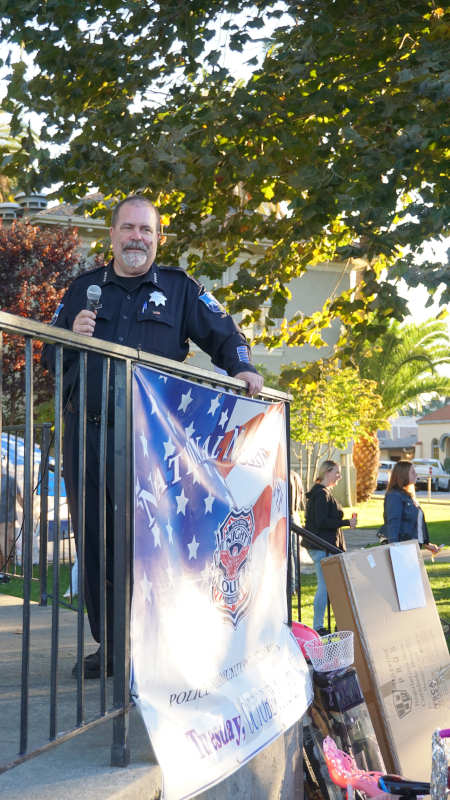
The Lakeport City Council had canceled its regular Tuesday night meeting so council members and staff could participate in the event.
Lakeport Police Chief Brad Rasmussen and his staff were on hand — along with K9 Officer Olin — to meet with community members.

There were opportunities to learn about agencies and organizations that serve the community, with booths lined up around the park offering information and swag.
There also were plenty of raffle tickets and prizes.
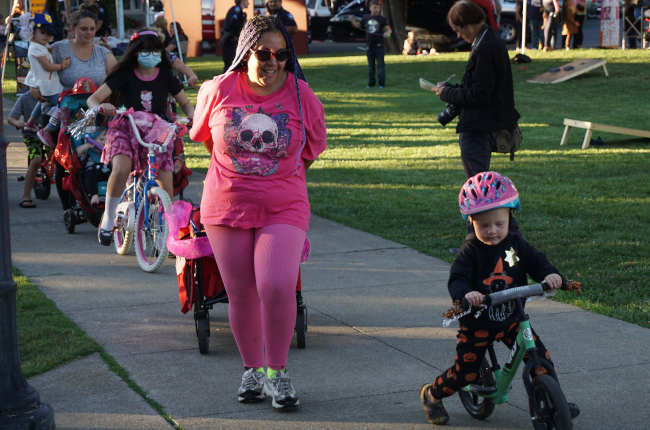
It was topped off by a bike parade of children who had decorated their bikes for a circuit around the park.
This was the event’s second year back since the COVID-19 pandemic had caused it to be canceled.
Email Elizabeth Larson at