 How to resolve AdBlock issue?
News
Dear Lady of the Lake,
Do you have any spooky or scary stories to tell about Lakes or Clear Lake? It’s the season, afterall. Thank you for your column!
— Looking for Lake Lore Laura
Dear Laura,
Thank you for reaching out about this! It is the spooky season and it's a great time to share stories and haunted legends about lakes. Unfortunately, I don’t yet have a library on haunted stories about Clear Lake, but I am compiling that list with the help of some local friends!
First I will describe some of the science behind water, and why, in its basic elemental form, it has so much perceived potential to be linked to the paranormal. This column will merge the science with the spiritual, if you will. Feel free to explore more of the science on your own, and take what you want of the spiritual, if you believe in that sort of thing, of course.
Water and energy
You may have heard many things that refer to water as special, in particular, the water molecule is unique. It is polar, meaning it has both negative (oxygen atom) and positive (hydrogen atoms) charges, and due to this polarity water molecules can bond strongly with other polar molecules, including other waters.
Water is so strongly attached to itself that it can dissolve substances like sugars and salts. That’s a main reason why it’s so valuable to human, animal, and plant metabolisms - the water molecules can dissolve and bind needed nutrients and mobilize them through blood and plant tissues.
When water moves from state to state, energy becomes released or absorbed, which can influence the environment directly in the vicinity of the water. Think of humidity and warmth when water is heated.
Because a water molecule is so strongly attached to itself, it’s very hard to break apart, and requires a high boiling point to change from a liquid to a gas. During this process, the water bonds are broken and free oxygen and hydrogen atoms are released into the atmosphere as steam. This is related to the specific heat of water.
Specific heat is defined as the amount of heat needed to increase 1 gram 1 degree Celsius. How much heat it takes to heat one degree is also called heat capacity with good reason. It takes a lot of energy to break these bonds and heat water to a change of state. Anyone who has boiled a pot of water on an old, electric stove top knows, it takes a lot of time and energy to heat water to 100 degrees Celsius or boiling!
In contrast, the forming of bonds releases energy. The cooling and condensation of steam creates water, forms the water molecule, which releases energy such as heat. Maybe this is why cool damp places are known to have higher spooky, haunted activity, because the ongoing condensation condition provides ample excess energy for spirits to tap into? Maybe?
Since it takes so much energy to heat water, water is known to hold heat very well, and is rather stable to changing temperatures. That’s why during the first few cold weeks of the fall or winter season, the lake is still relatively warm in temperature, compared to the air.
When the water surface is warmer than the air, the water evaporates and as it cools in the air, it condenses and turns into fog droplets. This cycle will continue until the day temperatures have warmed to match the surface water temps or, in some parts of the Country, the lake freezes over.
This fog layer, called steam fog, when combined with turbulent winds that push across the water, produce whirling, spiraling, steam or fog devils (similar to dust devils).
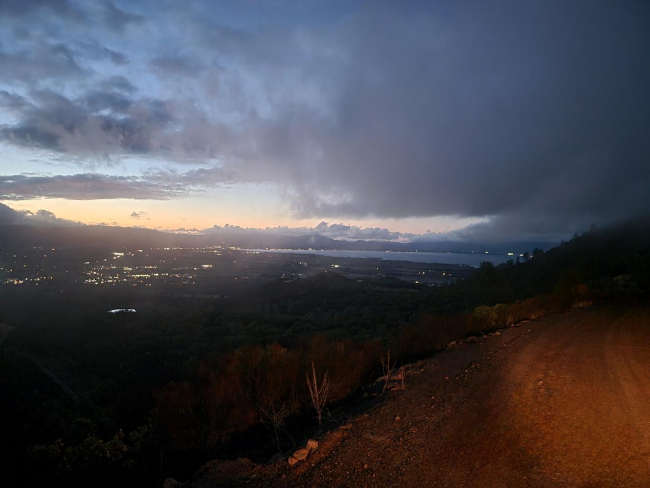
What a perfect scene, this eerie, misty fog that settles during autumn over lakes, making spectral and mysterious stories of the deep that much more believable!
Energy of water and potential for paranormal
So we learned that water contains energy, and it either releases or absorbs energy when changing the state of water.
This ties into the first law of thermodynamics that energy can neither be created nor destroyed, so if water holds energy, and there is a change of state that releases that energy, then that energy has to go somewhere. Here enters the theory that the energy contained in water helps to serve as a conduit for the paranormal activity. With the science explained, we can see how and why water has been used to emphasize and accentuate stories of the unexplained.
Additional theories suggest that mineral waters, which are salts dissolved in water, act as an electric conduit, making the movement and mobilization of “spiritual” energy easier, much like electrical energy or electrical conductivity. But does the idea of salted water being a paranormal pathway really hold water?
Think the Bermuda triangle, the area between the island of Bermuda, Miami,FL and San Jaun, Puerto Rico, which is responsible for an unusually large number of unexplained disappearances of ships and planes. In the ocean, there are many myths and legends about ghost ships, sunken and lost cities, haunting singing sirens, and sailors who saw mythical creatures, while at sea.
Is this the result of water as a conduit to another ghostly world due to its special, chemical properties? Or just fantastical fiction because the larger and darker a body of water, the more spooky space our imaginations can travel? I will let you decide.
Should you need more explanation about the physics about ghosts being able, or not being able to, use the energy around us, I would strongly suggest this blog post by Pancake Gravy on “The Thermodynamics of Ghost Hunting.” Very well written, scientifically prudent, and interesting. Full disclosure and warning, warning you, it is maximum level nerd-fodder.
Spiritual and Healing properties of water
Of course water has been associated with positive, spiritual healing acoss space and time, among practically every culture that has existed near a hot, or healing spring. In addition to the need for freshwater for drinking and cooking, indigenous cultures around the world, from the Maori on New Zealand’s Lake Rotorua, to the Greenlandic Inuits and Dasko Island, and tribes throughout North and South America, all held hot springs in high regard and relied on them for spiritual and domestic purposes.
Healing springs are even a staple of past and current Lake County tourism! In western civilization, the tales around healing springs included the idea that ailments, illnesses, sicknesses, even human disabilities like blindness, could be healed simply by visiting and dipping in the blessed water believed to be magic, or containing special properties to heal.
At the time, the healing properties of springs were considered magic, or a gift from god, or a higher, divine force. Of course now we know that there were many logical reasons that people felt healed and healthier after indulging in the springs.
Usually hot or cold healing springs were located in remote rural or mountain locations, or desert retreats. Once people left the crowded, cramped, urban areas, they were less likely to share germs, or breathe in stuffy air that was congested with oil and wood smoke from the indoor burning of candles and fires. Anyone would undoubtedly feel better after leaving that environment, even if you had to endure a 6 week wagon or buggy ride!
Additionally, the water sources from these springs, usually artisan, were filtered after percolating through the ground and were not contaminated by human or animal feces, as most the surface and well water sources near busy urban centers were before proper water sanitation treatments were employed.
Another thing to consider is that usually springs, and hot springs more often, contain sulfur, salts and other minerals. Hot springs improve many functions of the human condition, including increased circulation, improve blood flow, softens and exfoliates skin, and the antifungal and antibacterial properties of hot springs mineral waters would help to rid the body of any lice, parasites, and skin irritations.
Before bathtubs and showers were in every house, most people didn’t bathe that often, so a deep, rejuvenating warm bath that lasted over a week or month-long visit at the hot springs obviously did wonders to improve the general health of the visitors.
Today, we still can see, and feel, the health benefits, from a good hot spring treatment, and some even use cold plunges as a way to improve inflammation and muscle soreness, among other benefits.
Haunted Lakes and other bodies of water
Now that we have investigated the science behind water, and how it might, or might not, be associated with paranormal activities, I wanted to share three small stories about haunted lakes and water bodies.
Lake Morena, the most remote reservoir in San Diego County, is reportedly the most haunted lake in California. Part of the San Diego County Park System, is a family-friendly location for camping, boating, fishing, and hiking. The hauntings include campers hearing footsteps outside their cabins and tents, but not discovering any prints the next morning and floating apparitions of babies in white gowns.
Theories suggest that the spirits are angry villagers that were killed during the floods of 1916 because of Charles Hatfield, or the “Rainmaker” activities. This connection might be a stretch, but regardless, the legends and stories of Lake Morena live on and continue to this day.
This next one, The Brookdale Lodge, is not about a lake, but about a hotel in the Santa Cruz mountains that is famous for being built on top of a bubbling brook. Perhaps the constantly flowing creek water provides the spirits the energy they need to give this location as one of the most haunted hotels in California.
The Brook Room was built around the bubbling Clear Creek, which apparently is the only one like it in the world. Apparently, a previous owners niece died by falling into the stream, and several other reported deaths on the property contribute to the activity and stories. <>
The Lodge is also famous for visiting celebrity guests such as Herbert Hoover, Marilyn Monroe, James Dean, and others. Could the stream, with its continuous flow of ambiance and energy be helping the spirits live on at Brookdale?
Santa Cruz isn’t too far a drive from Lake County, perhaps one day we will find out.
The last story I will share is about Lake Tahoe. This story is sourced from the Haunted Lakes book by E.S. Evans even though there are apparently many myths and legends about our deep sister lake to the east.
The haunted story is really quite sad, about Lotta Crabtree and her husband John, who were deeply in love and lived on Lake Tahoe. One day John never came home and Lotta spent the rest of her life searching for him, until she passed on. The haunting stories usually involve a woman in white on the shores of the Lake looking for someone. Could this spirit be Lotta looking for her lost love?
Of note: When I searched for “Actress Lotta Crabtree” on wikipedia, it reported she never married and died in Boston in 1924.
So, Laura, I hope you have enjoyed some of the science behind scary water and these few lake lore and water-centric ghost stories. As I mentioned, I am building up my haunted tales for Clear Lake which I hope to be able to share with you in future years during this very chilling time of year.
Sincerely,
Lady of the Lake
Angela De Palma-Dow is a limnologist (limnology = study of fresh inland waters) who lives and works in Lake County. Born in Northern California, she has a Master of Science from Michigan State University. She is a Certified Lake Manager from the North American Lake Management Society, or NALMS, and she is the current president/chair of the California chapter of the Society for Freshwater Science. She can be reached at
“These outlooks provide critical guidance on the upcoming season for many industries and sectors of our economy, from energy producers to commodities markets to agricultural interests to tourism,” said Sarah Kapnick, Ph.D., NOAA chief scientist. “With a strengthening El Nino and more potential climate extremes in an already record-breaking year, we’re lucky to have scientists like those at the Climate Prediction Center helping to build a Weather and Climate-Ready Nation by providing critical operational seasonal climate predictions.”
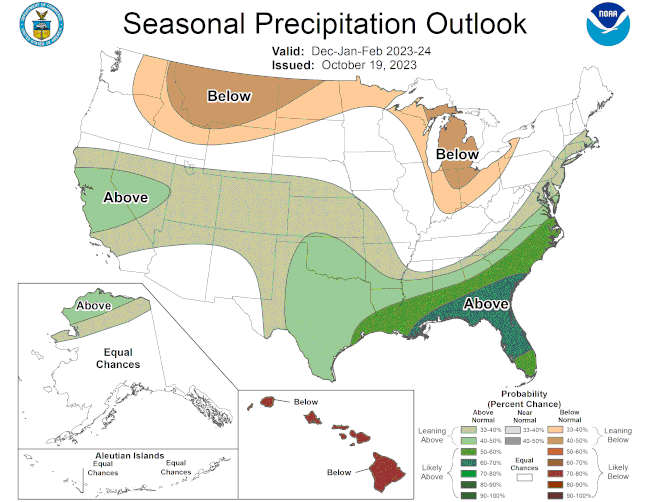
From December through February, NOAA predicts wetter-than-average conditions for northern Alaska, portions of the West, the southern Plains, Southeast, Gulf Coast and lower mid-Atlantic and drier-than-average conditions across the northern tier of the U.S., especially in the northern Rockies and High Plains and near the Great Lakes.
“An enhanced southern jet stream and associated moisture often present during strong El Nino events supports high odds for above-average precipitation for the Gulf Coast, lower Mississippi Valley and Southeast states this winter,” said Jon Gottschalck, chief of the Operational Prediction Branch of the Climate Prediction Center.
NOAA forecasters, in collaboration with the National Integrated Drought Information System (NIDIS), continue to monitor extreme, ongoing drought conditions that have persisted through the southern and central U.S. and worsening drought in Hawaii.
“According to the Oct. 17 U.S. Drought Monitor, a third of the country, including Puerto Rico, is in drought,” said Brad Pugh, operational drought lead with NOAA’s Climate Prediction Center. “During late October, heavy precipitation is likely to result in drought improvement for the central U.S. El Nino with its enhanced precipitation is expected to provide drought relief to the southern U.S. during the next few months.”

Temperature
• Warmer-than-average temperatures are favored across the northern tier of the U.S. and much of the Far West.
• The greatest odds for warmer-than-average conditions are in Alaska, the Pacific Northwest and northern New England.
• Near-normal seasonal mean temperatures are most likely for a region from the south-central Rockies to the southern Plains.
• Remaining areas fall into the category of equal chances for below-, near-, or above-average seasonal mean temperatures.
Precipitation
• Wetter-than-average conditions are most likely in northern Alaska, some areas of the West from parts of California to the south-central Rockies, the southern Plains, Gulf Coast, Southeast and lower mid-Atlantic.
• The greatest odds for drier-than-average conditions are forecast in portions of the northern Rockies and central Great Lakes region, especially for Michigan and northern Ohio and Indiana.
• Much of the central portion of the U.S. falls into the category of equal chances for below-, near-, or above-average seasonal total precipitation.
Drought
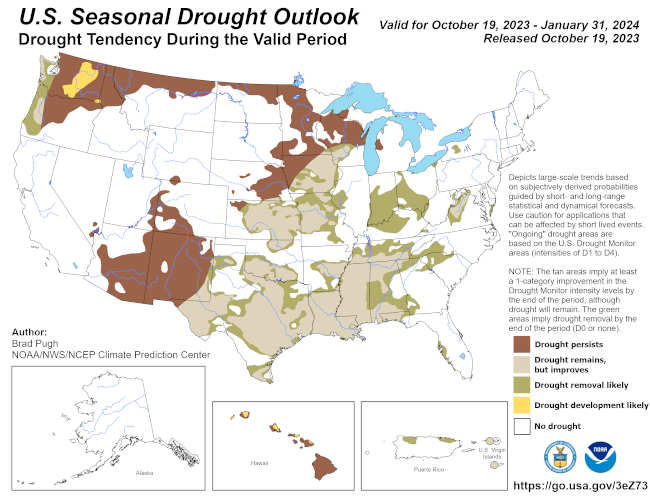
• Widespread extreme to exceptional drought continues to persist across much of the South, and portions of the central U.S.
• Drought conditions are expected to improve across the Southeast, the Gulf Coast (including the lower Mississippi Valley), and Texas due to the expected wetter-than-average forecast.
• Drought conditions are expected to persist for the northern Rockies, northern Great Plains, and portions of the desert Southwest this winter.
• Drought development could occur in the interior Pacific Northwest given the chance for drier-than-average conditions.
• Drought is likely to persist or develop across Hawaii.
About NOAA's seasonal outlooks
NOAA’s seasonal outlooks provide the likelihood that temperatures and total precipitation amounts will be above-, near- or below-average, and how drought conditions are anticipated to change in the months ahead. The outlook does not project seasonal snowfall accumulations as snow forecasts are generally not predictable more than a week in advance.
NOAA’s Climate Prediction Center updates the three-month outlook each month. The next update will be available Nov. 16.
Seasonal outlooks help communities prepare for what is likely to come in the months ahead and minimize weather's impacts on lives and livelihoods. Resources such as drought.gov and climate.gov provide comprehensive tools to better understand and plan for climate-driven hazards. Empowering people with actionable forecasts, seasonal predictions and winter weather safety tips is key to NOAA’s effort to build a more Weather- and Climate-Ready Nation.
Winter forecasting tools: Here’s what’s new at NOAA this year
This winter, NOAA will implement a series of upgrades and improvements. In November, the experimental Probabilistic Winter Storm Severity Index (WSSI-P) will become operational.
The product will enhance communication with external partners, media and the general public by graphically depicting the likelihood of potential societal impacts due to expected winter hazards over a 7-day period.
This is complemented by a version of the Winter Storm Severity Index (WSSI) based on the official National Weather Service forecast of the most likely conditions over the next three days.
NOAA’s Weather Prediction and Climate Prediction Centers will continue to use Winter Key Messages, which highlight the agency’s most essential information for upcoming winter weather, including extreme cold and heavy snow potential. These can be found under “Top Stories” on the Weather Prediction Center’s and Climate Prediction Center’s websites.
This winter, NOAA will complete its implementation of Impact-Based Warning Tags for Snow Squall Warnings. Snow Squall Warnings are warnings issued for short duration intense bursts of snow and wind leading to whiteout visibility and possible flash freezes on roads.
To distinguish high-impact snow squalls, the National Weather Service will issue impact-based Snow Squall Warnings using the “Significant” tag for events that pose a substantial threat to safe travel.
Wireless Emergency Alerts, emergency messages sent by authorized government alerting authorities through wireless carriers, will be limited to only high-impact Snow Squall Warnings with the Snow Squall Impact Tag of “Significant.”
Capt. Gregory Van Patten said the two people who died in the crash were Vaughan Wesley Porter, 54, of North Highland, Utah, and Jaime Danielle Rust, 51, of Payson, Utah.
Van Patten said the Mendocino County Sheriff's Office Coroner's Division was able to identify Porter and Rust through dental record comparisons.
The plane crash was reported on the evening of Oct. 20 in the 21000 block of Airport Road in Covelo.
Deputies arriving at the scene, along with firefighters, found the plane on fire, with the fire spreading into the vegetation.
After containing the fire, the deputies found the bodies while searching the debris field.
While the sheriff’s office is conducting the coroner’s investigation, the Federal Aviation Administration and the National Transportation Safety Board are investigating the circumstances that led to the crash.
NTSB and FAA preliminary investigation information showed that the plane was a Beech A36 Bonanza, a fixed wing single-engine plane built in 1991.
The plane was registered to Plane Haven LLC of Kalispell, Montana.
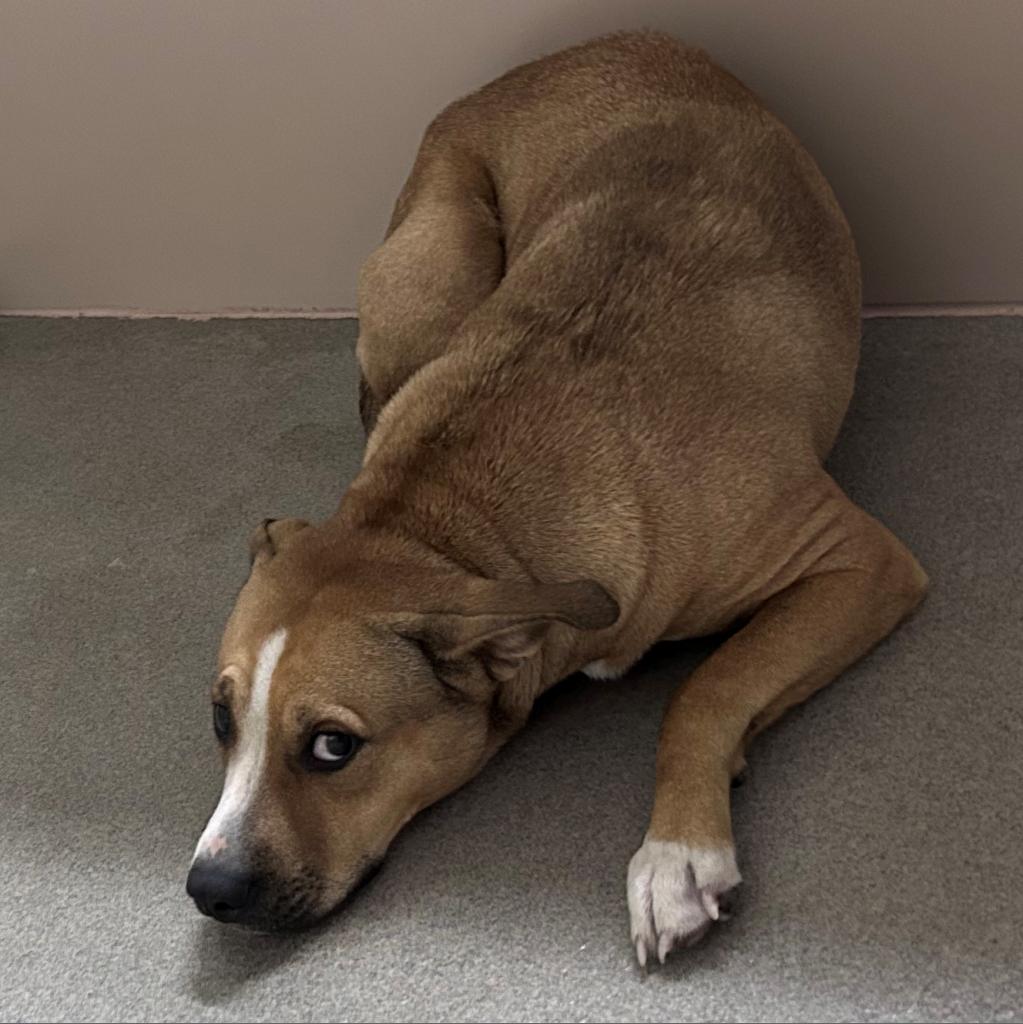
Dogs available for adoption this week include mixes of Australian shepherd, border collie, boxer, Chihuahua, German shepherd, hound, Labrador retriever, pit bull, shepherd and treeing walker coonhound.
Dogs that are adopted from Lake County Animal Care and Control are either neutered or spayed, microchipped and, if old enough, given a rabies shot and county license before being released to their new owner. License fees do not apply to residents of the cities of Lakeport or Clearlake.
Those dogs and the others shown on this page at the Lake County Animal Care and Control shelter have been cleared for adoption.
Call Lake County Animal Care and Control at 707-263-0278 or visit the shelter online for information on visiting or adopting.
The shelter is located at 4949 Helbush in Lakeport.
Email Elizabeth Larson at




























For centuries, the quest for new elements was a driving force in many scientific disciplines. Understanding an atom’s structure and the development of nuclear science allowed scientists to accomplish the old goal of alchemists – turning one element into another.
Over the past few decades, scientists in the United States, Germany and Russia have figured out how to use special tools to combine two atomic nuclei and create new, superheavy elements.


These heavy elements usually aren’t stable. Heavier elements have more protons, or positively charged particles in the nucleus; some that scientists have created have up to 118. With that many protons, the electromagnetic repulsive forces between protons in the atomic nuclei overwhelm the attractive nuclear force that keeps the nucleus together.
Scientists have predicted for a long time that elements with around 164 protons could have a relatively long half-life, or even be stable. They call this the “island of stability” – here, the attractive nuclear force is strong enough to balance out any electromagnetic repulsion.
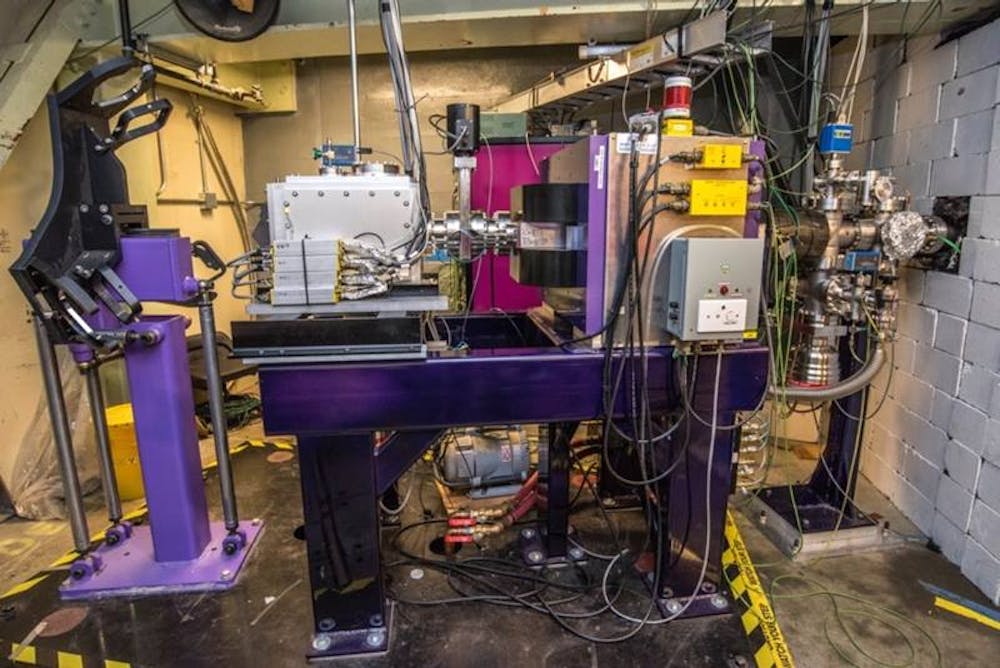
Since heavy elements are difficult to make in the lab, physicists like me have been looking for them elements everywhere, even beyond the Earth. To narrow down the search, we need to know what sort of natural processes could produce these elements. We also need to know what properties they have, like their mass densities.
Calculating density
From the outset, my team wanted to figure out the mass density of these superheavy elements. This property could tell us more about how the atomic nuclei of these elements behave. And once we had an idea about their density, we could get a better sense of where these elements might be hiding.
To figure out the mass density and other chemical properties of these elements, my research team used a model that represents an atom of each of these heavy elements as a single, charged cloud. This model works well for large atoms, particularly metals that are laid out in a lattice structure.
We first applied this model to atoms with known densities and calculated their chemical properties. Once we knew it worked, we used the model to calculate the density of elements with 164 protons, and other elements in this island of stability.
Based on our calculations, we expect stable metals with atomic numbers around 164 to have densities between 36 to 68 g/cm3 (21 to 39 oz/in3). However, in our calculations, we used a conservative assumption about the mass of atomic nuclei. It’s possible that the actual range is up to 40% higher.
Asteroids and heavy elements
Many scientists believe that gold and other heavy metals were deposited on Earth’s surface after asteroids collided with the planet.
The same thing could have happened with these superheavy elements, but super mass dense heavy elements sink into ground and are eliminated from near the Earth’s surface by the subduction of tectonic plates. However, while researchers might not find superheavy elements on Earth’s surface, they could still be in asteroids like the ones that might have brought them to this planet.
Scientists have estimated that some asteroids have mass densities greater than that of osmium (22.59 g/cm3, 13.06 oz/in3), the densest element found on Earth.
The largest of these objects is asteroid 33, which is nicknamed Polyhymnia and has a calculated density of 75.3 g/cm3 (43.5 oz/in3). But this density might not be quite right, since it’s quite difficult to measure the mass and volume of far-away asteroids.
Polyhymnia isn’t the only dense asteroid out there. In fact, there’s a whole class of superheavy objects, including asteroids, which could contain these superheavy elements. Some time ago, I introduced the name Compact Ultradense Objects, or CUDOs, for this class.
In a study published in October 2023 in the European Physical Journal Plus, my team suggested some of the CUDOs orbiting in the solar system might still contain some of these dense, heavy elements in their cores. Their surfaces would have accumulated normal matter over time and would appear normal to a distant observer.
So how are these heavy elements produced? Some extreme astronomical events, like double star mergers could be hot and dense enough to produce stable superheavy elements.
Some of the superheavy material could then remain on board asteroids created in these events. They could stay packed in these asteroids, which orbit the solar system for billions of years.
Looking to the future
The Eurpoean Space Agency’s Gaia mission aims to create the largest, most precise three-dimensional map of everything in the sky. Researchers could use these extremely precise results to study the motion of asteroids and figure out which ones might have an unusually large density.
Space missions are being conducted to collect material from the surfaces of asteroids and analyze them back on Earth. Both NASA and the Japanese state space agency JAXA have targeted low density near-Earth asteroids with success. Just this month, NASA’s OSIRIS-REx mission brought back a sample. Though the sample analysis is just getting started, there is a very small chance it could harbor dust containing superheavy elements accumulated over billions of years.
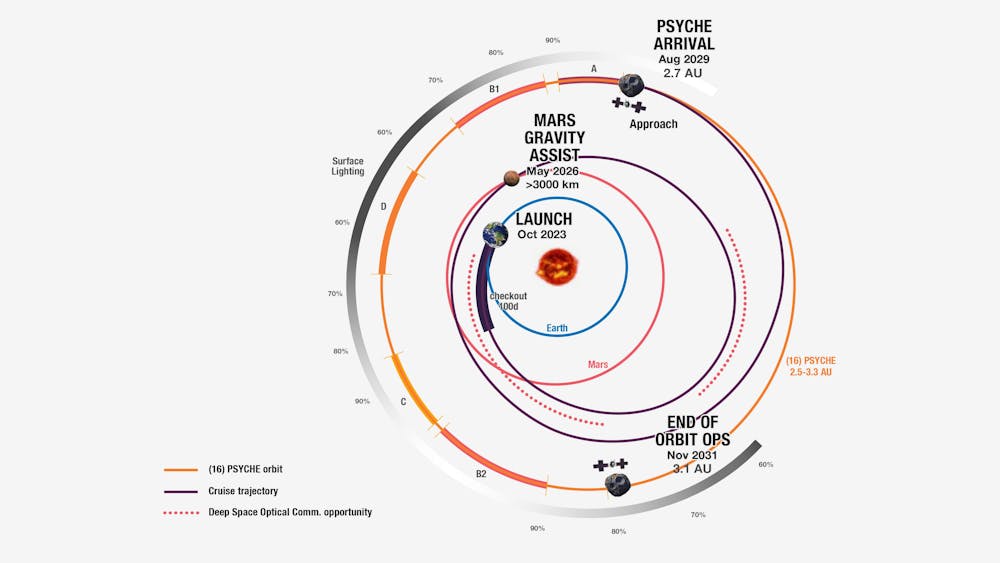
One mass-dense dust and rock sample brought back to Earth would be enough. NASA’s Psyche mission, which launched in October 2023, will fly to and sample a metal-rich asteroid with a greater chance of harboring superheavy elements. More asteroid missions like this will help scientists better understand the properties of asteroids orbiting in the solar system.
Learning more about asteroids and exploring potential sources of superheavy elements will help scientists continue the century-spanning quest to characterize the matter that makes up the universe and better understand how objects in the solar system formed.
Evan LaForge, an undergraduate student studying physics and mathematics, is the lead author on this research and helped with the writing of this article, along with Will Price, a physics graduate student.
Johann Rafelski, Professor of Physics, University of Arizona
This article is republished from The Conversation under a Creative Commons license. Read the original article.
The National Weather Service said the red flag warning for all of Lake County will be in effect from 5 a.m. Saturday to 5 p.m. Sunday.
During that time, wind gusts could reach over 30 miles per hour.
The wind advisory will be in effect from 5 p.m. Saturday to 11 a.m. Sunday, and the frost advisory is for the mountains in the northern third of Lake County from 1 a.m. Saturday to 10 a.m. Sunday.
The forecast predicts warm daytime weather this week, with temperatures dropping into the 40s at night.
Conditions are forecast to transition back to wet weather later next week, when the first storm system is expected to make landfall.
In Lake County, there will be a slight chance of rain on Wednesday night and on Thursday.
There also are chances of rain on Friday, and more storms also are expected at the end of next week.
Email Elizabeth Larson at