 How to resolve AdBlock issue?
News
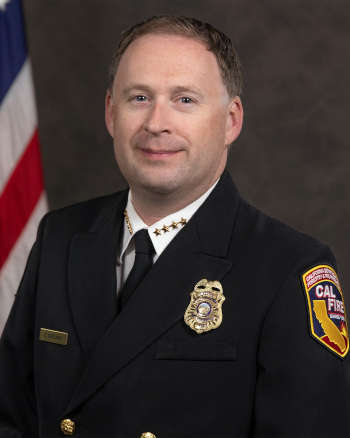
Gov. Gavin Newsom has appointed a new state fire marshal.
Chief Daniel Berlant of Auburn has been appointed state fire marshal with the California Department of Forestry and Fire Protection, or Cal Fire.
Berlant began his career with Cal Fire in 2001 as a volunteer and was hired in 2002 in the Fire Prevention Bureau of the Nevada-Yuba-Placer Unit.
In 2005, he began working in the Cal Fire Communications Office as a fire prevention specialist in Sacramento.
After several fire sieges and extensive work in the public information function, he was promoted in 2008 to department information officer and was tasked with serving as Cal Fire’s main spokesperson.
In 2014, he was promoted to the chief of public information overseeing the Sacramento and region staff of the Communications Office.
In 2016, Chief Berlant was promoted to assistant deputy director at the Office of the State Fire Marshal over the Wildfire Planning & Engineering, and Fire Engineering & Investigations Divisions.
Cal Fire said Assembly Bill 9 (2021) created the Community Wildfire Preparedness and Mitigation Division within the Office State Fire Marshal.
The division will be responsible for the policy and program leadership for defensible space, home hardening/WUI building codes, land use planning, fire prevention grants, pre-fire/fire plan, utility wildfire mitigation, fire hazard/risk mapping, and incident reporting.
In addition, Chief Berlant will continue oversight of the OSFM Fire Engineering & Investigations Division responsible for fire protection related licensing/certification, arson and bomb, and fireworks enforcement/disposal.
Berlant earned a Bachelor of Science degree in political science from the University of California, Davis.
This position requires Senate confirmation and the compensation is $203,564.
Berlant is registered without party preference.

If you live on the East Coast, you may have driven through roundabouts in your neighborhood countless times. Or maybe, if you’re in some parts farther west, you’ve never encountered one of these intersections. But roundabouts, while a relatively new traffic control measure, are catching on across the United States.
Roundabouts, also known as traffic circles or rotaries, are circular intersections designed to improve traffic flow and safety. They offer several advantages over conventional intersections controlled by traffic signals or stop signs, but by far the most important one is safety.

I research transportation engineering, particularly traffic safety and traffic operations. Some of my past studies have examined the safety and operational effects of installing roundabouts at an intersection. I’ve also compared the performance of roundabouts versus stop-controlled intersections.
A brief history of roundabouts
As early as the 1700s, some city planners proposed and even constructed circular places, sites where roads converged, like the Circus in Bath, England, and the Place Charles de Gaulle in France. In the U.S., architect Pierre L'Enfant built several into his design for Washington, D.C.. These circles were the predecessors to roundabouts.
In 1903, French architect and influential urban planner Eugène Hénard was one of the first people who introduced the idea of moving traffic in a circle to control busy intersections in Paris.
Around the same time, William Phelps Eno, an American businessman known as the father of traffic safety and control, also proposed roundabouts to alleviate traffic congestion in New York City.
In the years that followed, a few other cities tried out a roundabout-like design, with varying levels of success. These roundabouts didn’t have any sort of standardized design guidelines, and most of them were too large to be effective and efficient, as vehicles would enter at higher speeds without always yielding.
The birth of the modern roundabout came with yield-at-entry regulations, adopted in some towns in Great Britain in the 1950s. With yield-at-entry regulations, the vehicles entering the roundabout had to give way to vehicles already circulating in the roundabout. This was made a rule nationwide in the United Kingdom in 1966, then in France in 1983.
Yield-at-entry meant vehicles drove through these modern roundabouts more slowly, and over the years, engineers began adding more features that made them look closer to how roundabouts do now. Many added pedestrian crossings and splitter islands – or raised curbs where vehicles entered and exited – which controlled the vehicles’ speeds.
Engineers, planners and decision-makers worldwide noticed that these roundabouts improved traffic flow, reduced congestion and improved safety at intersections. Roundabouts then spread throughout Europe and Australia.
Three decades later, modern roundabouts came to North America. The first modern roundabout in the U.S. was built in Summerlin, on the west side of Las Vegas, in 1990.
Ever since, the construction of modern roundabouts in the U.S. has picked up steam. There are now about 10,000 roundabouts in the country.
Why use roundabouts?
Roundabouts likely caught on so quickly because they reduce the number of potential conflict points. A conflict point at an intersection is a location where the paths of two or more vehicles or road users cross or have the potential to cross. The more conflict points, the more likely vehicles are to crash.
A roundabout has only eight potential conflict points, compared to 32 at a conventional four-way intersection. At roundabouts, vehicles don’t cross each other at a right angle, and there are fewer points where vehicles merge or diverge into or away from each other.
The roundabout’s tight circle forces approaching traffic to slow down and yield to circulating traffic, and then move smoothly around the central island. As a result, roundabouts have fewer stop-and-go issues, which reduces fuel consumption and vehicle emissions and allows drivers to perform U-turns more easily. Since traffic flows continuously at lower speeds in a roundabout, this continuous flow minimizes the need for vehicles to stop, which reduces congestion.
The Federal Highway Administration estimates that when a roundabout replaces a stop sign-controlled intersection, it reduces serious and fatal injury crashes by 90%, and when it replaces an intersection with a traffic light, it reduces serious and fatal injury crashes by nearly 80%.
Why do some places have more than others?
Engineers and planners traditionally have installed roundabouts in intersections with severe congestion or a history of accidents. But, with public support and funding, they can get installed anywhere.
But roundabouts aren’t needed in every intersection. In places where congestion isn’t an issue, city planners tend not to push for them. For example, while there are around 750 roundabouts in Florida, there are fewer than 50 in North Dakota, South Dakota and Wyoming combined.
Roundabouts have been gaining popularity in the U.S. in recent years, in part because the Federal Highway Administration recommends them as the safest option. Some states, like New York and Virginia, have adopted a “roundabout first” policy, where engineers default to using roundabouts where feasible when building or upgrading intersections.
In 2000, the U.S. only had 356 roundabouts. Over the past two decades, that number has grown to over 10,000. Love them or hate them, the roundabout’s widespread adoption suggests that these circular intersections are here to stay.
Deogratias Eustace, Professor of Civil, Environmental and Engineering Mechanics, University of Dayton
This article is republished from The Conversation under a Creative Commons license. Read the original article.
The latest report from the Employment Development Department said the September unemployment rate in Lake County was 5.6%, the same rate as in August. The September 2022 jobless rate was 4.3%.
California’s unemployment rate was 4.7% in September, which is 0.1% higher than the previous month. The state registered a 3.7% jobless rate in September 2022.
The Bureau of Labor Statistics said the nationwide unemployment rate was 3.8% in August and September, and 3.5% in the previous September.
The Employment Development Department said California payroll jobs totaled 18,109,000 in September 2023, up 8,700 from August and also up 302,800 from September of last year.
Since the current economic expansion began in April 2020, California has gained 3,191,000 jobs, which averages out to a gain of 77,829 jobs per month, the report said.
The number of Californians employed in September was 18,470,700, a decrease of 36,300 persons from August’s total of 18,507,000 and down 500 from the employment total in September, according to the Employment Development Department.
The report said the number of unemployed Californians was 913,600 in September, an increase of 18,600 over the month and up 144,100 in comparison to September 2022.
As of September 2023, California has added 436,400 more nonfarm jobs than it had in February 2020 at the state’s pre-pandemic high, the report said.
Most of Lake County’s job sectors showed declines, with the exception of private service providing, which grew by 1.1%, and private education and health services, which grew by 4.5%.
Lake County’s total farm jobs were down by 14.8% in the month-over comparison, but up by 25.6% over the previous year.
The jobless rate for Lake County ranked it No. 41 out of the state’s 58 counties.
The lowest unemployment rate in California in September, 2.9%, was in San Mateo County, while Imperial County registered the highest rate, 21.1%.
Lake’s neighboring county jobless rates and ranks were: Colusa, 8.5%, No. 56; Glenn, 6.1%, No. 47; Mendocino, 4.6%, No. 28; Napa and Sonoma, 3.5%, tied for No. 6; and Yolo, 4.3%, No. 20.
Five of California’s 11 industry sectors gained jobs in September:
• Private education and health services: Up 18,200 jobs statewide, thanks to above average increases in general medical and surgical hospitals, continuing care retirement communities and assisted living facilities, and individual and family services.
• Leisure and hospitality: Up 11,300, thanks, in part, to job gains in the accommodation industry group.
• Trade, transportation and utilities: Up 2,400.
• Construction: Up 2,200.
• Government: Up 300.
Sectors showing declines included the following:
• Professional and business services: Down 10,900. It posted the largest month-over job loss due to above average declines in accounting, tax prep and bookkeeping services, architectural, engineering, and related services, and scientific research and development services.
• Information: Down 7.300.
• Manufacturing: Down 4,600.
• Financial activities: Down 1,600.
• Other services: Down 1,100.
• Mining and logging: Down 200.
In related data that figures into the state’s unemployment rate, the Employment Development Department said there were 368,452 people certifying for Unemployment Insurance benefits during the September 2023 sample week. That compares to 394,757 people in August and 294,085 people in September 2022.
Concurrently, 37,863 initial claims were processed in the September 2023 sample week, which was a month-over decrease of 111 claims from August, but a year-over increase of 3,362 claims from September 2022, the report said.
Email Elizabeth Larson at
The meeting will begin at 4 p.m. at the Moose Lodge, located at 15900 Moose Lodge Lane in Clearlake Oaks.
The meeting will be available via Zoom. The meeting ID is 986 3245 2684, pass code is 666827.
Business on Wednesday will include an update on Spring Valley, with reports on illegal cannabis cultivation, FireWise Community safety and Spring Valley Lake recovery.
There also will be updates on John T. Klaus Park and commercial cannabis.
Northshore Fire Protection District Chief Mike Ciancio is scheduled to give a report to the group.
Supervisor EJ Crandell also will update the group on the Clearlake Oaks Roadmap Taskforce, a meeting with Sonoma Clean Power, the Lake County Area Plan and general plan updates, and the latest on the Blue Ribbon Committee.
ERTH’s next meeting will take place on Dec. 6.
ERTH’s members are Denise Loustalot, Jim Burton, Tony Morris and Pamela Kicenski.
For more information visit the group’s Facebook page.
The California Highway Patrol is embarking on a yearlong comprehensive campaign to discourage teens from driving while distracted.
Motor vehicle crashes are a leading cause of death for teens in the United States.
California is home to more than 800,000 licensed teenage drivers. Sadly, thousands of the state’s drivers between 15 and 19 years of age are involved in fatal and injury crashes every year.
According to data from the CHP’s Statewide Integrated Traffic Records System, in 2021 there were more than 17,000 fatal and injury crashes involving teen drivers.
Through the grant-supported Teen Distracted Driving initiative, the CHP is dedicated to promoting safe and responsible driving practices with the goal of helping teen drivers remain focused on the road to avoid becoming another statistic.
"A combination of driver inexperience and distraction behind the wheel can lead to a lifetime of consequences,” said CHP Commissioner Sean Duryee. “The dangers associated with driving distracted are not worth the text, call, or fleeting distraction. It's a careless choice that can change lives forever."
Everyday activities like using a cell phone, eating, drinking, adjusting the stereo, or chatting with friends, pose life-threatening risks when done behind the wheel and can have an impact on all road users.
The Teen Distracted Driving program encompasses an educational element that enables CHP officers and traffic safety collaborators to participate in school and community events across the state.
Enforcement efforts targeting distracted driving will be carried out during both National Teen Driver Safety Week in October and National Distracted Driving Awareness Month in April.
Funding for this program was provided by a grant from the California Office of Traffic Safety, through the National Highway Traffic Safety Administration.

The ramp-up to cold and flu season is a bad time for consumers to learn that some of their most trusted go-to products don’t actually work.
An advisory committee to the U.S. Food and Drug Administration concluded unanimously in September 2023 that phenylephrine – an active ingredient found in popular over-the-counter cough and cold products such as Sudafed PE, Theraflu and NyQuil Severe Cold and Flu – works no better than a placebo when taken orally. The 2023 FDA advisory panel met to review growing evidence that oral phenylephrine is an ineffective treatment for nasal congestion. The committee did not review the effectiveness of phenylephrine nasal spray.
In response, CVS, one of the largest pharmacy chains in America, announced that they will no longer sell products that contain oral phenylephrine as the only active ingredient in its community pharmacies.
To the millions of Americans who will suffer from colds with stuffy noses this fall and winter – many of whom have used products containing phenylephrine for years – the panel’s decision may be startling.
Consumers are likely wondering whether they should stop using over-the-counter products containing phenylephrine, whether the products will still be on the shelves this winter and what other options they might have. Consumers may also question whether combination cough, cold and flu products will still be safe and effective for use at home.
As the FDA considers the advisory committee’s conclusions, oral phenylephrine will still likely be sold at many pharmacies despite the fact that more effective nonprescription medications and nonmedication approaches to relieve congestion exist.
As pharmacists who are focused on patient care in local communities, we have some advice on what to do when you need relief from cold and flu symptoms.
The backstory
As of fall 2023, phenylephrine is listed as the sole active ingredient, or as one of the active ingredients, in thousands of over-the-counter products, including tablets, liquids, nasal sprays, gels and ointments.
The medication, when taken as an oral tablet, oral liquid or nasal spray, has long been used for the temporary relief of sinus or nasal congestion from the common cold or seasonal allergies. Phenylephrine has been the only oral decongestant on pharmacy and grocery store shelves since another popular decongestant, pseudoephedrine, became more regulated and went behind the counter in 2006.
The most recent analysis is not the first time an FDA advisory panel has scrutinized oral phenylephrine. A 2007 panel examining its use concluded that more studies were needed to make a final decision regarding the effectiveness of phenylephrine.
Additional studies since then showed no difference in efficacy between phenylephrine and a placebo, likely because phenylephrine taken by mouth is inactivated in the gut.
Safety concerns
No safety issues with oral phenylephrine alone were documented in the 2023 advisory panel conclusion. However, researchers and advisory panel members have raised concerns about the possibility of products containing ineffective phenylephrine remaining on pharmacy shelves.
Even if oral phenylephrine is safe, taking an ineffective medication could cause consumers to spend money on products that work no better than a placebo. A placebo effect is a well-known phenomenon in which people taking an inactive product may perceive benefit. The placebo tablets used in the phenylephrine studies were the same or similar shape and color as the phenylephrine tablets but without the active ingredient.
The panel also noted the missed opportunities for pharmacists to recommend something more effective for nasal congestion if phenylephrine remains commercially available.
Despite the advisory committee’s conclusions, no official action has been taken by the FDA as of late October 2023. If the agency proposes a change in the availability of phenylephrine, consumers will be asked to weigh in prior to a final ruling.
The story behind pseudoephedrine
Luckily, the nonprescription oral nasal decongestant pseudoephedrine – which is known to be effective – has been commercially available for many years. This drug is available as a single ingredient product or in combination with other ingredients in products marketed to treat sinus congestion.
Pseudoephedrine is a nasal decongestant that is taken by mouth to relieve a stuffy nose. It works by constricting the blood vessels that become enlarged as a result of a cold, flu or seasonal allergies.
But buying products containing pseudoephedrine is not as straightforward as it sounds. Because pseudoephedrine can be used to manufacture the street drug methamphetamine, the FDA requires that it be sold behind the counter and in limited amounts each day and month. It also requires photo identification at the point of sale.
If the FDA acts on the advisory committee’s conclusions that oral phenylephrine is not an effective nasal decongestant, pseudoephedrine may be the only remaining oral medication available without a prescription to treat nasal congestion. Here are some things to know about pseudoephedrine:
-
Pseudoephedrine should not be used in doses higher than those that are recommended on the label. Use of products containing pseudoephedrine should be stopped and a health care provider consulted if dizziness, nervousness or sleeplessness occurs.
-
Pseudoephedrine should not be used by consumers with heart disease, high blood pressure, thyroid disease, diabetes or an enlarged prostate without talking with a health care provider like a pharmacist or a physician.
-
Products with pseudoephedrine should not be used while taking, or within two weeks of stopping, a prescription monoamine oxidase inhibitor, which is most commonly used to treat for depression or Parkinson’s disease.
Other treatments
In addition to oral pseudoephedrine, medicated nasal sprays – including those containing phenylephrine or oxymetazoline as active ingredients – can also relieve nasal congestion. These products are sold under the brand name Afrin and others.
However, medications are not the only way to relieve congestion. Some non-drug approaches include hot, steamy showers, safe use of neti pots, vaporizers or humidifiers, saline nasal spray and applying a warm, moist washcloth to the face. All of these non-drug approaches can help sooth the nasal passage to provide temporary relief from congestion. If symptoms of congestion continue for more than two weeks, or if signs of an infection arise, go see your doctor.
Since products containing oral phenylephrine will remain on the market for the time being, it is critical for consumers to read the labels of over-the-counter products and review the active ingredients and their risks.
You should talk with your pharmacist about your symptoms, medical conditions and the other medications you’re taking prior to purchasing any over-the-counter product. Your pharmacist will help you determine if your symptoms can be managed with self-care or if you need to see a physician.
Lucas A. Berenbrok, Associate Professor of Pharmacy and Therapeutics, University of Pittsburgh; Colleen Culley, Associate Professor of Pharmacy, University of Pittsburgh, and Karen Steinmetz Pater, Associate Professor of Pharmacy, University of Pittsburgh
This article is republished from The Conversation under a Creative Commons license. Read the original article.