 How to resolve AdBlock issue?
News
Andrew White, of Dixon, has been reappointed to the State 9-1-1 Advisory Board, where he has served since 2021.
White has been police chief for the city of Martinez since 2023.
He was police chief for the city of Clearlake from 2018 to 2022.
White was an instructor and scenario evaluator at the Napa Valley College Criminal Justice Training Center from 2007 to 2022.
He was police commander for the Suisun City Police Department from 2015 to 2018, and served in several sworn positions there from 2002 to 2015.
White was a dispatcher at the Napa Police Department from 2002 to 2004. He is a member of the California Police Chiefs Association.
White earned a Bachelor of Science degree in organizational management and information technology from Union Institute and University.
This position does not require Senate confirmation and there is no compensation. White is a Republican.
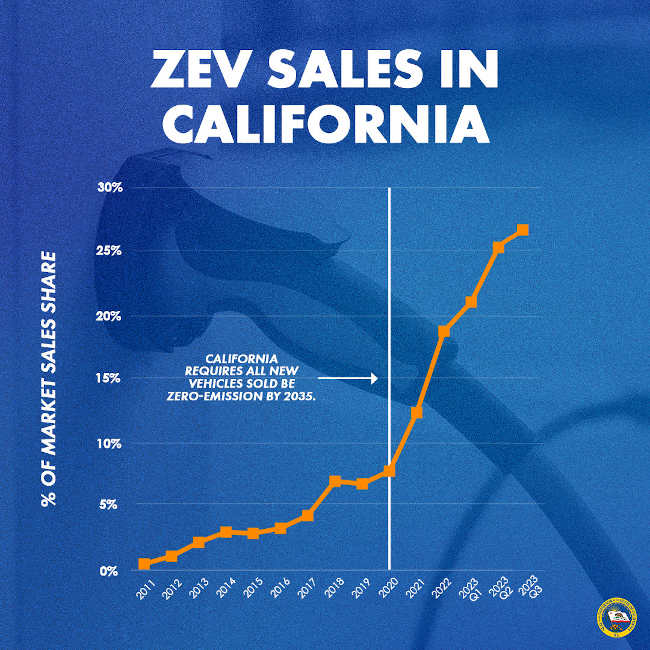
In the third quarter of this year, from July through September, 26.7% of new cars sold in California were zero-emission vehicles, or ZEVs, according to new data from the Governor’s Office.
That’s up from 25.4% in the previous quarter.
This comes after Gov. Newsom announced that California surpassed both its zero-emission truck sales and vehicle sales goals two years ahead of schedule, and surpassed its 10,000 fast EV chargers goal more than a year ahead of schedule.
In China last week, Gov. Newsom touted the state’s progress on ZEVs and saw China’s own progress with ZEVs firsthand.
“We’ve made it easier and cheaper than ever for folks to transition to clean cars, and it’s continuing to produce real results. This progress represents less pollution in our air from burning fossil fuels. This is critical progress in our fight against climate change while expanding our clean energy economy,” Newsom said.
California’s ZEV Record:
• 26.7% of all new cars sold in California last quarter were ZEVs, according to the California Energy Commission: 119,580 ZEV sales in Q3 of 2023, 342,888 total ZEV sales year to date.
• 34% of new ZEVs sold in the U.S. are sold in California, according to the California Air Resources Board.
• Thousands of dollars in grants and rebates available for low-income Californians – learn more at ClimateAction.ca.gov
• The historic $52 billion California Climate Commitment includes over $10 billion for zero-emission cars, trucks, buses and infrastructure.
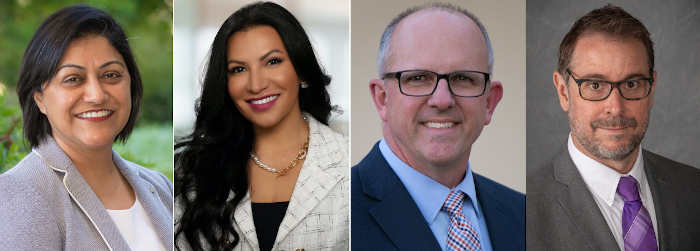
NORTHERN CALIFORNIA — Yuba Community College District Chancellor Dr. Shouan Pan has announced the selection of four finalists for the position of Woodland Community College president.
Woodland Community College’s campuses include the Lake County Campus in Clearlake.
During an Oct. 23 listening session with community leaders in Clearlake, Dr. Pan said emphasized the importance of the college president role.
He said a nationwide search yielded 36 applicants, which were narrowed to 11 semifinalists.
The four finalists the district announced Wednesday were recommended to the chancellor by a diverse interview committee made up of faculty, staff and community members.
The Woodland Community College president finalists are, in alphabetical order, Dr. Monica Chahal, Dr. Lizette Navarette, Dr. Brian Sanders and Dr. James Todd.
Candidate forums will be held, in person, on Tuesday, Nov. 14.
Faculty, staff, students, and community members are invited to attend these forums to hear directly from each candidate.
Interviews for the candidates will also be conducted on Nov. 14, with a final decision expected soon after. The approval of an employment agreement by the board of trustees will follow.
The anticipated start date for the president is January 2024.
Short biographies of the finalists are below. More detailed biographies and additional information regarding the forums will be posted on the WCC website.
Dr. Monica Chahal
Dr. Monica Chahal is an experienced leader with a career spanning more than three decades in educational institutions, including the California Community College system.
Her work has been defined by her focus on equity, social justice and student success. Her lifelong commitment to students has led to a rewarding career as a classified professional, adjunct and full-time faculty, and administrator at Yuba College, Woodland Community College, and Clovis Community College.
In all these roles, she is most proud to have served alongside and worked collaboratively with others committed to excellence and innovation.
Dr. Lizette Navarette
Dr. Lizette Navarette is a passionate student-centered leader with nearly two decades of experience in higher education and local government.
As executive vice chancellor at the California Community College Chancellor’s Office, she leads the Office of Institutional Supports and Success which includes college finance, facilities planning, institutional effectiveness, and government relations.
She is responsible for formulating policies that determine the distribution of over $13 billion in local assistance and capital outlay funds to the state’s 73 community college districts, professional development which advances student success, and coordinating state and federal matters for the system.
From October 2022 to June 2023, Dr. Navarette served as interim deputy chancellor. She previously served as the vice chancellor of College Finance and Facilities Planning and was the first woman to hold that position.
Navarette has also served as the vice president of the Community College League of California, associate director of Regional Relations for the University of California Riverside and as the Youth & Education Coordinator for the city of Riverside.
Dr. Navarette has an extensive history championing student success, affordability and equitable educational opportunities for all students. She earned a bachelor’s degree in political science and international relations from UC Riverside, a master’s degree in public administration from the University of La Verne and a doctorate in education from UC Davis.
In 2021, Dr. Navarette earned the United Nations Global Education for All award for her research on working adult learners.
Navarette is a proud first-generation graduate.
Dr. Brian Sanders
Dr. Brian Sanders is recognized across California’s community colleges for his leadership, innovation and extensive knowledge of the community college system.
He has served as a tenured mathematics faculty member, dean of a large division, interim chief business officer, and chief instructional officer for both Columbia College and Modesto Junior College.
His service on the executive board for the California Community Colleges Chief Instructional Officers and on statewide Chancellor’s Office committees has resulted in significant improvements for the community colleges.
On campus, he is known as a kind, creative problem-solver, collaborating with all constituent groups to develop and implement effective solutions to difficult challenges.
Dr. James Todd
Dr. James Todd has over 17 years experience working at California community colleges as a faculty member and as an executive administrator in academic and student affairs.
As a faculty member, he taught anthropology, while also serving as academic senate president and as an elected faculty representative on the statewide Executive Committee for the Academic Senate for California Community Colleges.
His faculty experience fostered a deep commitment to participatory governance, an inclusive style of educational leadership, and student equity and social justice efforts in education.
He is passionate about fostering access and meeting the needs of local communities, facilitating student success and completion, building public and private partnerships, and ensuring equitable post-graduation outcomes for students.
Over the last eight years, Todd has served as an executive administrator. He was the vice president of student services at Modesto Junior College, as well as the assistant superintendent and vice president of instruction and planning at San Joaquin Delta College in Stockton.
He is currently the assistant superintendent and vice president of student services at Sierra College.
Todd completed Master of Arts and Doctor of Philosophy degrees in cultural anthropology at the University of California, Santa Cruz.
The proposed prescribed burn includes 50 acres of non-native grasslands along Highway 53 and Anderson Ranch Parkway near Lower.
Smoke from the burn should be limited in duration; however, it will be noticeable.
The burning will take place only during the day. It’s anticipated that the smoke will travel west to east.
With assistance from the California Highway Patrol and the California Department of Transportation, traffic will be controlled and motorists advised of the control burn.
The prescribed burn will reduce accumulated flashy fuel thatch adjacent to Highway 53, restore fire to the landscape, reduce invasive plant cover and promote native plant regeneration and provide live fire training for fire personnel in a controlled manner.
The commission was created by the Not Invisible Act, led by Secretary of the Interior Deb Haaland during her time in Congress.
Its mandate was to develop recommendations on actions the federal government can take on six focused topics to help combat violent crime against Indigenous people and within Indian lands, and to address the epidemic of missing persons, murder and trafficking of American Indian and Alaska Native peoples, as specified under the law.
“I am so grateful to the members of the Not Invisible Act Commission for the time and effort they have given to this work and this report over the past two years. Indian Country will be safer, and lives will be saved, because of this Commission’s work,” said Secretary Haaland. “Everyone deserves to feel safe in their community. Crimes against Indigenous peoples have long been underfunded and ignored, rooted in the deep history of intergenerational trauma that has affected our communities since colonization. I look forward to reviewing the recommendations, which will help us continue to galvanize attention and resources toward these tragic epidemics.”
“These recommendations will play an important role in our shared work to address the violence Tribal communities face,” said Attorney General Merrick B. Garland. “I am grateful to the Commissioners for approaching this critical and difficult work with the urgency and thoughtfulness it deserves. The Justice Department is committed to working with the Department of Interior, Congress, and our state, local, and Tribal partners to address the Commission’s recommendations and respond to the public safety challenges facing American Indians and Alaska Natives.”
The Departments will carefully consider the NIAC’s recommendations, which will help further the Biden-Harris administration’s work to advance and invest in public safety in Indian Country.
At the 2021 White House Tribal Nations Summit, President Biden signed Executive Order 14053 on Improving Public Safety and Criminal Justice for Native Americans and Addressing the Crisis of Missing or Murdered Indigenous People directing the Departments of the Interior, Justice and Health and Human Services to work with tribal nations and partners to build safe and healthy Tribal communities and to support comprehensive law enforcement, prevention, intervention and support services.
Last year, the president signed the Violence Against Women Act Reauthorization Act of 2022 into law, which built on advancements from previous reauthorizations and included new provisions to address the crisis of Missing and Murdered Indigenous Peoples across the country and re-enforced tribal sovereignty by providing means for tribes to address the epidemic of violence within their lands and communities.
At the 2022 White House Tribal Nations Summit, the Interior Department’s Bureau of Indian Affairs and the Federal Bureau of Investigation announced an agreement to provide for the effective and efficient administration of criminal investigations in Indian Country.
The agreement specified that the BIA Office of Justice Services, or BIA-OJS, and the FBI would cooperate on investigations and share information and investigative reports as well as establish written guidelines outlining jurisdiction and investigative roles and responsibilities.
The agreement also requires that all BIA, FBI and Tribal law enforcement officers receive training regarding trauma-informed, culturally responsive investigative approaches.
Secretary Haaland has traveled throughout the nation and internationally to highlight the need for coordination and collaboration on issues related to violence against Indigenous peoples. Within the first 100 days of the Biden-Harris administration, Secretary Haaland created a new Missing and Murdered Unit within the BIA-OJS, which is providing leadership and direction for cross-departmental and interagency work involving missing and murdered Indigenous peoples.
The Not Invisible Act Commission’s recommendations will inform the Department’s efforts to evolve the MMU to address gaps within law enforcement agencies and across the federal government.
Last week, Attorney General Garland, Deputy Attorney General Lisa O. Monaco, and Associate Attorney General Vanita Gupta met with the Tribal Nations Leadership Council, including a council member who serves as a commissioner on the Not Invisible Act Commission, and discussed a range of pressing issues impacting American Indian and Alaska Native people.
Attorney General Garland traveled to Alaska in August, during which he visited Anchorage and the Village of Galena. Attorney General Garland met with tribal leaders and advocates to discuss the public safety challenges that Alaska Native individuals and communities face, including the Justice Department’s continuing to work in partnership with tribal communities to address the MMIP crisis.
In the past year, Associate Attorney General Gupta has held meetings with tribal and Native leaders in Minnesota and Alaska.
This month in Alaska, the Associate Attorney General spoke at the Alaska Federation of Natives annual convention to announce the launch of the Alaska Pilot Program, which empowers Tribes to exercise criminal jurisdiction over non-Indians present in their Villages for certain crimes.
Since the establishment of the NIAC in 2020, the Justice Department has made strides in implementing systems aimed at preventing new instances of MMIP, locating individuals who are reported missing, and, where a crime has occurred, investigating and prosecuting those responsible.
Earlier this summer, the Department launched a MMIP Regional Outreach Program. This program places attorneys and coordinators at U.S. Attorneys’ Offices across the United States to help prevent and respond to cases of missing or murdered Indigenous people.
The benefits of friendship go far beyond having someone to confide in or spend time with – it can also protect you from physical and mental health problems. For example, people with good friends recover more quickly from illnesses and surgeries. They report higher well-being and feel like they live up to their full potential. Additionally, people with good friends report being less lonely across many life stages, including adolescence, becoming a parent and old age.
In fact, friendships are so powerful that the social pain of rejection activates the same neural pathways that physical pain does.
Behavioral scientists like me have tended to focus our research about friendships on their benefits. How to cultivate these powerful relationships hasn’t been as deeply researched yet. Understanding more about what people look for in a friend and how to make and sustain good friendships could help fight the loneliness epidemic.
Traditional conceptions of friendship
Previous generations of behavioral scientists traditionally focused on the notion that people form friendships with those who are similar, familiar and in close proximity to them.
When you look at all the friendships you’ve had over your life, these three factors probably make intuitive sense. You’re more likely to have things in common with your friends than not. You feel an increased sense of familiarity with friends the longer you know them – what psychologists call the mere exposure effect. And your friends are more likely to live or work near you.
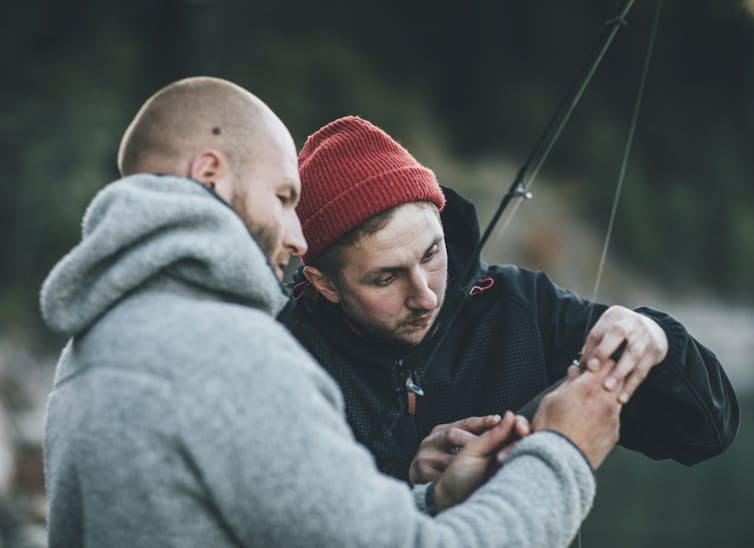
Researchers in this field have also typically divided friendship preferences based on gender. The dichotomy suggests that women prefer one-on-one, emotionally close and face-to-face friendships, while men prefer multi-person, task-oriented and side-by-side friendships, with the focus on a shared activity.
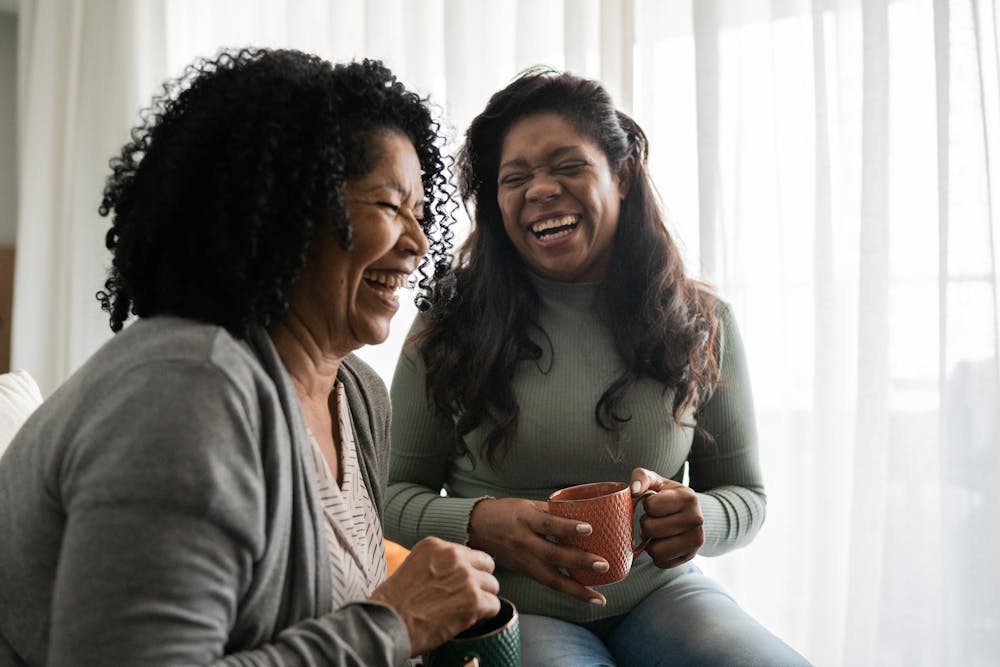
Again, when looking at your own friendships, these findings may seem intuitive. Women on average prefer to engage in activities that allow for self-disclosure and sharing secrets, such as spending time one-on-one talking about their lives. Men, on the other hand, tend to prefer to engage in activities that are group-based and have a clearly defined outcome, such as playing sports together. Findings such as these show that gender and preferences on how to connect are important in friendships.
But these explanations of friendship do not address the most important aspect of making friends – choosing the individual people you want to turn into your pals. Friendship decisions are not random. There are many people who are similar, familiar, in close proximity and have similar preferences as you. Yet few of these individuals end up being your friends.
So, in a world full of possibilities, how do people pick those who will become their friends?
New ways to think about friendship
Within the last decade, researchers have begun investigating the roots of friendship preferences beyond the classic descriptions.
For example, social scientists see there are strong preferences for friends to be loyal, trustworthy and warm. Additionally, researchers find there are preferences for friends who help you solve specific kinds of problems and are generous and caring with you instead of others. These preferences help people navigate making friends, given limited reserves of time and effort. In short, they help you find the best possible friends you can in a world full of friendship possibilities.
Social scientists have also learned that, while there are some important gender differences in what people want in friends, it is not accurate to say that men and women want one kind of friendship over another. In fact, when we take a more holistic approach and consider broader categorizations of emotional closeness and tasks, the gender differences in these preferences are reduced. And of course, people don’t exclusively pick between face-to-face and side-by-side friendships. Instead, it is more likely that they focus on what they want from their friends and let these needs guide how friendships form.
Ultimately it’s your individual preferences that guide you toward the people who will best meet your particular social needs. With a little luck, you’ll find buddies who can lend a hand when you need one and support you in reaching your goals. In all, your preferences are the key to finding friends who can buffer against feeling lonely and provide you with the social, emotional and health benefits of friendship.
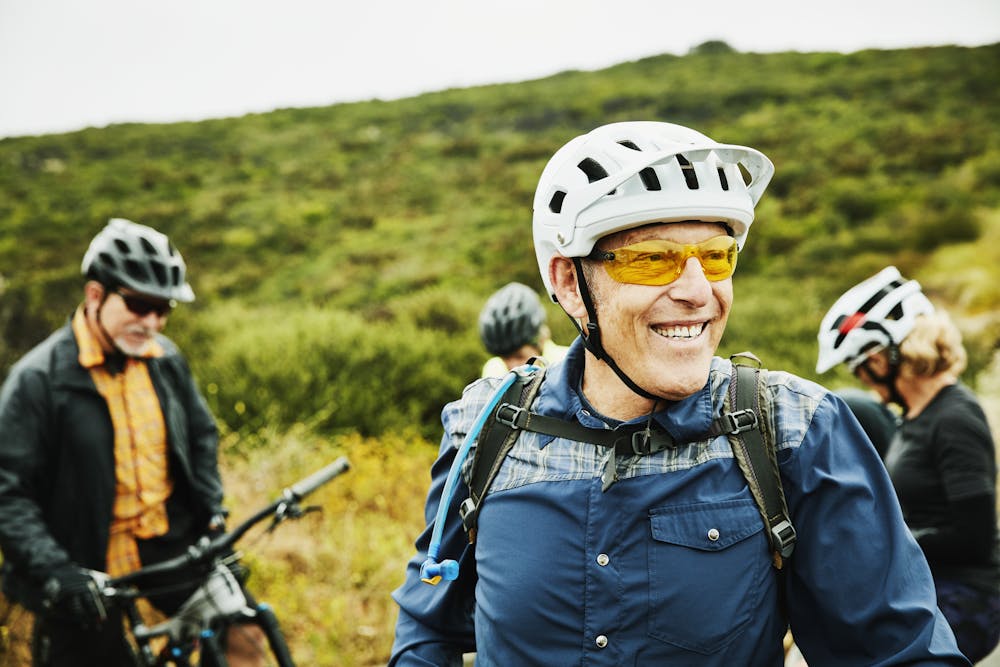
When you’re looking for friends
It’s hard to provide clear guidelines for improving friendships because the research about friendship preferences is still developing. But there are some clear points for consideration:
-
Determine what you value in friends. Do you want one-on-one, emotionally close friendships or multi-person, task-oriented friendships? Depending on your preference, different kinds of activities will be helpful for finding others who fit the bill and cultivating these friendships.
-
Know that it will take time to make close friendships. Research suggests that it takes 30 hours of interaction to make a casual friend, 140 hours to make a good friend and 300 hours to make a best friend.
-
Consider what you bring to the table. Everyone has unique strengths they bring to their friendships. Research shows that, when you’re able to demonstrate that you have characteristics people want in friends, you’re able to make more satisfying friendships.
Understand friendships to understand loneliness
Considering the nuances of friendship preferences will be extremely important in reducing not only loneliness, but other related public health crises. For example, loneliness is associated with likelihood of attempting suicide. Recent surveys have found that men are suffering big declines in the number of close friends they have, as well as experiencing higher rates of suicide compared to women.
The U.S. Surgeon General’s recent recommendations for fighting the loneliness epidemic focus on public policies and infrastructure. But fostering community spaces for connection – such as parks, libraries and playgrounds – prioritizes the preferences of those who favor the one-on-one, emotionally close and face-to-face connections more often preferred by women. These places are less beneficial for people with more typically masculine preferences, as there is no guarantee that these spaces will foster side-by-side, task-oriented connections unless areas for sports and other team-based activities are also included.
To counter this inequity, researchers and public health officials first need to understand what makes friendships satisfying. Then they can ensure that recommendations to curb loneliness address all of the pathways that people use to cultivate high-quality friendships.
Jessica D. Ayers, Assistant Professor of Psychological Science, Boise State University
This article is republished from The Conversation under a Creative Commons license. Read the original article.