 How to resolve AdBlock issue?
News
Applications — which can be found on the Kelseyville Unified website or the district office — are due by noon on Friday, Dec. 8.
The district reported that the two board members who resigned are Natalie Higley and Allison Panella.
“One board member is now a Kelseyville Unified School District employee, working as a school counselor, so she is no longer eligible to serve as a board member, and the other resigned from the board for personal reasons. That leaves us with two vacancies we need to fill,” said Superintendent Dr. Nicki Thomas.
Thomas said the board plans to have the vacancies filled by Dec. 19.
Panella told Lake County News, “I have thoroughly enjoyed my time on the board and regret not completing the remainder of my term. I have resigned because I accepted a position as a school counselor for Kelseyville Elementary School, where I look forward to serving our students in a more meaningful way.”
The current elected board members — Board President Rick Winer, Clerk Gilbert Rangel and Mary Beth Mosko — will appoint the new board members, who will serve a provisional term from December 2023 through December 2024.
The role of the school board is to ensure that school districts are responsive to the values, beliefs and priorities of their communities, according to the California School Boards Association.
Boards fulfill this role by setting direction, establishing an effective and efficient structure, providing support, ensuring accountability and providing community leadership as advocates for children, the school district and public schools.
In Kelseyville, the time commitment to serve is approximately four hours per month.
Board members typically attend one regular monthly meeting and occasional special meetings, for which they prepare by reading materials provided in advance.
Meetings usually last about two hours each.
The basic criteria to serve as a Kelseyville Unified board member include residing within the district boundaries, being a registered voter, having no conflicts of interest that would invalidate service (such as being a district employee) and being at least 18 years of age.
Thomas noted that the board would love to find applicants who are familiar with Kelseyville Unified and have an unselfish interest in public schools, the community, and in every child.
“The board hopes to find candidates who demonstrate courage and the ability to explain and enforce necessary rules, even when they are unpopular, and who understand that leadership often involves doing the most good for the most people — which can require garnering support for a feasible policy as opposed to a perfect policy,” Thomas said.
She said the current board members work for the good of the whole based on moral and ethical values and she appreciates that.
Thomas also believes having a sense of humor can help ease the tension when difficult decisions must be made.
Once applications are reviewed, qualified applicants will be invited back for interviews on Dec. 14 and the two applicants chosen to fill the vacancies will be sworn in on Dec. 19.
These provisional board members will serve until newly elected board members are chosen during the November 2024 election.
In November 2024, two positions will be listed on the ballot: one for a full four-year term and another for the remaining two years of an existing four-year term.
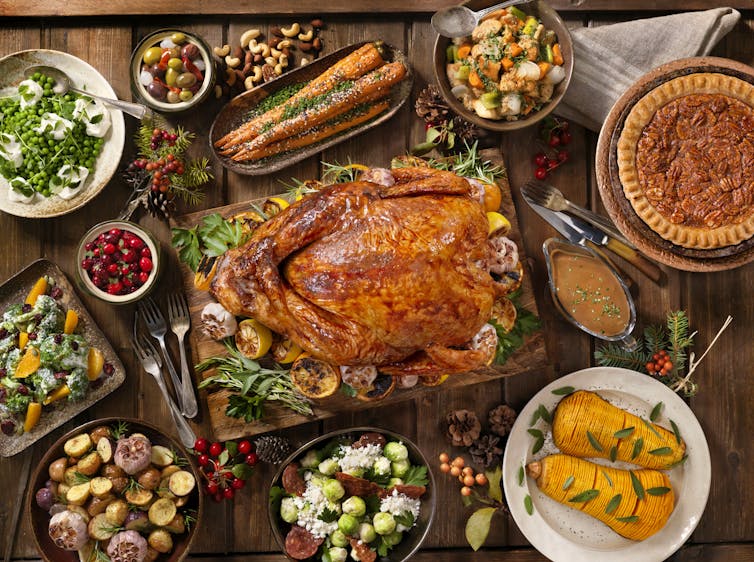
Thanksgiving is a time for gathering with friends and family around the dinner table. No one wants to cause their family or friends to get sick from a foodborne illness on this holiday or any other occasion.
The Centers for Disease Control and Prevention reports that 1 in 6 Americans, or 48 million people, get sick from a foodborne illness each year. According to the CDC, more than 1 million of these people get sick from salmonella, which is the primary pathogen associated with poultry.
As a food safety specialist, my role is to educate food producers, manufacturers and consumers on how to ensure the safety of the food they produce.
This Thanksgiving – and, really, for any gathering – make sure you understand how to prepare your meal to ensure that everyone goes home without a foodborne illness. Understanding the safe food practices to follow at home during preparation, cooking, serving and storing leftovers will keep your holiday meal delicious and safe to eat.
Pathways to foodborne illness
Salmonella is a bacteria that causes a foodborne illness called salmonellosis. Salmonella is also often linked to undercooked poultry and beef, undercooked eggs, raw milk and produce. Symptoms of salmonellosis, which include diarrhea, fever and stomach pain, can begin six hours to six days after eating contaminated food.
Food contamination occurs when pathogens, toxins or chemicals make their way into food. Common pathogens that are attributed to foodborne illnesses are salmonella, E. coli, listeria and norovirus. Botulism is a foodborne illness that is caused by a toxin that is produced by a bacterium. A bacterial or viral contaminant can get on the food at any point along the food production chain, from the field, water, equipment, processing, handling, transportation, storage or preparation.
Every person who grows, handles, transports, stores or prepares food along the food production chain plays a very important role in detecting, eliminating or reducing contamination.
The perennial wisdom of hand-washing
Any food preparation and handling should always start with hand-washing.
There are five steps to proper hand-washing:
- Wash hands with running water.
- Apply enough soap to create a complete lather.
- Scrub hands, including the top, between fingers, around fingernails and wrists for a minimum of 20 seconds.
- Rinse hands under running water.
- Dry with a paper towel or air dry.
Hands should also be washed any time during food preparation that your hands have touched another food or surface that may have pathogens on it. This includes handling raw meat, poultry, seafood or eggs, as well as touching unwashed produce, blowing your nose, touching your cellphone or petting a cat or dog, to name a few.
A study by the U.S. Department of Agriculture’s Food Safety Inspection Service, which is the branch of the USDA that makes sure meat, poultry and eggs are safe for consumption, observed that 97% of study participants failed to wash their hands during food preparation when they should have. So while hand-washing might seem like a no-brainer, clearly it’s not.
Rinsing the poultry beforehand is a no-no
While preparing your meal, there are a few critical food-handling steps to follow to prevent cross contamination, or the transfer of pathogens from one surface to another.
First, keep raw meat, poultry and seafood away from raw or ready-to-eat foods. For example, do not prepare your raw turkey next to where you are preparing a salad, or do not cut produce on a cutting board that had raw meat on it without washing it thoroughly first.
Many people may not realize that it is unsafe to rinse poultry before cooking. The USDA recommends leaving poultry unwashed because it can cause pathogens to easily spread throughout the kitchen from the spray of the water. The only exception is a brined turkey. Brined turkeys are required to be rinsed before cooking, but use extra caution when doing so, and be sure to sanitize all surfaces in and around the sink afterward.
Having a clean work surface is critical
Another key step to keeping your Thanksgiving meal safe is to effectively clean and sanitize kitchen surfaces and equipment following instructions on your kitchen cleaner.
Chlorine bleach is a commonly used sanitizer that can be used in the kitchen, but there are a few things to know before using it. Chlorine bleach works best when mixed with cool – not hot – water and should be made fresh daily before using. To prepare, mix a teaspoon of bleach with one quart of water, and let the solution cover the surface for one minute before wiping, or allow to air dry.
Cooking the meat to safe temperatures
Cooking the Thanksgiving turkey or ham are two more critical steps in preparing a safe holiday meal.
Before cooking turkey, make sure it is completely thawed in the refrigerator. For large birds, this may require up to one week of thawing time, so plan ahead.
All poultry must be cooked to a minimum of 165 degrees Fahrenheit. Cooking instructions and cooking temperatures will vary based on the cooking method that you choose. But no matter the cooking method, make sure to take the temperature of the turkey in the thickest portion of the breast meat and innermost part of the thigh, being sure not to touch bone with the thermometer. Poultry must be cooked to 165 F because this is the temperature that is required to kill salmonella instantly.
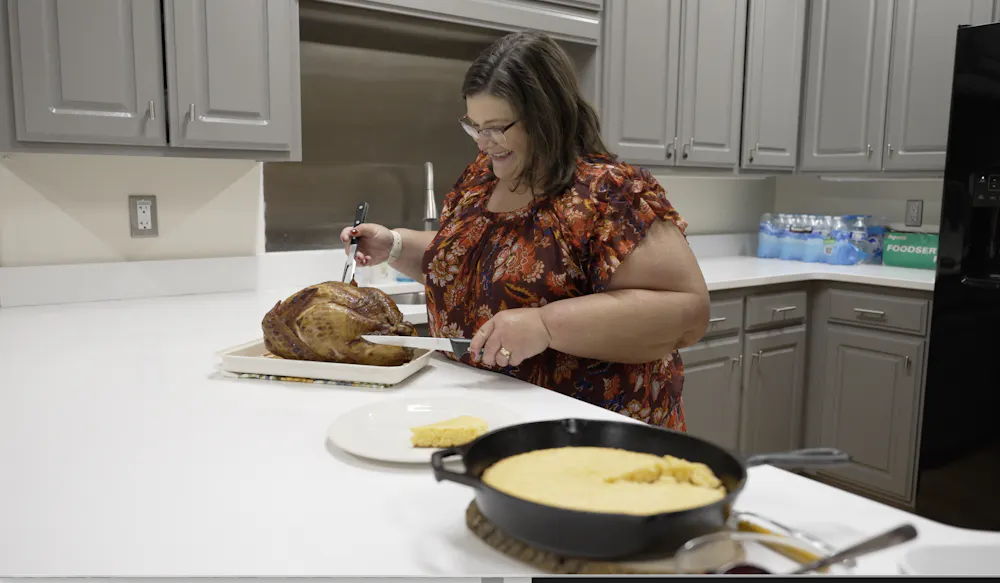
Based on the size of your bird and your cooking method, determine the amount of cooking time it will need well ahead of time. If you are cooking it in the oven with other dishes, consider that some extra roasting time may be needed, as the temperature of the oven decreases and extends cooking time every time the oven door is opened. You want to make sure you have enough time to cook the turkey thoroughly and allow approximately 30 minutes of rest time at room temperature before carving.
If you are preparing ham, first determine whether it is fully precooked at the time of purchase or if cooking is required. Even if fully cooked, hams still need to be heated to a minimum of 140 F. Those that require cooking need to be cooked to 145 F. Like turkey, roasting time will be based on the size of the ham – plan ahead so you know when to put it in the oven. A thermometer should be used to measure the temperature of the thickest portion of the ham without touching bone.
Safe handling and storage should not be an afterthought
Safe handling of the turkey, ham and other side dishes does not end after they are cooked.
If the food is served buffet style and will be kept out at room temperature for an extended period of time, make sure to have a plan to keep hot food hot, which means above 135 F, and cold foods below 40 F, which is equivalent to the maximum safe temperature of a refrigerator. For example, hot foods can be kept hot in a preheated chafing dish, and cold foods can be served in their serving dish that is nestled in a bowl or tray of ice. If you are unable to keep the food hot or cold during service, then make sure they are put away in the refrigerator within two hours after serving.
Thanksgiving leftovers should be stored in the refrigerator for no more than three to four days. If you have a lot of leftovers that won’t be eaten within this time frame, consider freezing them for a quick meal at a later date, then thaw and eat them within three to four months for best quality. Remember to label and date leftovers so you know what they are and when they were put in the refrigerator or freezer.
Kimberly Baker, Food Systems and Safety Program Team Director and Assistant Extension Specialist, Clemson University
This article is republished from The Conversation under a Creative Commons license. Read the original article.
Beginning at 6:01 p.m. on Wednesday, Nov. 22, and continuing through 11:59 p.m. on Sunday, Nov. 26, the maximum enforcement period, or MEP, aims to reduce the number of crashes, injuries, and fatalities during one of the year’s busiest travel periods.
“Thanksgiving is a time for gratitude and celebration, but the holiday is also associated with increased travel and a higher risk of traffic incidents,” said CHP Commissioner Sean Duryee. “Our officers will be on patrol to take enforcement action as necessary and to provide assistance to motorists who are stranded or in need of help on the side of the road.”
During the MEP, CHP officers will be working to assist and educate motorists and enforce traffic safety laws throughout the state, actively looking for unsafe driving behaviors, including impaired or distracted driving, speed and reckless driving, and people not wearing seat belts.
Last year during the Thanksgiving MEP, 37 people were killed in crashes within the CHP’s jurisdiction.
The CHP’s holiday enforcement effort also resulted in more than 8,600 citations issued to motorists for speed and seat belt violations.
Additionally, CHP officers made 1,016 arrests for driving under the influence during the four-day period.
“Remember to prioritize safety as you travel during the holidays,” added Commissioner Duryee. “Observe speed limits, avoid distractions, and ensure everyone in the vehicle is buckled up. Responsible driving contributes to a happy and safe holiday.”
Thanksgiving is an important time of the year for families and friends to come together.
Whether you are gathering around the table to indulge in family recipes that have been passed down for generations, or you’re creating something new in the kitchen this year, Cal Fire has some kitchen safety tips to help you prevent accidental kitchen fires.
According to the National Fire Protection Association, or NFPA, the holiday season sees a peak in home cooking fires.
Data from 2017 to 2021 highlights unattended cooking as the primary cause of such fires and associated casualties.
Each year, cooking fires cause hundreds of deaths, thousands of injuries and more than $1 billion in damages. California experienced over 60,600 cooking fires from 2017 to 2022, which equates to over 1,000 cooking fires per month in our state alone in a five-year period.
Nearly 5,300 of those fires resulted in injuries, with 571 unfortunately resulting in fatalities.
Frying the turkey instead of baking it for hours, has become increasingly popular. “Cooking fires are preventable.
Always use your device outdoors, have a fire extinguisher handy and never use water to put out a grease fire.
It’s also important to remember when frying your turkey, fry on concrete, not grass, as any sparks on vegetation could cause a fire,” advised California State Fire Marshal Daniel Berlant. “Never leave your turkey unattended, regardless of where and how you choose to cook it.”
Following the proper safety precautions this holiday will help you and your family and friends enjoy a safe holiday.
Cooking safety tips:
• Always stay in the kitchen while frying, grilling, or broiling food. If you must leave the kitchen for even a short period, turn off the stove and oven.
• Regularly check on food that is simmering, baking, or roasting; and use a timer to remind yourself that you’re cooking.
• Turn pot handles towards the back of the stove.
• Keep children 3 feet away from the hot stove, and away from hot food and hot liquids.
• Never use water to put out a grease fire. Instead, turn the burner off and slide a lid over the flame. Baking soda can also be used to help extinguish a small grease fire.
• Make sure a fire extinguisher is in the kitchen and you know how to use it.
• Ensure you have working smoke alarms installed in your home. Press the test button and if the
alarm does not beep, replace the unit immediately.
• When using a turkey fryer, be sure to follow instructions closely. Don’t exceed the recommended oil level and only use the device outdoors. Never place a frozen or partially thawed turkey in hot oil.
• Know your exit routes in case of a fire emergency, get everyone out and then call 911.
For additional cooking safety tips, visit https://www.nfpa.org/cooking.
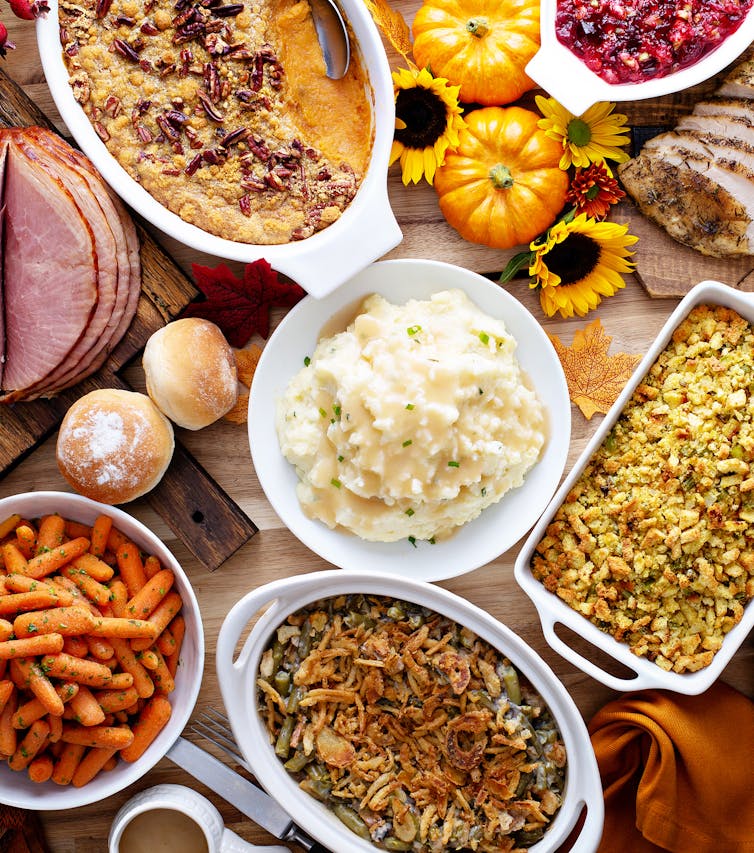
While people usually think first about the turkey or the ham during holiday meals, the sides are what help balance your plate. Colorful vegetables like green beans, collard greens, roasted carrots and mashed sweet potatoes are loaded with important micronutrients. But how you prepare them will help determine whether you get the most nutritional value out of each bite this holiday season.
As a biochemist, I know that food is made up of many chemical substances that are crucial for human growth and function. These chemical substances are called nutrients and can be divided into macronutrients, such as carbohydrates, fats and proteins, and micronutrients, such as vitamins and minerals.
Vegetables are full of micronutrients that human bodies need for metabolism – or converting food into energy – as well as to form and maintain cells and tissues. These micronutrients can be classified into three types: minerals, water-soluble vitamins and fat-soluble vitamins.
Minerals

The greens – collard greens, kale, spinach, green beans – on your table are rich sources of the elements magnesium and calcium. Your body needs these two major minerals for muscle movement and bone health.
Magnesium is essential for many of the enzymes that play important roles in DNA synthesis and repair, as well as protein production and metabolic function. The cellular processes, especially accurate DNA synthesis, are important in protecting your body from developing diseases such as cancer. Calcium helps regulate the pH in your body, influences your metabolism and strengthens your nerve impulses. Nerve impulses are important for your senses and your memory.
Greens are also a source of iron – you were right, Popeye! – which is particularly important for the oxygen-binding proteins hemoglobin and myoglobin that transfer and store oxygen in your body, respectively. In addition, human bodies require iron for processes that help generate energy, protect against oxidative damage and make hormones.
Orange vegetables – carrots, pumpkin, sweet potatoes and squash – contain some levels of calcium and iron as well as high levels of potassium. Potassium is important for muscle movement, nerve impulses and maintaining low blood pressure. Although not a colorful vegetable, white potatoes also contain very high levels of potassium.
Water-soluble vitamins

Most green and orange vegetables contain high levels of vitamin C. Vitamin C is an important water-soluble vitamin because it acts as an antioxidant. Antioxidants protect your cells against certain types of damage caused by very reactive molecules known as free radicals.
In addition, vitamin C can enhance immune response and is essential for the synthesis of collagen – the major protein in your skin. Although taking large levels of vitamin C will not keep you from ever getting sick, a healthy amount can help your skin stay soft, help you avoid diseases like scurvy and potentially shorten the length of a cold.
The white potatoes on the table have high levels of vitamin B6, which is a component of enzymes essential for carbohydrate, fat and protein metabolism. It also helps create healthy blood cells and is important in the production of neurotransmitters such as serotonin and dopamine, which both regulate pleasure and happiness.
Fat-soluble vitamins
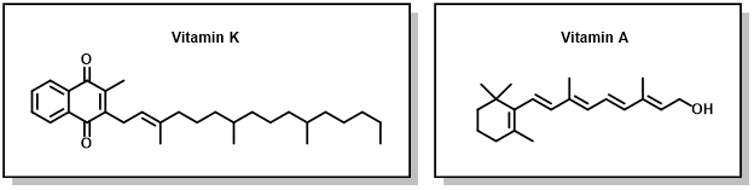
One of the most important vitamins you get from the green vegetables, especially leafy ones like kale, spinach, collards and Brussels sprouts, is vitamin K. Vitamin K is an essential component of enzymes that make proteins in bone and proteins that help clot blood after injuries.
Vitamin A is another important fat-soluble vitamin found in spinach and orange vegetables. The source of vitamin A in vegetables is actually beta carotene, which gets broken into two molecules of active vitamin A after consumption. Vitamin A is essential to vision as well as cell differentiation, reproduction, bone health and immune system function.
Absorption of micronutrients
Consuming vegetables that contain micronutrients is very important, but just as important is your body’s ability to absorb the nutrients and transport them to the cells that need them. Macronutrients like carbohydrates, fats and proteins that primarily make up the food we eat are very efficiently absorbed into your bloodstream.
However, only 3%-10% of some micronutrients actually get distributed throughout your body. Other ingredients and factors in your food can moderate whether you absorb vitamins and minerals.
Therefore, it is important to prepare vegetables in a way that can enhance the body’s ability to absorb their essential vitamins and minerals.
One good example of this is iron – specifically, the iron in the food you consume. Heme iron, which is the form necessary for incorporation into your body, comes only from animal products and is the most easily absorbed.
The plant-based iron contained in green and orange vegetables, on the other hand, is not bound to a heme, and your body can’t absorb it as readily. Consuming vitamin C alongside vegetables can increase the uptake of nonheme iron. So, a squeeze of lemon or orange juice can not only enhance the flavor of your vegetables but the micronutrients you obtain from them.
Fat-soluble vitamins, like vitamin K and vitamin A, are best absorbed when the meal contains some dietary fat, which you can get from oil. This is particularly important for vitamin K because green vegetables are its primary dietary source. This is in contrast to the other minerals and vitamins discussed that can also be obtained from animals or legumes that contain some amounts of dietary fat already.
After consumption, vitamin K must be packaged with other fats in structures called micelles or lipoproteins that can move around in the bloodstream. That means that it’s a good idea to prepare your greens with some source of fat – olive oil, avocado oil, butter or even a little bacon grease.
So, if you’re staring at the southern style collard greens on your plate and wondering whether they’re as healthy as eating a raw green leaf, think about it in terms of the biochemistry. While raw greens provide you with plenty of fiber and minerals, they won’t help your vitamin K levels as greens cooked in oil will.
Enjoy your time around the holiday table. Load up your plate with everything you like to eat, and make sure to not go completely fat-free in order to help your body process and use all the micronutrients.
Julie Pollock, Associate Professor of Chemistry, University of Richmond
This article is republished from The Conversation under a Creative Commons license. Read the original article.
The COVID-19 pandemic slowed previous gains made in controlling HIV blood levels and worsened health disparities, according to UC San Francisco researchers leading the largest U.S. evaluation of the impact of the public health crisis on people with HIV.
While the country had been making progress on its goals to reduce HIV before COVID-19, the researchers found the pandemic compromised those gains by leveling off improvements in the overall population and worsening outcomes among Black patients and people who inject illicit drugs.
“Equity in HIV outcomes likely worsened during the pandemic, with decreased access to necessary care and increased socioeconomic impacts disproportionately affecting these populations,” said the paper’s first author, Matthew Spinelli, MD, assistant professor in the Division of HIV, Infectious Diseases and Global Medicine at UCSF and the Priscilla Chan and Mark Zuckerberg San Francisco General Hospital and Trauma Center.
The study was published Nov. 14, 2023 in Clinical Infectious Diseases, the journal of the Infectious Diseases Society of America.
The researchers used data from 17,999 participants from Jan. 1, 2018 to Jan. 1, 2022 at eight large HIV clinics in Baltimore, Birmingham, Boston, Chapel Hill, Cleveland, San Diego, San Francisco and Seattle. They compared results from Jan.1, 2018 to March 21, 2020, tracking outcomes as the pandemic progressed.
Past progress in controlling the virus came to a virtual standstill during the pandemic for the general population. But for certain subsets, mainly Black patients as well as those with a history of injection drug use, the pandemic worsened their outcomes.
The percentage of Black patients who kept their viral loads suppressed decreased from 87% to 85%, and for people who inject drugs their level dropped from 84% to 81%.
The shelter-in-place orders around the country limited access to care for patients, especially those who were already experiencing health disparities. Factors included the shift to telemedicine to provide HIV services as well as reduced in-person medical visits. Increased isolation also led to worsening substance use, loneliness and mental health issues for some individuals.
UCSF’s Spinelli said the results show the U.S. may not reach its goals to eliminate HIV by 2030 as part of the federal government’s initiative Ending the HIV Epidemic in the U.S.
“We will need to redouble our efforts in responding to the HIV epidemic to regain our momentum, with a focus on improving health equity so that no one is left behind,” Spinelli said.