 How to resolve AdBlock issue?
News
Much of the equipment has been recovered and one arrest has been made, the agency said.
On Nov. 19, deputies responded to Lower Lake High School regarding a possible burglary of items from school vehicles, said sheriff’s public information officer Lauren Berlinn.
Berlinn said Deputy Chase Reynolds spoke with a school maintenance worker who said he arrived at the school at around 7:30 a.m. and saw the chain locking the gate surrounding the maintenance yard had been cut, five maintenance vehicles were tampered with, and several power tools and fuel were stolen.
The estimated total loss of tools was valued at over $8,000, Berlinn said.
The maintenance worker reviewed surveillance camera footage from the weekend and saw two males enter the maintenance yard at midnight on Nov. 19, siphon gasoline out of the school maintenance vehicles and remove tools from the vehicles. Berlinn said the suspects returned two hours later and stole additional tools from the vehicles.
The surveillance footage caught the suspects leaving the school in a green Honda Civic with distinct features, according to Berlinn’s report.
Deputies searched the Clearlake area and, with the assistance of Clearlake Police Department Officers, located the vehicle in Clearlake, Berlinn said.
Deputies contacted the driver and determined they were on searchable probation out of Lake County. Berlinn said the driver was suspected of being one of the suspects by Deputy Reynolds, as they were wearing similar clothing as seen in the surveillance video.
Per the driver’s probation status, Deputy Reynolds searched the vehicle. Deputy Reynolds located and recovered several of the stolen tools and items used to siphon fuel, Berlinn said.
Deputy Reynolds arrested the driver, identified as Johnny Richard Caldwell, 23, and drove him to his residence in Clearlake to conduct a further probation search, which resulted in the recovery of approximately $8,700 worth of power tools, hand tools, power tool accessories, and school laptops, according to Berlinn.
Berlinn said the items recovered were positively identified as belonging to the school as they were all engraved with unique identifying information. Lower Lake High School officials confirmed the recovered items were those stolen from the school.
This investigation is ongoing. Anyone with information should contact Deputy Reynolds via email at
In compliance with Assembly Bill 481 (2021 Chiu), the department has scheduled a community engagement meeting at 1:30 p.m. Thursday, Dec. 28, in the council chambers at Lakeport City Hall, 225 Park St.
The meeting, open to any member of the public, will be for the purpose of discussion, including a question-and-answer session, regarding its annual military equipment report.
For more information, contact the Lakeport Police Department at 707-263-5491.
Xylazine — an animal tranquilizer with no approved human use — is increasingly being found in the illicit drug supply, and has been linked to rising overdose deaths across the country.
The legislation would make xylazine a controlled substance, but exempt legitimate veterinary use, making illicit trafficking of xylazine subject to increased criminal penalties while maintaining veterinarians’ access to the drug for approved use in animals.
“Tranq poses a unique and devastating challenge in our fight against the overdose epidemic,” Newsom said. “Although California is not yet seeing tranq at the same rates as other parts of the country, this legislation will help the state stay ahead and curb dealers and traffickers, while we work to provide treatment and resources for those struggling with addiction and substance abuse.”
Xylazine-related deaths are increasing drastically in every region in the nation, more than tripling from 2020 to 2021, with the northeast seeing deaths jump from 631 to 1,281, and the west seeing them jump from 4 to 34. Xylazine can cause severe wounds and necrosis, and can lead to amputation.
Xylazine alone is not an opioid, but it is often mixed with fentanyl. When a xylazine overdose is suspected, health experts recommend administering the opioid reversal agent naloxone.
Key additional actions
The California Department of Public Health sent an All Facilities Letter notifying facilities and clinicians of the emergence of xylazine in the U.S. illicit drug supply, and what actions clinicians should take to keep patients safe.
The California State Board of Pharmacy and the California Veterinary Medical Board issued an alert and reminder to licensees that xylazine is subject to dangerous drugs laws, including highlighting that Board of Pharmacy licensees must keep records of dangerous drugs for at least three years.
These actions build on the Governor’s Master Plan for Tackling the Fentanyl and Opioid Crisis, which includes an expansion of CalGuard-supported operations that last year led to a 594% increase in seized fentanyl and historic levels of funding — $1 billion statewide — to crack down on the crisis, assist those struggling with substance use and increase prevention efforts. Specifically on xylazine, the state has been working with the public, and with health care partners, clinicians, and veterinarians, to proactively raise awareness of the issue and the threat it poses.
Redwood Community Services, based in Ukiah, will now operate the shelter, located in the former juvenile hall facility at 1111 Whalen Way in north Lakeport.
During its Nov. 14 meeting, the Board of Supervisors approved the new shelter contract between the Lake County Behavioral Health Services Department — acting as the lead administrative entity for the Lake County Continuum of Care — and Redwood Community Services Inc.
Redwood Community Services will receive $2,417,489.64 for fiscal years 2023 to 2026 to operate the shelter. The contract runs from Dec. 1 to June 30, 2026, unless terminated earlier.
The group also runs the Building Bridges Homeless Resource Center in Ukiah.
The contract requires Redwood Community Services to meet expected targets including providing 35 beds, serving 300 people with the proposed funding and reaching 200 people through street outreach, having 88 homeless persons exiting the program or project to permanent housing, 50 households with increased monthly income and a minimum of 12% of the total funding to be spent on youth.
Earlier in the same meeting, the board approved continuing its emergency proclamation declaring a shelter crisis in the county of Lake.
Behavioral Health Director Elise Jones said the shelter had been operating on an interim basis by a group called the Blue Horizons Foundation.
Jones said there had been a long history of those who have operated the shelter in recent years.
She did not go into detail about those previous operators, but they include Elijah House, an Oroville-based nonprofit that first received the county contract to run an emergency COVID-19 shelter at the juvenile hall facility in July 2020 and operated it for two years.
At that time, Elijah House was out of compliance with state reporting rules for nonprofits, and throughout the time it held the contract it remained out of compliance. In February, the California Attorney General’s Office suspended Elijah House’s nonprofit registration for failure to bring its reporting current.
After Elijah House abruptly left in the summer of 2022, the shelter was closed until Sunrise Special Services Foundation reached an agreement to reopen it in February. Sunrise continued to operate the shelter, with its contract extended, until Blue Horizons took over earlier this fall.
Besides the change in operator, Jones told the board that the biggest difference in this new shelter contract is that it is a transition from overnight to 24/7.
Jones said the funding from the Continuum of Care is front-loaded and will be reduced over time as Redwood Community Services rolls out the enhanced care management benefit and the medical respite benefit, “which will ultimately be the long term sustainability for the shelter.”
She said Redwood Community Services will have co-located services there that will bill through Medi-Cal and sustain that shelter. “They have a history of doing that type of programming in Mendocino County, so happy to say we’re not a pilot in that.”
Supervisor Bruno Sabatier, who attended via Zoom as he was at the California State Association of Counties meeting in Alameda County, said the new contract also involves some case management compared to the previous contract.
“I think that is a huge adjustment to ensure that we are moving people along and not just keeping them in a shelter,” said Sabatier, adding that having case management will be crucial to what those individuals need.
He reported that the chair of the Continuum of Care and another executive committee member are part of Redwood Community Services and so took no part in the request for proposals process or the selection, avoiding meetings or recusing when the matters were discussed.
Sage Wolf, Redwood Community Services’ director of integrated health, said that in November 2019 they transitioned the Ukiah shelter from overnight to 24/7.
Wolf pointed out that there are differences between Ukiah’s Building Bridges shelter and Lakeport, including the fact that Building Bridges is in the city of Ukiah and more centrally located, so it’s open to the public during the day. It’s both an emergency shelter and a drop-in center.
Lake County’s shelter is not centrally placed and has separate, private rooms, unlike the congregate space with room for 50 beds at Ukiah, said Wolf, adding that they will use policies established for the Ukiah center as the basis of how they will operate Lake County’s shelter.
Supervisor Michael Green said he visited the Ukiah shelter the previous day and spent two hours asking Wolf questions.
While he expressed confidence in their policies, and thinks the situation will be light years ahead of where the county has been, he said there is the need to drill down into the immense liability the shelter carries and make sure to parse the county’s and the operator’s responsibilities. The shortcomings of the juvenile hall facility have fallen primarily on the county.
“I don’t personally think today’s contract is adequate to all those questions but I'm not going to oppose it on that basis today. I’m just going to invite future iterations to get a little more granular,” Green said.
Wolf thanked the county, Behavioral Health and the Continuum of Care for the opportunity to run the Lakeport shelter. “It is a high risk operation,” Wolf said, adding that the people they are targeting for service are some of the most vulnerable community members.
“We are experienced in running that kind of shelter and working with this population,” and aware of the kind of risks that are involved, but can’t have a plan in place for everything that can happen, Wolf said.
“We are really adept and responsive at being able to quickly identify potential risks and then when risks happen be able to respond as quickly as possible to what’s happening,” Wolf added.
Wolf said the collaboration is already in place to support the shelter, and that will be key. “None of us can address homelessness by ourselves. We need to do it as a community.”
Lakeport Police Chief Brad Rasmussen said his agency and the city of Lakeport support the contract, explaining that many unhoused individuals from Lakeport use the shelter’s services.
“It has been critical over the past year to have that available,” said Rasmussen, who also is running for Green’s supervisorial seat in 2024.
Rasmussen said the one gap they saw was that the shelter was not 24/7, which will be covered in the new contract. He said he believed it would be a huge improvement and benefit.
He thanked Behavioral Health and community partners, Redwood Community Services, the Board of Supervisors and county administrative staff who have worked hard over the past year to keep shelter services going. Rasmuseen said the shelter is critical to the unhoused and has a huge impact on the community as a whole if those services aren’t available.
Wolf explained how Medi-Cal funding will support emergency shelter beds for those coming out of hospital, jail, rehab and mental health treatment, adding it’s for individuals who need somewhere soft to land to stabilize. Lake County’s shelter won’t, however, have medical respite on site.
That Medi-Cal funding will partially support the shelter in years two and three, and also will partially support it if they find funding to go past 2026. Wolf explained that they have to braid a lot of multiple funding streams to keep it going, and that there hasn’t been one consistent funding stream to keep a shelter going unless it’s a very small shelter.
Wolf said that one of the tasks they have in front of them over the next two and a half to three years is to identify some of those other funding streams.
“There are some competitive grants that we could apply for in coordination and collaboration with the community to bring in additional dollars to support the shelter after this contract expires,” she said, adding that she wanted to make sure everyone is on the same page as they look to the future.
Vice Chair Moke Simon, who ran the meeting as Board Chair Jessica Pyska also was at the California State Association of Counties, thanked Wolf for coming to the meeting.
“The funding is No. 1,” said Simon, noting it’s a focus of the Governor’s Office and will be a collaboration going forward.
Green moved to approve the $2.4 million contract, with the board voting 4-0.
“All right, we’ve got a 24 hour shelter. Good job everyone,” Simon said.
Email Elizabeth Larson at
Senate President Designee Mike McGuire advanced SB 833, the Cannabis Licensing Reform Act, this year.
He said the reason is that, across California, small-family licensed cannabis farmers are struggling to make ends meet amidst historic market instability. Many can’t even afford to put plants in the ground, only to harvest a product that won’t make a profit.
Yet, growers are required to pay full freight for their state cultivation license — up to tens of thousands of dollars annually — even if they don’t plant that year.
This harsh economic reality, paying for a license they may not even use, doesn’t make any sense and it's helping drive instability into the market, McGuire said.
The process for an inactive or downgraded cultivation license already exists at local levels but currently there is no statewide equivalent that allows cannabis farmers to pause or reduce their crop size without paying the full annual fees, McGuire said.
He said the state cultivation license for a 10,000 square feet to one acre farm is $40,000 to $50,000 annually.
McGuire’s legislation will allow cannabis farmers to either pause their license fee, but maintain an inactive license, or reduce their license size based on crop size, saving the farmer money.
Under current state regulations, cannabis farmers have to pay full freight even if they don’t grow for the year or reduce their crop size. This new law will now provide family cannabis farmers flexibility and the ability to pay less when they grow less.
“SB 833 is all about common sense. Just like with other agricultural crops, cannabis farmers shouldn’t go under from one bad season, whether it’s from a tough market, drought, or even a wildfire. Right now, cannabis farmers must pay their state license fees regardless—or forfeit them all together. This is nuts and that’s why we advanced this legislation. Farmers need flexibility in this erratic market and if they grow less, they should pay less. It’s that simple,” Senator McGuire said.
SB 833 was signed into law by Gov. Gavin Newsom and will go into effect Jan. 1, 2024.
At hundreds of wildlife rehabilitation centers across the U.S., people can learn about wild animals and birds at close range. These sites, which may be run by nonprofits or universities, often feature engaging exhibits, including “ambassador” animals that can’t be released – an owl with a damaged wing, for example, or a fox that was found as a kit and became accustomed to being fed by humans.
What’s less visible are the patients – sick and injured wild animals that have been admitted for treatment.
Each year, people bring hundreds of thousands of sick and injured wild animals to wildlife rehab centers. Someone may find an injured squirrel on the side of the road or notice a robin in their backyard that can’t fly, and then call the center to pick up an animal in distress.
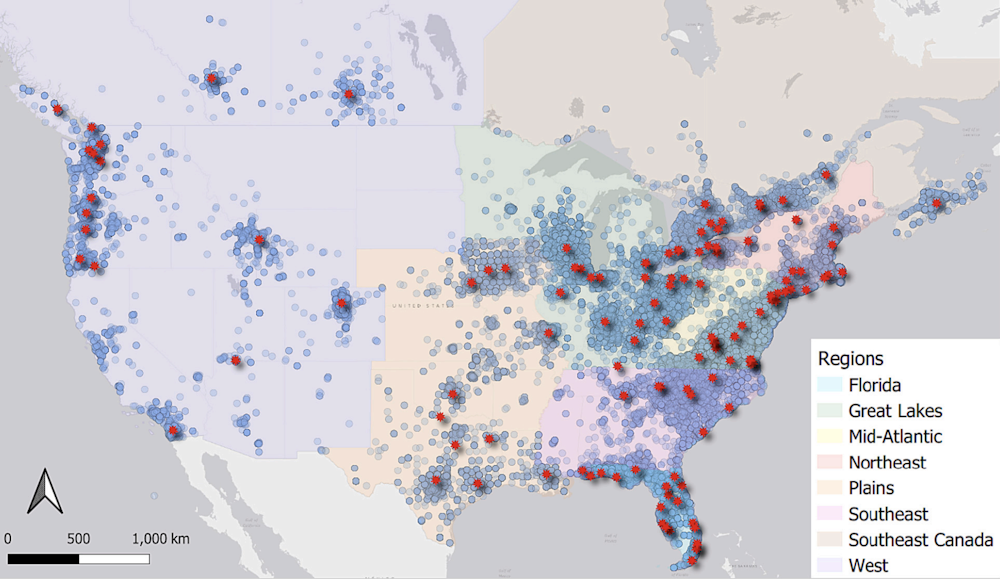
We study ecology and biology, and recently used newly digitized records from wildlife rehabilitation centers to identify the human activities that are most harmful to wildlife. In the largest study of its kind, we reviewed 674,320 records, mostly from 2011 to 2019, from 94 centers to paint a comprehensive picture of threats affecting over 1,000 species across much of the U.S. and Canada.
Our findings, published in the journal Biological Conservation, point to some strategies for reducing harm to wildlife, especially injuries caused by cars.
Tracking the toll
Humans are responsible for the deaths and injuries of billions of animals every year. Bats and birds fly into buildings, power lines and wind turbines. Domestic cats and dogs kill backyard birds and animals. Development, farming and industry alter or destroy wild animals’ habitats and expose wildlife to toxic substances like lead and pesticides. Extreme weather events linked to climate change, such as flooding and wildfires, can be devastating for wildlife.
Most Americans support protecting threatened and endangered species, and recognize that human activities can harm wildlife. But it is surprisingly difficult to determine which activities are most harmful to wildlife and identify effective solutions.
Information from wildlife rehab centers across the U.S. can help fill in that picture. When an animal is brought into one of these centers, a rehabilitator assesses its condition, documents the cause of injury or illness if it can be determined, and then prepares a treatment plan.
Wildlife rehabbers may be veterinarians, veterinary technicians or other staff or volunteers who are certified by state agencies to treat wildlife. They follow professional codes and standards, and sometimes publish research in peer-reviewed journals.
A growing data pool
Until recently, most wildlife rehab records existed only in binders and file cabinets. As a result, studies drawing on these records typically used materials from a single location or focused on a particular species, such as bald eagles or foxes.
Recently, though, rehab centers have digitized hundreds of thousands of case records. Shareable digital records can improve wildlife conservation and public health.
For example, the Wildlife Center of Virginia has worked with government agencies and other rehab centers to establish the WILD-ONe database as a tool for assessing trends in wildlife health. This will be an exciting area of research as more records are digitized and shared.
Threats vary by species
Using this trove of data, we have been exploring patterns of wildlife health across North America. In our study, we identified key threats affecting wildlife by region and for iconic and endangered species.
Overall, 12% of the animals brought to rehab centers during this period were harmed by vehicle collisions – the single largest cause of injury. For great horned owls, which are common across the U.S., cars were the most common cause of admission – possibly because the owls commonly forage at the same height as vehicles, and may feed on road kill.
Other threats reflect various animals’ habitats and life patterns. Window collisions were the most common injury for the big brown bat, another species found in many habitats across the U.S. Fishing incidents were the main reason for admission of endangered Kemp’s ridley sea turtles, which are found in the Gulf of Mexico and along the Atlantic coast.
Toxic substances and infectious diseases represented just 3.4% of cases, but were important for some species. Bald eagles, for example, were the species most commonly brought to centers with lead poisoning. Eagles and other raptors consume lead ammunition inadvertently when they feed on carcasses left in the wild by hunters.
In southern Florida, hurricanes and floods resulted in spikes in the numbers of animals brought to rehab centers, reflecting the impact of climate-driven extreme weather events on wildlife health.
About one-third of animals in the cases we reviewed were successfully released back to the wild, though this varied greatly among species. For example, 68% of brown pelicans were released, but only 20% of bald eagles. Unfortunately, some 60% of the animals died from their injuries or illnesses, or had to be humanely euthanized because they were unable to recover.
Spotlighting solutions
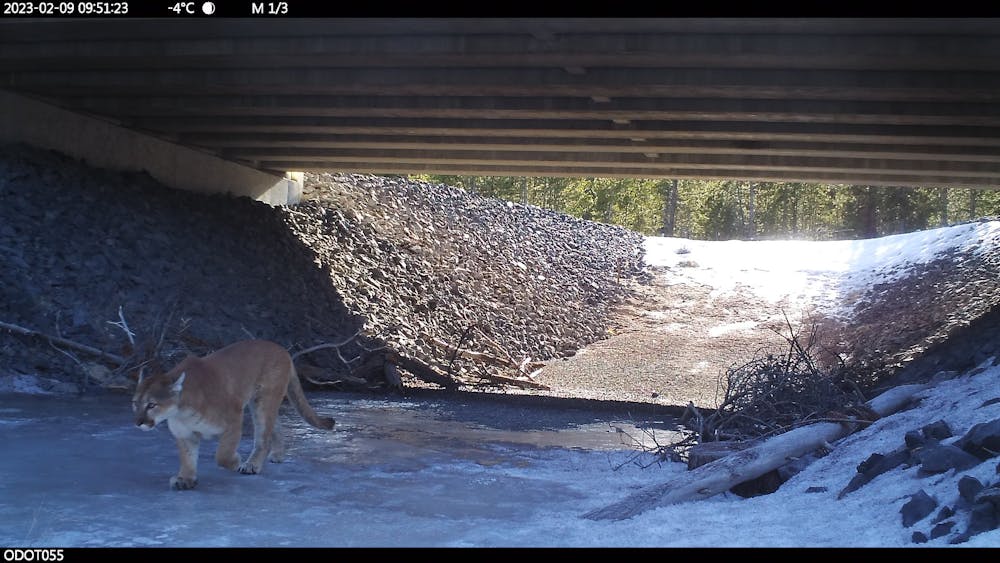
Our results spotlight steps that can help conserve wildlife in the face of these threats. For example, transportation departments can build more road crossings for wildlife, such as bridges and underpasses, to help animals avoid being hit by cars.
Wildlife management agencies can ban or limit use of ammunition and fishing gear that contain lead to reduce lead poisoning. And governments can incorporate wildlife into disaster management plans to account for surges in wildlife rescues after extreme weather events.
People can also make changes on their own. They can drive more slowly and pay closer attention to wildlife crossing roads, switch their fishing and hunting gear to nonlead alternatives, and put decals or other visual indicators on windows to reduce bat and bird collisions with the glass.
To learn more about animals in your area and ways to protect them, you can visit or call your local wildlife rehab center. You can also donate to these centers, which we believe do great work, and are often underfunded.
The scale of threats facing wild animals can seem overwhelming, but wildlife rehabbers show that helping one injured animal at a time can identify ways to save many more animal lives.
Tara K. Miller, Policy Research Specialist, Repair Lab, University of Virginia and Richard B. Primack, Professor of Biology, Boston University
This article is republished from The Conversation under a Creative Commons license. Read the original article.