How to resolve AdBlock issue?
News

Cars are no longer just a means of transportation. They have become rolling hubs of data communication. Modern vehicles regularly transmit information wirelessly to their manufacturers.
However, as cars grow “smarter,” the right to repair them is under siege.
As legal scholars, we find that the question of whether you and your local mechanic can tap into your car’s data to diagnose and repair spans issues of property rights, trade secrets, cybersecurity, data privacy and consumer rights. Policymakers are forced to navigate this complex legal landscape and ideally are aiming for a balanced approach that upholds the right to repair, while also ensuring the safety and privacy of consumers.
Understanding telematics and right to repair
Until recently, repairing a car involved connecting to its standard on-board diagnostics port to retrieve diagnostic data. The ability for independent repair shops – not just those authorized by the manufacturer – to access this information was protected by a state law in Massachusetts, approved by voters on Nov. 6, 2012, and by a nationwide memorandum of understanding between major car manufacturers and the repair industry signed on Jan. 15, 2014.
However, with the rise of telematics systems, which combine computing with telecommunications, these dynamics are shifting. Unlike the standardized onboard diagnostics ports, telematics systems vary across car manufacturers. These systems are often protected by digital locks, and circumventing these locks could be considered a violation of copyright law. The telematics systems also encrypt the diagnostic data before transmitting it to the manufacturer.
This reduces the accessibility of telematics information, potentially locking out independent repair shops and jeopardizing consumer choice – a lack of choice that can lead to increased costs for consumers.
Also, these telematics systems fall outside the scope of the original Massachusetts legislation and the nationwide memorandum of understanding. Recognizing the pivotal role diagnostic data plays in vehicle maintenance and repair, 75% of Massachusetts voters approved a ballot initiative on Nov. 3, 2020, to amend the state’s repair legislation. The amendment aims to ensure that the switch to telematics does not curtail an effective right to repair vehicles.
Specifically, the new law requires manufacturers selling telematics-equipped vehicles from the 2022 model year onward to provide car owners and their chosen repair shops access to the vehicle’s mechanical data through an interoperable, standardized and open-access telematics platform. Access should also encompass the ability to relay commands to components of the vehicle, if necessary, for maintenance, diagnostics and repair. Voters in Maine overwhelmingly approved a similar measure on Nov. 7, 2023.
However, the Massachusetts law was the subject of a lawsuit in federal court shortly after voters approved it in 2020, and it was suspended until June 1, 2023.

Safety and privacy concerns
While the amendment makes significant strides toward creating a level playing field in vehicle maintenance and repair, the National Highway Traffic Safety Administration and car manufacturers have raised concerns about the legislation.
The National Highway Traffic Safety Administration’s main concern revolves around cybersecurity vulnerabilities with potential ramifications for vehicle safety, particularly the amendment’s provision for two-way access. A hacker could potentially take control of a car’s critical systems like accelerator, brakes and steering. Consequently, the agency recommended that car manufacturers not adhere to the law.
A related argument is that Massachusetts law is preempted by federal law. This forms the basis of a lawsuit filed in November 2020 by the Alliance for Automotive Innovation against Massachusetts’ attorney general.
The manufacturers assert that abiding by the state law would inevitably put them in breach of federal statutes and regulations, such as the National Traffic and Motor Vehicle Safety Act. This lawsuit was pending as of press time, although the Massachusetts attorney general declared the law effective as of June 1, 2023.
Critics also emphasize the privacy concerns associated with open access to telematics systems. Granting third-party access could expose personal details, especially real-time location data. Advocacy groups warn that this information might be used as a tracking tool by potential abusers and others aiming to exploit people.
Recent developments
The National Highway Traffic Safety Administration and Massachusetts’ attorney general appear to have reached a consensus on alterations to the law, and the administration has dropped its recommendation that manufacturers disregard the law.
The primary adjustment would mean a telematics platform would be in compliance with the right to repair law if it were accessible within close proximity to the vehicle – for example, via Bluetooth. The National Highway Traffic Safety Administration confirmed that this would be safer and align with federal law.
However, repair advocates have criticized this change as unduly restrictive. They argue that it gives authorized car dealers an unfair advantage over independent repair shops because the manufacturers allow the dealers to access the data remotely.
A new federal bill, the REPAIR Act, was recently introduced in the House, seeking to require vehicle manufacturers to provide access to in-vehicle diagnostic data, including telematics. This bill’s first hearing occurred on Sept. 27, 2023, and the bill passed out of subcommittee on Nov. 2.
Who owns your car’s data?
One issue left unresolved by the legislation is the ownership of vehicle data. A vehicle generates all sorts of data as it operates, including location, diagnostic, driving behavior, and even usage patterns of in-car systems – for example, which apps you use and for how long.
In recent years, the question of data ownership has gained prominence. In 2015, Congress legislated that the data stored in event data recorders belongs to the vehicle owner. This was a significant step in acknowledging the vehicle owner’s right over specific datasets. However, the broader issue of data ownership in today’s connected cars remains unresolved.
Whether data should be subject to property rights is a matter of debate. If deemed property, it seems logical to award these rights to the vehicle owner because the vehicle creates the data while used by the owner. However, through contractual terms and digital locks, manufacturers effectively secure control over the data.
The question of ownership aside, the crux of the matter for right to repair is guaranteed access for vehicle owners to their vehicles’ data.
A way forward
While concerns surrounding the Massachusetts legislation have merit, we believe they should not overshadow the need to preserve a competitive space in the auto repair sector and preserve the right to repair. This matters not only for safeguarding consumers’ autonomy and ensuring competitive pricing, but also for minimizing environmental waste from prematurely discarded vehicles and parts.
The hope is that policymakers and the industry can strike a balance: upholding the right to repair without compromising safety and privacy. One possibility is developing tools that segregate sensitive personal information from mechanical data.
Ultimately, a successful implementation of the new law in Massachusetts may pave the way for a renewed nationwide memorandum of understanding, capturing the essence of the original memorandum of understanding and preserving the right to repair cars in the face of rapidly advancing technologies.
Leah Chan Grinvald, Professor of Law, University of Nevada, Las Vegas and Ofer Tur-Sinai, Professor of Law, Ono Academic College
This article is republished from The Conversation under a Creative Commons license. Read the original article.
The Lake County Sheriff’s Office has so far not disclosed the name of the man who was shot as the investigation is still in its preliminary stages.
Lauren Berlinn, the sheriff’s office’s public information officer, said that deputies responded to the 100 block of Dixon Drive in Lakeport due to reports of an assault with a knife by a male subject.
Berlinn said deputies arrived on scene and contacted the subject who at that point had a firearm.
She said multiple attempts were made by the deputies to defuse and de-escalate the situation; however, the subject refused to comply.
Shots were fired and medical personnel responded. Berlinn said the subject was pronounced dead at the scene.
Berlinn said the Lake County Sheriff’s Office was on scene Thursday afternoon and cooperating with the Lake County District Attorney’s Office to conduct the investigation into this incident.
The Lake County District Attorney’s Office is the lead investigating agency per Lake County’s Critical Incident Protocol, Berlinn said.
Berlinn said the information provided on Thursday afternoon was based on a preliminary and ongoing investigation, which continues to evolve as investigators interview witnesses, review physical and electronic records, and analyze forensic evidence.
“The department’s understanding of the facts and circumstances may change as additional evidence is collected and analyzed,” Berlinn said.
CLEARLAKE, Calif. — During its annual visit to Lake County last week, the Yuba Community College Board encountered a room filled with concerned residents — current and former students and faculty, and community members — who came to advocate for preserving and building up the district’s Lake County Campus.
The Nov. 9 meeting was marked by an evening of pointed candor, demands for truthfulness and transparency, and an appeal for partnership.
The Yuba Community College District Board, which governs Yuba Community College and Woodland Community College, annually holds one meeting in Lake County, whose Clearlake campus is aligned with Woodland.
Staff say the Lake County meetings typically tend to be the best attended of the year, and that was the case last Thursday evening, when nearly 100 community leaders, students and staff came to the three-and-a-half-hour-long meeting to voice their concerns about the campus’ future.
The overwhelming majority of the more than two dozen speakers told the board at the over a two-hour public comment period of their growing concerns about how the campus’ staff has been allowed to dwindle, with important positions not replaced, while key services for students like the library and the student center are allocated few resources and the bookstore is now nonexistent, and counseling services have been drastically reduced.
“We have lost so many staff here it’s ridiculous. It’s like a ghost town,” said student and Success Center staffer Laura Jean Bevan.
While some of the campus’ issues were attributed to the ongoing fallout from the COVID-19 pandemic, speakers indicated the campus’ challenges predated the pandemic, which has only made things worse with its driving down of enrollment.
One former student said the main campus in Woodland has been suffocating the Clearlake campus. Another pointed to the elimination of the LEARN program, meant to help remedial learners, and a lack of marketing of services and classes as more blows to the campus.
Others asked the board to recognize the campus’ unique community, which meets the needs of its students in a very special way. It’s a place, they said, where students have felt safe and valued.
A speaker shared her journey from being homeless and the victim of domestic violence to studying at the campus, which she said saved her life. Today she’s employed and working at the Hope Center.
At the same time, those who spoke to the board pointed to disparities in resource allocation — while positions are disappearing in Lake County, they are increasing at Woodland Community College’s main campus. However, it also has been reported that the Colusa County center is being starved of resources.
Kevin Reynolds, vice president of Reynolds Systems, which employs 100 people, said one of their biggest challenges is recruiting, and how education can help local businesses stay alive.
One of the former students who spoke, Ami Landrum, said what is being taken away from the campus is detrimental to the whole community.
Still other concerns focused on the campus’ lack of a strategic plan.
These concerns matched what Dr. Shouan Pan, the district’s new chancellor, heard from staff and community leaders at an Oct. 23 listening session also attended by Lake County News.
Afterward, Trustee Doug Harris, a former campus faculty member who now represents Lake County on the board, said he had never seen anything like it, with so many people coming forward to explain, point by point, their concerns.
Just a year ago, at the campus’ 50th anniversary event, staff, students and supporters highlighted how the educational opportunities it has afforded have had an immensely positive impact on the community.
Those raising the alarm to the board last Thursday were united in their concerns that Lake County could end up ultimately losing the campus.
Ed Robey, a former Clearlake City Council member and retired county supervisor who once was an adjunct professor at the college, said the community needs a viable, sustainable community college.
“We’re at a tipping point, and it’s up to you guys to decide which way we tip,” Robey told the board.
Robey was one of several speakers who asked the board to be honest with the community and not let the campus die on the vine.
Clearlake City Manager Alan Flora said they’re seeing the campus be squeezed at every corner.
“The only result that you can expect from that continual squeezing is the concerns that you’re hearing,” Flora said.
Pamela Bening-Hale, a former student at the college who now sits on the Konocti Unified School Board, put it more bluntly.
“Shame on you,” she told the board, adding that she hadn’t realized what was being taken away from Lake County’s students.
Notable speakers make their arguments
Notable among the speakers were the number of former students who have since gone on to become community leaders and professionals, all of them emphasizing the difference their education at the Lake County Campus made.
They included District 2 Supervisor Bruno Sabatier, who also worked as an outreach and engagement specialist at the campus; Zabdy Neria, a Lake County Office of Education child therapist and Konocti Unified School District Board member; Pamela Bening-Hale, who also serves on the Konocti Unified Board; Tim Gill, assistant superintendent of educational services; Kim Cole, tribal administrator for Middletown Rancheria; Randall Cole, Kim Cole’s husband, a counselor and motivational speaker; Clearlake Mayor Russell Perdock; Kevin Thompson, clinic manager at the Lake County Tribal Health Consortium’s new Clearlake clinic; and Rob Reil, who now heads up the Lower Lake High School Culinary Program.
Then there were the former instructors who passionately appealed for help for the school, including Harris, Robey, Shannon Gunier, Dr. Harry Lyons and Peggy Alexander.
Those former students and instructors were joined by Lake County Superintendent of Schools Brock Falkenberg; Clearlake City Councilman Dirk Slooten; Joan Mingori, a business owner and retired Konocti Unified career counselor and board member; and City Manager Alan Flora.
Sabatier, who called the meeting attendance “amazing,” offered statistics outlining the different economic realities for Lake and Yolo counties, explaining that getting people to sign up for college in Woodland and Yolo County may be more natural than in Clearlake and Lake County.
He asked the board to look at expenditures per student, asserting that Lake County’s students should be valued as much as students at other campuses.
Sabatier pointed to the need to pay staff more to retain them, and to keep lines of communication open with local government.
“No longer in Lake County do we say it is what it is or it is good enough,” and that standards need to be raised, expectations set and people held accountable.
“I’m looking for partnership, I’m looking for leadership, I’m looking for us to serve together to make our community a better place,” said Sabatier.
Gunier called her 10 years as an adjunct faculty member “my heart job,” recalling how well people worked together.
She said if you want to see success in action, attend a campus graduation ceremony.
However, Gunier, like other former staff members, said staff is declining, which has been brought on in part by lack of support from the Woodland Community College administration.
“Their efforts seem to be marginal at best,” said Gunier, pointing to lack of a strategic plan and adding, “Our staff has been left out of the decision making process.”
That’s led to important positions being eliminated. When staff raises concerns about that, Gunier said they are being met with a condescending and dismissive attitude.
She blamed it on the campus’ realignment with Woodland in 2015, suggesting the best thing to do is to let Lake County’s campus run autonomously, under the auspices of the California Community Colleges system, or to come up with a shared strategic plan to deal with dropping attendance and loss of staff.
“We have the power to turn it around,” she said.
Falkenberg pointed out that the Yuba Community College District serves all or part of eight counties, a huge geographical area with many diverse and unique needs and desires.
“Clearlake is unique as well,” he said, explaining that fewer than 80% of Clearlake residents have a high school diploma and only 40% have attempted college courses, significantly different statistics from the state, from Woodland and Davis.
One third of Lake County’s workforce leaves the county each day, primarily for Sonoma, Napa and Mendo counties — in that order, Falkenberg said. The majority of those commuters live in the south county, in the college’s district. As a result, connections to the Sacramento Valley, where the main campus is located, is limited.
He asked for leadership focused on Lake County and the Clearlake campus, noting there is a difference between leadership and management, as leadership means engaging with people.
“I ask, I think we all ask, that the college focus on being leaders in Lake County,” Falkenberg said.
Falkenberg also asked for them to come with a can-do attitude to meet the community’s needs, and not expect the community to meet the college’s needs.
Ignoring the needs of the living — and the dead
Dr. Lyons, who taught biology at the campus for 29 years before his 2016 retirement, said he keeps track of his colleagues, and he now sees signs of unsustainability. He pointed to the campus library being mostly closed, a nonexistent bookstore, and a computer lab where the lights are off and students have no access.
In 2016, there were 11 full-time faculty at the Lake County Campus; now there are six. At the same time, the main Woodland Campus’ staff has grown from 27 to 37, a 37% increase compared to Lake County’s 45% decrease, Lyons said.
Lyons said that, as a scientist, “data without context is troublesome,” explaining that even with COVID-19 and the impact on Lake County of damaging wildfires, the Lake County Campus’ experience is still substantially different from Woodland’s.
He said Lake is the ninth poorest county in California. “Poverty is nothing to be proud of but it is nothing to be ashamed of either,” he said, pointing out that none of the seven other counties the district serves are on that list of the poorest counties.
Lyons also asked them to get a full-time biology instructor, explaining that there are ethical and biological requirements for the management of the cadavers that the campus uses in its biological studies.
He had worked to bring cadavers — and the learning opportunities they offer to students — to the campus. Yet, with no biology professor now in place, there are concerns the cadavers are not being protected and cared for properly.
Peggy Alexander, who retired in 2018 after teaching 28 years, said she watched it grow from a tiny campus to a thriving location at the time she retired.
Alexander said when you take an already lean institution and cut it more, it puts limits on the local administration’s ability.
“You starve the institution. You wrong our campus and our community,” she said, and violate your mission. But, she added, the board has the power to do otherwise.
Slooten, as he had been in the listening session with Dr. Pan weeks earlier, was emphatic about the need to preserve the campus.
“Woodland should not decide what is good for Lake County. Period,” Slooten said.
Too many programs and staff positions have been cut by Woodland, he said. “That has to stop, now.”
The Lake County Campus is vital for providing much-needed programs for economic and personal development, said Slooten, who asked for a commitment from the board that they will pay attention to this campus. “It is that important to us.”
Rob Reil said he felt at home the minute he met Culinary Arts instructor Robert Cabreros, who taught him to be kind to others, to have perspective and to always move forward.
Riel, who now teaches those same skills at Lower Lake High School, said that when his students think about a four year campus, their brains explode, but the Lake County Campus provides them with opportunities.
He advocated for dual enrollment — with high school students able to get college credit. “This is the hill that I will die on.”
Randall Cole called the campus “an artery to our community,” and that taking away its funding is like taking away the runaway from an airplane. “You can’t take off.”
Pointing to the dozens of concerned Lake County residents, Cole added, “Please hear our community. Look at this room.”
Harris got up from his seat at the board table to go to the podium, receiving a round of applause as he did so.
Formerly a faculty member who taught at the campus for 23 years, Harris said, “My observation is that this campus has been subject to an administration by attrition more than anything else.”
He said that process by the Woodland administration began in 2016 with the realignment, “and has been gathering speed ever since.”
They have no counselors, no position covering engagement and recruitment for high school students — which is the biggest component out of community colleges’ recent climb out of enrollment decline — and have had a policy of canceling classes two weeks before the semester, despite the fact that many students add classes at the last minute. He added that he’s pleased to hear that the cancellation policy is being revised.
Harris said the community won’t accept a result with the Lake County Campus similar to what has happened with the Colusa Center. Colusa County educators recently told him, in his capacity as a board member, “We thought you had forgotten us.”
He ended by turning to the audience and said, “Thank you all for showing up.”
A need to focus on local high schools students
Joan Mingori, who had been a career counselor at Lower Lake High School, said that the campus has suffered as the college administration has killed off dual enrollment classes.
She recalled bringing hundreds of students to the college and working with counselors to get them financial aid and to complete enrollment. All of that went away with the student outreach programs.
Mingori questioned how poorer students can manage to study effectively without the library and resource center.
“I’m angry. I’m angry at all of you,” she told the board. She added, “We had a viable campus here and you really have let it go.”
Lake County Chief Deputy Probation Officer Meredith Noyer spoke about an October event in which 40 agencies came to the college campus to offer support to individuals on probation supervision as part of giving them new opportunities. She said those individuals referred by probation felt support and hope.
Flora said the city of Clearlake has been renting a building on campus for their staff as the City Hall renovations move forward.
He said it’s been interesting to be on campus and see what’s going on. “It hasn’t put my mind at ease. It’s made me more concerned.”
Former Campus Dean Ingrid Larsen — who left for another job in September after less than a year in the position — told Flora a few times that it was very sad that the city supports the campus more than the college leadership.
Flora said there is a tremendous amount of need, and the situation boils down to two options: either change course and invest in the campus or be honest with the community that they’re going to squeeze it to death.
Speaking for the city, Flora said, “We’re committed to transforming this community.”
Tim Gill of Konocti Unified spoke about the 10 career pathways at Lower Lake High School, in which are enrolled about 700 students. There’s a total of 1,100 high school students not far away, between Lower Lake and Middletown High schools, but the pathways are meant to take those students elsewhere.
He noted how Lake County Fire Chief Willie Sapeta and Adventist Health Clear Lake President Colleen Assavapisitkul asked to have the college add an emergency response pathway. Woodland Community College said no, Mendocino College said yes.
Gill, who took classes at the campus and had been an adjunct faculty member there, told the board, “You guys need to invest in us.”
Board President Juan Delgado thanked everyone for coming to the meeting. “You are showing that you really are for this facility.”
Later in the meeting, as it was nearing its end, new Trustee Rita Andrews told community members that they were heard, and that she would be thinking about what was said that night for a long time.
Board member Jesse Ortiz said he wanted an analysis of the Lake County Campus and resources and where the college is at in the budget.
“It's only fair. We spent two hours listening to this community,” Ortiz said, asking them to take some time and put it on an upcoming agenda. “I think it’s just the right thing to do.”
Sabatier, sitting in the back of the room, gave the board a thumbs-up.
Email Elizabeth Larson at
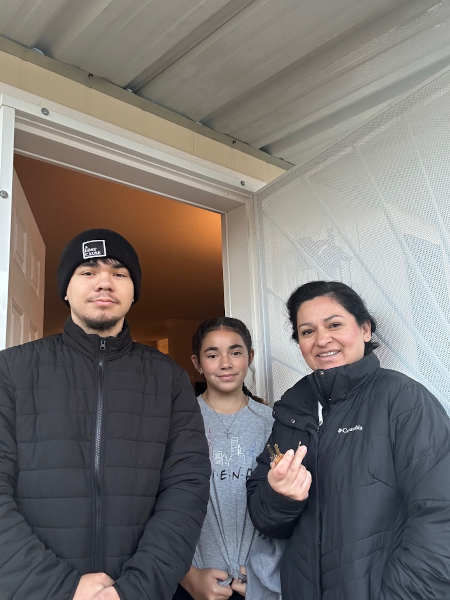
LAKE COUNTY, Calif. — Habitat for Humanity Lake County reported that it has helped another community member create a new home.
On July 21, Habitat for Humanity Lake County welcomed Maria Ferrari and her family into their new home.
After the loss of their rental housing in the Valley fire, Ferrari made it her New Year’s resolution to become a homeowner and after speaking to the Habitat for Humanity staff, she put in her application.
“It was a very long process but I am a homeowner now,” Ferrari said. “My children could not wait to get their own rooms. They were excited by discovering how the appliances work and doing their own laundry.”
She added, “I am grateful to Habitat for working with me. Being a single mother, it has not been easy but you always found a way to make it work. Thank you to each of the Habitat for Humanity collaborators. Without your help, this wish would not have come through.
If you or someone you know is interested in partnering with Habitat to become a homeowner, applications for the Homeownership Program are currently being accepted.
The stability and security of homeownership is one of the greatest gifts a family can have, Habitat reported.
The pride in one’s home and the benefits it offers to the family unit are a boon to our community, helping to make Lake County a better place for all of us.
Habitat for Humanity Lake County is here to help make that happen for qualifying, deserving families in our communities.
Applicants must have lived in Lake County for at least one year, be willing to partner with Habitat in the construction of their home, present a positive attitude toward the process, and be considered low-income.
If you, or someone you know, are interested and might qualify, please contact the Habitat office at 707-994-1100 for more information or to receive a pre-application. For assistance in Spanish dial Extension 108.
Tammy Brigham is the administrator for Habitat for Humanity Lake County.
Guns originating in the United States power human- and drug-trafficking efforts and other illicit activities by cartels and other transnational criminal organizations in Mexico and beyond.
The "Disarming Cartels Act" has also been co-sponsored by Representatives Dina Titus (NV-01), Danny Davis (IL-07), and Eleanor Holmes Norton (DC-AL).
“Firearms purchased in the United States are being illegally trafficked to Mexico, arming the cartels and fueling the fentanyl epidemic,” said Thompson. “Going after the bad actors that facilitate the exchange of guns for fentanyl will help us crack down on illegal drug trade while preventing firearms from getting into the hands of cartels and other criminal organizations. The Disarming Cartels Act will help us secure our border, reduce the flow of fentanyl in our country, and disrupt the illegal flow of firearms into Mexico. As Chair of the Gun Violence Prevention Task Force, I’m proud to support this important bill with Reps. Goldman, Castro, Titus, Danny Davis, and Eleanor Holmes Norton.”
“Democrats and Republicans alike recognize the devastating threat posed by the fentanyl trade and human smuggling and trafficking, all of which are predominantly controlled by Mexican drug cartels at our southern border,” Congressman Dan Goldman said. “But Republicans simply ignore that the source of the cartels’ power is the hundreds of thousands of American-manufactured weapons of war that flow out of the United States and into the hands of the cartels. If we want to address crime across our southern border, then we must address the exportation of American guns across the border. The Disarming Cartels Act will do just that.”
“For years, American guns have fueled violence, instability, and forced migration across the Western Hemisphere,” said Congressman Joaquin Castro. “The United States can — and must — do more to stop the weapons we manufacture from landing in the hands of criminal organizations that smuggle fentanyl and other deadly drugs to the United States. The Disarming Cartels Act will disrupt cross-border trafficking through greater interagency collaboration at home and enhanced coordination with our partners in Mexico — protecting innocent people on both sides of the border.”
Mexico has one gun store in the entire country and restrictive firearm regulations. Yet, on an annual basis, there are nearly 30,000 annual firearm deaths in Mexico.
More than 500,000 American-made guns are trafficked to Mexico every year, and seventy percent of firearms recovered from crime scenes in Mexico can be traced to the United States. Criminal organizations operating in Mexico purchase firearms and ammunition from U.S.-based retailers to target law enforcement and military personnel, harm citizens, and enforce cartel control of territory.
To disrupt the trafficking of U.S.-sourced firearms into Mexico, the ‘Disarming Cartels Act’ directs the Secretary of Homeland Security to:
• Increase interagency collaboration to identify, target, disrupt, and dismantle transnational criminal organizations responsible for exporting firearms and related munitions from the United States to Mexico.
• Instruct Homeland Security Investigations within U.S. Immigration and Customs and Enforcement to establish a mechanism for sharing aggregated information about interdictions of southbound firearms and U.S.-sourced firearms in Mexico with Federal partners.
• Expand the collection and analysis of information concerning firearms recovered at crime scenes in Mexico to identify U.S.-based gun traffickers.
• Enhance coordination with Mexican agencies to increase outbound inspections by U.S. Customs and Border Protection on the southwest land border.
• Establish performance measures for efforts to disrupt the smuggling of U.S.-sourced firearms to Mexico.
• Require the Secretary of Homeland Security to provide annual reports on the Department’s actions to disrupt the smuggling of U.S.-sourced firearms and munition to Mexico.
Transnational criminal organizations are known to exchange drugs like fentanyl to U.S. buyers for firearms. Cartels have orchestrated sophisticated attacks on Mexican security forces, with increasing use of .50 caliber rifles, modified fully automatic rifles, and belt-fed machine guns to counter Mexican security forces.
Mexico has one gun store in the entire country and restrictive firearm regulations. Yet, on an annual basis, there are nearly 30,000 annual firearm deaths in Mexico.
The Gun Violence Prevention Task Force is committed to protecting communities across the country from the dangers of gun violence. In October, the Gun Violence Prevention Task Force condemned the Republican failure to respond to the gun violence epidemic and sent a letter urging Speaker Johnson to use his new authority to bring bipartisan, common sense gun safety legislation to the floor for a vote.
Thompson represents California’s Fourth Congressional District, which includes all or part of Lake, Napa, Solano, Sonoma and Yolo counties.
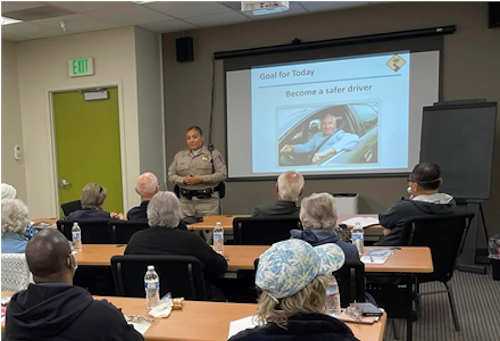
It is important that all drivers on California’s roadways be well-equipped with the knowledge and tools to help them safely operate their vehicle.
With the help of the $225,000 Keeping Everyone Safe, or KEYS, grant, the California Highway Patrol will continue to empower the state’s senior community with a free specialized driving course designed with them in mind.
The CHP’s Age Well, Drive Smart course was developed in 2008 to assist and educate drivers, age 65 and older, as well as promote safe travel for all.
Every year, thousands of the state’s seniors attend the course with the goal of improving their driving skills, refreshing their knowledge of the rules of the road and learning how age-related physical changes may affect one’s driving ability.
“Roadway safety and mobility for California’s seniors remains a high priority for the CHP,” said CHP Commissioner Sean Duryee. “The Age Well, Drive Smart course is not just a class; it's a crucial initiative that equips our senior drivers with the knowledge and skills they need to stay safe and confident behind the wheel.”
The CHP invites all of California’s senior drivers aged 65 and older to attend an Age Well, Drive Smart class to learn the tools to drive safer and drive longer.
The class is approximately two hours in length and is offered at local CHP Area offices as well as many senior centers throughout the state.
The class is a way for seniors to educate themselves, evaluate their driving abilities, and improve their driving skills.
More information about this free class is available from any local CHP office. The Clear Lake Area Office can be reached at 707-279-0103.
The Age Well, Drive Smart course is made possible by a grant provided by the California Office of Traffic Safety, through the National Highway Traffic Safety Administration.