 How to resolve AdBlock issue?
News
A $400,000 federal grant will help the California Highway Patrol Native-Tribal Traffic Education Program build and strengthen the Department’s relationship with Northern California’s Native American communities.
The grant will support the Tribal Traffic Education Program, or TTEP — the CHP’s first grant-funded safety program specifically focused on reaching Native American communities — with funding for traffic safety education to drivers, pedestrians, and bicyclists on and near California’s tribal lands.
With a population of nearly 720,000, California is home to more Native Americans/Alaskan Natives than any other state.
There are 109 federally recognized tribes, each with its own unique culture, history and practices.
The program strives to improve service and public trust in tribal communities by implementing many of the lifesaving traffic safety programs the CHP has to offer.
“We are excited to extend our traffic safety initiatives to tribes and Native American residents within our communities,” said CHP Commissioner Sean Duryee. “The program’s primary goal is to save lives through education, while proactively building and maintaining relationships with California’s diverse tribal communities.”
CHP personnel involved in TTEP serve as resources to Native American/Alaska Native communities and tribes by sharing traffic safety information, conducting traffic safety presentations, and participating in community outreach and tribal cultural events.
The CHP has set a goal of conducting 125 tribal traffic safety presentations and other community outreach activities within the CHP’s Northern, Golden Gate, and Valley Divisions each grant cycle, with the intent of expanding the program statewide.
Program topics will include seat belt safety, proper use of child safety seats, dangers of driving under the influence, pedestrian and bicycle education, defensive driving techniques, distracted driving, teen/parent driving safety, driver license requirements, and other educational subjects.
Traffic safety presentations will be conducted at schools, public health fairs, tribal events, and other activities.
Funding for this program was provided by a grant from the California Office of Traffic Safety, through the National Highway Traffic Safety Administration.
The grant will support the Tribal Traffic Education Program, or TTEP — the CHP’s first grant-funded safety program specifically focused on reaching Native American communities — with funding for traffic safety education to drivers, pedestrians, and bicyclists on and near California’s tribal lands.
With a population of nearly 720,000, California is home to more Native Americans/Alaskan Natives than any other state.
There are 109 federally recognized tribes, each with its own unique culture, history and practices.
The program strives to improve service and public trust in tribal communities by implementing many of the lifesaving traffic safety programs the CHP has to offer.
“We are excited to extend our traffic safety initiatives to tribes and Native American residents within our communities,” said CHP Commissioner Sean Duryee. “The program’s primary goal is to save lives through education, while proactively building and maintaining relationships with California’s diverse tribal communities.”
CHP personnel involved in TTEP serve as resources to Native American/Alaska Native communities and tribes by sharing traffic safety information, conducting traffic safety presentations, and participating in community outreach and tribal cultural events.
The CHP has set a goal of conducting 125 tribal traffic safety presentations and other community outreach activities within the CHP’s Northern, Golden Gate, and Valley Divisions each grant cycle, with the intent of expanding the program statewide.
Program topics will include seat belt safety, proper use of child safety seats, dangers of driving under the influence, pedestrian and bicycle education, defensive driving techniques, distracted driving, teen/parent driving safety, driver license requirements, and other educational subjects.
Traffic safety presentations will be conducted at schools, public health fairs, tribal events, and other activities.
Funding for this program was provided by a grant from the California Office of Traffic Safety, through the National Highway Traffic Safety Administration.

Although the Crab Nebula is one of the best-studied supernova remnants, questions about its progenitor, the nature of the explosion that created it still remain unanswered.
The NASA/ESA/CSA James Webb Space Telescope is on the case as it sleuths for any clues that remain within the supernova remnant.
Webb’s infrared sensitivity and spatial resolution are offering astronomers a more comprehensive understanding of the still-expanding scene
The NASA/ESA/CSA James Webb Space Telescope has gazed at the Crab Nebula, a supernova remnant located 6500 light-years away in the constellation Taurus.
Since this energetic event was recorded in 1054 CE by 11th-century astronomers, the Crab Nebula has continued to draw attention and additional study as scientists seek to understand the conditions, behavior and after-effects of supernovae by carefully studying this relatively close example.
With Webb’s NIRCam (Near-Infrared Camera) and MIRI (Mid-Infrared Instrument), the game is afoot as new details are uncovered — including the first complete map of dust distribution — in the search for answers about the Crab Nebula’s origins.
At first glance the general shape of the nebula is reminiscent of the 2005 optical wavelength image from the NASA/ESA Hubble Space Telescope.
In Webb’s infrared observation, a crisp, cage-like structure of fluffy gaseous filaments are shown in red and orange. However, in the central regions, emission from dust grains (yellow-white and green) is mapped out by Webb for the first time. The Hubble and Webb images of this object can be contrasted here.
Additional aspects of the inner workings of the Crab Nebula become more prominent and are seen in greater detail in the infrared light captured by Webb.
In particular, Webb highlights what is known as synchrotron radiation: emission produced from charged particles, like electrons, moving around magnetic field lines at relativistic speeds.
The radiation appears here as milky smoke-like material throughout the majority of the Crab Nebula’s interior.
This feature is a product of the nebula’s pulsar, a rapidly rotating neutron star. The pulsar’s strong magnetic fields accelerate particles to extremely high speeds and cause them to emit radiation as they wind around magnetic field lines. Though emitted across the electromagnetic spectrum, the synchrotron radiation becomes particularly vibrant in the infrared with Webb's NIRCam instrument.
To locate the Crab Nebula’s pulsar heart, trace the wisps that follow a circular ripple-like pattern in the middle to the bright white dot in the center. Further out from the core, follow the thin white ribbons of the radiation. The curvy wisps are closely grouped together, outlining the structure of the pulsar’s magnetic fields, which sculpt and shape the nebula.
At center left and right, the white material curves sharply inward from the filamentary dust cage’s edges and goes toward the neutron star’s location, as if the waist of the nebula is pinched. This abrupt slimming may be caused by the confinement of the supernova wind’s expansion by a belt of dense gas.
The wind produced by the pulsar heart continues to push the shell of gas and dust outward at a rapid pace. Notice how the filaments tend to be longer toward the upper right side of the nebula, in the same direction the pulsar is moving – not restricted by the belt of gas. Among the remnant’s interior, yellow-white and green mottled filaments form large-scale loop-like structures, which represent areas where dust grains reside.
The search for answers about the Crab Nebula’s past continues as astronomers further analyse the Webb data and consult previous observations of the nebula taken by other telescopes. Scientists will have newer Hubble data to review within the next year or so from the telescope’s reimaging of the supernova remnant. This will mark Hubble’s first look at the Crab Nebula in over 20 years, and will enable astronomers to more accurately compare Webb and Hubble’s findings.
Webb is the largest, most powerful telescope ever launched into space. Under an international collaboration agreement, ESA provided the telescope’s launch service, using the Ariane 5 launch vehicle.
Working with partners, ESA was responsible for the development and qualification of Ariane 5 adaptations for the Webb mission and for the procurement of the launch service by Arianespace. ESA also provided the workhorse spectrograph NIRSpec and 50% of the mid-infrared instrument MIRI, which was designed and built by a consortium of nationally funded European Institutes (The MIRI European Consortium) in partnership with JPL and the University of Arizona.
Webb is an international partnership between NASA, ESA and the Canadian Space Agency.
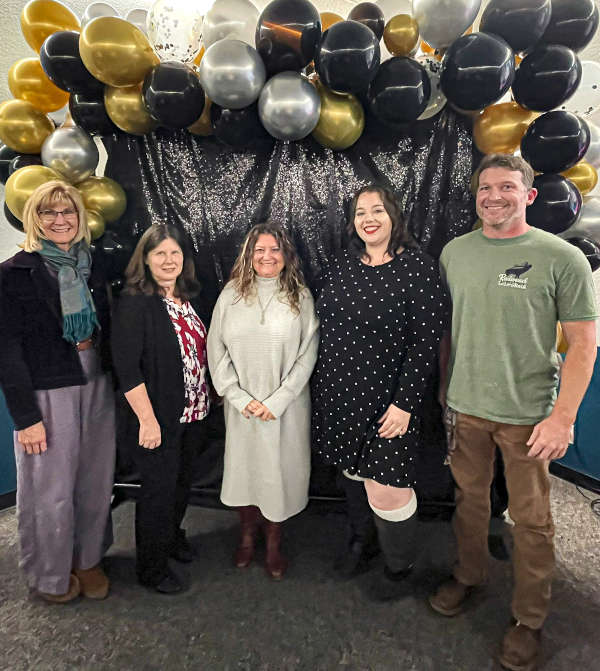
LAKE COUNTY, Calif. — Educators, families and friends recently came together to honor the Lake County District Teachers of the Year.
It was a night of celebrating excellence in education.
During the reception, each Lake County District Teacher of the Year received a Congressional Recognition Award from Congressman Mike Thompson.
"These educators demonstrate a commitment to high-quality education. What they do, every day, impacts student achievement and success," Brock Falkenberg, Lake County Superintendent of Schools said. "Each award recipient is exemplary in their work ethic and is dedicated to supporting the school and students."
The district teachers of the Year include:
• Joni Falkenberg — Kelseyville Unified School District.
• Rachel Weidner — Konocti Unified School District.
• Sandi Morton — Lakeport Unified School District.
• Jon Prather — Middletown Unified School District.
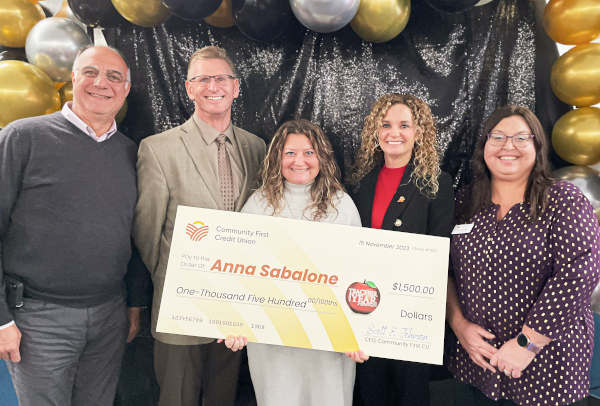
• Anna Sabalone – Upper Lake Unified School District.
Along with receiving the Congressional Recognition, Lake County Teacher of the Year Anna Sabalone received a check from Community First Credit Union. Thank you to Community First Credit Union for their ongoing support of providing the Lake County Teacher of the Year with a $1,500 cash award.
Although the Lake County Teacher of the Year is chosen in May, the reception is held after the California Department of Education chooses its five California Teachers of the Year in late October.
This allows us to honor our Lake County Teacher of the Year if they were to be named California Teacher of the Year. Lake County's last California Teacher of the Year was Erica Boomer from Upper Lake High School in 2019.
The Lake County Teacher of the Year program is administered through the Lake County Office of Education and the California Department of Education. For more information about the Lake County District Teachers of the Year, please visit www.lakecoe.org/TOY.
CLEARLAKE, Calif. — The Clearlake Police Department is asking for the public’s help in locating a missing woman.
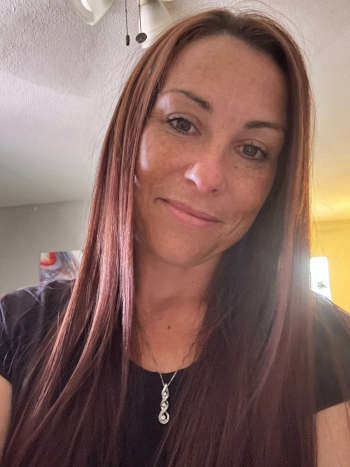
Ricci Chandler was last seen around 9:30 a.m. Nov. 16 in the area of Olympic Drive in Clearlake, driving a black Cadillac SUV, Arizona plate X8A1SP.
Chandler suffers from bipolar disorder and epilepsy, and has not been taking medications as prescribed.
She is described as a white female, 5 feet 1 inch tall, with long brown hair possibly worn in a bun and brown eyes.
When Chandler was last seen, she was wearing a black jacket and black pants.
If you have any information regarding Chandler's whereabouts please contact the Clearlake Police Department at 707-994-8251, Extension 1.
On Thursday, the Department of Veterans Affairs released the National Veteran Suicide Prevention Annual Report, the largest national analysis of veteran suicides through 2021, the latest year for which there is data.
The report shows that 6,392 veterans died by suicide in 2021, which is 114 more than in 2020.
The number of non-veteran suicides also increased to 40,020 deaths in 2021, which is 2,000 more than in 2020.
Officials said that 2021 was the first full year of the COVID-19 pandemic, which led to greater financial strain, housing instability, anxiety and depression levels, and barriers to health care — all of which are known to be associated with increased risk of suicide for veterans and non-veterans alike.
There was also an increase in firearm availability in 2021, which is proven to increase both the risk of suicide and the risk of dying during a suicide attempt.
Ending veteran suicide is VA’s top clinical priority and a key part of President Biden’s Unity Agenda.
Since 2021, VA has worked aggressively to expand support for veterans in crisis, including offering no-cost health care to veterans in suicidal crisis at VA or non-VA facilities; launching the 988 (then press 1) to help veterans connect more quickly with caring, qualified responders through the Veterans Crisis Line; partnering with community-based suicide prevention organizations to provide veterans with on-the-ground support; expanding firearm suicide prevention efforts; and encouraging veterans to reach out for help through a national Veteran suicide prevention awareness campaign.
These steps have led to more than 33,000 veterans getting free emergency health care, a 12.1% increase in use of the Veterans Crisis Line, more than 3.5 million visits to VA’s support website, and more.
Moving forward, VA and the Biden-Harris Administration will continue to work urgently to end Veteran suicide through a public health approach that combines both community-based and clinically based strategies to save lives.
“There is nothing more important to VA than preventing veteran suicide — nothing,” said Secretary of Veterans Affairs Denis McDonough. “One veteran suicide will always be too many, and we at VA will use every tool to our disposal to prevent these tragedies and save veterans’ lives.”
“We will do everything in our power to learn from this report and use its findings to help us save lives,” said VA undersecretary for Health Shereef Elnahal, M.D. “It will take all of us — working together — to end veteran suicide, and we will not rest until that goal becomes a reality.”
Before 2021, veteran suicide had decreased two years in a row — from 6,718 veteran suicides in 2018 to 6,278 in 2020. Learn more information about VA’s comprehensive, nationwide efforts to prevent veteran suicide.
This report is based on verified data from the Centers for Disease Control and Department of Defense, and it meets the quality standards of a peer-reviewed publication.
In the interest of full transparency, VA releases yearly reports detailing how we come to the conclusions in the Annual Suicide Prevention Report.
For more detailed information about veteran suicide in 2021, view the full report. For additional veteran suicide mortality data, see the report’s accompanying state data sheets.
The report shows that 6,392 veterans died by suicide in 2021, which is 114 more than in 2020.
The number of non-veteran suicides also increased to 40,020 deaths in 2021, which is 2,000 more than in 2020.
Officials said that 2021 was the first full year of the COVID-19 pandemic, which led to greater financial strain, housing instability, anxiety and depression levels, and barriers to health care — all of which are known to be associated with increased risk of suicide for veterans and non-veterans alike.
There was also an increase in firearm availability in 2021, which is proven to increase both the risk of suicide and the risk of dying during a suicide attempt.
Ending veteran suicide is VA’s top clinical priority and a key part of President Biden’s Unity Agenda.
Since 2021, VA has worked aggressively to expand support for veterans in crisis, including offering no-cost health care to veterans in suicidal crisis at VA or non-VA facilities; launching the 988 (then press 1) to help veterans connect more quickly with caring, qualified responders through the Veterans Crisis Line; partnering with community-based suicide prevention organizations to provide veterans with on-the-ground support; expanding firearm suicide prevention efforts; and encouraging veterans to reach out for help through a national Veteran suicide prevention awareness campaign.
These steps have led to more than 33,000 veterans getting free emergency health care, a 12.1% increase in use of the Veterans Crisis Line, more than 3.5 million visits to VA’s support website, and more.
Moving forward, VA and the Biden-Harris Administration will continue to work urgently to end Veteran suicide through a public health approach that combines both community-based and clinically based strategies to save lives.
“There is nothing more important to VA than preventing veteran suicide — nothing,” said Secretary of Veterans Affairs Denis McDonough. “One veteran suicide will always be too many, and we at VA will use every tool to our disposal to prevent these tragedies and save veterans’ lives.”
“We will do everything in our power to learn from this report and use its findings to help us save lives,” said VA undersecretary for Health Shereef Elnahal, M.D. “It will take all of us — working together — to end veteran suicide, and we will not rest until that goal becomes a reality.”
Before 2021, veteran suicide had decreased two years in a row — from 6,718 veteran suicides in 2018 to 6,278 in 2020. Learn more information about VA’s comprehensive, nationwide efforts to prevent veteran suicide.
This report is based on verified data from the Centers for Disease Control and Department of Defense, and it meets the quality standards of a peer-reviewed publication.
In the interest of full transparency, VA releases yearly reports detailing how we come to the conclusions in the Annual Suicide Prevention Report.
For more detailed information about veteran suicide in 2021, view the full report. For additional veteran suicide mortality data, see the report’s accompanying state data sheets.
Motorcycle-involved crashes continue to be a major concern for the California Highway Patrol.
The CHP has implemented a yearlong, federally funded program, Get Educated and Ride Safe VI, or GEARS, with the goal of increasing motorcycle safety and awareness throughout the state.
The GEARS VI goals are designed to reduce the number of motorcycle-involved crashes and crash victims.
Based on provisional data, there were 7,639 motorcycle-involved crashes, resulting in 381 deaths and 6,969 injuries, within CHP jurisdiction in federal fiscal year 2021-22 — an 8% increase from the previous year.
“Motorcycle riders are statistically more likely to be injured or killed when involved in a crash,” said CHP Commissioner Sean Duryee. “The GEARS VI grant will support the Department’s efforts to improve safety for motorcycle riders and other road users through focused education and enforcement.”
During the grant period, the CHP will increase motorcycle safety activities in regions with a high number of motorcycle incidents and participate in traffic safety education campaigns.
The campaign will promote the use of U.S. Department of Transportation-compliant helmets for all riders and raise driver awareness of sharing the road with motorcyclists.
The CHP will also increase enforcement in areas with a high number of motorcycle-involved crashes, which resulted from speed, improper turns, and driving under the influence of alcohol and/or drugs.
Funding for this program was provided by a grant from the California Office of Traffic Safety through the National Highway Traffic Safety Administration.
The CHP has implemented a yearlong, federally funded program, Get Educated and Ride Safe VI, or GEARS, with the goal of increasing motorcycle safety and awareness throughout the state.
The GEARS VI goals are designed to reduce the number of motorcycle-involved crashes and crash victims.
Based on provisional data, there were 7,639 motorcycle-involved crashes, resulting in 381 deaths and 6,969 injuries, within CHP jurisdiction in federal fiscal year 2021-22 — an 8% increase from the previous year.
“Motorcycle riders are statistically more likely to be injured or killed when involved in a crash,” said CHP Commissioner Sean Duryee. “The GEARS VI grant will support the Department’s efforts to improve safety for motorcycle riders and other road users through focused education and enforcement.”
During the grant period, the CHP will increase motorcycle safety activities in regions with a high number of motorcycle incidents and participate in traffic safety education campaigns.
The campaign will promote the use of U.S. Department of Transportation-compliant helmets for all riders and raise driver awareness of sharing the road with motorcyclists.
The CHP will also increase enforcement in areas with a high number of motorcycle-involved crashes, which resulted from speed, improper turns, and driving under the influence of alcohol and/or drugs.
Funding for this program was provided by a grant from the California Office of Traffic Safety through the National Highway Traffic Safety Administration.