 How to resolve AdBlock issue?
News

CLEARLAKE, Calif. — Clearlake Animal Control has several new dogs among those waiting to be adopted.
The Clearlake Animal Control website lists 38 adoptable dogs.
The adoptable dogs include “Panther,” a male mastiff mix with a black coat.
There also is “Turbo,” a male Belgian malinois mix.

The shelter is located at 6820 Old Highway 53. It’s open from 9 a.m. to 6 p.m. Tuesday through Saturday.
For more information, call the shelter at 707-762-6227, email
This week’s adoptable dogs are featured below.
Email Elizabeth Larson at

If a school board member has a social media account, would it be wrong for them to block someone and delete their comments? That’s a question the Supreme Court has decided to take up after public officials, including two school board members, blocked constituents from seeing their accounts or removed critical comments.
At stake is what constitutes state action – or action taken in an official governmental capacity – on social media. Under the First Amendment, officials engaging in state action cannot restrict individuals’ freedom of speech and expression.
A ruling in the case, likely to come in spring or early summer 2024, could have broad implications for American society, where nearly three-fourths of the population use social media in their daily lives. The ruling could also establish whether social media accounts of public officials should be treated as personal or governmental.
In a joint oral argument, the Supreme Court heard two separate cases on the matter, including the one involving school board members, in late October 2023. Interestingly, lower courts reached opposite outcomes, prompting the question of whether a post on a personal social media page can be considered state action.
The school board case
Beginning around 2014, two school board candidates in the Poway Unified School District in San Diego created Facebook and Twitter, now X, pages as part of their campaigns for office. They continued to use them after they were elected to communicate with residents and seek their input.
In 2017, the school board members blocked a couple with children in the district from commenting on their pages. Christopher and Kimberly Garnier repeatedly posted criticism on those pages over such issues as the board members’ handling of race relations in the district and alleged financial wrongdoing by the then-superintendent. The Garniers responded to being blocked by filing a lawsuit.
In the resulting case, O'Connor-Ratcliff v. Garnier, the U.S. Court of Appeals for the 9th Circuit affirmed that the two school board members violated the Garniers’ First Amendment rights to free speech and expression. The court rejected the board members’ claims that their accounts were private because they were not controlled by their boards and their posts were not directly related to their official duties.
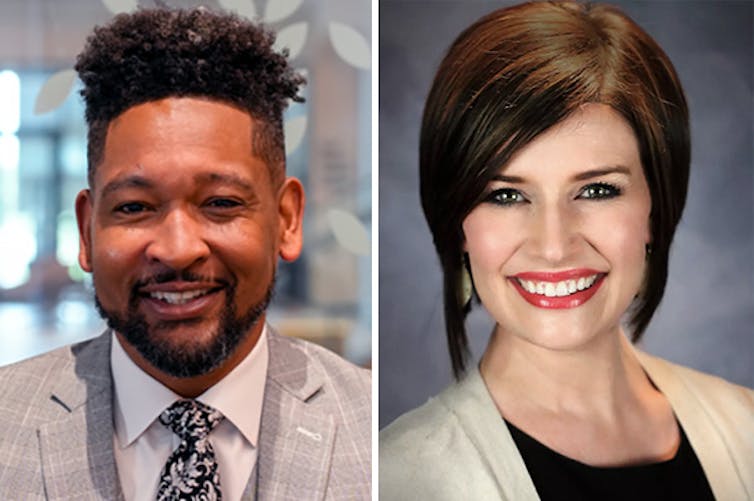
The 9th Circuit judges made three points in ruling that the board members violated the First Amendment. First, the pages identified the board members as government officials and displayed their titles prominently. Second, the social media accounts provided information about school activities. And third, the board members solicited constituent input about school matters on the social media pages in question.
However, the court concluded that the board members were not liable for monetary damages. This is because at the time the school board members blocked the Garniers, no court had yet established whether the First Amendment applies to public officials’ speech in the context of social media. It was – and remains – a new frontier in the law.
Critical comments over COVID-19
Conversely, in a similar case in Port Huron, Michigan, the 6th Circuit made the opposite ruling.
Years before he was appointed city manager in 2014, a man named James Freed created a personal Facebook page that he eventually made public when he reached the limit of “friends” allowed on Facebook. Once in office, he used the page for both personal and professional reasons, posting updates about his family as well as policies he was working to implement. During the pandemic, constituent Kevin Lindke posted on Freed’s page, criticizing his handling of the public health crisis. Freed deleted Lindke’s comments and blocked him from the page. Lindke sued.
In Lindke v. Freed, the 6th Circuit affirmed that Freed did not violate the First Amendment in deleting and blocking Lindke’s comments. And like the 9th Circuit in O'Connor-Ratcliff v. Garnier, the court concluded that people’s First Amendment rights to comment on public officials’ social media pages had not yet been established.
The 6th Circuit ruled that Freed posted on his social media page as a private citizen, rather than as a governmental official. The court determined this for three reasons. First, no state law required him to run a social media page. Second, state funds and resources were not used to run the page. And third, the page belonged to Freed as an individual, rather than to the office of city manager – unlike the @POTUS page on X, for example. Therefore, the court concluded that the postings did not constitute state action subject to the First Amendment.
In April 2023, the Supreme Court agreed to intervene in both cases.
The future of the cases
Both cases not only have consequences for citizens’ First Amendment rights but also for social media companies and users. The Court may decide whether social media platforms such as Facebook and X can be liable for allowing a public official to block private citizens from commenting on their accounts.
These cases might also establish rules and standards about how public officials can control their social media accounts and the role of the courts in these disputes.
In a brief supporting the city manager in Lindke v. Freed, the U.S. Department of Justice basically argued that if the government neither owns nor controls the personal social media accounts of public officials, their behavior on the platforms “will rarely be found to be state action.”
The DOJ added that preventing public officials from blocking some messages might make them less willing to speak out about important issues. They warned that this could reduce, rather than enhance, free speech and discourse on matters of public interest, whether in schools or other agencies.
On the other hand, organizations such as the ACLU argue that allowing public officials to restrict comments on social media would be detrimental to democracy by limiting free speech.
“The upshot of the government officials’ argument is that they should have a constitutional blank check to silence or retaliate against their constituents for expressing disfavored viewpoints on social media,” the ACLU wrote about the two cases. “This would give officials a way to short-circuit our most fundamental First Amendment protections.”
Depending on how the court rules, social media may be headed into a new era of who can access and comment on the accounts of public officials.
Charles J. Russo, Joseph Panzer Chair in Education and Research Professor of Law, University of Dayton
This article is republished from The Conversation under a Creative Commons license. Read the original article.
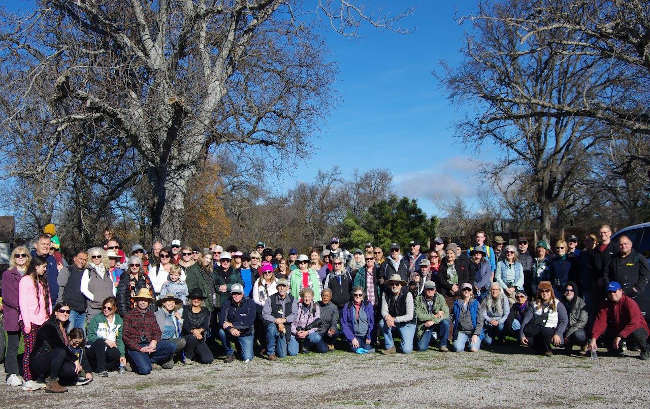
LOWER LAKE, Calif. — On New Year’s Day, over 100 visitors decided to get a healthy start to 2024 by participating in the tenth annual First Day Hike held at Anderson Marsh State Historic Park.
Hikers of all ages enjoyed a beautiful, sunny day in the park, and ranged from “old timers” who regularly hike in the park to first time visitors.
“The First Day Hike has become a Lake County tradition,” said Henry Bornstein, one of the State Parks volunteer hike leaders. “With the exception of 2021, which was canceled due to COVID-19 pandemic restrictions, the First Day Hikes at the park have attracted over 100 attendees for each of the past ten years. To allow folks to “sleep in” on New Year’s Day, we always begin the hikes at noon.”
The hike this year covered a three-mile loop on the park’s trail system and was led by an all-volunteer team of State Park docents.
The hikers were divided into two groups to accommodate the large number of visitors, with each group starting in a different direction and passing each other in the middle of the hike.
Each group stopped periodically to allow the hike leaders to discuss the flora and fauna that was encountered on the trail.
The recent rains created a good opportunity to identify the animal tracks on the trails and the sunny day was made brighter by Western bluebirds finding perches in the trees and shrubs.
“State Park staff and volunteers at Anderson Marsh State Historic Park are looking forward to the start of another year of guided nature walks at the park, culminating with next year’s First Day Hike,” Bornstein said.
If approved, store thefts would no longer be processed as a misdemeanor with no jail time if a suspect has been convicted of two or more specified theft-related offenses, and punishment could range from imprisonment in the county jail ranging from six months to as long as three years.
“Shoplifting, smash-and-grab thefts, and other acts of retail theft trends are causing retailers to close their businesses and endangering customers and employees,” said Ramos. “Since the pandemic, these crimes have increased. That is not the direction California needs to go.”
He added, “The Public Policy Institute reported that the 2022 rates for commercial burglary rates had increased by almost 16 percent compared to 2019. The PPIC also reported that shoplifting in 2022 had increased by nearly 29% from the pandemic years.”
In 2014, voters approved Prop 47 by a 60% to 40% vote and categorized some nonviolent offenses as misdemeanors rather than felonies.
One provision increased the threshold amount for theft misdemeanors from $450 to $950 and did not allow prior such convictions to count toward the new $950 threshold.
If Ramos’ measure becomes law, it would become effective only upon voters’ consent at the next statewide election.
AB 1772 does not state a new threshold for triggering the increased penalties for retail theft, only the existence of prior convictions on the suspect’s criminal record.
In February 2023, the legislator requested the state auditor to review the effectiveness of Proposition 47 to determine whether it had escalated crime rates in San Bernardino and Riverside counties and if so, what categories had been affected.
The auditor’s report is expected later this year.
The report analyzes millions of vehicle and pedestrian stops conducted in 2022 by 560 law enforcement agencies in California — a major expansion from the 58 participating agencies in the previous report — under the Racial and Identity Profiling Act, or RIPA.
In addition to providing an in-depth look into policing in 2022, the Board’s report contains a wide array of best practice recommendations related to policing, with a particular focus on the impact of pretext stops, law enforcement interactions with youth, civilian complaint processes, police union effects on law enforcement accountability, and trainings on racial and identity profiling.
Overall, the findings from the latest RIPA report are consistent with the disparities observed in prior years’ data with respect to perceived race, age, and disability status.
“California is leading the nation in identifying and addressing racial and identity profiling,” said Andrea Guerrero, co-chair of the RIPA Board and Executive Director of Alliance San Diego. “This report marks a major milestone as the first to include stop data from law enforcement agencies across the entire state. The scale of data that California is collecting allows us to say definitively that profiling exists — it is a pervasive pattern across the state. We must now turn to the hard work of ending profiling by bringing all the stakeholders to the table to ascertain and change the policies and the practices that enable it. I'm proud to work alongside community and law enforcement leaders on the RIPA Board who are having the tough conversations needed to bring about change. Public safety depends on all of us, and we invite all stakeholders to join the RIPA Board on our path to progress."
“The annual collection of the RIPA stop data is making California communities safer by directing thoughtful and reflective reform,” said Attorney General Rob Bonta. “Over the last several years, we’ve collected and analyzed information on more than 16 million police encounters in our state. In turn, with the support of our staff at the California Department of Justice, the RIPA Board has continued to issue key recommendations for our law enforcement agencies to promote transparency and take critical steps to enhance, and in some cases, repair the public trust.”
The information collected under RIPA includes data on peace officers’ perceptions of the demographics of stopped individuals, such as race or ethnicity, gender identity, sexual orientation, age, and disability.
The board collects this information to determine whether disparities can be found across demographic groups. The board uses several well-established methodologies to analyze stop data to determine if bias may exist.
Some of the key findings from the board’s report include:
• Number of stops: A total of 4,575,725 stops were conducted by 560 agencies from January 1, 2022 to December 31, 2022.
• Population comparison: Overall, the disparity between the proportion of stops and the proportion of residential population was greatest for Black individuals, who were stopped 131.5 % more frequently than expected.
• Search rates: Black individuals were searched at a rate 1.66 times the rate of White individuals. Although stopped individuals perceived to be Black or Hispanic/Latino were searched at a higher rate relative to individuals perceived to be White, officers discovered contraband or evidence during stops in which they conducted searches at a lower rate for individuals perceived to be Black or Hispanic/Latino.
• Actions taken: Officers reported not taking any reportable action during 75% of stops and taking actions during 25% of stops. Of all the racial or ethnic groups, stopped individuals whom officers perceived to be Native American had the highest rate of being searched (22.4%) and handcuffed (17.8%). Stopped individuals whom officers perceived to be Black had the highest rate of being detained curbside or in a patrol car (20.2%) and ordered to exit a vehicle (7.1%). Individuals perceived to be transgender men/boys also had actions taken towards them during half of their stops (50.0%).
In addition to the data analysis, the board issues best practice recommendations that law enforcement agencies, the Legislature, local policymakers, the Commission on Peace Officer Standards and Training (POST), community members, and advocates should consider when implementing evidence-based and data-driven policy reforms geared to eliminate racial and identity profiling and improve law enforcement and community relations.
Examples of the board’s recommendations from the report include:
• Ending all pretextual stops and searches by taking actions such as ending consent or supervision searches as well as limiting law enforcement roll in the enforcement of traffic laws;
• Prohibiting the collection of field interview cards and entries into CalGang or any agency database in absence of an arrest;
• Adopting internal policies that prohibit law enforcement agencies and district attorneys from pursuing criminal charges for standalone resisting arrest without other citable offenses;
• Prioritizing a care-first model, reducing unnecessary criminal justice intervention or law enforcement response in favor of a community-based response for youth with disabilities and youth experiencing mental health crises;
• Considerations related to the efficacy of school police and law enforcement contacts, such as identifying specific student conduct or statutory violations that require disciplinary action that should be handled by school staff, and for which law enforcement officers should not be involved;
• Calling for further research on how Police Officer Bills of Rights and provisions or agreements with unions affect police accountability;
• Amending Penal Code section 832.5 to include a standardized definition of “civilian complaint”;
• Reviewing all available video footage and incorporating root cause analysis into complaint investigations; and
• Seeking community and Board input early in POST’s course development process and integrating feedback into the course curriculum before finalizing the course.
For more on RIPA and other criminal justice data, members of the public are encouraged to visit OpenJustice, a data-driven initiative that works to increase access to criminal justice data and support the development of public policy.
A copy of the report announced today is available here. More information about the Board is available here.
Think about your first job. Maybe it was delivering pizza, bagging groceries, busing tables or doing landscaping work. Did you get enough training to avoid potential injuries? Chances are, you didn’t – and your boss or supervisor just told you to get to work.
Employing young people helps them in many ways. They can learn a trade, develop job skills, become more responsible and earn money. But there’s danger, too: Americans between 15 and 24 years old are up to 2.3 times more likely to get injured on the job than workers who are 25 and over.
In 2021, 398 workers under 25 died after getting injured on the job.
In my research about the unique occupational safety hazards young workers face, I’ve identified three common causes of this susceptibility to injury: their lack of experience, developing bodies and brains, and reluctance to speak up.
Physical and cognitive limitations
The 19 million young people employed today make up approximately 13% of the U.S. workforce.
Work is more dangerous for young people because they’ve simply had less time to become aware of many common workplace hazards than their older co-workers.
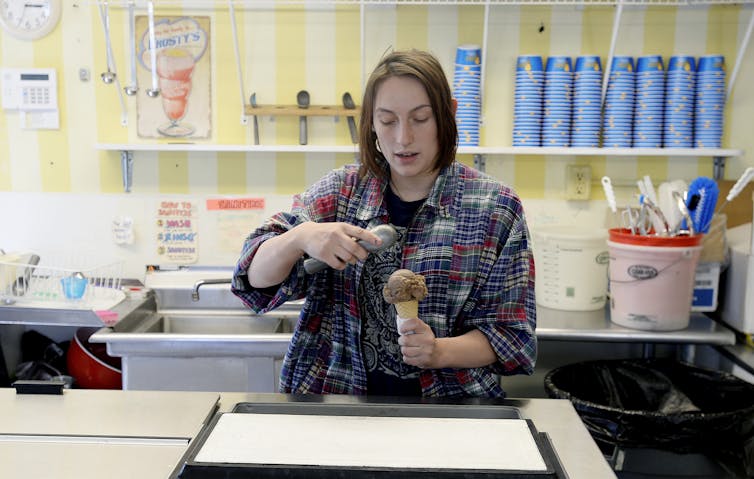
And yet this problem isn’t typically addressed during onboarding: Even those who have been trained to do a specific job may not be taught ways to avoid common injuries. These include tendinitis from scooping ice cream for hours on end, burns from operating a deep fryer, lacerations from sharp objects, and slips, trips and falls.
It’s also important to remember that bodies and brains continue to develop well into adulthood – up to age 25. This can make some tasks riskier before that point for the 55% of individuals between the ages of 16 and 24 who work.
For example, workers in their teens and early 20s may be smaller and weaker than older workers. Furthermore, some safety equipment, such as gloves and masks, may not properly fit.
In addition to physical changes that occur during adolescence, the brain is also developing and restructuring into early adulthood. The frontal cortex, which is used for decision-making and helps you to think before you act, continues to develop into adulthood and can lead to risky behaviors.
Young people are inclined to seek approval and respect, which influences their decision-making.
They also engage in risky behaviors both on and off the job that may affect their performance at work.
Finally, many young workers are reluctant to speak up if they have concerns, or to ask questions if they don’t know what to do, because they don’t want to lose respect from their boss or supervisor. To avoid appearing unqualified, they may not want to admit that they need help.

Weaker protections in some states
Despite these inherent risks, Arkansas, Iowa and other states have recently weakened labor laws, loosening restrictions about the kinds of work teens can do and increasing the number of hours they can work.
This is happening at a time when the number of child labor violations are rising and more children are dying or getting injured, especially when they do tasks that violate federal labor laws.
Duvan Tomas Perez, for example, died on the job while cleaning machinery in the Mar-Jac Poultry plant in Hattiesburg, Mississippi, in August 2023. Perez was 16. So was Michael Schuls, who died in June 2023 while attempting to unjam a wood-stacking machine at Florence Hardwoods, a Wisconsin lumber company. Will Hampton, another 16-year-old, also died that month in Lee’s Summit, Missouri, while working at a landfill.
Teachers at a Nebraska middle school figured out that students who had trouble staying awake at school were working night shifts at a slaughterhouse, doing dangerous cleaning work that caused chemical burns.
Enacted in 1938, the Fair Labor Standards Act established federal standards to ensure workplace safety for workers under 18 and bars employers from interfering with their educational opportunities. This law sets 14 as a minimum age for formal employment, restricts when and how many hours children may work, and outlines the type of work children may safely perform.
Some of the new state labor laws allow children to work in more dangerous jobs and limit their employers’ liability for injury, illness or even death on the job.
When state labor laws are less restrictive than the federal law, however, the federal standards apply.
The federal government is also ramping up enforcement efforts. The Labor Department found 4,474 children employed in violation of federal child labor laws between Oct. 1, 2022, and July 20, 2023. Employers, including McDonald’s and Sonic fast-food franchisees, owed more than $6.6 million in penalties as a result.
3 steps employers can take
In addition to following the law, I believe that employers and supervisors need to address the unique risks to young workers by taking these necessary steps:
• Provide training on how to do tasks safely and supervise young workers until key tasks have been mastered. Training should not only occur right before a new employee gets ready for their first shift, but whenever new tasks are assigned, when there is a new hazard in the workplace, and after an injury or near miss occurs in the workplace.
• Model safe behaviors. Remember that young workers often learn by watching their bosses and co-workers, whose actions can reinforce safety expectations and build a culture of safety.
• Take into account a worker’s abilities when assigning tasks, and check in on them regularly, especially when switching tasks. Ask open-ended questions, such as, “What are the steps you are going to take when you do this task?” as opposed to questions that can be answered with a yes or no, like, “Do you know how to do this task?” Be sure to let workers know how to report concerns and who they can talk to if they have questions about workplace procedures and policies.
These strategies are easy to implement and cost little to follow.
And they surely make it safer for workers in their teens and early 20s to gain the valuable work experience they want and need, while helping their employers to maintain safe, productive workplaces that nurture the workers our economy will increasingly depend upon in the years ahead.
Diane Rohlman, Associate Dean for Research, Professor and Endowed Chair of Rural Safety and Health, University of Iowa
This article is republished from The Conversation under a Creative Commons license. Read the original article.