 How to resolve AdBlock issue?
News
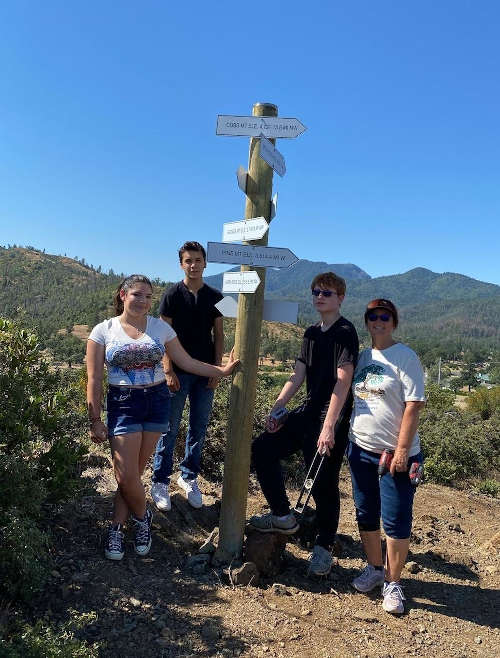
MIDDLETOWN, Calif. — There is a sweet spot of nature in Middletown called Rabbit Hill.
The site is owned by the Lake County Land Trust.
This nine-acre serpentine outcropping is a geologically and culturally significant piece of property, with 360-degree views.
Rabbit Hill also has a sculpture (Invitation — Gateway to the Sky 2020-22) created by artist Marcus Maria Jung in collaboration with community members and the Middletown Art Center, in remembrance of the 2015 Valley Fire.
Soon residents, visitors and those passing through will see significant improvements on the 9-acre preserve.
The Lake County Land Trust is working with Cal Fire on vegetation management. Shaded fuel breaks near the road and property lines will lessen the danger from wildfire.
The goal is to keep the neighborhood safe while at the same time considering the importance of wildlife habitat provided by the chaparral/leather oak community that makes up the preserve.
An exciting public art project on Rabbit Hill is currently in progress. It’s a partnership between the Middletown Art Center, the Middletown Rancheria of Pomo Indians of California, and the Callayomi County Water District.
The partners are seeking design proposals for 360-degree murals inspired by Pomo basketry to be painted on Callayomi's water tanks.
As Rabbit Hill is the highest point in town, the murals will be visible from multiple locations in Middletown and from the highway, and will enhance the property.
The project is funded by the partners with additional support from the National Endowment for the Arts and community members. Learn more at https://middletownartcenter.org/waterbasket.html.
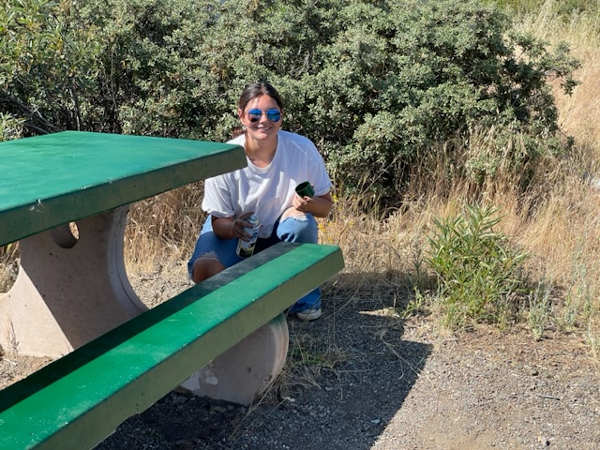
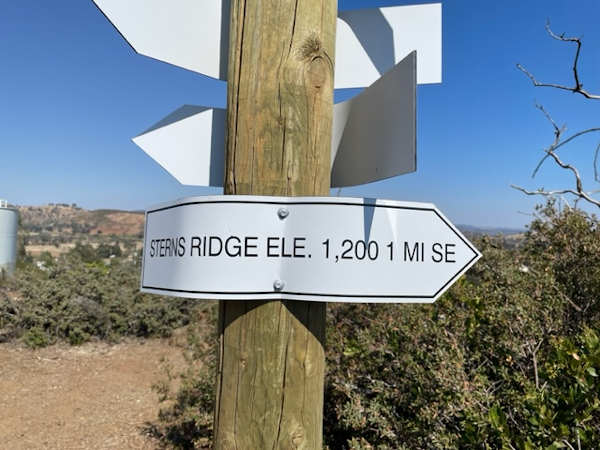
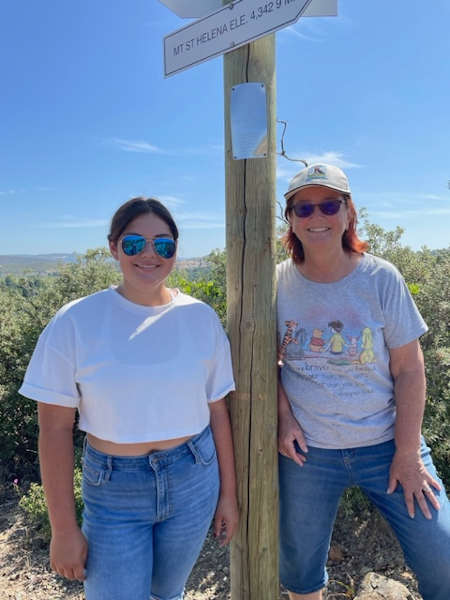
Beginning in 2022 several Middletown High School students have been conducting their community service hours at Rabbit Hill with pruning, trash collection and erecting a very fine directional post that points to the mountain peaks visible from the hilltop.
Unfortunately, over this time Rabbit Hill has experienced extensive vandalism. Graffiti on the cement picnic table, water tower, and rocks including some hate symbols have been a disappointing and common occurrence.
The new directional signs have been broken off, bent, and then tossed around the area. The Land Trust will be replacing these directional signs for the third time.
The Lake County Land Trust is a 501(c) (3) nonprofit whose mission is to conserve lands of natural and cultural significance. The funding for improvements and stewardship of Rabbit Hill Preserve comes from local contributions and volunteers.
Many people live near Rabbit Hill and walk it often. The Land Trust appreciates that many of those folks pick up trash and enjoy the views and calm of this small gem.

The hope is that more people will volunteer to monitor and report problems to
The Land Trust is beseeching parents to remind their youth that vandalism is not only an annoying prank but also a serious crime.
Hate symbols or words and the monetary value of the damage done by vandalism can increase the crime level. When vandalism, including graffiti, malicious damage, destroying, or defacing someone else's property happens, it is disappointing and expensive to replace and repair.
The cost is borne by all those who support the Land Trust. Those costs and possibly jail time will be borne by those caught committing the crime.
Please remind youth and adults of the moral and legal consequences of their actions.
Where possible, the Land Trust opens its privately owned preserves, including Rabbit Hill, to the public. It is a gift to the people of Middletown and visitors that Rabbit Hill remains open, and improvements are made.
Please help the Lake County Land Trust continue to safely keep Rabbit Hill open to the public by keeping an eye on it, reporting crimes to the Land Trust and the local sheriff and reminding young people to be responsible citizens.
“The land that you’re on, it came with a price.” — Sonja Thinn-Miller, Round Valley Indian Tribes
NORTHERN CALIFORNIA — Across the country, national forests are cared for by the Forest Service, but native people have lived, traversed and taken care of these lands long before the land management agency existed.
For the Forest Service, it’s important to understand this piece of American history and learn from native communities.
The Nome Cult Walk — also known as the Konkow Trail of Tears — was one of many forced removals of Indigenous people from their homelands across what is known today as the Mendocino National Forest.
The Nome Cult Walk Cultural Committee invited Forest Service staff to walk the old trail and listen to the stories of the descendants who walked those sorrowful footsteps long ago.
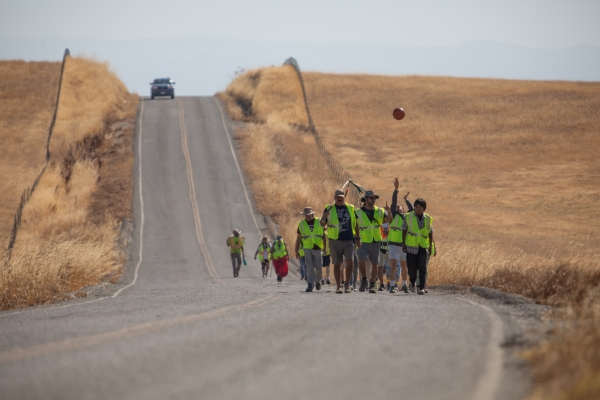
Early on a Sunday morning in September, about 60 people gather in a circle near the Sacramento River just west of Chico.
Most are wearing good walking shoes, sun hats and safety vests. The women wear beautiful handmade skirts adorned with ribbons and butterflies.
It is the beginning of the 28th annual Nome Cult Walk.
This ceremonial walk covers over 100 miles from Chico to Covelo and commemorates the California Indians who were forcibly detained and marched across the valley and North Coast Mountains in September 1863. It was one of many forced marches that occurred in Northern California following the establishment of reservations in the 1850s.
“It started out as just a walk for our ancestors,” said Ronnie Hostler, an elder born and raised at Round Valley Indian Reservation, about the origins of the Nome Cult Walk. “How were they feeling, leaving their home and looking at that mountain, not knowing where they were going?”
Over the course of a week, the Nome Cult Walk participants traverse an average 15-25 miles each day while their supporters drive water, food, camping supplies, and porta-johns alongside them. Support vehicles display handwritten safety messages of “Walkers Ahead!” and flashing lights to slow oncoming traffic.
Each day, organizers prepare walkers for the hard journey, reminding them of the importance of staying hydrated, taking breaks, and applying moleskin to any blisters.
During the morning circle, they remember their ancestors who were forced along these roads under the most severe conditions. Each person has their own reasons for doing the journey, and some participants reflect on who they walk for each day.
“I walk for my mom, my grandmother, my father, my son. Now I walk for my granddaughter. So that's why I'm here today,” said Ronnie.
As the day warms, each step becomes heavier, harder. Raw spots become blisters. Physical discomfort mirrors the pain of interior wounds and loved ones now gone. The walkers — supporting each other — push on.
“We’ve been doing a remembrance walk for the Nome Cult Trail. Not just remembering it through story. It's reliving the history and getting a better idea of what my ancestors had to go through for me to be here today,” said Kyle Miller of Round Valley Indian Tribes.
“This walk is my heritage,” said Brandon Miller, Kyle Miller’s brother and also from Round Valley.

Past and present merge on Nome Cult Walk
That original walk 160 years ago was unimaginably difficult. Native Americans had been rounded up in encampments with little food or water. Many were malnourished and sick before the walk even began.
Soldiers guarded them on horseback and brutally forced them, like cattle, to march from Chico, across the valley, over the eastern spur of the North Coast Mountain range, and down into Covelo to the Round Valley Reservation (then called the “Nome Cult Farm”).
Of the 461 who began the journey in 1863, only 277 survived.
On the third day of the current Nome Cult Walk, the trail climbs into the foothills. Participants enter lands managed by the Mendocino National Forest along the 23N35 Road, locally known as Mud Flat Road.
This is one of the hardest days of the journey. The walkers ascend during the late afternoon, in full sun with no relief from the shade.
Memories of their ancestors haunt each step. Leaders of this year’s walk remind participants that this was the section of the trail when soldiers separated the babies from their mothers, then killed the babies with bayonets. This is also where many of the elderly or those who were too sick to continue were left behind.
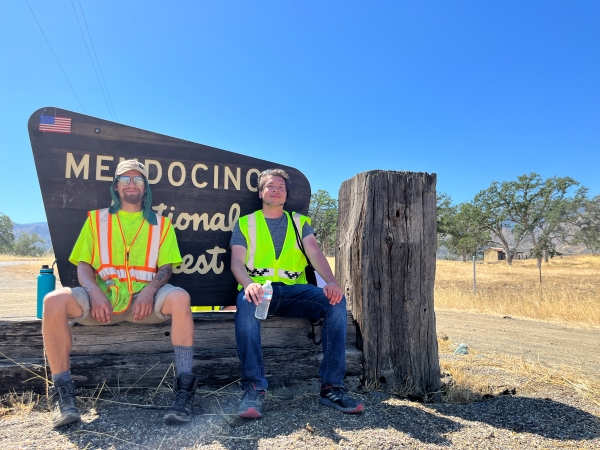
“People don’t realize how America became America,” said Sonja Thinn-Miller, member of the Round Valley Indian Tribes, and mother of Kyle and Brandon Miller. “The land that you’re on, it came with a price.”
As much as the walk is full of physical and spiritual pain, it is also a walk of healing, gratitude and resilience.
“It’s healing our ancestors and ourselves and future generations,” said Jack Cunningham of the Mountain Maidu Tribe, who is on his 16th Nome Cult Walk.
On some nights, singers and dancers share beautiful songs, stories and prayers underneath the stars. In between the songs there is plenty of laughter. As much as it is about remembrance, the Nome Cult Walk has grown into something new, a celebration of life, family and traditions.
“This walk really helps bring us back together,” said Victor Alvarez, member of Paskenta Band of Nomlaki Indians. “We are mending our family ties that were once broken by generational trauma. I believe it will make us better as a whole, as a family.”
Today the Nome Cult Walk brings together many generations and members of several tribes in the area, including descendants of the Concow Maidu, the Round Valley Indian Tribes, Paskenta Band of Nomlaki Indians, Berry Creek Rancheria of Maidu Indians of California, Redding Rancheria, Grindstone Nomlaki, the Mechoopda Tribe, Pit River, Wintu, Nisenan and Greenville Maidu. Over the course of the week, the walkers’ connections to each other grow deeper.
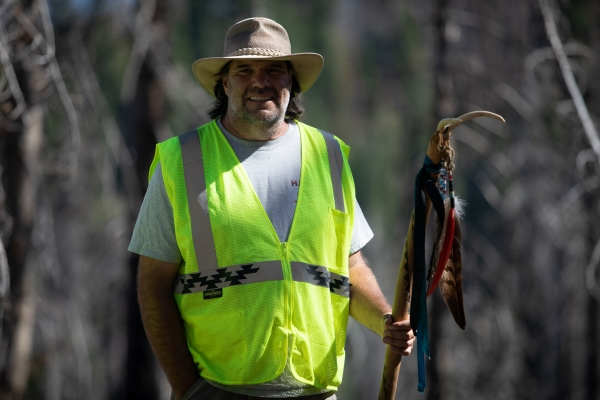
A granddaughter helps lead the way
One of the original walkers was only 8 years old when he was forced on the journey. Now 14 of his descendants walk a similar path.
“My grandfather was one of the children that were able to make it over into Round Valley,” said Charlotte Bauer, who is Concow and Wailaki, born and raised on the Round Valley Indian Reservation.
Bauer was one of the “Crazy Eight” who worked with a Forest Service archaeologist in locating the Nome Cult Trail and began the annual commemorative walk in 1996.
“The reason I still do this walk is to not only honor my grandfather but all of the ancestors and also the people that walked with us and are no longer here,” she said.
“I also walk for the future,” Bauer added. “We have been encouraged, from the beginning, to hand this down to future generations where we want to keep it going on indefinitely.”
For nearly 30 years, tribal members have walked through their ancestral lands to honor the memory and retrace the footsteps of their ancestors, as part of an ongoing healing process.
As the walkers descend the mountains toward the Eel River, a new group of young children from Round Valley school joins them.
Kyle Miller, great-great-grandson of one who was forced on the original march, picks up the lead staff and guides the walkers home to Round Valley.
Laura Leidner works for the Mendocino National Forest. This video and article were produced in collaboration with the Nome Cult Walk Cultural Committee and the Forest Service.


At this time of year many of us resolve to prioritise our health. So it is no surprise there’s a roaring trade of products purporting to guarantee you live longer, be healthier and look more youthful.
While an estimated 25% of longevity is determined by our genes, the rest is determined by what we do, day to day.
There are no quick fixes or short cuts to living longer and healthier lives, but the science is clear on the key principles. Here are five things you can do to extend your lifespan and improve your health.
1. Eat a predominantly plant-based diet
What you eat has a huge impact on your health. The evidence overwhelmingly shows eating a diet high in plant-based foods is associated with health and longevity.
If you eat more plant-based foods and less meat, processed foods, sugar and salt, you reduce your risk of a range of illnesses that shorten our lives, including heart disease and cancer.

Plant-based foods are rich in nutrients, phytochemicals, antioxidants and fibre. They’re also anti-inflammatory. All of this protects against damage to our cells as we age, which helps prevent disease.
No particular diet is right for everyone but one of the most studied and healthiest is the Mediterranean diet. It’s based on the eating patterns of people who live in countries around the Mediterranean Sea and emphases vegetables, fruits, wholegrains, legumes, nuts and seeds, fish and seafood, and olive oil.
2. Aim for a healthy weight
Another important way you can be healthier is to try and achieve a healthy weight, as obesity increases the risk of a number of health problems that shorten our lives.
Obesity puts strain on all of our body systems and has a whole myriad of physiological effects including causing inflammation and hormonal disturbances. These increase your chances of a number of diseases, including heart disease, stroke, high blood pressure, diabetes and a number of cancers.
In addition to affecting us physically, obesity is also associated with poorer psychological health. It’s linked to depression, low self-esteem and stress.
One of the biggest challenges we face in the developed world is that we live in an environment that promotes obesity. The ubiquitous marketing and the easy availability of high-calorie foods our bodies are hard-wired to crave mean it’s easy to consume too many calories.
3. Exercise regularly
We all know that exercise is good for us – the most common resolution we make this time of year is to do more exercise and to get fitter. Regular exercise protects against chronic illness, lowers your stress and improves your mental health.
While one of the ways exercising helps you is by supporting you to control your weight and lowering your body fat levels, the effects are broader and include improving your glucose (blood sugar) use, lowering your blood pressure, reducing inflammation and improving blood flow and heart function.

While it’s easy to get caught up in all of the hype about different exercise strategies, the evidence suggests that any way you can include physical activity in your day has health benefits. You don’t have to run marathons or go to the gym for hours every day. Build movement into your day in any way that you can and do things that you enjoy.
4. Don’t smoke
If you want to be healthier and live longer then don’t smoke or vape.
Smoking cigarettes affects almost every organ in the body and is associated with both a shorter and lower quality of life. There is no safe level of smoking – every cigarette increases your chances of developing a range of cancers, heart disease and diabetes.
Even if you have been smoking for years, by giving up smoking at any age you can experience health benefits almost immediately, and you can reverse many of the harmful effects of smoking.
If you’re thinking of switching to vapes as a healthy long term option, think again. The long term health effects of vaping are not fully understood and they come with their own health risks.
5. Prioritise social connection

When we talk about living healthier and longer, we tend to focus on what we do to our physical bodies. But one of the most important discoveries over the past decade has been the recognition of the importance of spiritual and psychological health.
People who are lonely and socially isolated have a much higher risk of dying early and are more likely to suffer from heart disease, stroke, dementia as well as anxiety and depression.
Although we don’t fully understand the mechanisms, it’s likely due to both behavioural and biological factors. While people who are more socially connected are more likely to engage in healthy behaviours, there also seems to be a more direct physiological effect of loneliness on the body.
So if you want to be healthier and live longer, build and maintain your connections to others.
Hassan Vally, Associate Professor, Epidemiology, Deakin University
This article is republished from The Conversation under a Creative Commons license. Read the original article.
Dogs available for adoption this week include mixes of border collie, Boxer, Doberman pinscher, German shepherd, Great Pyrenees, hound, Labrador retriever, pit bull, Queensland heeler, shepherd and terrier.
Dogs that are adopted from Lake County Animal Care and Control are either neutered or spayed, microchipped and, if old enough, given a rabies shot and county license before being released to their new owner. License fees do not apply to residents of the cities of Lakeport or Clearlake.
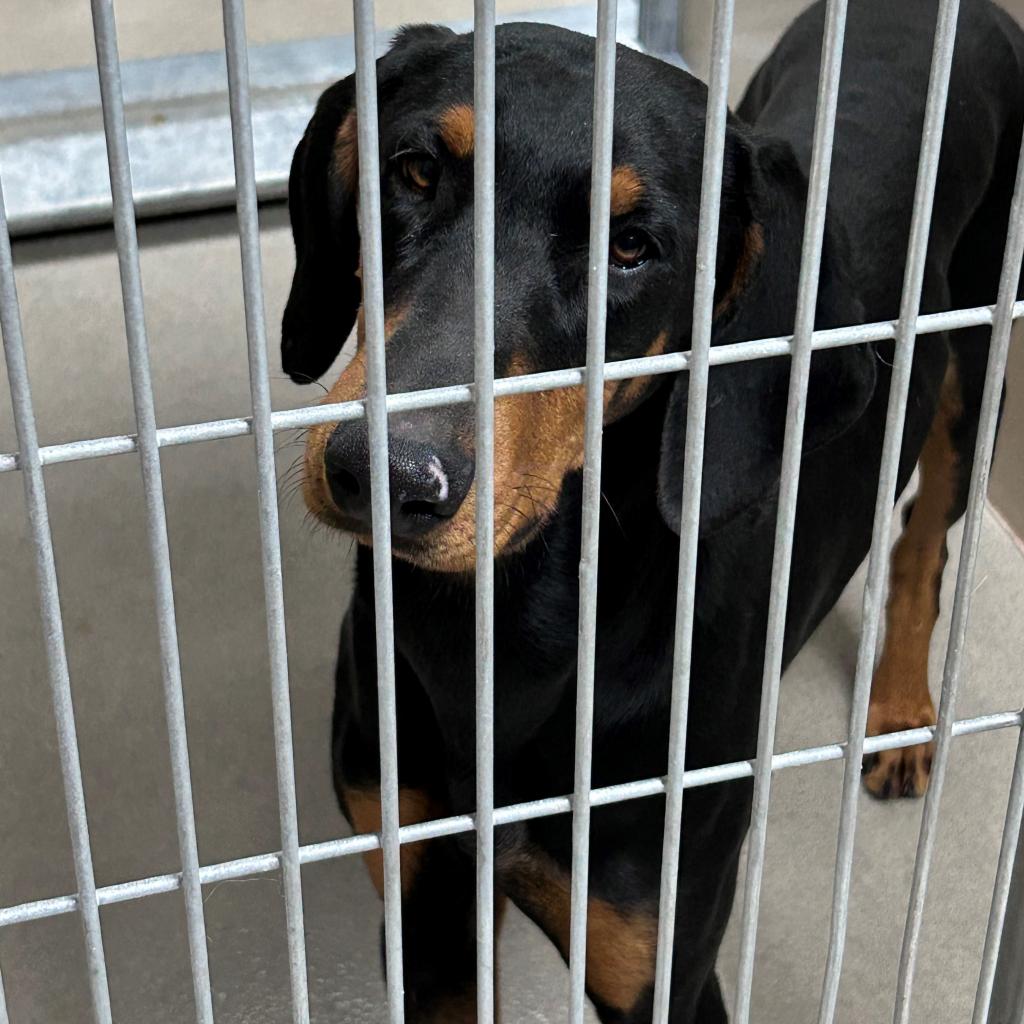
Those dogs and the others shown on this page at the Lake County Animal Care and Control shelter have been cleared for adoption.
Call Lake County Animal Care and Control at 707-263-0278 or visit the shelter online for information on visiting or adopting.
The shelter is located at 4949 Helbush in Lakeport.
Email Elizabeth Larson at


























The year 2023 proved to be an important one for space missions, with NASA’s OSIRIS-REx mission returning a sample from an asteroid and India’s Chandrayaan-3 mission exploring the lunar south pole, and 2024 is shaping up to be another exciting year for space exploration.
Several new missions under NASA’s Artemis plan and Commercial Lunar Payload Services initiative will target the Moon.
The latter half of the year will feature several exciting launches, with the launch of the Martian Moons eXploration mission in September, Europa Clipper and Hera in October and Artemis II and VIPER to the Moon in November – if everything goes as planned.
I’m a planetary scientist, and here are six of the space missions I’m most excited to follow in 2024.
1. Europa Clipper

NASA will launch Europa Clipper, which will explore one of Jupiter’s largest moons, Europa. Europa is slightly smaller than Earth’s Moon, with a surface made of ice. Beneath its icy shell, Europa likely harbors a saltwater ocean, which scientists expect contains over twice as much water as all the oceans here on Earth combined.
With Europa Clipper, scientists want to investigate whether Europa’s ocean could be a suitable habitat for extraterrestrial life.
The mission plans to do this by flying past Europa nearly 50 times to study the moon’s icy shell, its surface’s geology and its subsurface ocean. The mission will also look for active geysers spewing out from Europa.
This mission will change the game for scientists hoping to understand ocean worlds like Europa.
The launch window – the period when the mission could launch and achieve its planned route – opens Oct. 10, 2024, and lasts 21 days. The spacecraft will launch on a SpaceX Falcon Heavy rocket and arrive at the Jupiter system in 2030.
2. Artemis II launch

The Artemis program, named after Apollo’s twin sister in Greek mythology, is NASA’s plan to go back to the Moon. It will send humans to the Moon for the first time since 1972, including the first woman and the first person of color. Artemis also includes plans for a longer-term, sustained presence in space that will prepare NASA for eventually sending people even farther – to Mars.
Artemis II is the first crewed step in this plan, with four astronauts planned to be on board during the 10-day mission.
The mission builds upon Artemis I, which sent an uncrewed capsule into orbit around the Moon in late 2022.
Artemis II will put the astronauts into orbit around the Moon before returning them home. It is currently planned for launch as early as November 2024. But there is a chance it will get pushed back to 2025, depending on whether all the necessary gear, such as spacesuits and oxygen equipment, is ready.
3. VIPER to search for water on the Moon
VIPER, which stands for Volatiles Investigating Polar Exploration Rover, is a robot the size of a golf cart that NASA will use to explore the Moon’s south pole in late 2024.
Originally scheduled for launch in 2023, NASA pushed the mission back to complete more tests on the lander system, which Astrobotic, a private company, developed as part of the Commercial Lunar Payload Services program.
This robotic mission is designed to search for volatiles, which are molecules that easily vaporize, like water and carbon dioxide, at lunar temperatures. These materials could provide resources for future human exploration on the Moon.
The VIPER robot will rely on batteries, heat pipes and radiators throughout its 100-day mission, as it navigates everything from the extreme heat of lunar daylight – when temperatures can reach 224 degrees Fahrenheit (107 degrees Celsius) – to the Moon’s frigid shadowed regions that can reach a mind-boggling -400 F (-240 C).
VIPER’s launch and delivery to the lunar surface is scheduled for November 2024.
4. Lunar Trailblazer and PRIME-1 missions
NASA has recently invested in a class of small, low-cost planetary missions called SIMPLEx, which stands for Small, Innovative Missions for PLanetary Exploration. These missions save costs by tagging along on other launches as what is called a rideshare, or secondary payload.
One example is the Lunar Trailblazer. Like VIPER, Lunar Trailblazer will look for water on the Moon.
But while VIPER will land on the Moon’s surface, studying a specific area near the south pole in detail, Lunar Trailblazer will orbit the Moon, measuring the temperature of the surface and mapping out the locations of water molecules across the globe.
Currently, Lunar Trailblazer is on track to be ready by early 2024.
However, because it is a secondary payload, Lunar Trailblazer’s launch timing depends on the primary payload’s launch readiness. The PRIME-1 mission, scheduled for a mid-2024 launch, is Lunar Trailblazer’s ride.
PRIME-1 will drill into the Moon – it’s a test run for the kind of drill that VIPER will use. But its launch date will likely depend on whether earlier launches go on time.
An earlier Commercial Lunar Payload Services mission with the same landing partner was pushed back to February 2024 at the earliest, and further delays could push back PRIME-1 and Lunar Trailblazer.
5. JAXA’s Martian Moon eXploration mission
While Earth’s Moon has many visitors – big and small, robotic and crewed – planned for 2024, Mars’ moons Phobos and Deimos will soon be getting a visitor as well. The Japanese Aerospace Exploration Agency, or JAXA, has a robotic mission in development called the Martian Moon eXploration, or MMX, planned for launch around September 2024.
The mission’s main science objective is to determine the origin of Mars’ moons. Scientists aren’t sure whether Phobos and Deimos are former asteroids that Mars captured into orbit with its gravity or if they formed out of debris that was already in orbit around Mars.
The spacecraft will spend three years around Mars conducting science operations to observe Phobos and Deimos. MMX will also land on Phobos’ surface and collect a sample before returning to Earth.
6. ESA’s Hera mission
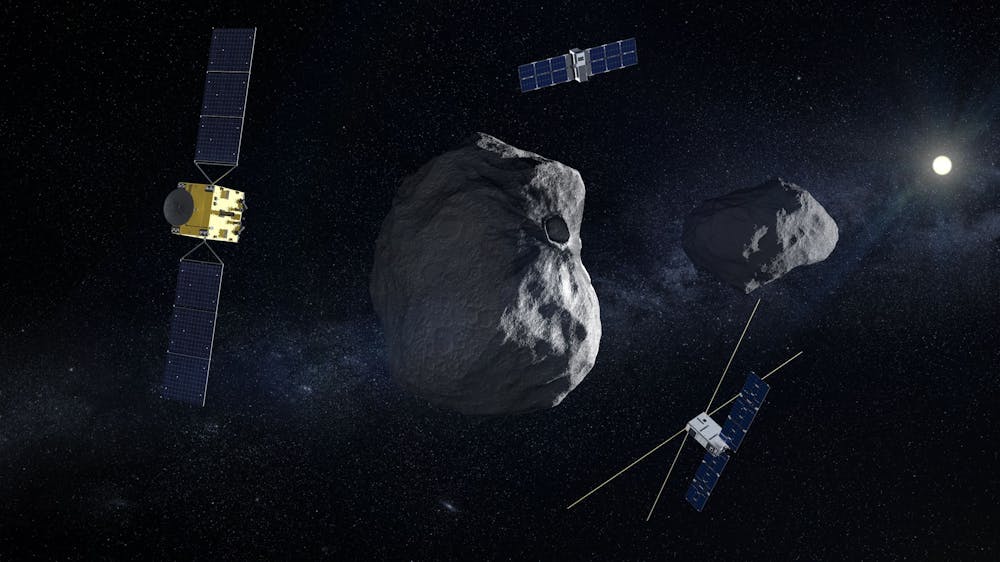
Hera is a mission by the European Space Agency to return to the Didymos-Dimorphos asteroid system that NASA’s DART mission visited in 2022.
But DART didn’t just visit these asteroids, it collided with one of them to test a planetary defense technique called “kinetic impact.” DART hit Dimorphos with such force that it actually changed its orbit.
The kinetic impact technique smashes something into an object in order to alter its path. This could prove useful if humanity ever finds a potentially hazardous object on a collision course with Earth and needs to redirect it.
Hera will launch in October 2024, making its way in late 2026 to Didymos and Dimorphos, where it will study physical properties of the asteroids.
Ali M. Bramson, Assistant Professor of Earth, Atmospheric, and Planetary Sciences, Purdue University
This article is republished from The Conversation under a Creative Commons license. Read the original article.
The National Weather Service forecast for the week expects rain every day, with the exception of a sunny New Year’s Day, but rain is expected that night.
The Lakeport Police Department encourages drivers to check vehicle equipment — from headlights to wiper blades.
If you have not installed new wiper blades on your vehicle since summer, police say to make that a top priority. Most Lake County auto parts stores will install them for free.
If you plan on drinking alcoholic beverages, they also recommend you plan on a sober designated driver.
Law enforcement officers from all county law enforcement agencies will be looking for intoxicated drivers. “Don't make us ruin your fun,” Lakeport Police said.
The California Highway Patrol also is in the midst of a maximum enforcement period for the New Year’s holiday.