 How to resolve AdBlock issue?
News

LAKEPORT, Calif. — A Clearlake couple has welcomed a healthy new baby girl, who has the distinction of being Lake County’s first baby of 2024.
Jaylin Mora-Rivera was born at 10:26 p.m. Monday, Jan. 1, to proud parents Janette Rivera and Gustavo Mora Cueras at Sutter Lakeside Hospital.
The hospital reported that Jaylin weighed 6 pounds, 6 ounces.
Jaylin’s arrival was highly anticipated by big brother Dylan, 5, who has already met his little sister.
Her parents live in Clearlake but chose to give birth at Sutter Lakeside Hospital for a second time due to the care they received with their first child.
Rivera said she is feeling well. About her care, she says, “All the nurses are kind and attentive.”
The family was impressed with the education they received from the delivery team and felt very prepared for the birth of Jaylin.
Their delivery team included Dr. Peter Weiss, Amanda Smith, RN, and Crystal Zepeda, RN.
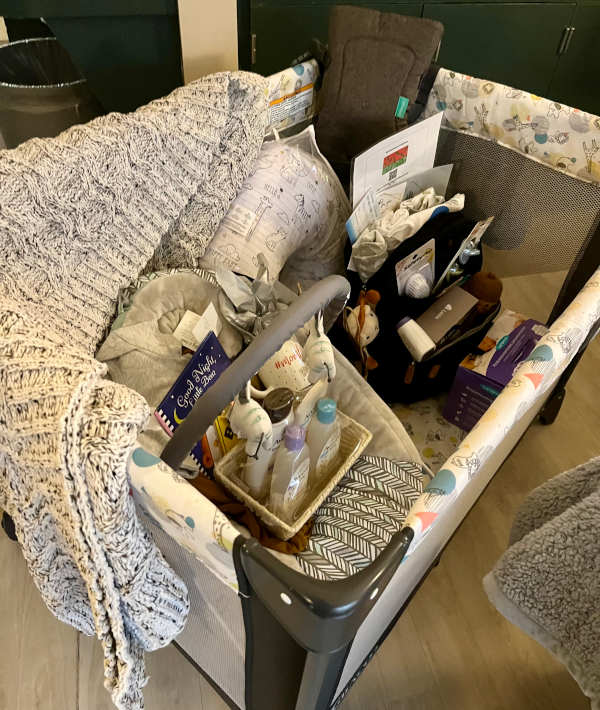
As the first baby of 2024 both at Sutter Lakeside and for all of Lake County, Jaylin and her family will receive a “New Year's Baby Basket.”
This tradition at Sutter Lakeside hospital is arranged by the staff of the Family Birth Center. This year’s basket donations were coordinated by Registered Nurses Clare Tanti and Meagan Gard.
Eleven individuals and organizations donated to this year’s basket, including Pak n Play, diaper bag, boppy pillow, grocery gift cards, a mama pamper package, newborn baby photo session, a staycation at a local Airbnb and many more items.
The 2024 donors included A+H General Store, Brittany Albaum, Darby Designs, Kaitlinn Bour, Lorena Watson, NP, Megan Andrus, Mother-Wise, Oak Clothing Boutique, Serenity Massage, Stefani Re and Sutter Lakeside Hospital.
The couple were much appreciative of the items and the spirit in which they were given.
Rivera is looking forward to enjoying a celebratory meal, bonding with Jaylin and then going home on Wednesday to be with family. For now, her care is continued postpartum by Dr. Brian Truong, Laurie De Leon, RN, and Courtney Taffi, RN.
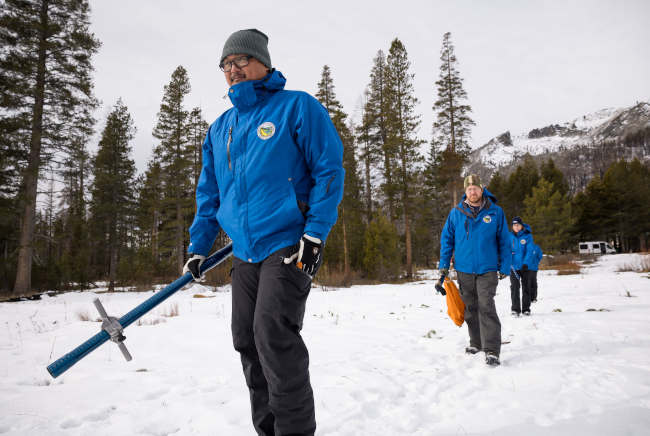
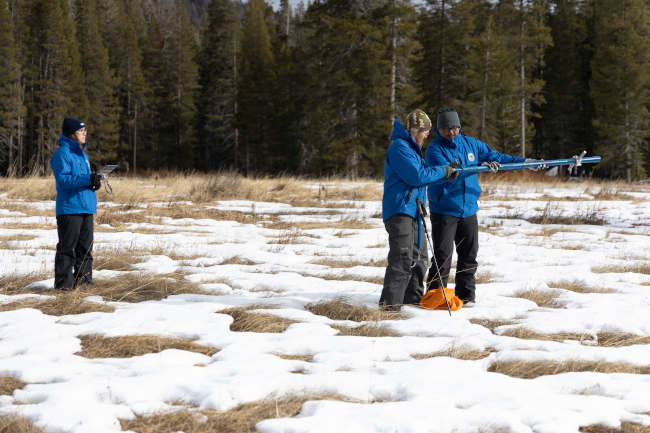
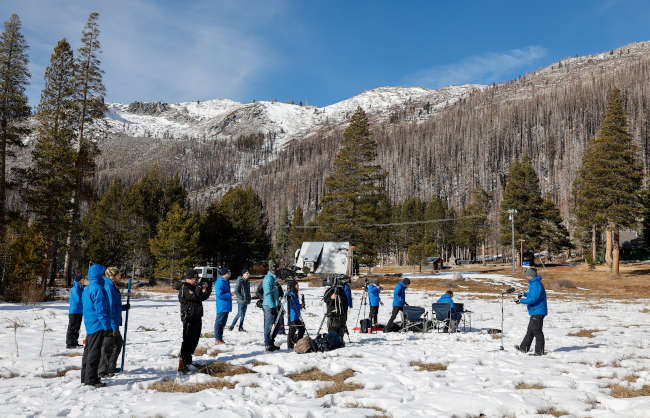
NORTHERN CALIFORNIA — The Department of Water Resources on Tuesday conducted the first snow survey of the season at Phillips Station, finding a sparse snowpack.
The manual survey recorded 7.5 inches of snow depth and a snow water equivalent of 3 inches, which is 30% of average for this location.
The snow water equivalent measures the amount of water contained in the snowpack and is a key component of DWR’s water supply forecast. Statewide the snowpack is 25% of average for this date.
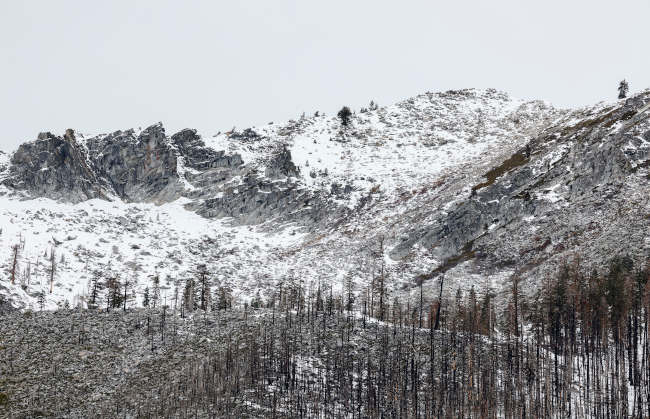
After one of the largest snowpacks on record last season, the start of this water year has been dry despite some recent storms in the last weeks of December that provided a small boost in the snowpack.
While state reservoirs are still above average for this time of year and strong El Niño conditions are present in the Pacific Ocean, the outlook for the rest of the winter remains highly uncertain.
“California saw firsthand last year how historic drought conditions can quickly give way to unprecedented, dangerous flooding,” said DWR Director Karla Nemeth. “Although El Niño does not guarantee an above average water year, California is preparing for the possibility of more extreme storms while increasing our climate resilience for the next drought.”
DWR’s electronic readings from 130 stations placed throughout the state indicate that the statewide snowpack’s snow water equivalent is 2.5 inches, or 25% of average for this date, compared to 185% on this date last year.
“While we are glad the recent storms brought a small boost to the snowpack, the dry fall and below average conditions today shows how fast water conditions can change,” said DWR’s Snow Surveys and Water Supply Forecasting Unit Manager Sean de Guzman. “It’s still far too early to say what kind of water year we will have, and it will be important for Californians to pay attention to their forecasts and conserve water, rain or shine.”
Last year, California experienced climate whiplash when the driest three year-period on record ended with extreme storm events in January and March that caused damage and flooding across the state.
These extreme weather events highlight the need for all Californians to prepare for flood risk. DWR is working with tribal, federal, state, and local partners to provide flood resources and training to communities across the state.
The State-Federal Flood Operations Center, or FOC, has pre-positioned flood fight materials at more locations across the state and is starting this winter with more supplies on hand, including 2.2 million more sandbags.
This fall, DWR coordinated pre-flood season meetings with emergency response agencies across the state and organized 38 flood-fight trainings for city, county, state and tribal agencies to prepare for possible local emergencies.
To prepare for flooding, all Californians should follow three basic steps:
• Be aware of your risk: Know whether your home is downslope of a burn area or in a floodplain; pay attention to weather forecasts; listen to local authorities.
• Be prepared: Always have an emergency evacuation kit ready; be prepared to evacuate early; have a plan for where you will go in an emergency.
• Take action: Subscribe to your local emergency providers to get updated information. If local authorities issue an evacuation order, do not delay, follow local guidelines for evacuation and never attempt to drive through a flooded roadway.
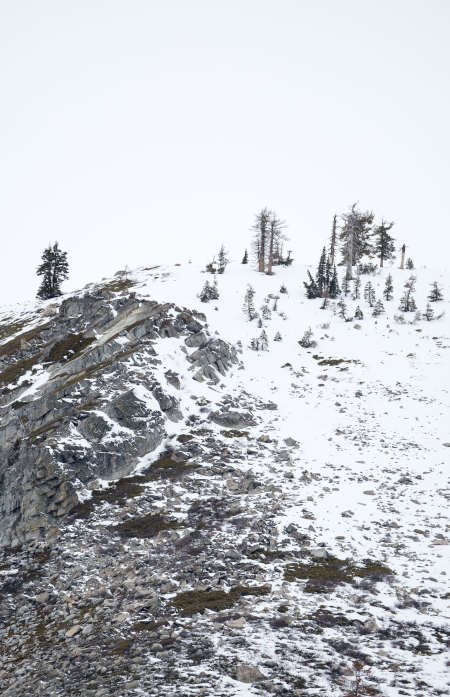
One year ago, the January survey at the Phillips location showed a water content of 177% of average and was followed by a series of damaging atmospheric river storms in January and March that caused flood impacts across the state and produced one of the largest snowpacks on record.
In addition to deploying resources including over 1.9 million sandbags across the state last year, the FOC coordinated a joint state, federal and local response to snowmelt-driven flooding concerns and prepared for the historic snowmelt by providing hydraulic and hydrologic modeling and snowmelt forecasts that allowed agencies to deploy resources, reinforce levees and protect communities.
On average, the Sierra snowpack supplies about 30% of California’s water needs. Its natural ability to store water is why the Sierra snowpack is often referred to as California's “frozen reservoir.”
Data from these snow surveys and forecasts produced by DWR’s Snow Surveys and Water Supply Forecasting Unit are important factors in determining how DWR manages the state’s water resources.
Due to last year’s above average conditions and historic snowpack, a total of 3.5 million acre-feet of water was captured in State Water Project, or SWP, reservoirs.
Lake Oroville, the SWP’s largest reservoir, is currently at 130% of average to date and state water managers are prepared to capture and store as much water as possible.
The National Weather Service’s weather station network showed rainfall totals in inches for the 24-hour period ending at 11:30 p.m. Tuesday as follows:
• Hidden Valley Lake: 0.72.
• Indian Valley Reservoir: 0.53.
• Kelseyville: 0.85.
• Lake Pillsbury: 0.87.
• Lower Lake: 0.59.
• Lyons Valley: 0.54.
• Whispering Pines: 1.16.
The National Weather Service’s forecast synopsis for the North Coast calls for showers to taper off during the day on Wednesday, to be followed by progressively colder storms with lower snowfall from Friday through Sunday, and more precipitation expected beginning early next week.
In Lake County, rain is forecast for much of the rest of the week and into next week.
Snow is possible on Friday and Saturday in the mountains north of Upper Lake and in Cobb beginning on Saturday night.
The forecast also calls for breezy conditions from Wednesday through Saturday.
Daytime temperatures through the week will hover in the high 40s to low 50s, and remain in the 30s at night, dropping to near or below freezing from Friday through Monday nights.
Email Elizabeth Larson at

Nearly three-quarters of high school students do not get enough sleep on school nights, according to the Centers for Disease Control and Prevention.
The National Sleep Foundation recommends that teens sleep for eight to 10 hours per night. But various factors hinder this, including early school start times and shifts in adolescents’ circadian rhythms – the biological internal clock that regulates the sleep-wake cycle and repeats roughly every 24 hours. Healthy sleep is crucial for teens’ physical, cognitive and emotional development. When teens don’t get enough sleep, it can have lifelong impacts. They range from poor mental health to lower attendance and graduation rates.
As a neurologist specializing in sleep disorders, I have studied the profound importance of sleep in optimizing the body and mind. I believe insufficient sleep among adolescents is a public health crisis. This is why I reached out to my local state representative in Pennsylvania, Rep. Jill Cooper, a member of the House Education Committee, in October 2023 and pushed for legislative change. The resulting proposed bill would mandate that middle and high schools start no earlier than 8:15 a.m. by the 2026-27 school year.
While parents, educators and school administrators cannot alter biology, they can change school start times to allow students to obtain sufficient sleep for academic success and physical and mental well-being. In fact, the American Academy of Pediatrics recommends pushing back school start times to 8:30 a.m. or later.
Around the world, school start times vary considerably, from 7 a.m. in Brazil to 9 a.m. in Finland. While I’m not aware of any global dataset or research on the relationship between school start times and academic performance, Finland was ranked No. 2 on the list of best educational systems in the Global Citizens for Human Rights report in 2020. Canada, where the average school day begins at 8:30 a.m., was ranked No. 4.
Sleep and the teenage brain
Parents may notice that their kids, who were once early birds, start to sleep later and later as they hit their teen years. This is not just due to typical teen behavior like playing video games late at night, but rather it’s a biological response.
During adolescence, changes in hormone levels, along with physical and brain maturation, lead to natural shifts in the circadian rhythm. The body tends to delay the release of melatonin, the hormone responsible for bringing on drowsiness at night.
Consequently, teens often find it challenging to fall asleep early, leading to a later bedtime. This delayed circadian rhythm also results in a preference for waking up later in the morning. These changes clash with societal and cultural expectations such as early school start times, often contributing to sleep deprivation among teenagers.
More than 80% of public middle and high schools across the United States start before 8:30 a.m., with 42% starting before 8 and 10% before 7:30. Consequently, bus pickup for some children can be as early as 5 a.m. in some districts. What follow are four negative outcomes associated with early school start times.
Hindered academic success
Numerous studies have linked early school start times to poorer performance on academic tests.
One study looked at school start times, graduation rates and attendance rates for 30,000 students in 29 high schools across seven states. It found a significant improvement in attendance rates, from 90% to 93%, and graduation rates, from 80% to 90%, four years after delaying school start times to 8:30.
Sleep deprivation has been shown to worsen memory, learning ability, attention span, creativity, school attendance and first-period tardiness – a perfect storm for poor academic performance.
Poorer mental health
A recent advisory from the U.S. surgeon general raised the alarm on the harmful impacts of social media on youth mental health. Researchers have unearthed mounds of evidence on the negative effects, including poor body image. In these discussions, however, a simple yet powerful solution for improving mental well-being is often overlooked – the profound impact of sleep.
During REM sleep – or the dream state – our memories consolidate and we process emotions. Insufficient sleep increases the risk of depression, anxiety and suicide among adolescents. One study showed that for every extra hour of sleep among adolescents, their risk of suicide decreased by 11%.
Impaired physical health and social behavior
Sleep is fundamental for physical well-being. For both children and adults, it plays a key role in essential bodily functions. During slow-wave sleep – or deep sleep – our bodies restore themselves: Our immune system strengthens to keep us healthy. And our waste-clearing glymphatic system eradicates neurotoxic proteins, which are linked to diseases like Alzheimer’s.
Sleep deprivation is associated with higher rates of obesity, diabetes, cardiovascular problems, chronic health conditions, physical injuries and weakened immune function. Sleep-deprived students are more likely to fall asleep when sedentary, such as when driving a car. Motor vehicle accidents related to driving while drowsy are especially prevalent among teen drivers.
Sleep-deprived students are also more likely to demonstrate aggression, struggle with social communication and engage in risk-taking behaviors. One study found that the amount of sleep that high school students get is directly related to their engagement in unsafe behaviors, such as substance abuse, risky driving, aggressive behavior and tendency toward self-harm.
An economic cost
The economic ramifications of this crisis may not be immediately obvious, but they are undeniable. Contrary to concerns that delayed school start times might increase transportation costs by changing bus schedules, a 2017 study conducted by the nonprofit RAND Corp. found that the economic benefits far outweigh the expenses.
The study showed that a universal shift to 8:30 a.m. school start times would result in an $8.6 billion gain in the U.S. economy over two years. Investing in delayed school start times, therefore, isn’t a drain on resources. Instead, it contributes to a healthier future for generations to come.
Joanna Fong-Isariyawongse, Associate Professor of Neurology, University of Pittsburgh
This article is republished from The Conversation under a Creative Commons license. Read the original article.
The council will meet at 6 p.m. Thursday, Jan. 4, in the council chambers at Clearlake City Hall, 14050 Olympic Drive.
The meeting will be broadcast live on the city's YouTube channel or the Lake County PEGTV YouTube Channel.
Community members also can participate via Zoom or can attend in person. The webinar ID is 843 9850 4235.
The meeting also can be accessed via One tap mobile at 16694449171,,84398504235# or by dialing 1 669 444 9171.
The agenda can be found here.
Comments and questions can be submitted in writing for City Council consideration by sending them to City Clerk Melissa Swanson at
To give the council adequate time to review your questions and comments, please submit your written comments before 4 p.m. Thursday, Jan. 4.
At its Dec. 7 regular meeting, the council unanimously appointed Councilmember David Claffey as the mayor for 2024. Councilmember Joyce Overton was appointed vice mayor.
Claffey takes over the mayor’s seat for the first time on Thursday, and will make a presentation.
The council also will offer a proclamation declaring January 2024 as Human Trafficking Awareness Month and present certificates of appreciation for the annual Breakfast with Santa volunteers.
In council business, the council will consider appointing members as representatives to represent and vote on behalf of the city at the CalCities, Redwood Empire division business meetings, which take place on a quarterly basis, and represent the city and vote at the division legislative committee meetings.
In addition, the council will consider Mayor Claffey’s proposed appointments to various committees, boards and commissions for 2024.
The council also will hold a closed session with legal counsel to discuss a liability claim filed by June Linet Cejavasquez and two cases of anticipated litigation.
Email Elizabeth Larson at
On Jan. 1, SB 673, which created the new “Ebony Alert,” went into effect.
The legislation was authored by Sen. Steven Bradford (D-Gardena) and sponsored by the NAACP California Hawaii State Conference.
It allows law enforcement agencies to request that the California Highway Patrol activate an alert for Black youth — including young women and girls between 12 to 25 years of age — who are reported missing under unexplained or suspicious circumstances, at risk, developmentally disabled, cognitively impaired, or who have been abducted, the CHP reported.
Bradford’s office said that, with the bill becoming law, California will become the first state in the nation to enact a law to combat the crisis of missing Black youth and young Black women.
While Black Americans make up 13% of the nation’s population, Bradford said Black children make up about 38% of all missing child cases and they receive less media attention.
In addition, Bradford’s office said missing young Black women are often subjected to human trafficking. A Congressional Black Caucus Foundation report on human trafficking also found 40% of sex trafficking victims nationally were identified as Black women.
In a support statement for the legislation, Oakland City Councilmember Treva Reid pointed to
Oakland Police Department data that shows that Black people make up 22% of Oakland’s population yet account for about 60% of reported missing persons cases.
The Black and Missing Foundation reported that California ranks in the top states where people of color are disappearing at an alarming rate.
“It is important to continue to raise awareness about this issue and advocate for policies that prioritize finding missing people of color. We must ensure that every missing person is given the same amount of attention and resources, regardless of their race or socioeconomic status,” the foundation said.
Berry Accius, founder and chief executive officer of Voice of the Youth, said of the new legislation, “The Ebony Alert will be a game changer for our communities and a necessary tool to bring missing Black girls and women home.”
Bradford’s office said that, unlike the Amber Alert — which can only be used for children younger than age 18 — the Ebony Alert is broader and can be used to help locate young people between the ages of 12 and 25, including those that are considered runaways and those that are subject to human trafficking.
However, that broader aspect of the Ebony Alert was noted as a concern by Gov. Gavin Newsom, who signed the bill into law on Oct. 8.
In his signing message, the governor thanked the Legislature for addressing the “well documented disproportionality in the number of children of color who go missing every year.”
However, while he was signing the bill, Newsom added, “my Administration has broader concerns that were clearly expressed to the author throughout the process. The criteria in this bill are expansive and do not align with the criteria in existing alerts such as the Amber Alert, Endangered Missing Advisory, Feather Alert and Silver Alert. Our emergency alert system is dependent on people not being fatigued by it and thus ignoring it. Our challenge is to achieve balance between the imperative to notify the public quickly in cases of missing persons or dangerous situations, but to not desensitize that same public by sending too many notifications.”
In response, Newsom said he’s directed the CHP and the Office of Emergency Services to propose reforms through the budget “to ensure consistency for all of California's alert programs.”
The Ebony Alert joins a suite of other alerts managed by the CHP.
In 2022, two new alerts were approved: The Feather Alert, meant to help locate missing Indigenous people, and the California Statewide Yellow Alert Program, introduced through Assembly Bill 1732, which the CHP said is activated when a person has been killed due to a hit-and-run incident and the law enforcement agency has specified information concerning the suspect or the suspect’s vehicle.
Other alerts include:
• The AMBER Alert — which stands for America’s Missing: Broadcast Emergency Response — that’s been used since 2002 when children age 17 or younger have been abducted;
• The Blue Alert, approved in 2011, that notifies the public when a suspect in the assault or killing of a police officer remains at large and the search is active.
• The Silver Alert, used since 2013 when elderly, developmentally or cognitively-impaired persons are missing and determined to be at-risk.
• The general endangered missing advisory is used when an individual is missing under unexplained or suspicious, and is believed to be in danger due to issues with age, physical and mental health issues, weather, being with a potentially dangerous person or other circumstances.
Email Elizabeth Larson at