How to resolve AdBlock issue?
Refresh this page
How to resolve AdBlock issue?
Refresh this page
Lake County News,California
  • Home
    • Registration Form
  • News
    • Education
    • Veterans
    • Community
      • Obituaries
      • Letters
      • Commentary
    • Police Logs
    • Business
    • Recreation
    • Health
    • Religion
    • Legals
    • Arts & Life
    • Regional
  • Calendar
  • Contact us
    • FAQs
    • Phones, E-Mail
    • Subscribe
  • Advertise Here
  • Login

News

Estate Planning: Keeping financial assets current

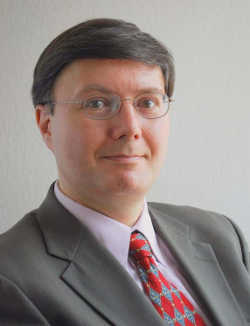
Dennis Fordham. Courtesy photo.
People often think that establishing a living trust and signing a power of attorney is all that they need to do to control their assets in the event of incapacity and eventual death. This can be a costly misunderstanding.

It is necessary to retitle assets to the living trust and to update designation of death beneficiaries to pay on death, or “POD,” bank accounts and transfer on death, or TOD, brokerage accounts or else, preferably, retitle such assets to the trust (except retirement accounts). Let’s discuss some scenarios.

Consider a settlor of a living trust who declares various brokerage accounts to be trust assets on the trust asset schedule. These accounts may have designated death beneficiaries named on old death beneficiary forms who are no longer the owner’s intended death beneficiaries.

Unless the account owner either retitles these accounts to her living trust or signs a new designation of death beneficiary form these accounts will pass according to the old death beneficiary form; not what the settlor intended when she declared these on the trust asset schedule.

Next, consider a settlor of a trust who owns an interest in real property in California or elsewhere in the US but does not retitle the ownership interest to his or her living trust. An unintended and undesirable outcome is possible.

That is, if the property is held in joint tenancy with a co-owner, usually a spouse, then the surviving joint tenant (spouse) will inherit the deceased joint tenant’s interest, depending on who dies first. Such joint tenancy scenarios are commonplace between spouses and domestic partners, and less common between parent and child.

However, when such relationships involve step children one or the other joint tenant may wish to sever the joint tenancy by transferring their interest into a separate living trust in order to ensure that their own children eventually inherit their interest in such property.

Moreover, if the ownership interest in real property is not in joint tenancy but is held individually, then such ownership risks the possibility of an unnecessary probate.

For example, consider a couple that creates a joint living trust and transfers their co-owned real properties into the living trust, but omits the husband’s interest in his sole and separate real property that the husband inherited or purchased prior to the marriage.

When the husband dies the surviving spouse will need to probate the husband’s will because the property is not the deceased husband’s primary residence; which in California now avoids probate through a petition to determine succession to a decedent’s primary residence.

Typically such a probate will result in the husband’s assets outside of the trust being transferred into the husband’s living trust, for further administration.

In such a situation, the husband would have done well to either create a separate trust for the husband’s sole and separate property that he wants to keep separate from the assets in the husband and wife joint trust because he intends to leave the asset (or its proceeds) to different beneficiaries.

Furthermore, bank and brokerage accounts excluding retirement accounts which can never be owned by a trust, are usually best held inside of a trust to be managed by the trustee if and when the account owner is incapacitated. Otherwise, the account owner is relying on his or her agent under a power of attorney (if any) to manage such non assets.

Unless the power of attorney is current, appropriately drafted, and acceptable to the financial institution this situation might lead to otherwise avoidable court proceedings but for the trust not owning these assets.

The reasons why assets are not retitled to the trust are varied, but include the following: the asset was refinanced and taken out of the trust; new assets were purchased outside of the trust; or the asset was deliberately kept or inadvertently left outside the trust. Whatever the reason, it is best to be aware of the situation and act appropriately.

The foregoing is not legal advice. Consult a qualified estate planning attorney for guidance. 

Dennis A. Fordham, Attorney, is a State Bar-Certified Specialist in estate planning, probate and trust law. His office is at 870 S. Main St., Lakeport, Calif. He can be reached at This email address is being protected from spambots. You need JavaScript enabled to view it. and 707-263-3235.  

Space News: Google’s proposed data center in orbit will face issues with space debris in an already crowded orbit

This rendering shows satellites orbiting Earth. yucelyilmaz/iStock via Getty Images

The rapid expansion of artificial intelligence and cloud services has led to a massive demand for computing power. The surge has strained data infrastructure, which requires lots of electricity to operate. A single, medium-sized data center here on Earth can consume enough electricity to power about 16,500 homes, with even larger facilities using as much as a small city.

Over the past few years, tech leaders have increasingly advocated for space-based AI infrastructure as a way to address the power requirements of data centers.

In space, sunshine – which solar panels can convert into electricity – is abundant and reliable. On Nov. 4, 2025, Google unveiled Project Suncatcher, a bold proposal to launch an 81-satellite constellation into low Earth orbit. It plans to use the constellation to harvest sunlight to power the next generation of AI data centers in space. So, instead of beaming power back to Earth, the constellation would beam data back to Earth.

For example, if you asked a chatbot how to bake sourdough bread, instead of firing up a data center in Virginia to craft a response, your query would be beamed up to the constellation in space, processed by chips running purely on solar energy, and the recipe sent back down to your device. Doing so would mean leaving the substantial heat generated behind in the cold vacuum of space.

As a technology entrepreneur, I applaud Google’s ambitious plan. But as a space scientist, I predict that the company will soon have to reckon with a growing problem: space debris.

The mathematics of disaster

Space debris – the collection of defunct human-made objects in Earth’s orbit – is already affecting space agencies, companies and astronauts. This debris includes large pieces, such as spent rocket stages and dead satellites, as well as tiny flecks of paint and other fragments from discontinued satellites.

Space debris travels at hypersonic speeds of approximately 17,500 miles per hour (28,000 km/h) in low Earth orbit. At this speed, colliding with a piece of debris the size of a blueberry would feel like being hit by a falling anvil.

Satellite breakups and anti-satellite tests have created an alarming amount of debris, a crisis now exacerbated by the rapid expansion of commercial constellations such as SpaceX’s Starlink. The Starlink network has more than 7,500 satellites, which provide global high-speed internet.

The U.S. Space Force actively tracks over 40,000 objects larger than a softball using ground-based radar and optical telescopes. However, this number represents less than 1% of the lethal objects in orbit. The majority are too small for these telescopes to reliably identify and track.

In November 2025, three Chinese astronauts aboard the Tiangong space station were forced to delay their return to Earth because their capsule had been struck by a piece of space debris. Back in 2018, a similar incident on the International Space Station challenged relations between the United States and Russia, as Russian media speculated that a NASA astronaut may have deliberately sabotaged the station.

The orbital shell Google’s project targets – a Sun-synchronous orbit approximately 400 miles (650 kilometers) above Earth – is a prime location for uninterrupted solar energy. At this orbit, the spacecraft’s solar arrays will always be in direct sunshine, where they can generate electricity to power the onboard AI payload. But for this reason, Sun-synchronous orbit is also the single most congested highway in low Earth orbit, and objects in this orbit are the most likely to collide with other satellites or debris.

As new objects arrive and existing objects break apart, low Earth orbit could approach Kessler syndrome. In this theory, once the number of objects in low Earth orbit exceeds a critical threshold, collisions between objects generate a cascade of new debris. Eventually, this cascade of collisions could render certain orbits entirely unusable.

Implications for Project Suncatcher

Project Suncatcher proposes a cluster of satellites carrying large solar panels. They would fly with a radius of just one kilometer, each node spaced less than 200 meters apart. To put that in perspective, imagine a racetrack roughly the size of the Daytona International Speedway, where 81 cars race at 17,500 miles per hour – while separated by gaps about the distance you need to safely brake on the highway.

This ultradense formation is necessary for the satellites to transmit data to each other. The constellation splits complex AI workloads across all its 81 units, enabling them to “think” and process data simultaneously as a single, massive, distributed brain. Google is partnering with a space company to launch two prototype satellites by early 2027 to validate the hardware.

But in the vacuum of space, flying in formation is a constant battle against physics. While the atmosphere in low Earth orbit is incredibly thin, it is not empty. Sparse air particles create orbital drag on satellites – this force pushes against the spacecraft, slowing it down and forcing it to drop in altitude. Satellites with large surface areas have more issues with drag, as they can act like a sail catching the wind.

To add to this complexity, streams of particles and magnetic fields from the Sun – known as space weather – can cause the density of air particles in low Earth orbit to fluctuate in unpredictable ways. These fluctuations directly affect orbital drag.

When satellites are spaced less than 200 meters apart, the margin for error evaporates. A single impact could not only destroy one satellite but send it blasting into its neighbors, triggering a cascade that could wipe out the entire cluster and randomly scatter millions of new pieces of debris into an orbit that is already a minefield.

The importance of active avoidance

To prevent crashes and cascades, satellite companies could adopt a leave no trace standard, which means designing satellites that do not fragment, release debris or endanger their neighbors, and that can be safely removed from orbit. For a constellation as dense and intricate as Suncatcher, meeting this standard might require equipping the satellites with “reflexes” that autonomously detect and dance through a debris field. Suncatcher’s current design doesn’t include these active avoidance capabilities.

In the first six months of 2025 alone, SpaceX’s Starlink constellation performed a staggering 144,404 collision-avoidance maneuvers to dodge debris and other spacecraft. Similarly, Suncatcher would likely encounter debris larger than a grain of sand every five seconds.

Today’s object-tracking infrastructure is generally limited to debris larger than a softball, leaving millions of smaller debris pieces effectively invisible to satellite operators. Future constellations will need an onboard detection system that can actively spot these smaller threats and maneuver the satellite autonomously in real time.

Equipping Suncatcher with active collision avoidance capabilities would be an engineering feat. Because of the tight spacing, the constellation would need to respond as a single entity. Satellites would need to reposition in concert, similar to a synchronized flock of birds. Each satellite would need to react to the slightest shift of its neighbor.

Detecting space debris in orbit can help prevent collisions.

Paying rent for the orbit

Technological solutions, however, can go only so far. In September 2022, the Federal Communications Commission created a rule requiring satellite operators to remove their spacecraft from orbit within five years of the mission’s completion. This typically involves a controlled de-orbit maneuver. Operators must now reserve enough fuel to fire the thrusters at the end of the mission to lower the satellite’s altitude, until atmospheric drag takes over and the spacecraft burns up in the atmosphere.

However, the rule does not address the debris already in space, nor any future debris, from accidents or mishaps. To tackle these issues, some policymakers have proposed a use-tax for space debris removal.

A use-tax or orbital-use fee would charge satellite operators a levy based on the orbital stress their constellation imposes, much like larger or heavier vehicles paying greater fees to use public roads. These funds would finance active debris removal missions, which capture and remove the most dangerous pieces of junk.

Avoiding collisions is a temporary technical fix, not a long-term solution to the space debris problem. As some companies look to space as a new home for data centers, and others continue to send satellite constellations into orbit, new policies and active debris removal programs can help keep low Earth orbit open for business.The Conversation

Mojtaba Akhavan-Tafti, Associate Research Scientist, University of Michigan

This article is republished from The Conversation under a Creative Commons license. Read the original article.
Project to improve pedestrian safety and traffic calming on Highway 20 planned in 2026

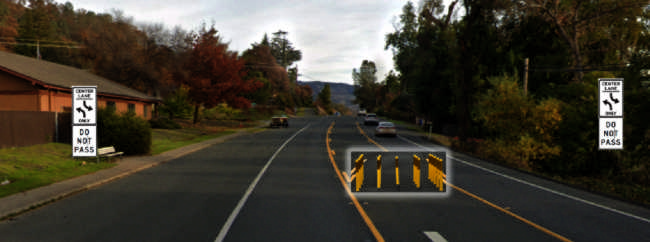
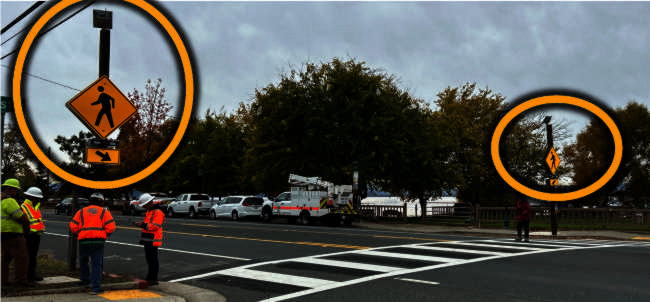
This photo and graphic mockup show flexible plastic posts that will be installed in the center turn lanes along Highway 20 on the Northshore in Lake County, California, to discourage the illegal use of the center turn lane as a passing lane. Image courtesy of Caltrans.

LAKE COUNTY, Calif. — Caltrans said a project to improve pedestrian safety and install traffic calming features on a 30-mile stretch of Highway 20 will begin in the summer.

The Route 20 Pedestrian Safety Improvement Project will include Blue Lakes, Upper Lake, Robinson Rancheria, Nice, Lucerne, Glenhaven and Clearlake Oaks, Caltrans reported.

“Given the highway’s significance in connecting residents, visitors, and east-west travelers between U.S. 101 and Interstate 5, prioritizing safety is vital for all road users including pedestrians, cyclists, and transit users,” Caltrans said in a statement issued on the project.

“The project is part of a state funded pilot program to deliver cost-effective, quick build safety enhancements. The funding is not associated with SB1 and individual projects do not require approval from the California Transportation Commission,” Manny Machado, public information officer for Caltrans District 1, which includes Lake and Mendocino counties, told Lake County News.

Machado said the project will focus on a number of safety enhancements. 

They include flexible plastic posts installed in the center turn lanes to discourage the illegal use of the center turn lane as a passing lane.

There will be three new crosswalks with pedestrian activated rectangular rapid flashing beacons in Nice at Collier Avenue, between Howard Avenue and Benton Avenue, and at the east end of Manzanita Drive in Nice, and one in Glenhaven at Spring Road.

There also will be two new crosswalks in Lucerne at 13th Avenue and Country Club Drive.

Striping changes to enhance intersections will take place at Pomo Way in Robinson Rancheria; in Nice at Collier Avenue, Springe Drive and Manzanita Drive — both east and west ends; and at Island Drive in Clearlake Oaks.

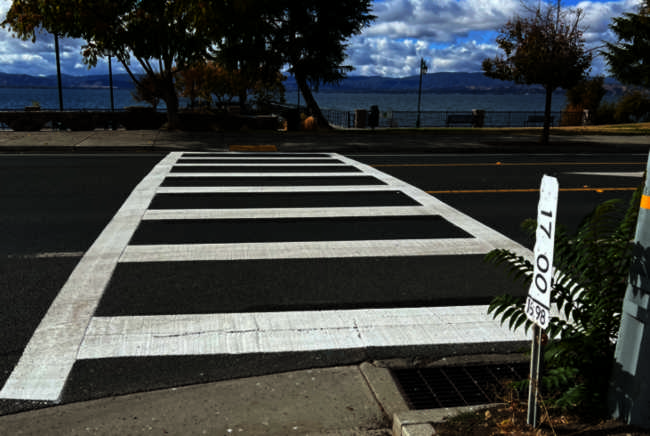
Two new crosswalks — like this one in Lucerne, California — will be installed at other locations in the town, specifically, at 13th Avenue and Country Club Drive. Image courtesy of Caltrans.


Additional pedestrian warning signs and no passing signs also will be installed in the project area, Machado said.

Regarding what led to the project, Machado said it was initiated “to address community input regarding passing in the center turn lanes, aggressive driving, and pedestrian safety enhancements.”

He said the project is the third of three “quick build proactive safety projects” along the Northshore in response to community input.

“The prior two quick build safety projects were constructed in 2024 and 2025 and upgraded 36 crosswalks and installed new rectangular rapid flashing beacons at 17 of those crosswalks. A separate project is also under development to install a pedestrian hybrid beacon and a sidewalk realignment at the school crosswalk at High Valley Road in Clearlake Oaks,” he explained. 

The construction contract has not yet been advertised or awarded, Machado said.

Machado said construction is expected to start in the summer of 2026 and last up to six months.

Email Elizabeth Larson at This email address is being protected from spambots. You need JavaScript enabled to view it.. Follow her on Twitter, @ERLarson, and on Bluesky, @erlarson.bsky.social. Find Lake County News on the following platforms: Facebook, @LakeCoNews; X, @LakeCoNews; Threads, @lakeconews, and on Bluesky, @lakeconews.bsky.social. 

The project will include four new crosswalks with pedestrian activated rectangular rapid flashing beacons — three in Nice and one in Glenhaven. This image shows a crosswalk with these beacons in Lucerne, California. Image courtesy of Caltrans.

ERTH seeks applicants for two town council vacancies; deadline to apply is Dec. 28

LAKE COUNTY, Calif. — The East Region Town Hall, or ERTH — a municipal council serving the Eastern Region of District 3 — has openings for two council members.

The purpose of ERTH is to increase the participation of the residents of the East Region of supervisorial District 3 in decisions affecting the community. 

ERTH council members are selected by the Lake County Board of Supervisors and serve a term of two years — two of these council seats expire Jan. 1, 2026, and are open for applications.

Council applicants should meet the following criteria:

• Be a registered voter in the county of Lake.
• Have attended at least two ERTH meetings in the past year.
• Reside within the ERTH boundaries.

The East Region consists of zip codes 95443, 95423 and the unincorporated areas of 95422 and 95424 within the District 3 boundaries. This includes Glenhaven, Clearlake Oaks, Spring Valley, Double Eagle, High Valley, Elem Colony and Clearlake Peninsula.

Meetings are held the first Wednesday of each month from 4 to 5:30 p.m. at the Moose Lodge in Clearlake Oaks.

Applications are available from the Clerk of the Board on the county website at https://portal.laserfiche.com/b1526/forms/GKA97 and will be accepted through Dec. 28 with tentative selection at the BOS meeting on January 6th.

If you do submit an application, please email This email address is being protected from spambots. You need JavaScript enabled to view it.. They will keep track of any applications to ensure that all are submitted to the Board of Supervisors for review and selection.

ERTH Council members are Chair Maria Kann, Vice Chair Angela Amaral, Holly Harris, Denise Loustalot and Sterling Wellman.

Clearlake Animal Control: ‘Lola’ and the dogs

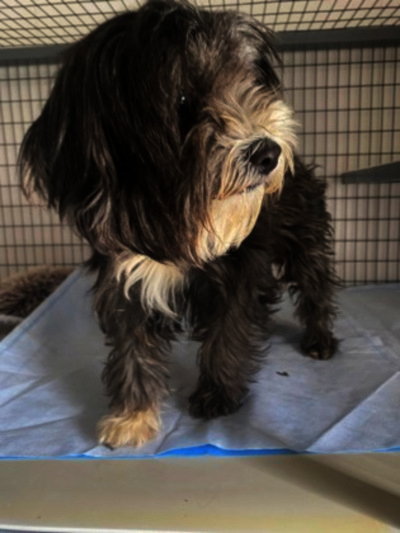
“Lola.” Photo courtesy of Clearlake Animal Control.


CLEARLAKE, Calif. — Clearlake Animal Control has many new dogs and puppies waiting to be welcomed into new homes this week.

The shelter has 61 adoptable dogs listed on its website.

This week’s dogs include “Lola,” a female Shih Tzu with a black and white coat.

The shelter is located at 6820 Old Highway 53. It’s open from 9 a.m. to 6 p.m. Tuesday through Saturday. 

For more information, call the shelter at 707-762-6227, email This email address is being protected from spambots. You need JavaScript enabled to view it. or visit Clearlake’s adoptable dogs here.

This week’s adoptable dogs are featured below.

Email Elizabeth Larson at This email address is being protected from spambots. You need JavaScript enabled to view it.. Follow her on Twitter, @ERLarson, and on Bluesky, @erlarson.bsky.social. Find Lake County News on the following platforms: Facebook, @LakeCoNews; X, @LakeCoNews; Threads, @lakeconews, and on Bluesky, @lakeconews.bsky.social. 

Flu shots: how scientists around the world cooperate to choose the strains to vaccinate against each year


Twice a year, 40 scientists gather together for five days to decide what strains of influenza to vaccinate against for the next flu season. It takes around six months to prepare the vaccine – which usually includes protection against three different strains of flu. So in February, the group’s decision affects the northern hemisphere’s flu season, and in September, it’s about the southern hemisphere.

Europe and the US are heading into a flu season that some are warning could be particularly severe this winter. While even as summer approaches in Australia, the country is still registering high numbers of cases after a record-breaking flu season earlier in the year.

So how does the process of deciding on a flu vaccine each year actually work? And does what happens in the southern hemisphere influence the way the virus circulates in the northern hemisphere?

In this episode ofThe Conversation Weekly podcast, we speak to Ian Barr, deputy director for the WHO Collaborating Centre for Reference and Research on Influenza, based at the Peter Doherty Institute for Infection and Immunity, part of the University of Melbourne. Barr is one of those 40 scientists who attend the meetings to decide what strains to focus vaccination efforts on.

After a tour around his lab, Barr explains how the different parts of the global flu monitoring system cooperate – and why it can be misleading to think that what happens in the southern hemisphere influences the northern hemisphere, and vice versa. Barr says that might be the case in some years – including in 2025 – but in “other years, I think it’s less clear that the viruses are coming from south to north … they may come from other places that have had unseasonable outbreaks during the summer or autumn.”

Listen to the interview with Ian Barr on The Conversation Weekly podcast.

This episode of The Conversation Weekly was written and produced by Gemma Ware and Mend Mariwany with assistance from Katie Flood. Mixing by Michelle Macklem and theme music by Neeta Sarl.

Newsclip in this episode from 7News Australia.

Listen to The Conversation Weekly via any of the apps listed above, download it directly via our RSS feed or find out how else to listen here. A transcript of this episode is available via the Apple Podcasts or Spotify apps.The Conversation

Gemma Ware, Host, The Conversation Weekly Podcast, The Conversation

This article is republished from The Conversation under a Creative Commons license. Read the original article.
  • 48
  • 49
  • 50
  • 51
  • 52
  • 53
  • 54
  • 55
  • 56
  • 57

Community

  • Lake County Wine Alliance offers sponsor update; beneficiary applications open 

  • Mendocino National Forest announces seasonal hiring for upcoming field season

Public Safety

  • Lakeport Police logs: Thursday, Jan. 15

  • Lakeport Police logs: Wednesday, Jan. 14

Education

  • Woodland Community College receives maximum eight-year reaffirmation of accreditation from ACCJC

  • SNHU announces Fall 2025 President's List

Health

  • California ranks 24th in America’s Health Rankings Annual Report from United Health Foundation

  • Healthy blood donors especially vital during active flu season

Business

  • Two Lake County Mediacom employees earn company’s top service awards

  • Redwood Credit Union launches holiday gift and porch-to-pantry food drives

Obituaries

  • Rufino ‘Ray’ Pato

  • Patty Lee Smith

Opinion & Letters

  • The benefits of music for students

  • How to ease the burden of high electric bills

Veterans

  • CalVet and CSU Long Beach team up to improve data collection related to veteran suicides

  • A ‘Big Step Forward’ for Gulf War Veterans

Recreation

  • Wet weather trail closure in effect on Upper Lake Ranger District

  • Mendocino National Forest seeking public input on OHV grant applications

  • State Parks announces 2026 Anderson Marsh nature walk schedule 

  • BLM lifts seasonal fire restrictions in central California

Religion

  • Kelseyville Presbyterian to host Ash Wednesday service and Lenten dinner Feb. 18

  • Kelseyville Presbyterian Church to hold ‘Longest Night’ service Dec. 21

Arts & Life

  • Auditions announced for original musical ‘Even In Shadow’ set for March 21 and 28

  • ‘The Rip’ action heist; ‘Steal’ grounded in a crime thriller

Government & Politics

  • Lake County Democrats issue endorsements in local races for the June California Primary

  • County negotiates money-saving power purchase agreement

Legals

  • March 3 hearing on ordinance amending code for commercial cannabis uses

  • Feb. 12 public hearing on resolution to establish standards for agricultural roads

How to resolve AdBlock issue?
Refresh this page