How to resolve AdBlock issue?
Refresh this page
How to resolve AdBlock issue?

Refresh this page
Lake County News,California
  • Home
    • Registration Form
  • News
    • Education
    • Veterans
    • Community
      • Obituaries
      • Letters
      • Commentary
    • Police Logs
    • Business
    • Recreation
    • Health
    • Religion
    • Legals
    • Arts & Life
    • Regional
  • Calendar
  • Contact us
    • FAQs
    • Phones, E-Mail
    • Subscribe
  • Advertise Here
  • Login

News

Helping Paws: A new lineup of dogs

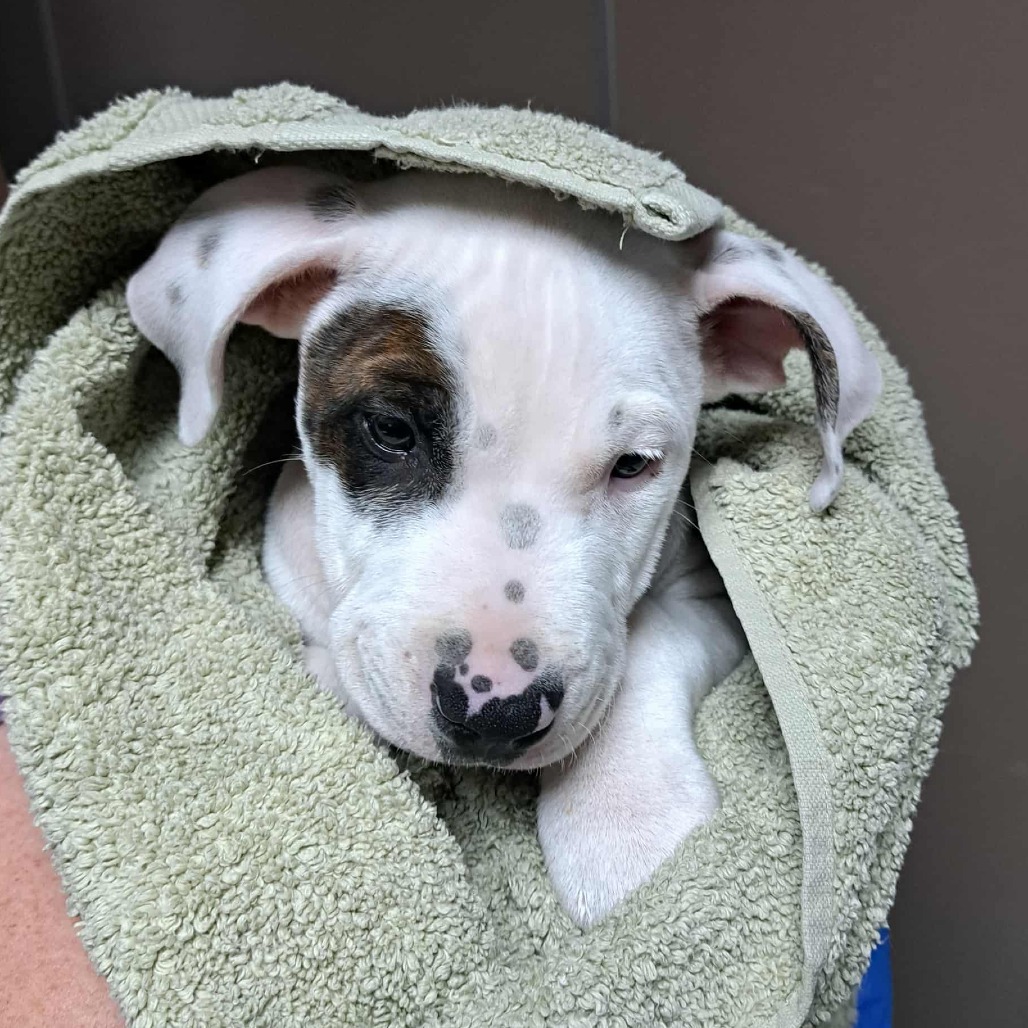
LAKE COUNTY, Calif. — Lake County Animal Care and Control has a group of dogs this week waiting for their new homes.

The dogs available for adoption this week include mixes of cattle dog, German shepherd, Labrador Retriever, pit bull terrier, terrier and shepherd.

Dogs that are adopted from Lake County Animal Care and Control are either neutered or spayed, microchipped and, if old enough, given a rabies shot and county license before being released to their new owner. License fees do not apply to residents of the cities of Lakeport or Clearlake.

Those animals shown on this page at the Lake County Animal Care and Control shelter have been cleared for adoption.

Call Lake County Animal Care and Control at 707-263-0278 or visit the shelter online for information on visiting or adopting.

The shelter is located at 4949 Helbush in Lakeport.

Email Elizabeth Larson at This email address is being protected from spambots. You need JavaScript enabled to view it.. Follow her on Twitter, @ERLarson, and on Bluesky, @erlarson.bsky.social. Find Lake County News on the following platforms: Facebook, @LakeCoNews; X, @LakeCoNews; Threads, @lakeconews, and on Bluesky, @lakeconews.bsky.social. 


Kennel#27 Ziggy's preview photo

Kennel#27 Ziggy

Kennel#20 Duke's preview photo
Kennel#20 Duke

Kennel#11(Little Momma)'s preview photo
Kennel#11(Little Momma)

Kennel#17 Sugar's preview photo
Kennel#17 Sugar

Kennel#8 Dash's preview photo
Kennel#8 Dash

Kennel#34 Pawla's preview photo
Kennel#34 Pawla

Kennel#16 (Bernard)'s preview photo
Kennel#16 (Bernard)

Kennel#9 Roxie's preview photo
Kennel#9 Roxie

Kennel#10 Bally's preview photo
Kennel#10 Bally

Kennel#24 Amber's preview photo
Kennel#24 Amber
 
Kennel#14 Chief's preview photo
Kennel#14 Chief

Kennel#28 Freya's preview photo
Kennel#28 Freya

Kennel#21(Brother)'s preview photo
Kennel#21(Brother)

Kennel#30(Sista)'s preview photo
Kennel#30(Sista)

Kennel#6 Tallow's preview photo
Kennel#6 Tallow

Kennel#18 Rex's preview photo
Kennel#18 Rex

Kennel#12 Shylah's preview photo
Kennel#12 Shylah

Kennel#7 Koda's preview photo
Kennel#7 Koda

Kennel#19 Timmy's preview photo
Kennel#19 Timmy

Kennel#33's preview photo
Kennel#33

Kennel#26's preview photo
Kennel#26


Writing builds resilience by changing your brain, helping you face everyday challenges

Writing is a way of thinking and doing. AscentXmedia/iStock via Getty Images Plus

Ordinary and universal, the act of writing changes the brain. From dashing off a heated text message to composing an op-ed, writing allows you to, at once, name your pain and create distance from it. Writing can shift your mental state from overwhelm and despair to grounded clarity — a shift that reflects resilience.

Psychology, the media and the wellness industry shape public perceptions of resilience: Social scientists study it, journalists celebrate it, and wellness brands sell it.

They all tell a similar story: Resilience is an individual quality that people can strengthen with effort. The American Psychological Association defines resilience as an ongoing process of personal growth through life’s challenges. News headlines routinely praise individuals who refuse to give up or find silver linings in times of hardship. The wellness industry promotes relentless self-improvement as the path to resilience.

In my work as a professor of writing studies, I research how people use writing to navigate trauma and practice resilience. I have witnessed thousands of students turn to the written word to work through emotions and find a sense of belonging. Their writing habits suggest that writing fosters resilience. Insights from psychology and neuroscience can help explain how.

Writing rewires the brain

In the 1980s, psychologist James Pennebaker developed a therapeutic technique called expressive writing to help patients process trauma and psychological challenges. With this technique, continuously journaling about something painful helps create mental distance from the experience and eases its cognitive load.

In other words, externalizing emotional distress through writing fosters safety. Expressive writing turns pain into a metaphorical book on a shelf, ready to be reopened with intention. It signals the brain, “You don’t need to carry this anymore.”

Person sitting at a table writing in a notebook
Sometimes you can write your way through difficult emotions. Grace Cary/Moment via Getty Images

Translating emotions and thoughts into words on paper is a complex mental task. It involves retrieving memories and planning what to do with them, engaging brain areas associated with memory and decision-making. It also involves putting those memories into language, activating the brain’s visual and motor systems.

Writing things down supports memory consolidation — the brain’s conversion of short-term memories into long-term ones. The process of integration makes it possible for people to reframe painful experiences and manage their emotions. In essence, writing can help free the mind to be in the here and now.

Taking action through writing

The state of presence that writing can elicit is not just an abstract feeling; it reflects complex activity in the nervous system.

Brain imaging studies show that putting feelings into words helps regulate emotions. Labeling emotions — whether through expletives and emojis or carefully chosen words — has multiple benefits. It calms the amygdala, a cluster of neurons that detects threat and triggers the fear response: fight, flight, freeze or fawn. It also engages the prefrontal cortex, a part of the brain that supports goal-setting and problem-solving.

In other words, the simple act of naming your emotions can help you shift from reaction to response. Instead of identifying with your feelings and mistaking them for facts, writing can help you simply become aware of what’s arising and prepare for deliberate action.

Even mundane writing tasks like making a to-do list stimulate parts of the brain involved in reasoning and decision-making, helping you regain focus.

Making meaning through writing

Choosing to write is also choosing to make meaning. Studies suggest that having a sense of agency is both a prerequisite for, and an outcome of, writing.

Researchers have long documented how writing is a cognitive activity — one that people use to communicate, yes, but also to understand the human experience. As many in the field of writing studies recognize, writing is a form of thinking — a practice that people never stop learning. With that, writing has the potential to continually reshape the mind. Writing not only expresses but actively creates identity.

Writing also regulates your psychological state. And the words you write are themselves proof of regulation — the evidence of resilience.

Popular coverage of human resilience often presents it as extraordinary endurance. News coverage of natural disasters implies that the more severe the trauma, the greater the personal growth. Pop psychology often equates resilience with unwavering optimism. Such representations can obscure ordinary forms of adaptation. Strategies people already use to cope with everyday life — from rage-texting to drafting a resignation letter — signify transformation.

Building resilience through writing

These research-backed tips can help you develop a writing practice conducive to resilience:

1. Write by hand whenever possible. In contrast to typing or tapping on a device, handwriting requires greater cognitive coordination. It slows your thinking, allowing you to process information, form connections and make meaning.

2. Write daily. Start small and make it regular. Even jotting brief notes about your day — what happened, what you’re feeling, what you’re planning or intending — can help you get thoughts out of your head and ease rumination.

3. Write before reacting. When strong feelings surge, write them down first. Keep a notebook within reach and make it a habit to write it before you say it. Doing so can support reflective thinking, helping you act with purpose and clarity.

4. Write a letter you never send. Don’t just write down your feelings — address them to the person or situation that’s troubling you. Even writing a letter to yourself can provide a safe space for release without the pressure of someone else’s reaction.

5. Treat writing as a process. Any time you draft something and ask for feedback on it, you practice stepping back to consider alternative perspectives. Applying that feedback through revision can strengthen self-awareness and build confidence.

Resilience may be as ordinary as the journal entries people scribble, the emails they exchange, the task lists they create — even the essays students pound out for professors.

The act of writing is adaptation in progress.The Conversation

Emily Ronay Johnston, Assistant Teaching Professor of Global Arts, Media and Writing Studies, University of California, Merced

This article is republished from The Conversation under a Creative Commons license. Read the original article.

Space News: How will the universe end?

In a few billion years, the Milky Way and Andromeda, the nearest spiral galaxy, might collide. Future observers could be treated to fantastic views. NASA; ESA; Z. Levay and R. van der Marel, STScI; T. Hallas; and A. Mellinger

Curious Kids is a series for children of all ages. If you have a question you’d like an expert to answer, send it to This email address is being protected from spambots. You need JavaScript enabled to view it..


How will the universe end? – Iez M., age 9, Rochester, New York


Whether the universe will “end” at all is not certain, but all evidence suggests it will continue being humanity’s cosmic home for a very, very long time.

The universe – all of space and time, and all matter and energy – began about 14 billion years ago in a rapid expansion called the Big Bang, but since then it has been in a state of continuous change. First, it was full of a diffuse gas of the particles that now make up atoms: protons, neutrons and electrons. Then, that gas collapsed into stars and galaxies.

A graphic timeline of the history of the universe, from the Big Bang on the left to accelerated expansion today on the right.
Our current theory for the history of the universe. On the left is the Big Bang roughly 14 billion years ago. The structure and makeup of the universe have changed over time. NASA/WMAP Science Team

Our understanding of the future of the universe is informed by the objects and processes we observe today. As an astrophysicist, I observe objects like distant galaxies, which lets me study how stars and galaxies change over time. By doing so, I develop theories that predict how the universe will change in the future.

Predicting the future by studying the past?

Predicting the future of the universe by extending what we see today is extrapolation. It’s risky, because something unexpected could happen.

Interpolation – connecting the dots within a dataset – is much safer. Imagine you have a picture of yourself when you were 5 years old, and then another when you were 7 years old. Someone could probably guess what you looked like when you were 6. That’s interpolation.

A picture explaining interpolation vs extrapolation using pictures of the author at different ages
Using a picture of the author when he was 5 years old and 7 years old, you could interpolate what he looked like when he was 6 years old, but you couldn’t predict what he would look like at 29. Stephen DiKerby

Maybe they could extrapolate from the two pictures to what you’d look like when you are 8 or 9 years old, but no one can accurately predict too far into the future. Maybe in a few years you get glasses or suddenly get really tall.

Scientists can predict what the universe will probably look like a few billion years into the future by extrapolating how stars and galaxies change over time, but eventually things could get weird. The universe and the stuff within might once again change, like it has in the past.

How will stars change in the future?

Good news: The Sun, our medium-sized yellow star, is going to continue shining for billions of years. It’s about halfway through its 10 billion-year lifetime. The lifetime of a star depends on its size. Big, hot, blue stars live shorter lives, while tiny, cool, red stars live for much longer.

Today, some galaxies are still producing new stars, but others have depleted their star-forming gas. When a galaxy stops forming stars, the blue stars quickly go “supernova” and disappear, exploding after only a few million years. Then, billions of years later, the yellow stars like the Sun eject their outer layers into a nebula, leaving only the red stars puttering along. Eventually, all galaxies throughout the universe will stop producing new stars, and the starlight filling the universe will gradually redden and dim.

An illustration of a red dwarf star and a nearby planet
Red dwarf stars are the longest-lived type of stars. Once star formation shuts down throughout the universe, eventually only red stars will be left, gradually fading away over trillions of years. NASA/ESA/STScI/G. Bacon

In trillions of years – hundreds of times longer than the universe’s current age – these red stars will also fade away into darkness. But until then, there will be lots of stars providing light and warmth.

How will galaxies change in the future?

Think of building a sand castle on the beach. Each bucket of sand makes the castle bigger and bigger. Galaxies grow over time in a similar way by eating up smaller galaxies. These galactic mergers will continue into the future.

In galaxy clusters, hundreds of galaxies fall inward toward their shared center, often resulting in messy collisions. In these mergers, spiral galaxies, which are orderly disks, combine in chaotic ways into disordered blob-shaped clouds of stars. Think of how easy it is to turn a well-constructed sand castle into a big mess by kicking it over.

For this reason, the universe over time will have fewer spiral galaxies and more elliptical galaxies because the spiral galaxies combine into elliptical galaxies.

The Milky Way galaxy and the neighboring Andromeda galaxy might combine in this way in a few billion years. Don’t worry: The stars in each galaxy would whiz past each other totally unharmed, and future stargazers would get a fantastic view of the two galaxies merging.

How will the universe itself change in the future?

The Big Bang kick-started an expansion that probably will continue in the future. The gravity of all the stuff in the universe – stars, galaxies, gas, dark matter – pulls inward and slows down the expansion, and some theories suggest that the universe’s expansion will coast along or slow to a halt.

However, some evidence suggests that some unknown force is starting to exert a repulsive force, causing expansion to speed up. Scientists call this outward force dark energy, but very little is known about it. Like raisins in a baking cookie, galaxies will zoom away from each other faster and faster. If this continues into the future, other galaxies might be too far apart to observe from the Milky Way.

A simulated view of the night sky from a planet in a huge elliptical galaxy
After star formation shuts down and galaxies merge into huge ellipticals, the expansion of the universe might mean that other galaxies are impossible to observe. For trillions of years, this might be the view of the unchanging night sky: a single red elliptical galaxy. NASA; ESA; Z. Levay and R. van der Marel, STScI; T. Hallas; and A. Mellinger

To summarize the best current prediction of the future: Star formation will shut down, so galaxies will be full of old, red, dim stars gradually cooling into darkness. Each group or cluster of galaxies will merge into a single, massive, elliptical galaxy. The accelerated expansion of the universe will make it impossible to observe other galaxies beyond the local group.

This scenario eventually winds down into a dark eternity, lasting trillions of years. New data might come to light that changes this story, and the next stage in the universe’s history might be something totally different and unexpectedly beautiful. Depending on how you look at it, the universe might not have an “end,” after all. Even if what exists is very different from how the universe is now, it’s hard to envision a distant future where the universe is entirely gone.

How does this scenario make you feel? It sometimes makes me feel wistful, which is a type of sadness, but then I remember we live at a very exciting time in the story of the universe: right at the start, in an era full of exciting stars and galaxies to observe! The cosmos can support human society and curiosity for billions of years into the future, so there’s lots of time to keep exploring and searching for answers.


Hello, curious kids! Do you have a question you’d like an expert to answer? Ask an adult to send your question to This email address is being protected from spambots. You need JavaScript enabled to view it.. Please tell us your name, age and the city where you live.

And since curiosity has no age limit – adults, let us know what you’re wondering, too. We won’t be able to answer every question, but we will do our best.The Conversation

Stephen DiKerby, Postdoctoral Researcher in Physics and Astronomy, Michigan State University

This article is republished from The Conversation under a Creative Commons license. Read the original article.

Lake County’s draft climate adaptation plan released for public comment

LAKE COUNTY, Calif. — Lake County’s draft climate adaptation plan, or CAP, is available for public review through Dec. 19.

Review the public review draft of the plan and take the survey on the plan’s website.

This comprehensive plan — an effort involving the cities of Clearlake and Lakeport, and the county of Lake — relies on existing adaptation successes to provide a framework to reduce climate-related risks and build community resilience countywide.

The draft CAP Includes:

• An assessment of current policies and programs supporting climate resilience, hazard mitigation, risk reduction, and climate adaptation.
• Identified gaps in existing resources.
• Goals, strategies, and actions to address the risks and impacts from wildfire, extreme heat, drought, flooding, and other climate-related hazards.

What happens next? Local agencies need the feedback from the community on the CAP.

After reviewing the plan, community members are asked to take a brief community survey no later than Dec. 19.

The survey asks for feedback on:

• Identified gaps in existing resources and programs;
• Proposed goals, strategies and actions;
•Additional comments or concerns.

Your input will help ensure the plan reflects the needs, values and priorities of the community. 

Whether you're a long-time resident, new to the area, work here or are visiting, the cities and county want to hear from you.

For more information about this survey or future public meetings on the Climate Adaptation Plan, visit: https://lakecounty2050.org/climate-adaptation-plan/.

Visit the CAP website here.

Attorneys general support law to help combat MMIP crisis

California Attorney General Rob Bonta has joined a bipartisan coalition of 39 attorneys general in a letter to Congress supporting the Tribal Warrant Fairness Act, which would level the public safety playing field by empowering tribes to work with the U.S. Marshals Service to combat the Missing and Murdered Indigenous Peoples, or MMIP, crisis.

Indigenous communities are disproportionately at risk of violence, murder and going missing.

To combat this unacceptable crisis, officials said it is critical to quickly deploy law enforcement resources where they are most needed.

In the letter, the attorneys general support the aim of the Tribal Warrant Fairness Act, or TWFA, to further tackle this crisis by providing the assistance of the U.S. Marshals Service to tribal partners to protect children and increase public safety and offer suggestions on how to further strengthen TWFA.

“For too long, tribal nations have borne the brunt of violence, historical harms, and ongoing barriers when seeking answers, justice, and safety,” said Attorney General Bonta. “In order to alleviate this crisis, we need to not only listen, but to push forward meaningful structural change. I’m proud to join a bipartisan coalition of attorneys general in support of the Tribal Warrant Fairness Act, which is an important step to removing barriers to public safety for tribal communities. We're at our best when we work together, when we listen, and when we co-create solutions. At the California Department of Justice, we will continue to stand with our tribal and law enforcement partners to protect the safety and well-being of our tribal communities.” 

Should the act be enacted, the TWFA would allow federal law enforcement to be deployed at the request of tribal law enforcement to find missing children. This would increase the likelihood of a swift and safe recovery, especially within those vital first 48 hours after someone goes missing. 

Additionally, the TWFA would allow, at a tribe’s request, tribal law enforcement officers to join the U.S. Marshals Service elite Fugitive Apprehension Task Force, a multi-jurisdictional team that works together on the federal, state, and local level to find and arrest dangerous fugitives.

In the comment letter, the attorneys general:

• Strongly support the proposed legislation, which will facilitate both the search of missing children and the apprehension of dangerous fugitives.
• Provide suggestions to expand the criminalization of interstate flight with the intent of avoiding prosecution, testifying, or complying with lawful investigative processes to apply tribal proceedings.
• Applaud Congress’s efforts to increase tribal law enforcement agencies’ full access to federal public safety resources.  

In filing the letter, Attorney General Bonta joins the attorneys general of American Samoa, Arizona, Arkansas, Colorado, Connecticut, Delaware, District of Columbia, Georgia, Hawaii, Illinois, Indiana, Kansas, Kentucky, Louisiana, Maine, Maryland, Massachusetts, Michigan, Minnesota, Nebraska, Nevada, New Hampshire, New Mexico, New York, North Carolina, North Dakota, Ohio, Oklahoma, Oregon, Pennsylvania, Rhode Island, South Carolina, South Dakota, Tennessee, Utah, Washington, West Virginia and Wisconsin.

Off-label use of COVID-19 vaccines was once discouraged but has become common amid new guidelines

Getting a COVID-19 vaccine is trickier now than in years past, but still possible. d3sign/Moment via Getty Images

Following the federal government’s changes to COVID-19 vaccine eligibility and recommendations in 2025, many people are wondering whether they can get COVID-19 vaccines for themselves or their children.

In May 2025, the U.S. Food and Drug Administration limited eligibility for updated COVID-19 vaccines to people ages 65 years and up and to those under 65 with a “high-risk” condition. In September, the Centers for Disease Control and Prevention adopted an “individualized decision-making” approach to COVID-19 vaccination instead of broadly recommending the vaccines.

It’s not just the public that is confused. Many physicians and pharmacists also have questions about whether and how they can administer COVID-19 vaccines.

As philosophers with expertise in bioethics and legal philosophy, we have been following the ethical and regulatory landscape for COVID-19 vaccines since they first became available in late 2020.

In the fall of 2025 that landscape looks a bit different in light of the new guidelines. While it is causing understandable confusion, most people who want to get a COVID-19 vaccine can do so. Broad access is possible, in part, through what in health care is called “off-label use.”

“Off-label” refers to using an FDA-approved product for a different purpose, or with a different population, than that for which it received approval. Off-label prescriptions are common in health care, particularly in pediatrics.

COVID-19 vaccines from 2020-2025

People likely recall that COVID-19 vaccines were developed faster than any vaccine had been previously, thanks to efforts such as the U.S. government’s Operation Warp Speed. Initially limited in supply, the vaccines first became available through “emergency use authorization” in December 2020, with health care workers among the first prioritized by the government to receive them.

In August 2021, the FDA fully approved the first COVID-19 vaccine for people ages 16 and up. Following this, younger children started to become eligible for COVID-19 vaccines. From 2022 through summer 2025, COVID-19 vaccines were available to everyone 6 months and older in doctors’ offices or pharmacies, mostly free of charge, albeit with disparities in access due to an individual’s age, geographic location or vaccine costs.

But in May 2025, the new FDA and CDC leadership appointed by the Trump administration started to change their agencies’ positions on COVID-19 vaccines. Such regulatory changes affect who is considered eligible for the vaccines and whether public and private insurers must provide coverage. Meanwhile, state laws influence the ability of pharmacists, who frequently provide routine vaccinations, to administer COVID-19 vaccines.

Understanding the role of federal agencies such as the FDA and the CDC, as well as medical professional organizations and guidelines, can help untangle the complicated picture for access to COVID-19 vaccines.

Critics of the changes note that when a vaccine is available but not recommended, fewer may choose to be vaccinated and more disease may circulate unchecked in the general population.

2025 changes to FDA and CDC guidance

It’s helpful to understand the process through which vaccines become approved and endorsed by government agencies in the U.S.

First, the FDA approves drugs and other biologic products such as vaccines for specific uses, in specific age groups – in this case, to prevent people from getting COVID-19 or, if they do get it, to reduce the severity of their symptoms.

Next, the CDC recommends products that the FDA has approved or authorized. These recommendations have a different regulatory function than the initial FDA decisions. The CDC issues public health guidelines for which vaccines people should receive and which ones public and private insurance must cover. In some states, the CDC’s recommendations also affect whether pharmacies can administer vaccines.

Until September 2025, when the CDC shifted its stance, the agency broadly recommended COVID-19 vaccines for everyone 6 months of age and older, regardless of their underlying conditions. These recommendations supported public health and ensured that public and private insurance covered 100% of the cost of these vaccines as preventive health care.

Medical and CDC recommendations

Despite the FDA’s updated eligibility criteria and the CDC’s revised guidance, medical professional organizations have continued to broadly recommend COVID-19 vaccines.

In August, the American Academy of Pediatrics issued its own vaccine schedule. In addition to kids who meet FDA eligibility due to heightened risk, the organization recommends that all children between 6 months and 2 years old be vaccinated against COVID-19, as well as any child whose parent or guardian wants them to be vaccinated.

When the Advisory Committee on Immunization Practices, or ACIP – the committee that advises the CDC on vaccine policy – met in mid-September, it voted to recommend that anyone 6 months and older can get a COVID-19 vaccine according to “individual-based decision-making.” The committee also voted to require continued funding of COVID-19 vaccines through private and public health insurance and the Vaccines for Children program that provides free vaccines to children who are Medicaid eligible, uninsured or underinsured. In October, the interim CDC director adopted the ACIP recommendations as the formal guidance from the CDC for the 2025-2026 COVID-19 vaccines.

These recommendations from the CDC and medical professional organizations are difficult to square with the FDA labeling changes for COVID-19 vaccines. The CDC is recommending that people make individual decisions with their medical providers about COVID-19 vaccination, regardless of their eligibility through FDA approval.

This is possible because anyone who doesn’t meet FDA eligibility can get a COVID-19 vaccine through off-label use.

Pregnant woman holding her abdomen, getting vaccine injection in her arm from doctor syringe.
The American College of Obstetricians and Gynecologists still recommends that people who are pregnant get the COVID-19 vaccine. Olga Rolenko/Moment via Getty Images

Off-label use of COVID-19 vaccines

Using COVID-19 vaccines off-label means administering them for the same purpose but to a wider population than those who are FDA-eligible. In 2021 the CDC prohibited the off-label use of COVID-19 vaccines purchased by the federal government. This was an unusual move and is no longer the case.

While uncommon, off-label vaccination is sometimes recommended. One example is off-label vaccination against measles, mumps and rubella, or MMR, for children under 12 months old who plan to travel to areas where measles is not eradicated, or are exposed to a disease outbreak.

Moreover, the CDC’s 2025-2026 COVID-19 vaccine recommendations remove certain barriers that typically accompany off-label use.

For example, products used off-label are not always covered by insurance. Many private insurers already committed to covering COVID-19 vaccines as preventive care for the 2025-2026 vaccine season. The recommendations from ACIP and the CDC subsequently guaranteed that private and public health insurance plans would continue to cover COVID-19 vaccines in full. This includes COVID-19 vaccines under the Vaccines for Children program that purchases vaccines for approximately half of U.S. children.

Off-label use of a product is ethically and legally permissible if a physician believes its benefits outweigh its risks for their patient. But the CDC’s recommendation for individual decision-making may also lessen clinicians’ worries about liability. So might the guidance from the American Academy of Pediatrics, as well as the American College of Obstetricians and Gynecologists’ vaccine recommendations that anyone who is pregnant should get an updated COVID-19 vaccine during pregnancy.

Off-label use is typically done via a doctor’s prescription. Yet many COVID-19 vaccines are administered in pharmacies. Getting vaccinated in a pharmacy is especially helpful for people without primary care doctors or the time or money for a clinic visit. Many states have taken steps to remove barriers to obtaining off-label COVID-19 vaccines at pharmacies. The CDC’s October 2025 recommendations for individual decision-making also enable COVID-19 vaccination by pharmacists.

For people who would like to be vaccinated against COVID-19, knowing how off-label use fits into current regulations may be helpful for understanding their access to vaccines this respiratory virus season, and medical treatment in general.The Conversation

Shannon Fyfe, Assistant Professor of Law and Assistant Professor of Philosophy, Washington and Lee University and Elizabeth Lanphier, Assistant Professor of Pediatrics, University of Cincinnati

This article is republished from The Conversation under a Creative Commons license. Read the original article.

  • 52
  • 53
  • 54
  • 55
  • 56
  • 57
  • 58
  • 59
  • 60
  • 61

Community

  • Lake County Wine Alliance offers sponsor update; beneficiary applications open 

  • Mendocino National Forest announces seasonal hiring for upcoming field season

Public Safety

  • Lakeport Police logs: Thursday, Jan. 15

  • Lakeport Police logs: Wednesday, Jan. 14

Education

  • Woodland Community College receives maximum eight-year reaffirmation of accreditation from ACCJC

  • SNHU announces Fall 2025 President's List

Health

  • California ranks 24th in America’s Health Rankings Annual Report from United Health Foundation

  • Healthy blood donors especially vital during active flu season

Business

  • Two Lake County Mediacom employees earn company’s top service awards

  • Redwood Credit Union launches holiday gift and porch-to-pantry food drives

Obituaries

  • Rufino ‘Ray’ Pato

  • Patty Lee Smith

Opinion & Letters

  • The benefits of music for students

  • How to ease the burden of high electric bills

Veterans

  • CalVet and CSU Long Beach team up to improve data collection related to veteran suicides

  • A ‘Big Step Forward’ for Gulf War Veterans

Recreation

  • Wet weather trail closure in effect on Upper Lake Ranger District

  • Mendocino National Forest seeking public input on OHV grant applications

  • State Parks announces 2026 Anderson Marsh nature walk schedule 

  • BLM lifts seasonal fire restrictions in central California

Religion

  • Kelseyville Presbyterian to host Ash Wednesday service and Lenten dinner Feb. 18

  • Kelseyville Presbyterian Church to hold ‘Longest Night’ service Dec. 21

Arts & Life

  • Auditions announced for original musical ‘Even In Shadow’ set for March 21 and 28

  • ‘The Rip’ action heist; ‘Steal’ grounded in a crime thriller

Government & Politics

  • Lake County Democrats issue endorsements in local races for the June California Primary

  • County negotiates money-saving power purchase agreement

Legals

  • March 3 hearing on ordinance amending code for commercial cannabis uses

  • Feb. 12 public hearing on resolution to establish standards for agricultural roads

How to resolve AdBlock issue?

Refresh this page