How to resolve AdBlock issue?
Refresh this page
How to resolve AdBlock issue?
Refresh this page
Lake County News,California
  • Home
    • Registration Form
  • News
    • Education
    • Veterans
    • Community
      • Obituaries
      • Letters
      • Commentary
    • Police Logs
    • Business
    • Recreation
    • Health
    • Religion
    • Legals
    • Arts & Life
    • Regional
  • Calendar
  • Contact us
    • FAQs
    • Phones, E-Mail
    • Subscribe
  • Advertise Here
  • Login

News

County seeks members for Big Valley and animal control advisory boards

LAKE COUNTY, Calif. — The Board of Supervisors is seeking applicants to fill vacancies on two advisory boards, the Big Valley Advisory Council and the Animal Control Advisory Board.

The Big Valley Advisory Council has two vacancies, one for a public member and one for a public member-alternative.

The purpose of this council is to advise the Board of Supervisors on matters which relate to the Big Valley Area which may include, but are not limited to, matters of public health, safety welfare, public works, economic development, planning and land use.  Interested parties must be able to commit to a two-year term.

The Animal Control Advisory Board has one vacancy for a member from District 5.
 
This board is tasked with reviewing and evaluating Animal Care and Control needs, which are listed in the group’s bylaws. 

It also advises the Board of Supervisors and the Animal Care and Control director; acts as a liaison between the community, the Board of Supervisors and the Animal Care and Control director; reviews department budgets; and submits annual reports to the Board of Supervisors. 

Interested parties must be able to commit to a two-year term.

Applications are online at www.lakecountyca.gov on the Board of Supervisors page or at the Lake County Courthouse, Clerk of the Board Office, Room 109, 255 N. Forbes St. in Lakeport. 

Membership on the above-mentioned boards is voluntary.

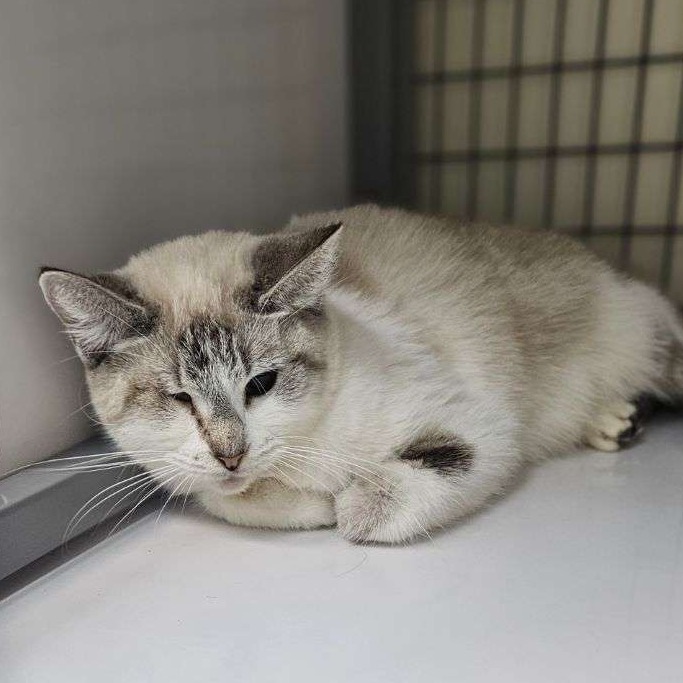
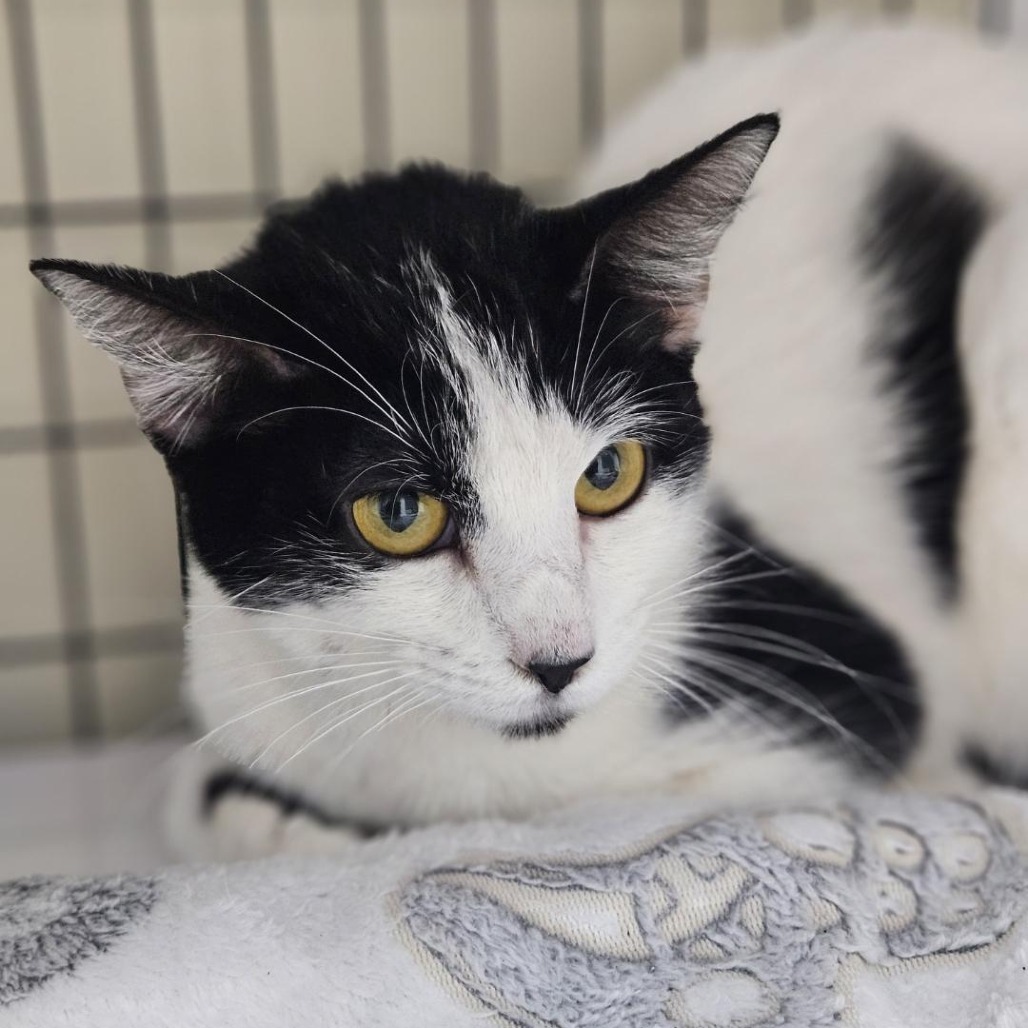
Purrfect Pals: Many new cats and kittens

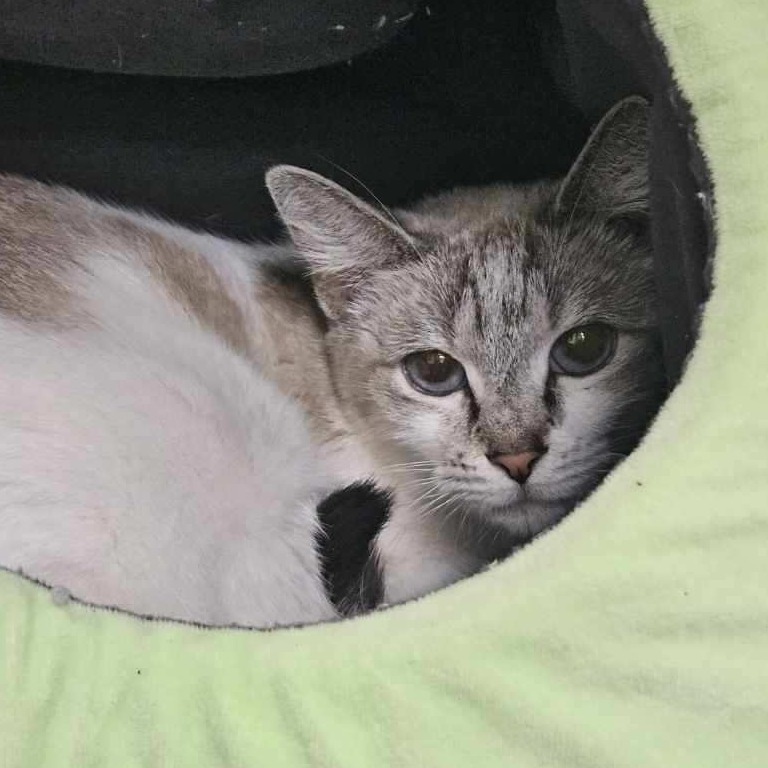
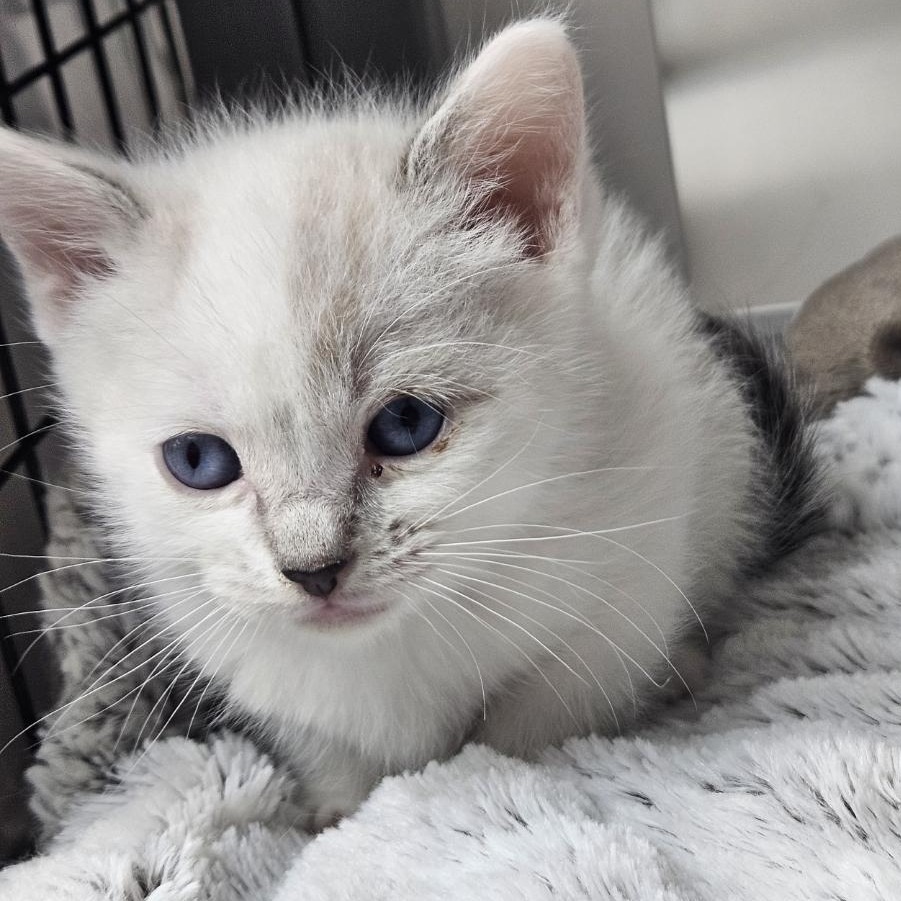
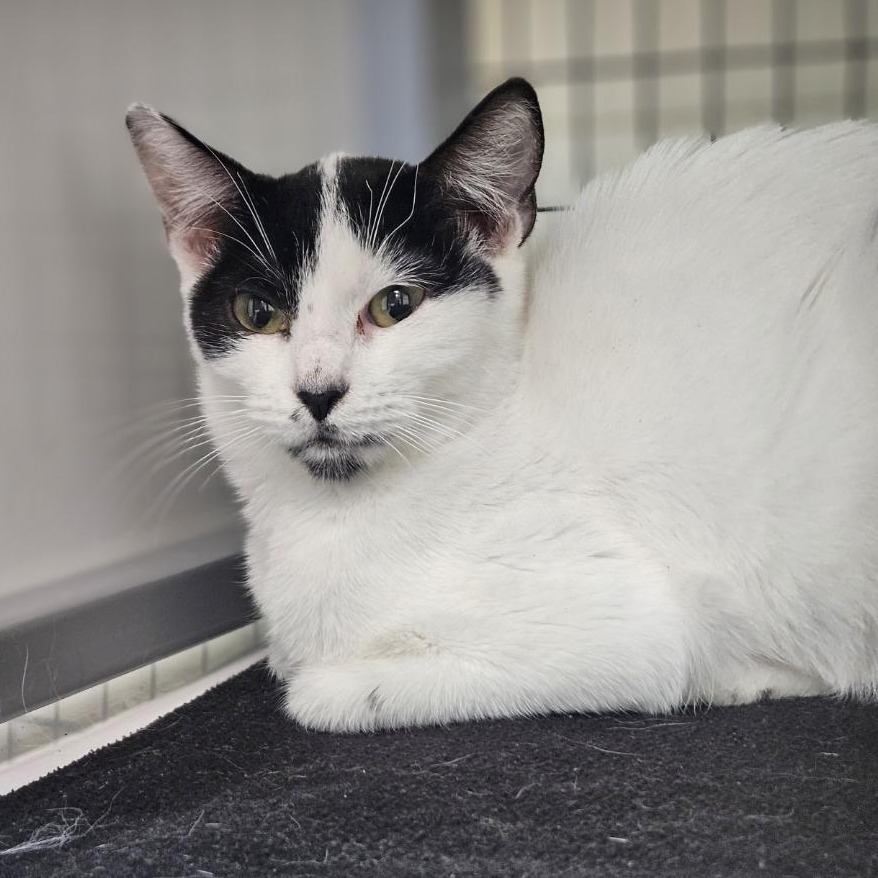
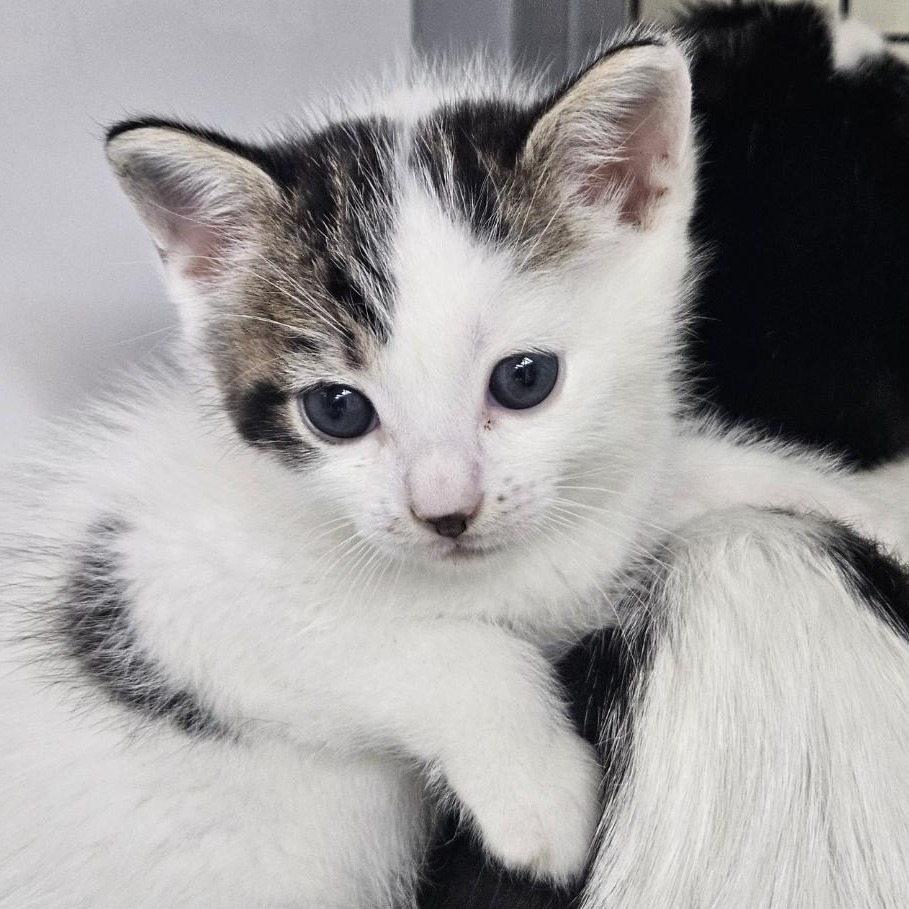
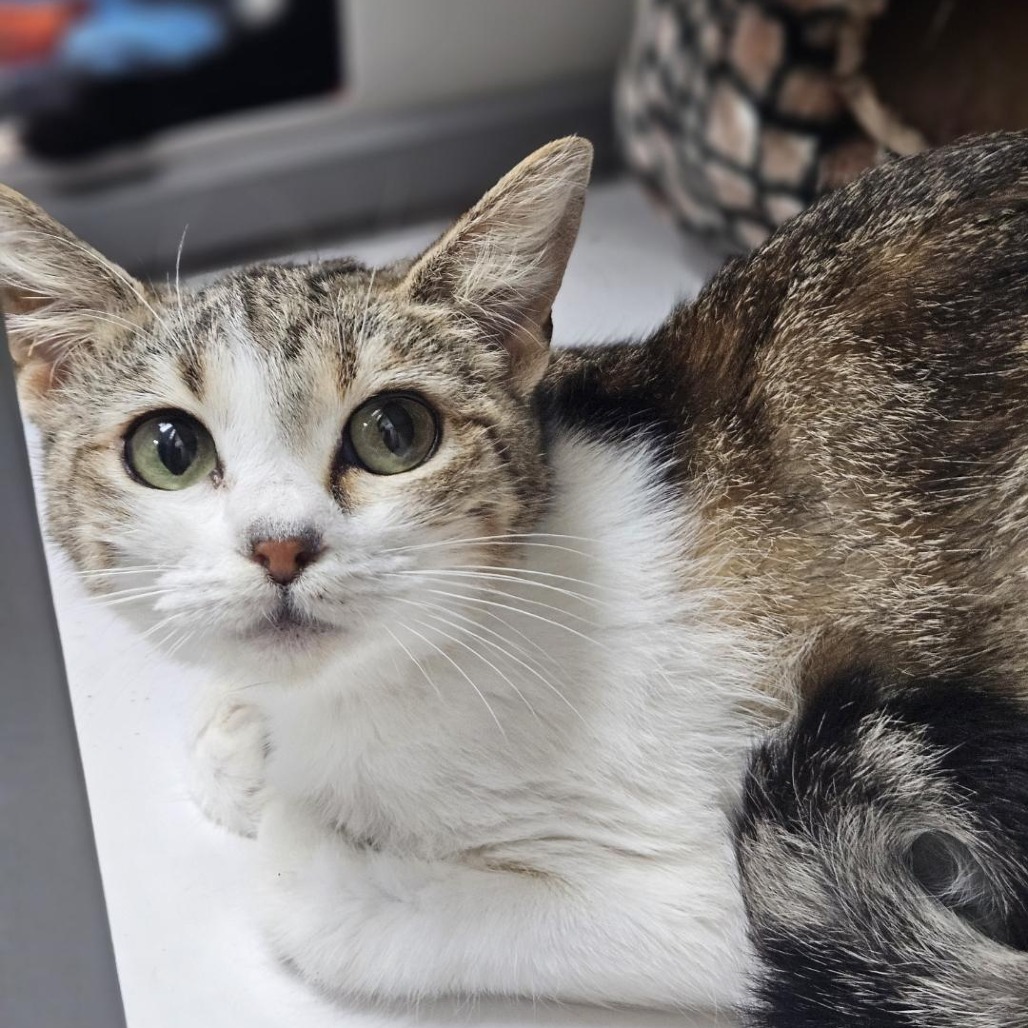
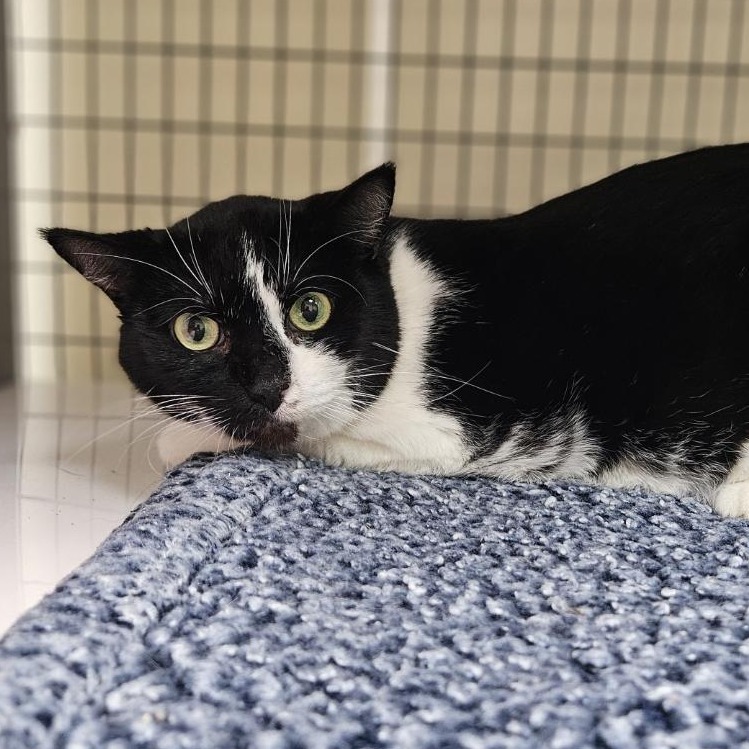
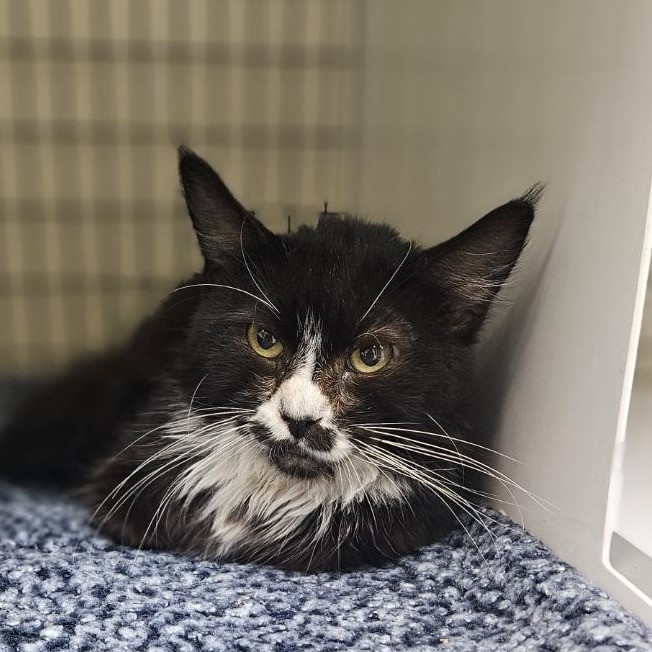
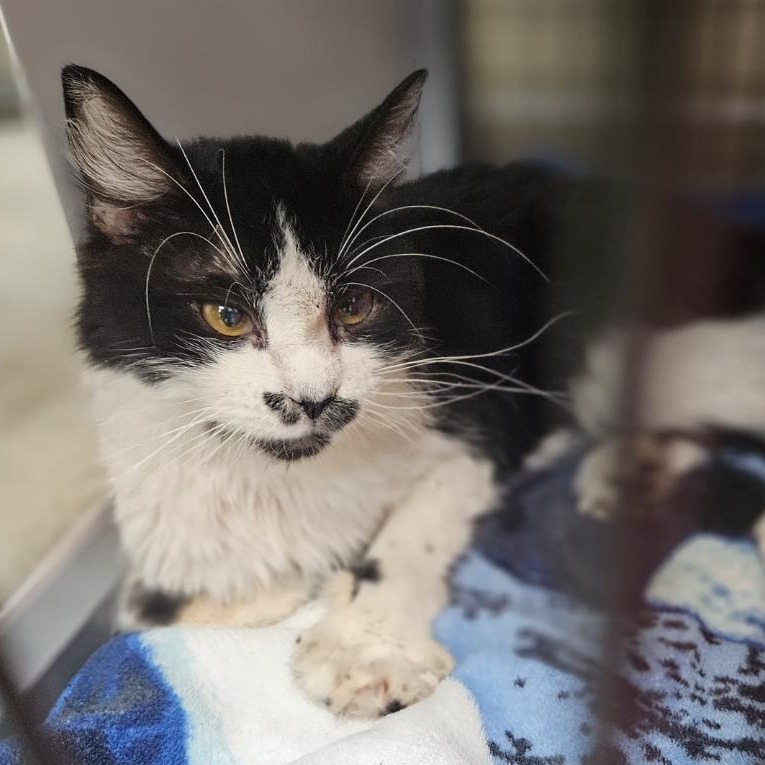
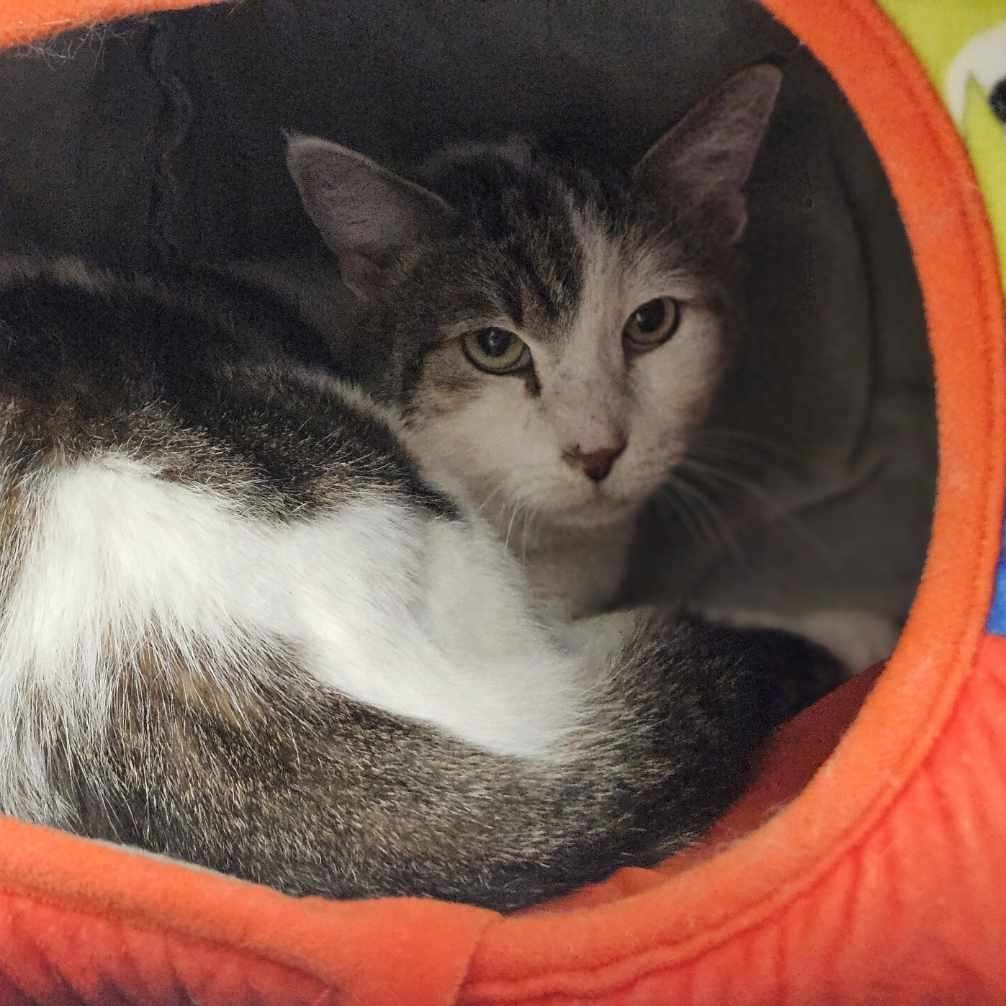
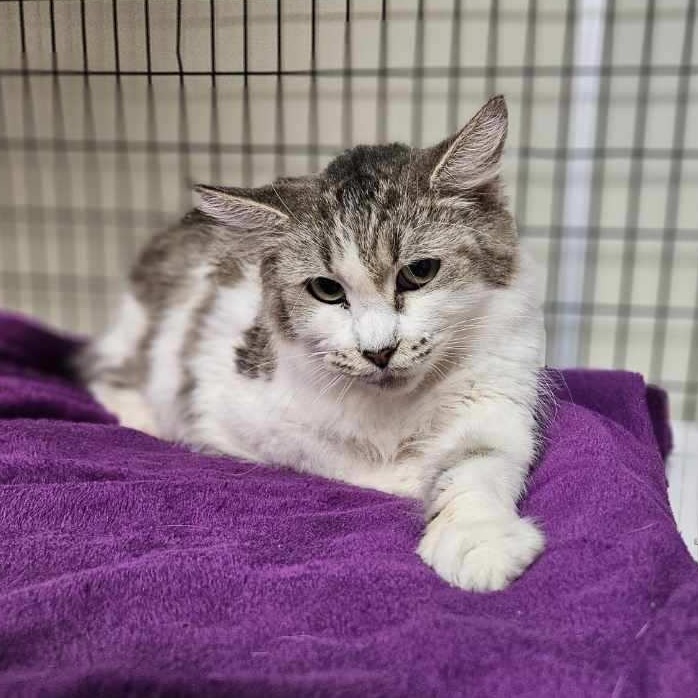
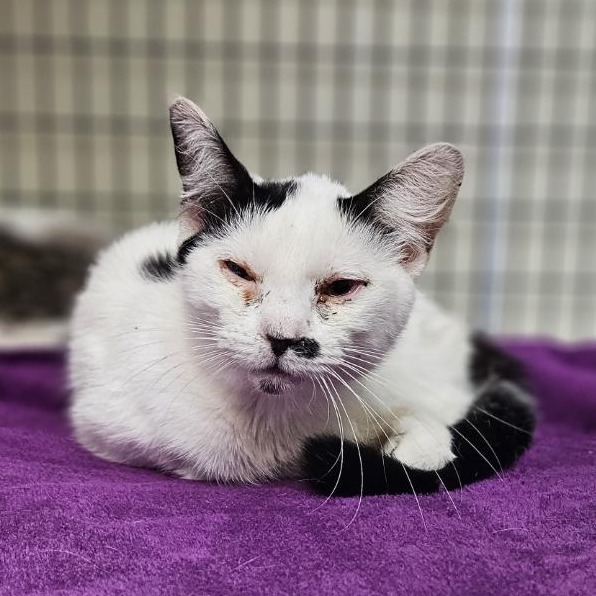
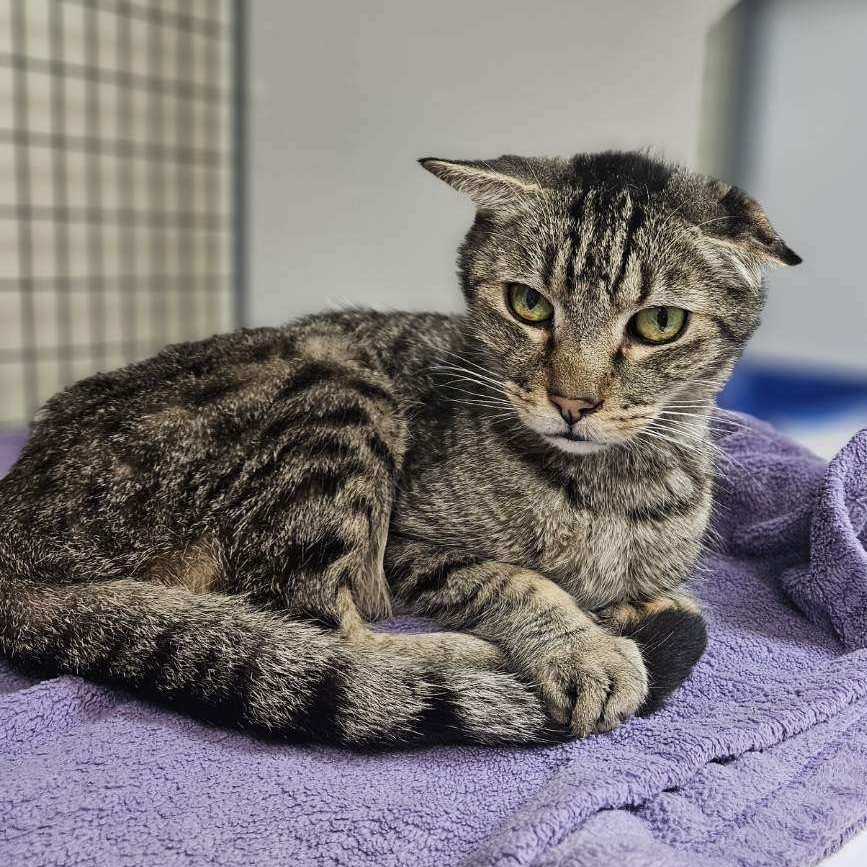
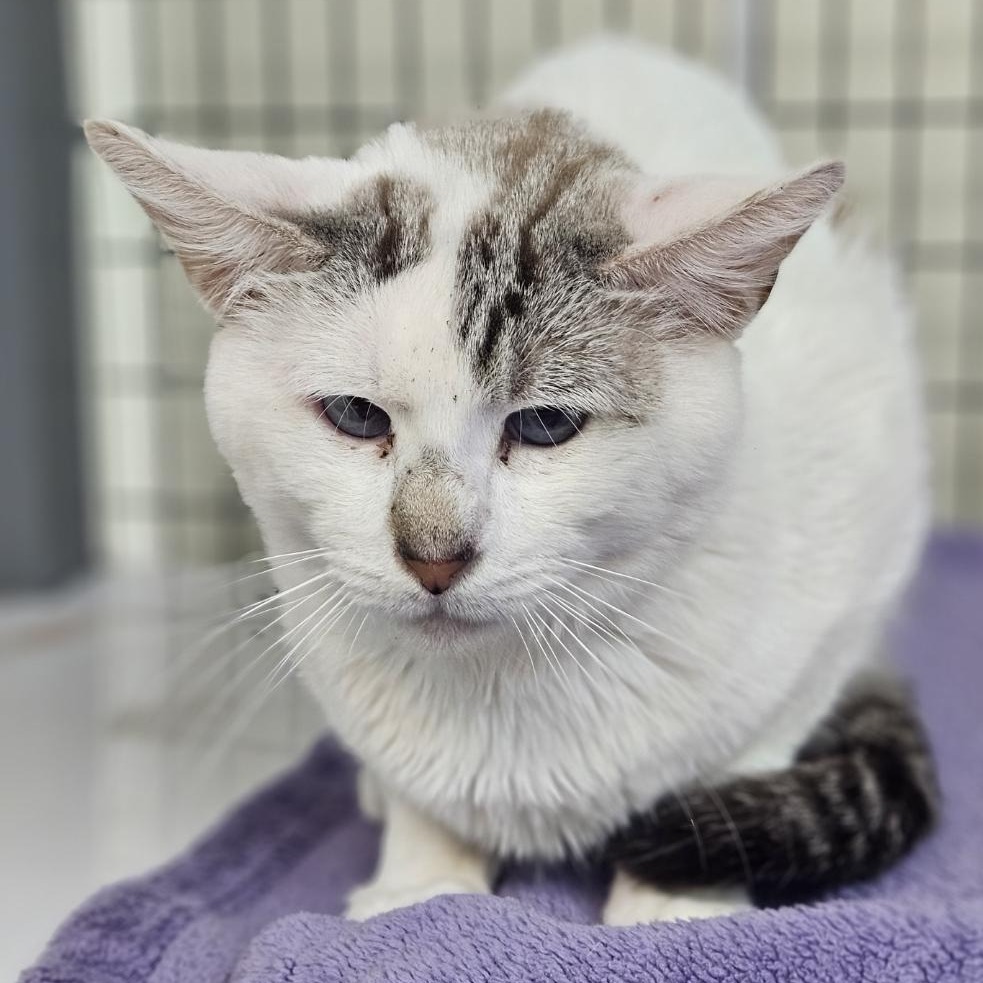
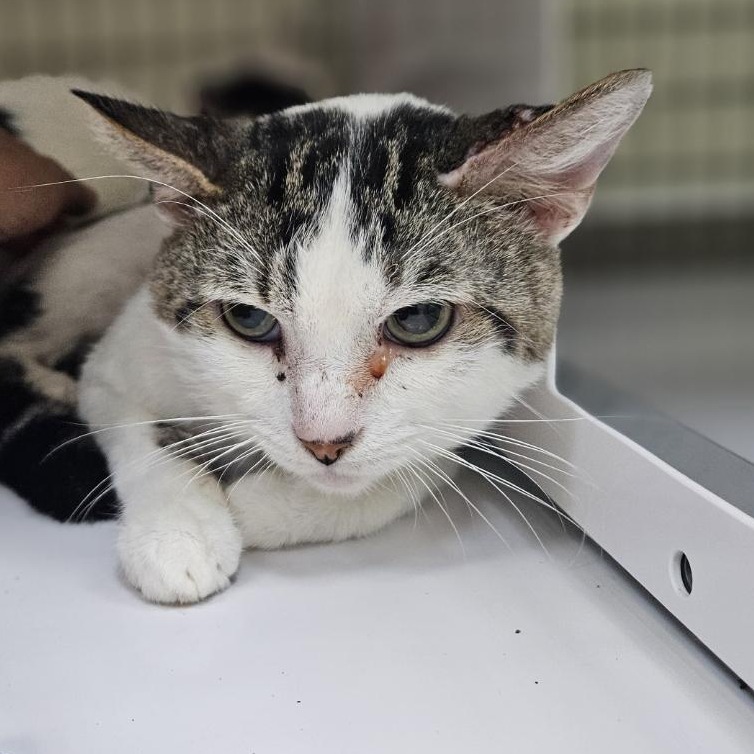
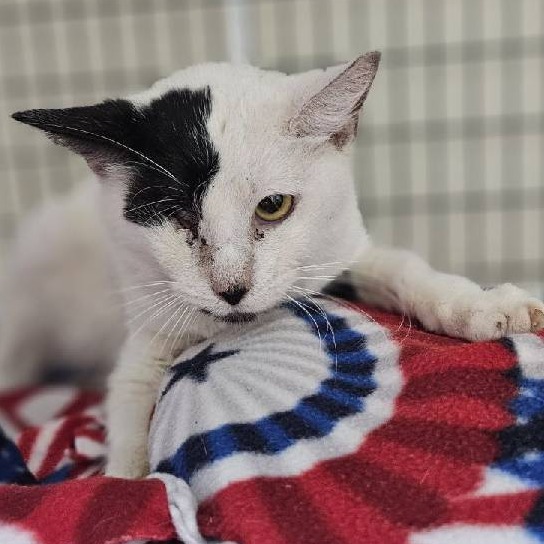
LAKE COUNTY, Calif. — Lake County Animal Care and Control has a big group of cats and kittens in need of new homes this Thanksgiving week.

The kittens and cats at the shelter that are shown on this page have been cleared for adoption.

Call Lake County Animal Care and Control at 707-263-0278 or visit the shelter online for information on visiting or adopting.

The shelter is located at 4949 Helbush in Lakeport.

Email Elizabeth Larson at This email address is being protected from spambots. You need JavaScript enabled to view it.. Follow her on Twitter, @ERLarson, and on Bluesky, @erlarson.bsky.social. Find Lake County News on the following platforms: Facebook, @LakeCoNews; X, @LakeCoNews; Threads, @lakeconews, and on Bluesky, @lakeconews.bsky.social. 

A#68's preview photo
A#68

A#122a's preview photo
A#122a

A#73's preview photo
A#73

A#122b's preview photo
A#122b

A#122c's preview photo
A#122c

A#89a's preview photo
A#89a

A#111a's preview photo
A#111a

A#111b's preview photo
A#111b

A#49a's preview photo
A#49a

A#49b's preview photo
A#49b

A#139a's preview photo
A#139a

A#139b's preview photo
A#139b

A#122(mom)'s preview photo
A#122(mom)

A#114a's preview photo
A#114a

A#114b's preview photo
A#114b

A#117a's preview photo
A#117a

A#117b's preview photo
A#117b

A#21a's preview photo
A#21a

A#21b's preview photo
A#21b
 

Don’t let food poisoning crash your Thanksgiving dinner

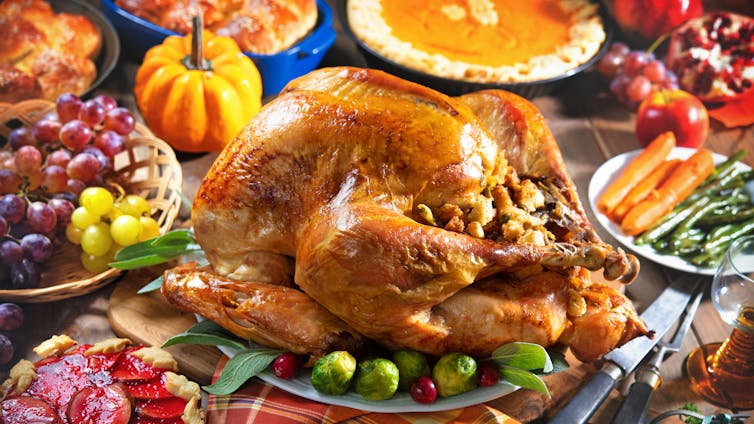
Undercooked turkey is a leading cause of foodborne illness on Thanksgiving. AlexRaths/iStock via Getty Images Plus

Thanksgiving is a time for family, friends and feasting. However, amid the joy of gathering and indulging in delicious food, it is essential to keep food safety in mind. Foodborne illnesses can quickly put a damper on your celebrations.

As an immunologist and infectious disease specialist, I study how germs spread – and how to prevent them from doing so. In my courses, I teach my students how to reduce microbial risks, including those tied to activities such as hosting a big Thanksgiving gathering, without becoming germophobes.

Foodborne illnesses sicken 48 million Americans – 1 in 6 people – each year. Holiday meals such as Thanksgiving pose special risks because these spreads often involve large quantities, long prep times, buffet-style serving and mingling guests. Such conditions create many opportunities for germs to spread.

This, in turn, invites a slew of microbial guests such as Salmonella and Clostridium perfringens. Most people recover from infections with foodborne bacteria, but each year around 3,000 Americans die from the illnesses they cause. More routinely, these bugs can cause nausea, vomiting, stomach cramps and diarrhea within hours to a couple of days after being consumed – which are no fun at a holiday celebration.

Foods most likely to cause holiday illness

Most foodborne illnesses come from raw or undercooked food and foods left in the so-called danger zone of cooking temperature – 40 degrees to 140 degrees Fahrenheit – in which bacteria multiply rapidly. Large-batch cooking without proper reheating or storage as well as cross contamination of foods during preparation can also cause disease.

A turkey on a counter being stuffed by two sets of hands.
Put that bird right in the oven as soon as you’ve stuffed it to keep bacteria from multiplying inside. kajakiki/E+ via Getty Images

Not all dishes pose the same risk. Turkey can harbor Salmonella, Campylobacter and Clostridium perfringens. Undercooked turkey remains a leading cause of Thanksgiving-related illness. Raw turkey drippings can also easily spread bacteria onto hands, utensils and counters. And don’t forget the stuffing inside the bird. While the turkey may reach a safe internal temperature, the stuffing often does not, making it a higher-risk dish.

Leftovers stored too long, reheated improperly or cooled slowly also bring hazards. If large pieces of roasted turkey aren’t divided and cooled quickly, any Clostridium perfringens they contain might have time to produce toxins. This increases the risk of getting sick from snacking on leftovers – even reheated leftovers, since these toxins are not killed by heat.

Indeed, each November and December outbreaks involving this bacterium spike, often due to encounters with turkey and roast beef leftovers.

Don’t wash the turkey!

Washing anything makes it cleaner and safer, right? Not necessarily.

Many people think washing their turkey will remove bacteria. However, it’s pretty much impossible to wash bacteria off a raw bird, and attempting to do so actually increases cross contamination and your risk of foodborne illness.

Since 2005, federal food safety agencies have advised against washing turkey or chicken. Despite this, a 2020 survey found that 78% of people still reported rinsing their turkey before cooking – often because older recipes or family habits encourage it.

When you rinse raw poultry, water can splash harmful bacteria around your kitchen, contaminating counter tops, utensils and nearby foods. If you do choose to wash turkey, it’s critical to immediately clean and disinfect the sink and surrounding area. A 2019 USDA study found that 60% of people who washed their poultry had bacteria in their sink afterward – and 14% had bacteria in the sink even after cleaning it.

Family enjoying Thanksgiving meal
A few food prep precautions can help keep the holiday free of gastrointestinal distress. Drazen Zigic/iStock via Getty Images Plus

Food prep tips for a safe and healthy Thanksgiving

Wash your hands regularly. Before cooking and after touching raw meat, poultry or eggs, wash your hands thoroughly with soap and water for at least 20 seconds. Improper handwashing by people handling food is a major source of bacterial contamination with Staphylococcus aureus. This bacterium’s toxins are hard to break down, even after cooking or reheating.

Thaw turkey safely. The safest way to thaw a turkey is in the refrigerator. Allow 24 hours per 4-5 pounds. There’s also a faster method, which involves submerging the turkey in cold water and changing the water every 30 minutes – but it’s not as safe because it requires constant attention to ensure the water temperature stays below 40 F in order to prevent swift bacteria growth.

Stuff your turkey immediately before cooking it. Stuffing the turkey the night before is risky because it allows bacteria in the stuffing to multiply overnight. The toxins produced by those bacteria do not break down upon cooking, and the interior of the stuffing may not get hot enough to kill those bacteria. The USDA specifically warns against prestuffing. So cook stuffing separately, if possible, or if you prefer it inside the bird, stuff immediately before roasting, making sure it reaches 165 F.

Cook food to the right temperature. A thermometer is your best friend – use it to ensure turkey and stuffing both reach 165 F. Check casseroles and other dishes too. It’s best not to rely on an internal pop-up thermometer, since they can be inaccurate, imprecise and could even malfunction.

Avoid cross contamination. Use separate cutting boards for raw meat, vegetables and bread. Change utensils and plates after handling raw meat before using them for cooked foods.

Keep food at safe temperatures. Serve hot foods immediately, and make sure hot foods are served above 140 F and cold dishes below 40 F to keep them out of the microbial danger zone.

Be cautious with buffet-style serving. Limit food time on the table to two hours or less – longer than that, any bacteria present can double every 20 minutes. Provide dedicated serving utensils, and avoid letting guests serve with utensils they have eaten from.

Be mindful of expiration dates. Don’t forget to check dates on food items to make sure that what you are serving isn’t expired or left from last Thanksgiving.

Educate guests on food safety. Remind guests to wash their hands before preparing or serving food, and politely discourage double-dipping or tasting directly from communal dishes.

Thanksgiving should be a time of gratitude, not gastrointestinal distress. By following these simple food safety tips, you can help ensure a safe and healthy holiday.The Conversation

Lisa Cuchara, Professor of Biomedical Sciences, Quinnipiac University

This article is republished from The Conversation under a Creative Commons license. Read the original article.

SPCA of Lake County accomplishes record number of spay/neuter surgeries in 2025

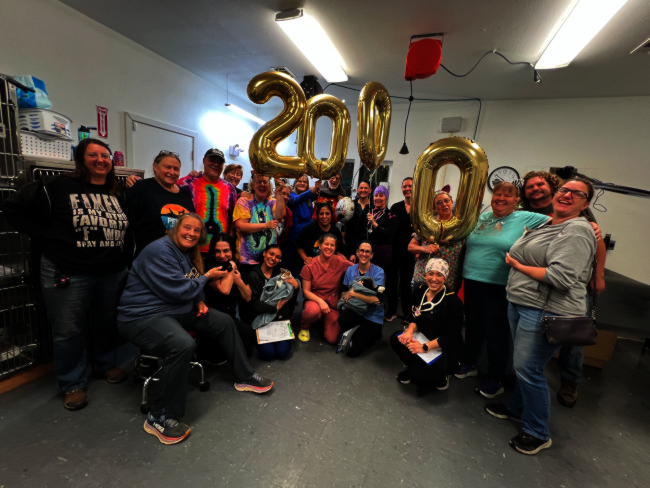
SPCA volunteers gather to celebrate having spayed or neutered more than 2,000 animals during 2025 at the end of their last clinic of the year on Sunday, Nov. 16, 2025, in Kelseyville, California. Photo courtesy of the SPCA.

KELSEYVILLE, Calif. — Last Sunday afternoon, as the final day in its latest three-day spay/neuter clinic was drawing to a close, it was clear that the SPCA of Lake County had a lot to celebrate.

For one, while there were still 16 community cats queued up waiting for surgery, by the end of the day they would have completed care for 89 community cats, free of charge.

“It is the most we’ve ever done,” Fawn Williams, the SPCA board vice president, said, her face lit up with a smile.

Beyond the delight Williams and other volunteers took in that singular victory, it was dwarfed by another fact. 

The bigger accomplishment was that, after using additional collaboration and funding support to conduct monthly clinics throughout the year, by the time the November clinic ended — the final one of the year — the little group of volunteers had more than doubled the number of animals served over the previous year. 

“We were hoping for 2,000,” said Nancy Johnson, the SPCA board president.

And they did it — spaying or neutering 2,030 animals in 2025. That number includes dogs and cats, owned and feral.

The accomplishment becomes all the more impressive when compared to the 980 animals served in 2024.

“We’re hoping we can pull off 2,000 next year as well,” said Johnson.

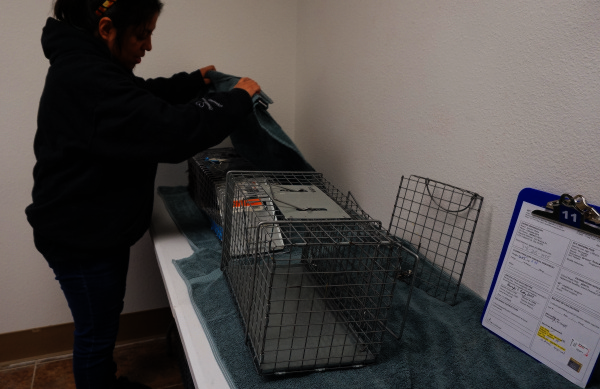
Adriana Hermosillo, an SPCA board member who is known as the “Transfer Lady,” illustrates how she moved cats from traps into squeeze traps at the SPCA’s last spay/neuter clinic of the year on Sunday, Nov. 16, 2025, in Kelseyville, California. Photo by Elizabeth Larson/Lake County News.

An evolving mission

Johnson said the SPCA of Lake County began in 1983.

Over the years, it has operated as an animal shelter and has offered vet services, such as vaccinations.

For a time, it provided animal control services for the city of Clearlake, but terminated that agreement in 2015. In January of that year, the SPCA also closed its shelter. Since then, it also has ended its vaccination clinics.

In a history of the organization offered by Johnson, she said when they closed the shelter knowing that “you can’t adopt your way out of an animal overpopulation” situation.

In the years since, SPCA has focused on spay/neuter services. To do so, it created partnerships with other animal care organizations, including Animal Refugee Response. That group’s grant from Petsmart Charities was, said Johnson, “a perfect fit” for use of the SPCA facility and its volunteers to bring the Clearlake Pet Project to life.

That, she said, began the journey of the only high-quality, high-volume spay-neuter clinic in Lake County.

“Through COVID, through volunteer shortages, through staff challenges, through board changes, SPCA of Lake County proved over and over they are ‘the little clinic that could,’ providing 400 to 600 affordable spay neuter appointments two weekends a month,” Johnson’s history of the group explained.

At the end of 2024, after 980 successful spay/neuter surgeries, Johnson said the SPCA had a question: “We have the facility, we have the surgical staff, we have the volunteer base — what would we need to offer more appointments?”

In answering that question, Johnson said partners were key. So they joined forces with groups including Dogwood Animal Rescue and the Clearlake Animal Association to create Pet Fix Lake County.

She said Pet Fix Lake County contracted with Animal Balance, which brought to Lake County five MASH-style vet clinics that altered 200 cats and dogs in three days.

Animal Balance also educated the SPCA on how to streamline its operations, Johnson said.

Once that infrastructure was in place, Johnson said SPCA created collaborations with funding partners, including Lake County Animal Care and Control, Wine Country Animal Lovers, the Habematolel Pomo of Upper Lake and Dogwood Animal Rescue. That larger partnership provided the funding needed to offer 1,000 spay-neuter surgeries in 2025 at a copayment of only $25 for the client.

Other partners in the effort include Clearlake Animal Association, Humane Society of Inland Mendocino, Kelseyville Lumber, 100 Women Strong, city of Clearlake, United Spay Alliance and 100 Bucks Strong.

North Bay Animal services, which has held the animal control contract for the city of Clearlake, has spent $7,000 to $8,000 for spay and neuter services for animals in its care, Johnson said.

That funding is critical because Johnson said the full cost of a three-day clinic is up to $40,000. They spent close to $8,000 just on Nov. 16.

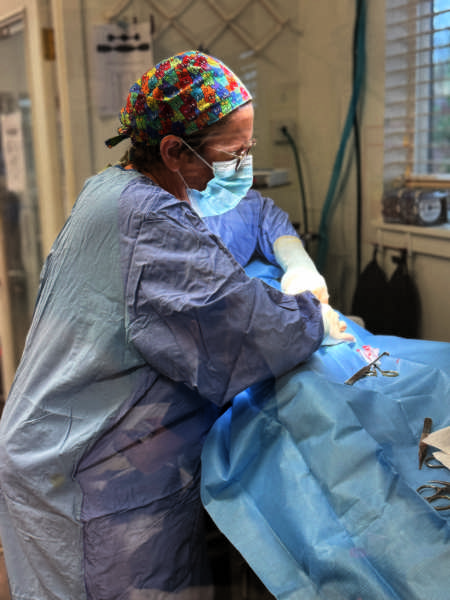
Veterinarian Dr. Jennifer Eisley, the SPCA of Lake County’s main veterinarian, performs surgery at the SPCA’s last clinic of the year on Sunday, Nov. 16, 2025, in Kelseyville, California. Photo courtesy of the SPCA.

An efficient operation

On Nov. 16, SPCA’s spay/neuter clinic was running at high capacity, with volunteers and the vet staff moving efficiently through a routine that they have perfected.

When the cats come in, held in the correct traps for feral cats, they’re taken into a room where they are weighed and then moved into squeeze traps that allow vet staff to safely handle them while prepping for surgery.

Adriana Hermosillo, an SPCA board member who is known as the “Transfer Lady,” showed the process of moving the cats to the cages.

From there, the cats wait to be taken in for surgery and prep, with volunteers and vet techs getting them ready to hand them off to vet staff.

That day, they had vet techs from Lake, Mendocino, Sonoma and Sacramento counties, Williams said. They brought not only their skills but, in some cases, additional equipment, like squeeze cages.

“It's a community group effort,” said Williams.

One of the vet techs, Rebecca Bloomquist — who is credited with having designed the SPCA’s surgical and operational layout — was working on anesthesia. Williams said they call Bloomquist “MacGyver,” a reference to the 1980s TV character known for being able to improvise solutions to tricky problems. 

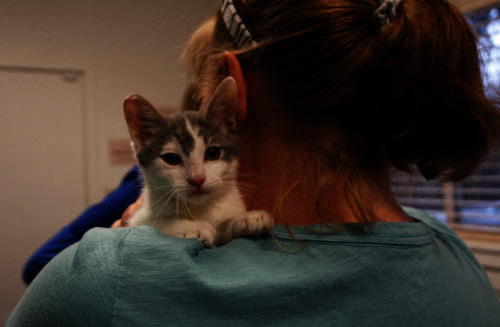
SPCA Treasurer Fawn Williams holds a friendly kitten who was awake and frisky after surgery at the SPCA’s last spay/neuter clinic of the year on Sunday, Nov. 16, 2025, in Kelseyville, California. Photo by Elizabeth Larson/Lake County News.


All three vets working at the clinic that day came from Sonoma County.

They were led by Dr. Jennifer Eisley, who has been SPCA’s regular vet for eight years. She was joined by Dr. Carley Boyd, who grew up in Lakeport and now works at Central Animal Hospital in Petaluma, and Dr. Lauren Pangburn of Alderbrook Animal Hospital in Santa Rosa.

The operations move rapidly. Once the animals are prepped, Dr. Eisley said that, on average, it takes about 30 seconds to neuter a male cat and six to 20 minutes to spay a female cat. However, she cautioned that those estimates depend on a variety of circumstances. Males, she added, take longer to prepare for surgery.

After surgery, the cats were handled by the recovery team, which gave them vaccines and fluids, and heat support.

Then it was back into their cages to fully recover and wake up from the anesthesia.

One friendly male kitten was happy to get out of his cage and be cuddled by Williams. And then it was back in the cage for rest and a snack.

Williams said the entire operation is 100-percent volunteer, adding that without volunteers, none of it could be done. She added that she thinks people don’t know about how volunteers make the SPCA’s efforts possible.

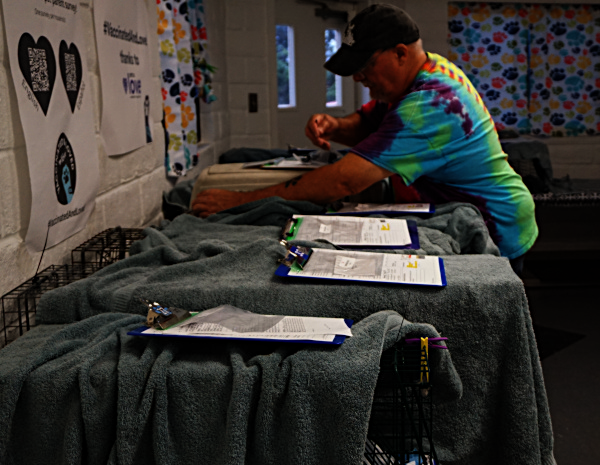
Greg Stanley, one of the many dedicated volunteers with the SPCA of Lake County, tends cats recovering from surgery at the organization’s last spay/neuter clinic of the year on Sunday, Nov. 16, 2025, in Kelseyville, California. Photo by Elizabeth Larson/Lake County News.

Looking ahead

The SPCA points to the need for collaboration and volunteers. “Partnering is really the key to our continued success,” said Johnson.

This year their members attended the concerts in the park in Clear Lake and Lakeport to share information about their services and get more people involved in their work.

Johnsons said the experience, education and connections SPCA received throughout 2025 will carry over into 2026, with more veterinarian partnerships and volunteers, and with generous donors. 

SPCA has two more Pet Fix clinics scheduled for 2026 and many multiple vet clinics scheduled for the benefit of owned cats and dogs and community cats.

Lake County Animal Care and Control has applied for a grant to help cover costs in the coming year, Johnson said.

Volunteers said it will take a few years of steady work on spaying and neutering to get caught up with a backlog in cases across Lake County.

They said that backlog is partially the result of the COVID-19 pandemic, as well as the sudden death in March of 2022 of Dr. Richard Bachman, a veterinarian who played a key role in establishing and running the clinic at Lake County Animal Care and Control and expanding its services. The county has still not been able to find another vet to continue the work that Bachman started, meaning many of its services have not resumed.

In order to fully address Lake County’s spay/neuter needs, SPCA staff and volunteers there needs to be another low-cost clinic available, in addition to theirs, and more vets.

“That is the bottleneck. There’s just not enough,” said Johnson.

Still, the SPCA of Lake County’s impact is being noted. Greg Stanley, a volunteer who also works with the group Street Dawgs, said other counties are watching what the group is doing.

Johnson said they're trying to figure out how to expand service in the current footprint that they are in.

She circled back to the importance of volunteers, who give thousands of hours to the work of addressing Lake County’s pet overpopulation challenges.

“This is just the hardest job you’ll ever love,” said Johnson.

Volunteers like her will go home exhausted after a clinic, but she says they know they are doing something important.

From left, Fawn Williams, Marsha Collins and Nancy Johnson at work in the SPCA office during its last spay/neuter clinic of the year on Sunday, Nov. 16, 2025, in Kelseyville, California. Photo by Elizabeth Larson/Lake County News.

How you can get involved

If you would like to volunteer, the basic commitment is a four-hour shift once a month. However, volunteers can work longer if they desire.

To apply, visit the SPCA’s volunteer webpage.

To donate funds, visit the SPCA’s donations page and donate online or mail donations to SPCA of Lake County, P.O. Box 784, Clearlake, CA 95422.

Donations also can be made by purchasing items on SPCA’s Amazon wish list.

Staff said equipment like cages also are always needed.

Email Elizabeth Larson at This email address is being protected from spambots. You need JavaScript enabled to view it.. Follow her on Twitter, @ERLarson, and on Bluesky, @erlarson.bsky.social. Find Lake County News on the following platforms: Facebook, @LakeCoNews; X, @LakeCoNews; Threads, @lakeconews, and on Bluesky, @lakeconews.bsky.social. 

A Simple Gesture: Helping Lake County residents one bag at a time

LAKE COUNTY, Calif. — “A Simple Gesture,” a grassroots food collection program, continues to make a meaningful impact across Lake County through community generosity and volunteer support. 

Food insecurity is a growing crisis across the country. As federal funding for essential programs like SNAP and local food banks continues to decline, communities must take initiative. That’s where A Simple Gesture comes in.

With five active chapters in Lake County — Lakeport, North Shore Lake County, Clearlake/Lower Lake, South Lake County, and Kelseyville — the program makes it easy for residents to help fight hunger right in their own neighborhoods.

When you sign up with A Simple Gesture, you’ll receive a reusable green bag to fill with non-perishable food items.

Once a month, a local volunteer will pick up your bag directly from your doorstep and deliver the donations to a local food pantry in your area — ensuring your contributions stay within your own community.

Once you register, you’ll receive reminders via email or text before each pick-up. For your first donation, you can use any bag or box you have on hand. After that, volunteers will leave behind a reusable bag for future collections.

Recent donations have provided critical support during the ongoing food crisis, but food insecurity remains a serious issue in Lake County. 

Every bag of food collected helps feed local families, seniors, and individuals struggling to make ends meet.

It’s simple to help: Visit www.JoinASG.org and sign up by your ZIP code. 

Your participation ensures that your donations go directly to neighbors in need.

Join us today and make a difference — one bag at a time.

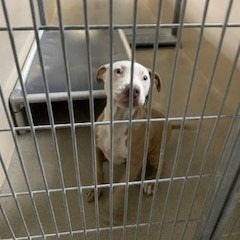
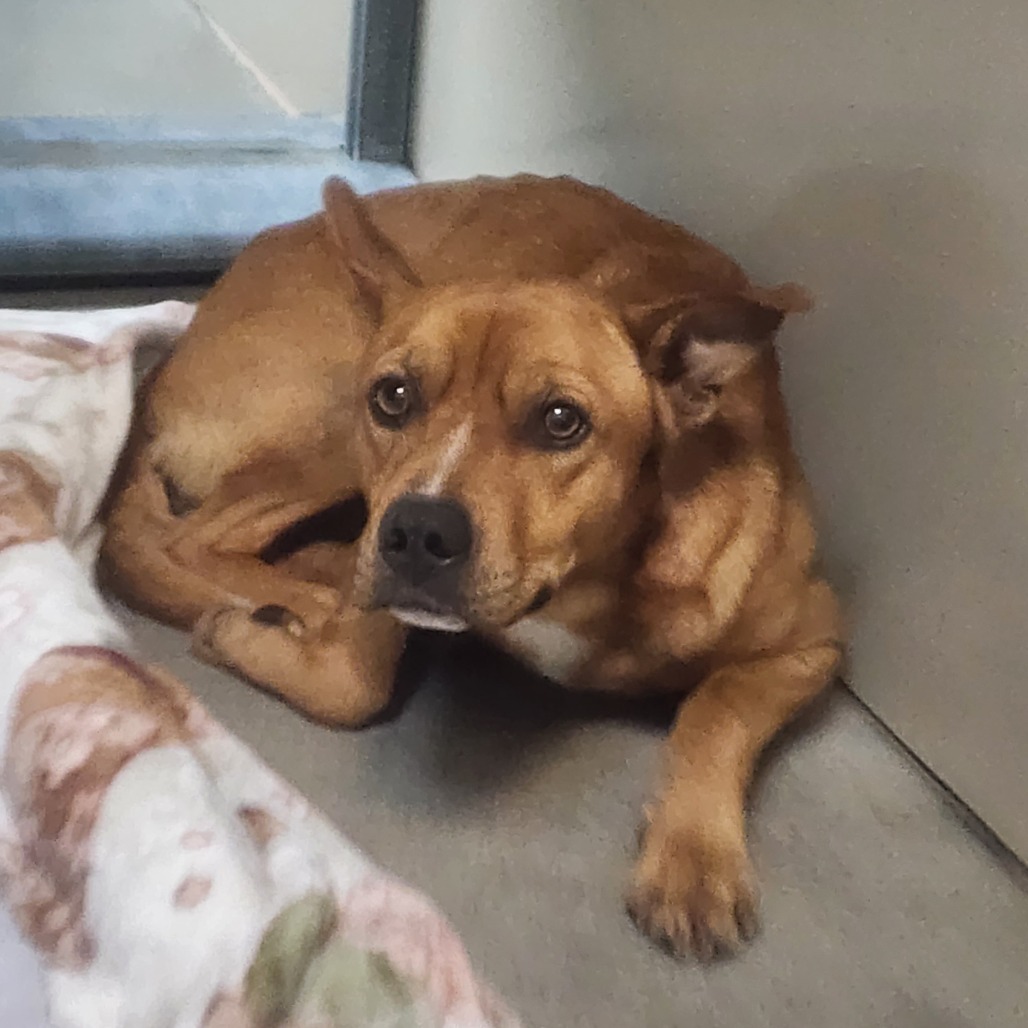
Helping Paws: Thanksgiving week dogs

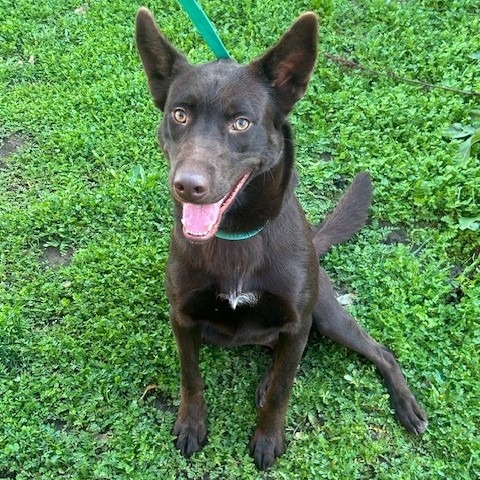
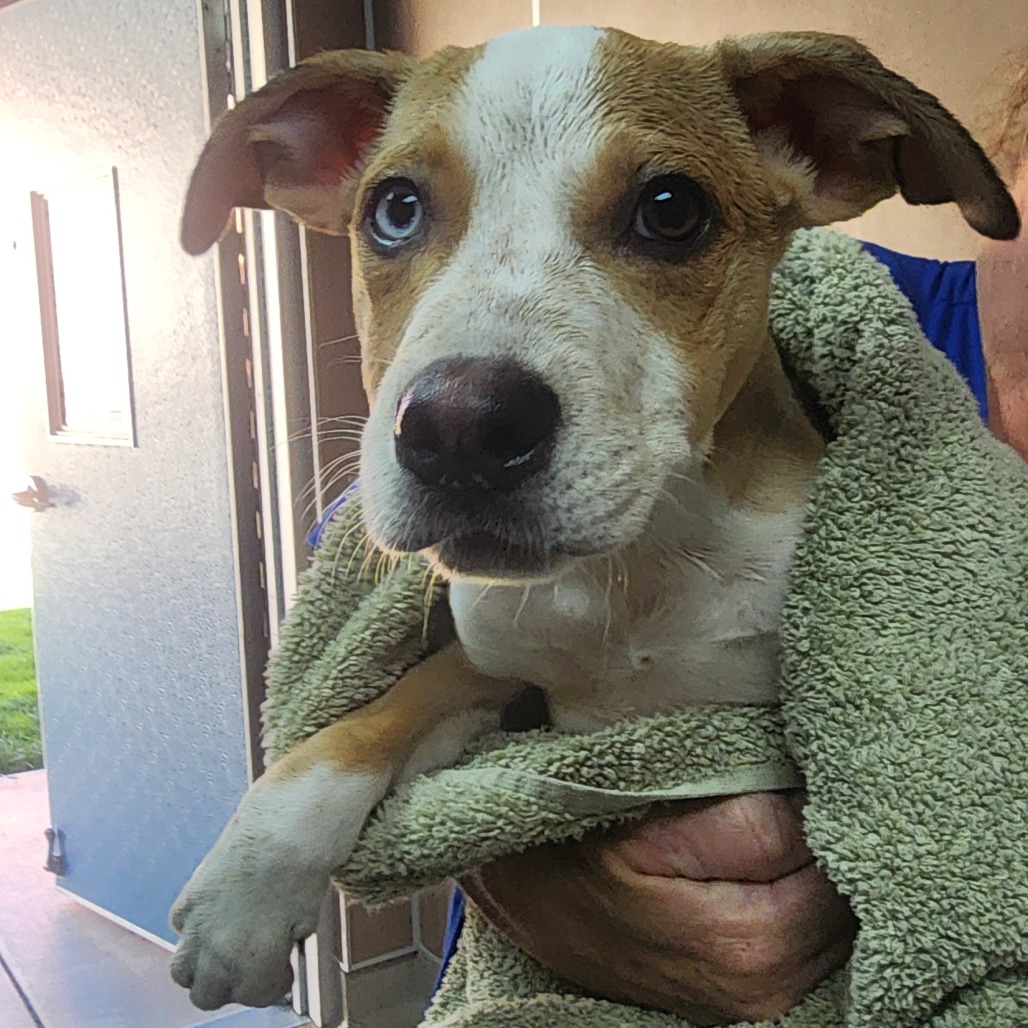
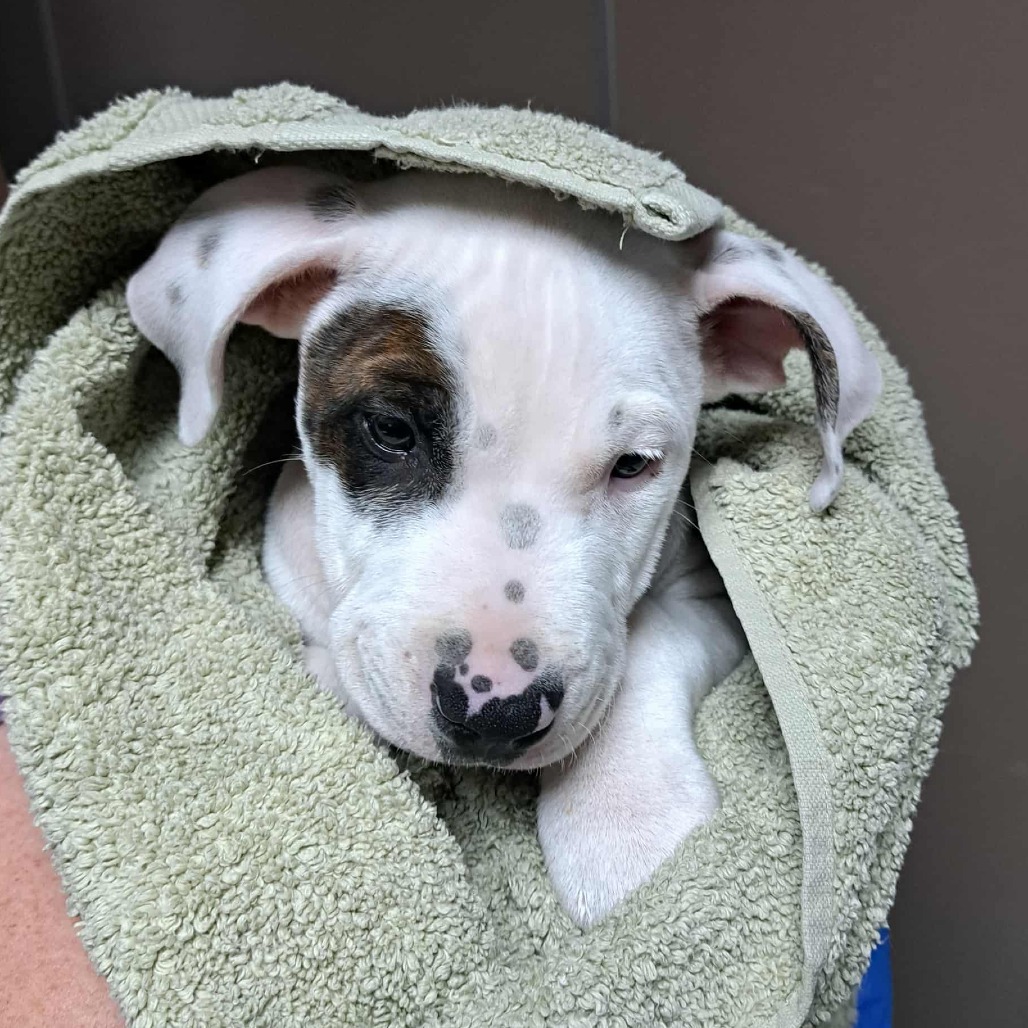
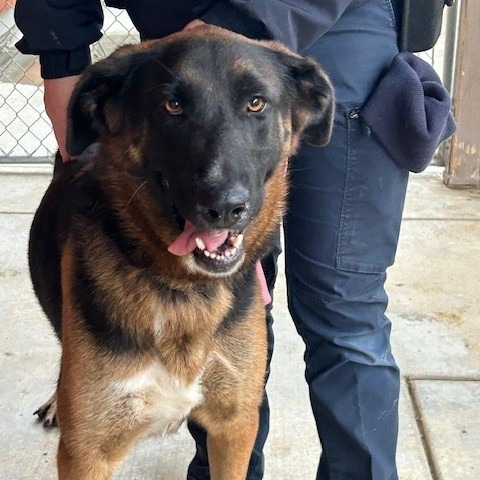
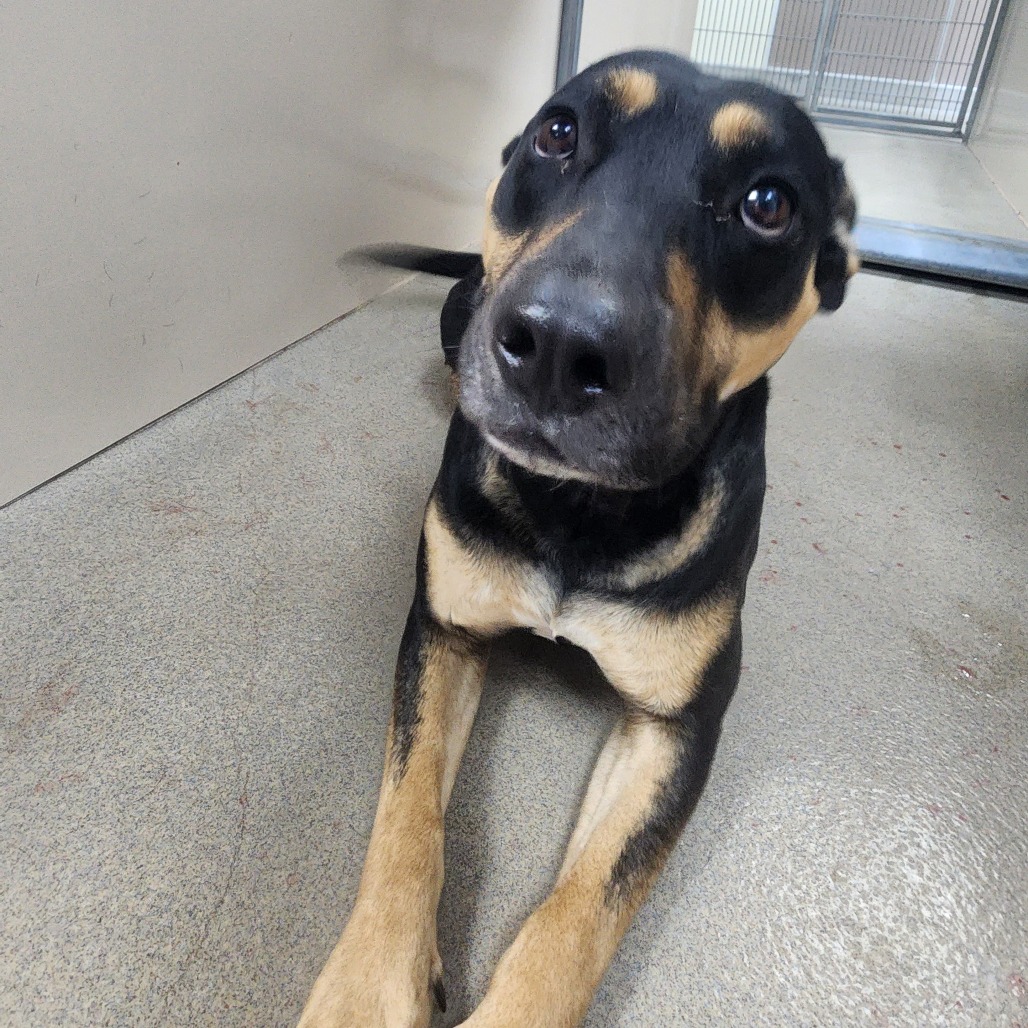
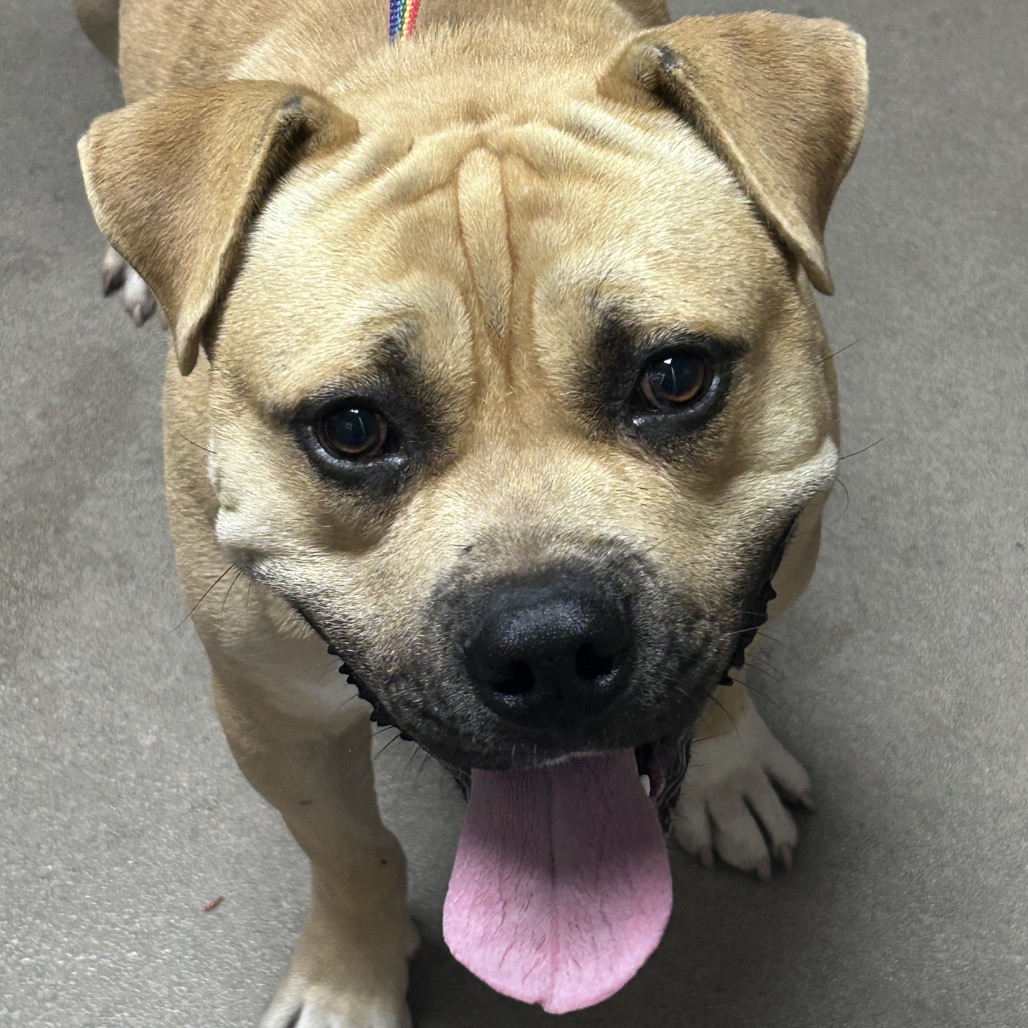
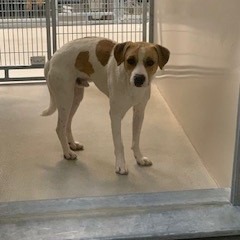
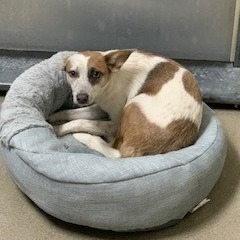
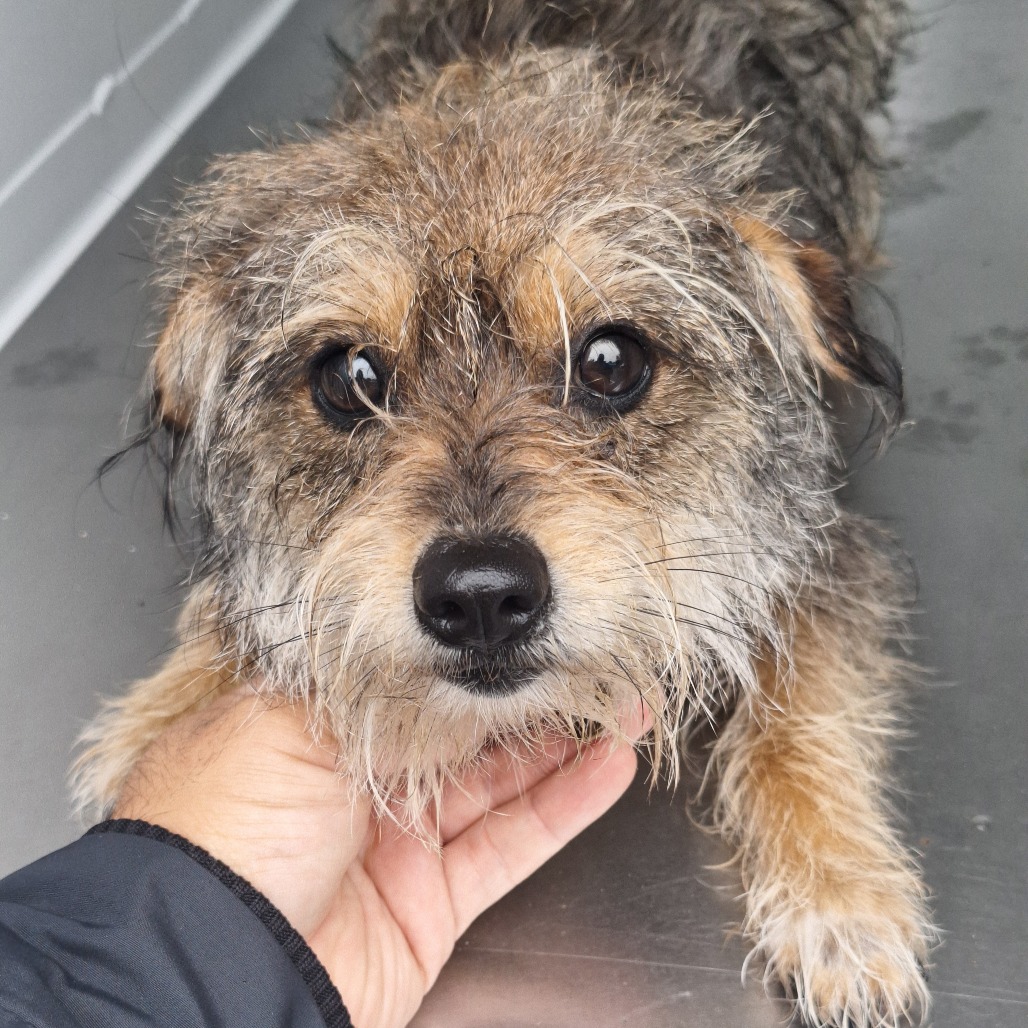
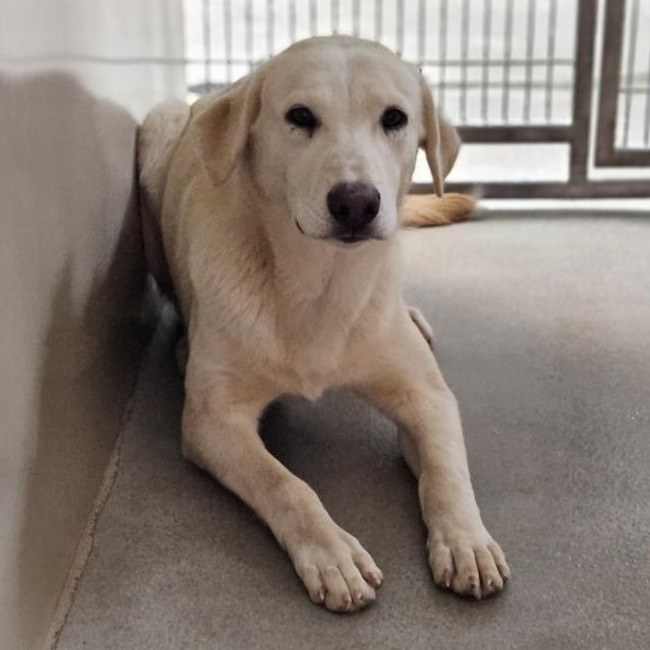
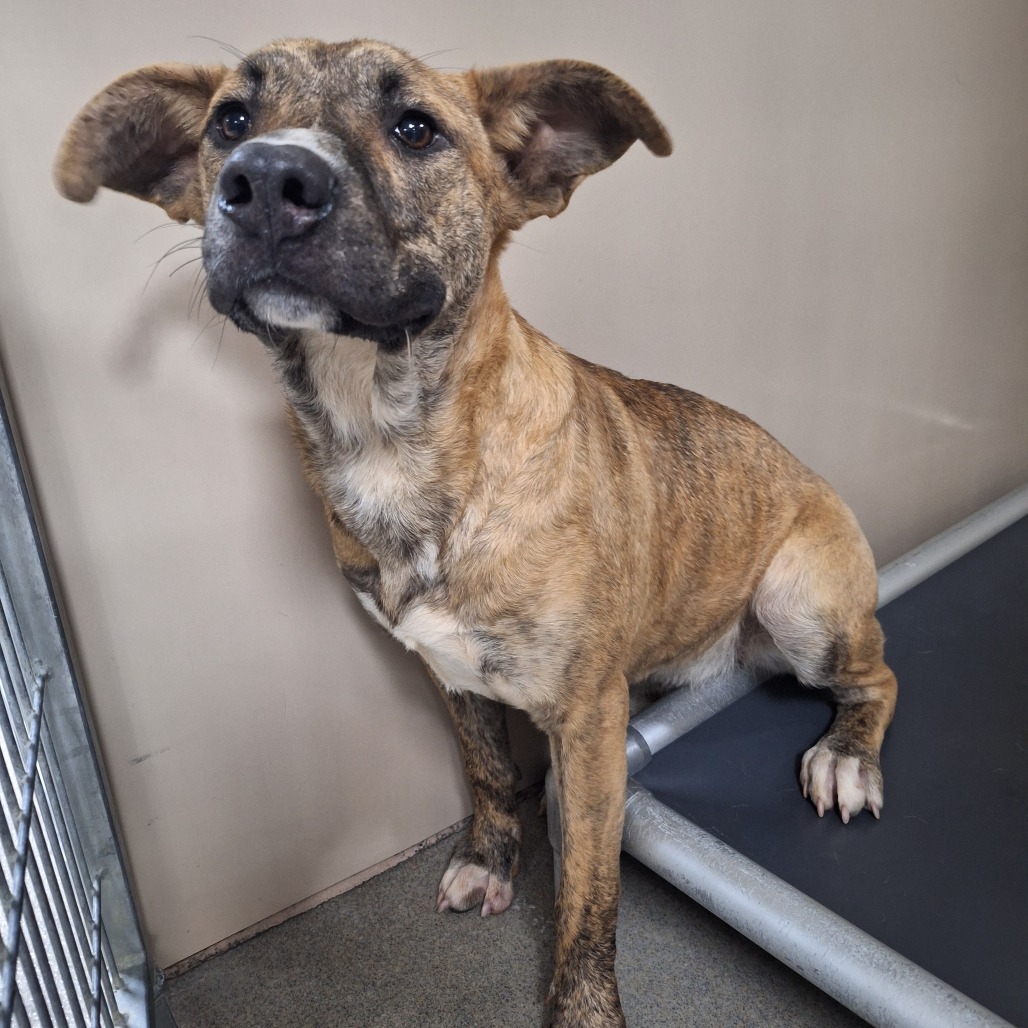
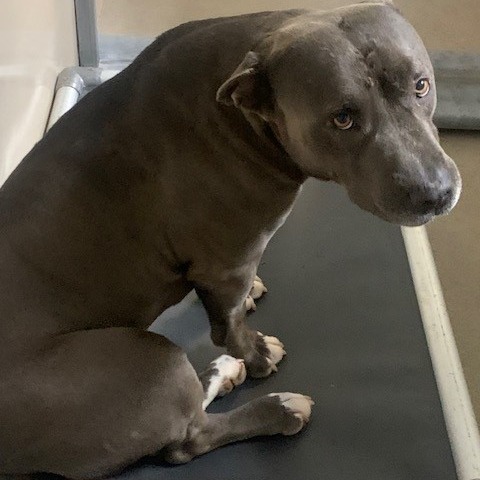
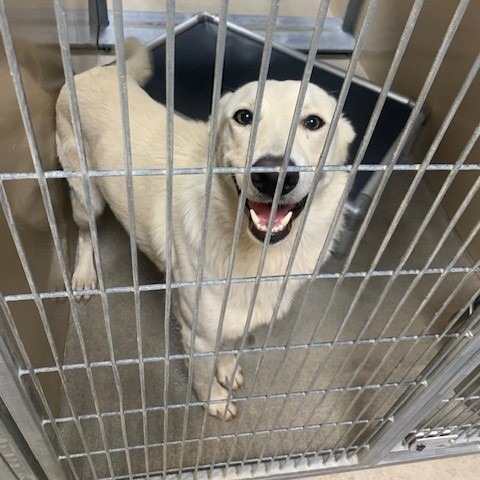
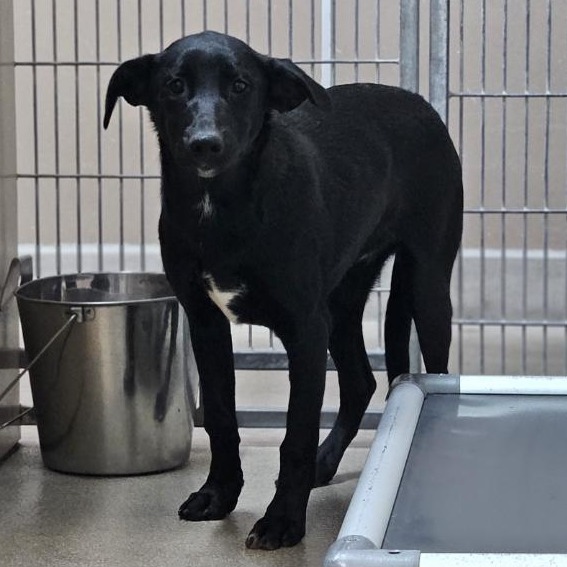
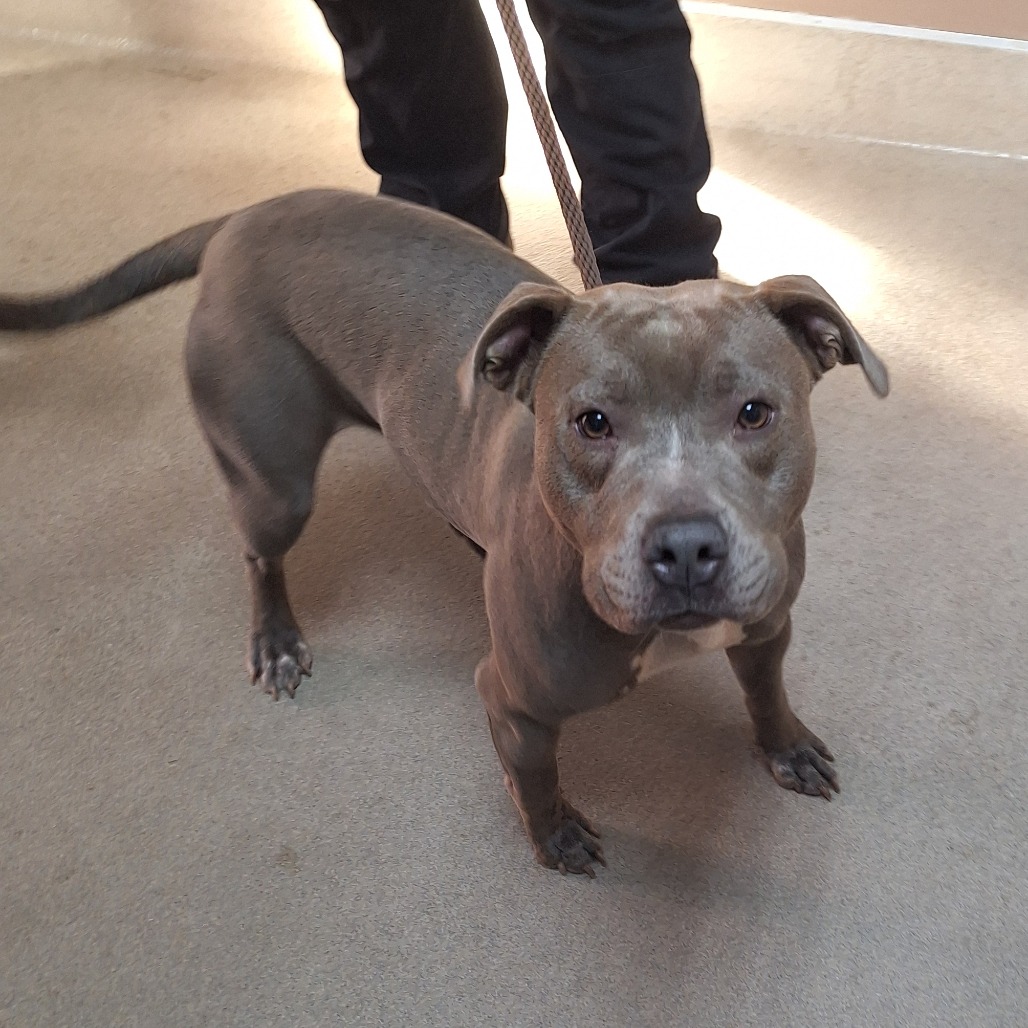
LAKE COUNTY, Calif. — Lake County Animal Care and Control has dogs waiting for new homes this Thanksgiving week.

The dogs available for adoption this week include mixes of Australian shepherd, chow, German shepherd, husky, Labrador Retriever, pit bull terrier, Rottweiler, terrier and shepherd.

Dogs that are adopted from Lake County Animal Care and Control are either neutered or spayed, microchipped and, if old enough, given a rabies shot and county license before being released to their new owner. License fees do not apply to residents of the cities of Lakeport or Clearlake.

Those animals shown on this page at the Lake County Animal Care and Control shelter have been cleared for adoption.

Call Lake County Animal Care and Control at 707-263-0278 or visit the shelter online for information on visiting or adopting.

The shelter is located at 4949 Helbush in Lakeport.

Email Elizabeth Larson at This email address is being protected from spambots. You need JavaScript enabled to view it.. Follow her on Twitter, @ERLarson, and on Bluesky, @erlarson.bsky.social. Find Lake County News on the following platforms: Facebook, @LakeCoNews; X, @LakeCoNews; Threads, @lakeconews, and on Bluesky, @lakeconews.bsky.social. 


Kennel#32 Bluey's preview photo
Kennel#32 Bluey

\Kennel#5 Hank's preview photo
Kennel#5 Hank

Kennel#27 Ziggy's preview photo
Kennel#27 Ziggy

Kennel#20 Duke's preview photo
Kennel#20 Duke

Kennel#11(Little Momma)'s preview photo
Kennel#11(Little Momma)

Kennel#17 Sugar's preview photo
Kennel#17 Sugar

Kennel#8 Dash's preview photo
Kennel#8 Dash

Kennel#34 Pawla's preview photo
Kennel#34 Pawla

Kennel#16 (Bernard)'s preview photo
Kennel#16 (Bernard)

Kennel#9 Roxie's preview photo
Kennel#9 Roxie

Kennel#10 Bally's preview photo
Kennel#10 Bally

Kennel#24 Amber's preview photo
Kennel#24 Amber

Kennel#3(Mabie)'s preview photo
Kennel#3(Mabie)

Kennel#2 Finn's preview photo
Kennel#2 Finn

Kennel#31 Aspen's preview photo
Kennel#31 Aspen

Kennel#14 Chief's preview photo
Kennel#14 Chief

Kennel#25a Honey's preview photo
Kennel#25a Honey

Kennel#25b Sunny's preview photo
Kennel#25b Sunny

Kennel#29 Polar's preview photo
Kennel#29 Polar

Kennel#15 Aria's preview photo
Kennel#15 Aria

Kennel#13 Echo's preview photo
Kennel#13 Echo

Kennel#28 Freya's preview photo
Kennel#28 Freya
 
Kennel#21(Brother)'s preview photo
Kennel#21(Brother)

Kennel#30(Sista)'s preview photo
Kennel#30(Sista)

Kennel#6's preview photo
Kennel#6

Kennel#18's preview photo
Kennel#18


  • 56
  • 57
  • 58
  • 59
  • 60
  • 61
  • 62
  • 63
  • 64
  • 65

Community

  • Lake County Wine Alliance offers sponsor update; beneficiary applications open 

  • Mendocino National Forest announces seasonal hiring for upcoming field season

Public Safety

  • Lakeport Police logs: Thursday, Jan. 15

  • Lakeport Police logs: Wednesday, Jan. 14

Education

  • Woodland Community College receives maximum eight-year reaffirmation of accreditation from ACCJC

  • SNHU announces Fall 2025 President's List

Health

  • California ranks 24th in America’s Health Rankings Annual Report from United Health Foundation

  • Healthy blood donors especially vital during active flu season

Business

  • Two Lake County Mediacom employees earn company’s top service awards

  • Redwood Credit Union launches holiday gift and porch-to-pantry food drives

Obituaries

  • Rufino ‘Ray’ Pato

  • Patty Lee Smith

Opinion & Letters

  • The benefits of music for students

  • How to ease the burden of high electric bills

Veterans

  • CalVet and CSU Long Beach team up to improve data collection related to veteran suicides

  • A ‘Big Step Forward’ for Gulf War Veterans

Recreation

  • Wet weather trail closure in effect on Upper Lake Ranger District

  • Mendocino National Forest seeking public input on OHV grant applications

  • State Parks announces 2026 Anderson Marsh nature walk schedule 

  • BLM lifts seasonal fire restrictions in central California

Religion

  • Kelseyville Presbyterian to host Ash Wednesday service and Lenten dinner Feb. 18

  • Kelseyville Presbyterian Church to hold ‘Longest Night’ service Dec. 21

Arts & Life

  • Auditions announced for original musical ‘Even In Shadow’ set for March 21 and 28

  • ‘The Rip’ action heist; ‘Steal’ grounded in a crime thriller

Government & Politics

  • Lake County Democrats issue endorsements in local races for the June California Primary

  • County negotiates money-saving power purchase agreement

Legals

  • March 3 hearing on ordinance amending code for commercial cannabis uses

  • Feb. 12 public hearing on resolution to establish standards for agricultural roads

How to resolve AdBlock issue?
Refresh this page