How to resolve AdBlock issue?
Refresh this page
How to resolve AdBlock issue?
Refresh this page
Lake County News,California
  • Home
    • Registration Form
  • News
    • Education
    • Veterans
    • Community
      • Obituaries
      • Letters
      • Commentary
    • Police Logs
    • Business
    • Recreation
    • Health
    • Religion
    • Legals
    • Arts & Life
    • Regional
  • Calendar
  • Contact us
    • FAQs
    • Phones, E-Mail
    • Subscribe
  • Advertise Here
  • Login

News

Lakeport Library closes temporarily for construction

LAKE COUNTY, Calif. — The Lakeport Library will close to the public for the entire month of December 2025.

The temporary closure is required to install a new fire suppression system. The upgrade is funded by the California State Library's Building Forward Grant. 

An uninterrupted, one-month closure allows contractors to finish the work safely and on schedule. 

The library is scheduled to reopen for full service in January 2026.

"This is a major project that will protect our collections and facility for years to come," said Count Librarian Christopher Veach. "We are doing everything we can to provide as much service as possible, so the public still has access to the library throughout the construction."

Lakeport Library will maintain core services through a limited-service plan starting in December:

• Curbside pick-up: Call the Lakeport Library at 707-263-8817 to arrange curbside pick-up of requested items. Requested items can also be transferred to another branch for pick-up.

• Bookmobile: The Lake County Bookmobile will be open in the Lakeport Library parking lot on Fridays and Saturdays from 10 a.m. to 4 p.m.

• Digital Access: Patrons can use the online library at library.lakecountyca.gov 24/7. Free public Wi-Fi will remain available from the parking lot.

• Literacy Services: Adult and Family Literacy programs will continue by phone and at other library branches.

• Returns: Due dates for Lakeport items will be automatically extended. Patrons can hold their materials or use the book drop to return their items.

• Unavailable Services: Most events, public computers, and in-person browsing of the collection will stop until the library fully reopens. Some events will relocate or be offered digitally.

For more information about resources and events at Lake County Library, visit https://library.lakecountyca.gov. 

Lakeport Police make arrest following hit and run

Alcohol police officers seized as part of a drunk driving and hit and run arrest on Wednesday, Nov. 19, 2025, in Lakeport, California. Photo courtesy of the Lakeport Police Department.


LAKEPORT, Calif. — A crash at a city park on Wednesday afternoon led to an arrest for felony charges including driving under the influence and hit and run.

The Lakeport Police Department said its officers were dispatched to Xabatin Park at 3:21 p.m. Wednesday for the report of a traffic collision that had escalated to a verbal altercation. 

Officers arrived on scene and met with the reporting party, who stated that the other vehicle had fled the scene. 

While speaking with the reporting party, the suspect vehicle was spotted driving in a nearby parking lot, police said.

Officers conducted a traffic stop on the suspect vehicle and contacted the driver, who had the odor of an unknown alcoholic beverage coming from his breath. 

After conducting field sobriety tests on the driver as well as a breath test, the driver was arrested for felony DUI, felony hit and run, and driving without a driver's license, police said.

Officers also located an open container of alcohol in the front cup holder, as well as several open containers of alcohol in the vehicle. 

The names of the individuals involved in the crash were not released.

“The Lakeport Police Department is dedicated to taking impaired drivers off the roadway and keeping all who work, visit, and live in the City of Lakeport safe,” the agency said in a report on the arrest.

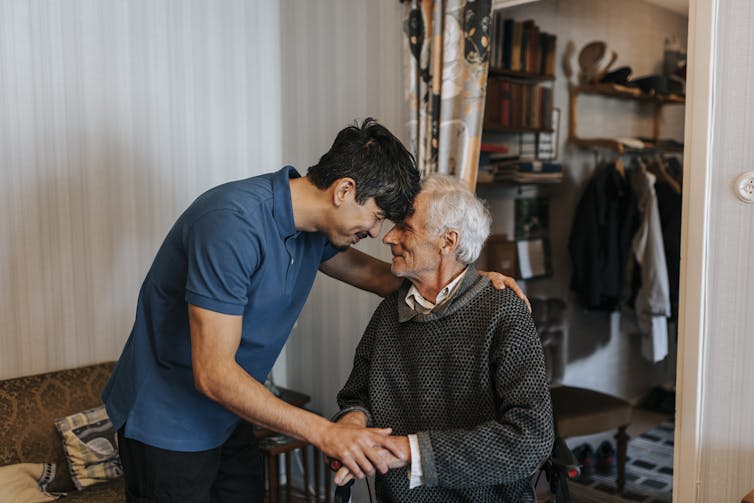
Americans are unprepared for the expensive and complex process of aging – a geriatrician explains how they can start planning

It’s important for older adults to plan for their care as they age. Maskot/Maskot via Getty Images

Hollywood legend Gene Hackman and his wife, Betsy Arakawa, were found dead in their home in February 2025. Hackman had been living with Alzheimer’s and depended on Arakawa as his full-time caregiver.

Disturbingly, postmortem data suggests that Arakawa died of complications from pulmonary Hantavirus several days before her husband passed. The discordant times of death point to a grim scenario: Hackman was left alone and helpless, trapped in his home after his wife’s death.

The couple’s story, while shocking, is not unique. It serves as a warning for our rapidly aging society. The U.S. population is aging, but most Americans are not adequately planning to meet the needs of older adulthood.

As a geriatric physician and medical educator, I care for older adults in both inpatient and outpatient settings. My research and clinical work focus on dementia and surrogate decision-making.

In my experience, regardless of race, education or socioeconomic status, there are some universal challenges that all people face with aging and there are steps everyone can take to prepare.

Aging is inevitable but unpredictable

Aging is an unpredictable, highly individualized process that varies depending on a person’s genetics, medical history, cognitive status and socioeconomic factors.

The majority of older Americans report a strong sense of purpose and self-worth. Many maintain a positive view of their overall health well into their 70s and 80s.

But at some point, the body starts to slow down. Older adults experience gradual sensory impairment, loss of muscle mass and changes in their memory. Chronic diseases are more likely with advancing age.

According to the U.S. Census Bureau, 46% of adults over age 75 live with at least one physical disability, and this proportion grows with age. Even those without major health issues may find that routine tasks like yard work, housekeeping and home repairs become insurmountable as they enter their 80s and 90s.

Some may find that subtle changes in memory make it difficult to manage household finances or keep track of their medications. Others may find that vision loss and slowed reaction time make it harder to safely drive. Still others may struggle with basic activities needed to live independently, such as bathing or using a toilet. All of these changes threaten older adults’ ability to remain independent.

The costs of aging

Nearly 70% of older Americans will require long-term care in their lifetime, whether through paid, in-home help or residence in an assisted living facility or nursing home.

But long-term care is expensive. In 2021, the Federal Long Term Care Insurance Program reported that the average hourly rate for in-home care was US$27. An assisted living apartment averaged $4,800 per month, and a nursing home bed cost nearly double that, at a rate of $276 per day.

Many Americans may be shocked to discover that these costs are not covered by Medicare or other traditional medical insurance. Long-term care insurance covers the cost of long-term care, such as in-home care or nursing home placement. However, what is covered varies from plan to plan. Currently, only a small minority of Americans have long-term care insurance due to high premiums and complex activation rules.

I am not aware of any high-quality, peer-reviewed studies that have demonstrated the cost effectiveness of long-term care insurance. Yet, for many Americans, paying for care out of pocket is simply not an option.

Medicaid can provide financial support for long-term care but only for older adults with very low income and minimal assets – criteria most Americans don’t meet until they have nearly exhausted their savings.

Those receiving Medicaid to cover the costs of long-term care have essentially no funds for anything other than medical care, room and board. And proposed federal financial cuts may further erode the limited support services available. In Michigan, for example, Medicaid-covered nursing home residents keep only $60 per month for personal needs. If individuals receive monthly income greater than $60 – for instance, from Social Security or a pension – the extra money would go toward the cost of nursing home care.

Those who don’t qualify for Medicaid or cannot afford private care often rely on family and friends for unpaid assistance, but not everyone has such support systems.

A nurse helps an older man shave.
Older adults may end up needing help with day-to-day personal care. Klaus Vedfelt/DigitalVision via Getty Images

Planning for the care you want

Beyond financial planning, older adults can make an advance directive. This is a set of legal documents that outlines preferences for medical care and asset management if a person becomes incapacitated. However, only about 25% of Americans over 50 have completed such documentation.

Without medical and financial powers of attorney in place, state laws determine who makes critical decisions, which may or may not align with a person’s wishes. For instance, an estranged child may have more legal authority over an incapacitated parent than their long-term but unmarried partner. Seniors without clear advocates risk being placed under court-appointed guardianship – a restrictive and often irreversible process.

In addition to completing advance directives, it is important that older adults talk about their wishes with their loved ones. Conversations about disability, serious illness and loss of independence can be difficult, but these discussions allow your loved ones to advocate for you in the event of a health crisis.

Who’s going to care for you?

Finding a caregiver is an important step in making arrangements for aging. If you are planning to rely on family or friends for some care, it helps to discuss this with them ahead of time and to have contingency plans in place. As the Hackman case demonstrates, if a caregiver is suddenly incapacitated, the older adult may be left in immediate danger.

Caregivers experience higher rates of stress, depression and physical illness compared with their peers. This is often exacerbated by financial strain and a lack of support. It helps if the people you will be relying on have expectations in place about their role.

For instance, some people may prefer placement in a facility rather than relying on a loved one if they can no longer use the bathroom independently. Others may wish to remain in their homes as long as this is a feasible option.

Connecting with available resources

There are local and federal initiatives designed to help aging adults find and get the help they need. The Centers for Medicare & Medicaid Services recently launched the GUIDE Model to improve care and quality of life for both those suffering from dementia and their caregivers.

This program connects caregivers with local resources and provides a 24-hour support line for crises. While GUIDE, which stands for Guiding an Improved Dementia Experience, is currently in the pilot stage, it is slowly expanding, and I am hopeful that it will eventually expand to provide enhanced coverage for those suffering from dementia nationwide.

The Program for All-Inclusive Care of the Elderly helps dual-eligible Medicare and Medicaid recipients remain at home as they age. This program provides comprehensive services including medical care, a day center and home health services.

Area agencies on aging are regionally located and can connect older adults with local resources, based on availability and income, such as meals, transportation and home modifications that help maintain independence.

Unfortunately, all of these programs and others that support older adults are threatened by recent federal budget cuts. The tax breaks and spending cuts bill, which was signed into law in July 2025, will result in progressive reductions to Medicaid funding over the next 10 years. These cuts will decrease the number of individuals eligible for Medicaid and negatively affect how nursing homes are reimbursed.

The government funding bill passed on Nov. 13 extends current Medicare funding through Jan. 30, 2026, at which point Medicare funding may be reduced.

Even as the future of these programs remains uncertain, it’s important for older adults and their caregivers to be intentional in making plans and to familiarize themselves with the resources available to them.The Conversation

Kahli Zietlow, Physician and Clinical Associate Professor of Geriatrics & Internal Medicine, University of Michigan

This article is republished from The Conversation under a Creative Commons license. Read the original article.

Clearlake City Council to discuss issues with Lake County Sanitation District

LAKE COUNTY, Calif. — The Clearlake City Council will hear a staff proposal to take back the city’s authority regarding governance of the Lake County Sanitation District. 

The council will meet at 6 p.m. Thursday, Nov. 20, in the council chambers at Clearlake City Hall, 14050 Olympic Drive.

The agenda can be found here.

The meeting will be broadcast live on the city's YouTube channel or the Lake County PEGTV YouTube Channel. 

Community members also can participate via Zoom. The pass code is 168709. One tap mobile is available at +16694449171,,82771053751#, or join by phone at 669-444-9171 or 646-931-3860.
 
The public will not be allowed to provide verbal comment during the meeting if attending via Zoom. The public can submit comments in writing for City Council consideration by commenting via the Q&A function in the Zoom platform or by sending comments to the Administrative Services Director/City Clerk at This email address is being protected from spambots. You need JavaScript enabled to view it.. To give the City Council adequate time to review your comments, you must submit your written emailed comments prior to 4 p.m. on the day of the meeting.

One of the key agenda items on Thursday is the discussion and consideration of rescinding the city's delegation of authority to the Lake County Board of Supervisors to serve as the governing board of the Lake County Sanitation District.

The report to the council from City Manager Alan Flora and City Attorney Scott Drexel explains that the city started moving in this direction last year as the result of “significant and frequent concerns over the maintenance, operation and planning efforts of Lake County Special Districts management of the sanitation district, coupled with little cooperation in addressing long standing issues.”

In April of 2024, the City Council adopted Resolution 83-24 notifying the supervisors of the city's concerns and asking to meet to discuss it.

“In February of 2025 the Board of Supervisors finally discussed this request, but at the request of the County Administrative Office delayed any meeting until at least July 2025. Since that time numerous inquiries have been made to various County officials and no meeting has been scheduled to discuss,” the report said.

“The significance and frequency of maintenance, operation, and planning efforts have only grown since the City initially took action. At this time staff recommends rescinding the resolution 83-24, which will force the orderly transition of governance of the Lake County Sanitation District,” Flora and Drexel said in their report.

Under business, the council will hold an update and discussion on the city’s fire hydrant inspection, testing and maintenance ordinance.

The council also will discuss and consider awarding a $3,198,680.33 contract for the Burns Valley/Arrowhead/Olympic Drive Project to Lamon Construction, with authorization for the city manager to approve up to 10% for additional unforeseen contract amendments.

Also on Thursday, the council will hold a public hearing to consider a resolution authorizing the extension of temporary closures of certain roads to reduce illegal dumping and protect the environment, as well as the public health and welfare.

The council also will consider its 2026 meeting calendar, and host presentations for November’s adoptable dogs and a proclamation declaring November 2025 as Alzheimer's Disease Awareness Month.

On the meeting’s consent agenda — items that are considered routine in nature and usually ad
opted on a single vote — are warrants; adoption of a resolution approving an amendment to the State CDBG Program Income Award, #21-CDBG-PI-00036-Senior Center Rehabilitation; the 2025 Mayor's Appointments List; a memo regarding holiday closures of the City Hall Administration Office; and adoption of Resolution No. 2025-43 approving a temporary street closure for the Winter Festival Celebration on Dec. 6.

The council also will hold a closed session for conference with legal counsel regarding the Koi Nation of Northern California v. City of Clearlake and for a performance evaluation of City Manager Alan Flora.

Email Elizabeth Larson at This email address is being protected from spambots. You need JavaScript enabled to view it.. Follow her on Twitter, @ERLarson, and on Bluesky, @erlarson.bsky.social. Find Lake County News on the following platforms: Facebook, @LakeCoNews; X, @LakeCoNews; Threads, @lakeconews, and on Bluesky, @lakeconews.bsky.social. 

Registrar’s office updates Prop 50 vote count; Lake County’s overall vote flips against measure

LAKE COUNTY, Calif. — The Lake County Registrar of Voters Office reported that it has made significant progress in counting thousands of more ballots as part of finalizing the county for the Nov. 4 Statewide Special Election to decide on the congressional redistricting measure, Proposition 50.

On Tuesday, the elections office issued its fourth report on the estimated number of unprocessed ballots still to count during the official canvass period, which ends early in December.

Since its report last week, the elections office has counted more than 5,500 additional ballots, some of which were ballots postmarked on or before Election Day that arrived up until Nov. 12.

As of Tuesday, the Registrar’s Office said it had 658 ballots still to count, including 12 vote-by-mail ballots, 386 provisional/conditional ballots, and 260 vote-by-mail ballots under further review.

The Registrar of Voters Office did not give an indication of how its vote count has changed, however, ballot counts are being reported by the California Secretary of State’s Office.

On Tuesday, the state said the Proposition 50 count showed 7,408,128 “yes” votes, or 64.4%, to 4,095,372 “no” votes, or 35.6%. While the number of ballots is up by several hundred thousand since last week, the percentages of yes and no votes remain the same.

Notably, Lake County’s Proposition 50 count has flipped from the yes votes leading to now the no votes edging out in front by 26 votes. On Tuesday, the no votes were up to 10,184, or 50.1%, with yes votes totaling 10,158, or 49.9%.

The registrar asked voters who received a “signature verification statement” or an “unsigned ballot envelope statement” to submit the completed statements to its office by 5 p.m. Sunday, Nov. 30.

Statements may be returned by fax, 707-263-2742; by email, This email address is being protected from spambots. You need JavaScript enabled to view it.; and in person at the elections office, 325 N. Forbes St. in Lakeport.

The Registrar of Voters Office will be closed on Nov. 27 and 28 in observance of the Thanksgiving holiday. However, a drop box for after-hours and weekend use will be available at the elections office until 5 p.m. Nov. 30.

Replacement forms can be found on the Registrar of Voters’ current election webpage under “Voter Forms.”

For more information, call the Lake County Registrar of Voters Office at 707-263-2372 or toll-free at 888-235-6730, from 8 a.m. to 5 p.m. Monday through Friday. 

The county elections office plans to certify the final results on Dec. 2, two days ahead of the deadline that the state reported. 

The Secretary of State’s Office plans to certify the final results on Dec. 12.

Email Elizabeth Larson at This email address is being protected from spambots. You need JavaScript enabled to view it.. Follow her on Twitter, @ERLarson, and on Bluesky, @erlarson.bsky.social. Find Lake County News on the following platforms: Facebook, @LakeCoNews; X, @LakeCoNews; Threads, @lakeconews, and on Bluesky, @lakeconews.bsky.social. 

New California wolf pack confirmed

OR-93, the Oregon wolf that traveled to California in 2020. Photo by Austin James Jr., Confederated Tribes of Warm Springs.

NORTHERN CALIFORNIA — The California Department of Fish and Wildlife reported late Monday that a new wolf family was confirmed this fall. 

The Grizzly pack consists of two adults and a pup who have established territory in southern Plumas County.

The Grizzly pack’s confirmation means that California still has 10 existing packs, despite the demise of the Beyem Seyo pack in October from an agency kill action on members of that pack tied to conflicts with livestock.

“This year has brought both joyful and tragic news about wolves’ homecoming to California, but I’m elated there’s a new pack and more than 30 new pups roaming our state,” said Amaroq Weiss, senior wolf advocate with the Center for Biological Diversity. “Wolves are still in the early stages of recovery in California and these new arrivals keep their recovery on a positive trajectory.”

At least six of California’s wolf families had pups this year, with a total of 31 pups reportedly born.

The packs confirmed to have had pups this year include the Beyem Seyo pack (six pups), the Lassen pack (two pups), the Whaleback pack (10 pups), the Harvey pack (seven pups) and the Ice Cave pack (six pups).

Known wolf mortalities reported this quarter included the three adults and one pup from the Beyem Seyo pack killed by agency staff in October, two Beyem Seyo pups that likely died of natural causes, a yearling Beyem Seyo wolf found dead in August whose death is under investigation, and the breeding female of the Yowlumni pack, who was found dead in September and likely died from complications associated with mange.

Among several reports issued by the department in its Monday update was one detailing this year’s livestock-wolf predation investigations and conclusions from the beginning of January through Oct. 31. Just over half of livestock losses occurred in the Sierra Valley and were attributed to the Beyem Seyo pack.

“The Beyem Seyo pack’s loss was a tragedy because this family of endangered wolves could still be alive if ranchers had started proactively using conflict-deterrent measures three or four years ago,” said Weiss. “If we strive for success we’ll find it, but if we mistakenly think coexistence with wolves isn’t possible, then failure will find us. Though wolf recovery is still a new thing for people in California, I’m confident we can find pathways to success.”

The first wolf in nearly a century to make California part of his range was OR-7, a radio-collared wolf from Oregon that entered California in late 2011. 

OR-7 traveled across seven northeastern counties in California before returning to southwestern Oregon, where he found a mate and settled down, forming the Rogue pack.

Several of OR-7’s offspring have since come to California and established packs. Those include the original breeding male of the Lassen pack and the breeding female of the Yowlumni pack residing in Tulare County. 

The Shasta pack, California’s first confirmed wolf pack in nearly 100 years, was discovered in 2015 but disappeared a few months later.

The gray wolf (Canis lupus) is native to California but was driven to extinction in the state by the mid-1920s. 

After OR-7 left Oregon for California, the Center and allies successfully petitioned the state to fully protect wolves under California’s endangered species act. 

Wolves are also federally protected in California under the federal Endangered Species Act. It is illegal to intentionally kill any wolves in the state except in defense of human life.


  • 59
  • 60
  • 61
  • 62
  • 63
  • 64
  • 65
  • 66
  • 67
  • 68

Community

  • Lake County Wine Alliance offers sponsor update; beneficiary applications open 

  • Mendocino National Forest announces seasonal hiring for upcoming field season

Public Safety

  • Lakeport Police logs: Thursday, Jan. 15

  • Lakeport Police logs: Wednesday, Jan. 14

Education

  • Woodland Community College receives maximum eight-year reaffirmation of accreditation from ACCJC

  • SNHU announces Fall 2025 President's List

Health

  • California ranks 24th in America’s Health Rankings Annual Report from United Health Foundation

  • Healthy blood donors especially vital during active flu season

Business

  • Two Lake County Mediacom employees earn company’s top service awards

  • Redwood Credit Union launches holiday gift and porch-to-pantry food drives

Obituaries

  • Rufino ‘Ray’ Pato

  • Patty Lee Smith

Opinion & Letters

  • The benefits of music for students

  • How to ease the burden of high electric bills

Veterans

  • CalVet and CSU Long Beach team up to improve data collection related to veteran suicides

  • A ‘Big Step Forward’ for Gulf War Veterans

Recreation

  • Wet weather trail closure in effect on Upper Lake Ranger District

  • Mendocino National Forest seeking public input on OHV grant applications

  • State Parks announces 2026 Anderson Marsh nature walk schedule 

  • BLM lifts seasonal fire restrictions in central California

Religion

  • Kelseyville Presbyterian to host Ash Wednesday service and Lenten dinner Feb. 18

  • Kelseyville Presbyterian Church to hold ‘Longest Night’ service Dec. 21

Arts & Life

  • Auditions announced for original musical ‘Even In Shadow’ set for March 21 and 28

  • ‘The Rip’ action heist; ‘Steal’ grounded in a crime thriller

Government & Politics

  • Lake County Democrats issue endorsements in local races for the June California Primary

  • County negotiates money-saving power purchase agreement

Legals

  • March 3 hearing on ordinance amending code for commercial cannabis uses

  • Feb. 12 public hearing on resolution to establish standards for agricultural roads

How to resolve AdBlock issue?
Refresh this page