How to resolve AdBlock issue?
Refresh this page
How to resolve AdBlock issue?
Refresh this page
Lake County News,California
  • Home
    • Registration Form
  • News
    • Education
    • Veterans
    • Community
      • Obituaries
      • Letters
      • Commentary
    • Police Logs
    • Business
    • Recreation
    • Health
    • Religion
    • Legals
    • Arts & Life
    • Regional
  • Calendar
  • Contact us
    • FAQs
    • Phones, E-Mail
    • Subscribe
  • Advertise Here
  • Login

News

Lakeport City Council to review first-quarter finances, consider new vehicle purchase

LAKEPORT, Calif. — The Lakeport City Council will review the city’s first-quarter financial statements and consider purchasing a new vehicle for the Utilities Department director.

The council will meet Tuesday, Nov. 18, at 6 p.m. in the council chambers at Lakeport City Hall, 225 Park St. 

The agenda can be found here. 

If you cannot attend in person, and would like to speak on an agenda item, you can access the Zoom meeting remotely at this link or join by phone by calling toll-free 669-900-9128 or 346-248-7799. 

The webinar ID is 973 6820 1787, access code is 477973; the audio pin will be shown after joining the webinar. Those phoning in without using the web link will be in “listen mode” only and will not be able to participate or comment. 

Comments can be submitted by email to This email address is being protected from spambots. You need JavaScript enabled to view it.. To give the city clerk adequate time to print out comments for consideration at the meeting, please submit written comments before 3:30 p.m. on Tuesday, Nov. 18.

Under council business, the council will hear an update on the city’s first-quarter financial statements for fiscal year 2025-26. The update will cover unaudited revenue and expenses through Sept. 30 for the General Fund, Water Operating and Maintenance Fund, and Sewer Operating and Maintenance Fund.

The council is also considering spending $35,507.69 to buy a 2026 Chevrolet Colorado Truck to be assigned to the city’s Utilities Director Paul Harris. 

The city already has a vehicle, which was “reassigned to the Utilities Superintendent position approximately one year ago,” according to the staff report. 

It was “originally hoped” that the vehicle could be shared between the superintendent and Harris. “Unfortunately, this has not been the case due to consistent field work requirements,” the staff report said. 

The council is also being asked to approve a temporary month-to-month lease extension for the tenant at 910 Bevins St., keeping rent at $875 per month while the city completes a surplus property review for a potential future transfer or sale.

On the consent agenda — items considered noncontroversial and usually accepted as a slate on one vote — are ordinances; waive reading except by title of any ordinances under consideration at this meeting for either introduction or passage per Government Code Section 36934; approval of the minutes of the City Council regular meeting of November 4, 2025; receive and file the draft minutes of the Measure Z Advisory Committee regular meeting of October 29, 2025; adopt the second reading, Ordinance No. ___, amending Section 3.05.011(E) of the Lakeport Municipal Code to clarify that the dollar thresholds established in subsections A, B, and C automatically adjust as necessary to comply with any adjustment mandated by the State Controller pursuant to Public Contract Code Section 22020; and receive and file the 2025 Sewer System Management Plan (SSMP) Audit Executive Summary for the reporting period May 2, 2022 – May 2, 2025.

Email staff reporter Lingzi Chen at This email address is being protected from spambots. You need JavaScript enabled to view it.. 

2025 Bass Angler Magazine Clear Lake Super 60 Champion wraps up on Sunday

Mason McAbee from Bakersfield, California, earned honors as the 2025 Bass Angler Magazine Super 60 Champion on Sunday, Nov. 16, 2025, in Lake County, California. Photo by Craig Nelson.

LAKE COUNTY, Calif. — There was steady rain on Championship Sunday as the 2025 Bass Angler Magazine Clear Lake Super 60 Champion tournament came to a close. 

Randy McAbee Sr., a legend in the bass fishing community, was on hand for the weigh-in on Sunday afternoon.

He and his wife left Bakersfield at 9 a.m. to watch his son and grandson cross the weigh-in stage.

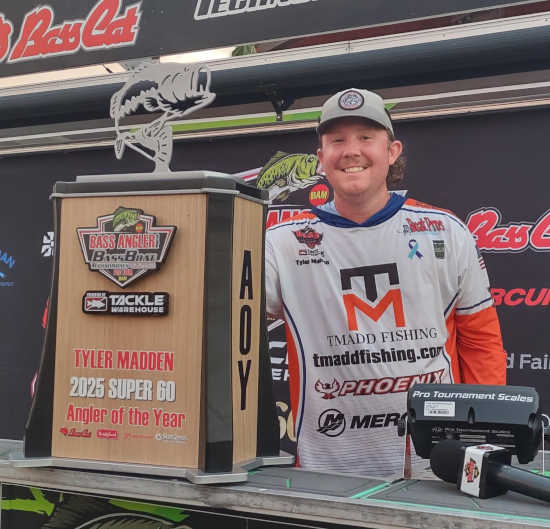
The first angler to sit on the hot seat is the 2025 Angler of the Year Tyler Madden. Madden’s five fish limit that weighed 16.65 pounds was quickly eliminated by Ty Manterola’s 24.54 pound limit.

Manterola remained on the hot seat as the next seven anglers were unsuccessful in bumping him off until Mason McAbee crossed the stage. His five fish limit that weighed 27.19 pounds was enough to claim the title. 

The top prize package is a Bass Cat Pentera Classic paired with a Mercury 200 Pro XS fully rigged with lowrance electronics worth $70,000.

A special thanks to Mark Lassagne and the entire BAM staff for putting on an incredible televised production. 

The top 10 anglers who competed on Super Sunday are listed in order below:

• Mason McAbee, 27.19 pounds, $70,000 Bass Cat / Mercury Package.
• Ty Manterola, 24.54 pounds, $12,500.
• Tyler Madden, 16.65 pounds, $7,500.
• Randy McAbee, 15.78 pounds, $6,000.
• Austin Bonjour, 14.26 pounds, $5,000.
• Sean Minderman, 13.35 pounds, $4,500.
• Bryant Smith, 10.90 pounds, $4,000.
• Colby Pearson, 10.88 pounds, $3,500.
• Robert Riehl, 10.59 pounds, $3,500.
• Luke Johns, 3.81 pounds, $3,500.

Craig Nelson is a former professional golfer who fell in love with tournament bass fishing 20 years ago. He found Lake County after fishing an FLW Stren Series event and never left. He’s the back-to-back winner of the Konocti Classic and runner up in the inaugural WON Bass Clear Lake Open.

Tyler Madden from Brentwood, California, has been named 2025 Bass Angler Magazine Super 60 Angler of the Year. Photo by Craig Nelson.

Community health centers provide care for 1 in 10 Americans, but funding cuts threaten their survival

Community health clinics provide primary care to 1 in 10 people in the U.S., but they often operate on razor-thin margins. Ariel Skelley/Photodisc via Getty Images

Affordable health care was the primary point of contention in the longest government shutdown in U.S. history, which hit 43 days on Nov. 12, 2025.

This fight highlights a persistent concern for Americans despite passage of the landmark Affordable Care Act 15 years ago.

In 2024, 27.2 million Americans, or 8.2% of the population, lacked health insurance entirely. A significant number of Americans have trouble affording health care, even if they do have insurance. The tax and spending package signed by President Donald Trump into law in July 2025 puts a further 16 million Americans at risk of losing their health care insurance by 2034, according to the Congressional Budget Office.

Many people who lack or have insufficient health insurance seek health care from a network of safety net clinics called community health centers. Even though community health centers provide care for 1 in 10 people in the U.S. – and 1 in 5 in rural areas – many people are unaware of their role in the country’s medical system.

As an emergency physician and the director of the student-led community health program at the University of South Carolina School of Medicine in Greenville, I collaborate with the community health center in Greenville and am closely familiar with how these types of providers function.

These clinics often operate on razor-thin margins and already function under continual demands to do more with less. Slated cuts to health care spending from the tax and spending bill and funding uncertainties that were driven by the shutdown threaten to destabilize them further.

What are community health centers?

Community health centers are clinics typically located in low-income areas that provide affordable health care to everyone, regardless of their ability to pay. Their history is rooted in the Civil Rights Movement.

In 1964, as activists traveled through the South to register Black voters, a group of doctors, nurses and social workers that called themselves the Medical Committee for Human Rights formed to provide emergency first aid and to support civil rights workers, volunteers and the local communities they engaged with.

Witnessing how intimately poor health in some of these communities was tied to living in conditions of extreme poverty, the group embraced the mission of providing health care as a way to fight the injustice of racism. Their idea was that treating illnesses and chronic conditions that stemmed from poverty would enable people to rise out of poverty and shape their own destiny.

Federally funded community health centers have their roots in the Civil Rights Movement.

The original community health centers were called Neighborhood Health Centers, and the first two – one in Boston and the other in Mississippi – opened in 1966. They were funded as part of President Lyndon B. Johnson’s War on Poverty, which introduced legislation that launched safety net programs, including Medicare and Medicaid, designed to support Americans experiencing economic hardships.

Community health centers quickly multiplied over the following decades and became a cornerstone of the U.S. health care system. These health centers took a broad approach to patient care, focusing on preventive nutrition and health education. They also sought to help with challenges that weren’t strictly medical but also affect people’s health, such as language barriers, lack of transportation and housing insecurity.

Different types of community health centers

Most community health centers receive the majority of their funding from the federal government. These clinics, called Federally Qualified Health Centers, must fulfill some specific requirements.

For one thing, they must be strategically located to be accessible to people in low-income communities with fewer available medical professionals. They must also minimize other barriers to care – for example, by providing language interpreters and offering telehealth services if appropriate. Additionally, they must be governed by a board in which at least 51% of the members are people who live in the local community.

In 2023, such clinics received over US$5.6 billion in federal funding. In addition to direct federal government support, they often rely on reimbursements from Medicaid to cover their costs. Some also receive state funding and private funding, as well as money from private insurance of the few patients who do carry it.

People who lack Medicaid or private insurance, or who are underinsured, receive care at no cost if their income is below 200% of the poverty level, and on a sliding scale otherwise.

Another type of community health center is often referred to as a “free clinic” or a “look-alike” clinic. These clinics typically rely on private grant funding or charitable donations. They are usually run by volunteers, and they often operate on limited schedules and have limited access to specialists.

In 2024, there were more than 1,500 federally funded health clinics providing services in over 17,000 different locations and more than 775 documented free or charitable clinics across the U.S. Together, these two types of community health centers provide free care to over 30 million people.

Lots of people sitting in a health clinic waiting room
Community health clinics deliver care at no cost to people whose income is below 200% of the poverty level. ADAM GAULT/SPL/Science Photo Library via Getty Images

The community health project that I direct, called Root Cause, falls into a third category of free safety net health care generally referred to as “pop-up” or makeshift medical clinics. These projects vary widely, but Root Cause, which is run by medical students, operates as a monthly health fair that provides simple screenings for high blood pressure and diabetes as well as education on preventive care and healthy lifestyles.

Pop-up projects like ours are more precarious than other types of community health centers, but through grants and partnerships with organizations in Greenville, we have managed to keep this program funded for eight years.

Compounding stressors

Community health centers are extremely cost-effective, providing primary care to more than 10% of the U.S. population at the cost of just 1% of the country’s total health care spending. But with health care costs rising and Medicaid and insurance reimbursements failing to keep up, community health centers are increasingly being asked to do more with less.

The 2025 government shutdown added further uncertainty to community health centers’ operations. Although government funding and reimbursements through Medicare and Medicaid continued, having fewer government workers to complete the administrative tasks that these clinics rely on slowed their access to funds.

In the long term, cuts to Medicaid of up to $1 trillion included in the government’s tax and spending package are likely to decrease community health centers’ funding by limiting Medicaid reimbursements.

Simultaneously, those cuts and other policy changes, such as new work requirements for Medicaid, are likely to strip millions of Americans of health coverage – pushing more people to seek free or low-cost care. Cuts to Supplemental Nutrition Assistance Program benefits would increase food insecurity as well as stress – both factors that directly affect health – and thus may have the same effect.

Given that community health centers provide a kind of long-term stopgap for health care in high-need areas, decreasing their capacity could destabilize other elements of local health care delivery systems. For example, uninsured people who can’t access care at community health centers may turn to already overburdened hospital emergency rooms, which are required by law to treat them.

As funding cuts imperil health care access, the need for safety net health care only grows. These opposing forces may be putting an untenable strain on a vital service so many Americans rely on.The Conversation

Jennifer Spinghart, Clinical Assistant Professor of Biomedical Sciences, University of South Carolina

This article is republished from The Conversation under a Creative Commons license. Read the original article.
Wine Alliance distributes $170,000 to community organizations 

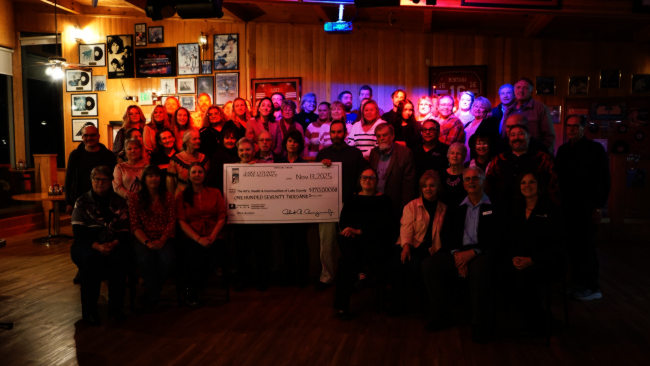
A group of beneficiaries for the 2025 Lake County Wine Auction on Thursday, Nov. 13, 2025, at Konocti Harbor Resort and Spa in Kelseyville, California. Photo by Elizabeth Larson/Lake County News.

KELSEYVILLE, Calif. — Dozens of nonprofits received much-needed funds for their work, a benefit of the annual Lake County Wine Auction.

On Thursday evening, the Lake County Wine Alliance — which puts on the Wine Auction — handed out 43 checks totaling $170,000 to a wide range of nonprofit organizations and schools doing important work across the county.

“This is the culmination of a year’s worth of work,” Rob Roumiguiere, the Wine Alliance’s treasurer, said during the presentation ceremony, held in the tavern at Konocti Harbor Resort and Spa.

This year’s Wine Auction, held in September, also was held at Konocti Harbor, where it will be held again in 2026 — which will mark the event’s 25th year. Roumiguiere said they’ve been holding events two years in a row at the same locations.

This year’s distribution total was down from the $210,000 given in 2024 and $226,000 in 2023. The event record was the $300,000 raised and distributed in 2022.

“Things in the economy are a little stretched right now,” Roumiguiere said.

Roumiguiere explained that the many companies and organizations that sponsor the Wine Auction make it possible to give out as much money as they do. 

One hundred percent of proceeds go to the event’s beneficiaries, selected from applications submitted during a three-month period ending at the start of May.

It’s an expensive event to put on, but well worth it, as it’s become one of the county’s biggest events, he said. 

This year’s auction sold out six weeks ahead of time and was attended by an estimated 400 people, with Clearlake City Manager Alan Flora acting as the master of ceremonies and featuring Congressman Mike Thompson, a benefactor and presenter.

Over its 24 years, the Wine Auction has raised more than $3,273,000, Roumiguiere said. 

Choosing who to give the money to isn’t an easy decision, he said, explaining the many applications they receive and the amount of need.

At the same time, they get to be part of the success of the groups they support. Roumiguiere said they’ve been told that their support has kept high school arts programs going. 

More information about upcoming events and how to apply to be a beneficiary, visit the Wine Alliance website.

Beneficiaries for this year’s Wine Auction are as follows.

• Adopt a Fifth Grader
• Catholic Charities of Northwest California
• City of Clearlake Animal Association
• City of Clearlake Recreation Center
• Clear Lake High School Culinary Program
• First Lutheran Church Food Pantry
• Friends of the Lake County Library
• Health & Wellness Expo
• Highlands Senior Center
• Hope Center
• Jack’s Lavender Farm
• Kelseyville Food Pantry
• Kelseyville High School Culinary Program
• Kelseyville Senior Center
• Lake County Campus Culinary Program
• Lake County Literacy Coalition
• Lake County Sheriffs’ Activities League
• Lake County Young Life
• Lake County Family Resource Center
• Lake County Rural Arts Initiative
• Lakeport Senior Centers Meals on Wheels    
• Live Oak Senior Center
• Lower Lake HS Culinary Program
• Middletown Composite Mountain Bike Team
• Middletown Senior Center
• Mother-Wise
• Northshore Fire Fund
• Operation Santa
• Operation Tango Mike
• People Services
• Proud to be in the Trades
• Second Wind Project
• Shop with a Cop Program
• Totes for Teens
• Vision of Hope Village

Email Elizabeth Larson at This email address is being protected from spambots. You need JavaScript enabled to view it.. Follow her on Twitter, @ERLarson, and on Bluesky, @erlarson.bsky.social. Find Lake County News on the following platforms: Facebook, @LakeCoNews; X, @LakeCoNews; Threads, @lakeconews, and on Bluesky, @lakeconews.bsky.social. 

BAM Super 60 Championship’s second day starts with fog delay

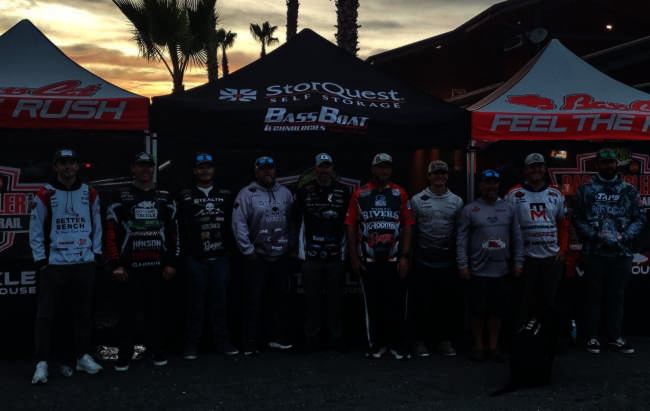
The top 10 anglers who are competing to win the Bass Angler Magazine Super 60 Championship. Photo by Craig Nelson.

LAKE COUNTY, Calif. — Day two, or “Cut Day,” of the Bass Angler Magazine, or BAM, Super 60 Championship opened on Saturday with a prayer from the Tournament Director Michael Bray, the national anthem and a fog delay.

Bray and the owner of BAM, Mark Lassagne, decided to err on the side of caution and hold the field for two hours to ensure safe boating conditions. 

Big Fish honors went to Karl Okerman from Auburn, California. The Big Fish weighed 9.94lbs worth $1,000 and a pair of Costa Sunglasses worth $300 dollars. Photo by Craig Nelson.


Tournament directors have a tough job and making that call commands respect for the anglers safety and the sport of fishing.

With the smell of two stroke oil exhaust in the air and the purr of four stroke motors the professional field of anglers patiently waited for the low fog to lift.

After the eight hour day of fishing was shortened to six, Cut Day was complete and the top 10 anglers’ weights were zeroed for the final day of competition. 

Mason McAbee from Bakersfield, California weighed 27.40 pounds on day 1 and 27.27 pounds on day two for a total weight of 54.67 pounds taking top honors on Cut Day. Photo by Craig Nelson.

On Sunday morning, the championship is up for grabs and the angler who manages their fish and location the best will reign victorious.

The top 10 anglers competing for the Bass Cat prize package worth $70,000 are in order below:

• Mason McAbee from Bakersfield, California;
• Luke Johns from Folsom, California;
• Colby Pearson from Rogue River, Oregon;
• Bryant Smith from Roseville, California;
• Austin Bonjour from Templeton, California;
• Robert Riehl from Stockton, California;
• Randy McAbee from Bakersfield, California;
• Sean Minderman from Spokane, Washington;
• Ty Manterola from Pasco, Washington;
• Tyler Madden, Brentwood, California.

Craig Nelson is a former professional golfer who fell in love with tournament bass fishing 20 years ago. He found Lake County after fishing an FLW Stren Series event and never left. He’s the back-to-back winner of the Konocti Classic and runner up in the inaugural WON Bass Clear Lake Open.

Colby Pearson from Rogue River, Oregon, weighed 27.11 pounds on day 1 and 25.74 pounds on day 2 for a total weight of 52.85 pounds. Photo by Craig Nelson.

Austin Bonjour from Templeton, California, weighed 29.75 pounds on day 1 and 21.48 pounds on day 2 for a total weight of 51.23 pounds. Photo by Craig Nelson.


Helping Paws: A new group of dogs

LAKE COUNTY, Calif. — Lake County Animal Care and Control has more new dogs and puppies ready to be adopted.

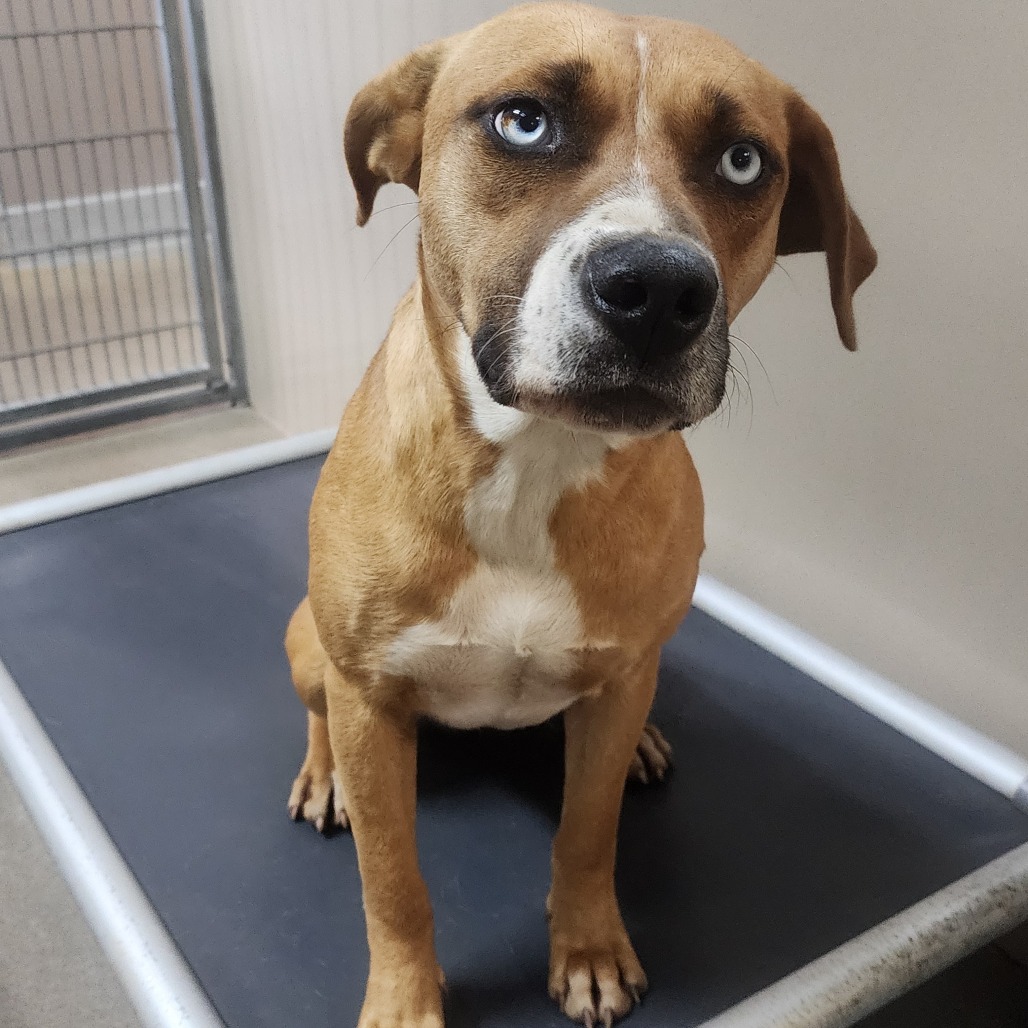
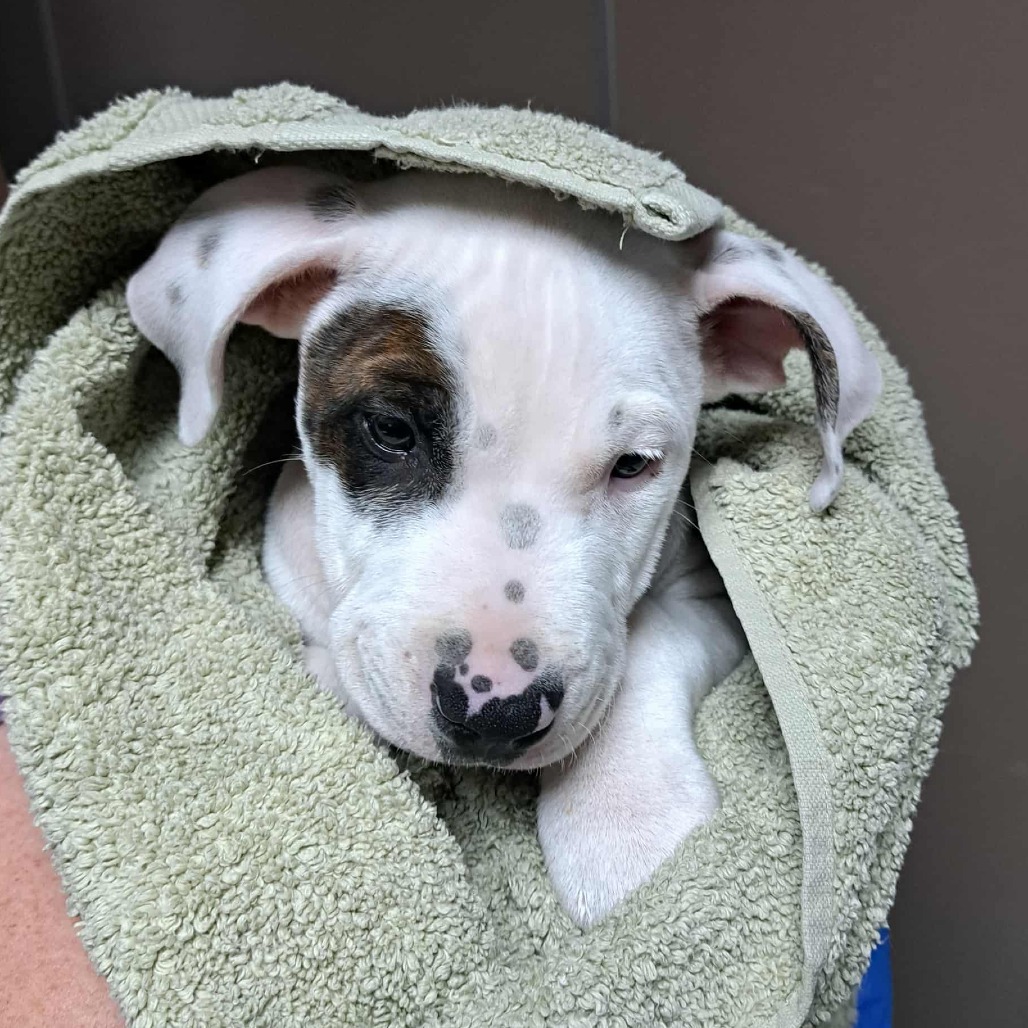
The dogs available for adoption this week include mixes of Australian shepherd, chow, German shepherd, husky, Labrador Retriever, pit bull terrier, Rottweiler, terrier and shepherd.

Dogs that are adopted from Lake County Animal Care and Control are either neutered or spayed, microchipped and, if old enough, given a rabies shot and county license before being released to their new owner. License fees do not apply to residents of the cities of Lakeport or Clearlake.

Those animals shown on this page at the Lake County Animal Care and Control shelter have been cleared for adoption.

Call Lake County Animal Care and Control at 707-263-0278 or visit the shelter online for information on visiting or adopting.

The shelter is located at 4949 Helbush in Lakeport.

Email Elizabeth Larson at This email address is being protected from spambots. You need JavaScript enabled to view it.. Follow her on Twitter, @ERLarson, and on Bluesky, @erlarson.bsky.social. Find Lake County News on the following platforms: Facebook, @LakeCoNews; X, @LakeCoNews; Threads, @lakeconews, and on Bluesky, @lakeconews.bsky.social. 

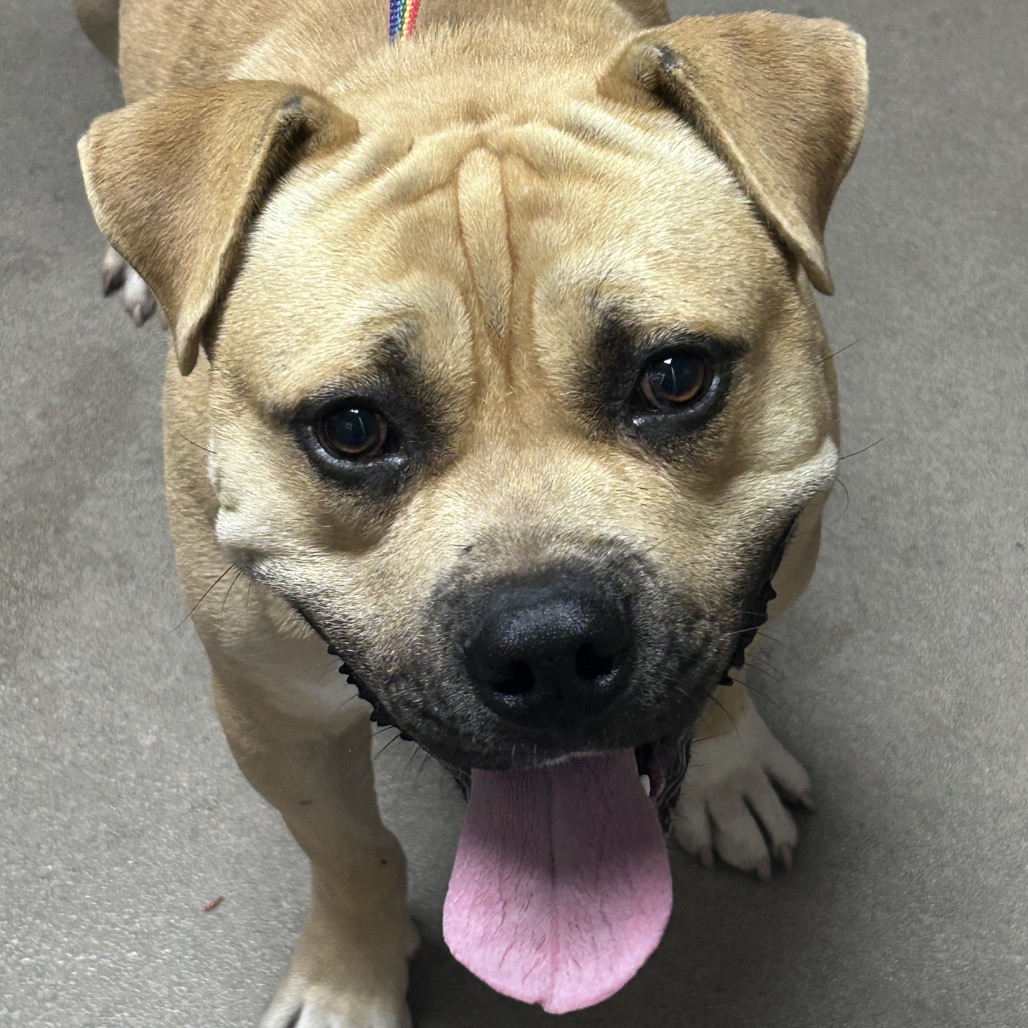
Kennel#26 Blair's preview photo
Kennel#26 Blair

Kennel#4 Amore's preview photo
Kennel#4 Amore

Kennel#22 Azula's preview photo
Kennel#22 Azula

Kennel#32 Bluey's preview photo
Kennel#32 Bluey

Kennel#12 Kora's preview photo
Kennel#12 Kora

Kennel#5 Hank's preview photo
Kennel#5 Hank

Kennel#6 Daisy's preview photo
Kennel#6 Daisy

Kennel#27 Ziggy's preview photo
Kennel#27 Ziggy

Kennel#23 Murphey's preview photo
Kennel#23 Murphey

Kennel#20 Duke's preview photo
Kennel#20 Duke

Kennel#21 Hanson's preview photo
Kennel#21 Hanson

Kennel#19a Petunia's preview photo
Kennel#19a Petunia

Kennel#11(Little Momma)'s preview photo
Kennel#11(Little Momma)

Kennel#17 Sugar's preview photo
Kennel#17 Sugar

Kennel#8 Dash's preview photo
Kennel#8 Dash

Kennel#34 Pawla's preview photo
Kennel#34 Pawla

Kennel#30 Junior's preview photo
Kennel#30 Junior

Kennel#19b(Pico)'s preview photo
Kennel#19b(Pico)

Kennel#16 (Bernard)'s preview photo
Kennel#16 (Bernard)

Kennel#9's preview photo
Kennel#9

Kennel#10 Bally's preview photo
Kennel#10 Bally

Kennel#24's preview photo
Kennel#24

Kennel#18's preview photo
Kennel#18

Kennel#3(Mabie)'s preview photo
Kennel#3(Mabie)

Kennel#2's preview photo
Kennel#2

Kennel#31's preview photo
Kennel#31

Kennel#25a's preview photo
Kennel#25a

Kennel#25b's preview photo
Kennel#25b

  • 61
  • 62
  • 63
  • 64
  • 65
  • 66
  • 67
  • 68
  • 69
  • 70

Community

  • Lake County Wine Alliance offers sponsor update; beneficiary applications open 

  • Mendocino National Forest announces seasonal hiring for upcoming field season

Public Safety

  • Lakeport Police logs: Thursday, Jan. 15

  • Lakeport Police logs: Wednesday, Jan. 14

Education

  • Woodland Community College receives maximum eight-year reaffirmation of accreditation from ACCJC

  • SNHU announces Fall 2025 President's List

Health

  • California ranks 24th in America’s Health Rankings Annual Report from United Health Foundation

  • Healthy blood donors especially vital during active flu season

Business

  • Two Lake County Mediacom employees earn company’s top service awards

  • Redwood Credit Union launches holiday gift and porch-to-pantry food drives

Obituaries

  • Rufino ‘Ray’ Pato

  • Patty Lee Smith

Opinion & Letters

  • The benefits of music for students

  • How to ease the burden of high electric bills

Veterans

  • CalVet and CSU Long Beach team up to improve data collection related to veteran suicides

  • A ‘Big Step Forward’ for Gulf War Veterans

Recreation

  • Wet weather trail closure in effect on Upper Lake Ranger District

  • Mendocino National Forest seeking public input on OHV grant applications

  • State Parks announces 2026 Anderson Marsh nature walk schedule 

  • BLM lifts seasonal fire restrictions in central California

Religion

  • Kelseyville Presbyterian to host Ash Wednesday service and Lenten dinner Feb. 18

  • Kelseyville Presbyterian Church to hold ‘Longest Night’ service Dec. 21

Arts & Life

  • Auditions announced for original musical ‘Even In Shadow’ set for March 21 and 28

  • ‘The Rip’ action heist; ‘Steal’ grounded in a crime thriller

Government & Politics

  • Lake County Democrats issue endorsements in local races for the June California Primary

  • County negotiates money-saving power purchase agreement

Legals

  • March 3 hearing on ordinance amending code for commercial cannabis uses

  • Feb. 12 public hearing on resolution to establish standards for agricultural roads

How to resolve AdBlock issue?
Refresh this page