How to resolve AdBlock issue?
Refresh this page
How to resolve AdBlock issue?
Refresh this page
Lake County News,California
  • Home
    • Registration Form
  • News
    • Education
    • Veterans
    • Community
      • Obituaries
      • Letters
      • Commentary
    • Police Logs
    • Business
    • Recreation
    • Health
    • Religion
    • Legals
    • Arts & Life
    • Regional
  • Calendar
  • Contact us
    • FAQs
    • Phones, E-Mail
    • Subscribe
  • Advertise Here
  • Login

News

Wreaths Across America commemoration takes place Dec. 13

LAKE COUNTY, Calif. — The annual Wreaths Across America commemoration is returning to Lake County this week.

The event will be held at five Lake County cemeteries — Hartley, Kelseyville, Lower Lake, Middletown and Saint Mary’s in Lakeport — at 9 a.m. Saturday, Dec. 13.

This year’s theme is “Keep Moving Forward.”

Wreaths Across America honors veterans through nationwide wreath-laying ceremonies and year-round educational outreach.

During these events, wreaths are placed on the headstones of veterans from all branches of service — Army, Marines, Navy, Air Force, Coast Guard, Space Force and Merchant Marines — as well as POW/MIA memorials. 

In 2024 alone, more than four million wreaths were placed at nearly 5,000 participating cemeteries across the country and overseas.

This tradition reminds all Americans of the sacrifices made to secure our freedoms.

Everyone is invited to attend as youth organizations, volunteers and veteran organizations conduct the Wreaths Across America ceremonies at the five cemeteries and show veterans and their families that they will not be forgotten.      

Community members are urged to take an hour out of the busy holiday season to participate in this heartfelt ceremony, where they will come together to remember the fallen, honor those who serve and teach future generations the true cost of freedom.

Thompson, Newhouse, LaMalfa, Salinas and Panetta introduce bill to deliver tariff relief for wine and specialty crop growers

WASHINGTON, DC – On Tuesday, Congressional Wine Caucus Co-Chairs Rep. Mike Thompson (CA-04) and Rep. Dan Newhouse (WA-04), alongside Rep. Doug LaMalfa (CA-01), Rep. Andrea Salinas (OR-06), and Rep. Jimmy Panetta (CA-19) introduced the Specialty Crop & Wine Producer Tariff Relief Act, legislation to provide direct support to specialty crop growers and wine producers facing economic losses from tariffs.

“Farmers and wine producers in our district are being hit hard with rising costs at home and retaliatory tariffs abroad,” said Thompson. “Northern California agriculture feeds our country and fuels our local economy. When our producers are targeted with tariffs, families here at home feel it immediately. This bill gives them targeted relief they need to stay competitive. California’s agricultural and wine community are cornerstones of our local economies, from family farms to world-class producers. Ensuring they can weather sudden tariff hikes isn’t just an economic necessity, it’s a commitment to protecting the livelihoods that make our district and community special.”

“While many crops are struggling in farm country, specialty crops are at a breaking point,” said Newhouse. “For too long, specialty crops have been left out of the conversation when financial relief for farmers is on the table, and it is essential that we begin to balance the scales. This bipartisan legislation directs USDA to establish a program that delivers much needed relief to our producers who grow some of the highest quality specialty crops in the world. If we want to continue to boost our specialty crop industry, then the federal government must make it a priority when planning for financial assistance for farmers.”

“The agricultural economy is suffering, and dividing farm country isn’t the solution,” said LaMalfa. “Row crop and specialty crop growers in my district are struggling just alike, and this bill ensures all of farm country is supported. We can’t make Americans healthy again if we continue to let tree nut, fruit, and vegetable growers fall behind in bad years while only boosting the safety net for a limited number of crops. I appreciate Reps. Thompson, Newhouse, Salinas, and Panetta for joining me in leading this effort.”

“Oregon’s wine producers and specialty crop growers make world-class products, but as countries impose tariffs in response to Trump’s trade policies, our farmers are facing higher costs, shrinking export opportunities, and real economic pain,” said Salinas. “Specialty crops and wine producers have been harmed by tariffs just like row crops, and the federal government has a responsibility to provide equal relief. This bill ensures they get the support they need to weather the economic hardship tariffs have caused. Ultimately, we need to get rid of Trump’s barriers to trade so our world-class products can truly be enjoyed all over the world, but in the meantime, Congress must step up to help our farmers where the Trump Administration has failed them.”

“This administration’s tariff policy has significantly impacted farmers of all types of crops from all across the country,” said Panetta. “That’s why as proud representatives of regions that produce specialty crops, we must ensure that that type of agriculture is protected and included in any relief type of package. Our bipartisan Specialty Crop & Wine Producer Tariff Relief Act will provide specialty crop farmers with the direct payments program that’s needed to ensure that they continue to play a vital part of our nation’s agriculture."

Specialty crop growers and wine producers rely on robust export markets around our world. With the enactment of new tariffs and trade barriers, our agricultural communities have suffered significant losses. 

Foreign competitors are filling the gap left by declining U.S. exports, strengthening their position while American producers are struggling with new market uncertainties.

This key agricultural sector is experiencing significant volatility, raising prices and reduced competitiveness. Producers are facing significant challenges accessing once reliable markets and seeing input costs skyrocket. 

This legislation would provide much needed relief to this key agricultural sector and ensure they are provided the financial resources necessary to whether the current market while Congress does its work to negotiate and implement trade agreements.

The Specialty Crop & Wine Producer Tariff Relief Act will support local growers and producers by:

• Creating a direct pay program through USDA for specialty crop growers and wine producers experiencing “covered losses” caused by increased foreign tariffs.
• Allows USDA to purchase surplus specialty crops for use in nutrition programs such as school meals and SNAP.
• Authorizes funds to be made available through 2030.
 
Thompson represents California’s Fourth Congressional District, which includes all or part of Lake, Napa, Solano, Sonoma and Yolo counties. 

What 38 million obituaries reveal about how Americans define a ‘life well lived’

Obituaries provide a window into the prevailing traditions and moral values of their time. alexmillos/iStock via Getty Images Plus

Obituaries preserve what families most want remembered about the people they cherish most. Across time, they also reveal the values each era chose to honor.

In a study published in the journal Proceedings of the National Academy of Sciences, we analyzed 38 million obituaries of Americans published from 1998 to 2024. We identified the values families most often highlight, and how those values shift across generations, regions and major historical events.

Specifically, working with psychologists Liane Young and Thomas Mazzuchi, we examined the language used on Legacy.com, an online platform where families often post obituaries and share memories of loved ones.

During their lifetime, most people tend to be guided by a small set of broad values like caring for others, honoring tradition, keeping loved ones safe and seeking personal growth. To understand how these values showed up in remembrance, we used text-analysis tools built on curated lists of everyday words people use when talking about those themes.

By analyzing the words that appeared again and again in memorials, we could see which values communities chose to emphasize when looking back on the lives of their loved ones, and how those patterns changed over time. Because the dataset included 38 million obituaries, the analysis ran on a supercomputer.

Across nearly 30 years of obituaries, words related to the value “tradition” appeared most often – many tributes described religious participation and enduring customs. Words related to the value “benevolence” – caring for the welfare of others – were also consistently prominent. In fact, tradition and benevolence formed the dominant value profile across the dataset: They appeared in more than 70% of the obituaries. By contrast, words related to values like “achievement” and “power” appeared far less often.

Historical events did leave a mark. After the attacks of Sept. 11, 2001, the language families used to remember loved ones shifted compared with the period just before the attacks – and those shifts persisted for at least a year. Words related to the value “security” – including terms like “surviving,” “health” and “order” – showed up less often. At the same time, families used more language related to values like “benevolence” and “tradition.” Terms like “caring,” “loyal” and “service” showed up more often. These changes were especially strong in New York, where the attacks had the most direct impact.

COVID-19, however, produced the most dramatic shifts. Beginning in March 2020, benevolence-related language – including terms like “love,” “sympathy” and “family” – declined sharply, and hasn’t been the same since. Tradition-related language – terms like “service,” “faith” and “heritage” – initially declined as well, then rose above baseline levels during later stages of the pandemic.

These changes show that collective disruptions impact the moral vocabulary families use when commemorating loved ones. They shift what it means to have lived a good life.

We also saw differences that reflect stereotypes about gender and age. Obituaries for men contained more language linked to achievement, conformity and power. Meanwhile, obituaries for women contained more language associated with benevolence and enjoying life’s pleasures.

An elderly woman works on a laptop, looking grim, with a bouquet of flowers behind it.
There are notable differences in the values highlighted in obituaries of older versus younger adults. AWelshLad/iStock / Getty Images Plus

Older adults were often remembered more for valuing tradition. Younger adults, on the other hand, were often remembered more for valuing the welfare of all people and nature, and for being motivated to think and act independently. Value patterns in men’s obituaries shifted more across the lifespan than those in women’s. In other words, the values highlighted in younger and older men’s obituaries differed more from each other, while women’s value profiles stayed relatively consistent across age.

Why it matters

The most visited parts of print newspapers and online memorial sites, obituaries offer a window into what societies value at different points in time.

This study contributes to the broader scientific understanding of legacy. People often hold strong preferences about how they want to be remembered, but far less is known about how they actually are remembered, in part because large-scale evidence about real memorials is rare. Our analysis of millions of obituaries helps fill that gap.

What’s next

Obituaries allow researchers to trace cultural values across time, geography and social groups. Future work can examine differences across race and occupation, as well as across regions. It could also look to earlier periods using historical obituary archives, such as those preserved in older newspapers and local records.

Another direction is to examine whether highlighting how often kindness shows up in obituaries could inspire people to be more caring in daily life.

Understanding what endures in memory helps clarify what people consider meaningful; those values shape how they choose to live.

The Research Brief is a short take on interesting academic work.The Conversation

Stylianos Syropoulos, Assistant Professor of Psychology, Arizona State University; David Markowitz, Associate Professor of Communication, Michigan State University, and Kyle Fiore Law, Postdoctoral Research Scholar in Sustainability, Arizona State University

This article is republished from The Conversation under a Creative Commons license. Read the original article.

State announces $1 million for Lake County Fairgrounds

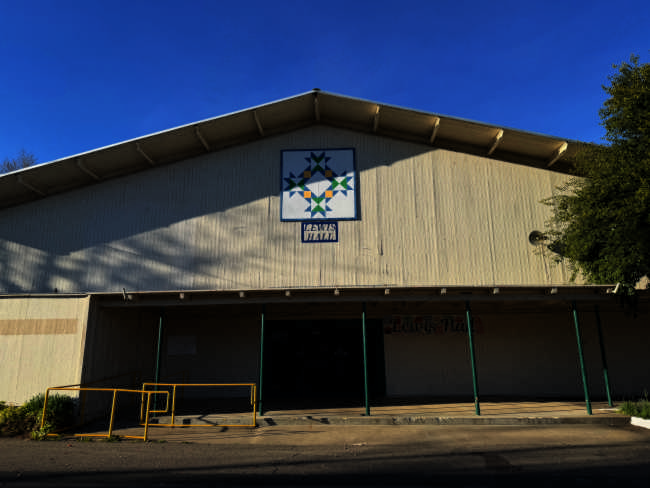
Lewis Hall at the Lake County Fairgrounds is one of the buildings expected to get upgrades with a $1 million allocation from the state. Photo by Lingzi Chen/Lake County News.

LAKEPORT, Calif. — State officials on Monday announced a $1 million investment to address long-standing facility repairs and upgrades at the Lake County Fairgrounds.

“We've secured a million dollars that will be invested with the Lake County Fair that will allow the Fair Board to be able to get to work on some critical projects,” said Sen. Mike McGuire at the Sponsor Building of the Lake County Fairgrounds.

The funding will address “deferred maintenance” built up over the decades, McGuire said, including fixing leaky roofs, renovating bathrooms and rehabilitating the commercial kitchen.

Lake County Board of Supervisors Chair Eddie Crandell and supervisors Brad Rasmussen, Jessica Pyska and Bruno Sabatier attended the announcement event, along with Lakeport City Council members Stacey Mattina and Brandon Disney. 

“It's not easy, especially since the money isn't always there for deferred maintenance, and they have been tenacious,” McGuire said of the Lake County Fair Board that has been pushing for funding. “They've been laser-focused on bringing positive change to the fairgrounds, and I want to say thank you to your board for stepping up time and time again.”

McGuire later told Lake County News that the funding comes from the state general fund. The dollars will flow to the Lake County Fairgrounds, which plans to go out to bid on the projects by mid-2026, with construction expected to begin by the end of the year.

“We're super excited to be able to go out to bid and see what we can do with this money. And we're so grateful,” said Lake County Fair Board President Traci Medina, reflecting on decades of pushing for these improvements. “It’s taken us 20 years to make this kind of a dent in anything." 

Fair Board member Nara Dahlbacka told Lake County News that the fairgrounds’ funding needs predate her time on the board, and she has focused on communicating those needs to local, state and federal officials. 

The board has applied for grants in the past, including a resilience grant a few years ago, but was not awarded funding. “The need hasn’t decreased,” Dahlbacka said. 

About a month ago, “Sen. McGuire found money in the budget,” Dahlbacka said. “It was an awesome surprise.”

“This is so exciting, and it's about damn time,” McGuire said in a brief interview after the announcement, standing in the winter’s sunny breezes against the backdrop of the fairgrounds’ open race track, where green fields stretched beneath a clear blue sky.

Sen. Mike McGuire, left, shakes hands with Lake County Fair Chief Executive Officer Drew Jacoby on Monday, Dec. 8, 2025, during an announcement about a $1 million allocation of funds to upgrade the Lake County Fairgrounds. Photo by Lingzi Chen/Lake County News.

Significance of $1 million for the community hub

“That money is going to go a long way,” said Lake County Fair Chief Executive Officer Drew Jacoby at the announcement event. 

“And for me, it's not only about fixing the roofs — It's once that roof is fixed, all of a sudden this hall can be a warming center for the county. Once the kitchens are fixed here in Barty’s cafe, they can be a commercial kitchen,” Jacoby said.

Jacoby said food vendors have been asking monthly if there is a commercial kitchen they can use, and he hasn’t been able to say yes — until now. 

He added that the state’s investment will help repair critical infrastructure, support long-term success for the facility and allow the fairgrounds to develop new projects.

“Today is about economic development,” McGuire added. “The more work that we do here at the fairgrounds, the better off.”

He also noted the role of the fairgrounds as the hub for evacuation during disasters such as wildfires. 

“It just helps us to be that place that the community can come to and feel safe in the buildings,” Medina told Lake County News. “We're trying to get it back to the point where the community thinks of this as a place to have their events.”

Lake County Fair is one of the longest-running fairs in California, with the first fair held in 1880 in Lower Lake. In 1938, its governing body — the 49th District Agricultural Association, now commonly known as the Lake County Fair Board — was formed through the state Legislature.

In 1947, the board purchased the first piece of the current fairgrounds on Martin Street with $14,000 and held the first fair on the new site the following year.  

Several key structures were added in the 1950s, including Lewis Hall and Barty’s Café in 1950 and the Little Theater in 1955 — all of which Sen. McGuire highlighted as priorities for upcoming repairs.

“Some of these buildings probably haven't had any major refreshments since they were built,” Medina of the Fair Board told Lake County News, referring to facilities built in the 1950s and 1960s.

“It’s very exciting,” she said, adding that it brings tears to the eyes “because it's such a blessing.”

Email staff reporter Lingzi Chen at This email address is being protected from spambots. You need JavaScript enabled to view it.. 


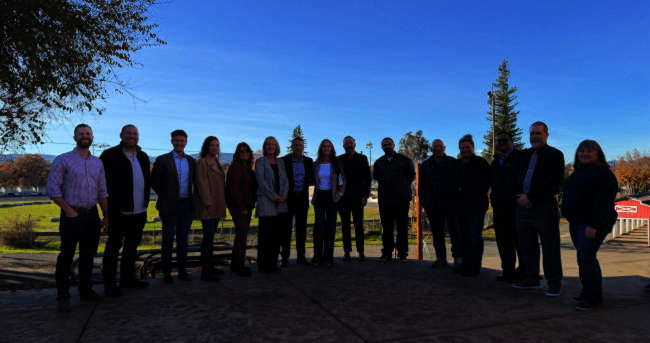
Members of the Lake County Fair Board, the Lake County Board of Supervisors, the County Administrative Office and the Lakeport City Council joined with Sen. Mike McGuire for an announcement on Monday, Dec. 8, 2025, about funds to upgrade the Lake County Fairgrounds. Photo by Lingzi Chen/Lake County News.

Lakeport Planning Commission to hold final meeting of the year

LAKEPORT, Calif. — The Lakeport Planning Commission will meet for the last time this year and elect its officer for 2026.

The commission will meet at 5:30 p.m. Wednesday, Dec. 10, in the council chambers at Lakeport City Hall, 225 Park St.

The agenda is available here.

To speak on an agenda item, access the meeting remotely here; the meeting ID is 814 1135 4347, pass code is 847985. 

To join by phone, dial 1-669-444-9171; for one tap mobile, +16694449171,,81411354347#,,,,*847985#.

Comments can be submitted by email to This email address is being protected from spambots. You need JavaScript enabled to view it.. To give the city clerk adequate time to print out comments for consideration at the meeting, please submit written comments before 4:30 p.m. on Wednesday, Dec. 10.

The commission’s main item of business is its annual election of officers for the calendar year of 2026. 

The commission will next meet on Jan. 14.

Email Elizabeth Larson at This email address is being protected from spambots. You need JavaScript enabled to view it.. Follow her on Twitter, @ERLarson, and on Bluesky, @erlarson.bsky.social. Find Lake County News on the following platforms: Facebook, @LakeCoNews; X, @LakeCoNews; Threads, @lakeconews, and on Bluesky, @lakeconews.bsky.social. 

Lakeport Economic Development Advisory Committee to meet Dec. 10

LAKEPORT, Calif. — The Lakeport Economic Development Advisory Committee will hold its final meeting of the year this week.

The committee, or LEDAC, will meet from 7:30 to 9 a.m. Wednesday, Dec. 10, in the council chambers at Lakeport City Hall, 225 Park St.

The meeting also will be available via Zoom; meeting ID is 842 2886 1335, pass code is 594383 or join by phone, 1 669 900 6833.

LEDAC’s meetings are open to the public.

On the agenda are economic development updates from Ben Rickelman, Lake County deputy county administrative officer for economic development, and Nicole Flora, executive director of the Lake County Economic Development Corp. and the Lake County Chamber of Commerce.

The group also will discuss the 2025 Business Walk.

Other business will include the addition of new members in 2026. At its meeting last week, the Lakeport City Council reappointed Pam Harpster and Lissette Hayes, and made a new appointment of Victoria Pulido to two-year terms, which go into effect in January.

Three new permanent voting seats also were added by the council to LEDAC, representing the Lake County Fair,  the Big Valley Band of Pomo Indians and the Scotts Valley Band of Pomo Indians.

The committee will next meet on Jan. 14.

LEDAC advocates for a strong and positive Lakeport business community and acts as a conduit between the city and the community for communicating the goals, activities and progress of Lakeport’s economic and business programs.

Members are Chair Wilda Shock, Vice Chair Laura Sammel, Secretary JoAnn Saccato, Bonnie Darling, Candy De Los Santos, Pam Harpster, Lissette Hayes, Euline Olinger, Carl Porter, Marie Schrader and Tim Stephens. City staff who are members include City Manager Kevin Ingram and Community Development Department Director Joey Hejnowicz, Associate Planner Victor Fernandez and Chief Building Officer Bethany Moss Childers.

Email Elizabeth Larson at This email address is being protected from spambots. You need JavaScript enabled to view it.. Follow her on Twitter, @ERLarson, and on Bluesky, @erlarson.bsky.social. Find Lake County News on the following platforms: Facebook, @LakeCoNews; X, @LakeCoNews; Threads, @lakeconews, and on Bluesky, @lakeconews.bsky.social. 

  • 45
  • 46
  • 47
  • 48
  • 49
  • 50
  • 51
  • 52
  • 53
  • 54

Community

  • Lake County Wine Alliance offers sponsor update; beneficiary applications open 

  • Mendocino National Forest announces seasonal hiring for upcoming field season

Public Safety

  • Lakeport Police logs: Thursday, Jan. 15

  • Lakeport Police logs: Wednesday, Jan. 14

Education

  • Woodland Community College receives maximum eight-year reaffirmation of accreditation from ACCJC

  • SNHU announces Fall 2025 President's List

Health

  • California ranks 24th in America’s Health Rankings Annual Report from United Health Foundation

  • Healthy blood donors especially vital during active flu season

Business

  • Two Lake County Mediacom employees earn company’s top service awards

  • Redwood Credit Union launches holiday gift and porch-to-pantry food drives

Obituaries

  • Rufino ‘Ray’ Pato

  • Patty Lee Smith

Opinion & Letters

  • The benefits of music for students

  • How to ease the burden of high electric bills

Veterans

  • CalVet and CSU Long Beach team up to improve data collection related to veteran suicides

  • A ‘Big Step Forward’ for Gulf War Veterans

Recreation

  • Wet weather trail closure in effect on Upper Lake Ranger District

  • Mendocino National Forest seeking public input on OHV grant applications

  • State Parks announces 2026 Anderson Marsh nature walk schedule 

  • BLM lifts seasonal fire restrictions in central California

Religion

  • Kelseyville Presbyterian to host Ash Wednesday service and Lenten dinner Feb. 18

  • Kelseyville Presbyterian Church to hold ‘Longest Night’ service Dec. 21

Arts & Life

  • Auditions announced for original musical ‘Even In Shadow’ set for March 21 and 28

  • ‘The Rip’ action heist; ‘Steal’ grounded in a crime thriller

Government & Politics

  • Lake County Democrats issue endorsements in local races for the June California Primary

  • County negotiates money-saving power purchase agreement

Legals

  • March 3 hearing on ordinance amending code for commercial cannabis uses

  • Feb. 12 public hearing on resolution to establish standards for agricultural roads

How to resolve AdBlock issue?
Refresh this page