How to resolve AdBlock issue?
Refresh this page
How to resolve AdBlock issue?
Refresh this page
Lake County News,California
  • Home
    • Registration Form
  • News
    • Education
    • Veterans
    • Community
      • Obituaries
      • Letters
      • Commentary
    • Police Logs
    • Business
    • Recreation
    • Health
    • Religion
    • Legals
    • Arts & Life
    • Regional
  • Calendar
  • Contact us
    • FAQs
    • Phones, E-Mail
    • Subscribe
  • Advertise Here
  • Login

News

6 myths about rural America: How conventional wisdom gets it wrong

Dusk in downtown Lumberton, county seat in Robeson County, N.C., the most diverse rural county in America. AP Photo/David Goldman

Roughly 1 in 5 Americans live in rural areas – places the federal government defines based on small populations and low housing density.

Yet many people understand rural America through stereotypes. Media and political conversations often use words or terms such as “fading,” “white,” “farming,” “traditional” and “politically uniform” to describe rural communities.

In reality, rural communities are far more varied. Getting these facts right matters because public debates, policies and resources – including money for programs – often rely on these assumptions, and misunderstandings can leave real needs neglected.

We are rural demographers at Louisiana State University and Syracuse University who study the causes and consequences of well-being in rural America. Here we outline six myths about rural America – a few among many – highlighted in our recent book “Rural and Small-Town America: Context, Composition, and Complexities.”

Myth 1: Rural America is disappearing due to depopulation

Many people think rural America is emptying out. The story is more complicated. It’s true that from 2010 to 2020 most rural counties lost population. But about one-third grew, especially those near cities or those with lakes, mountains and other natural attractions. And there have been times, like in the 1970s and 1990s, when rural populations grew faster than cities – periods called “rural rebounds.”

An important thing to know about rural population change is that the places defined as “rural” change over time. When a rural town grows enough, the U.S. Office of Management and Budget reclassifies it as “urban.” In other words, rural America isn’t disappearing – it’s changing and sometimes urbanizing.

Myth 2: Most rural Americans live on farms

Farming is still important in many rural places, but it’s no longer the way most rural Americans make a living. Today, roughly 6% of rural jobs are in agriculture. And most farm families also have members who work off-farm jobs, often for access to health insurance and retirement benefits.

A bigger source of employment in rural America is manufacturing. In fact, manufacturing plays a larger role as a share of jobs and earnings in rural areas than in cities. That also means that deindustrialization – steady job losses in manufacturing over the decades – has been especially painful in rural America. Unlike large cities with lots of employers, rural communities rely on just a few. When a rural plant or factory closes, the local impacts are often devastating.

The largest share of rural jobs today is in service-sector work, such as retail, food service, home health care and hospitality. These jobs often pay low wages, offer few benefits and have unstable hours, making it harder for many rural families to stay financially secure.

Myth 3: Only white people live in rural America

People often picture rural America as mostly white, but that’s not the full story. About 1 in 4 rural residents are nonwhite. Hispanic and Black people make up the largest shares, and Indigenous people have a greater portion of their population living in rural areas than any other racial group.

Rural America is also getting more racially and ethnically diverse every year. Young people are leading that change: About 1 in 3 rural children are nonwhite. The future of rural America is racially diverse, even if popular images don’t always show it.

Myth 4: Rural America is healthier than urban America

Many people imagine rural life as healthier than city life. But the opposite is true. People in rural areas die younger and at higher rates than people in cities. Scholars call this the “rural mortality penalty,” and it has been widening for years. The COVID-19 pandemic made the gap even larger due to higher death rates in rural communities.

This isn’t just because rural areas have more older people. Rural working-age people, ages 25 to 64, are dying younger than their urban peers, and the gap is growing. This trend is being driven by nearly all major causes of death. Rural residents have higher rates of early death from cancers, heart disease, COVID-19, motor vehicle crashes, suicide, alcohol misuse, diabetes, stroke and pregnancy-related complications.

Myth 5: Rural families are more traditional than urban families

Images of rural life often evoke households in which married couples are raising children in traditional family structures. Historically, rural children were more likely to live with married parents. But that’s no longer the case.

Today, rural children are less likely than urban children to live with married parents and are more likely to live with cohabiting unmarried parents or in the care of grandparents or other relatives. Partly as a result, rural child poverty rates are higher than urban rates, and many rural families rely on safety-net supports such as the food aid program SNAP. Rural families are diverse, and many are economically vulnerable.

Myth 6: A new ‘rural revolt’ gave Donald Trump his presidential victories

Many rural voters have supported Donald Trump, but this didn’t happen overnight.

For much of the 20th century, Democrats drew major support from rural areas due to the party’s alignment with the working class and 100 years of single-party rule in the South spanning Reconstruction to the civil rights era.

However, social class and regional flips in voting patterns have meant rural voters have been shifting toward Republicans for nearly 50 years. The last time rural and urban residents voted within 1 percentage point of each other was in 1976, when Georgia peanut farmer and former governor Jimmy Carter was elected.

The partisan gap between rural and urban voters averaged 3 percentage points in the 1980s and 1990s, before growing to 10 percentage points in the 2000s and 20 percentage points in recent cycles. So, Trump’s support in rural America was not a new “revolt” but part of a long-term trend.

And in 2024, the key geographic story wasn’t rural voters at all – it was the sharp drop in turnout in big cities. Both candidates got fewer urban votes than in 2020, with Kamala Harris capturing over 10 million fewer votes in major and medium-sized cities than Joe Biden had four years earlier.

The Conversation

Tim Slack, Professor of Sociology, Louisiana State University and Shannon M. Monnat, Professor of Sociology, Syracuse University

This article is republished from The Conversation under a Creative Commons license. Read the original article.


Northshore Fire Protection District receives $160,000 grant for new emergency response equipment

LUCERNE, Calif. — The Northshore Fire Protection District has received a $160,000 grant from the California Office of Traffic Safety to purchase new life-saving equipment.

The specialized safety tool, known as the “jaws of life,” is used by first responders to safely rescue crash victims trapped inside a vehicle.

“We are incredibly grateful for this grant, which will allow us to purchase state-of-the-art rescue tools and provide training to first responders that is critical for the care of people injured in crashes,” District Fire Chief Shannon Banks said. “These tools will significantly impact our ability to protect and serve our community, allowing us to respond even more effectively in times of crisis.”

The Office of Traffic Safety told Lake County News that the grant to Northshore Fire was part of nearly $3 million that it provided to 35 fire departments statewide to support first responders in helping to treat crash victims faster.

Northshore Fire is one of the largest fire districts in California, covering 350 square miles. 

Post-crash care is vital in preventing serious injuries from turning deadly. Delays in providing expedient care impact survival chances. Reducing the time it takes to get to the patient, treating what can be treated, and transporting the patient to the hospital can be the difference between life and death. 

According to federal data, 42% of people who were killed in car crashes were alive when first responders arrived. 

New “jaws of life” hydraulic rescue tools will help first responders deliver life-saving measures for patients trapped in vehicles, significantly increasing chances of survival.

OTS said many rural districts have older tools that take longer to set up and operate compared to the newer equipment available.

“The faster they can set up and use the appropriate extrication equipment at the scene of a crash, the quicker they can reach and treat a crash victim,” the agency told Lake County News.

Funding for this program was provided by a grant from the California Office of Traffic Safety, through the National Highway Traffic Safety Administration.

OTS said its awards grants based on identifiable traffic safety problems, proposed strategies to improve the safety of roads, as well as proven measures taken to reduce traffic deaths and injuries. 

California Transportation Commission approves latest round of projects; Middletown highway work receives funding

LAKE COUNTY, Calif. — The California Transportation Commission on Tuesday approved $1.1 billion to fund new zero-emission buses, charging stations, and related infrastructure, as well as investments to restore aging bridges, improve highway safety, and increase mobility on local streets. 

The latest round of funds also includes a project in Lake County. 

Guided by the Governor’s Build More, Faster – For All infrastructure agenda, state officials said these improvements will make California communities safer and more climate resilient.

“Today’s investments show what it looks like when California chooses to lead with both urgency and intention,” said California Transportation Secretary Toks Omishakin on Tuesday. “By expanding zero-emission options and strengthening infrastructure in every corner of the state, we are delivering on Gov. Newsom’s vision to build a modern, sustainable transportation system for all.”

In Lake County, approximately $340,000 toward slide removal, drainage improvements and roadway repairs on Route 175 near Middletown.

Other projects approved in Caltrans’ District 1 include:

Approximately $9.1 million in federal IIJA funding toward construction of a roundabout on U.S. 199 at Elk Valley Cross Road near Crescent City in Del Norte County.

Approximately $3.5 million toward the replacement and construction of buildings at the Orleans Maintenance Station on Route 96 and the Blue Lake Weigh Station on Route 299 in Humboldt County.

Approximately $1.4 million including more than $1.3 million in federal IIJA funding and $150,000 in SB1 funding toward bridge improvements on U.S. 101 at Arcata Overhead No. 04-0079 and at South Fork Eel River Bridge and Separation No. 04-0065 in Humboldt County.

Approximately $18 million in SB1 funding for emergency allocations toward slope stabilization, roadway and guardrail repairs and rock catchment fencing following multiple slides caused by winter storms in 2024 and heavy rains in 2025 on Route 36 east of Swimmers Delight in Humboldt County.

Approximately $16.5 million in SB1 funding for emergency allocations toward roadway repairs, drainage improvements and the construction of a retaining wall on Route 1 near Rockport in Mendocino County.

Approximately $5.5 million in SB1 funding for emergency allocations toward roadway repairs, drainage improvements and the construction of retaining walls following multiple winter storms in 2024 on Route 36 east of Bridgeville in Humboldt County.

Approximately $3.3 million in SB1 funding for emergency allocations toward drainage improvements and roadway repairs near Orleans on Route 96 in Humboldt County.

Approximately $3.3 million in SB1 funding for emergency allocations toward the installation of ground movement tracking devices, drainage improvements and roadway repairs on U.S. 101 near Leggett in Mendocino County.

Approximately $500,000 in SB1 funding for emergency allocations toward the construction of a retaining wall, guardrail and pavement repairs, and erosion control on Route 253 near Ukiah in Mendocino County. 

Of the total allocation this month, $463 million has come via Senate Bill (SB) 1, the Road Repair and Accountability Act of 2017, and $190 million from the 2021 federal Infrastructure Investment and Jobs Act (IIJA).

SB 1 has invested approximately $5 billion annually toward transportation projects since 2017. It provides funding split between the state and local agencies. 

Road projects progress through construction phases more quickly, depending on the availability of funds, including those partially funded by SB 1. California is expected to receive nearly $42 billion in federal infrastructure funding over a span of five years. 

These investments will upgrade the state’s roads, bridges, rail, public transit, airports, ports and the electric vehicle charging network.

For more information about transportation and other infrastructure projects funded with state and federal investments, visit build.ca.gov. 

94th annual Capitol Tree lighting ceremony features LA fire survivors

Gov. Gavin Newsom speaks at the 94th annual Capitol Tree lighting ceremony on Wednesday, Dec. 10, 2025, in Sacramento, California.

Gov. Gavin Newsom and First Partner Jennifer Siebel Newsom hosted the 94th Annual California State Capitol Tree Lighting Ceremony alongside special guests 5-year-old twins Rebecca and Jude Kessler from Altadena – marking the 42nd year children from a Department of Developmental Services regional center have helped light the State Capitol tree. 

The twins and their family are survivors of the Eaton Fire, which destroyed their Altadena home. 

“Rebecca and Jude represent the very best of California — resilience, joy and a reminder that even in our toughest moments, our communities show up for one another. As families across the state join together for the holiday season, tonight’s ceremony is a celebration of generosity and the power of community,” said Gov. Newsom.

“What holds us together as Californians is the strength and community we find in each other. It was an honor to host Rebecca, Jude, and their parents at our annual tree lighting to ring in the holiday season and celebrate the resilience of the entire Los Angeles community.,” said First Partner Jennifer Siebel Newsom.

Five-year-old twins Rebecca and Jude Kessler from Altadena receive services through the San Gabriel Pomona Regional Center, or SG/PRC, which supported the family before and after the fire. Approximately 480,000 Californians with intellectual and developmental disabilities receive services from the state’s 21 regional centers, marking the 42nd consecutive year a regional center child has taken part in this cherished tradition.
 
Jude loves drawing, listening to music, and trains. At home, he wears his conductor hat. Rebecca chooses her preferred Santa hat and carries around a stuffed reindeer year-round. The twins’ participation in this year’s tree lighting highlights the importance of community support during emergencies. And for families that include individuals with intellectual or developmental disabilities, California’s regional centers are prepared to anticipate and meet their specific needs.

Jude and Rebecca began receiving early intervention services through the regional center at age 2. Diagnosed with autism, they became eligible for support provided through the Lanterman Developmental Disabilities Services Act. This past January, their Altadena family home was destroyed in the Eaton Fire. San Gabriel/Pomona Regional Center has provided ongoing support and services to the twins during the crisis which have helped to bring routine, continued growth, and community.

“Jude and Rebecca embody the heart and hope of the holiday season. Despite facing challenges no child should encounter, their enthusiasm and curiosity shine through,” said Pete Cervinka, director of DDS. “We are proud to have them represent Californians with intellectual and developmental disabilities at this year’s Tree Lighting Ceremony.”

A 60-foot tree provided by Cal Fire once again stands near the west steps of the State Capitol, continuing a tradition that began in 1983. The Capitol Tree, adorned with vibrant, hand-crafted ornaments made by Californians with intellectual and developmental disabilities, honors the creativity and contributions of communities served by the state’s 21 regional centers.

Singers at the 94th annual Capitol Tree lighting ceremony on Wednesday, Dec. 10, 2025, in Sacramento, California.


New this year, the Governor’s Office of Community Service and Engagement, or GO-Serve, hosted a holiday food drive with the Sacramento Food Bank and Family Services to support local families. California Service Corps members were joined by GO-Serve Director Josh Fryday and DDS Director Pete Cervinka to support the distribution of items to community members.

The festivities continued throughout the night with a holiday train for kids to enjoy, a cookie station and music from a local DJ to emcee the tree lighting countdown.

Complementing the main display, each regional center showcased its own six-foot tree, creating a festive forest that celebrates inclusion and statewide unity.

The Department of Developmental Services, or DDS, is responsible for overseeing the coordination and delivery of services and supports to over 480,000 Californians with, or at risk for, developmental disabilities including autism, cerebral palsy, intellectual disability, epilepsy, and related conditions. 

The state’s developmental services are designed to meet the needs and choices of individuals at each stage of their lives, and, to the extent possible, support them in their home communities, providing choices that are reflective of lifestyle, cultural and linguistic preferences.

San Gabriel/Pomona Regional Center is one of 21 regional centers in California that provide essential services and support to individuals with developmental disabilities and their families. It is a private, nonprofit corporation, funded by the State of California. SG/PRC’s mission is to collaborate, advocate, and support individuals with developmental disabilities and their families, so that every person enjoys a life of meaningful opportunities and inclusion.

The 94th annual Capitol Tree lighting ceremony took place on Wednesday, Dec. 10, 2025, in Sacramento, California.

The housing crisis is forcing Americans to choose between affordability and safety


Picture this: You’re looking to buy a place to live, and you have two options.

Option A is a beautiful home in California near good schools and job opportunities. But it goes for nearly a million dollars – the median California home sells for US$906,500 – and you’d be paying a mortgage that’s risen 82% since January 2020.

Option B is a similar home in Texas, where the median home costs less than half as much: just $353,700. The catch? Option B sits in an area with significant hurricane and flood risk.

As a professor of urban planning, I know this isn’t just a hypothetical scenario. It’s the impossible choice millions of Americans face every day as the U.S. housing crisis collides with climate change. And we’re not handling it well.

The numbers tell the story

The migration patterns are stark. Take California, which lost 239,575 residents in 2024 – the largest out-migration of any state. High housing costs are a primary driver: The median home price in California is more than double the national median.

Where are these displaced residents going? Many are heading to southern and western states like Florida and Texas. Texas, which is the top destination for former California residents, saw a net gain of 85,267 people in 2024, much of it from domestic migration. These newcomers are drawn primarily by more affordable housing markets.

Housing costs are the main driver of the California exodus, the Los Angeles Times notes.

This isn’t simply people chasing lower taxes. It’s a housing affordability crisis in motion. The annual household income needed to qualify for a mortgage on a mid-tier California home was about $237,000 in June 2025, a recent analysis found – over twice the state’s median household income.

Over 21 million renter households nationwide spent more than 30% of their income on housing costs in 2023, according to the U.S. Census Bureau. For them and others struggling to get by, the financial math is simple, even if the risk calculation isn’t.

I find this troubling. In essence, the U.S. is creating a system where your income determines your exposure to climate disasters. When housing becomes unaffordable in safer areas, the only available and affordable property is often in riskier locations – low-lying areas at flood risk in Houston and coastal Texas, or higher-wildfire-risk areas as California cities expand into fire-prone foothills and canyons.

Climate risk becomes part of the equation

The destinations drawing newcomers aren’t exactly safe havens. Research shows that America’s high-fire-risk counties saw 63,365 more people move in than out in 2023, much of that flowing to Texas. Meanwhile, my own research and other studies of post-disaster recovery have shown how the most vulnerable communities – low-income residents, people of color, renters – face the greatest barriers to rebuilding after disasters strike.

Consider the insurance crisis brewing in these destination states. Dozens of insurers in Florida, Louisiana, Texas and beyond have collapsed in recent years, unable to sustain the mounting claims from increasingly frequent and severe disasters like wildfires and hurricanes. Economists Benjamin Keys and Philip Mulder, who study climate change impacts on real estate, describe the insurance markets in some high-risk areas as “broken”. Between 2018 and 2023, insurers canceled nearly 2 million homeowner policies nationwide – four times the historically typical rate.

Yet people keep moving into risky areas. For example, recent research shows that people have been moving toward areas most at risk of wildfires, even holding wealth and other factors constant. The wild beauty of fire-prone areas may be part of the attraction, but so is housing availability and cost.

The policy failures behind the false choice

In my view, this isn’t really about individual choice – it’s about policy failure. The state of California aims to build 2.5 million new homes by 2030, which would require adding more than 350,000 units annually. Yet in 2024, the state only added about 100,000 – falling dramatically short of what’s needed. When local governments restrict housing development through exclusionary zoning, they’re effectively pricing out working families and pushing them toward risk.

My research on disaster recovery has consistently shown how housing policies intersect with climate vulnerability. Communities with limited housing options before disasters become even more constrained afterward. People can’t “choose” resilience if resilient places won’t let them build affordable housing.

The federal government started recognizing this connection – to an extent. For example, in 2023, the Federal Emergency Management Agency encouraged communities to consider “social vulnerability” in disaster planning, in addition to things like geographic risk. Social vulnerability refers to socioeconomic factors like poverty, lack of transportation or language barriers that make it harder for communities to deal with disasters.

However, the agency more recently stepped back from that move – just as the 2025 hurricane season began.

In my view, when a society forces people to choose between paying for housing and staying safe, that society has failed. Housing should be a right, not a risk calculation.

But until decision-makers address the underlying policies that create housing scarcity in safe areas and fail to protect people in vulnerable ones, climate change will continue to reshape who gets to live where – and who gets left behind when the next disaster strikes.The Conversation

Ivis García, Associate Professor of Landscape Architecture and Urban Planning, Texas A&M University

This article is republished from The Conversation under a Creative Commons license. Read the original article.

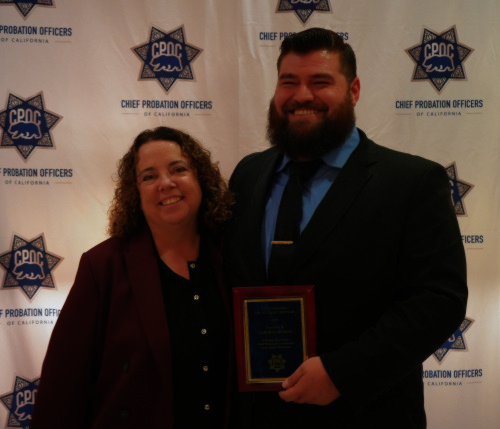
Morfin recognized as California North Region Employee of the Year at statewide probation awards ceremony

Lake County Chief Probation Officer Wendy Mondfrans (left) and Officer Roberto Morfin (right). Photo courtesy of the Chief Probation Officers of California.

 
LAKE COUNTY, Calif. — Roberto Morfin, supervising deputy probation officer with the Lake County Probation Department, has been recognized at the statewide 2025 Annual Chief Probation Officers of California Awards Ceremony as the North Region Probation Employee of the Year.

The awards honored his exceptional leadership, transformative impact on department operations, and deep commitment to supporting justice-involved individuals and staff alike.
 
“Roberto is a dedicated leader who brings consistency, compassion, and professionalism into every part of his work,” said Lake County Chief Probation Officer Wendy Mondfrans. “His ability to lead with integrity while strengthening our programs and staff makes him an invaluable member of our department. His work helps people in the justice system take part in transformative rehabilitation programs, making our communities safer for everyone.”
 
Morfin oversees day-to-day operations of the department’s South Field Office and plays a central role in ensuring programming and services operate seamlessly both in the community and within the jail. He is widely recognized as a steady, trusted leader who supports his team, provides hands-on training to new staff, and ensures the department’s mission is reflected in daily practice.
 
His leadership extends across several major department initiatives, including oversight of the Resilient Reentry Event, monthly Parole and Community Team meetings, and the county’s tattoo removal program, all programs aimed at removing barriers, increasing access to services, and helping those in the justice system build pathways to stability and long-term safety. 

Morfin is known for approaching these programs with a focus on dignity, opportunity and accountability for every individual he encounters.
 
Morfin began his career with the department at just 18 years old working in Juvenile Hall, was later promoted to deputy probation officer, and then to supervising deputy probation officer. 

His longstanding service, mentorship and unwavering positivity have made him a stabilizing force within the department and a respected leader across California.
 
“Roberto exemplifies the spirit of the probation profession throughout California through his dedication to community, his support of staff, and his strong and compassionate work with those in the justice system,” said Chief Steve Jackson, president of the Chief Probation Officers of California, or CPOC. “His leadership makes a meaningful difference every day.”
 
CPOC is recognizing Roberto Morfin for his outstanding service, leadership and meaningful contributions to the Lake County Probation Department and the broader community.
 
CPOC is an association of all 58 counties with a shared identity as law enforcement leaders. It is committed to a research-based approach to public safety that promotes positive behavior change. Their leadership guides policy and practice in prevention, community-based corrections, secure detention for youth, and direct human services. CPOC aims to prevent crime and delinquency, reduce recidivism, restore victims, and promote healthy families and communities.

  • 44
  • 45
  • 46
  • 47
  • 48
  • 49
  • 50
  • 51
  • 52
  • 53

Community

  • Lake County Wine Alliance offers sponsor update; beneficiary applications open 

  • Mendocino National Forest announces seasonal hiring for upcoming field season

Public Safety

  • Lakeport Police logs: Thursday, Jan. 15

  • Lakeport Police logs: Wednesday, Jan. 14

Education

  • Woodland Community College receives maximum eight-year reaffirmation of accreditation from ACCJC

  • SNHU announces Fall 2025 President's List

Health

  • California ranks 24th in America’s Health Rankings Annual Report from United Health Foundation

  • Healthy blood donors especially vital during active flu season

Business

  • Two Lake County Mediacom employees earn company’s top service awards

  • Redwood Credit Union launches holiday gift and porch-to-pantry food drives

Obituaries

  • Rufino ‘Ray’ Pato

  • Patty Lee Smith

Opinion & Letters

  • The benefits of music for students

  • How to ease the burden of high electric bills

Veterans

  • CalVet and CSU Long Beach team up to improve data collection related to veteran suicides

  • A ‘Big Step Forward’ for Gulf War Veterans

Recreation

  • Wet weather trail closure in effect on Upper Lake Ranger District

  • Mendocino National Forest seeking public input on OHV grant applications

  • State Parks announces 2026 Anderson Marsh nature walk schedule 

  • BLM lifts seasonal fire restrictions in central California

Religion

  • Kelseyville Presbyterian to host Ash Wednesday service and Lenten dinner Feb. 18

  • Kelseyville Presbyterian Church to hold ‘Longest Night’ service Dec. 21

Arts & Life

  • Auditions announced for original musical ‘Even In Shadow’ set for March 21 and 28

  • ‘The Rip’ action heist; ‘Steal’ grounded in a crime thriller

Government & Politics

  • Lake County Democrats issue endorsements in local races for the June California Primary

  • County negotiates money-saving power purchase agreement

Legals

  • March 3 hearing on ordinance amending code for commercial cannabis uses

  • Feb. 12 public hearing on resolution to establish standards for agricultural roads

How to resolve AdBlock issue?
Refresh this page