 How to resolve AdBlock issue?
News
NORTH COAST, Calif. – Calling all writers: The 26th annual Mendocino Coast Writers Conference encourages you to register early for its three-day event, Aug. 6 to 8, at the Mendocino Campus of College of the Redwoods in Fort Bragg.
If you’ve always dreamed of writing a book, the conference features outstanding authors who are also noted teachers, acclaimed editors and agents, and a friendly, inspiring campus setting where writers connect with experts and each other.
Registrants will participate in intensive writing workshops with the same author for three consecutive mornings. Afternoons consist of craft sessions and seminars with authors, editors and agents. Topics range from screenwriting to poetry to new publishing platforms and more.
Morning workshop leaders include David Corbett, master class; Indigo Moor, poetry; Sheila Bender, creative nonfiction; Catherine Ryan Hyde, novel and young adult fiction; Albert DeSilver, exploring prose and poetry; and Lisa Locascio, short fiction.
Publishing professionals include Frances Caballo, social media consultant; Kate Gale, editor and co-founder of Red Hen Press; and Laurie Fox and Chelsea Lindman, literary agents.
Some literary events are free and open to the public, including the well-attended “Paths to Publishing” panel.
The panel features local children’s author Ginny Rorby, whose newest title is “How to Speak Dolphin,” and John Evans, currently a lecturer at Stanford, whose memoir “Young Widower” won the River Teeth Literary Nonfiction Prize.
Conference faculty and selected students will share their new work at literary readings to be held each afternoon, also open to the public.
New this year are continuing education units for teachers attending the conference.
For more information visit www.mcwc.org or phone 707-485-4031, or email
UPPER LAKE, Calif. – The townspeople of Upper Lake want to keep their bank.
That came through loud and clear in a town hall meeting attended by about 75 people and hosted by District 3 Supervisor Jim Steele on Wednesday night at the Odd Fellows Hall.
It was Steele's first town hall as supervisor, and while there were several items discussed during the two-hour meeting – including road, sidewalk and trail projects, a community garden and cleaning up creeks – the topic that garnered the most attention and discussion was that of the planned closure of Westamerica's Upper Lake branch.
The bank notified customers in January that it planned to close its Upper Lake branch – located next door to the Odd Fellows Hall at 9470 Main St. – on April 24, as Lake County News has reported: www.bit.ly/1wHJ3yd .
In Upper Lake, where there has been a bank on the town's Main Street since 1921, the bank's customers are putting up a fight, circulating paper petitions as well as creating an online petition at http://petitions.moveon.org/sign/upper-lake-bank-customers .
Local officials – including Steele and County Administrative Officer Matt Perry, who also attended the Wednesday night meeting – along with Lake County Chamber of Commerce Chief Executive Officer Melissa Fulton have been working to assist the town on the bank matter.
They've forwarded community concerns and petitions to the California Department of Business Oversight, which has a say in the matter because Westamerica is a state-chartered bank.
Although initially Department of Business Oversight Commissioner Jan Lynn Owen told the bank in a Feb. 13 letter that she didn't object to the branch closure, the agency is now considering reopening the case, according to Owen's special assistant, Tom Dresslar, who also was at the Wednesday meeting.
No Westamerica representatives were present at the Wednesday night town hall.
Dresslar told Lake County News that the agency is considering taking another look at the matter because it has become more clear that the loss of the branch would impact communities across the Northshore and not just Upper Lake, as Westamerica had claimed.
Steele explained that banks have to follow regulations in closing or moving, and the interest now is in how much the community would suffer.
He said a county survey found there are 7,000 people within the branch's service area who might be influenced by the closure. Steele and Perry wrote a letter to the Department of Business Oversight quoting those numbers and also raising concerns about the damage the branch closure could potentially do to public and private investment in the community.
The Northshore as a whole has a total of 15,000 residents, with the Upper Lake bank branch the only bank in that area, said Steele, adding there are no other banks anywhere along Lake County's Highway 20 corridor.
“So, yes, we would be impacted by this,” he said.
Steele asked if any community members would be open to having a credit union in town. About half of the people in the room put their hands up.
Some of those in attendance said they wanted Westamerica to stay, preferring it because of its stability and for its involvement in the community – including Wild West Days and the Christmas light parade – over the years.
Steele said the community had to mobilize very quickly, encouraging people to sign the petitions, which he said are very important.
Also at the Wednesday meeting was Richard Cooper, president and chief executive officer of Mendo Lake Credit Union, which has branches in Clearlake and Lakeport.
Cooper – who noted several other credit union staffers were there – said they were interested in offering services to the community, and asked if the townspeople considered it a good option to have a Mendo Lake Credit Union branch there.
Asked if the credit union was definitely looking at an Upper Lake location, Cooper was careful in his responses.
“We heard that the community was concerned,” he said, explaining that credit union representatives have come over and talked to businesses.
Cooper explained that he wasn't being evasive, but that he didn't have the final say on such an expansion plan, which ultimately is up to the credit union board. He said such any expansion would need to be vetted to gauge its impact on the entire credit union membership.
Resident Annelle Durham asked Cooper what would happen if community members came over to occupy credit union meetings to show interest. Cooper responded by inviting her to the credit union board's annual meeting at 5:15 p.m. Thursday, March 26, in the Chenin Blanc Room at the Ukiah Conference Center, 200 South School St.
Steele noted that the whole Northshore area needs service, and Cooper agreed. “There's so much potential,” Cooper said.
Cooper explained that Mendo Lake Credit Union's board talked long and hard about opening its Clearlake office, which took place in the middle of the recession with high unemployment.
What seemed like a risky decision has turned out well, with Cooper noting, “The community has supported us in record numbers,” and brought in a strong volume of business.
He was asked if the credit union would consider opening an ATM in downtown Upper Lake; it currently has one at nearby Running Creek Casino.
“That is one of the options that we certainly would look at,” said Cooper.
Businesswoman and Upper Lake Community Council President Debbie Hablutzel asked Cooper if the credit union decided to come to town, would it buy the Westamerica Bank building. Cooper said there is a lot of available real estate on Main Street, noting that parking is important – he said it is always something that makes or breaks a financial institution.
Invited to speak, Dresslar told the group that the commissioner of the Department of Business Oversight “feels it's very important that the community's voice be heard in this process.”
The agency also wants to make sure it makes the best decision for the community, Dresslar said.
He said the Department of Business Oversight will will make its decision about whether to object to the branch closure ahead of the intended April 24 closure, and if it does object, the closure will be stopped.
Hablutzel asked if he had received the petitions, and Dresslar confirmed he had. He added that when his agency started looking at the online petition, the commissioner was very interested in the fact that the impact extends beyond Upper Lake.
Cooper told the group that Dresslar's presence at the meeting meant the community's voice is being heard. “Somebody's listening to you,” Cooper said.
He thanked Dresslar for coming, noting of the attention Upper Lake's bank matter is getting, “This doesn't happen very often.”
Email Elizabeth Larson at
MIDDLETOWN, Calif. – “The Wave of Hope” will hold a fundraiser dinner and auction on Saturday, March 28.
The event will take place from 5 to 10 p.m. at the Twin Pine Casino event center in Middletown. Dinner is at 6 p.m., with the live auction starting at 7 p.m.
In addition to dinner and the auction, there will be live entertainment by musician Dennis Purcell during dinner followed by a Hula performance by Kehaulani Studio and a performance by the Sonoma County Taiko Drummers. The auction will be followed by two hours of dancing with the C.A.M. Band.
The Wave of Hope is a nonprofit organization formed to combat Lake County's high suicide rate.
It is a traveling exhibition of written stories and photographs depicting people who have gone through hard times and come out the other side with hope.
More importantly, it is what they would say to someone who is standing in the shoes they once wore. These are everyday people, who one would never suspect went through what they did.
Founder Sharon Dawson said the project is saving lives and turning people in a direction other than suicide by simply breaking the silence.
“Suicide usually comes from a sense of alienation and the idea that one is alone in their difficulties. So much shame and fear surround the opening act,” said Dawson. “We are about letting people know that they are not the only ones who have ever felt how they are feeling how and that there is a light at the end of the tunnel of depression We are about ending the loneliness that isolates us from one another. We are about breaking the silence.”
Dawson said the fundraiser will help with creating more “waves” and a second group of people who have stories to tell – each reaching out to a different faction of society.
It also will assist the organization with continuing to develop its school program, which she said has proven to be highly successful.
“Please help us continue what we have done so far,” said Dawson. “It’s working. We have saved lives.”
Tickets cost $35 each, with sales closing on March 15. Each attendee over 21 will receive $5 free play for the evening compliments of Twin Pine Casino.
Ticket can be purchased online at http://www.thewaveofhope.org/tickets.htm or through any of the following: Middletown – Olive Tree Salon, The Dawson Studios Photography, Neft and Neft Realty, Middletown Florist and Gifts; in Hidden Valley Lake, through Jen Mullen at Century 21; or in Kelseyville at Anna’s Boutique; or call 707-888-0882.
LAKE COUNTY, Calif. – The county of Lake, through volunteers of the Konocti Regional Trails (KRT) system, has submitted an educational grant application to the California Department of Parks and Recreation, Off-Highway Motor Vehicle Recreation Division's Grants and Cooperative Agreements program.
The project was conceived by KRT's South County group to address some of the ongoing problems associated with illegal OHV usage along Putah Creek. It seeks to highlight the many legal OHV recreation areas that are abundant throughout the county, and focus on OHV recreation education and safety.
The program will reinforce responsible off-road riding, with emphasis on safety, environmental stewardship and respect for private property.
The project proposes utilizing peer group educators, such as AMA pro Jeff Mann Jr., owner of Oasis Motocross, as well as other local amateur riders, to advocate responsible, respectful, and safe off-road recreation.
The program also will feature:
– An exciting OHV video utilizing aerial video footage to showcase the many miles of OHV-sanctioned recreation areas in Lake County.
– An official Lake County OHV map/brochure.
– An OHV informational kiosk.
– Educational programs focused on school-aged children, OHV users and non-users.
– A Web site focused on OHV recreation.
Although the initial focus was concentrated in the South County, illegal and unauthorized OHV use is rampant throughout the county.
It can severely impact water quality from sedimentation and nutrient loading; sensitive riparian areas and habitats of endangered and threatened species, such as the Clear Lake hitch, yellow-legged frog and western pond turtle; percolation rates from OHV-compacted soils; and neighborhood tranquility and quality.
Therefore, this project could benefit all areas of the county especially along Clear Lake’s north shore ridgeline area that for many years, has been considered for low-impact, nonmotorized recreation.
In addition, it can provide valuable information for other county and city departments such as law enforcement, other government agencies, community and neighborhood associations, as well as tourist and hospitality establishments that provide services to OHV recreationists.
The preliminary application can be viewed at http://olga.ohv.parks.ca.gov/egrams_ohmvr/user/ReviewProjects.aspx .
In the Grant Program section, type “GCA-14” (no quotes); in the Agency section, type “94-6000825”, and in the Project section, type “S” for Education and Safety.
For more information, please contact Gigi Stahl at
With seven workshops and a Webinar slated for March, Caltrans invites the public to help shape the state’s transportation future by offering their input and comments on the California Transportation Plan 2040 (CTP 2040), which lays out a vision for California's transportation future to support a vibrant economy and our greenhouse gas emission reduction goals.
“We are creating a long-term vision for California’s transportation system, and the public will play a key role in that,” said Caltrans Director Malcolm Dougherty. “We are looking at innovative ways on how to best improve the sustainability of the state’s transportation system through strategies such as more transit service, safer bicycling and walking facilities and reduced congestion through less single occupant vehicle use.”
The CTP 2040 is a statewide policy plan designed to meet California’s future transportation needs and to support achieving a statewide reduction in greenhouse gas emissions 80 percent below 1990 levels by 2050. It envisions a fully integrated, multimodal and sustainable transportation system.
The interactive workshops will include a short overview presentation, maps and exhibits, and activities to share information about transportation concerns.
They will also help shape the final CTP 2040 document, which will help inform how California transportation dollars are invested. Caltrans is also seeking the public’s input to help insure that the CTP 2040 is fully consistent with the department’s mission, vision and goals to reduce single occupant vehicle use, promote active transportation to reduce emissions and improve public health and support the “Complete Streets” principle.
Caltrans has scheduled these events throughout the month for public comment.
The public also can review and comment on the plan, in addition to doing so via these events, at www.californiatransportationplan2040.org .
The deadline for comments is April 17.
The CTP 2040 scenarios also support the governor’s goal to reduce petroleum use in vehicles by up to 50 percent by 2030.
For an opportunity to review and comment on the draft plan, please attend any of these seven public workshops:
• Sacramento: 4-7 p.m., March 10, North Natomas Library, 4660 Via Ingoglia.
• Redding: 4-7 p.m., March 12, City of Redding Community Room, 777 Cypress Ave.
• San Diego: 4-7 p.m., March 17, San Diego Valencia Park/Malcolm X Public Library, 5148 Market St.
• Riverside: 4-7 p.m., March 18, Riverside City College, 4800 Magnolia Ave.
• Los Angeles: 4-7 p.m., March 19, Southern California Association of Governments, 818 West 7th St., 12th floor.
• Fresno: 4-7 p.m., March 24, Fresno City College, 1101 East University Ave.
• Oakland: 4-7 p.m., March 26, Joseph P. Bort Metrocenter, 101 Eighth St., Oakland.
• Webinar: 2-3 p.m., March 5, visit www.californiatransportationplan2040.org .
The development of the CTP is an open and collaborative planning process that includes governmental agencies, the private sector, advocacy groups, community organizations, and the public.
To view the draft plan, informational materials, and to receive more details on the public workshops, please visit www.californiatransportationplan2040.org .
Those unable to attend a meeting in person, can comment via an email to
Providing safe mobility for all users – including pedestrians, transit riders, bicyclists and motorists – supports the mission of Caltrans to “Provide a safe, sustainable, integrated and efficient transportation system to enhance California's economy and livability.”
The CTP 2040 helps support this mission while furthering an ongoing conversation about California’s transportation future.
Each year, Caltrans conducts numerous community and public outreach events and workshops to solicit public input and comment, including on efforts to reduce greenhouse gas emissions in transportation.
Last year, Caltrans also hosted multiple community meetings across California about how to improve transportation between regions of the state as part of the “Interregional Transportation Strategic Plan.”
To keep up on current information about the department, follow Caltrans on Twitter at https://twitter.com/CaltransHQ or visit http://www.dot.ca.gov/ .
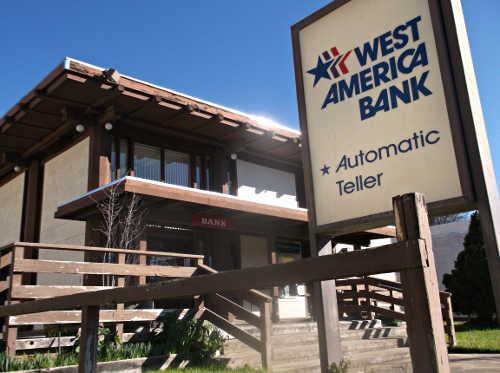
UPPER LAKE, Calif. – At Country Carpets on Main Street business in Upper Lake, owner Debbie Hablutzel has been welcoming community members stopping in not just to look at flooring, but to discuss one of the town's most pressing issues – the closure of its bank.
Westamerica Bank sent its customers a letter dated Jan. 23 that announced its intention to close the Upper Lake branch – which sits at 9470 Main St., just across from Hablutzel's shop – on April 24.
The decision shocked the community, which is pushing back against the plan to close its bank.
The united concern of residents has escalated to the point where new District 3 Supervisor Jim Steele has called a community town hall for 6 p.m. Wednesday, March 4, at the Odd Fellows Hall, 9480 Main St.
While there are a number of topics to be discussed, the bank closure is the big one, according to Hablutzel, who as president of the Upper Lake Community Council is helping rally and organize the town's response.
The matter also is under review by the California Department of Business Oversight, which has a say on the matter because Westamerica is a state-chartered bank.
While the Department of Business Oversight initially posed no objection to the closure, thanks to correspondence from community members that pointed to the bank’s importance to the entire Northshore, it is now considering a review of the matter.
“At this point we’re keeping our options open in terms of revisiting the issue,” said Special Assistant to the Commissioner Tom Dresslar.
An online petition has been set up at http://petitions.moveon.org/sign/upper-lake-bank-customers . As of Tuesday night, it had 137 signatures opposing the closure. In addition, paper petitions are making their way around the town.
One of the town's business owners, Diego Harris, stopped in at Hablutzel's shop on an afternoon last week to deliver his signed petition to her.
Harris opened his business, Diego's Gallery, eight years ago, choosing Upper Lake for reasons that included the availability of a bank.
“It's like the last thing I thought would close,” said Harris. He said when he went into the branch and found out about the closure, the staff was distressed and themselves had only just found out about the decision.
Noting he's seeing an uptick in business, Harris raised questions about why the bank would close at a time when the economy actually is starting to improve.
Hablutzel agreed, adding business at her shop has been the best it's been in six or seven years.
Harris said he uses the bank constantly. “I'm going over there right now to deposit into my checking.”
Community members don't feel that the bank has made good faith efforts to do outreach or to even give much of a time frame to respond to the decision.
The branch's small and friendly staff say they can't speak about the matter, and Westamerica officials – the regional manager as well as Robert Thorson, senior vice president and chief financial officers – did not respond to numerous messages left by Lake County news in an attempt to ask questions about the closure, including what is to happen with current staff.
Arlene Riedinger, Westamerica's vice president of Community Reinvestment Act and compliance manager, also did not respond to messages about the matter, but did acknowledge by email a second Lake County News request for the bank's Community Reinvestment Act Public File, which it must release upon request within a narrow time frame, according to federal Law. Lake County News is still awaiting receipt of the file.
The branch closure will create the need for additional travel, which takes time and money for gas, as Harris pointed out.
“It's a big hassle,” he said, explaining the need for the town's businesses – many of which are tourism-based – to have quick access to banking services and cash.
As important as the bank is to the town, Hablutzel said the matter's importance goes beyond the town itself.
“It's not just Upper Lake,” she said. She said the planned closure will affect other local communities and pointed out there are people from Nice and Lucerne – and even Lakeport – who bank at the Upper Lake Westamerica branch.
There is also an underlying sense of community pride in the Main Street bank branch. Hablutzel said there has always been a bank in Upper Lake. Or, at least, for most of the last century.
A bank history obtained by Lake County News showed that the Bank of Upper Lake opened in 1921 on the corner of Main and First streets. In 1959, the bank moved to its current location, a building built for a total cost of $52,000.
The bank became Bank of Lake County in the 1970s, and later in the same decade became Westamerica Bank. In 1988 it was sold to the Napa Valley Bank and returned to Westamerica Bank in the 1990s.
Through all of those changes – as well as the growth in credit unions and the shift in banking patterns – the physical presence of a bank in Upper Lake remained a constant.
Until now.
The process beings
The Westamerica Web site reports that the bank has $4.7 billion in assets, and is the seventh largest commercial bank headquartered in California. Westamerica Bank is a regional community bank with over 90 branches and two trust offices in 21 Northern and Central California counties.
The 2,100-square-foot Westamerica Bank building in Upper Lake is owned by Napa Valley Bancorp., which is owned by Westamerica. Napa Valley Bancorp. also owns the Westamerica branch property at 15342 Lakeshore Drive in Clearlake. The Westamerica branch at 4025 Main St. in Kelseyville is listed in the main company’s name, according to county property records.
County property records indicate that neither of the branches in Middletown or Lakeport are in company-owned buildings.
As a state-chartered bank, Westamerica is required to notify the state Department of Business Oversight of branch closure actions, according to Tom Dresslar, special assistant to the commissioner.
That's what the bank did in a letter dated Dec. 31. Riedinger notified the California Department of Business Oversight's Strategic Support Unit in San Francisco of the bank's intent to discontinue the Upper Lake branch and move services to the Lakeport branch at 150 S. Main St.
“Westamerica Bank has analyzed the impact the branch closure may have on the Upper Lake community and has determined the community will continue to have reasonable access to financial services,” Riedinger stated in the letter.
“The decision to close the branch is based on low transactional volume which does not support having a branch in the current location,” Riedinger added.
She said Upper Lake branch customers will not experience a service disruption, and would be notified 90 days before the closure occurred, noting there are a “variety of local banking choices” in the area.
“Westamerica Bank is a responsible lender and recognizes its duty to make available financial services to its communities,” Riedinger said. “A determination was made that any inconveniences this closure may have on the community will be outweighed by the fact that the new branch structure will bring a more lasting financial stability.”
By the time customers were notified of the closure in a separate letter dated Jan. 23, the Lakeport branch had moved to a new location, 650 N. Main St., Suite A, which Lake County Chamber of Commerce Chief Executive Officer Melissa Fulton described as “significantly smaller” than its previous location.
The January letter to customers noted that the closure will take effect “pending final regulatory approval.”
LaJuan Williams-Young, a spokeswoman for the Federal Deposit Insurance Corp., or FDIC, in Washington, DC, told Lake County News that the four federal banking agencies – including FDIC – require four things under Section 42 of the Federal Deposit Insurance Act when it comes to insured banking institutions closing branches.
The four requirements are to have a policy on branch closings; provide its federal regulator a 90-day advance notice of a proposed branch closing; mail to customers of that branch a notice at least 90 days before the scheduled closing; and place a conspicuous notice at the affected branch at least 30 days prior to the scheduled closing, Williams-Young said.
Williams-Young said said that the Federal Reserve Board is the primary federal regulator for state-chartered commercial bank members of the Federal Reserve System.
Customers fight back
After receiving the notice from the bank, customer and Upper Lake resident Nancy Brier began circulating a letter to local residents, businesses, organizations and leaders, urging them to fight the closure.
“This closure will be a blow to Upper Lake in particular and to all the communities on the North Shore. It is a key part of Lake County’s fledging infrastructure, and its loss will be felt widely,” she wrote.
Brier also raised concerns about the impact on the employees and customers, and the millions of dollars spent to rehabilitate the Northshore.
Fulton said she received Brier’s letter, and forwarded it to local businesses that she was aware of who were Westamerica customers, as well as Hablutzel.
She also sought community input, which she forwarded to Frank Bushnell at the Department of Business Oversight, copying the materials to County Administrative Officer Matt Perry.
Fulton, who said she had lived in the corporate world, explained that she knew that by the time the employees – much less the public – hear about actions like a branch closing, “It’s usually too late to do anything about it.”
In response to Westamerica's letter regarding the closing, the Department of Business Oversight wrote a letter to the bank, dated Feb. 13, that said Commissioner of Business Oversight Jan Lynn Owen offered no objection to the branch closure.
“In determining whether or not to object to the notice, the Commissioner considered whether the discontinuance of the branch office would have a seriously adverse effect on the public convenience or advantage,” the letter stated. “Information provided by the bank was carefully considered, and it is noted that the Bank has committed to continue to offer services, such as merchant courier service, to Upper Lake clients.”
The letter from the Department of Business Oversight also carbon copied the letter to the Federal Reserve Bank of San Francisco, Westamerica's federal regulator.
Rob Sholars, a spokesman for the Federal Reserve Bank of San Francisco, said its role in the Westamerica matter is governed by a joint policy statement between Office of the Comptroller of the Currency, Treasury, Board of Governors of the Federal Reserve System, Federal Deposit Insurance Corporation and Office of Thrift Supervision, Treasury.
Sholars referred to the same bank branch closure rules as were cited by Williams-Young. He added that in cases where a bank with interstate branches seeks to close a branch in a low- or moderate- income area, the 90-day prior customer notice must also inform customers that they can send public comment letters to the primary federal regulator, and the regulator can call a public meeting.
“The Upper Lake branch in question is not located in a low- or moderate-income area and thus the public comment process does not apply,” he said. “So long as the bank follows the technical requirements of the branch closure policy and law, the Federal Reserve cannot deny the notice or prevent the bank from closing the branch.”
Riedinger's letter to the state had identified Westamerica's Upper Lake and Lakeport branches as being in “middle-income” areas that are considered distressed or underserved, based on US Census tract information.
Sholars said the middle-income definition in this case comes from regulations contained within the Community Reinvestment Act.
Dresslar further explained that according to the Census database maintained by the Federal Financial Institutions Examination Council, the Census tract within which Upper Lake is located is middle income, with an estimated 2014 median family income of $49,268.
He explained that Upper Lake's Census tract is a distressed middle income community, which means one of three conditions are present: an unemployment rate of at least 1.5 times the national average; a poverty rate of 20 percent or more; or a population loss of 5 percent or more in the five-year period preceding the last decennial census.
County Administrative Officer Matt Perry and Supervisor Jim Steele wrote a letter, dated Feb. 18, to Bushnell of the state Department of Business Oversight voicing the county's concerns over the proposed branch closure, pointing out its service to the Northshore communities, where there are more than 7,000 residents with no other bank branch available.
Pointing to millions of dollars in public and private investment on the Northshore, the letter from Perry and Steele raised concerns that the branch closure “could jeopardize these private and public sector investments and adversely affect the community at a time when the economy is finally beginning to recover.”
The letter added, “It would benefit the bank to stay in place and promote their presence and services in the community. We’re certain the area will respond to an inclusive program.”
Perry is forwarding the petitions from Hablutzel to the state agency, and he and Fulton have been in communication to develop a strategy to address the closure proposal.
However, like community members and the media, county officials haven't been able to get anyone from the corporate offices – besides a receptionist or secretary – to take their calls about the closure.
“Nobody is calling us back,” Perry said, adding the bank didn't do any outreach to the county government over the decision.
State agency takes another look at bank closure
Thanks to the correspondence it has received from community members – as well as the online petition – the Department of Business Oversight is taking another look at the matter, said Dresslar.
One of the issues that the community's correspondence helped bring to the state's attention was that the closure wouldn't just impact Upper Lake.
The bank's rationale for the closure – as well as its assertions that the impact would be minimal – was based only on concerns about Upper Lake, not the surrounding communities, Dresslar said.
He said the bank management said public transit was available to get the elderly and disabled to Lakeport. The state also was told that residents of Upper Lake already typically travel to Lakeport for grocery shopping, health care and other services.
In addition, the bank reported to the state that many of Upper Lake's business owners were sole proprietors who already traveled around the county and also had addresses outside of Upper Lake, thus its judgment that the branch closure wouldn't have a significant impact.
As a result, all of the Department of Business Oversight's analysis was based on the impacts on Upper Lake alone, Dresslar said, adding that concern about the wider community impacts has led the agency to consider reopening the matter.
Dresslar said the community correspondence has been sent to the department's point person on the review of the bank closure, with the request that they make an assessment of whether to reopen the discussion.
While he didn’t have a date for when that would happen, he said it will happen quickly. “It would definitely be before the scheduled closure.”
Northshore residents who emphasize the importance of having a physical bank location illustrate key points found in a report released by the Federal Deposit Insurance Corp., or FDIC, on Feb. 19.
The FDIC study found that, “despite the increased use of online and mobile banking, brick-and-mortar banking offices continue to be the primary means through which FDIC-insured institutions deliver financial services to their customers.”
FDIC-insured institutions operated 94,725 banking offices as of June 2014, a decline of just 4.8 percent from the all-time high of 99,550 offices in 2009, according to the study.
Four main factors, according to the study, have influenced the number and distribution of banking offices over time: population growth, banking crises, legislative changes to branching laws, and technological innovation.
“In terms of technological change, there is little evidence that the emergence of new electronic channels for delivering banking services has substantially diminished the need for traditional branch offices where banking relationships are built,” the report said.
While there have been a number of changes in the banking industry in recent decades, the 2013 FDIC National Survey of Unbanked and Underbanked Households, visiting a teller remains the most common way for households to access their accounts.
However, the report also showed that Upper Lake's planned branch closure is indicative of a larger pattern in California, which is one of 15 states that have lost bank branches in the 1987 to 2014 time period.
Fulton said that community action makes a difference in situations like this. “If the people speak up loud and clear, they can make a difference,” she said. “We’ve seen that happen many times.”
Hablutzel pointed out that if customers have to go to Lakeport to do their banking, they're likely to choose another bank entirely.
“If they stay, we'll continue to put up with them,” she said.
Email Elizabeth Larson at