 How to resolve AdBlock issue?
News
Three arrested on marijuana charges during 'nail the mailer' operation; money, drugs, weapons seized
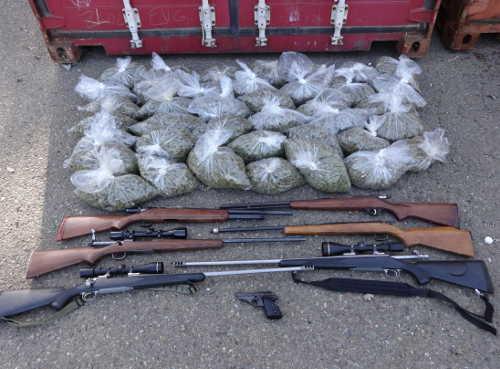
LAKE COUNTY, Calif. – Three Lake County men were arrested earlier this week during an operation carried out by federal and local authorities.
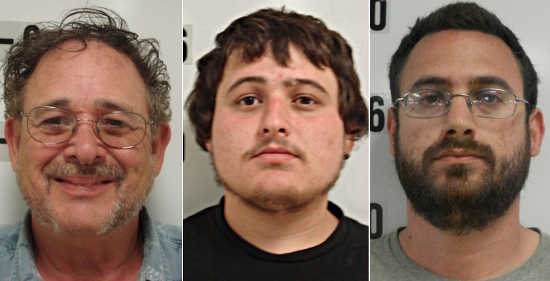
During the operation, 60-year-old Larry Morris Fabisch and Taylor Roland Fabisch, 22, both of Nice, along with Jonathan Robert Meisner, 28, of Clearlake, were arrested, according to Lt. Steve Brooks of the Lake County Sheriff's Office.
Brooks said that on Tuesday the United States Postal Inspection Service, Lake County Sheriff’s Office Narcotics Task Force and the Clearlake Police Department began a three-day "nail the mailer” operation.
The primary focus of the operation was the identification and seizure of US Postal parcels containing controlled substances that were being shipped from Lake County through the US Postal Service, Brooks said.
In addition, Brooks said investigators focused on parcels being shipped to Lake County containing the proceeds of controlled substance sales.
Over the three-day operation, $73,141 in US currency was seized, Brooks said.
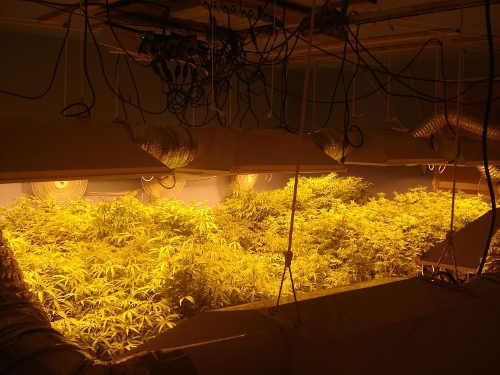
Five state and federal search warrants were authored for three residences and two parcels. Brooks said the service of the search warrants resulted in the seizure of 63 pounds of processed marijuana, 903 indoor marijuana plants, six rifles and one handgun.
Brooks said Larry Fabisch was arrested for the cultivation of marijuana, possession of marijuana for sale and for being armed while in the commission of a felony, and Taylor Fabisch was arrested for the cultivation of marijuana, possession of marijuana for sale and sales of marijuana. Meisner was arrested for the cultivation of marijuana and possession of marijuana for sales.
All three subjects were transported to the Lake County Hill Road Correctional Facility and booked, Brooks said.
Bail for each of the three men was set at $15,000. Jail records indicated all three posted the required percentage of bail and were released.
Larry Fabisch, a former county code enforcement officer, was arrested in October 2008 by deputies on charges including possessing more than 28.5 grams of marijuana, planting and cultivation, possession for sale and carrying loaded firearms in public, as Lake County News has reported.
NORTHERN CALIFORNIA – Rep. Doug LaMalfa (R-CA-01) and Rep. John Garamendi (D-CA-03) this week announced the introduction of HR 1060, which will accelerate the completion of a feasibility study of Sites Reservoir and authorize the project should it be found feasible.
Located in Lake's neighboring counties of Colusa and Glenn, Sites Reservoir is a proposed off-stream reservoir that would store as much as 1.8 million acre feet of water for cities, agriculture and the environment.
“Californians have spoken strongly in support of investing in new surface storage, with over two-thirds voting to invest in projects like Sites Reservoir,” said LaMalfa. “Sites provides more storage per dollar invested than any other proposed project, ensuring that California has water available for cities, farms and the environment during future droughts. It’s time to fulfill the promises made to voters, move forward on Sites, and build the infrastructure that will allow our state’s economy to continue growing for generations to come.”
“California is famous for bouncing back from adversity and emerging stronger. Sites Reservoir will play a key role in making our state drought resilient by expanding our water reserves. The Sites project would help meet the water needs of our communities, farms, and environment. It has galvanized bipartisan support across California. The water bond, which provides significant funding for storage, was passed by an overwhelming majority of California voters. Let’s continue this momentum, pass this bill, and start building California’s water future,” said Garamendi.
David Guy, president of the Northern California Water Association, urged support for the measure.
“This bipartisan effort promoting progressive water management is a step forward for California,” Guy said. “The dry years in California have shown the importance of surface storage for all beneficial purposes – water needed for cities and rural communities, farms, fish, birds and recreation. An off-stream regulating reservoir on the west-side of the Sacramento Valley (Sites) is critical for all these beneficial purposes in the Sacramento Valley, as well as providing state-wide water system operational improvements.”
Fritz Durst, chairman of the Sites Joint Powers Authority (Sites JPA), supported the congressmen’s action.
“Once again, our representatives, Congressmen LaMalfa and Garamendi, have exercised leadership by advancing this legislation and project,” said Durst. “Sites Reservoir will improve statewide water reliability so desperately needed in drought years to protect and enhance the lifeblood of our economy, while also providing the necessary water to conserve our rich wildlife and natural resources.”
Sites JPA Vice Chair Leigh McDaniel highlighted the importance of expeditious Congressional consideration of this measure.
“With the eyes of the country focused on California's historic drought, it is vital that we work jointly to seize this opportunity to develop the infrastructure needed to store additional water at Sites Reservoir and beyond,” McDaniel said. “Doing so will go a long way toward enhancing operational efficiency of the Central Valley Project and serve to mitigate the impacts of similar droughts going forward.”
The California Department of Water Resources recently reported that Sites Reservoir would generate an additional 900,000 acre feet of water during droughts, enough water to supply over seven million Californians for an entire year.
The California Alliance for Jobs has also examined Sites Reservoir and released a video above detailing the project’s benefits to cities, farms and the environment.
As an off-stream reservoir, Sites has the ability to recapture water released upstream, allowing improved conditions for salmon and reuse of water for urban and agricultural use.
Gov. Jerry Brown on Friday released annual applicant and appointee data for the administration’s judicial appointments.
From 2011 through 2014, there were 1,574 applicants for judicial appointments and Brown appointed 237 judges, including 76 in 2014.
Approximately 46 percent of Brown’s appointees in 2014 identified their ethnicity as American Indian or Alaska Native; Asian; Black or African-American; Hispanic; Native Hawaiian or other Pacific Islander; or other/unknown.
Brown also nominated two new justices to the California Supreme Court in 2014: Justice Mariano-Florentino Cuéllar in July and Justice Leondra R. Kruger in November. Both justices were sworn in by Brown earlier this year.
From 2011 through 2014, Brown’s judicial appointees included a number of notable firsts:
– Therese M. Stewart, the first openly lesbian justice to serve on the California Court of Appeal;
– Ferdinand P. Inumerable, the first Asian-American judge ever appointed to the Ventura County Superior Court;
– Paul Lo, the first Hmong American judge ever appointed in the country;
– Sunshine Sykes, the first Native American judge ever appointed to the Riverside County Superior Court;
– Sunil Kulkarni, the first South Asian American judge ever appointed in Northern California;
– Rupa Goswami, the first South Asian American woman judge ever appointed in California;
– Halim Dhanidina, the first American-Muslim judge ever appointed in California;
– Jim Humes, the first openly gay justice ever appointed to the California Court of Appeal;
– Miguel Marquez, the first Latino justice ever appointed to the Sixth District Court of Appeal;
– Rosendo Peña, the first Latino justice ever appointed to the Fifth District Court of Appeal;
– Chris Doehle, the first female judge ever appointed to the Del Norte County Superior Court;
– Kimberly Colwell, the first openly lesbian judge ever appointed to the Alameda County Superior Court;
– Mark Andrew Talamantes, the first Latino judge ever appointed to the Marin County Superior Court;
– Kathleen O’Leary, the first female presiding justice ever appointed to the Fourth District Court of Appeal, Division Three; and
– Raquel Marquez, the first Latina judge ever appointed to the Riverside County Superior Court.
Under SB 56 and SB 182, the governor is required to disclose aggregate statewide demographic data provided by all judicial applicants by March 1.
The judge and justice demographic data collected by the Judicial Council of California, Administrative Office of the Courts. State Bar membership data was collected by the California State Bar.
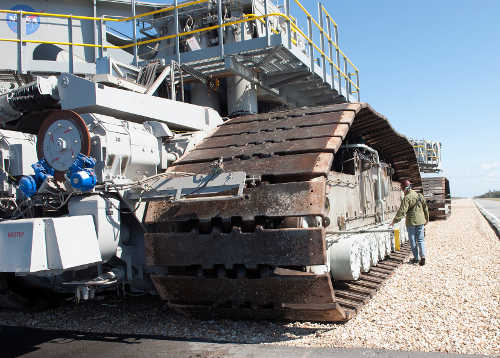
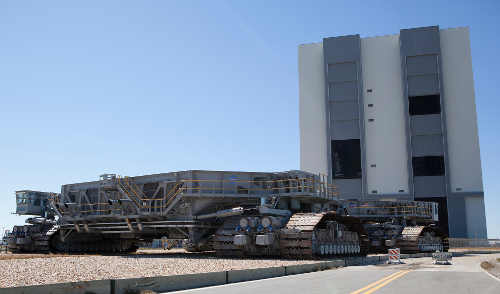
NASA's crawler-transporters, two of the largest vehicles ever built, have carried NASA rockets and spacecraft to the launch pad for the last 50 years.
They will continue their legacy as the “workhorses” of the nation's space program as part of the agency's journey to Mars.
The crawlers are being modified to carry NASA's Space Launch System (SLS) with the Orion spacecraft atop it and potential commercial vehicles to their pads to begin space exploration missions.
Originally constructed in 1965 to support the agency's Apollo Program, they also supported the Skylab, Apollo-Soyuz Test Project and Space Shuttle Program, helping NASA push the boundaries of human space exploration farther into the solar system.
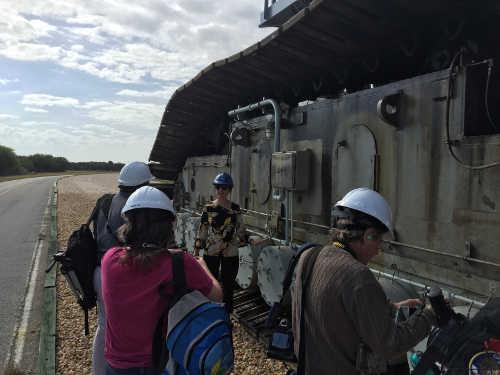
To celebrate its 50th year of supporting NASA missions, the upgraded and modified crawler-transporter 2, known as CT-2, rolled out of the Vehicle Assembly Building (VAB) on Feb. 18 and began the 4.2-mile trek to Launch Pad 39B at NASA's Kennedy Space Center in Florida. NASA, members of the media and guests paid tribute during a viewing and tour of the crawler at the pad Feb. 23.
But there's no time for these giant machines to rest on their laurels. The Ground Systems Development and Operations Program (GSDO) at Kennedy has been busy beefing up crawler-transporter 2 to be ready to support SLS and Orion. CT-1 will be available to carry a variety of other launch vehicles.
Using these vehicles, NASA will send astronauts farther than ever before, first to an asteroid, and onward to Mars. The modifications will enable the crawlers to continue supporting human spaceflight for another 20 years.
The crawlers were initially manufactured by the Marion Shovel Company in Marion, Ohio. Weighing in at more than 6 million pounds each, the larger parts that could be assembled and fit on a truck were shipped to Kennedy in 1964 where final assembly took place.
Each crawler is 131 feet long and 114 feet wide, with four pickup points spaced 90 feet apart on the upper deck that fit into four interface locations on the mobile launcher.
“It's important to maintain an equal amount of weight distributed on each of the crawler's trucks,” said John Giles, crawler project deputy manager. “Through tests and calculations, the center of gravity is determined for the mobile launcher. The interface locations can be different according to the weight and location of the space vehicle on top.”
The unique features of the giant vehicles include 16 traction motors, two alternating current generators, two direct current generators powered by diesel engines, and two control cabs each to drive the vehicles forward and backward.
The jacking, equalizing and leveling (JEL) system, among other systems, are monitored and controlled from inside the crawler's control room.
The JEL system keeps the upper deck and pick up points level at all times, even when traveling up steep inclines to the top of the pads, to prevent its rocket payload from toppling.
The crawlers' other unique features are the giant tracks, or treads, that propel the vehicles along. There are eight treads, two per corner, with each tread containing 57 “shoes.” Each shoe is 7.5 feet long and 1.5 feet wide and weighs 2,100 pounds.
The original shoes were provided by Marion and were replaced in 2004 with new shoes manufactured by ME Global Manufacturing in Duluth, Minnesota.
In 1985 a laser docking system was added to the crawlers, allowing them to dock within 0.50 to 0.25 inches of the fixed “dead zero” position at the launch pad and in the VAB.
Traveling at only about 1 mph, the crawlers carried the weight of the massive Saturn V rocket and Apollo capsule attached to the mobile launcher along with the launch umbilical tower (12.3 million pounds), and the space shuttle with solid rocket boosters and external fuel tank on top of the mobile launcher platform (11 million pounds).
The first use of a crawler was in August 1967, when the first Saturn V rocket for Apollo 4, an uncrewed mission, was transported to Launch Pad 39A.
To date, CT-1 has traveled 1,960 miles, and CT-2 has traveled 2,207 miles to and from the pads.
NASA's GSDO Program has made steady progress on the crawlers' refurbishment since the last space shuttle rolled to the pad in June 2011.
In November 2011, CT-2 moved the SLS mobile launcher from the park site beside the VAB to Launch Pad 39B during a rollout test.
In 2012, CT-2's original alternating current generators and associated parts were removed. Two new 1,500 kilowatt diesel engines and generators were installed.
Work continued over the next two years to modify and upgrade the crawler to extend the life of its operating systems, including the installation of 88 new traction roller bearing assemblies, a modified lubrication delivery system and a new temperature monitoring system.
In January 2014, CT-2 passed the first phase of an important milestone by completing a test of the new traction roller bearings on two of the massive vehicle's truck sections, A and C, followed by upgrades and testing on truck sections, B and D.
The JEL cylinders, electronics, cables and hydraulic components are being upgraded to increase load-carrying capacity. The upgrades are necessary to increase the lifted-load capacity of the crawlers from 12 million pounds to 18 million pounds to support the weight of the SLS and Orion spacecraft on the mobile launcher.
CT-1 is being strengthened to handle commercially operated rockets and spacecraft.
“The crawlers are ready to support NASA's SLS program and commercial missions for the next half century,” Giles said. “This continued support would not be possible without the managers, engineers and technicians that maintain these highly unique and specialized pieces of equipment.”
Linda Herridge works for NASA's John F. Kennedy Space Center.
LAKEPORT, Calif. – On Thursday a jury began deliberations on whether two brothers from San Francisco took part in a June 2013 home invasion robbery in Clearlake Oaks in which a young man was beaten and shot and his family terrorized.
Closing arguments in the trial of Dion Davis, 27, and his brother, Gregory Elarms, 30, wrapped up on Thursday morning, after which the jury was given instructions and sent to start its deliberations.
The men are among five individuals who the prosecution says carried out the home invasion on June 26, 2013, at the home of Ronnie and Janeane Bogner, whose adult son was shot during the incident.
Davis is alleged to have shot Jacob Bogner and to have shot at Clearlake Police Lt. Tim Celli, and so is charged with attempted murder. He also is charged with robbery, burglary, assault with a firearm on Bogner and Celli, car theft, theft, vandalism and conspiracy, as is Elarms.
The trial of Davis and Elarms began at the end of January. The prosecution and defense rested their respective cases last week.
Closing arguments began on Wednesday morning with District Attorney Don Anderson, who is personally handling the case's prosecution, with Deputy District Attorney Daniel Flesch as co-counsel.
Anderson was followed by Davis' defense attorney Bill Conwell and Elarms' attorney Doug Ferguson. Anderson finished up with his rebuttal to the defense arguments on Thursday morning.
Before the prosecution and defense addressed the jury, retired Judge James Garbolino – who came from Placer County to hear the case due to the local judges recusing themselves – read the jurors a stipulation agreed upon by both the attorneys in the case. Garbolino advised the jurors that they must accept the stipulations as facts, as both the prosecution and defense agree on them.
The stipulations include that on June 26, 2013, the Chico Police Department conducted a recorded interview with Jacob Bogner and took photographs, sending it to the Lake County Sheriff's Office on July 23, 2013. However, Det. Doug Dahmen, a lead detective in the case, didn't turn that interview over to the prosecution until August 2014. It was provided to the defense shortly thereafter.
The other stipulation was that Elarms was in custody in the San Francisco correctional facility from July 1, 2013, through April 3, 2014, on an unrelated matter. He was arrested in San Francisco on July 2, 2014, on the Bogner case and transferred to the Lake County Jail, where he was released on July 25, 2014, then rearrested in San Francisco on Aug. 15, 2014, and returned to the Lake County Jail.
The prosecution's case
In addressing the jury, Anderson touched on legal concepts jurors would need to take into account during deliberations before summing up his theory of how the crime took place.
Anderson said the plot to carry out the robbery began with Tyler Gallon – another defendant in the overall case who hasn't yet stood trial – owing Davis $14,000 after a rental car he had borrowed was impounded.
Gallon and Sean Foss – a former employee of the Bogners' company Weed Tech – talked, and Foss initially suggested going to the Spring Valley area to conduct a home invasion and steal 300 pounds of marijuana.
Foss then suggested going to the Bogners' home – where he claimed they had “100 guns” – to steal guns, money and a truck. Foss also is charged in connection to the robbery but has yet to stand trial.
Davis, Elarms and Davis' girlfriend, Jenaya Jelinek, came to Lake County on June 25, 2013, and met up at the home of one of Davis' relatives. A party took place that night and at one point Davis, Elarms, Foss and Gallon went to case the Bogners' home, which caused the family's dog to bark for some time, Anderson said.
The following morning, Jelinek – who told authorities she believed they were going to conduct a marijuana buy – drove the five men to the Bogners’ home in a Chevy Malibu that she said Davis had bought for her, dropped them off and was told to wait down the hill.
Janeane Bogner came outside, saw the men getting out of the car with masks on – except, Anderson said, for Elarms – who asked if “Lonnie” or “Ronnie” was at home.
She went back into the house where her young grandchildren were and the men forced their way into the house. Janeane Bogner struggled with a man who had dreadlocks – believed to be Elarms – pulling off his hoodie.
She yelled for help to her son, who came out and said he saw Davis pointing a .40-caliber Glock handgun at him. Davis told him not to move, adding, “This is the day that you are going to die.”
Davis told Jacob Bogner to get on the floor, which he did, with Davis going back to the foyer. By that point, Janeane Bogner had retreated to a bedroom to protect her grandchildren.
Jacob Bogner got up and came out of his bedroom, was chased by Davis back into the room and then locked his door. Davis shot through the door, hitting Jacob Bogner in the left leg, then broke through the door and demanded money, Anderson said.
Anderson said Davis then went back to the foyer, and Jacob Bogner, while wounded, again attempted to come out of his room. At that point Davis went back and pistol-whipped the wounded man.
The defendants are alleged to have stolen $121 in cash, two older pistols and a pellet gun, and Janeane Bogner's 2002 Cadillac Escalade, which they pushed over the embankment on Sulphur Bank Road between Clearlake Oaks and Clearlake.
In Clearlake, they would be spotted by Celli, who pursued them into the area of 16th Street, where the men fled the car and ran across a wooded area. Anderson said Davis shot four times at Celli, missing him by about 5 feet. The bullets were 4 feet off the ground, or at chest level.
Jelinek, still inside the car, was taken into custody immediately, while Davis, Foss and Gallon would go to Davis' relative's home and, after negotiations with law enforcement, would surrender later that day.
The morning after the home invasion, detectives with the Lake County Sheriff's Office and District Attorney's Office Chief Investigator Craig Woodworth served a search warrant at the home where the standoff had occurred.
Anderson said they found a cell phone, a case for a 9 millimeter pistol, a pair of black jeans with $121 in the pockets, three black hoodies like Janeane Bogner described and a skeleton mask like the one described by Jacob Bogner which Gallon would confess he wore.
Under the house's porch the investigators also found a shotgun, a 9 millimeter pistol, and a .40 caliber Glock with an extended 22-round magazine with 15 rounds still in it plus one in the chamber. Gallon would tell investigators that he put the guns there.
A Department of Justice firearms expert who tested that Glock pistol said the four shell casings found in the wooded area where Celli was shot at as well as a casing taken from outside Jacob Bogner's bedroom all came from that handgun.
Elarms would not be connected to the crime until the following year. Anderson said a Department of Justice fingerprint expert found Elarms' prints on the car near where Gallon said he was sitting.
Anderson dealt with the credibility of his witnesses in the case, including Jelinek, who testified in the first days of the trial. Last year she reached a plea agreement for second degree burglary and has since been released.
He acknowledged that Jelinek was lying when she said she couldn't tell if Elarms was the man in the backseat of Davis' car on the ride to Lake County on June 25, 2013. According to testimony from Davis' and Elarms' mother, Regina McGee, Jelinek had been a frequent visitor to McGee's home, where Elarms lived.
Anderson defended the credibility of Jacob Bogner, who he said has Asperger syndrome, which a defense expert said affects memory and facial recognition. The defense also claimed he was fatigued from little sleep and had a blood alcohol level of up to 0.05 based on an extrapolation of tests taken at the hospital after the shooting.
Anderson said Jacob Bogner gave detailed, credible statements about the incident and unequivocally identified Davis as his shooter.
While Janeane Bogner initially misidentified San Francisco resident Dexter Currington as being involved, that matter is a red herring and has no bearing on the case of Davis or Elarms, Anderson said. “Dexter Currington is not on trial here. Dexter Currington had an injustice done to him.”
Regarding issues with Dahmen, “This is a little bit difficult,” said Anderson, acknowledging that Dahmen made some “huge mistakes” in investigating the case.
Those include interviewing Currington in the Lake County Jail shortly after his arrest in September 2013, at which time Currington provided the detective with alibi information and witnesses to back it up. Dahmen did not, however, follow up with those witnesses, a fact he admitted on the stand.
“He interviewed Dexter and didn't do a darn thing about it for roughly six months,” not until Currington and his attorney brought the information forward to the District Attorney's Office, Anderson said. The charges against Currington were immediately dropped at that point.
Anderson acknowledged Dahmen's “negligence” – “I've got other words I want to use but I'm not going to,” he said – but added that those issues don't affect Davis or Elarms. Nor does Janeane Bogner initially identifying Currington.
He defended Gallon's credibility, noting that he gave the most complete, step-by-step account of the robbery. Anderson explained that Gallon's version could be verified by investigators. Gallon, he added, isn't immune to prosecution for having agreed to testify against Davis and Elarms.
Anderson told jurors they would have to decide of Davis intended to kill Bogner and Celli, which he said could be done by looking at his behavior. Referring to the Glock with its extended magazine, “That gun is a killing machine. That's what it's made for,” said Anderson.
He also repeated Davis' alleged statement to Jacob Bogner, “This is the day you are going to die.”
Anderson added, “He tried to kill him. He tried to follow through with that statement,” pointing out that Davis returned and pistol whipped the wounded man.
Defense attacks prosecution theory
Key points to the defense's arguments in favor of Davis and Elarms include Janeane Bogner's early misidentification of Currington as a suspect based on a photo lineup presented by sheriff's detectives at the start of July 2013.
Davis' attorney Bill Conwell also keyed in on the series of mistakes by Dahmen, including not recording – or, Conwell suggested, recording and destroying – the July 2, 2013, interview with Janeane Bogner in which she misidentified Currington; not turning over the Chico Police interview with Jacob Bogner for a year; and his failure to follow up on Currington's alibi information.
Dahmen admitted on the stand during testimony that he didn't do any followup on that potentially exculpatory information. He wouldn't write and submit a report on the interview until March 2014 after he was reminded by his supervisor that it existed.
In a hearing last week, Dahmen was recalled to the stand to ask a series of followup questions from the defense and Garbolino on his handling of the case. Accompanied by an attorney, when Dahmen was pressed on details of his performance, he repeatedly replied, “I can't recall.”
“His explanation, 'I can't recall,' is patently ridiculous,” Conwell said during his closing arguments on Wednesday.
Failing to follow up on exculpatory information or record interviews were among the things that Conwell told the jury are not normal for an investigation. He added, an improper investigation leads to improper results.
Other irregularities Conwell cited included Dahmen not showing Jacob Bogner a photo lineup. Instead, Jacob Bogner had identified Davis based on his picture posted in a Lake County News story shortly after the arrests that Bogner was able to access online while in the hospital.
Conwell also challenged Jacob Bogner's testimony based on his Asperger syndrome, which one of the defense's expert witnesses said makes it difficult for those who have it to do facial identifications. He maintained Jacob Bogner had been drinking the previous night and had little sleep, which he said could impact the accuracy of his eyewitness testimony.
In addition, Conwell said Bogner had told Chico Police that his assailant was clean shaven, although Davis' mugshot from the day of arrests showed him with some facial hair. In initial interviews, Jacob Bogner also described his assailant as possibly having a tattoo on his hand, which Davis doesn't have.
Rather, Conwell suggested that circumstantial evidence pointed to Gallon – who is clean shaven and who Conwell maintained does have a tattoo on his hand – being the shooter.
Jacob Bogner's account was influenced by other peoples' statements, online news accounts and information from Twitter and other parts of the Internet, said Conwell.
Conwell argued that this is a tainted eyewitness case based on issues with cross-race identification – which his expert said is a complication – and the “hindsight effect,” which causes a person's memory to change to fit the known outcome.
He raised issue with Janeane Bogner's misidentification of Currington because of the big difference in appearance between him and Elarms.
Conwell also told the jury that Gallon lied “many, many times” to investigators, gave a different seating orientation in the Malibu than that witnessed by Celli and stated he had a .40 caliber Smith and Wesson handgun that has never been located.
The ballistics evidence, Conwell said, didn't back up the idea that the shooter was trying to kill either Jacob Bogner or Celli.
“When the prosecution is making these assertions, look at the evidence,” he said, adding that the prosecution had failed to prove Davis had the .40 caliber Glock.
Ferguson told the jury that the prosecution had the wrong man in the case of Elarms. Citing his love of movies, Ferguson referred to the Akira Kurosawa film, “Rashomon,” which tells the story of several people who witness a crime and how each one comes away with a different story, and the movie “The Wrong Man” starring Henry Fonda.
“That's my theme,” he said.
Ferguson said Elarms was working at an apartment complex renovation project in San Francisco on the day of the home invasion. Three of Elarms' coworkers took the stand at trial to testify to that.
He pointed out that the case had a lot of testimony but little physical evidence, and he suggested the case could easily have been settled if more fingerprints and DNA evidence had been collected.
Janeane Bogner had described reaching all the way up to pull the hoodie off one of the suspects. Ferguson said she's 5 feet 6 inches tall and Elarms is 5 feet 9 inches tall, not enough of a height difference to match her account.
As for Dahmen's part in the case, “He may be looking for new work, I don't know,” said Ferguson, faulting the detective's work.
He suggested the investigators were using a “tell,” or a cue to get what they wanted in identifications, and not using double-blind procedures. Ferguson referred to studies that show the difficulty in identifying people of other races; the Bogners are white and Davis and Elarms are black.
As for the issue of time, “Memory fades very quickly,” said Ferguson, citing data that memory accuracy drops by a third in the first few minutes, another 15 percent after 10 minutes, declines to 55 percent over four hours and then to 50 percent after a week.
Janeane Bogner was interviewed by detectives a week after the home invasion, Ferguson said. “There was bad memory formation,” he said, adding there was no reason to believe she identified the wrong person on purpose. “She believed the person that she identified was the right person.”
He alleged that the District Attorney's Office was perfectly content that that they had their man in Currington, which later was proven to be wrong. “Maybe Dahmen dropped the ball, but nobody else picked it up.”
Like Conwell, he pointed to the significant physical differences between Currington and Elarms. “Decide for yourself how you could make a mistake like that,” he said. “She picked the wrong man.”
Some of the prosecution's own witnesses, he said, didn't place Elarms at the scene, and questioned the veracity of Gallon's statements, calling him “a desperate young man” facing life in prison who had five months in jail to figure out an angle. In that time, he never pointed out Currington was the wrong man.
Ferguson questioned what Elarms' motive would have been to make the long trip to Lake County.
“There is reasonable doubt in this case and you must find my client, Gregory Elarms, not guilty,” Ferguson said.
The prosecution responds
In a rebuttal that lasted just under an hour on Thursday morning, Anderson maintained there was more than enough evidence to convict Davis and Elarms beyond a reasonable doubt.
He once again acknowledged Dahmen's mistakes but held that those involve Currington, not Davis and Elarms, and is therefore a defense smokescreen, as many other people involved in the investigation did excellent work – from the 911 dispatcher to evidence technicians, the SWAT team and police officers.
Referring to the original 911 records, Anderson called it a great piece of evidence, noting the clear and immediate descriptions that both Jacob and Janeane Bogner gave of what had happened.
He challenged the defense's eyewitness testimony expert, stating that Jacob Bogner “has better memory than most of us.” He also dismissed defense assertions that Jacob Bogner's account was impaired by alcohol consumption the night before. Anderson said even the Department of Justice doesn't use medical records to determine blood alcohol content, but a specific testing method.
As for the suggestion that Bogner was fatigued or sleepy, “Being shot and being pistol-whipped is going to wake you up really quick,” said Anderson.
Anderson said there was no evidence to support that Gallon had the gun, and again pointed out that investigators were able to confirm eight different aspects of Gallon's story. “We can verify his story. His story makes sense.”
He further suggested that Elarms' coworkers' testimony was “actually too good to believe,” and appeared to be rehearsed.
While both Elarms' girlfriend, Shunae Morgan, and his mother testified to him being involved in a birthday party for his son on July 1, 2013, Elarms actually was in custody that day, and Anderson questioned if that party ever actually happened, pointing out no evidence had shown that it did.
As for Elarms' motive, “That's easy,” said Anderson. “It's money. It's guns. That's your motive. That's what they were doing. They were going after money. They were going after guns.”
He defended the work his staff did to measure the trajectory of the bullets shot at Celli and challenged the defense's contentions that Davis didn't try to kill Jacob Bogner or Celli. If killing them wasn't his intent, what was he planning? Anderson asked.
Warning shots are fired up in the are, not in such a way as to come within several feet of a person, he said.
He urged the jurors to look at the two shootings together. “Don't handle them separately. Handle them as one.”
“You have some innocent victims and they deserve justice. And you can give them that justice,” he said, asking for a guilty verdict.
By the end of the day on Thursday, Anderson said no verdict had been returned. The jury had, however, asked a question about in what order they were to consider the charges. He said they also listened to the 911 recording.
Deliberations are expected to resume Friday morning, he said.
Email Elizabeth Larson at
NORTHERN CALIFORNIA – The Department of Water Resources will conduct this winter’s third manual snow survey on Tuesday, March 3 just off Highway 50 near Sierra-at-Tahoe Road approximately 90 miles east of Sacramento.
Recent electronic readings have revealed a trend of declining water content in the snowpack this winter.
On Thursday, the statewide water content was just 19 percent of the historical average for the date.
For comparison, the third snow survey of 2014, conducted last February, showed a water content in the snowpack of about 22 percent.
This season’s first two manual surveys on Dec. 30 and Jan. 29 found a below-normal snowpack.
The statewide water equivalent was just 50 percent and 25 percent, respectively, of the historical averages on those dates.
Most of the state’s precipitation normally falls in the north and is collected there for distribution throughout California.
The north has had only two storm series this wet season, in mid- December and early February; both were warm storms and did not produce significant snowfall.
The northern Sierra snowpack’s water equivalent today is only 17 percent of the February 26 historical average.
Electronic snowpack readings are available at http://cdec.water.ca.gov/cdecapp/snowapp/sweq.action ; electronic reservoir readings are at http://cdec.water.ca.gov/cdecapp/resapp/getResGraphsMain.action .