 How to resolve AdBlock issue?
News
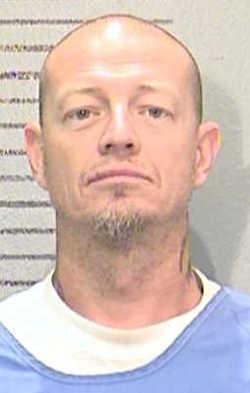
LOWER LAKE, Calif. – A minimum-security inmate from the California Correctional Center walked away from Konocti Conservation Camp on Friday evening.
Inmate James Bellino, 37, was last seen by camp staff at approximately 6:35 p.m., and was discovered to be missing for the inmate count at 8:20 p.m., according to the California Department of Corrections and Rehabilitation, or CDCR.
Bellino was assigned to an inmate firefighting crew at Konocti Conservation Camp, which houses approximately 100 minimum-custody inmates, authorities said.
Officials said Bellino was committed to the CDCR on Sept. 13, 2013, from Kern County for inflicting corporal injury on a spouse or cohabitant, which was a second strike, and criminal threat to cause great bodily injury or death.
He was scheduled to be released from CDCR custody on July 3, 2016, state authorities reported.
CDCR and Cal Fire, along with local law enforcement agencies and the California Highway Patrol, were notified and are assisting in the search for Bellino, according to a CDCR report issued late Friday.
As of Friday night shortly before midnight, all responding law enforcement agencies were continuing with the search and apprehension efforts, CDCR said.
Bellino is a white male, 6 feet 2 inches tall, 207 pounds, with green eyes and shaved head. Authorities said he was last seen wearing gray sweatpants, a white tank top and white tennis shoes.
Anyone seeing Bellino should call 911 or law enforcement authorities immediately.
Those with information about or knowledge of the location of Bellino should contact the CCC watch commander at 530-257-2181, Extension 4173.
While many Californians will be enjoying festivities on St. Patrick’s Day – Tuesday, March 17 – the California Highway Patrol will be working hard to keep them safe.
The number of arrests for driving under the influence increased in recent years, which can be avoided this year if people plan ahead to get home safely by designating a sober driver or calling for a ride before they start celebrating.
On St. Patrick’s Day in 2014, the CHP made 489 DUI arrests; 430 in 2013, and 300 in 2012.
The CHP encourages celebrants to get home safely by designating a non-drinking driver before their festivities begin or by making other plans, such as learning if their community has a sober ride program.
“Our officers will be watching for impaired drivers, to keep everyone safe. Designate a sober driver. Plan ahead to protect your life, your vehicle, and your friends,” said CHP Commissioner Joe Farrow.
“As you make all the plans for celebrating St. Patrick’s Day, don’t forget the most important plan,” said Rhonda Craft, director of the Office of Traffic Safety (OTS). “Plan ahead for your designated sober driver. Friend, family member, taxi, or ride share are all good choices to make it home safely.”
The CHP, Office of Traffic Safety, and the National Highway Transportation Safety Administration
(NHTSA) recommend a few simple tips:
· Before the celebrations begin, plan a way to get home safely at the end of the party.
· Designate a sober driver and leave your car keys at home.
· Use a taxi, call a sober friend or family member, or use public transportation to get home safely.
· Use your community’s sober ride program if there is one.
· If you are walking home, be sure to have a sober companion with you.
· If you see a drunk driver on the road, call 9-1-1. You could save a life.
· If you know people who are about to drive a vehicle or motorcycle while impaired, take their keys and help them make other arrangements.
NHTSA estimates that nationally, alcohol-impaired motor vehicle collisions cost more than $37 billion annually.
In my prior article, “The confidential marriage,” I discussed how confidential marriage licenses can be abused by predators to prey upon an elderly person without the elder’s family knowing what has occurred until it is too late.
What can be done to prevent such abuse of marriages?
Let’s discuss.
Unfortunately there are no criminal sanctions to deter someone from abusing the confidential marriage license.
California’s Elder Abuse Act punishes someone who, “takes, secretes, appropriates, obtains, or retains real or personal property of an elder or dependent adult for a wrongful use or with intent to defraud, or both.”
There is no equivalent sanction against someone who marries an elder in order to obtain a whole range of state and federal rights and protections including state spousal support and spousal inheritance rights.
The confidential marriage license allows predators to marry an elder without the elder’s unsuspecting family and friends realizing a marriage has taken place until after the elder’s death. By then it may be too late.
Assets may have been transferred during the elder’s life into the abuser’s name in the form of interspousal gifts and once the elder dies the predator as a surviving spouse is an heir to part or all of the deceased elder’s estate.
The level of competency required for marriage is minimal: Even an incompetent person can get married provided that he or she had a lucid moment at the time when consenting to the marriage.
While both spouses are still alive, their marriage is subject to annulment by court order, but once the elder dies, it is difficult for the elder’s surviving family to anull the marriage.
Prior to the elder’s death the marriage can be annulled in court either because it is voidable (on the grounds of unsound mind, fraud or undue influence) or because it was void from the beginning because the requirements for the marriage were not met.
After death, only marriages that are void can be annulled.
A traditional marriage requires a license, consent, two witnesses, an attesting witness, solemnization, and recordation.
A confidential marriage does not require any witnesses, any attestation by a witness, or recordation of the license.
The confidential marriage, however, requires the couple already to be living together and to be holding themselves out as husband and wife prior to marriage. Often this is not the case.
Accordingly, in Estate of Tollefsen the court annulled a confidential marriage because the couple had not lived together and had not been holding themselves out as husband and wife when they signed the confidential marriage license which stated otherwise.
Annulling the marriage is not the only remedy. A court may always reverse interspousal transfers and testamentary bequests that are the product of financial elder abuse and undue influence.
Anytime one spouse obtains an unfair benefit or advantage over the other spouse a presumption of undue influence applies.
This requires the benefited or advantaged spouse to prove that the advantage or benefit obtained was not unfairly obtained.
Thus when one spouse with substantial assets leaves much or all of his/her estate to the other spouse with no or little assets this presumption applies.
In Lintz v. Lintz, the court found that financial elder abuse and undue influence had occurred based on the following circumstantial evidence: the decedent’s wife had taken over the financial affairs, fired the husband’s estate planning attorneys, made the husband transfer his substantial separate property estate (worth millions) into community property, and amend his trust to give his wife an exclusive life estate and powers to the detriment of the husband’s youngest child.
None of the foregoing remedies is pain free, and all involve substantial legal fees. Thus, helping seniors to avoid predators is preferable.
Dennis A. Fordham, attorney (LL.M. tax studies), is a State Bar Certified Specialist in estate planning, probate and trust law. His office is at 870 S. Main St., Lakeport, California. Fordham can be reached by e-mail at
Magnetic reconnection could be the Universe's favorite way to make things explode.
It operates anywhere magnetic fields pervade space – which is to say almost everywhere.
In the cores of galaxies, magnetic reconnection sparks explosions visible billions of light-years away.
On the sun, it causes solar flares as powerful as a million atomic bombs. At Earth, it powers magnetic storms and auroras. It's ubiquitous.
The problem is, researchers can't explain it.
The basics are clear enough. Magnetic lines of force cross, cancel, reconnect and – bang! Magnetic energy is unleashed, with charged-particles flying off near the speed of light.
But how? How does the simple act of crisscrossing magnetic field lines trigger such a ferocious explosion?
“Something very interesting and fundamental is going on that we don't fully understand,” said Jim Burch of the Southwest Research Institute.
NASA has launched a mission to get to the bottom of the mystery.
It's called MMS, short for “Magnetospheric Multiscale” and it consists of four spacecraft that will fly through Earth's magnetic field, or “magnetosphere,” to study reconnection in action.
“Earth's magnetosphere is a wonderful natural laboratory for studying this phenomenon,” said Burch, the MMS Principal Investigator.
Launched on Thursday, the four spacecraft were designed, built and tested at NASA’s Goddard Space Flight Center.
Each one is shaped like a giant hockey puck, about 4 meters in diameter and 1 meter in height. In space, however, they are much larger.
“After launch, the spinning spacecraft will unfurl their electromagnetic sensors, which are at the end of wire booms as much as 60 meters long,” said Craig Tooley, MMS project manager at Goddard. “When fully extended, the sensors are as wide as a baseball field.”
These sprawling, spinning probes will fly in precise formation, as close as 10 kilometers apart and ares guided by GPS satellites orbiting Earth far below them.
“We can maintain formation with an accuracy of only 100 meters,” said Tooley. “This is crucial to our measurements.”
Any new physics MMS observes could help provide clean energy on Earth.
“For many years, researchers have looked to fusion as a clean and abundant source of energy for our planet,” said Burch. “One approach, magnetic confinement fusion, has yielded very promising results with devices such as tokamaks. But there have been problems keeping the plasma contained in the chamber.”
“One of the main problems is magnetic reconnection,” he continued. “A spectacular result of reconnection is known as the 'sawtooth crash.' As heat in the tokamak builds up, the electron temperature reaches a peak, then 'crashes' to a lower value. Some of the hot plasma escapes. This is caused by reconnection of the containment field.”
In light of this, you might suppose that fusion chambers would be a good place to study reconnection.
But no, said Burch. Reconnection in tokamaks happens in a tiny volume only a few centimeters wide. It is practically impossible to build sensors small enough to probe the reconnection zone.
Earth's magnetosphere is much better. In the expansive magnetic bubble that surrounds our planet, the process plays out over volumes as large as tens of kilometers across, for instance, when reconnection at the sun propels plasma clouds toward Earth, where additional reconnection events then sparks auroras.
“We can fly spacecraft in and around it and get a good look at what's going on,” he said.
That is what MMS will do: fly directly into the reconnection zone.
The spacecraft are sturdy enough to withstand the energetics of reconnection events known to occur in Earth's magnetosphere, so there is nothing standing in the way of a full two-year mission of discovery.
For more information and updates, visit the MMS home page: www.nasa.gov/mms .
Dr. Tony Phillips works for the National Aeronautics and Space Administration.
LAKE COUNTY, Calif. – Several grant-funded buses awarded to two local senior centers and People Services are opening up new possibilities and access for members of the community who previously had limited transportation options.
On Monday, Lucerne Alpine Senior Center Executive Director Rae Eby-Carl went to Lake Transit Authority headquarters in Lower Lake to collect the center's new bus, paid for through a grant obtained by Lake Transit.
It's one of seven buses paid for by the $480,000 grant, which Lake Transit applied for in May 2012 and received in December of that year, according to Mark Wall, Lake Transit's general manager.
Four of the buses went to People Services last spring and the Live Oak Senior Center received theirs last September.
Wall said Lake Transit worked with the Lucerne and Live Oak senior centers, and People Services to apply to Caltrans' Division of Mass Transportation for the funding. Caltrans, in turn, had received a Federal Transit Administration grant.
Wall said he was told by Caltrans officials that they had not seen any other group of organizations do a joint application like this one.
The grant process took a few years to work out, with Caltrans needing to sign off on any changes to vehicle usage, Wall said. The Lake Transit Board and the boards of the senior centers and People Services also had to approve memorandums of understanding for use of the buses before they were released.
“It's been pretty bureaucratic, quite frankly,” said Wall.
Wall said one bus is left, and has been offered to the Middletown Senior Center, which so far hasn't accepted it due to maintenance cost concerns, which it would need to fund.
“The LTA Board is very interested in seeing something like that happen, and we think it would be a big help to the Middletown area,” he said.
In the meantime, “We're going to operate it ourselves for nonemergency medical transportation,” which was one of the important features of the grant, Wall said.
People Services, which Wall said had the greatest need for the vehicles, received theirs first. In all, they got four new buses. The senior centers received smaller, seven-passenger buses with wheelchair lifts, he said.
People Services Executive Director Ilene Dumont said her organization was excited to receive the new buses, which had been badly needed as the ones they replaced were very old.
In total, the new buses for People Services cost $64,000 each, for a total of $256,000, said Dumont.
Dumont said the mid-sized buses have a capacity for 12 people if there is no passenger in a wheelchair, or eight with wheelchairs. The buses each have two wheelchair tie-downs.
“It's worked out perfect. It is so wonderful,” said Dumont.
She explained that People Services transports close to 200 people during the week to activities around the county, with many of those clients needing specialized transport service to pick them up every day. When clients are picked up, they're also returned home – no matter where they live in the county.
“People can get out into the community more during the day,” she said, and People Services can transport them in a better, more comfortable fashion, noting that the ride for the wheelchair-bound clients in particular is much improved.
Dumont has a fleet of 44 vehicles and her own maintenance crew. Without People Services running its own transportation services, a majority of its clients would be left indoors, she said.
“Our whole goal is to be out in the community doing things,” Dumont added.
Those activities to help others include assisting with Meals on Wheels deliveries for the senior centers in Clearlake Oaks, Lakeport, Lucerne and Middletown, she said.
When the Live Oak Senior Center received its van last fall, then-Executive Director Pat Grabham – who has since retired – said the center had been using an old van donated by a church for its transportation program, which by that time had been operating for five years.
Eby-Carl said the Lucerne Alpine Senior Center has not had a van before this, and she expects it to open up new opportunities for the center and the seniors its serves.
“Our goal is to get people to where they need to be,” Eby-Carl said, adding. “I think it will be a great deal of fun for folks to be able to come in and have meals at the center.”
She said socialization is important for seniors, and the vans could help move Meals on Wheels clients to become regular center visitors and take part in activities and events.
The Lucerne center currently delivers about 100 Meals on Wheels meals weekdays, Eby-Carl said, and serves 30 to 45 lunches between 11:30 a.m. and 1 p.m. Monday through Friday at the center, located at 10th Avenue and on Country Club Drive.
Eby-Carl said she intends to start offering more activities after the daily lunches, in addition to the current nutritional and Tai Chi programs now provided.
Wall said he is very pleased that the Lucerne Alpine Senior Center is getting a vehicle. Noting that he's known Eby-Carl for years, he added, “I know she'll work hard to make this really an asset for her community there.”
He said that reaching out to get people to the Lucerne senior center is “what we need,” as once they're at the center, it's easier to transport seniors elsewhere for errands and activities.
“We actually do a route deviation to the senior centers,” Wall said. “Any time they need us to come by, we do.”
Dumont said receiving the buses also means that the organizations will be able to offer nonemergency medical transportation. “There's a great need out there.”
Said Wall of Lake Transit, “I don't think people realize how much nonemergency medical transportation we do,” including transporting people to dialysis appointments.
The nonemergency medical transport side of things is still being worked out, Wall said, who is collaborating with medical providers around the county to set up the program.
Meanwhile, Eby-Carl – who herself drove the new bus back to her center – said they are looking for volunteer drivers to devote about three to four hours a day to transporting seniors to and from the center.
It just requires a regular driver's license and a clean driving record, she said, and the center will providing the training and insurance.
For more information call Eby-Carl at the Lucerne Alpine Senior Center, 707-274-8779.
Email Elizabeth Larson at
LAKE COUNTY, Calif. – Like the nation as a whole, Lake County started off 2015 with a slight uptick in its unemployment numbers, while state unemployment numbers improved.
The latest report from the California Employment Development Department showed that Lake County's unemployment in January was 8.9 percent, up from December's revised number of 8.6 percent, but improved over the January 2014 estimate of 10.6 percent.
California's unemployment rate for January was 6.9 percent, down from 7.1 percent in December and 8.1 percent in January 2014, the state reported. The unemployment rate is derived from a federal survey of 5,500 California households.
The US Bureau of Labor Statistics said that in January nationwide unemployment was 5.7 percent, up from 5.6 percent in December but down from 6.6 percent the previous January.
Based on a survey of 58,000 California businesses that measures jobs in the economy, the report found that California’s nonfarm payroll jobs totaled 15,928,000 in January, an increase of 67,300 during the month for a total gain of 1,806,700 jobs since the recovery began in February 2010. In December the state had a gain of 19,800 jobs.
The year-over-year change, January 2014 to January 2015, showed an increase of 498,000 job, up 3.2 percent, the state reported.
The federal survey of households that determines the unemployment rate showed an increase in the number of employed people, estimating that the number of Californians holding jobs in January was 17,620,000, an increase of 54,000 from December 2014, and up 441,000 from the employment total in January of last year.
The number of people unemployed in California in January was 1,316,000 – down by 31,000 over the month, and down by 194,000 compared with January of last year, the report showed.
Lake County's January unemployment numbers ranked it No. 33 out of the state's 58 counties, compared to its No. 40 ranking in December.
Neighboring counties were ranked as follows: Colusa, 23.2 percent, No. 58; Glenn, 11.1 percent, No. 43; Mendocino, 7 percent, No. 21; Napa, 5.7 percent, No. 9; Sonoma, 5.3 percent, No. 6; Yolo, 8 percent, No. 28.
One of the report's notable points was that, in January, Marin was supplanted by San Mateo County for the lowest unemployment in the state. San Mateo had a 3.9 percent rate, compared to Marin's 4 percent. Marin has held onto the No. 1 rank for some time. Colusa County had the state's worst unemployment rate.
In January, Lake County had a civilian labor force totaling 30,220 people, up from the 29,840 people counted in December and the 29,680 the previous January, the report showed.
The main county industry showing growth was “total farm,” with 14.5 percent, while total nonfarm showed a -0.8 percent decline.
Statewide, construction; trade, transportation and utilities; information; financial activities; professional and business services; educational and health services; leisure and hospitality; and government showed growth, while mining and logging; manufacturing; and other services showed declines, the state said.
Within Lake County's various communities, unemployment rates for January were as follows, from lowest to highest: Nice, 2.3 percent; Cobb, 4.4 percent; north Lakeport, 5.6 percent; Hidden Valley Lake, 6 percent; city of Lakeport, 6.1 percent; Middletown, 7.2 percent; Upper Lake, 7.7 percent; Clearlake Oaks, 8.5 percent; Kelseyville, 8.8 percent; city of Clearlake, 13.1 percent; Lucerne, 15.3 percent; and Lower Lake, 17 percent.
The Employment Development Department said there were 397,142 people receiving regular Unemployment Insurance benefits during the January 2015 survey week, compared with 436,034 in December and 495,273 in January of last year.
At the same time, new claims for Unemployment Insurance were 40,989 in January 2015, compared with 47,858 in December and 73,040 in January of last year, the agency said.
Email Elizabeth Larson at